
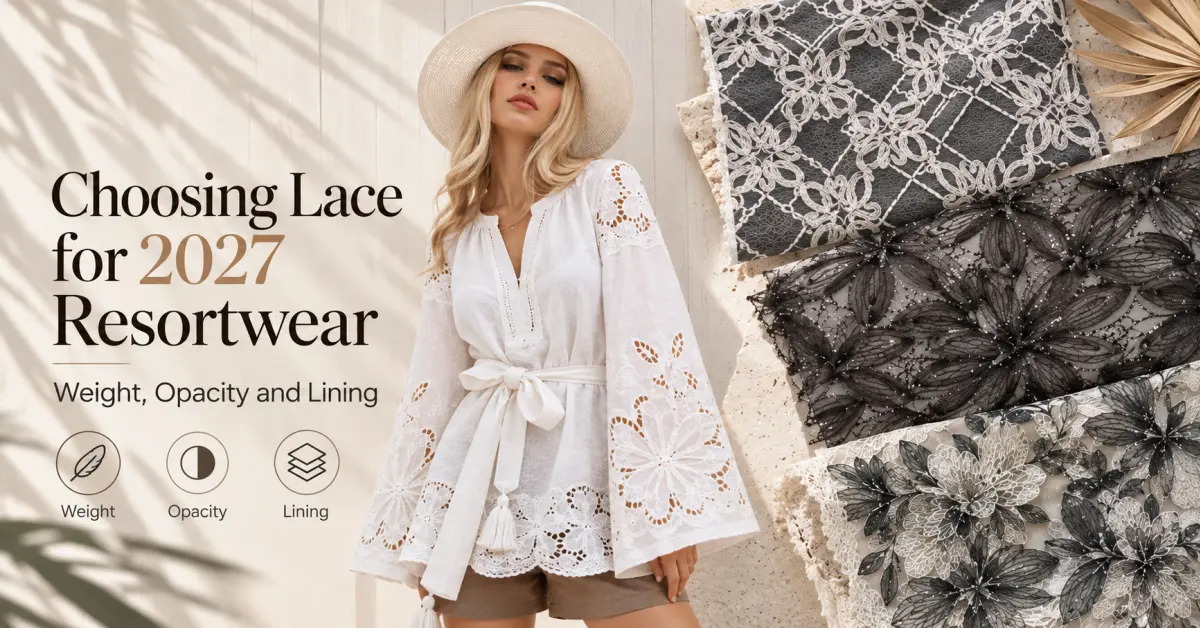

Choosing the right lace fabric for resortwear is not simply about finding a lightweight or attractive design. For fashion brands and apparel manufacturers, the fabric must also deliver the intended coverage, drape, comfort and consistency in bulk production.
A sheer lace that works beautifully for a beach cover-up may require additional lining when used for a resort dress. Similarly, a lace fabric with excellent visual texture may be too stiff for a flowing skirt.
For 2027 resortwear collections, the most practical approach is to evaluate lace according to the garment's construction rather than selecting it by appearance alone.
This guide explains how to compare lace fabric weight, opacity, drape and lining options, with specific recommendations for resort dresses, cover-ups and skirts.
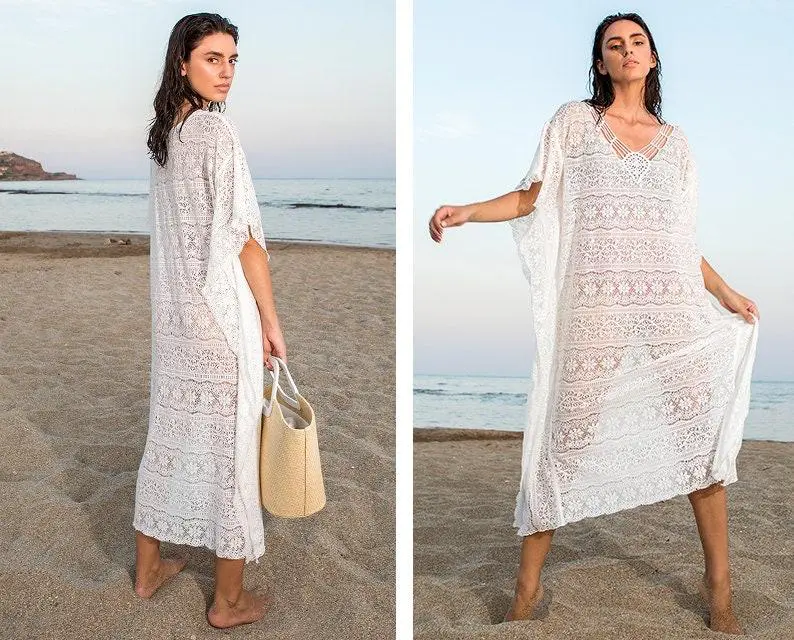
Start with the Garment, Not the Lace Pattern
Resortwear includes garments with different functional requirements. A loose beach cover-up, a lined day dress and a flowing maxi skirt may share a similar visual style, but they need different fabric properties.
Before sourcing lace, define three points:
-
Intended coverage: Is the garment designed to be sheer, partially lined or fully lined?
-
Desired silhouette: Should the fabric fall softly, hold a defined shape or create volume?
-
Wearing conditions: Will the garment be worn over swimwear, directly against the skin or with a separate lining?
These decisions help narrow the fabric selection before sampling.
For example, an openwork lace may be ideal for a beach cover-up because transparency is part of the design. The same construction may require a separate lining for a day dress intended for everyday wear.
The goal is not to find one lace suitable for every resortwear garment. It is to match the material to its intended function.
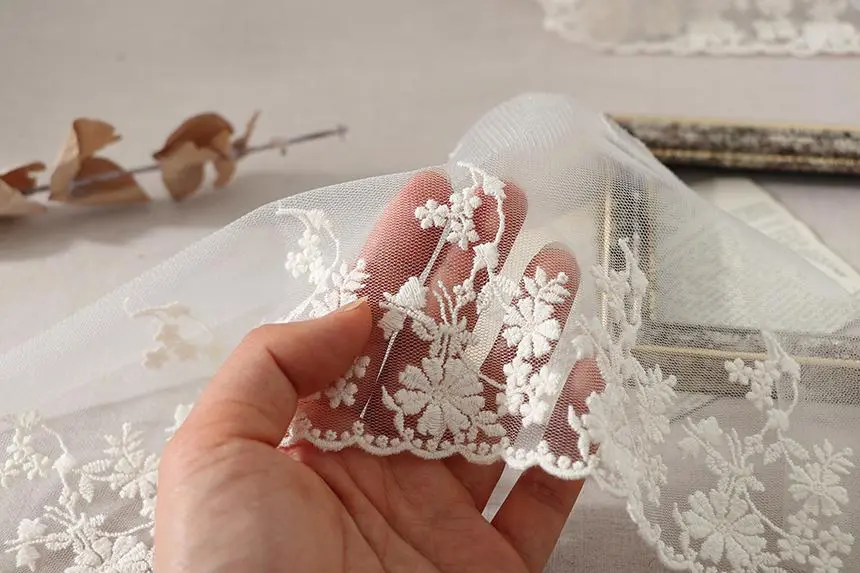
Understanding Lace Fabric Weight for Resortwear
Fabric weight is an important specification when sourcing lightweight lace fabric.
It is commonly expressed in grams per square meter (GSM), although some suppliers also provide weight in grams per linear meter.
These measurements are not interchangeable without knowing the fabric width.
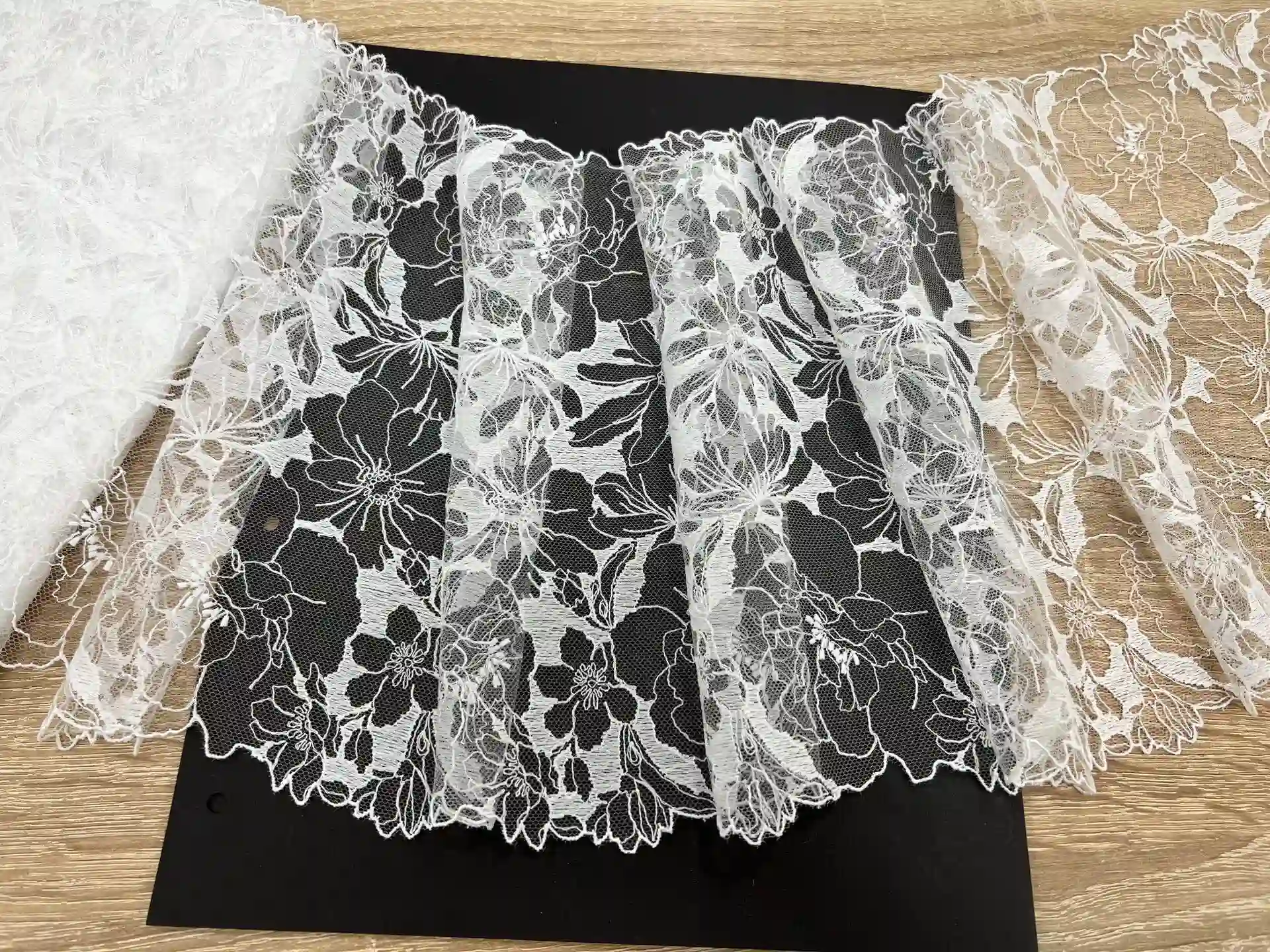
Why GSM Matters
GSM describes the mass of fabric per unit area. It helps buyers compare samples and establish measurable production specifications.
However, GSM alone does not determine whether a lace will feel light, soft or comfortable.
Two lace fabrics with similar weights can behave differently because of:
-
Base fabric construction
-
Yarn composition
-
Embroidery density
-
Openwork percentage
-
Finishing treatment
-
Surface texture
A relatively low-GSM lace with dense decorative areas may feel less flexible than a more evenly constructed fabric of similar weight.
Practical Weight Selection
For resortwear, weight should be evaluated together with garment length and silhouette.
| Fabric characteristic | Potential application | What to check |
|---|---|---|
| Very light, open construction | Beach cover-ups and sheer overlays | Stability, snagging and transparency |
| Lightweight, soft construction | Loose dresses and blouses | Drape, comfort and seam performance |
| Medium-weight lace | Skirts and more defined dresses | Structure, lining compatibility and bulk |
| Dense or heavily textured lace | Decorative panels and accents | Thickness, stiffness and garment balance |
These are qualitative selection categories, not universal GSM ranges. Actual suitability should be confirmed using the supplier's measured fabric specifications and physical samples.
For commercial sourcing, request the finished fabric weight, usable width and construction details rather than relying only on descriptions such as "ultra-light" or "soft lace."
Opacity: How Much Coverage Does the Garment Need?
Opacity is one of the most important considerations when choosing lace fabric for resortwear.
Unlike conventional woven fabrics, lace often contains intentional open spaces that allow light and the underlying garment to remain visible.
Its perceived coverage depends on the pattern density, base material, fabric color and what is worn underneath.

Three Practical Coverage Levels
High transparency
Open lace constructions allow significant visibility through the fabric.
They are often suitable for beach cover-ups, decorative overlays and garments intended to be worn over swimwear.
Partial transparency
Lace with a denser motif or less open ground provides greater visual coverage while retaining some transparency.
It may work for layered dresses, blouses or skirts with selective lining.
Greater visual coverage
Denser lace patterns may conceal more of the underlying material, but should not automatically be treated as opaque.
Coverage still needs to be evaluated on the body or over the intended lining.
How to Test Opacity During Sampling
A simple visual assessment can reveal potential problems before garment production.
Place the lace over contrasting light and dark backgrounds, then evaluate it under consistent lighting.
Next, test it over the proposed lining material.
For garments intended to be worn without a full lining, assess coverage on a fitting sample under realistic lighting conditions.
This is particularly important for dresses and skirts, where coverage can change with movement, stretching and garment construction.
Drape: Why Lightweight Lace Does Not Always Flow Well
Drape describes how fabric hangs and forms folds under its own weight.
For resortwear, it influences whether a garment appears relaxed, fluid, structured or bulky.
A flowing maxi dress generally requires different drape behavior from a straight-cut beach cover-up.
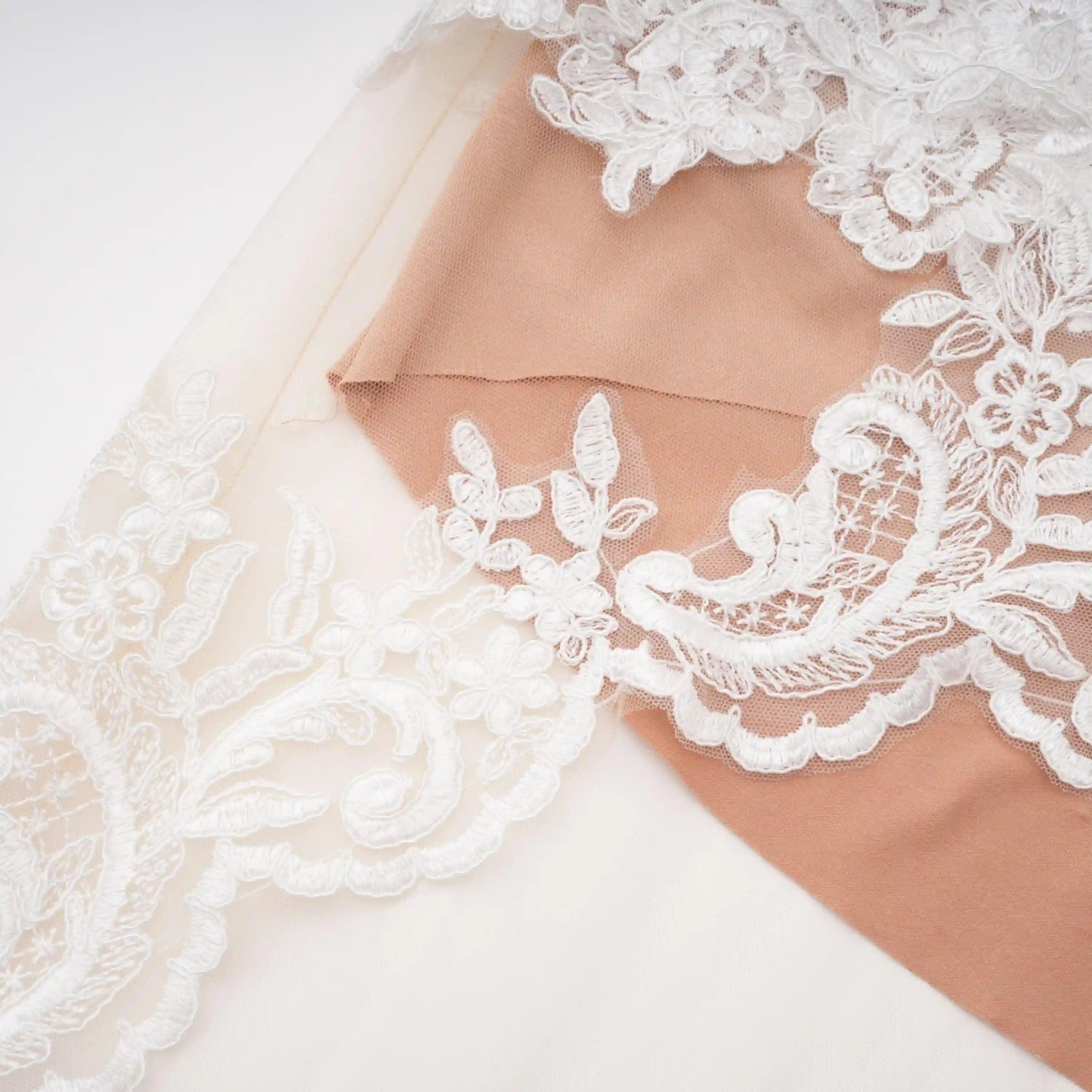
Factors That Influence Lace Drape
Base material: Fiber composition and yarn structure affect flexibility and surface feel.
Pattern density: Concentrated embroidery or decorative areas can create localized stiffness.
Finishing: Some finishing processes change the softness and handling characteristics of the fabric.
Fabric weight: Weight contributes to how the material hangs, but it does not independently determine drape.
Lining: The lining may change the movement and overall weight of the finished garment.
A Useful Sampling Method
Rather than evaluating only a small swatch, drape the fabric over a dress form or produce a simple garment panel.
Observe how it behaves when hanging vertically and when moving.
For skirts, test whether the fabric falls naturally around the body or creates unwanted stiffness near the hips and hem.
For dresses, check whether the lace follows the intended silhouette without pulling or creating excessive volume.
The most reliable decision comes from evaluating the lace in a garment-like construction.
Choosing the Right Lining for Lace Resortwear
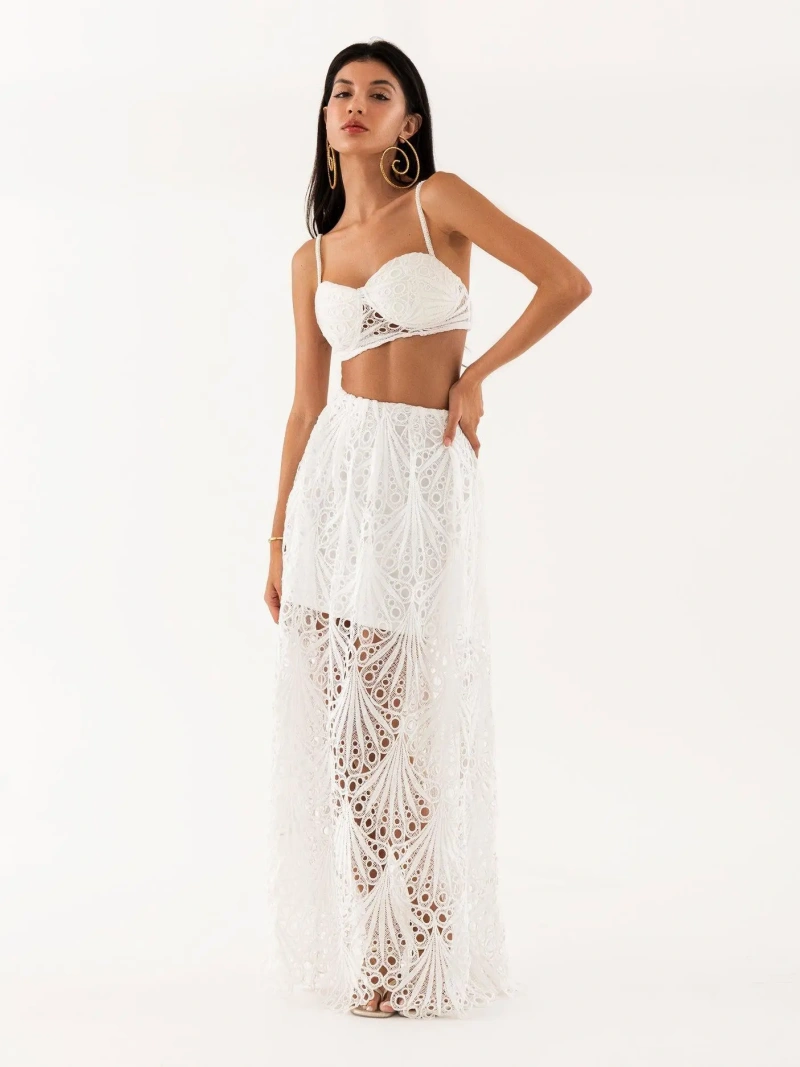
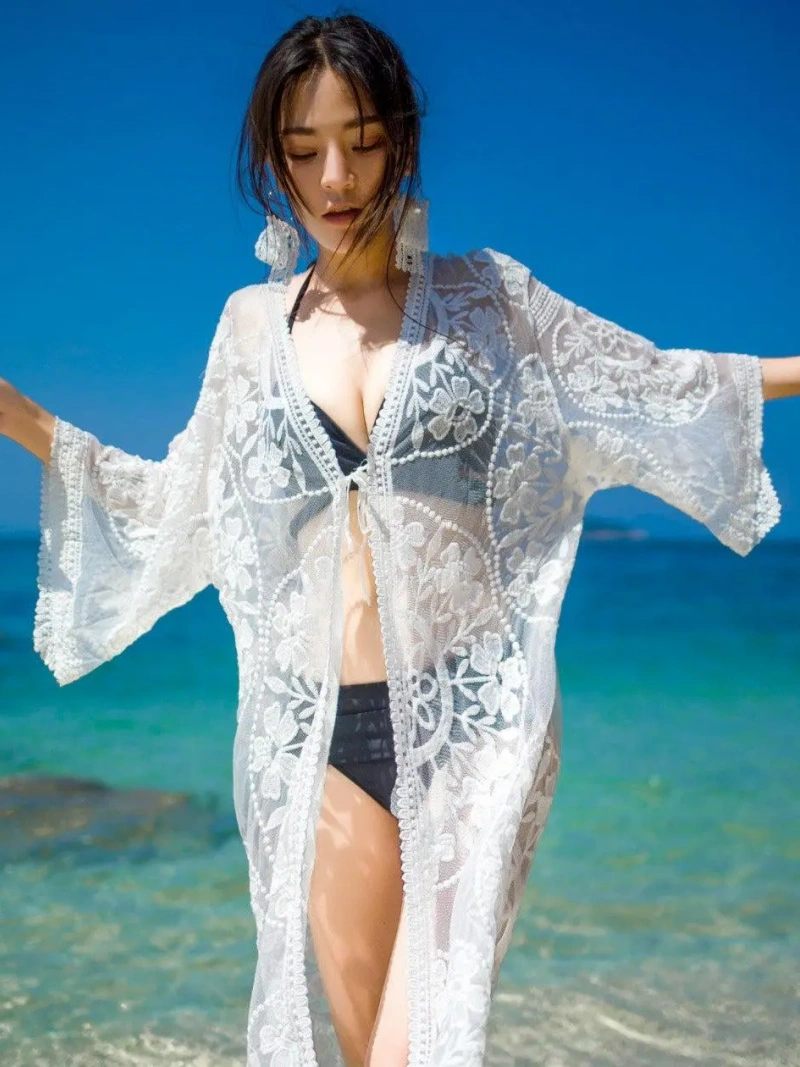
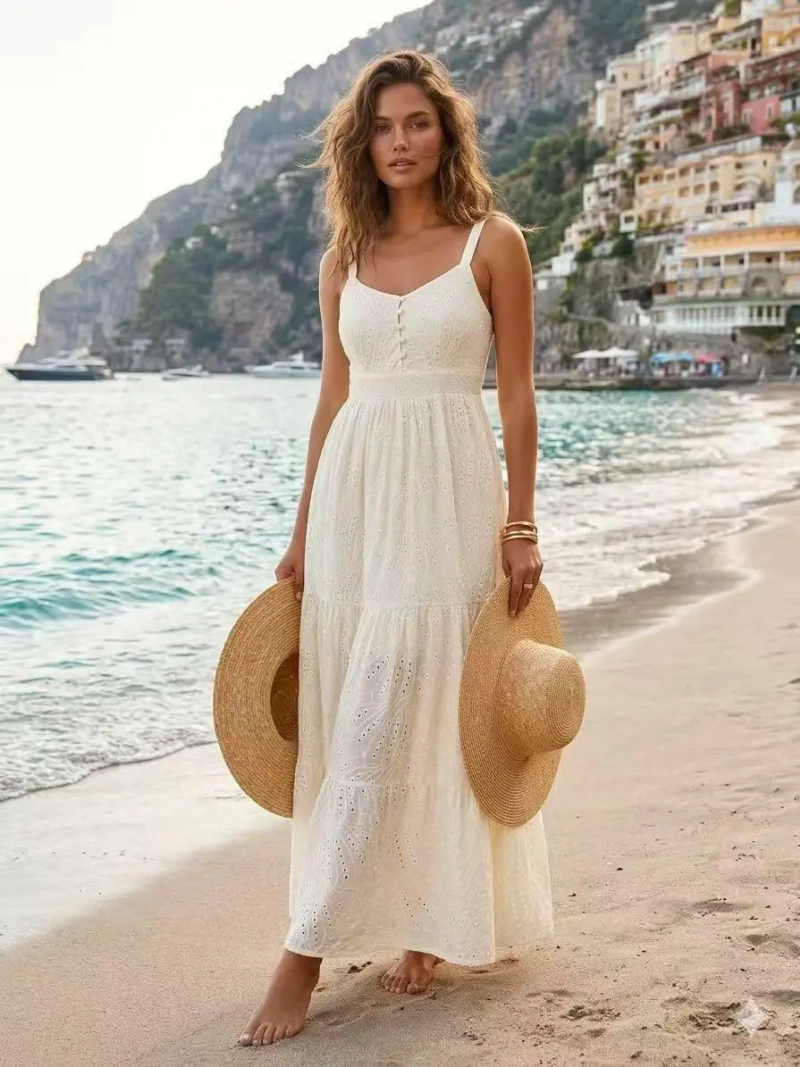
Lining can completely change the appearance and performance of lace.
A transparent lace may become suitable for a day dress when paired with an appropriate lining. Conversely, a lining that is too heavy can reduce the airy appearance that makes lace attractive for resortwear.
Common Lining Approaches
| Lining option | Main advantage | Suitable garments |
|---|---|---|
| No lining | Preserves transparency and reduces layers | Beach cover-ups |
| Partial lining | Adds coverage in selected areas | Resort dresses, skirts |
| Full lightweight lining | Provides more consistent coverage | Day dresses, maxi skirts |
| Separate slip | Offers styling flexibility | Sheer lace dresses |
| Contrast lining | Makes lace patterns more visible | Statement resortwear |
How to Select a Lining Material
The lining should be compatible with the lace in terms of weight, drape, stretch, shrinkage and care requirements.
A soft lining may work well with a fluid lace, while a more structured lining could change the intended silhouette.
For stretch lace, the lining must accommodate the garment's required movement.
Buyers should also assess how the lining behaves after washing or other intended care procedures.
Avoid Overlining Lightweight Lace
More lining does not necessarily mean better garment quality.
For a lightweight resort dress, a full lining may increase warmth and weight unnecessarily.
A partial lining or separate slip may provide sufficient coverage while preserving the lace's original appearance.
The appropriate choice depends on the design and intended use.
Resortwear Lace Selection Table: Dresses, Cover-Ups and Skirts
The following table can be used as an initial material selection guide when preparing a resortwear collection.
| Garment | Recommended lace characteristics | Opacity target | Drape requirement | Lining recommendation | Main sourcing concern |
|---|---|---|---|---|---|
| Loose resort dress | Lightweight, soft lace | Partial to greater coverage | Fluid | Partial or lightweight full lining | Comfort and silhouette |
| Maxi resort dress | Soft lace with stable construction | Design-dependent | Flowing | Lightweight lining or separate slip | Hem weight and movement |
| Beach cover-up | Open, lightweight lace | High transparency | Relaxed | Usually unlined | Snag resistance and seam stability |
| Long-sleeve cover-up | Soft, flexible openwork lace | High transparency | Loose | Usually unlined | Sleeve comfort and edge finishing |
| Resort maxi skirt | Lightweight to medium-weight lace | Partial coverage | Fluid with controlled volume | Partial or full lining | Waistband bulk and hem balance |
| Straight resort skirt | Stable lace with controlled flexibility | Partial to greater coverage | Moderately structured | Lining as required | Pattern alignment and seam appearance |
Best Lace for Resort Dresses
For dresses, prioritize comfort, drape and the relationship between lace and lining.
A soft lace that moves naturally with the garment is generally more useful than one selected solely for its decorative density.
Test the complete garment length because fabric weight and movement become more noticeable in longer silhouettes.
Best Lace for Beach Cover-Ups
For beach cover-ups, transparency may be a desired feature.
The key requirements are sufficient flexibility, comfortable surface texture and reliable construction around seams and openings.
Avoid assuming that a very delicate lace is automatically suitable for repeated wear.
Best Lace for Resort Skirts
For skirts, assess how the fabric behaves around the waist, hips and hem.
Dense decorative sections can create unwanted bulk or affect how the skirt falls.
The lining should support the intended coverage without restricting movement.

From Fabric Sample to Bulk Production: What Buyers Should Check
A lace sample may look suitable on a showroom table but behave differently during cutting, sewing and garment finishing.
For brands developing resortwear at commercial scale, the sample approval process should include more than appearance.
Essential Fabric Specifications
Request the following information from your supplier:
| Specification | Why it matters |
|---|---|
| Fiber composition | Helps assess care, feel and material compatibility |
| Fabric weight | Establishes a measurable production reference |
| Usable width | Affects cutting efficiency and fabric consumption |
| Pattern repeat | Influences placement and cutting layout |
| Stretch and recovery | Important for fit and movement |
| Dimensional stability | Helps evaluate changes after care |
| Color and finishing | Supports consistency between sample and bulk |
| Fabric defects and tolerance | Establishes inspection expectations |
Test the Lace and Lining Together
One common development mistake is approving the lace and lining separately without testing them as a combined garment.
Even if both materials perform well individually, they may respond differently to washing, movement or sewing.
For bulk production, approve a representative garment prototype using the intended lace, lining, thread and construction methods.
Check Production Repeatability
Buyers should confirm that the approved sample can be reproduced consistently.
Important considerations include fabric width, pattern repeat, finishing consistency, shade variation and acceptable inspection criteria.
The approved sample should be retained as a reference for bulk production and quality control.
Working with MJ Lace on Resortwear Fabric Development
For fashion brands sourcing lace fabric for resortwear, early communication about garment construction can help reduce unnecessary sampling revisions.
At MJ Lace, buyers can discuss lace selection and custom development based on the intended garment, material requirements and production specifications.
What to Include in a Resortwear Fabric Inquiry
A useful sourcing brief should include:
-
Garment type and reference images
-
Intended transparency or coverage
-
Preferred fabric composition
-
Target fabric weight, if established
-
Required usable width
-
Lining requirements
-
Estimated order quantity
-
Sampling and delivery schedule
If the target GSM is not yet known, a reference garment or physical sample can help communicate the desired fabric behavior.
The manufacturer can then assess available options and whether custom development is required.
Common Questions About Resortwear Lace
Is lightweight lace always suitable for resortwear?
No. Lightweight lace may be suitable for resortwear, but its softness, transparency, stability and drape must also match the garment design.
Should a lace beach cover-up have a lining?
Not necessarily. Many cover-ups are intentionally transparent and designed to be worn over swimwear. Lining depends on the intended styling and coverage.
What is more important for a lace maxi dress: GSM or drape?
Both matter, but they describe different properties. GSM measures fabric mass per unit area, while drape describes how the fabric hangs. The best choice depends on the complete garment construction.
Can a sheer lace be used for a resort skirt?
Yes. Sheer lace can be used for resort skirts when the design includes appropriate coverage, such as partial lining, full lining or a separate underlayer.
Conclusion
Choosing lace for 2027 resortwear collections requires a practical understanding of how the fabric will perform in the finished garment.
Weight helps establish measurable specifications. Opacity determines coverage and layering requirements. Drape influences silhouette and movement. Lining connects these properties to the garment's intended function.
For dresses, cover-ups and skirts, the most reliable sourcing decisions come from evaluating physical samples and garment prototypes rather than selecting lace by appearance alone.
By confirming material specifications, testing fabric combinations and establishing clear bulk production requirements, fashion brands can develop resortwear collections that balance design intent with manufacturing consistency.