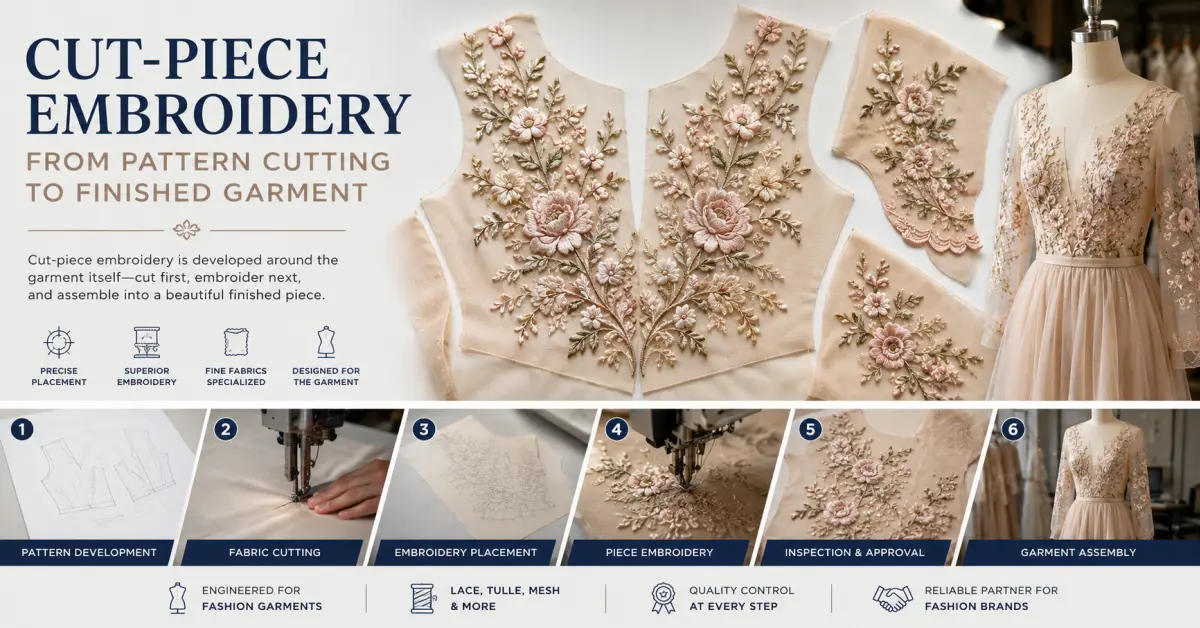


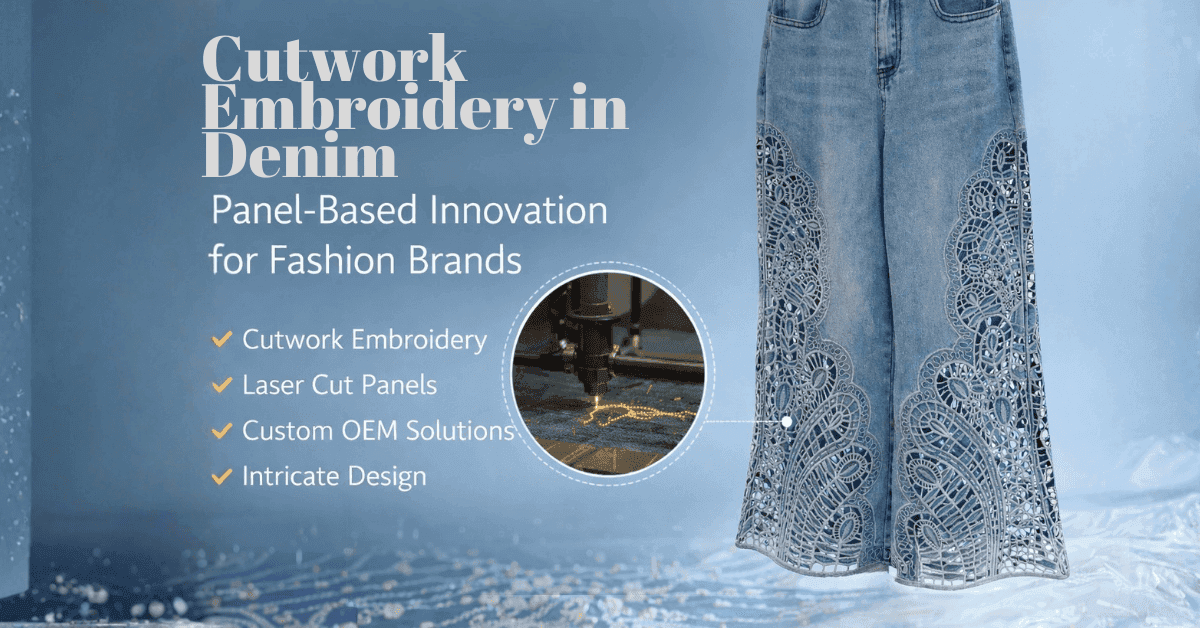
As denim continues to evolve beyond its utilitarian roots, designers are increasingly turning to advanced surface techniques to elevate this classic fabric. Among these innovations, cutwork embroidery—also known as panel-based or appliqué embroidery—has become one of the most powerful design tools in contemporary denim fashion.
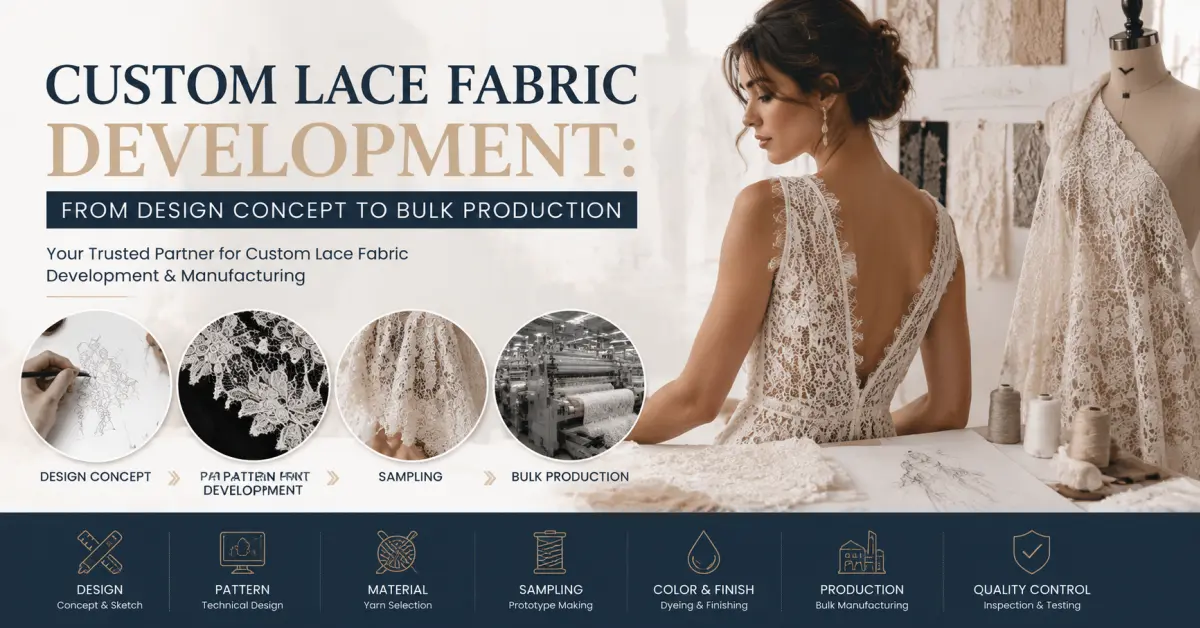
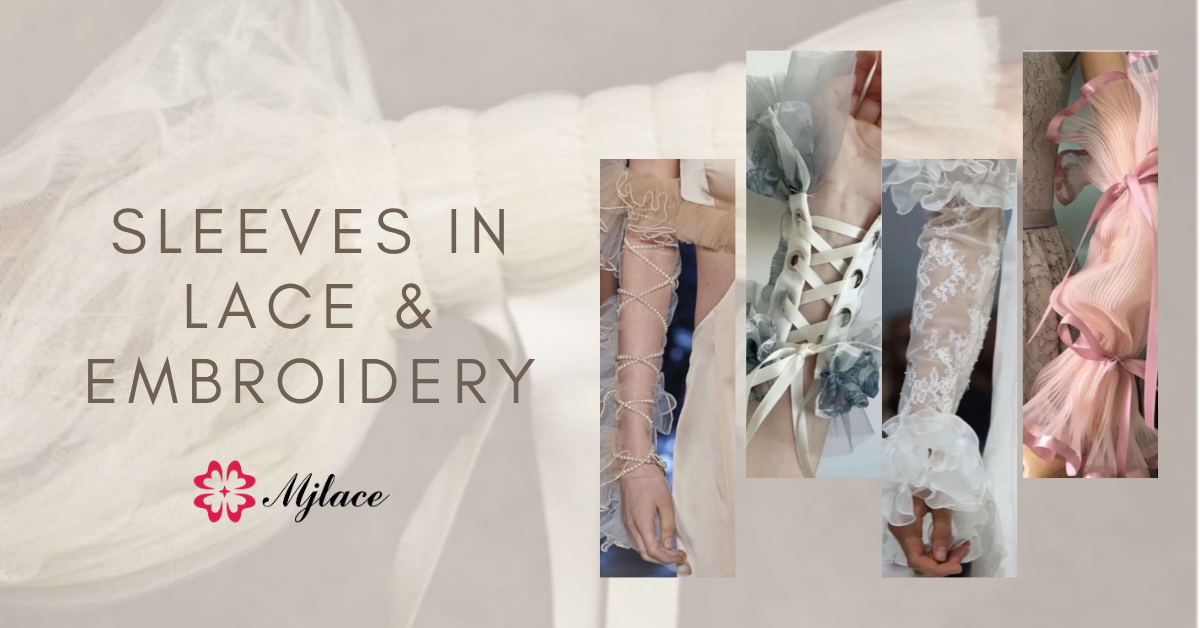
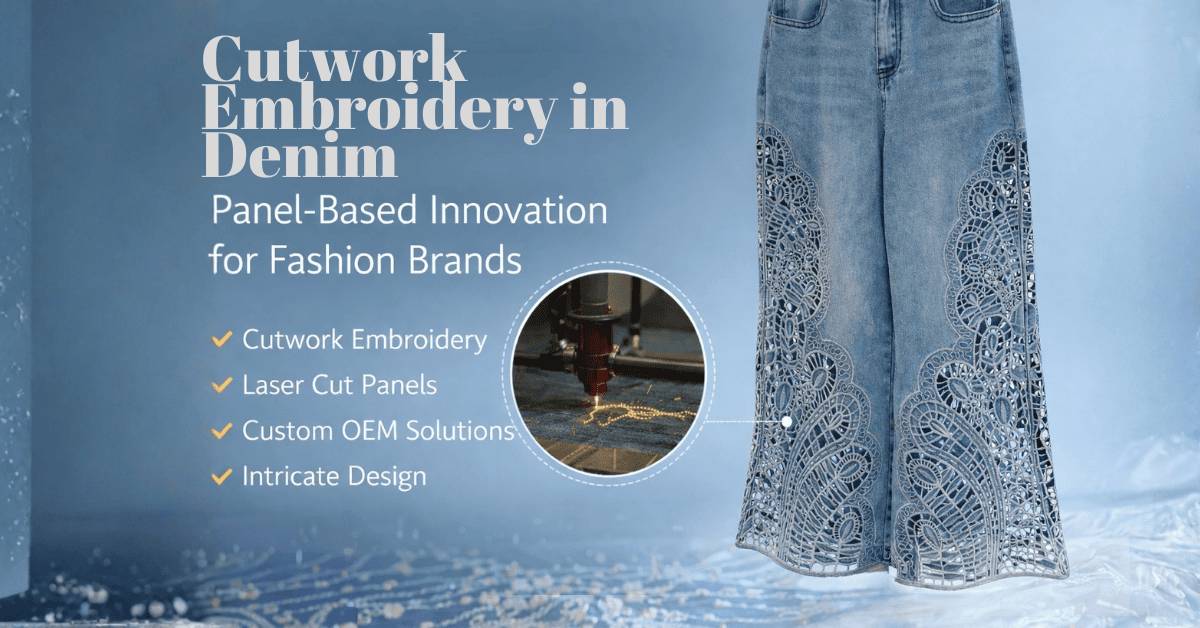
At MJlace (Meijara Textile), we have seen a growing demand from global brands for denim garments that combine precision cutting, embroidery craftsmanship, and lace-inspired aesthetics. A perfect example of this trend is our Laser Cut Embroidered Denim Pants with Lace Panel Inserts, where traditional denim meets refined cutwork embroidery technology.
This article explores what cutwork embroidery truly is, why it matters, how it is engineered, and how MJlace supports brands through a complete custom development process.
What Is Cutwork Embroidery? Understanding the Panel-Based Technique
Cutwork embroidery is not simply decorative stitching—it is a structural design technique.
Unlike surface embroidery, cutwork embroidery involves:
-
Strategic removal of fabric areas
-
Reinforcement of cut edges through embroidery stitches
-
Insertion or exposure of decorative patterns, often resembling lace
In denim applications, this process is commonly executed through embroidered panels or fabric cut-outs, which are later integrated into garment construction.
Why It’s Called “Panel-Based” Embroidery
In many denim designs, cutwork is applied as:
-
Pre-embroidered fabric panels
-
Laser-cut embroidery sections
-
Appliqué-style lace inserts
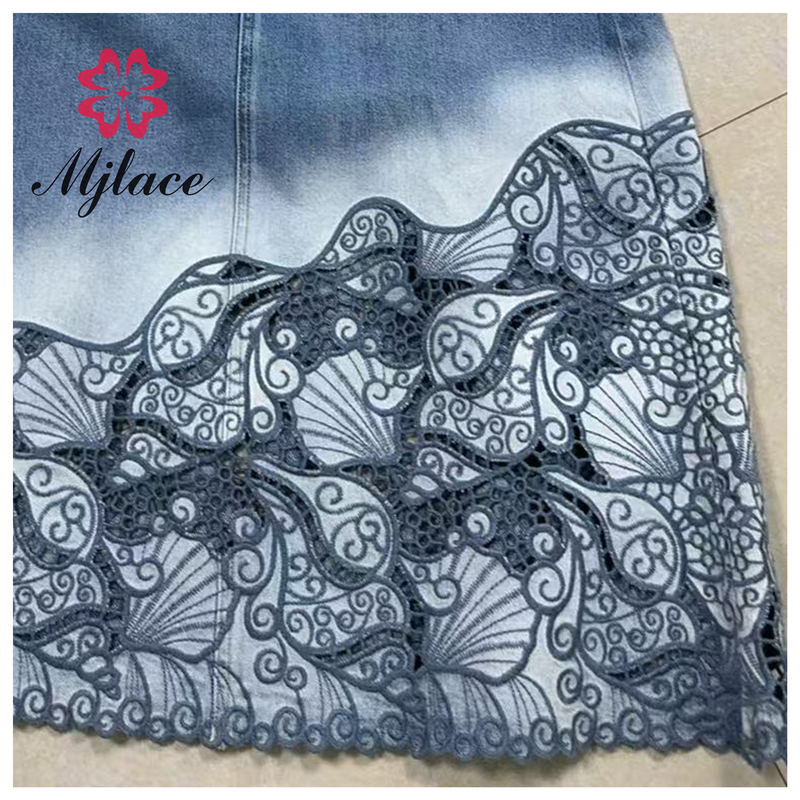
These panels are then sewn into specific garment areas such as hems, side seams, or leg openings—creating a balanced combination of structure and transparency.
This is why cutwork embroidery is especially popular in:
-
Fashion denim pants
-
Skirts and dresses
-
Statement jeans and runway collections
Why Cutwork Embroidery Is Challenging on Denim
Denim is significantly thicker and less flexible than traditional lace bases, which makes cutwork embroidery a technically demanding process.
Key challenges include:
Fabric Strength vs. Cut Precision
Denim fibers must remain stable after cutting. Poorly executed cutwork can lead to:
-
Fraying
-
Deformation
-
Reduced garment durability
Stitch Density Control
Embroidery stitches must be:
-
Dense enough to reinforce edges
-
Light enough to maintain flexibility
Panel Alignment
Cutwork panels must align perfectly with garment patterns to ensure:
-
Symmetry
-
Fit consistency
-
Visual balance
This is why cutwork embroidery in denim requires advanced equipment, experienced technicians, and strict quality control—all of which are core strengths of MJlace.
The Role of Laser Cutting in Modern Cutwork Embroidery
Traditional cutwork relied on manual cutting, which limited design complexity and consistency. Today, laser cutting technology has transformed this process.
Benefits of Laser Cut Embroidery Panels
-
High-precision cutting with clean edges
-
No fraying or distortion on denim surfaces
-
Repeatable accuracy for bulk production
-
Greater design freedom for intricate motifs
In MJlace’s production workflow, laser cutting is combined with embroidery reinforcement to ensure that every cut edge remains stable, smooth, and wearable—even after repeated washing.
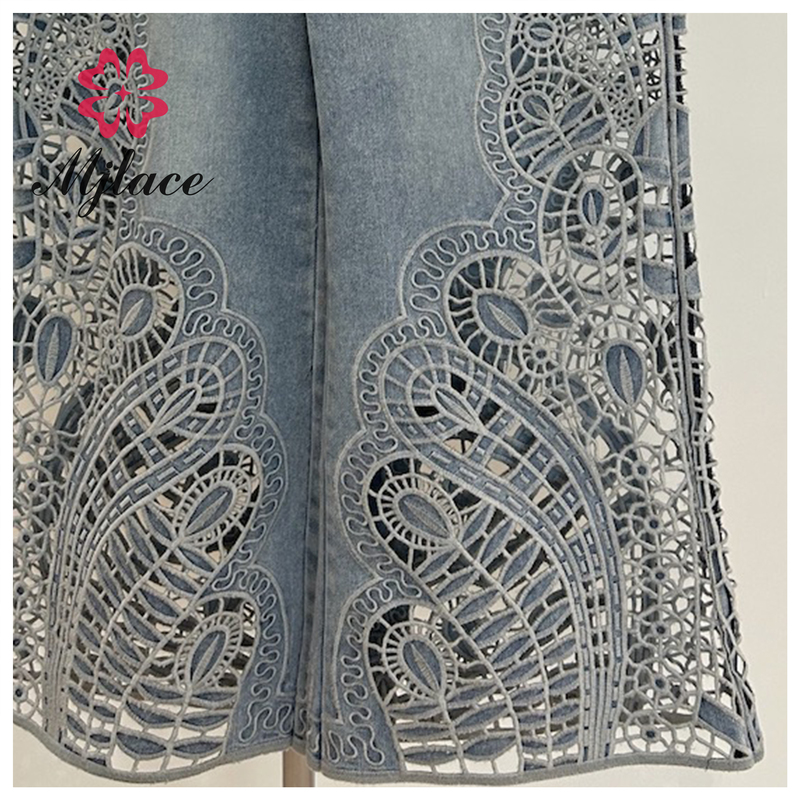
Case Focus: Laser Cut Embroidered Denim Pants with Lace Panel Inserts
This product showcases how cutwork embroidery can redefine denim aesthetics without sacrificing functionality.
Key Design Highlights
-
Laser-cut floral-inspired embroidery panels
-
Lace-like openwork effects without fragile lace
-
Strategically placed cutwork along the pant legs
-
Balanced contrast between solid denim and transparency
Rather than being decorative only, the cutwork panels become a structural design element, enhancing silhouette, movement, and breathability.
How MJlace Develops Cutwork Embroidery for Denim Brands
At MJlace, cutwork embroidery is treated as a custom-engineered solution, not a stock decoration.
Step 1: Design Consultation
We work closely with fashion brands to define:
-
Desired cutwork style (floral, geometric, abstract)
-
Panel placement on garments
-
Target market positioning
-
Budget and production volume
Step 2: Panel Pattern Development
Using professional embroidery CAD systems, we:
-
Digitize cutwork designs
-
Optimize stitch density for denim strength
-
Simulate cutting paths for laser precision
Step 3: Sampling & Testing
Before bulk production:
-
Cutwork panels are embroidered and laser cut
-
Denim stability tests are conducted
-
Edge durability and flexibility are evaluated
This step ensures the panel will perform as well as it looks.
Step 4: OEM Customization & Production
MJlace supports:
-
Custom sizes and panel shapes
-
Color matching and thread selection
-
Bulk production with consistent quality
-
Flexible MOQ options for emerging brands
Our experience as a professional lace and embroidery manufacturer since 1997 allows us to bridge fashion creativity with manufacturing feasibility.
Why Brands Choose Cutwork Embroidery for Denim Collections
Cutwork embroidery answers several key fashion demands at once:
-
Visual differentiation in a saturated denim market
-
Premium appearance without heavy embellishment
-
Lightweight feel compared to full lace overlays
-
Strong storytelling value for marketing and branding
For fashion brands targeting mid-to-high-end markets, cutwork embroidery offers a refined way to stand out while maintaining wearability.
Final Thoughts: Cutwork Embroidery as a Signature Denim Technique
Cutwork embroidery is no longer a niche technique—it has become a signature design language in modern denim fashion. When executed correctly, it adds depth, craftsmanship, and contemporary elegance to everyday garments.
Through advanced laser cutting, embroidery expertise, and a proven OEM development process, MJlace helps brands turn cutwork embroidery ideas into scalable, market-ready products.
Whether you’re developing a statement denim collection or refining a premium product line, cutwork embroidery offers endless creative possibilities—when supported by the right manufacturing partner.