
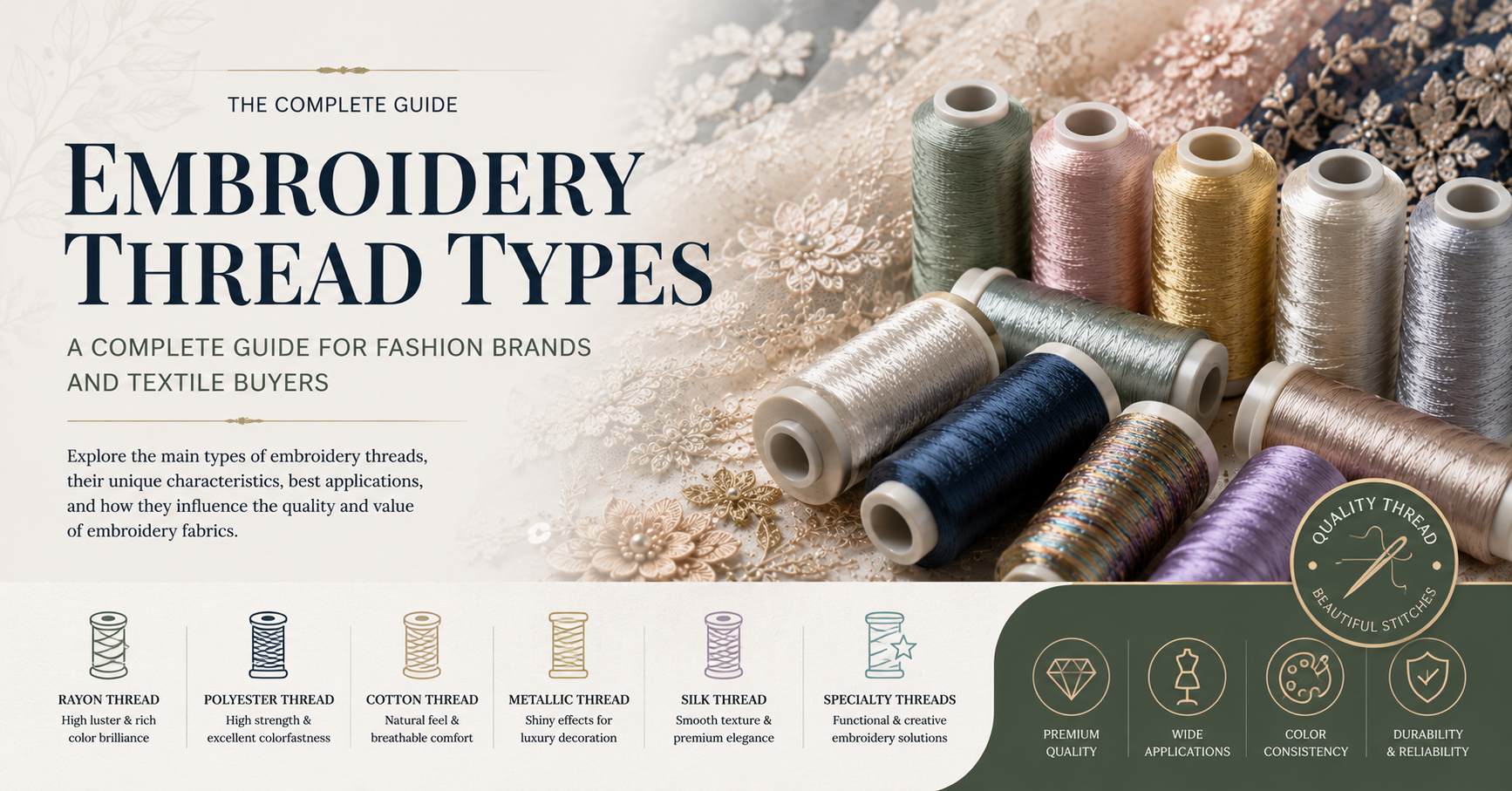

When discussing embroidery fabrics, most people focus on lace patterns, embroidery density, sequins, beads, or fabric construction. However, one of the most critical components behind embroidery quality is often overlooked: the embroidery thread itself.
The type of embroidery thread directly affects:
-
Appearance and texture
-
Durability and wash performance
-
Production efficiency
-
Color consistency
-
Embroidery precision
-
Garment comfort
-
Product cost
For fashion brands, bridal designers, embroidery manufacturers, and textile buyers, understanding embroidery thread categories is essential when developing premium embroidery fabrics.
Modern embroidery production utilizes dozens of specialized thread types, each designed for specific applications, machinery, and decorative effects.
This guide explores the major embroidery thread categories used in today's embroidery industry and explains how each thread influences the final fabric performance.
What Are the Main Types of Embroidery Thread?
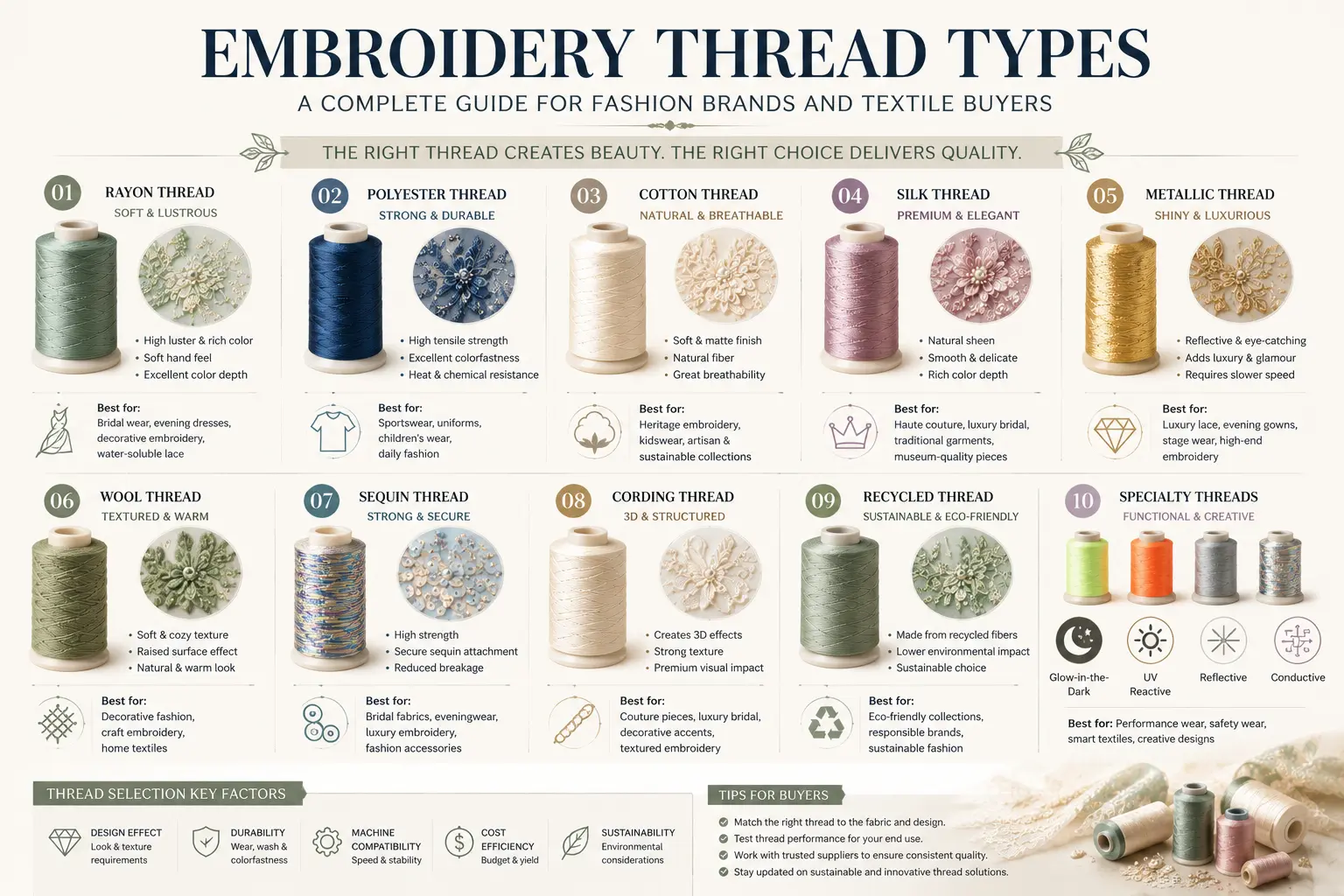
Modern embroidery fabrics typically use the following thread categories:
| Thread Type | Main Application |
|---|---|
| Rayon Thread | Fashion embroidery |
| Polyester Thread | Industrial embroidery |
| Cotton Thread | Natural embroidery |
| Metallic Thread | Luxury decoration |
| Silk Thread | Couture embroidery |
| Wool Thread | Textured embroidery |
| Glow Thread | Specialty effects |
| UV Reactive Thread | Performance apparel |
| Sequin Thread | Decorative embroidery |
| Cording Thread | 3D embroidery |
Among them, polyester and rayon account for more than 80% of global embroidery production.
Why Embroidery Thread Selection Matters
Embroidery thread is not simply a decorative material.
The wrong thread choice can lead to thread breakage, color fading, poor embroidery definition, production delays, and increased defect rates.
The right thread improves machine efficiency, stitch quality, product lifespan, and customer satisfaction.
For large-scale embroidery production, thread selection is often determined during the product development stage.
Rayon Embroidery Thread
What Is Rayon Thread?
Rayon embroidery thread is produced from regenerated cellulose fibers.
It has been one of the most popular embroidery threads in fashion applications for decades.
Key Characteristics
-
High luster
-
Soft hand feel
-
Excellent color depth
-
Smooth embroidery appearance
Rayon reflects light naturally, giving embroidery a luxurious appearance.
Typical Applications
Rayon thread is commonly used in bridal lace, evening dresses, women's fashion, decorative embroidery, and water-soluble lace.
Advantages
Superior Color Brilliance
Rayon absorbs dyes exceptionally well. As a result, colors appear richer, gradients are smoother, and floral embroidery looks more natural.
Luxury Appearance
Many luxury embroidery fabrics use rayon because of its elegant sheen.
Limitations
Rayon generally has lower abrasion resistance compared to polyester. For heavy-duty garments, alternative thread types may be preferred.
Polyester Embroidery Thread
Industry Standard for Commercial Production
Polyester embroidery thread is currently the most widely used embroidery thread worldwide.
Many large embroidery factories rely on polyester because of its stability and efficiency.
Key Characteristics
-
High tensile strength
-
Excellent colorfastness
-
Superior durability
-
Heat resistance
-
Chemical resistance
Production Advantages
Compared with rayon, polyester offers lower thread breakage rate, faster machine speeds, and better production consistency.
Modern high-speed embroidery machines are optimized for polyester threads.
Typical Applications
Polyester embroidery is widely used in sportswear, uniforms, children's clothing, workwear, and fashion embroidery.
Market Share
Industry estimates suggest polyester embroidery thread represents approximately 60–70% of global embroidery thread consumption.
Cotton Embroidery Thread
Traditional Natural Fiber Embroidery
Cotton embroidery thread remains popular in applications where a natural appearance is desired.
Characteristics
-
Matte finish
-
Soft texture
-
Natural fiber composition
-
Excellent breathability
Best Uses
Cotton thread is frequently found in heritage embroidery, artisan textiles, children's garments, and sustainable fashion collections.
Advantages
Cotton provides a handcrafted appearance that synthetic threads often cannot replicate.
Silk Embroidery Thread
The Luxury Standard
Silk thread represents one of the oldest embroidery materials in history.
Although expensive, it remains highly valued in couture embroidery.
Key Characteristics
-
Natural sheen
-
Ultra-smooth texture
-
Exceptional softness
-
Rich color depth
Common Applications
Silk embroidery is primarily used in haute couture, luxury bridalwear, traditional garments, and museum-quality embroidery.
Why Designers Love Silk
Silk creates a level of elegance difficult to achieve with synthetic materials.
Metallic Embroidery Thread
Creating Luxury and Glamour
Metallic embroidery threads are designed to add reflective decorative effects.
Common Types
Gold metallic thread is popular in bridalwear, evening gowns, and luxury lace.
Silver metallic thread is often used in modern fashion collections and contemporary embroidery.
Colored metallic thread is increasingly used in fashion-forward embroidery designs.
Manufacturing Structure
Modern metallic threads typically consist of a polyester core, metallic film wrapping, and protective coating.
Challenges
Metallic threads require slower machine speeds because they are more delicate than polyester.
Wool Embroidery Thread
Textured Surface Effects
Wool embroidery creates unique dimensional textures.
Characteristics
-
Soft appearance
-
Raised surface effect
-
Warm aesthetic
-
Natural fiber appeal
Applications
Used in decorative fashion textiles, craft embroidery, and premium home textiles.
Sequin Embroidery Thread Systems
Modern sequin embroidery requires specialized thread systems.
Why Specialized Threads Are Needed
Sequins add weight and friction during embroidery.
Specialized threads provide higher tensile strength, better stitch security, and reduced breakage.
Typical Applications
-
Eveningwear
-
Luxury embroidery
-
Fashion accessories
Explore our sequins and beads embroidery collection.
Cording and Tape Embroidery Threads
Creating Three-Dimensional Effects
Cord embroidery is increasingly popular in luxury embroidery fabrics.
What Is Cording Thread?
Cording involves attaching decorative cords to fabric surfaces through embroidery stitching.
Advantages
-
Strong texture
-
Dimensional appearance
-
Couture aesthetic
-
Premium visual impact
Growing Popularity
Luxury bridal and couture collections increasingly incorporate cording embroidery. Explore our cord embroidery and heavy work embroidery collections.
Recycled Embroidery Threads
Sustainability and Future Development
As sustainability becomes a priority, recycled embroidery threads are gaining market share.
Materials
Most recycled embroidery threads are produced from recycled polyester, recovered plastic bottles, and industrial textile waste.
Benefits
Lower Environmental Impact
Compared with virgin polyester, recycled threads offer reduced carbon footprint, lower water consumption, and improved sustainability profile.
Market Trend
Industry forecasts suggest sustainable embroidery thread demand could grow by more than 30% annually through 2030. Visit our sustainability section.
Specialty Embroidery Threads
Beyond traditional categories, manufacturers increasingly use specialty threads.
Examples include glow-in-the-dark thread used in children's apparel, fashion accessories, and promotional products; UV-reactive thread that changes appearance under UV light; reflective thread common in sportswear, outdoor apparel, and safety garments; and conductive thread emerging in smart textile applications.
How Modern Embroidery Machines Handle Different Threads
Today's embroidery machines can support multiple thread types within a single design.
Advanced systems from Tajima, Barudan, and ZSK allow automatic color changes, metallic thread integration, sequin attachment, cording embroidery, and mixed-material production.
This flexibility enables highly customized embroidery development.
Future Trends in Embroidery Threads
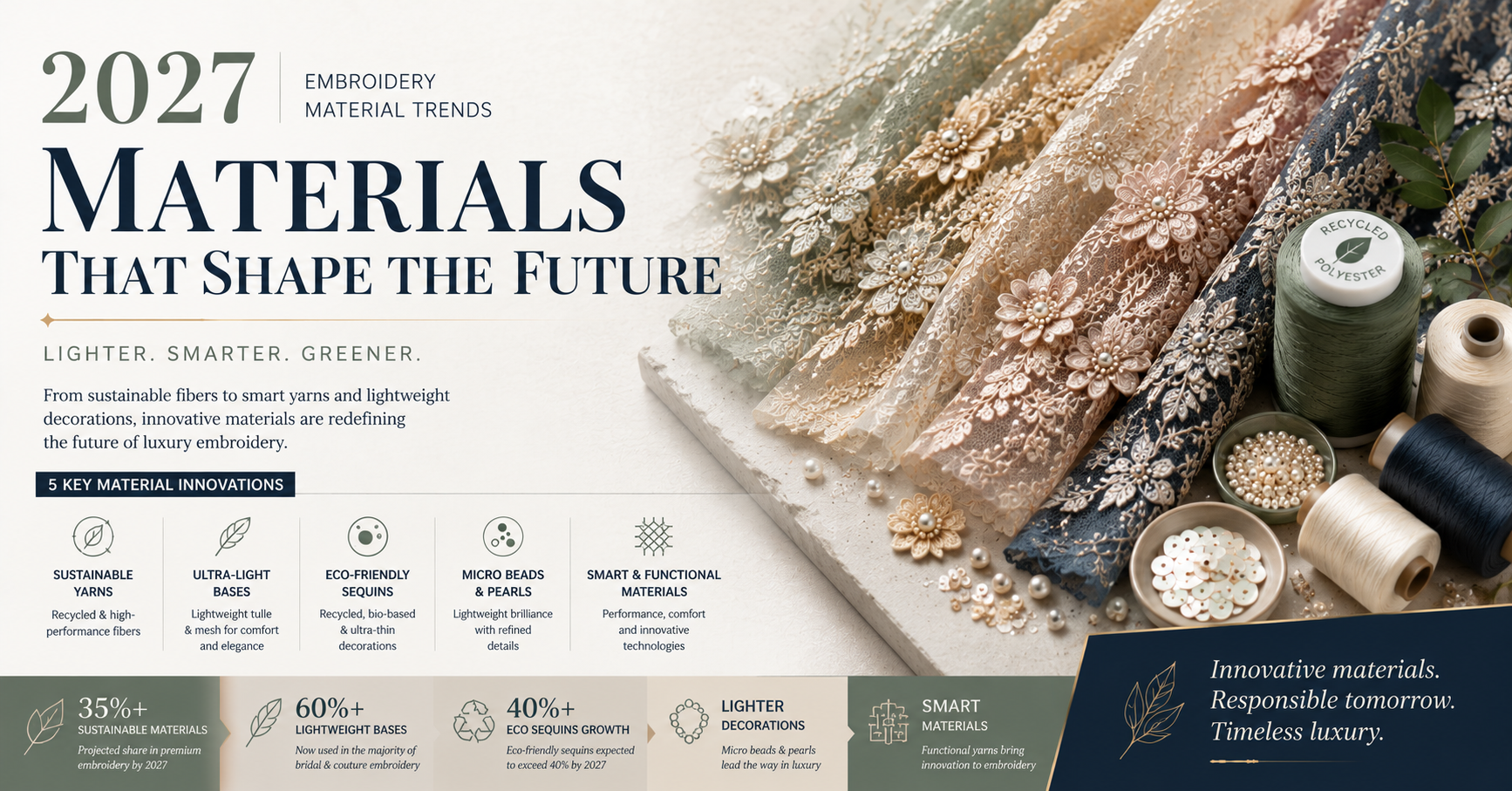
By 2027 and beyond, embroidery thread development is expected to focus on sustainable fibers, smart textiles, lightweight construction, higher machine efficiency, eco-friendly dyeing, and functional performance yarns.
The combination of decorative beauty and technical performance will become increasingly important.
Conclusion
Embroidery thread is the foundation of every embroidery fabric.
Whether producing bridal lace, fashion embroidery, water-soluble lace, or luxury couture textiles, the choice of thread determines not only appearance but also production efficiency, durability, and overall product value.
For fashion brands and textile buyers, understanding the differences between rayon, polyester, cotton, silk, metallic, recycled, and specialty embroidery threads is essential for making informed sourcing decisions.
As embroidery technology continues evolving, thread innovation will remain one of the most important drivers of future embroidery fabric development.
Ready to source quality embroidery threads and fabrics? Visit our homepage to explore our collections or contact us for inquiries. You may also submit an inquiry for custom pricing.