


In today’s global fashion supply chain, sourcing beautiful lace is only half the story. The other half—often underestimated but equally critical—is importing and logistics. For fashion brands, garment manufacturers, and textile buyers, understanding how lace fabrics move from factory to finished collection can make the difference between smooth production and costly delays.
This guide explains the key logistics considerations when importing lace fabrics, from shipping methods and customs documentation to packaging, lead times, and risk management—especially for embroidered lace, water-soluble lace, and custom-developed textiles.
Why Importing Lace Fabrics Requires Special Attention
Unlike standard woven fabrics, lace fabrics present unique logistics challenges:
-
Delicate structures prone to snagging or deformation
-
Complex widths, repeats, and roll lengths
-
Custom-dyed or custom-embroidered specifications
-
Tight seasonal fashion calendars
A well-planned logistics strategy ensures that lace arrives on time, in perfect condition, and fully compliant with import regulations.
Common Shipping Methods for Lace Fabric Imports
Sea Freight (FCL & LCL)
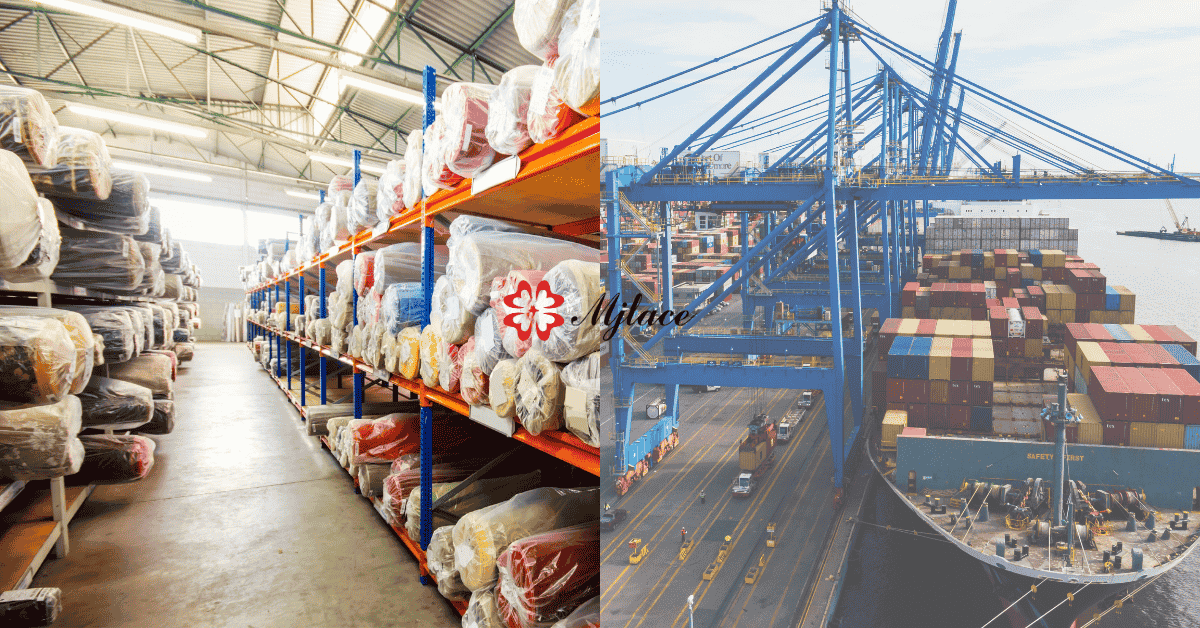
Sea freight remains the most cost-effective option for bulk lace orders.
Best for:
-
Large-volume production orders
-
Stable delivery schedules
-
Cost-sensitive sourcing
Considerations:
-
Longer transit times
-
Moisture protection required
-
Proper palletization and labeling essential
For lace suppliers like mjlace, sea shipments are carefully packed using moisture-resistant materials and reinforced rolls to prevent compression damage.
Air Freight
Air freight is often chosen for urgent fashion timelines.
Best for:
-
Urgent replenishment
-
High-value or lightweight lace styles
Trade-offs:
-
Higher cost
-
Limited volume
Air freight is commonly used during sample approval stages or last-minute design adjustments, especially for embroidered or water-soluble lace.
Courier / Express Shipping
Used primarily for development stages.
Best for:
-
Strike-offs
-
Lab dips
-
Design approvals
This method helps designers make faster decisions without delaying the production schedule.
Key Customs & Documentation for Lace Imports
Accurate paperwork is essential for smooth customs clearance.
Essential Documents Include:
-
Commercial Invoice
-
Packing List
-
Bill of Lading / Air Waybill
-
HS Code declaration
-
Country of Origin
Lace fabrics typically fall under embroidered or knitted textile HS codes, which may differ based on construction method.
Working with an experienced lace supplier helps reduce risks related to misclassification and customs delays.
Packaging Standards for Lace Fabrics
Proper packaging is critical to preserving lace quality during transit.
Common Packaging Methods:
-
Rolled on tubes with protective wrapping
-
Folded with interleaving paper for appliqué panels
-
Vacuum-packed for space optimization (used cautiously)
High-end lace fabrics often require custom packaging solutions, especially for 3D embroidery or cut-piece embroidery panels.
At mjlace, packaging is adapted based on:
-
Motif density
-
Final garment application
Lead Times: What Buyers Should Expect
Typical logistics timelines for lace fabrics:
-
Sampling & approvals: 5–15 days
-
Production: 20–45 days
-
Sea freight: 25–40 days
-
Air freight: 3–7 days
Understanding these timelines helps buyers align lace delivery with cutting, sewing, and launch schedules.
Risk Management in Lace Importing
Common Risks:
-
Color variation due to delayed shipping
-
Customs inspections
-
Seasonal port congestion
Risk Reduction Strategies:
-
Use moisture-proof packaging
-
Schedule buffer time before production
-
Confirm compliance with destination regulations
-
Choose suppliers with logistics experience
Reliable lace suppliers provide pre-shipment inspections and detailed packing documentation to minimize risks.
How mjlace Supports Global Import & Logistics
As an experienced lace manufacturer serving international markets, mjlace offers comprehensive logistics support, including:
-
Export-ready packaging
-
Flexible shipping options
-
Clear documentation support
-
Coordination with freight forwarders
-
On-time delivery planning
By integrating logistics planning early in the development process, mjlace helps brands reduce lead times and avoid last-minute complications.
Final Thoughts
Importing lace fabrics is more than a shipping task—it’s a strategic component of fashion production. By understanding shipping methods, documentation requirements, packaging standards, and lead times, fashion brands can ensure smoother sourcing operations.
With the right logistics partner and a reliable lace supplier, importing lace becomes a predictable, controlled, and scalable process—allowing designers and manufacturers to focus on creativity, quality, and market success.