

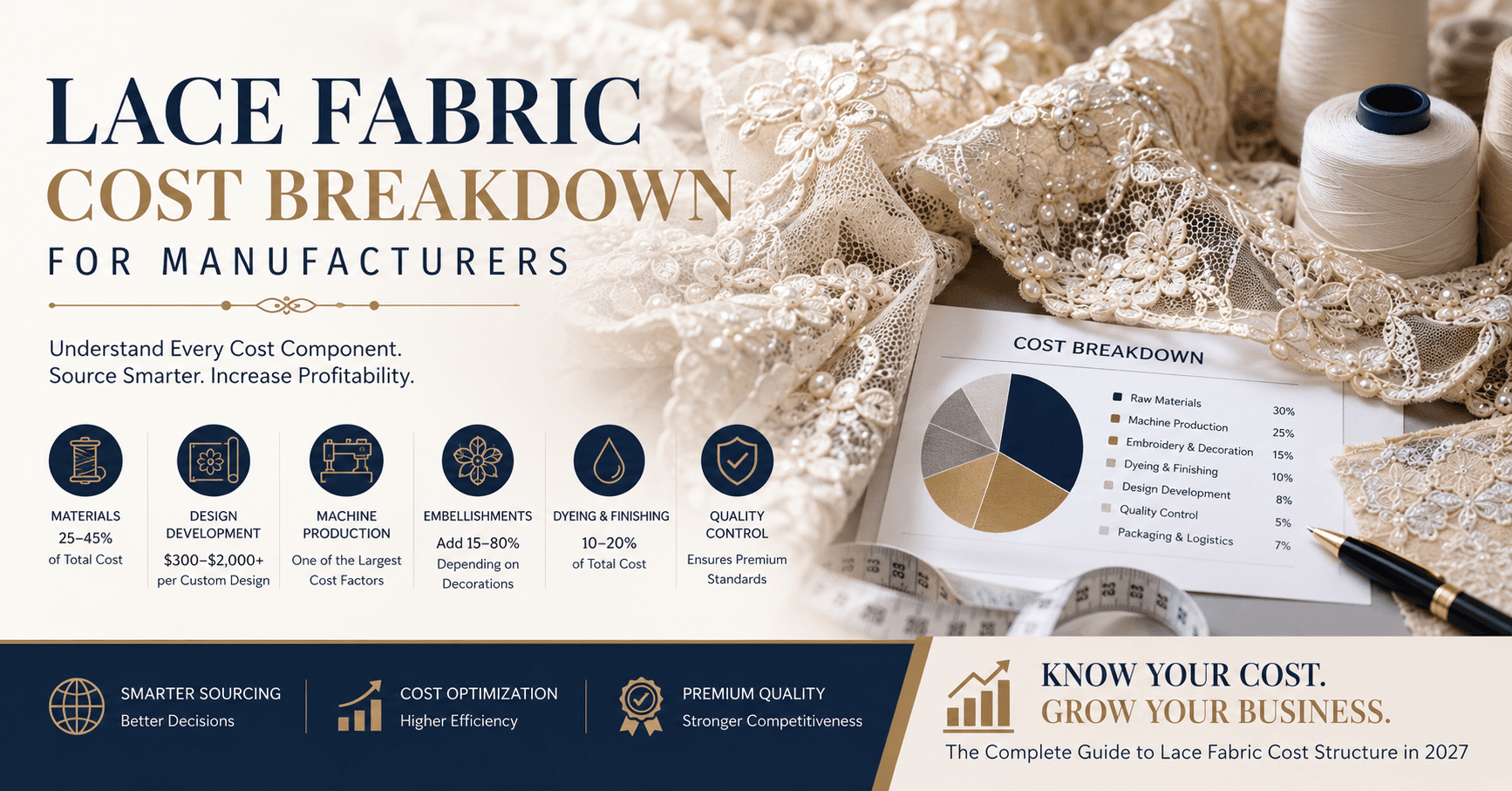
Lace fabric is a cornerstone of high-end apparel, bridalwear, and luxury textiles. For apparel manufacturers, understanding the factors that drive lace fabric cost is essential to maintaining profitability, ensuring consistent quality, and meeting client expectations. With the increasing demand for intricate lace patterns and custom designs, a clear breakdown of costs—from raw materials to production and embellishments—can help manufacturers make informed sourcing and pricing decisions.
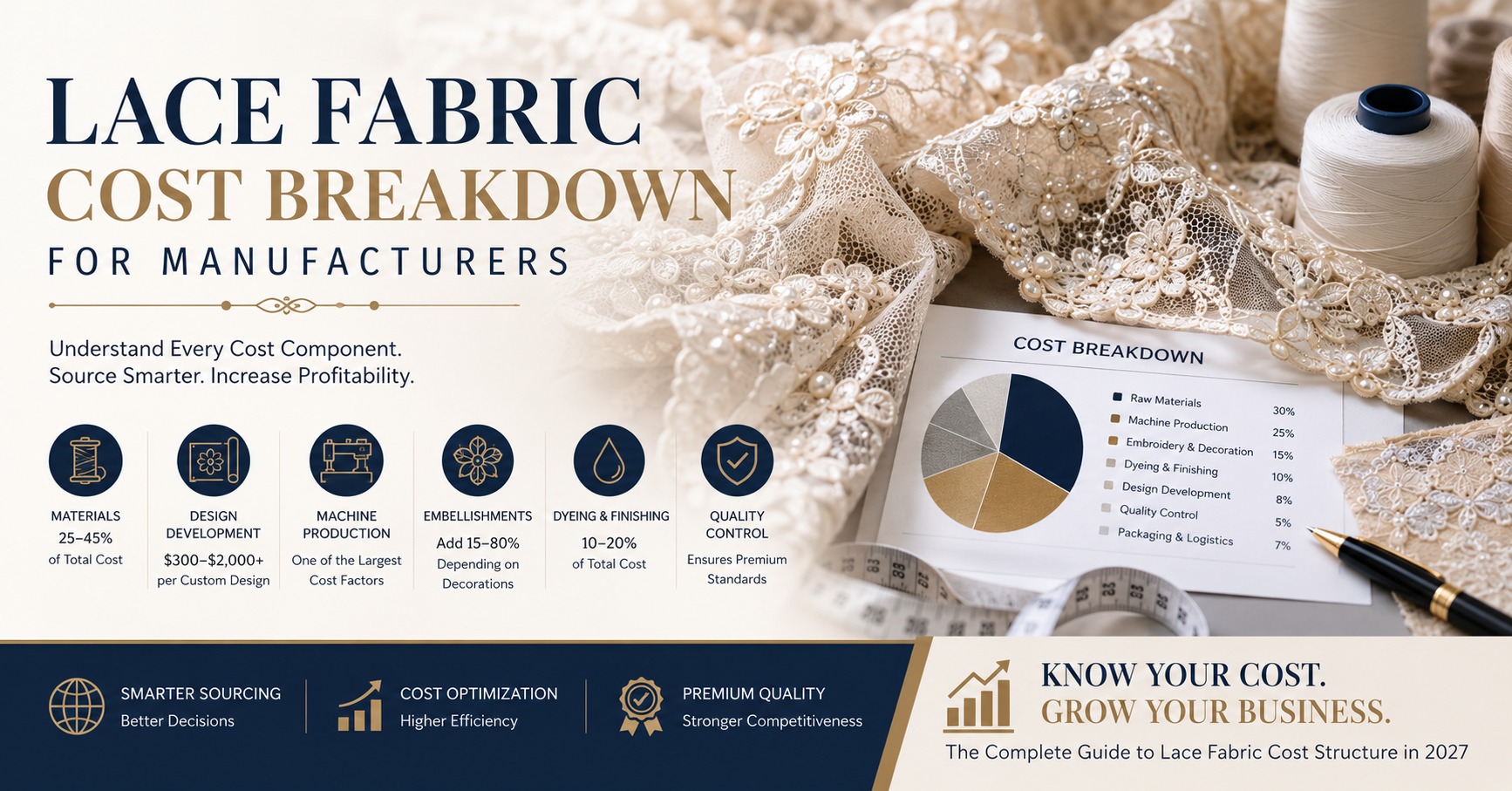
This guide provides a detailed analysis of lace fabric costs, including material selection, production methods, design complexity, width considerations, logistics, and market trends for 2027.
Material Costs: The Foundation of Lace Pricing
Materials are the largest single factor influencing lace fabric cost. Depending on fiber type, quality, and embellishments, material costs can vary significantly.
Common Materials:
| Material | Characteristics | Typical Uses | Cost Factor |
|---|---|---|---|
| Polyester | Durable, low-cost, easy care | Everyday apparel, mass-produced trims | Low |
| Nylon | Smooth, lightweight, flexible | Lingerie, delicate eveningwear | Medium |
| Cotton | Soft, breathable, luxurious | Bridal lace, premium apparel | Medium-High |
| Silk | Soft hand feel, high-end | Couture, luxury bridal | High |
| Mixed/Embellished | Beads, sequins, metallic thread, ribbons | Bridal, couture, statement pieces | Highest |
Case Insight: A 5cm eyelash lace trim in polyester may cost $3–$5 per yard, whereas a 25cm embroidered cotton lace with beads can reach $18–$25 per yard. Explore our cotton lace trim and bridal lace collections.
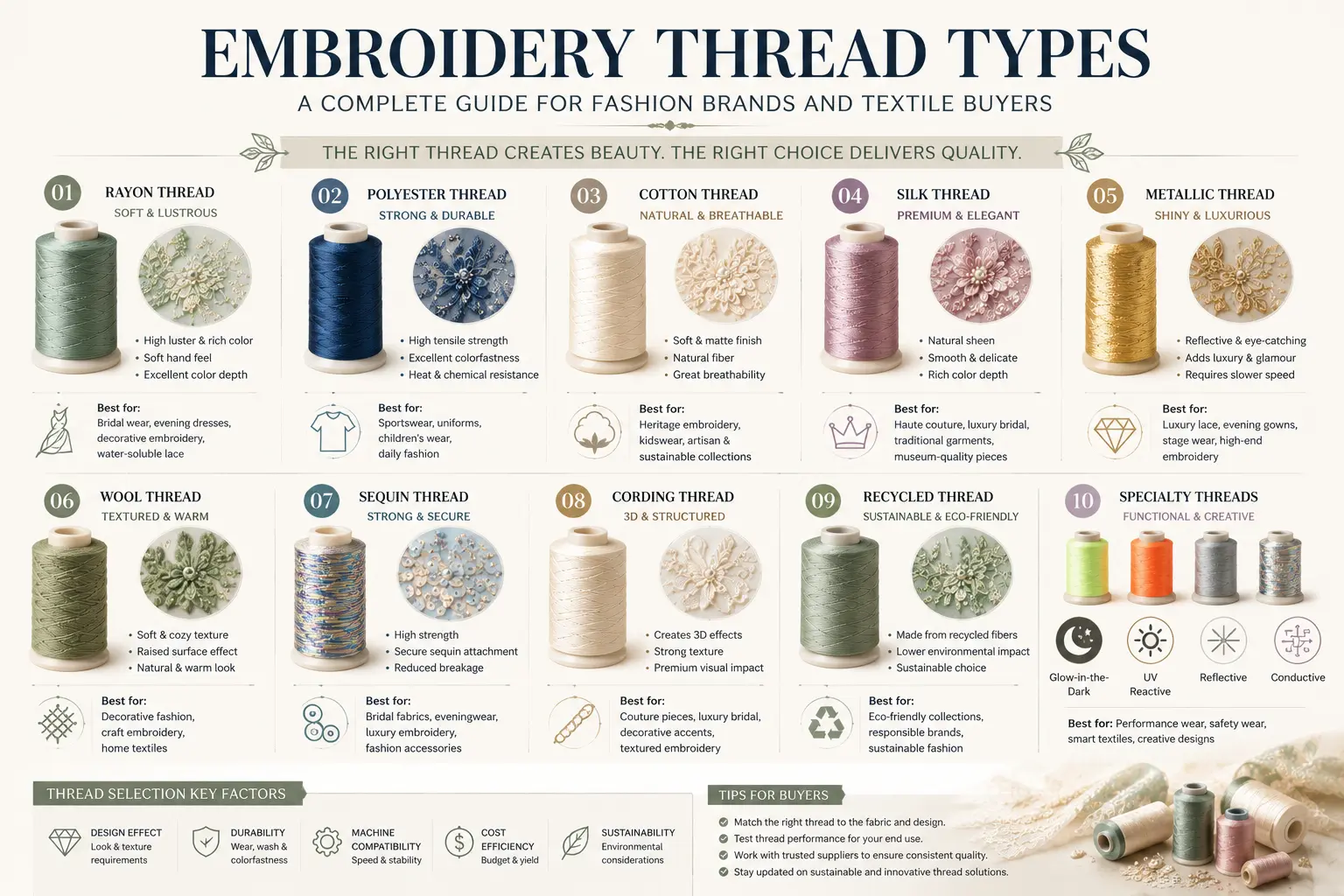
Manufacturing Costs: Machines, Labor, and Techniques
Lace manufacturing is a complex process, and production costs vary according to technology, labor intensity, and the desired level of detail.
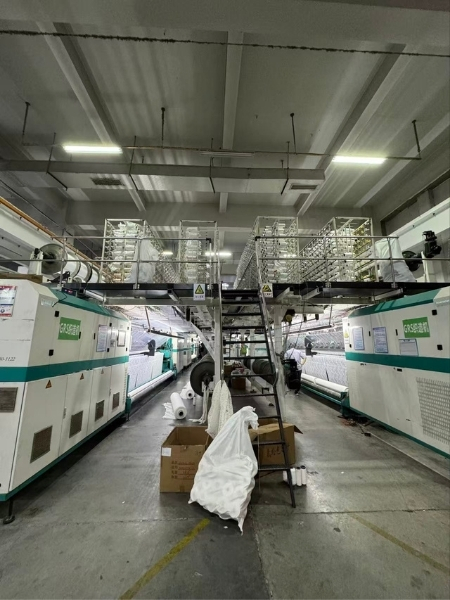
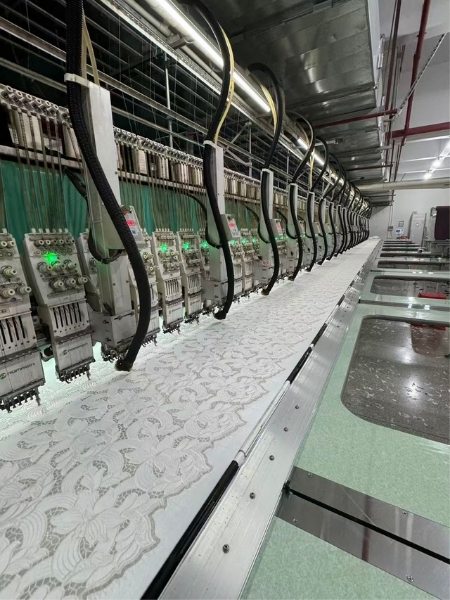
Machine Types and Production Impact
-
Raschel Knitting Machines: High-speed, efficient, suitable for mass production; supports up to 150cm width.
-
Jacquard Machines: Produce intricate, multi-layered designs; slower but higher quality.
-
Embroidery Machines (Multi-Bar): Ideal for sequins, beads, and detailed motifs; adds labor cost and production time.
-
Leavers Machines: Traditional high-end lace production; costly but produces luxury-grade lace for bridal and couture.
Labor and Quality Control
-
Skilled operators are required to ensure stitch accuracy, motif alignment, and pattern continuity.
-
Finishing processes—washing, color stabilization, trimming, and inspection—add additional labor and time costs.
Example: Producing a 100-meter roll of beaded lace can take 5–7 days, including machine operation and quality control, compared to 2 days for a simple synthetic trim. See our sequins and beads embroidery and crystal elegance bead sequin fabric.
Design Complexity: Patterns and Embellishments
Pattern intricacy is directly proportional to cost.
-
Simple Patterns: Geometric or single-color motifs; lower production time.
-
Complex Patterns: Multi-color floral designs, 3D embroidery, and fringe details; higher yarn consumption and slower production.
-
Embellished Lace: Sequins, beads, corded embroidery, or metallic threads increase both material and labor costs significantly. Explore cord embroidery and multi-color embroidery.
Trend Insight 2027: Multi-layered floral motifs combined with mixed-media embellishments are becoming the top requested designs for bridalwear and eveningwear, commanding premium prices.
Width and Roll Size Considerations
Lace width directly affects material consumption, machine setup, and pricing:
| Width Category | Typical Applications | Cost Impact |
|---|---|---|
| Narrow (≤10cm) | Lingerie, small trims, sleeves | Lower material cost, higher precision labor per yard |
| Medium (10–35cm) | Dresses, skirts, panel inserts | Balanced material and production cost |
| Wide (35–150cm) | Bridal gowns, couture fabric | High material cost, machine time, premium pricing |
Case Insight: A 150cm-wide eyelash lace panel for a wedding dress requires significantly more material and machine programming, increasing the unit cost by 10–15× compared to narrow trims. See our eyelash lace trim and lace trim collections.


Overhead and Logistics
Additional factors influence total cost:
-
Factory Overhead: Electricity, maintenance, and staff wages.
-
Packaging: Protective packaging to prevent deformation of delicate lace.
-
Shipping & Customs: Especially relevant for international orders of large or fragile lace fabrics. Learn about importing logistics.
Example: Bulk international shipping for 1,000 meters of wide lace can add $0.50–$1.00 per meter.
Cost Optimization Strategies for Manufacturers
-
Bulk Material Purchasing: Reduces per-unit material cost. Browse our products.
-
Balanced Width Selection: Use narrow trims for accents, wide panels for statement pieces.
-
Mixed Material Efficiency: Combine cost-effective base fibers with selective high-end embellishments.
-
Streamlined Production: Proper machine planning and digital patterning reduce machine downtime.
-
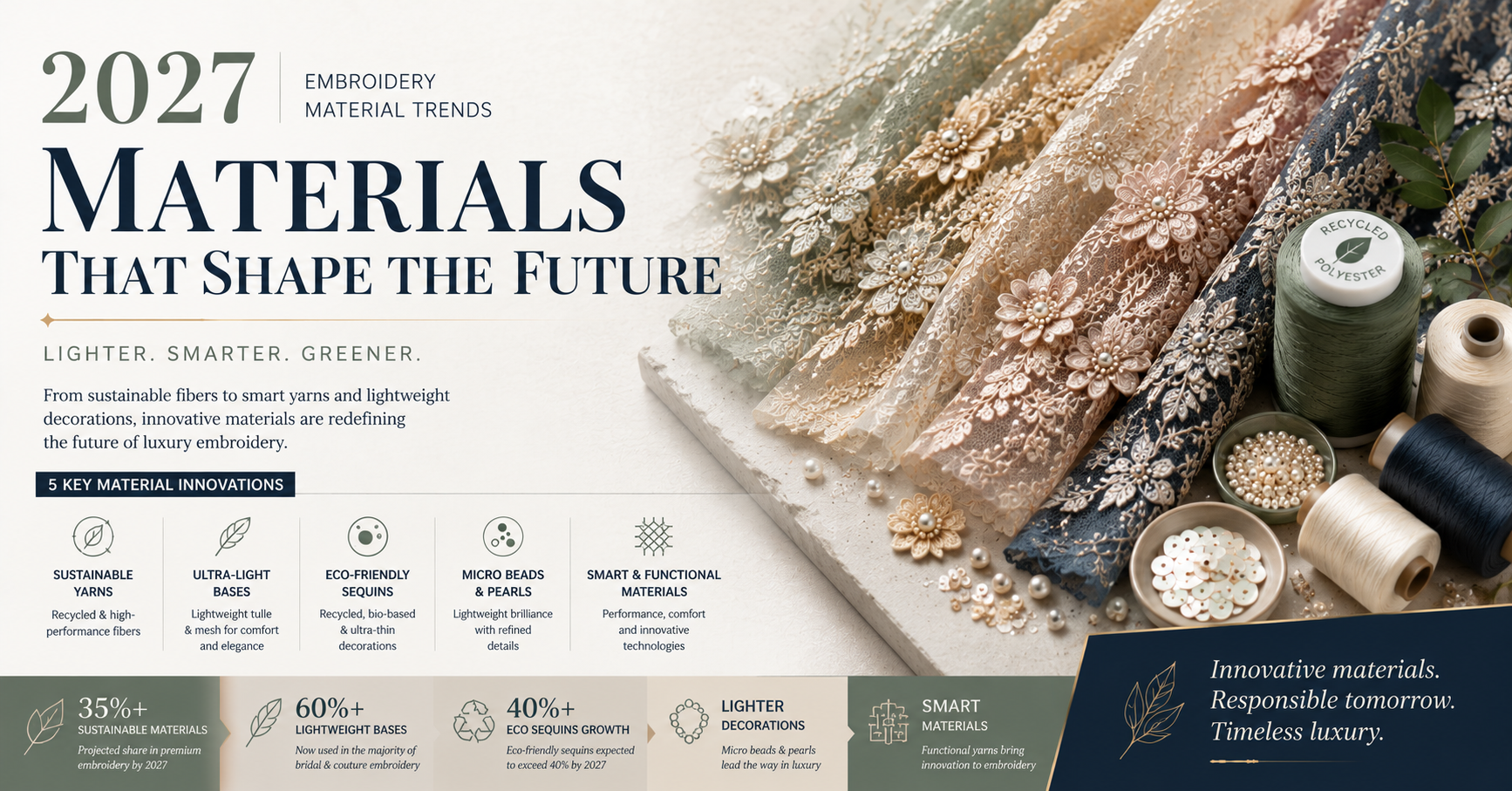
Sustainable Materials: Although slightly higher in cost, recycled fibers can attract premium clients and long-term contracts. Visit our sustainability section.
Market Trends Influencing Lace Costs
-
Sustainability: OEKO-TEX certified and recycled yarns are increasingly requested.
-
Customization Demand: Custom motifs, wide panels, and eyelash lace for bridal collections are growing by 20–30% year-over-year. Explore customized processes and pattern design development.
-
Global Sourcing: Consistent quality from multiple production sites reduces risk and stabilizes cost for international brands.
-
Premiumization: Luxury brands prioritize high-end embroidery and embellishments over volume, increasing average order value.
Conclusion
Understanding the detailed cost structure of lace fabric—from materials and manufacturing to design complexity, width, and overhead—enables manufacturers to make informed sourcing and pricing decisions. By strategically balancing cost and quality, manufacturers can produce appealing, durable lace fabrics that meet the aesthetic and functional demands of modern apparel markets.
Investing in premium lace fabrics, innovative production techniques, and sustainable materials ensures long-term profitability, stronger client relationships, and alignment with 2027 fashion trends.
Ready to source quality lace fabrics for your manufacturing needs? Visit our homepage to explore our collections or contact us for inquiries. You may also submit an inquiry for custom pricing.