

A Complete Guide to Quality Inspection, Testing, and International Compliance
In the global lace fabric industry, quality is not just an aesthetic requirement — it is a technical standard, a commercial promise, and a brand safeguard.
For apparel brands, sourcing managers, and textile buyers, lace quality directly affects garment durability, comfort, production yield, and customer satisfaction.
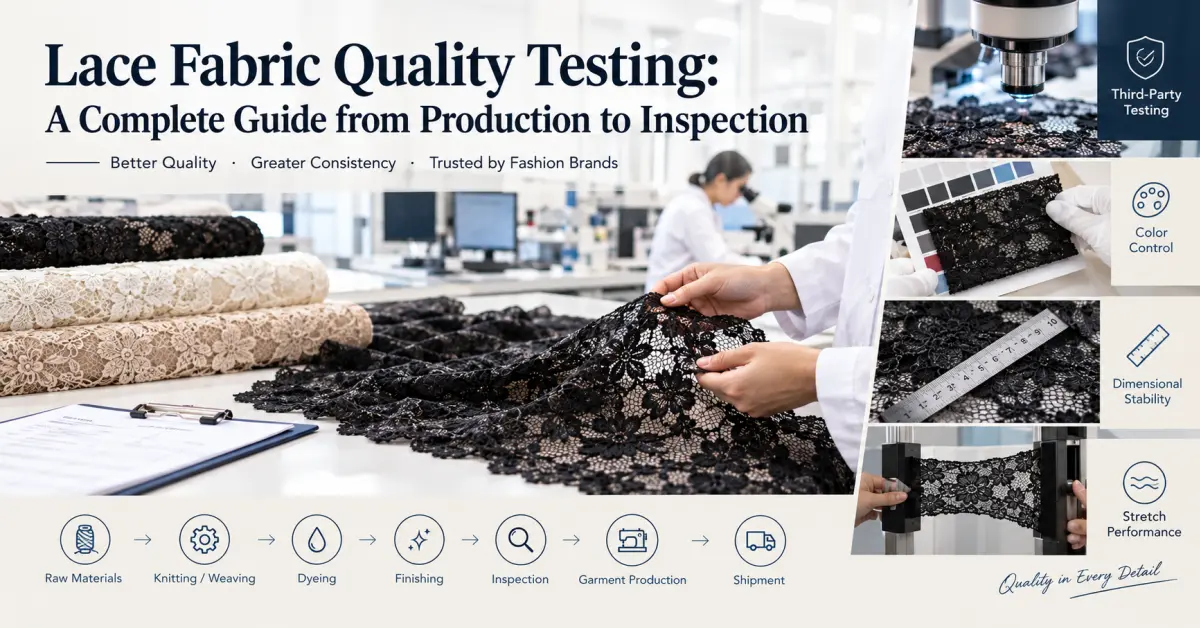
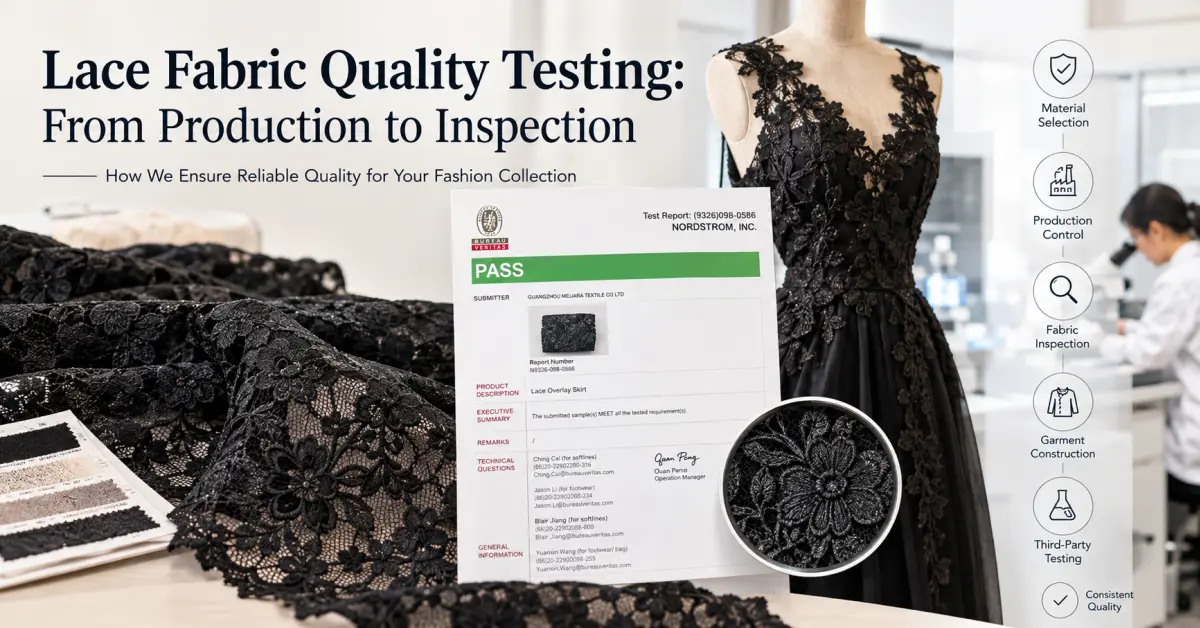
This article provides a comprehensive guide to lace fabric quality control and standards, covering inspection processes, testing methods, international certifications, and real-world quality risks in lace manufacturing.
Why Quality Control Is Critical in Lace Fabric Manufacturing
Lace fabrics are structurally complex textiles made through knitting, weaving, embroidery, or chemical processes. Compared with plain fabrics, lace has:
-
Open structures and fine yarns
-
Complex patterns and density variations
-
Higher sensitivity to tension, dyeing, and finishing
-
Greater risk of defects spreading during garment production
Without strict quality control, small defects can lead to:
-
Fabric breakage during cutting or sewing
-
Color inconsistency across production batches
-
High garment rejection rates
-
Costly reworks and delayed deliveries
For OEM and ODM lace suppliers, quality control is a competitive advantage, not just a compliance requirement.
Key Quality Factors in Lace Fabric Evaluation
Professional lace quality control focuses on five core dimensions:
1. Yarn & Raw Material Quality
-
Fiber composition accuracy (polyamide, polyester, cotton, elastane, viscose, etc.)
-
Yarn count consistency
-
Elastic recovery (for stretch lace)
-
Yarn strength and abrasion resistance
2. Structural Integrity
-
Stitch density uniformity
-
Pattern clarity and edge definition
-
Loop stability and knot security
-
Resistance to snagging and tearing
3. Appearance & Visual Quality
-
Surface cleanliness
-
Absence of oil stains or dye marks
-
Pattern symmetry
-
No broken motifs or missing embroidery threads
4. Color Accuracy & Fastness
-
Shade matching consistency
-
Color penetration depth
-
Resistance to washing, rubbing, light, and perspiration
5. Dimensional Stability
-
Shrinkage after washing
-
Width and length tolerance
-
Elastic recovery after stretching
Lace Fabric Quality Inspection Process (Step-by-Step)
1. Incoming Raw Material Inspection
Before production begins:
-
Yarn specifications verified
-
Fiber content confirmed
-
Elastic yarn tested for elongation and recovery
-
Color consistency checked (if pre-dyed yarns)
2. In-Process Production Inspection
During knitting, embroidery, or chemical lace production:
-
Machine tension monitoring
-
Pattern alignment checks
-
Continuous visual inspection
-
Defect recording and root-cause analysis
3. Grey Fabric Inspection
Before dyeing or finishing:
-
Structural defect detection
-
Hole, broken stitch, or pattern errors identified
-
Defect mapping on inspection reports
4. Finished Fabric Inspection
Final inspection typically follows the 4-point system or customized buyer standards, covering:
-
Visual defects
-
Color consistency
-
Measurement accuracy
-
Fabric hand feel and elasticity
Common Lace Fabric Defects and Causes
| Defect Type | Typical Cause |
|---|---|
| Broken motifs | Yarn tension imbalance |
| Color streaks | Uneven dye penetration |
| Oil stains | Machine lubrication issues |
| Pattern distortion | Incorrect machine setup |
| Elastic fatigue | Poor elastane quality |
| Edge curling | Improper finishing |
Early detection significantly reduces waste and reprocessing costs.
International Quality Standards for Lace Fabric
1. Color Fastness Standards
-
ISO 105 series
-
AATCC standards (U.S.)
-
Testing for washing, rubbing, light, perspiration
2. Dimensional Stability
-
ISO 6330 (washing and drying)
-
Buyer-specific tolerance requirements
3. Physical Performance Standards
-
Tensile strength
-
Tear resistance
-
Elastic recovery (especially for stretch lace)
4. Chemical Safety Standards
-
OEKO-TEX® Standard 100
-
REACH compliance (EU)
-
CPSIA (for children’s apparel)
-
AZO-free dye requirements
Lace Fabric Testing Methods Explained
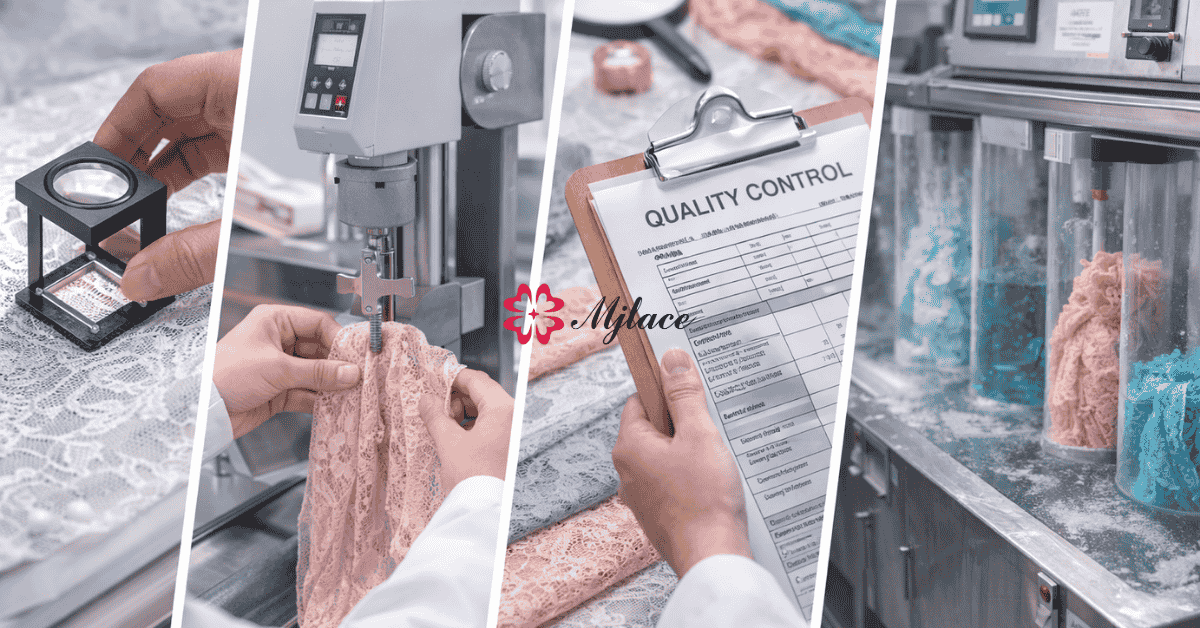
Professional lace factories typically operate in-house laboratories or work with third-party labs.
Key tests include:
-
Color fastness to washing and rubbing
-
Elastic elongation and recovery testing
-
Fabric weight (GSM) verification
-
Shrinkage rate measurement
-
pH value testing
-
Formaldehyde content testing
Each test result is documented and traceable by batch.
Quality Control Standards by Lace Type
Different lace types require different quality benchmarks:
Stretch Lace
-
Elastic recovery ≥ specified %
-
No permanent deformation
-
Uniform stretch across width
Embroidery Lace
-
Secure thread anchoring
-
No loose embroidery threads
-
Backing fabric integrity
Chemical Lace
-
Complete base fabric removal
-
Clean edges without residue
-
Consistent motif thickness
Jacquard Lace
-
Pattern repeat accuracy
-
Stable loop formation
-
No floating yarns
Buyer Quality Requirements & Custom QC Protocols
Many international buyers apply:
-
AQL standards (2.5 / 4.0 or stricter)
-
Customized defect classification
-
Pre-shipment inspection (PSI)
-
Shade approval via lab dips
-
Golden sample confirmation
Experienced lace suppliers adapt their QC system to brand-specific requirements, ensuring smooth approval cycles.
How Quality Control Protects Brand Value
For fashion brands and garment manufacturers:
-
Stable lace quality reduces production risks
-
Fewer returns and customer complaints
-
Better garment fit and durability
-
Stronger brand reputation in premium markets
For suppliers:
-
Higher repeat order rates
-
Long-term OEM partnerships
-
Reduced claims and disputes
-
Sustainable growth through trust
Future Trends in Lace Quality Control
The lace industry is evolving toward:
-
Digital inspection systems
-
AI defect recognition
-
Automated color matching
-
Full traceability from yarn to shipment
-
Sustainable quality metrics (eco-dyes, water usage)
Quality control is no longer static — it is data-driven and system-based.
Conclusion: Quality Is the Foundation of Reliable Lace Supply
Lace fabric quality control is a multi-layered process combining craftsmanship, technology, and international standards.
Whether you are a fashion brand, importer, or sourcing professional, understanding lace quality standards ensures smarter decisions and long-term success.
At Meijara Textile, quality control is embedded into every step — from yarn selection to final shipment — ensuring lace fabrics that meet global standards and exceed expectations.