



Lace is more than a decorative textile—it is a language of craftsmanship, innovation, and brand expression. For fashion brands, designers, and garment manufacturers, understanding lace types and categories is essential to selecting the right material for design intent, cost control, production feasibility, and market positioning.
At MJlace (Meijara), lace is not treated as a single product category, but as a system of techniques, structures, and applications. From delicate embroidery lace to advanced panel embroidery and burnout lace, each lace type serves a unique role in modern fashion collections.
This guide breaks down the most important lace types and categories, explains how they are produced, and shows how they are best applied in today’s garment industry.
Embroidery Lace: Precision Meets Artistry
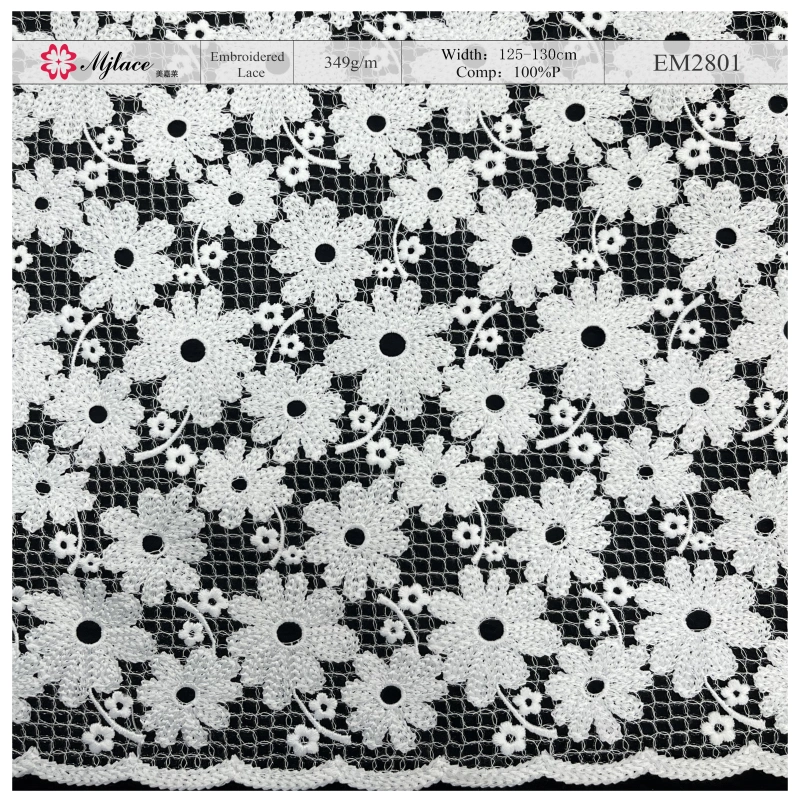
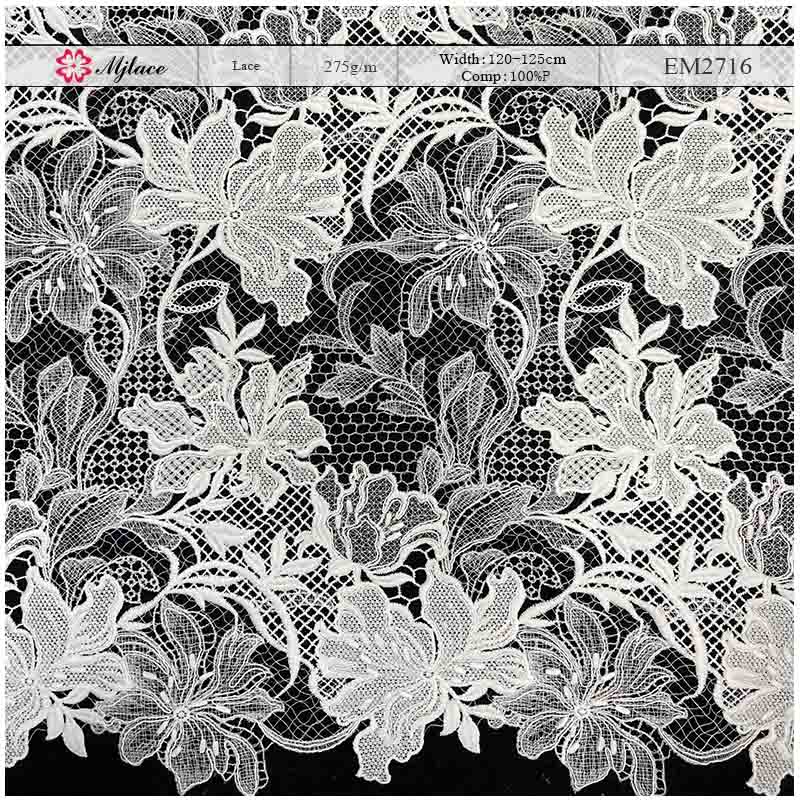
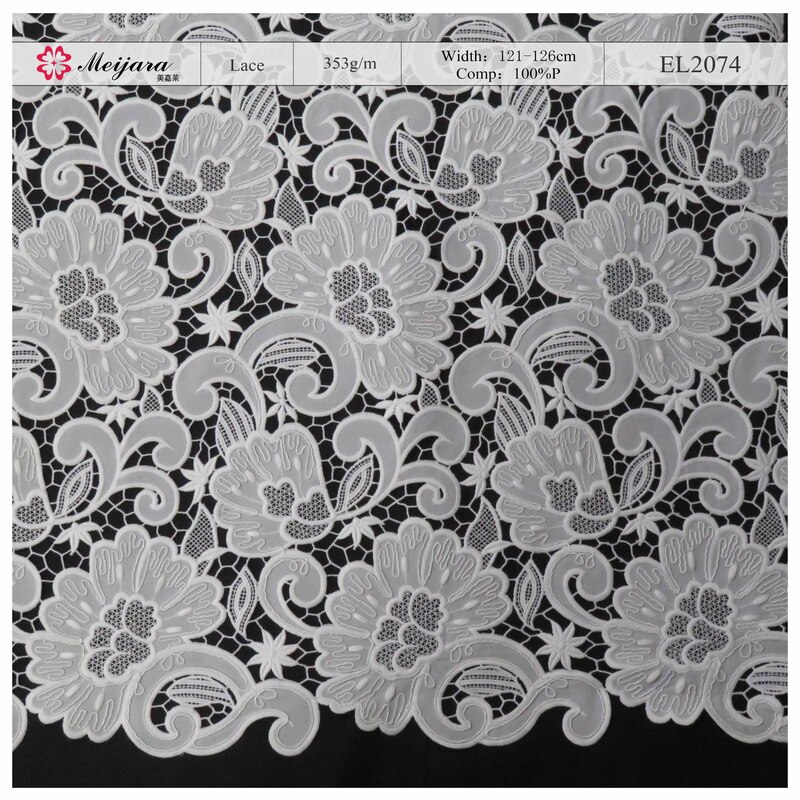
Embroidery lace is one of the most versatile and widely used lace categories in contemporary fashion. It is created by stitching decorative motifs onto a base fabric such as tulle, mesh, cotton voile, or organza.
Key Characteristics
-
High design flexibility
-
Clear motif definition
-
Compatible with both delicate and bold aesthetics
Subcategories
- All-over embroidery lace – Continuous patterns for dresses and overlays
- Motif embroidery lace – Individual motifs for placement decoration
- Panel embroidery lace – Embroidery produced in garment-shaped panels
MJlace Expertise
MJlace specializes in custom embroidery lace, especially panel embroidery, where patterns are embroidered directly according to garment pattern pieces. This method reduces fabric waste, improves motif alignment, and shortens production time for brands producing structured garments.
Common Applications
-
Bridal and evening gowns
-
Women’s blouses and dresses
-
Fashion-forward outerwear
Panel Embroidery Lace: Engineered for Modern Production
Panel embroidery lace is a category increasingly favored by modern brands due to its production efficiency and design accuracy.
Unlike traditional yardage lace, panel embroidery is:
-
Designed based on garment pattern shapes
-
Embroidered before garment assembly
-
Optimized for industrial-scale production
Why Brands Choose Panel Embroidery
-
Consistent motif placement
-
Lower fabric waste
-
Better cost control
-
Ideal for complex silhouettes
MJlace integrates CAD pattern engineering and embroidery digitizing to ensure panels match cutting and sewing requirements precisely, making this lace type ideal for B2B garment manufacturing.
Burnout Lace (Devoré Lace): Texture Through Subtraction
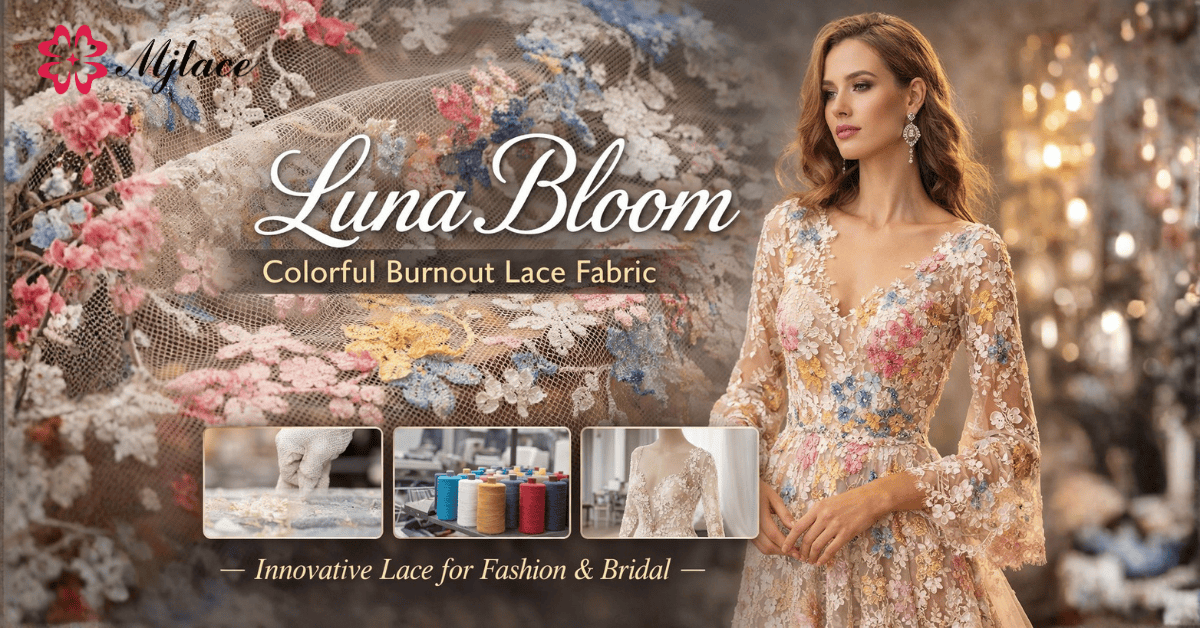
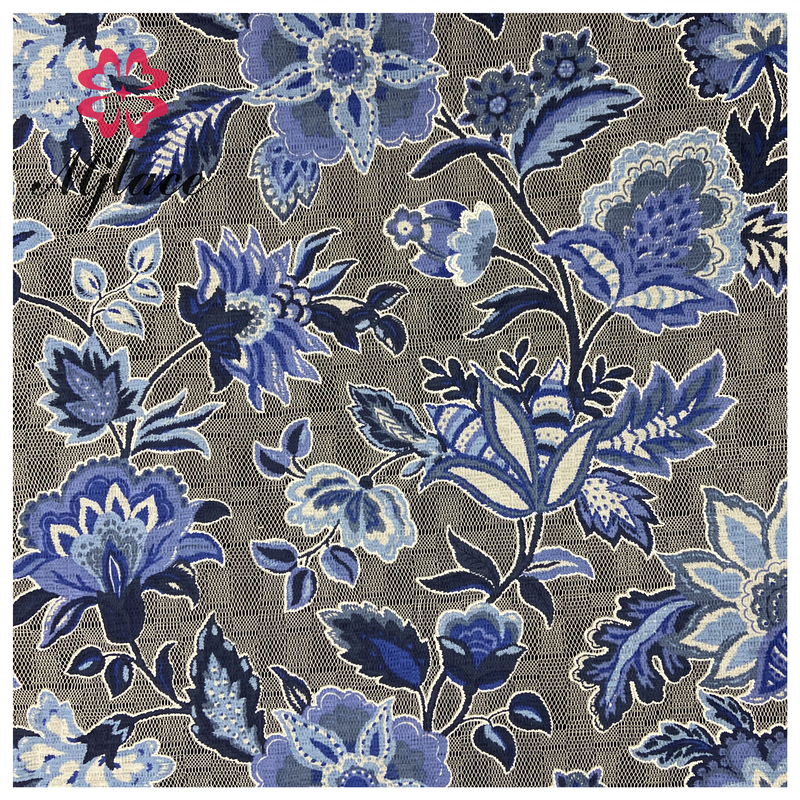
Burnout lace—also known as devoré lace—is produced through a chemical process that removes specific fibers from blended fabrics, creating semi-transparent patterns.
Visual & Functional Benefits
-
Lightweight and breathable
-
High contrast between opaque and sheer areas
-
Soft drape with strong visual depth
MJlace Application
MJlace combines burnout techniques with embroidery or print, creating hybrid lace fabrics that meet both fashion-forward and commercial needs.
Typical Uses
- Resort wear
- Contemporary women’s fashion
- Fashion dresses with layered effects
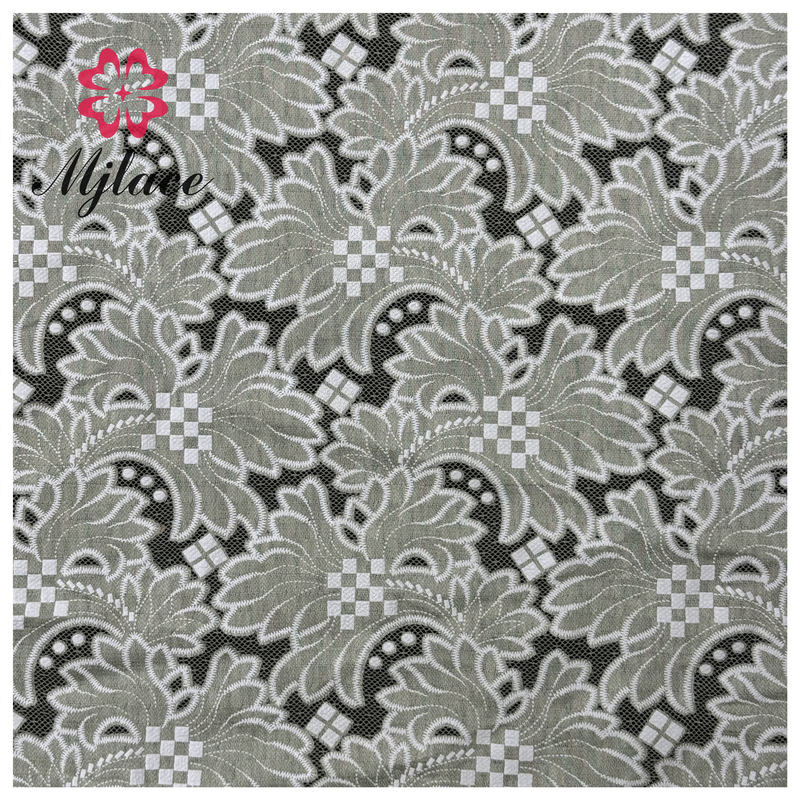
Chemical Lace (Guipure Lace): Structure Without a Base
Chemical lace is created by embroidering designs onto a water-soluble base fabric, which is later dissolved, leaving behind free-standing lace.
Features
-
No visible ground fabric
-
Strong structure and sculptural quality
-
High-end appearance
Ideal Applications
-
Necklines and cuffs
-
Statement panels
-
Decorative garment accents
MJlace produces chemical lace with reinforced thread structures, ensuring durability during garment construction and wear.
Cutwork & Eyelet Lace: Breathable Craftsmanship
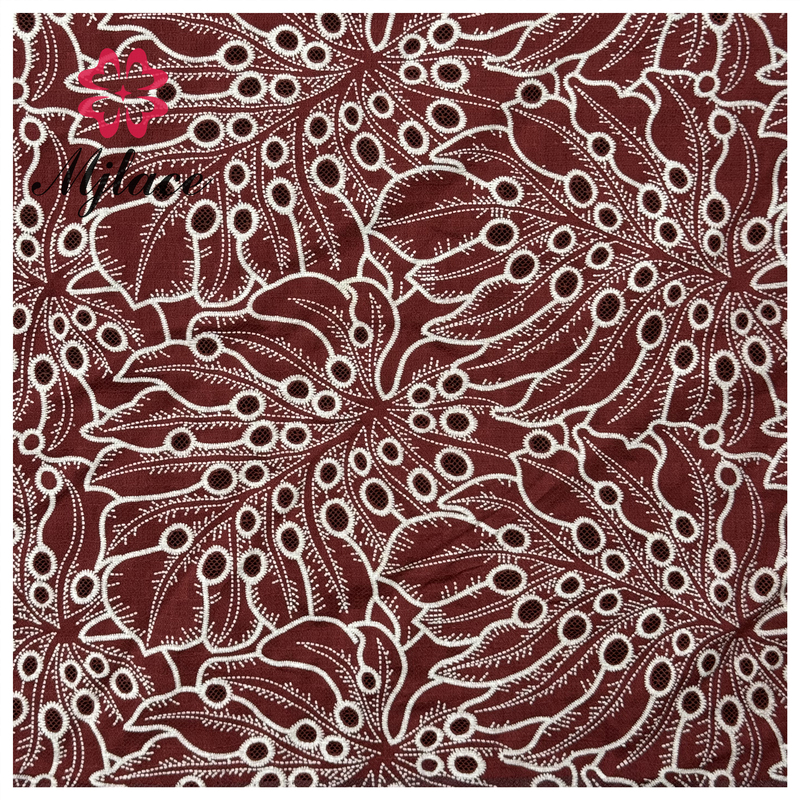
Cutwork lace involves cutting away fabric areas after embroidery, while eyelet lace features repeated perforated designs.
Advantages
-
Natural and breathable
-
Suitable for cotton and linen bases
-
Strong appeal in summer and resort collections
MJlace offers custom cutwork embroidery, adapting pattern density and hole size based on garment function and target market.
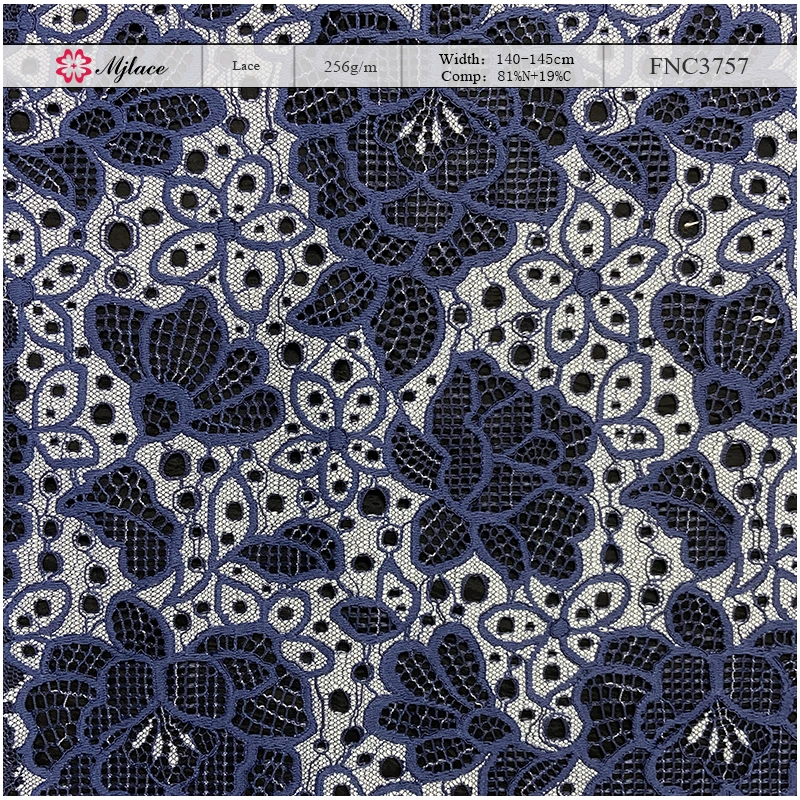
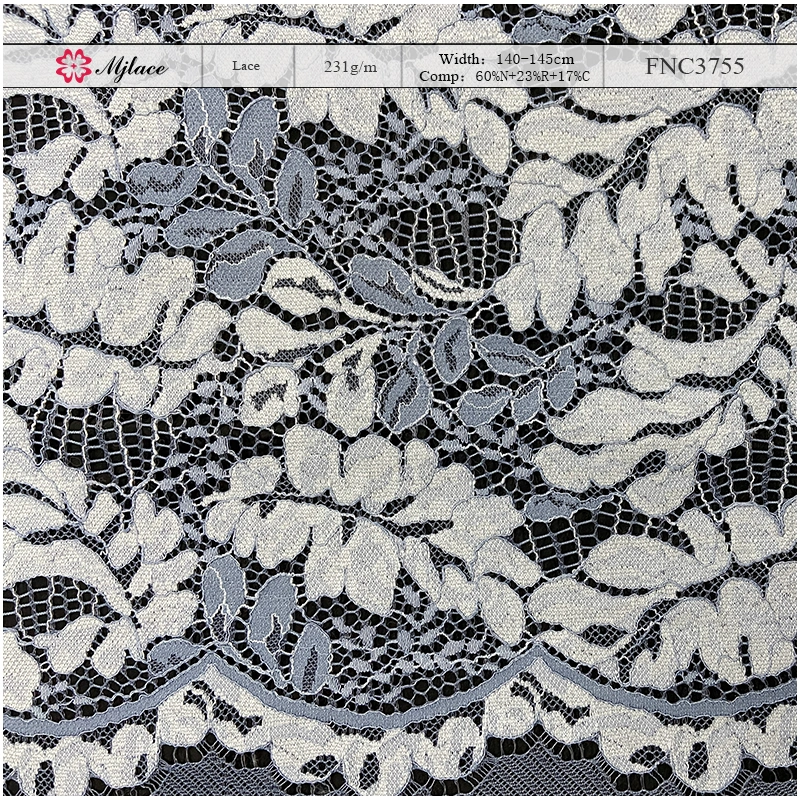
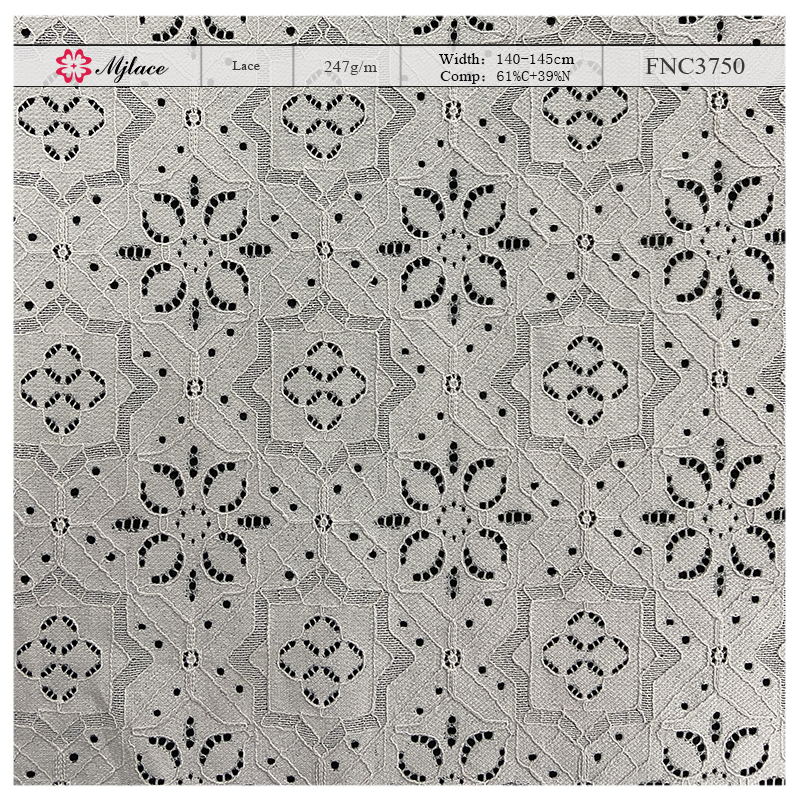
Lace by Fiber Type: Material Matters
Lace performance and appearance depend heavily on fiber selection.
Common Fiber Categories
-
Cotton lace – Natural, breathable, matte finish
-
Polyester lace – Durable, cost-effective, versatile
-
Nylon lace – Lightweight, smooth, sheer
-
Blended lace – Balanced aesthetics and performance
MJlace helps brands select fiber blends based on:
-
Garment end use
-
Price positioning
-
Sustainability goals
Sustainable Lace Categories: The Future of Lace
Sustainability is reshaping lace development. At MJlace, eco-conscious lace categories include:
-
Reduced-waste panel embroidery
-
OEKO-TEX–compliant materials
-
Process-optimized embroidery techniques
-
Long-life lace constructions
By designing lace with production efficiency and longevity in mind, MJlace supports brands aiming to reduce environmental impact without sacrificing design value.
Choosing the Right Lace Category for Your Brand
When selecting lace types, brands should consider:
-
Design intention (decorative vs structural)
-
Production scale
-
Cost targets
-
Sustainability requirements
MJlace works closely with designers and sourcing teams to recommend the most suitable lace category based on collection goals and manufacturing realities.
Conclusion: Lace as a Strategic Design Tool
Lace is no longer just an embellishment—it is a strategic textile choice that influences garment construction, cost efficiency, sustainability, and brand identity.
By understanding lace types and categories—and partnering with an experienced manufacturer like MJlace—brands can transform lace from a decorative element into a powerful design and production advantage.