

For decades, the development of embroidery fabrics has primarily focused on pattern design and decorative techniques. However, as fashion brands face increasing pressure to reduce their environmental impact while maintaining a high-end aesthetic, the industry's focus is rapidly shifting towards material innovation.
By 2027, the definition of embroidered fabrics will no longer depend solely on stitches or visual effects. Instead, the materials behind the embroidery—from yarns and mesh base fabrics to sequins, beads, and special decorative accessories—are becoming the main drivers of product differentiation.
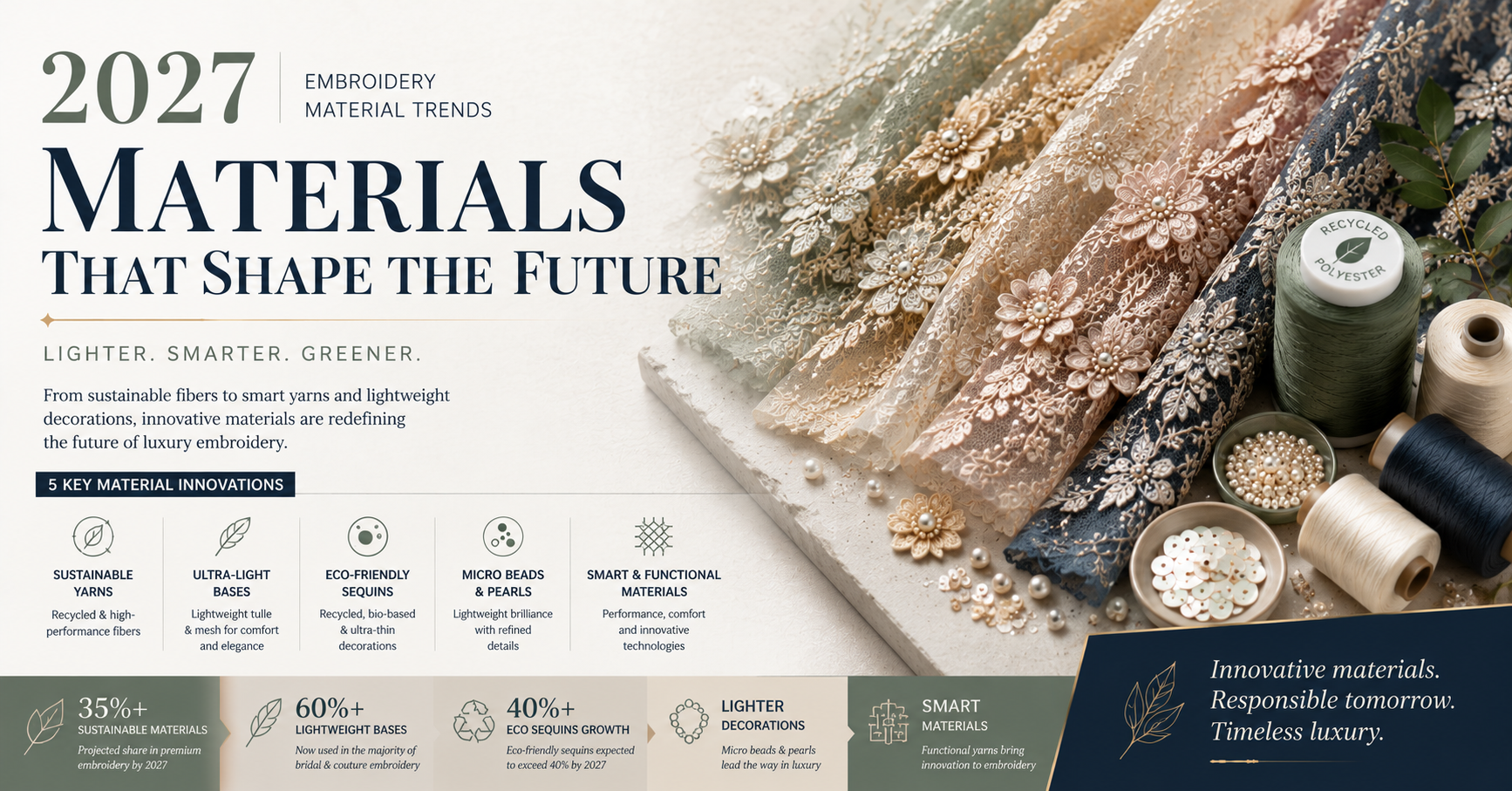
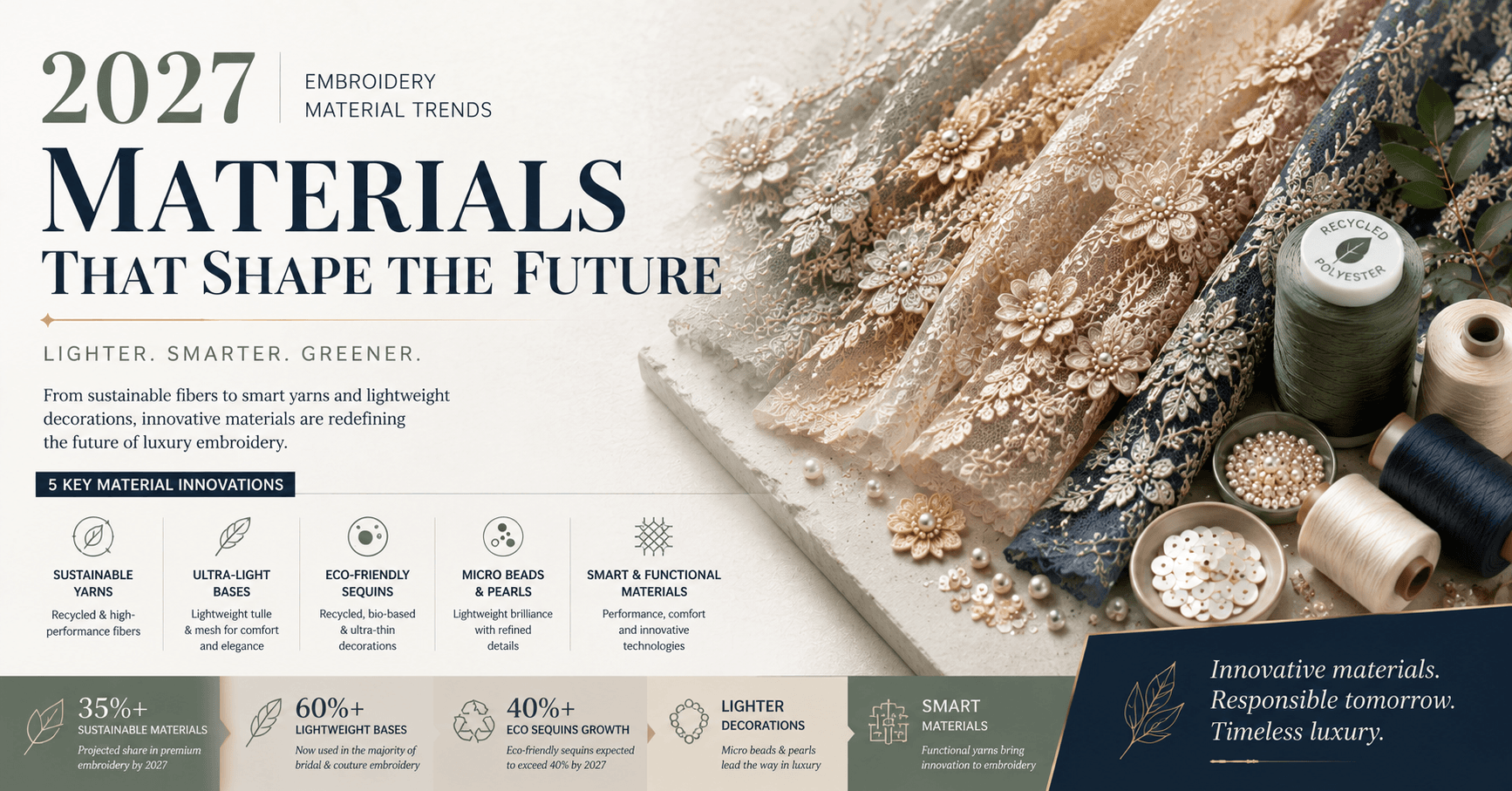
According to industry forecasts, by 2027, sustainable textile materials are expected to account for more than 35% of the total development of high-end embroidery, while lightweight decorative materials and smart functional yarns will continue to gain market share in wedding dresses, evening gowns and luxury ready-to-wear collections.
For embroidery manufacturers, lace suppliers, fashion brands, and textile buyers, understanding these material changes is crucial for future product development.
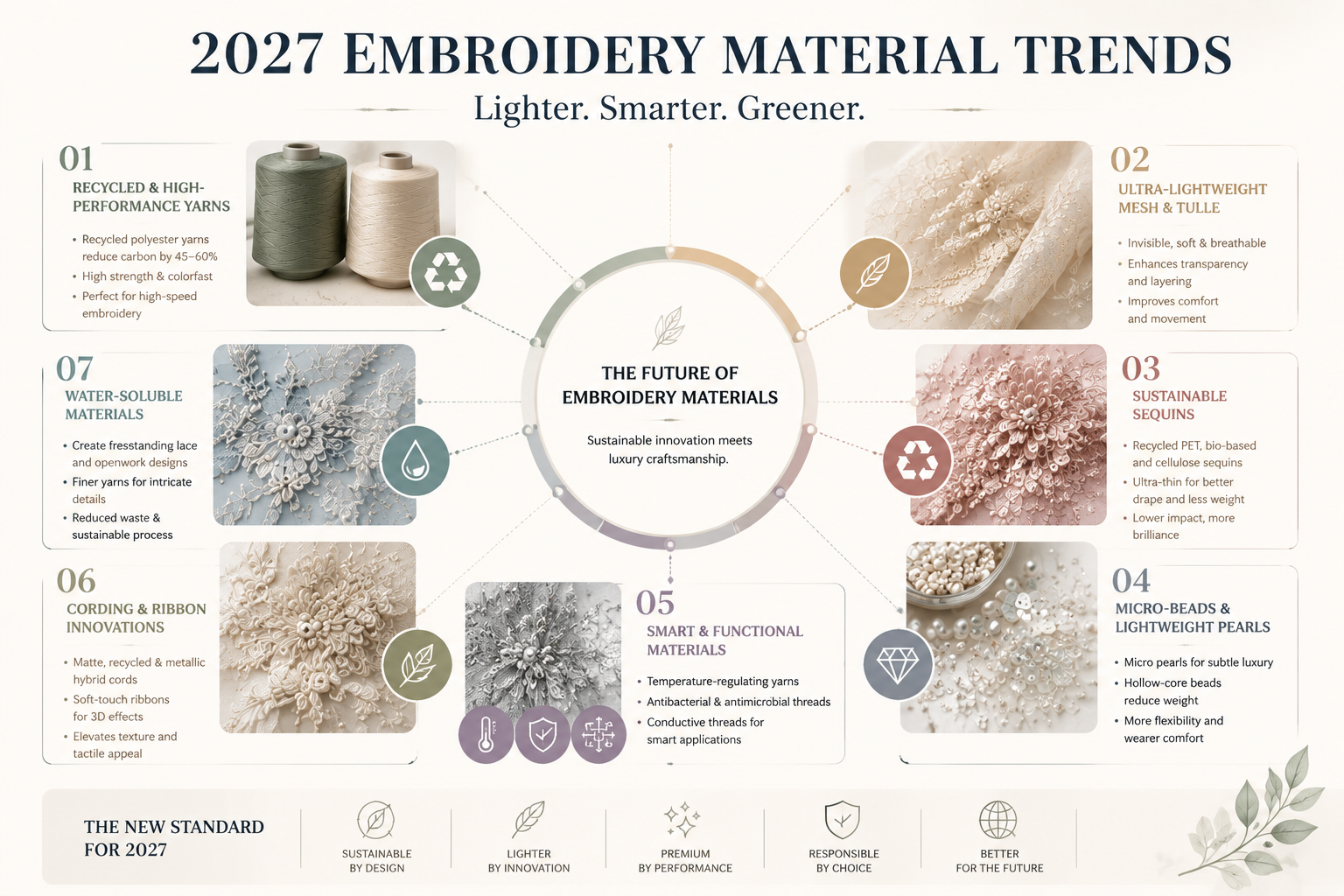
What materials will become the mainstay of embroidery fabrics in 2027?
The embroidery industry is developing towards five major material innovation directions:
| Material Category | Trend direction |
|---|---|
| Embroidery thread | Regenerated high-performance fibers |
| base fabric | Lightweight transparent structure |
| sequins | Environmentally friendly ultra-thin structure |
| Beads and pearls | Micro-decoration |
| Functional materials | Smart high-performance textiles |
The future of embroidery materials can be summarized in three words: lighter, smarter, and more environmentally friendly.
Recycled embroidery yarn will become the industry standard.
One of the most important developments in the embroidery manufacturing industry is the widespread use of recycled polyester embroidery yarn.
Historically, embroidery thread production has relied heavily on virgin polyester because of its high strength, good colorfastness, and strong machine compatibility.
However, environmental regulations and brand sustainability commitments are accelerating the changes.
Why is recycled yarn increasing?
Major fashion groups are now requiring their suppliers to reduce the carbon footprint of the entire supply chain.
Compared to traditional polyester fibers:
-
Recycled polyester fibers can reduce carbon emissions by up to 45-60%.
-
Water consumption can be reduced by approximately 30%.
-
Waste plastics can be reused in textile production.
Performance improvements
Early recycled embroidery threads often had problems such as uneven dyeing, low tensile strength, and thread breakage.
Modern yarn engineering technology has largely solved these problems.
Today's high-quality recycled embroidery yarns boast strength comparable to virgin polyester, are suitable for high-speed embroidery, offer excellent color consistency, and are more durable. Visit our Sustainability Zone .
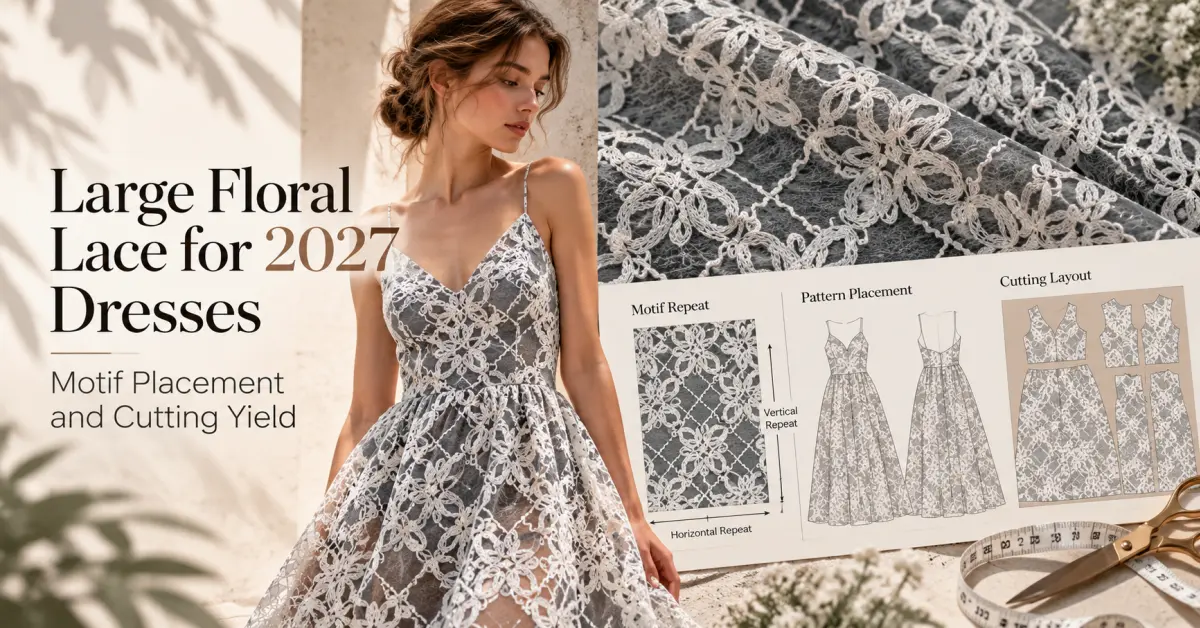
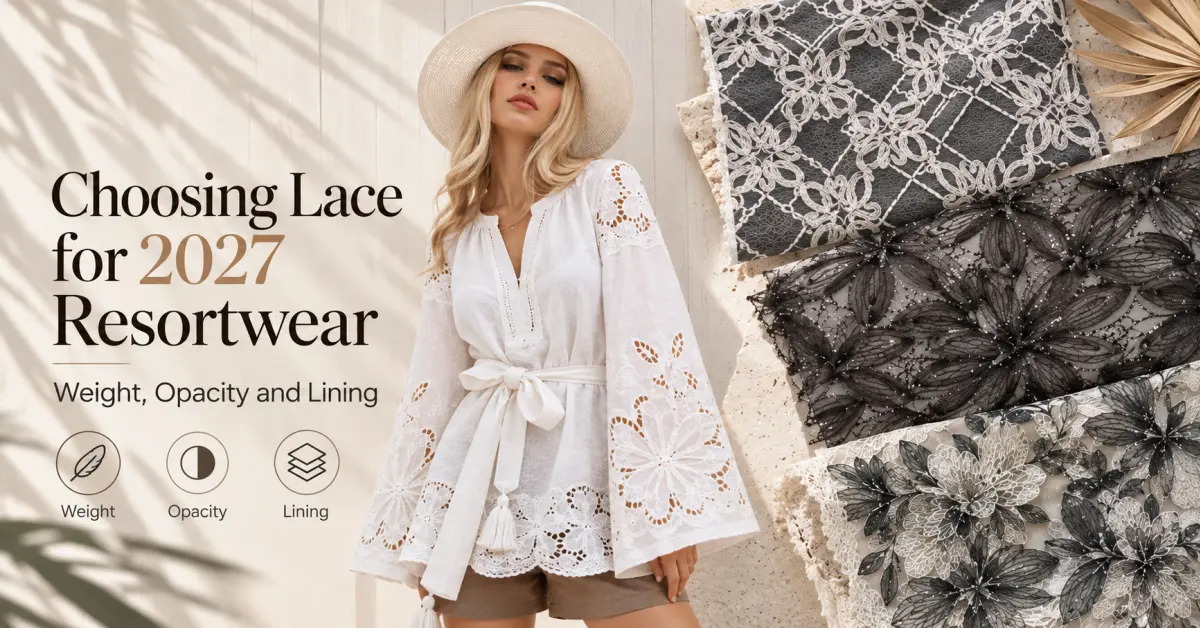
Ultralight mesh fabrics and tulle will dominate high-end embroidery techniques.
The demand for lightweight clothing is growing in the wedding dress and haute couture market.
Therefore, the embroidery base fabric became lighter and lighter.
Reduce the use of heavy floor coverings
Traditional embroidery fabrics typically use dense mesh, heavy tulle, and thick polyester base fabric. These structures can limit comfort and freedom of movement when worn.
Modern development focuses on invisible mesh fabrics, soft tulle, ultra-fine nylon mesh fabrics, and lightweight polyester mesh fabrics.
benefit
The lighter embroidered base fabric provides a better wearing experience—the garment becomes more comfortable, easier to move in, and less restrictive.
The enhanced visual luxury is another major advantage. The lightweight structure creates the effect of suspended embroidery, greater transparency, and a more three-dimensional sense of layering.
Market data
High-end wedding dress suppliers estimate that lightweight embroidered fabrics now account for over 60% of new wedding dress designs, compared to less than 40% five years ago. Explore our water-soluble embroidery products to learn more about lightweight options.
Sustainable sequins are replacing traditional PVC decorations
Sequins remain one of the most important decorative materials in embroidery.
However, traditional PVC sequins are facing increasingly stringent environmental scrutiny.
New generation sequin material
Manufacturers are developing recycled PET sequins, bio-based sequins, cellulose-derived decorative films, and ultra-thin eco-friendly sequins.
Why ultra-thin sequins are important
Reducing the thickness of sequins has many advantages: reducing garment weight, improving drape, reducing cracking, and improving the performance of embroidery machines.
Industry Forecast
It is projected that by 2027, eco-friendly sequins will account for more than 40% of high-end embroidery embroidery materials. Explore our sequin and bead embroidery collection.
Microbeads and lightweight pearls are replacing heavy ornaments.
Luxury consumers are increasingly favoring refined details over excessive embellishment.
This trend is changing beaded embroidery.
Traditional beading problems
Large beads often result in garments that are too heavy, less comfortable, more expensive to produce, and more difficult to wash.
Emerging solutions
Manufacturers are turning to microbeads, a material that offers elegant highlights, better flexibility, and lighter weight.
Hollow beads can maintain a three-dimensional visual effect while reducing overall weight and improving the comfort of clothing.
Clear crystal beads are popular in wedding dresses and haute couture because they create a soft play of light and shadow without overshadowing or obscuring embroidered designs. Please check out our elegant crystal sequined fabrics .
Smart embroidery materials will enter the luxury market.
One of the most exciting developments in 2027 is the emergence of smart embroidery materials.
Although it is still a relatively niche field, its applications are growing rapidly.
Temperature regulating yarn
These fibers help maintain the wearer's comfort by absorbing excess heat, releasing stored heat energy, and improving moisture management.
Antibacterial Embroidery Thread
High-end sportswear and premium lingerie brands are increasingly exploring the use of embroidery yarns containing silver-based treatments, zinc compounds, and antibacterial additives.
Conductive decorative wire
Conductive embroidery yarn, originally developed for wearable technology, is now appearing in experimental fashion collections. Potential applications include interactive clothing, smart fashion accessories, and integrated lighting effects.
The materials used for rope and ribbon embroidery will become more refined and complex.
Rope embroidery continues to be popular in the high-end fashion world.
The Evolution of Rope
Future development directions include matte luxury rope, recycled decorative rope, soft-touch synthetic ribbon, and metallic hybrid rope.
Why are wired connections booming?
Rope embroidery offers a strong three-dimensional effect, a haute couture aesthetic, lower stitch density requirements, and a superior tactile experience. Explore ourrope embroidery and heavy-duty embroidery collections.
Water-soluble materials will continue to expand
Water-soluble embroidery remains one of the most important categories of high-quality embroidery.
Why Water-Soluble Embroidery Remains Important
It allows designers to create independent lace structures, openwork embroidery, and highly detailed decorative patterns without the need for a visible base fabric.
2027 Development Plan
Future water-soluble embroidery will focus on finer yarn counts, more complex lace structures, lightweight decorative structures, and reduced production waste.
Hybrid material structures will define high-end embroidery
The future lies not in a single material, but in combining multiple materials into a single embroidery structure.
Common combinations of mixed materials
Luxury embroidery is increasingly combining recycled embroidery thread, ultralight mesh, eco-friendly sequins, microbeads, three-dimensional floral appliqués, and rope elements into the same design.
Why Hybrid Building Structures Work
It can create greater depth, more texture variation, higher perceived value, and stronger visual impact without appearing too bulky.
in conclusion
The embroidery industry in 2027 will be influenced by both material innovation and design creativity.
The most successful embroidered fabrics will combine sustainable yarns, lightweight base fabrics, eco-friendly embellishments, smart textile technologies, and hybrid decorative structures.
For fashion brands and textile buyers, understanding these material trends is crucial for selecting suppliers and planning future collections.
The future of embroidery is no longer just about the appearance of the fabric, but increasingly about the performance of the fabric, the production methods, and the sustainability of the production process.
Looking to source sustainable embroidery materials? Visit our homepage to browse our product range or contact us for details. You can also submit a custom quote request.