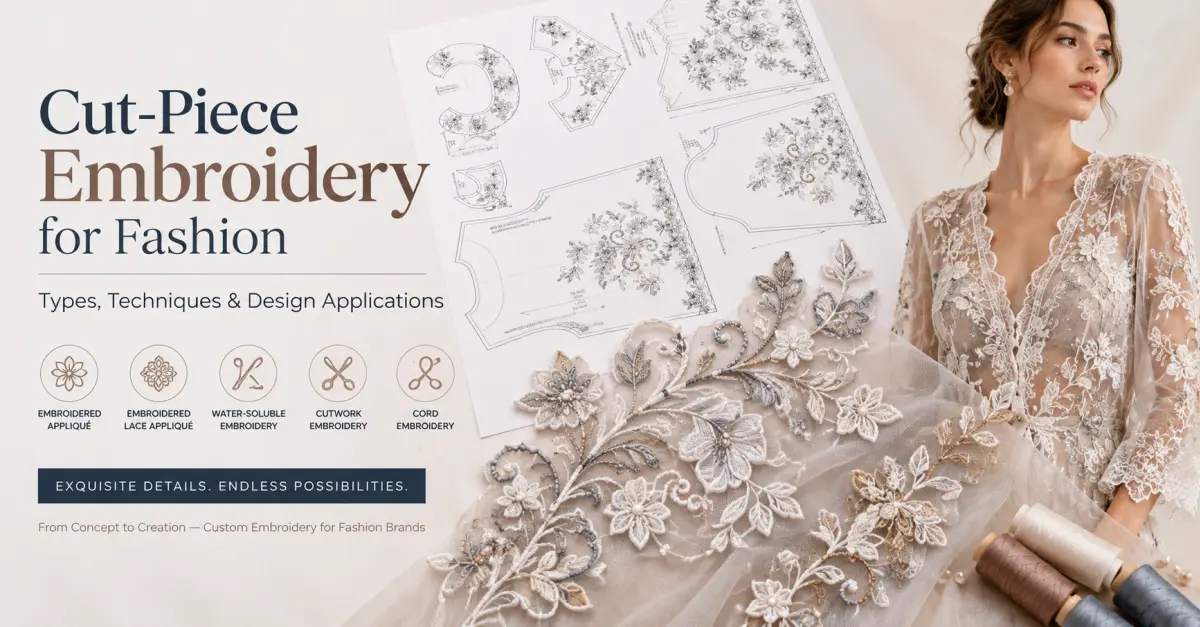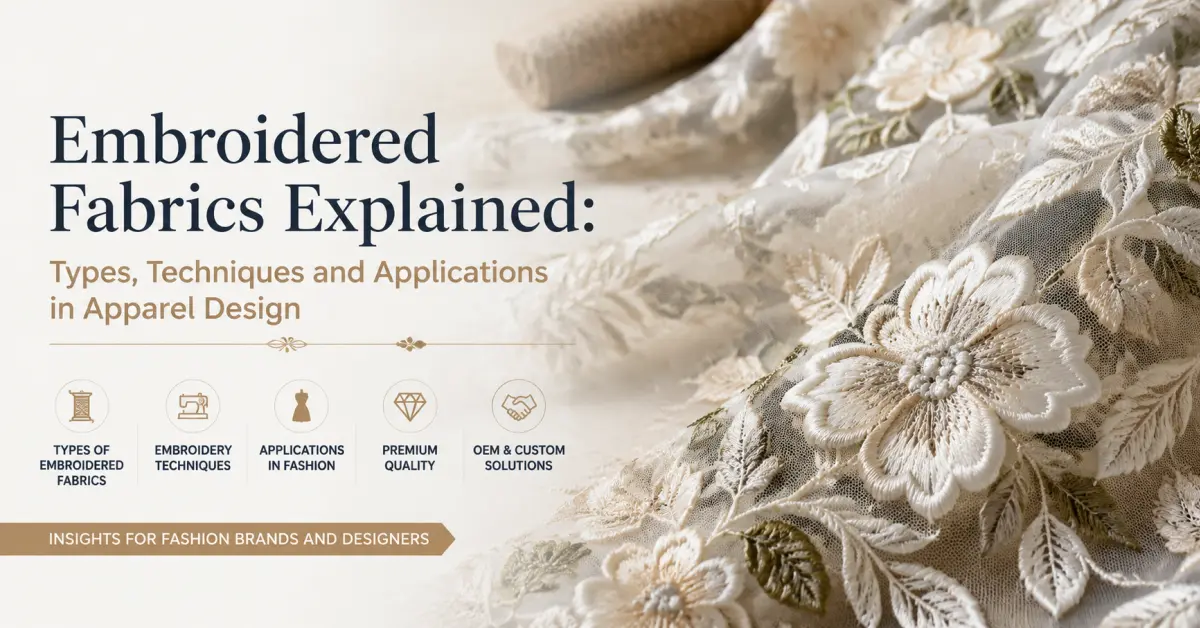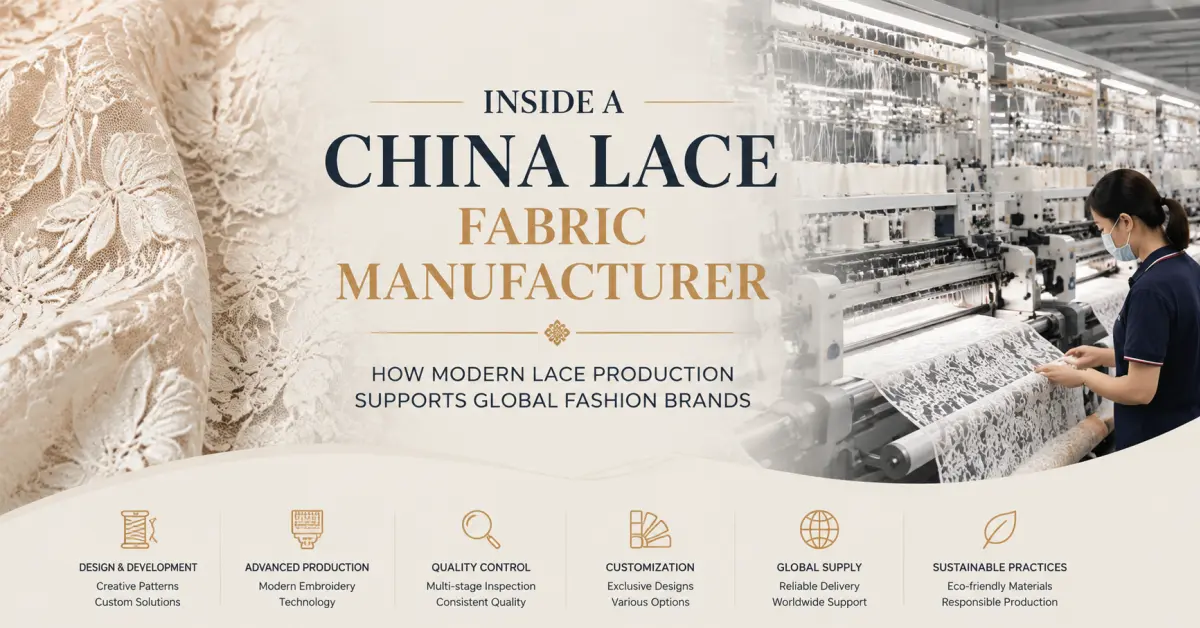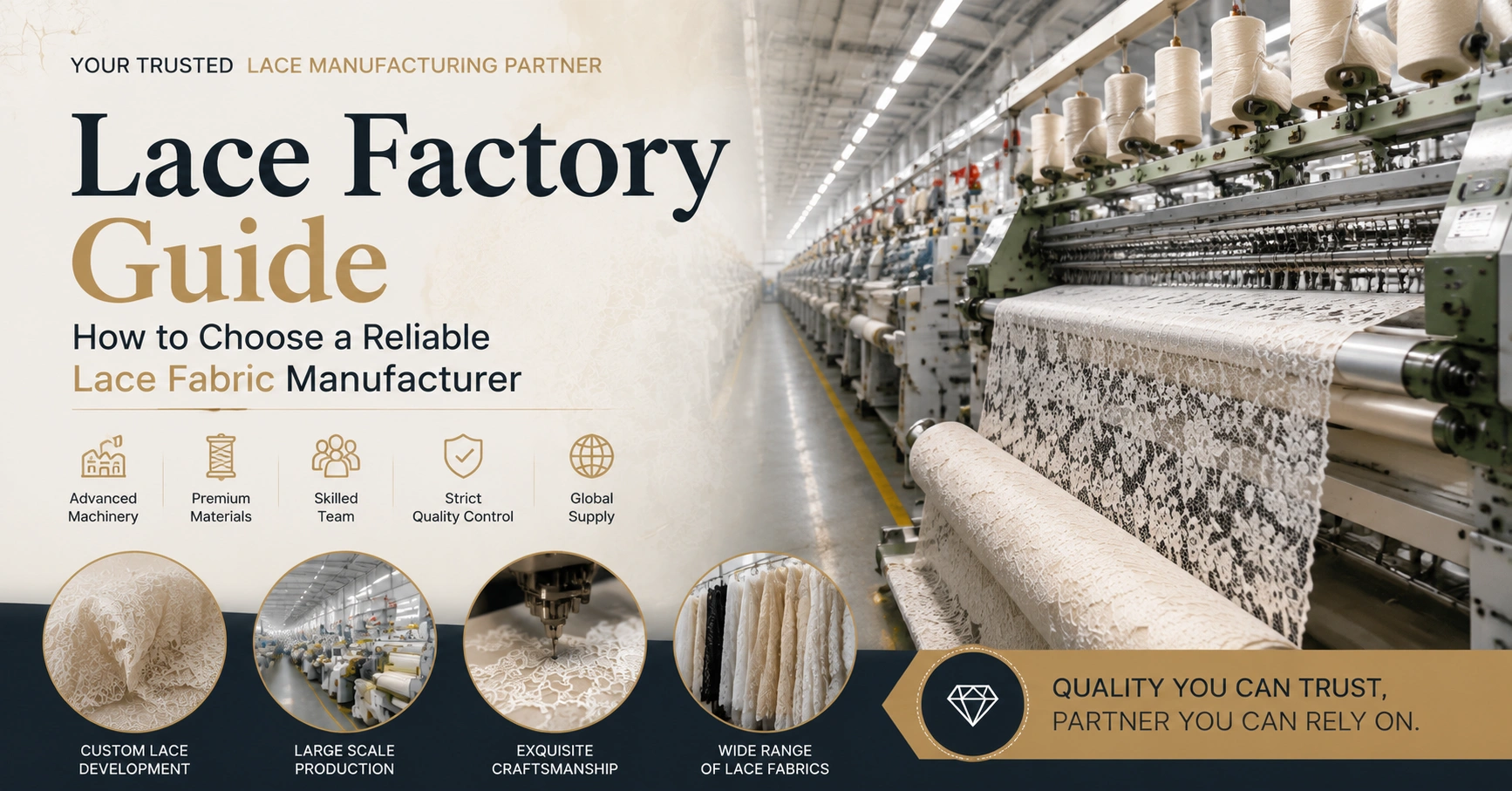

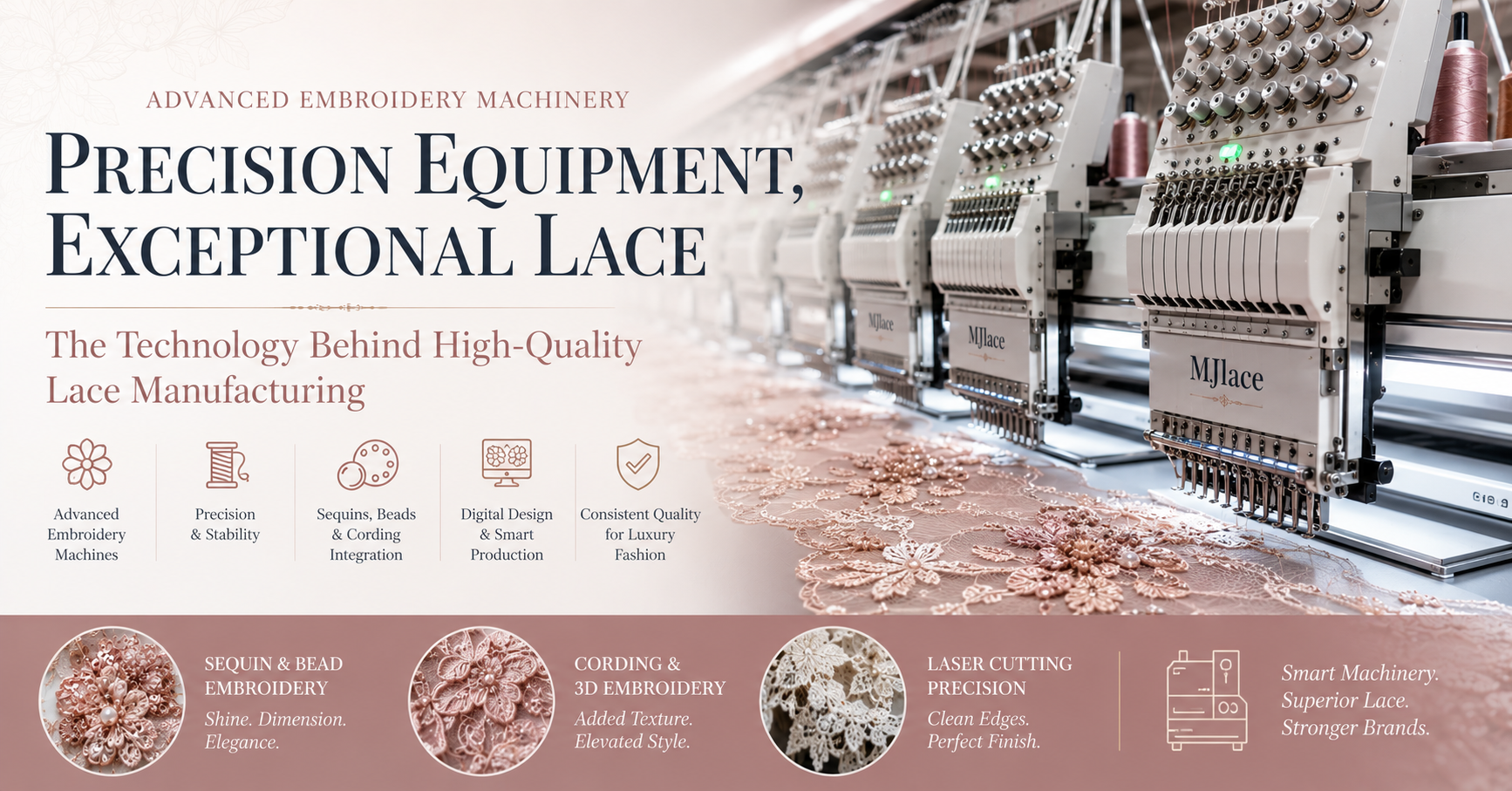

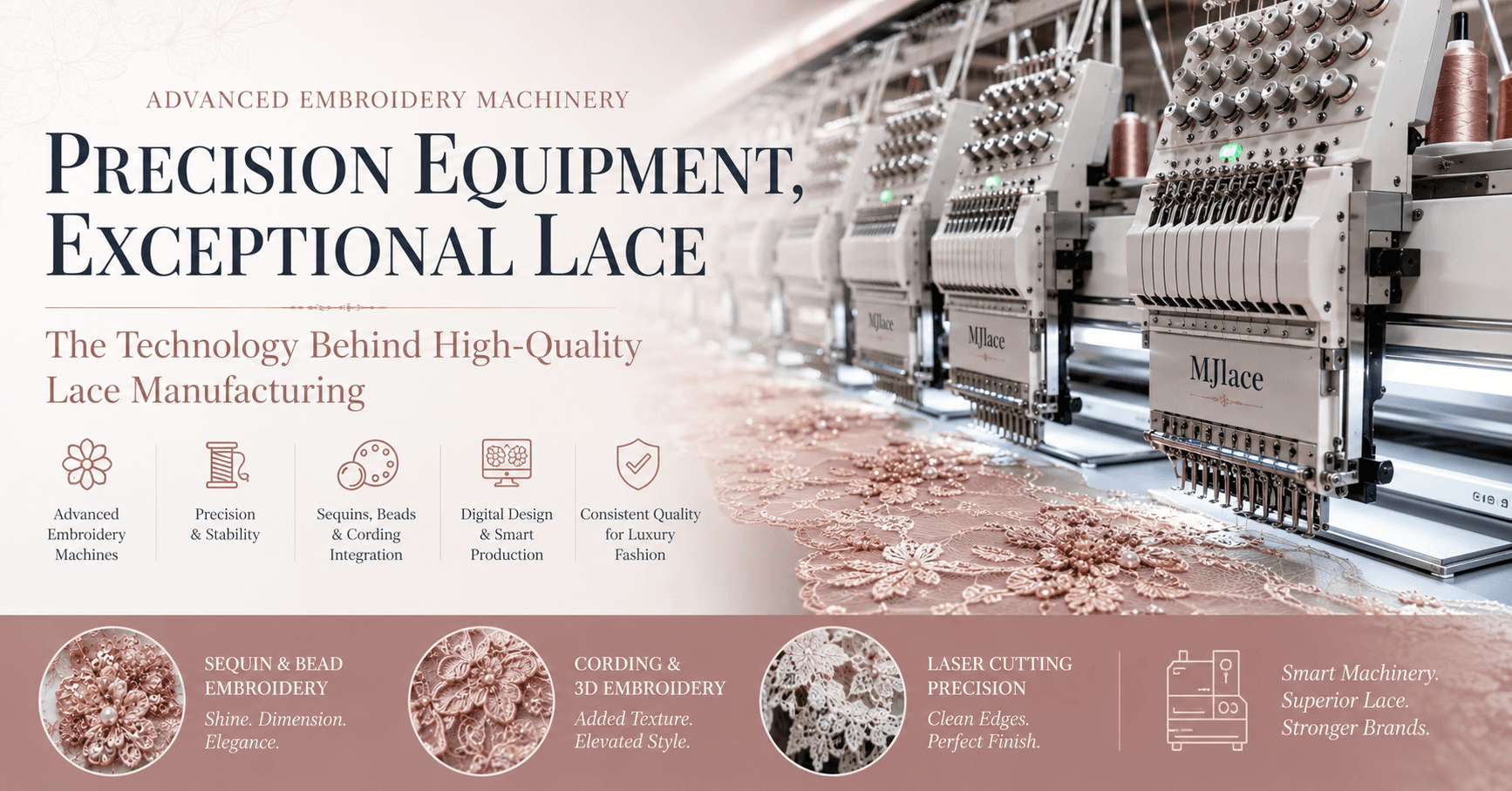
In today's high-end lace industry, embroidery machinery is no longer just a manufacturing tool — it is the technological foundation behind product quality, production stability, customization capability, and commercial competitiveness. For bridal brands, couture designers, luxury fashion houses, and wholesale lace buyers, understanding embroidery equipment has become essential when evaluating suppliers and developing premium collections.
Modern decorative lace fabrics are significantly more complex than traditional embroidery textiles. Fashion buyers increasingly demand:
-
Ultra-fine floral embroidery with high stitch density
-
Multi-layer 3D lace structures
-
Seamless integration of sequins, beads, pearls, and metallic threads
-
Lightweight yet stable embroidery on tulle and mesh bases
-
Water-soluble freestanding lace structures
-
Precision laser-cut lace edges
-
Consistent bulk production quality across thousands of meters
Achieving these effects requires highly specialized machinery combined with advanced digital embroidery programming, intelligent tension control systems, precision servo motors, and automated quality monitoring technologies.
Factories that rely on outdated embroidery equipment often struggle with:
-
Inconsistent embroidery density
-
Loose embellishment attachment
-
Distorted motifs
-
Unstable fabric feeding
-
Excessive thread breakage
-
Poor production repeatability
-
Long development cycles
In contrast, professional lace manufacturers equipped with advanced embroidery machinery can deliver more stable quality, faster sampling, greater customization flexibility, and lower long-term production risk.
This article provides a comprehensive technical overview of the embroidery machines used in modern lace manufacturing, explains how these systems affect lace quality, and helps B2B buyers evaluate manufacturing capability more professionally.
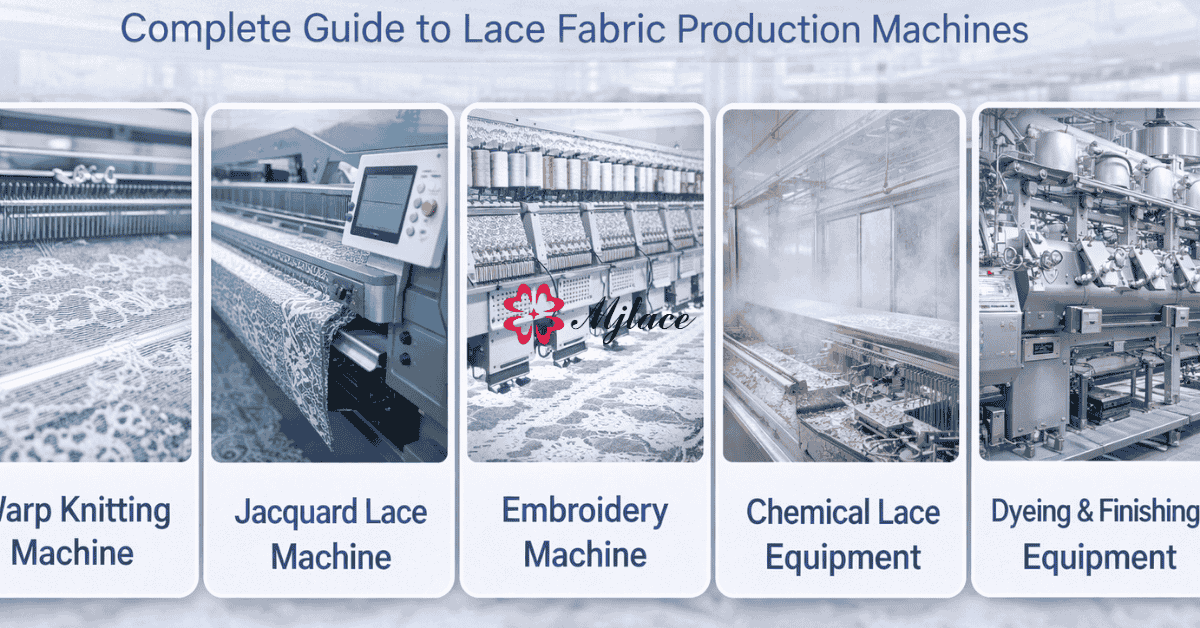
Which Embroidery Machines Matter Most in Lace Manufacturing?
Different embroidery machines serve different production purposes. High-end lace production usually requires a combination of specialized systems rather than a single machine type.
| Machine Type | Main Function | Best Applications |
|---|---|---|
| Schiffli Embroidery Machine | Large-scale embroidery production | Bridal lace, water-soluble lace |
| Multi-Head Embroidery Machine | Flexible custom embroidery, sampling | Fashion embroidery, sampling |
| Sequin Embroidery Machine | Automatic sequin attachment | Eveningwear and luxury lace |
| Cording Embroidery Machine | Raised embroidery effects | Guipure lace and 3D embroidery |
| Bead Embroidery Machine | Automated bead placement | Couture and bridal embellishment |
| Laser Cutting System | Precision lace cutting | Appliqué and decorative edges |
| Water-Soluble Embroidery System | Freestanding embroidery structures | Luxury decorative lace |
| CAD Embroidery Software | Digital pattern programming | All embroidery production |
Key Conclusion
The quality of decorative lace is heavily determined by:
-
Machine precision
-
Stitch control capability
-
Material compatibility
-
Tension management systems
-
Digital embroidery programming
-
Production stability during long runs
For luxury lace production, advanced machinery is often more important than raw material cost alone.
Why Embroidery Technology Has Become Critical in Modern Lace Manufacturing
The global fashion market has changed dramatically over the past decade. Fashion cycles are shorter, customization demand is higher, and consumers increasingly expect luxury-level craftsmanship even in mid-range collections.
As a result, lace fabrics have evolved from simple embroidery textiles into highly engineered decorative materials.
Modern luxury lace may combine:
-
Multi-thread embroidery
-
Metallic yarn integration
-
3D floral structures
-
Sequins and beadwork
-
Laser-cut detailing
-
Mixed-media fabric layering
Producing these structures consistently requires extremely precise embroidery systems.
Main Technical Challenges in Lace Embroidery Production
Before understanding the machines themselves, it is important to understand the production problems embroidery equipment must solve.
Stitch Density Stability
Lace embroidery often contains extremely dense floral motifs.
If stitch density is unstable:
-
Motifs become uneven
-
Lace edges distort
-
Thread tension changes visually
-
Embroidery loses dimensional consistency
Professional embroidery systems use servo-controlled needle movement and digital stitch compensation to maintain uniform density.
Lightweight Fabric Feeding
Many lace fabrics are embroidered on:
-
Tulle
-
Mesh
-
Organza
-
Water-soluble film
These materials are highly sensitive to feeding instability.
Poor feeding systems cause:
-
Fabric puckering
-
Misaligned embroidery
-
Pattern distortion
-
Wrinkled lace surfaces
Advanced machines use synchronized frame movement and intelligent fabric tension systems to stabilize lightweight materials.
Embellishment Attachment Strength
Modern decorative lace increasingly integrates:
-
Sequins
-
Beads
-
Pearls
-
Metallic decorations
Weak attachment systems lead to embellishment loss during:
-
Cutting
-
Washing
-
Garment sewing
-
Transportation
High-end embroidery machines use reinforced locking stitches and programmable attachment algorithms.
Long Production Stability
Large B2B orders may require thousands of meters of lace production.
Low-quality machines often experience:
-
Needle overheating
-
Mechanical vibration
-
Stitch inconsistency
-
Frame misalignment
Professional industrial embroidery systems are designed for continuous long-hour operation while maintaining precision.
Schiffli Embroidery Machines: The Foundation of Industrial Lace Manufacturing
Schiffli embroidery machines remain one of the most important technologies in lace production worldwide.
Originally developed in Switzerland during the 19th century, Schiffli systems are still widely used for:
-
Bridal lace
-
Cotton lace
-
Water-soluble lace
-
Tulle embroidery
-
Full-width decorative fabrics
How Schiffli Machines Work
Unlike ordinary embroidery machines, Schiffli systems use:
-
Hundreds or thousands of synchronized needles
-
Large embroidery frames
-
Chain stitch technology
-
Jacquard-controlled pattern systems
The fabric moves horizontally while needles simultaneously create embroidery across large fabric widths.
Modern computerized Schiffli systems include:
-
Servo-driven motion control
-
Automatic lubrication systems
-
Digital pattern programming
-
Real-time stitch monitoring
Technical Specifications of Modern Schiffli Machines
High-end industrial Schiffli systems may include:
| Specification | Typical Range |
|---|---|
| Needle Quantity | 500–1500 needles |
| Working Width | 3–15 meters |
| Stitch Speed | 600–1000 RPM |
| Control System | Computerized servo control |
| Stitch Type | Chain stitch embroidery |
Advantages of Schiffli Embroidery
Extremely Large Embroidery Width
Schiffli systems can produce continuous embroidery over very large widths without visible joins.
This is essential for:
-
Bridal gown panels
-
Full-width lace fabrics
-
Continuous floral embroidery
Better Production Efficiency
Because hundreds of needles operate simultaneously, Schiffli machines achieve extremely high production output.
Large factories may produce thousands of meters per day depending on embroidery complexity.
Excellent Decorative Compatibility
Schiffli systems can integrate:
-
Sequins
-
Metallic threads
-
Cording
-
Multi-layer embroidery
making them ideal for luxury lace production.
Multi-Head Computerized Embroidery Machines
Multi-head embroidery systems are now standard equipment for flexible fashion embroidery production.
Unlike Schiffli machines, multi-head systems use independent embroidery heads operating simultaneously.
These machines are highly suitable for:
-
Small-batch production
-
Rapid sampling
-
Customized embroidery
-
Seasonal fashion collections
Structure of Multi-Head Embroidery Systems
Modern systems include:
-
Independent servo motors
-
Pneumatic thread cutters
-
Rotary hooks
-
Automatic color-changing systems
-
Digital stitch memory
Some advanced systems support:
-
12–120 embroidery heads
-
Speeds exceeding 1200 stitches per minute
Why Multi-Head Systems Are Popular
Faster Design Development
Computerized embroidery patterns can be modified rapidly.
This allows fashion brands to:
-
Adjust motifs quickly
-
Test seasonal concepts faster
-
Reduce development time
Better Small MOQ Flexibility
Unlike Schiffli systems optimized for mass production, multi-head machines are ideal for:
-
Sampling
-
Medium-volume orders
-
Boutique collections
More Efficient Color Changes
Automatic color-switching systems improve efficiency for multi-color embroidery. Explore our multi-color embroidery options.
Sequin Embroidery Machines: Luxury Surface Decoration Technology
Sequins remain one of the most important decorative elements in bridal and eveningwear lace.
Modern sequin embroidery machines automate:
-
Sequin feeding
-
Cutting
-
Positioning
-
Stitch reinforcement
Technical Components of Sequin Machines
Advanced systems include:
-
Rotary sequin feeders
-
Pneumatic placement systems
-
Servo synchronization units
-
Reinforced locking stitch mechanisms
High-end systems can place 600–1000 sequins per minute with highly precise positioning accuracy.
Main Sequin Types Used in Lace Production
| Sequin Type | Application |
|---|---|
| Matte Sequins | Luxury bridal lace |
| Metallic Sequins | Eveningwear |
| Holographic Sequins | Fashion collections |
| Transparent Sequins | Soft couture effects |
| Iridescent Sequins | Runway garments |
Why Sequin Machine Precision Matters
Poor sequin systems often cause:
-
Misaligned sequins
-
Weak attachment
-
Uneven reflection
-
Broken decorative surfaces
Professional systems maintain:
-
Stable stitch reinforcement
-
Consistent placement angles
-
Better washing durability
See our sequins and beads embroidery collection.
Cording Embroidery Machines: Creating Dimensional Lace Structures
Cord embroidery creates raised embroidery surfaces using decorative cords stitched onto fabric.
This technique is heavily used in:
-
Guipure lace
-
Bridal embroidery
-
3D floral lace
-
Couture decorative fabrics
How Cord Embroidery Works
The machine feeds decorative cords through specialized guiding systems while embroidery stitches secure the cord to the fabric surface.
Common cord materials include:
-
Satin cords
-
Cotton cords
-
Metallic ropes
-
Decorative yarns
-
Ribbon structures
Why Cord Embroidery Is Technically Challenging
Cord embroidery requires extremely stable synchronization between:
-
Fabric movement
-
Cord feeding speed
-
Needle penetration timing
-
Thread tension systems
Without proper calibration:
-
Cords lift unevenly
-
Floral motifs distort
-
Stitch density becomes inconsistent
Commercial Advantages of Corded Lace
Corded embroidery creates:
-
Luxury handcrafted appearance
-
Strong texture contrast
-
Better motif visibility
-
Premium visual depth
This significantly increases perceived garment value. Explore our cord embroidery and heavy work embroidery options.
Bead Embroidery Machines: High-End Couture Decoration
Bead embroidery machines automate bead placement directly into lace structures.
These systems are widely used for:
-
Luxury bridal lace
-
Eveningwear fabrics
-
Couture embellishment
-
Decorative appliqués
Technical Challenges in Bead Embroidery
Beads create additional structural weight on lace fabrics.
Poorly calibrated systems often cause:
-
Bead dropping
-
Fabric distortion
-
Uneven spacing
-
Weak reinforcement
Professional systems solve this through:
-
Dynamic tension control
-
Reinforced locking stitches
-
Precision feeding rails
-
Automated spacing algorithms
See our crystal elegance bead sequin fabric.
Water-Soluble Lace Machines: One of the Most Advanced Embroidery Technologies
Water-soluble embroidery is among the most technically demanding lace production methods.
The embroidery is stitched onto dissolvable film material. After embroidery is completed, the base dissolves in water, leaving only the embroidered structure.
Why Water-Soluble Embroidery Requires Specialized Systems
This process demands:
-
Extremely stable stitch density
-
High-precision frame movement
-
Excellent thread tension balance
-
Minimal machine vibration
Even slight instability can destroy the final lace structure after dissolution.
Main Advantages of Water-Soluble Lace
Freestanding Decorative Structures
The final lace contains no visible base fabric.
Lightweight Luxury Appearance
Ideal for:
-
Bridal appliqués
-
Couture overlays
-
Luxury decorative trims
Highly Detailed Floral Motifs
Water-soluble embroidery allows extremely intricate lace structures. Learn more about water-soluble embroidery.
Laser Cutting Systems in Modern Lace Manufacturing
Modern lace factories increasingly integrate laser technology into embroidery production.
Laser systems improve:
-
Edge precision
-
Pattern cutting accuracy
-
Decorative detailing
-
Production consistency
Why Laser Cutting Is Important
Traditional mechanical cutting often causes:
-
Edge fraying
-
Pattern distortion
-
Inconsistent cutting lines
Laser systems provide:
-
Non-contact cutting
-
High precision below 0.1 mm tolerance
-
Cleaner decorative edges
Explore our laser embroidery options.
CAD Embroidery Software: The Digital Brain of Modern Embroidery
Modern embroidery production is fully digitalized.
Professional lace factories use advanced CAD systems for:
-
Pattern digitizing
-
Stitch simulation
-
Automatic repeat generation
-
Thread path optimization
-
Machine programming
Major Industrial Embroidery Software Systems
| Software | Main Function |
|---|---|
| Wilcom | Embroidery digitizing |
| Tajima DG | Industrial embroidery programming |
| Pulse | Couture embroidery editing |
| ZSK systems | Schiffli control programming |
Why Digital Embroidery Systems Matter for Buyers
CAD systems improve:
-
Development speed
-
Pattern precision
-
Production repeatability
-
Customization flexibility
Fashion brands can create exclusive embroidery designs more efficiently. Explore pattern design development.
Embroidery Machinery Trends for 2026
The embroidery industry continues evolving rapidly.
AI-Assisted Embroidery Programming
Advanced factories now use AI for:
-
Stitch optimization
-
Defect prediction
-
Production analysis
-
Automatic path correction
Smart Factory Integration
Modern embroidery production increasingly integrates:
-
ERP systems
-
Real-time monitoring
-
Predictive maintenance
-
Automated quality tracking
Sustainable Embroidery Technology
Manufacturers increasingly adopt:
-
Energy-efficient servo systems
-
Reduced thread waste technology
-
Eco-compatible embroidery materials
Visit our sustainability section.
Hybrid Decorative Production
Modern luxury lace increasingly combines:
-
Sequins
-
Beads
-
Laser cutting
-
Metallic threads
-
3D embroidery
-
Digital printing
within a single production workflow.
Conclusion
Embroidery machinery is now one of the most important competitive advantages in modern lace manufacturing. Advanced equipment directly determines embroidery precision, decorative complexity, production consistency, and customization capability.
For fashion brands and B2B buyers, understanding embroidery technology is essential when evaluating suppliers. Factories equipped with advanced Schiffli systems, computerized multi-head embroidery machines, sequin devices, cording systems, laser cutting equipment, and digital embroidery software are far more capable of producing stable, high-end decorative lace fabrics.
As bridal fashion, couture embroidery, and luxury decorative fabrics continue evolving toward more dimensional, customized, and technically sophisticated designs, advanced embroidery machinery will remain the driving force behind premium lace innovation and manufacturing excellence.
Ready to source high-quality embroidered lace? Visit our homepage to explore our collections or contact us for inquiries. You may also submit an inquiry for custom pricing.