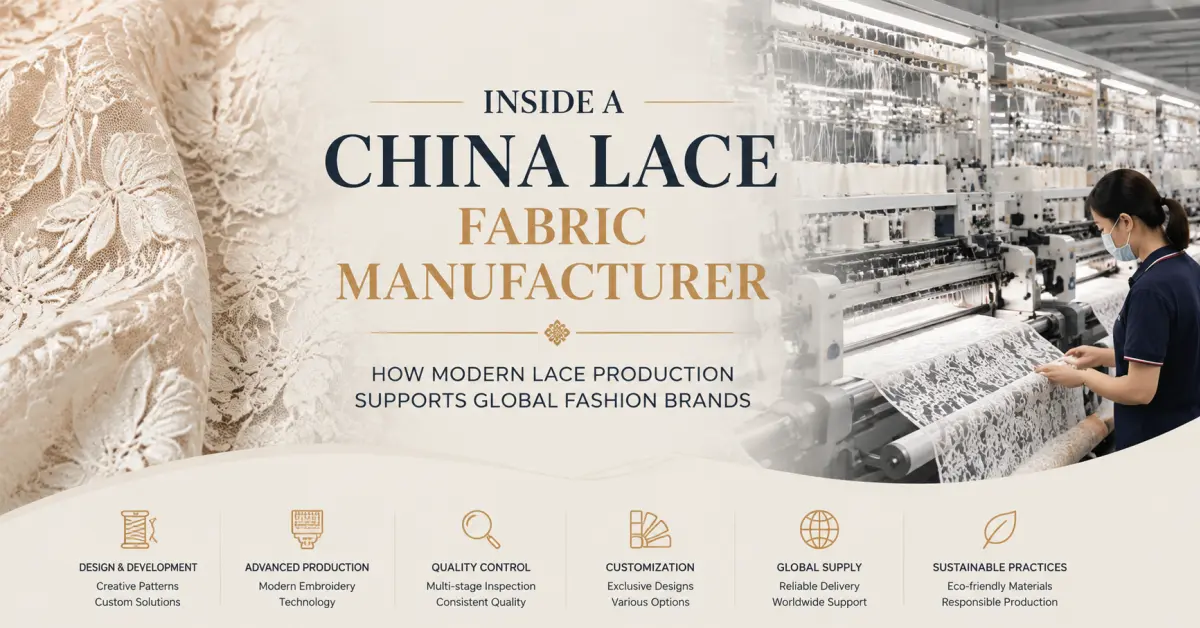

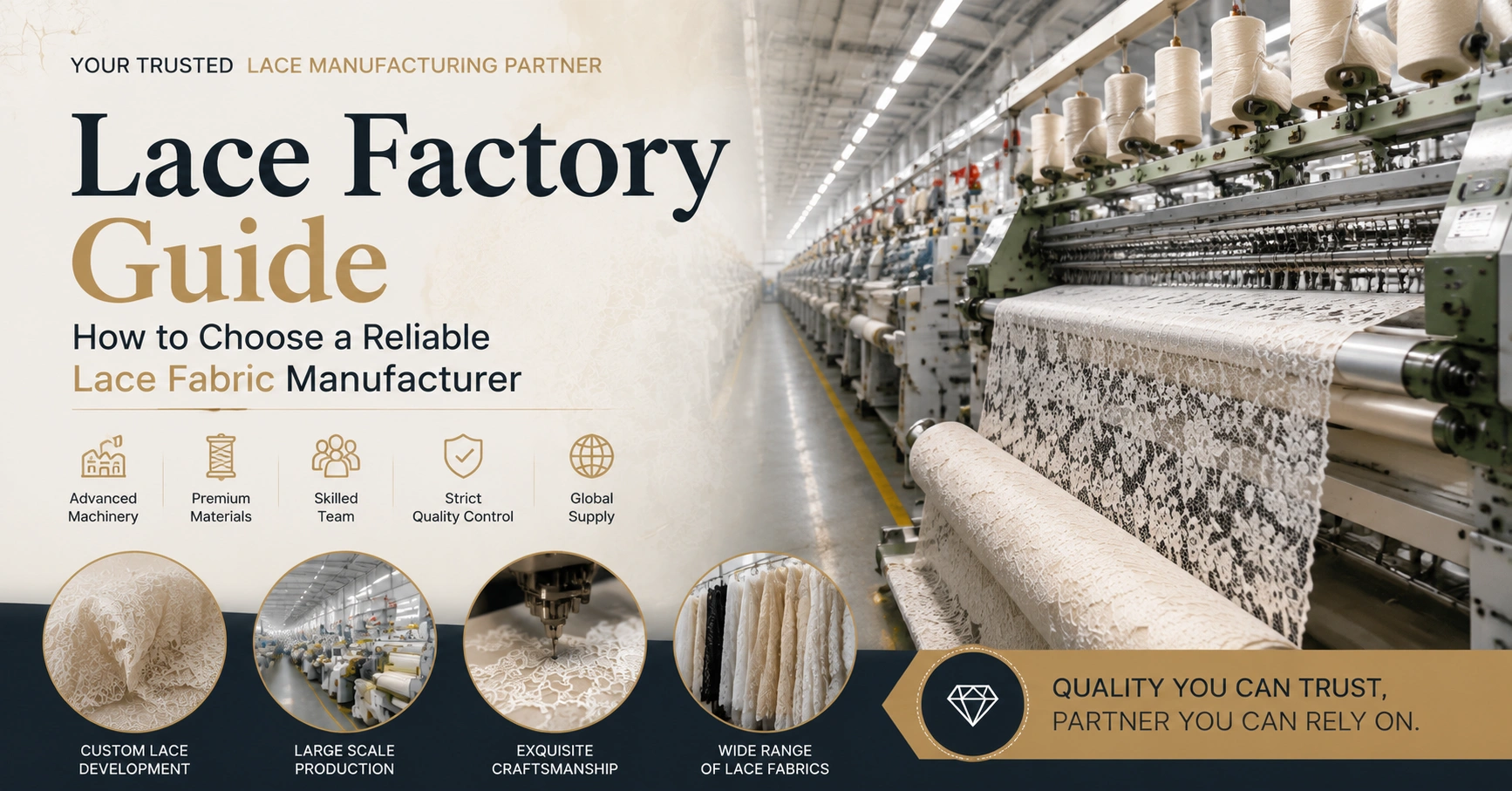

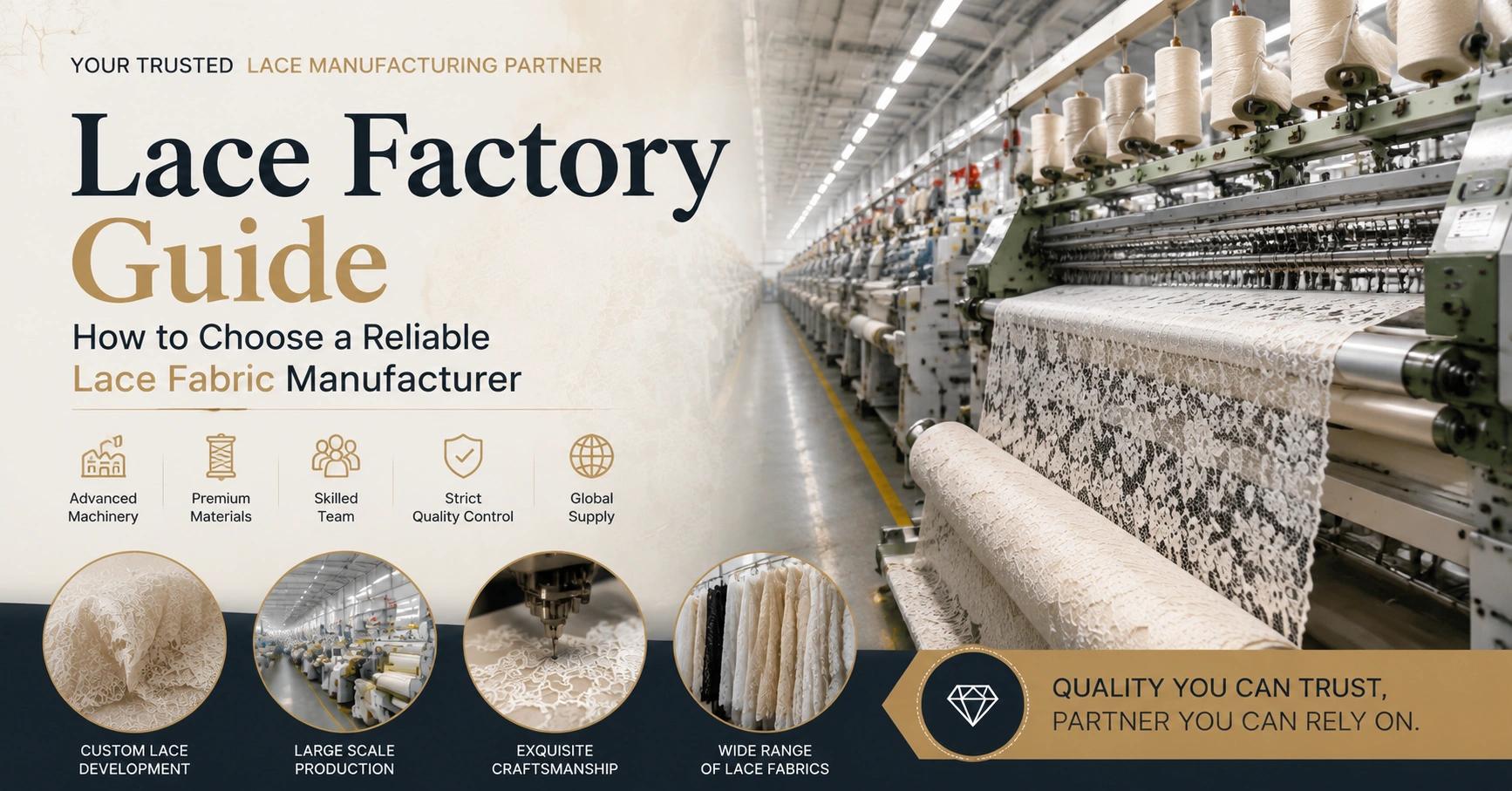
Why Choosing the Right Lace Factory Matters for Fashion Brands
In the global fashion and textile industry, lace is more than a decorative material. It represents craftsmanship, design value, and brand identity. From luxury bridal gowns and evening dresses to lingerie, lingerie trims, fashion accessories, and premium apparel collections, lace fabrics continue to play an important role in modern fashion development.
However, for fashion brands, designers, and garment manufacturers, finding the right lace factory is not simply about purchasing fabric. It is about establishing a long-term partnership with a supplier that can provide consistent quality, flexible customization, reliable production capacity, and professional technical support.
A professional lace factory plays a critical role throughout the entire product development process — from initial design concepts and pattern development to sampling, bulk production, quality inspection, and global delivery.
With the growth of international fashion supply chains, many buyers are searching for reliable partners such as a lace factory in China because China has developed a complete textile manufacturing ecosystem, advanced lace production technology, and strong customization capabilities.
But not every supplier can meet the requirements of international brands.
Choosing the right lace factory requires understanding production capabilities, machinery, quality management, customization services, and export experience.
This guide explains what global buyers should consider when selecting a professional lace manufacturer and how experienced suppliers support fashion brands from concept to production.
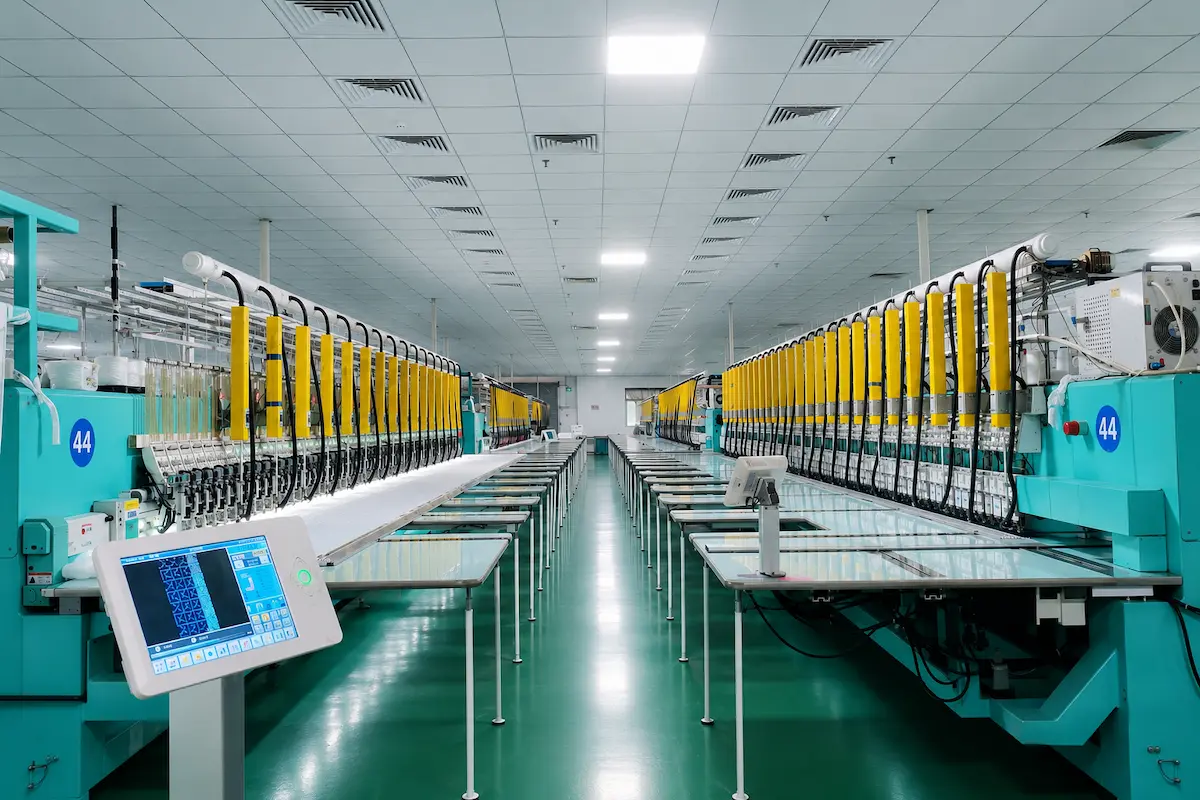
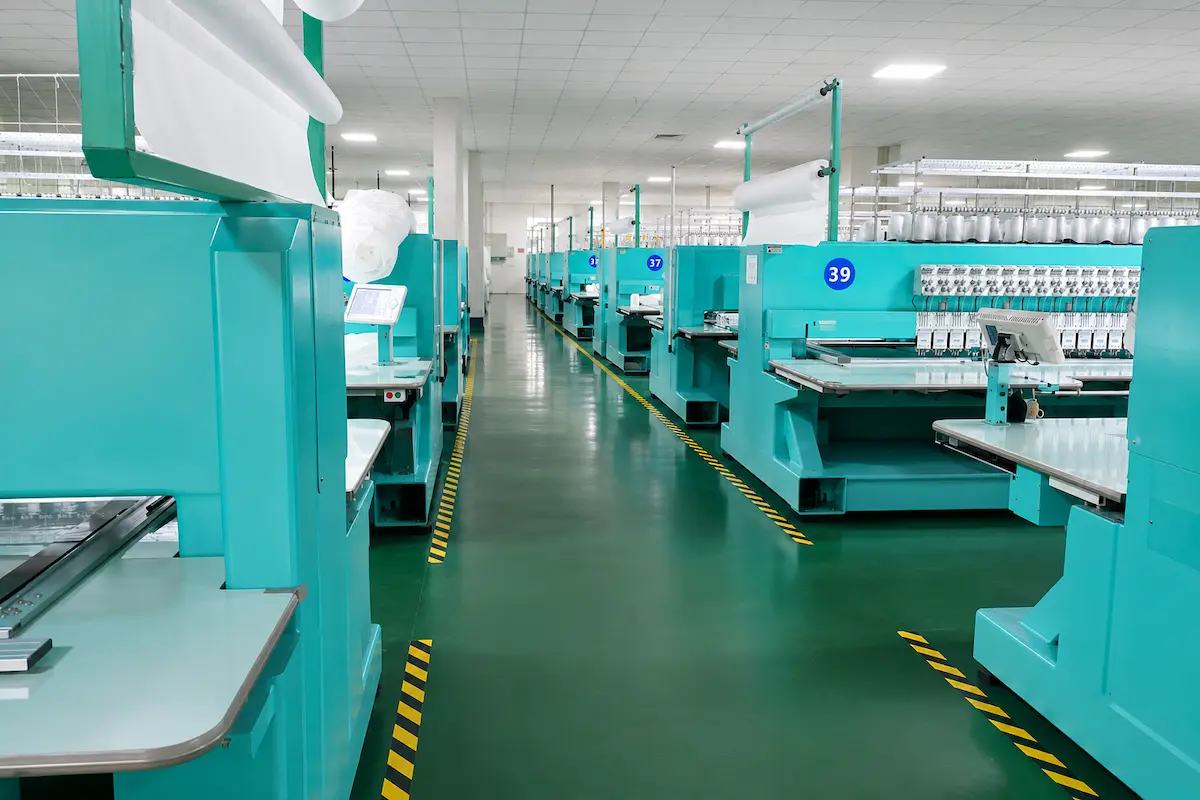
What Is a Lace Factory?
A lace factory is a textile manufacturing facility specializing in the production of lace fabrics, lace trims, embroidered lace, jacquard lace, stretch lace, and customized lace materials.
Unlike trading companies that purchase finished fabrics from different sources, a professional lace factory controls the production process directly, including:
-
Lace design development
-
Yarn selection
-
Machine production
-
Pattern creation
-
Dyeing and finishing
-
Embroidery processing
-
Quality inspection
-
Packaging and shipment
This direct manufacturing capability allows brands to achieve better consistency, faster communication, and greater flexibility in product development.
For fashion companies, working directly with a lace factory provides several advantages:
-
Better control over fabric quality
-
More customization options
-
Lower production risks
-
More competitive pricing
-
Faster product development cycles
Especially for brands creating seasonal collections, bridal collections, or premium fashion products, cooperation with an experienced lace manufacturer can significantly improve efficiency.
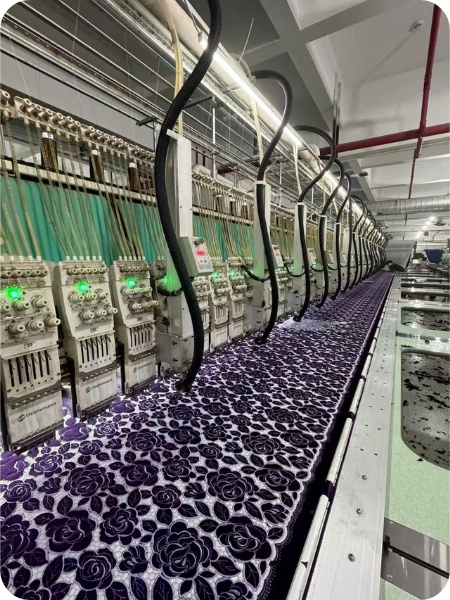
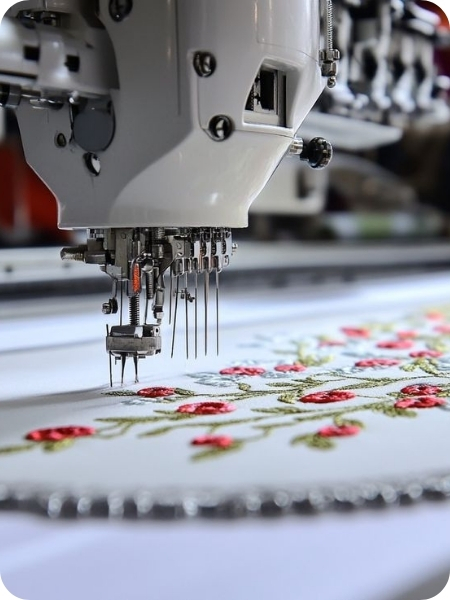
Why China Has Become a Global Lace Manufacturing Hub
Over the past decades, China has developed one of the world's most complete textile supply chains. The lace industry benefits from advanced machinery, skilled technicians, and integrated production resources.
A professional lace factory in China usually combines:
-
Modern knitting technology
-
Computerized pattern development
-
Large-scale production capacity
-
Experienced technical teams
-
Complete finishing processes
China's lace manufacturing advantages mainly come from several aspects.
Advanced Lace Production Technology
Modern lace production requires precision equipment and technical expertise.
Leading lace factories use advanced machines including:
-
Karl Mayer lace machines
-
Computerized jacquard machines
-
Embroidery machines
-
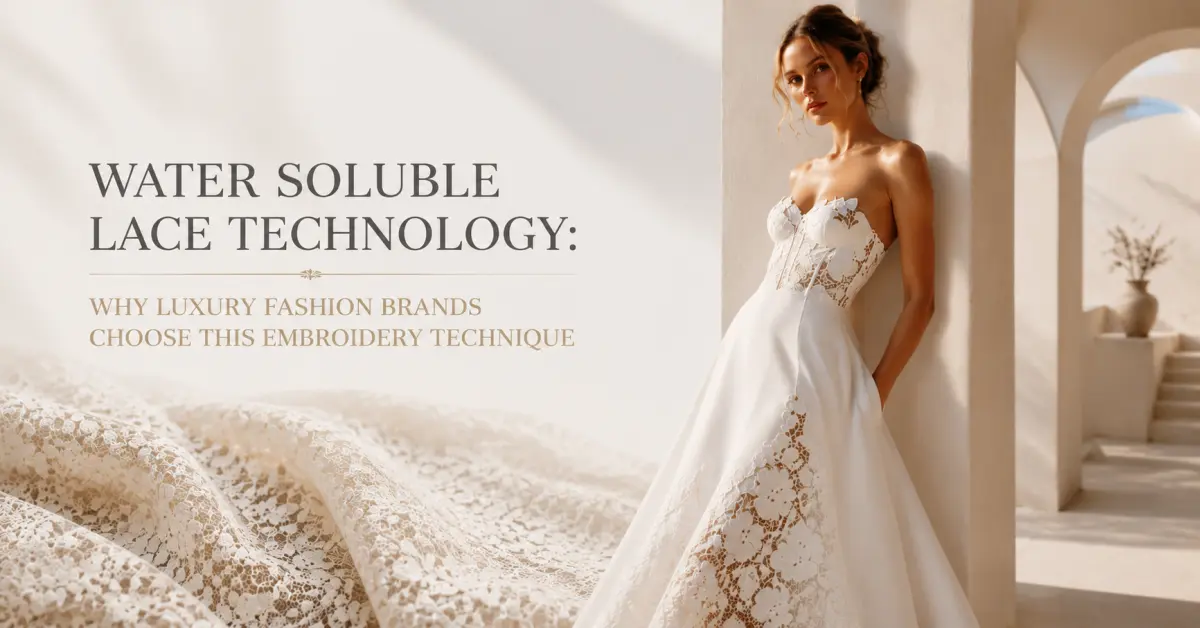
Water-soluble embroidery systems
-
Sequin embroidery equipment
These technologies allow manufacturers to produce:
-
Stretch lace fabric
-
Jacquard lace
-
Chantilly lace
-
Embroidered lace
-
Beaded lace
-
Chemical lace
Advanced machinery also improves:
-
Pattern accuracy
-
Fabric stability
-
Production efficiency
-
Design complexity
For international fashion brands, this means suppliers can transform creative concepts into commercially viable fabrics.
Strong Customization Capability
Today's fashion market requires differentiation.
Brands no longer want only standard lace designs. They need unique patterns, exclusive colors, and customized structures.
A professional lace factory can provide:
Custom Pattern Development
Designers can provide:
-
Sketches
-
Reference images
-
CAD drawings
-
Existing fabric samples
The factory can then develop new lace patterns according to requirements. Learn about pattern design development.
Custom Color Matching
Color consistency is essential for fashion production.
Experienced lace manufacturers provide:
-
Pantone color matching
-
Lab dip development
-
Bulk color control. Learn about dyeing and color matching.
This is especially important for:
-
Bridal collections
-
Luxury apparel
-
Seasonal fashion lines
Custom Finishing Options
Depending on application requirements, lace can be customized with:
-
Printing
-
Hot stamping
-
Flocking
-
Sanding
-
Sequins. Explore sequins and beads embroidery.
-
Beads. See crystal elegance bead sequin fabric.
-
Rhinestones
These techniques help brands create premium visual effects.
What Makes a Professional Lace Factory Different?
Not every lace supplier can be considered a true manufacturer.
Many companies in the market operate as trading businesses, purchasing fabrics from multiple factories and reselling them.
For buyers looking for stable long-term cooperation, identifying a real manufacturing partner is essential.
A professional lace factory usually has the following characteristics.
In-House Production Facilities
The most important factor is production capability.
A reliable lace factory should have:
-
Own production lines
-
Experienced operators
-
Quality control teams
-
Sample development department
-
Production management system
Factory ownership allows better control over:
-
Production schedules
-
Quality standards
-
Design confidentiality
For brands developing exclusive lace designs, this is especially important.
Professional Product Development Team
Lace manufacturing is not only about operating machines.
Creating high-quality lace requires technical experience.
A professional development team understands:
-
Pattern structure
-
Yarn characteristics
-
Fabric elasticity
-
Weight requirements
-
Application performance
For example:
A lace fabric designed for bridal gowns requires different characteristics compared with lingerie lace or fashion apparel lace.
Bridal lace usually focuses on:
-
Elegant patterns
-
Rich texture
-
High dimensional effects
-
Embroidery details
Stretch lace requires:
-
Good recovery
-
Comfortable hand feel
-
Stable elasticity
Experienced technicians help customers choose the correct structure for their applications.
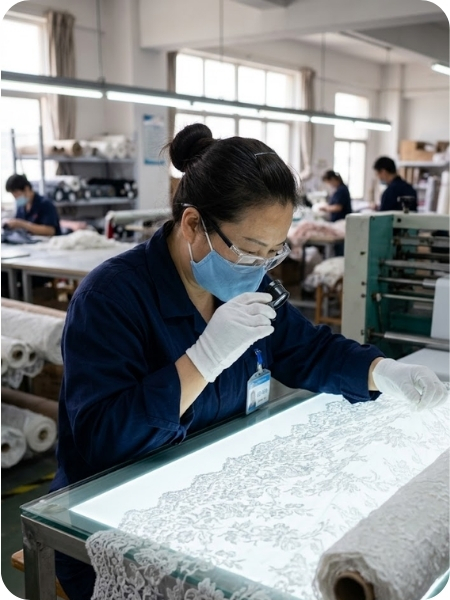
Strict Quality Control System
Quality consistency is one of the biggest concerns for international buyers.
A professional lace factory should have quality inspection throughout the production process. Learn about quality control standards.
Typical quality control includes:
Raw Material Inspection
Checking:
-
Yarn quality
-
Fiber composition
-
Color stability
Production Inspection
Monitoring:
-
Pattern accuracy
-
Fabric width
-
Defects
-
Machine performance
Finished Product Inspection
Testing:
-
Color difference
-
Stretch recovery
-
Fabric appearance
-
Packaging condition
Reliable quality control reduces production issues and protects brand reputation.
How Does a Lace Factory Produce Custom Lace Fabric?
For fashion brands, customization is one of the most important reasons to work directly with a professional lace factory. Unlike standard fabrics purchased from the market, custom lace requires a complete development process involving design communication, technical evaluation, sampling, production, and quality control.
A reliable lace manufacturer does not simply produce fabric based on existing patterns. Instead, it works closely with customers to transform creative concepts into finished textile products.
The typical custom lace production process includes the following stages.
Design Concept and Requirement Analysis
Every custom lace project begins with a design concept.
Fashion brands may provide different types of references, including:
-
Fashion sketches
-
Runway inspiration
-
Existing lace samples
-
Brand design concepts
-
Pattern drawings
-
Fabric photos
The lace factory analyzes the requirements from both aesthetic and technical perspectives.
Key factors include:
-
Final application
-
Fabric structure
-
Pattern size
-
Fabric weight
-
Stretch requirement
-
Color expectation
-
Production quantity
For example, a bridal brand developing wedding dress lace may require a luxurious floral pattern with three-dimensional embroidery effects, while a lingerie brand may prioritize softness, elasticity, and comfort.
A professional manufacturer will evaluate whether the design can be produced efficiently and recommend suitable production methods.
Lace Pattern Development
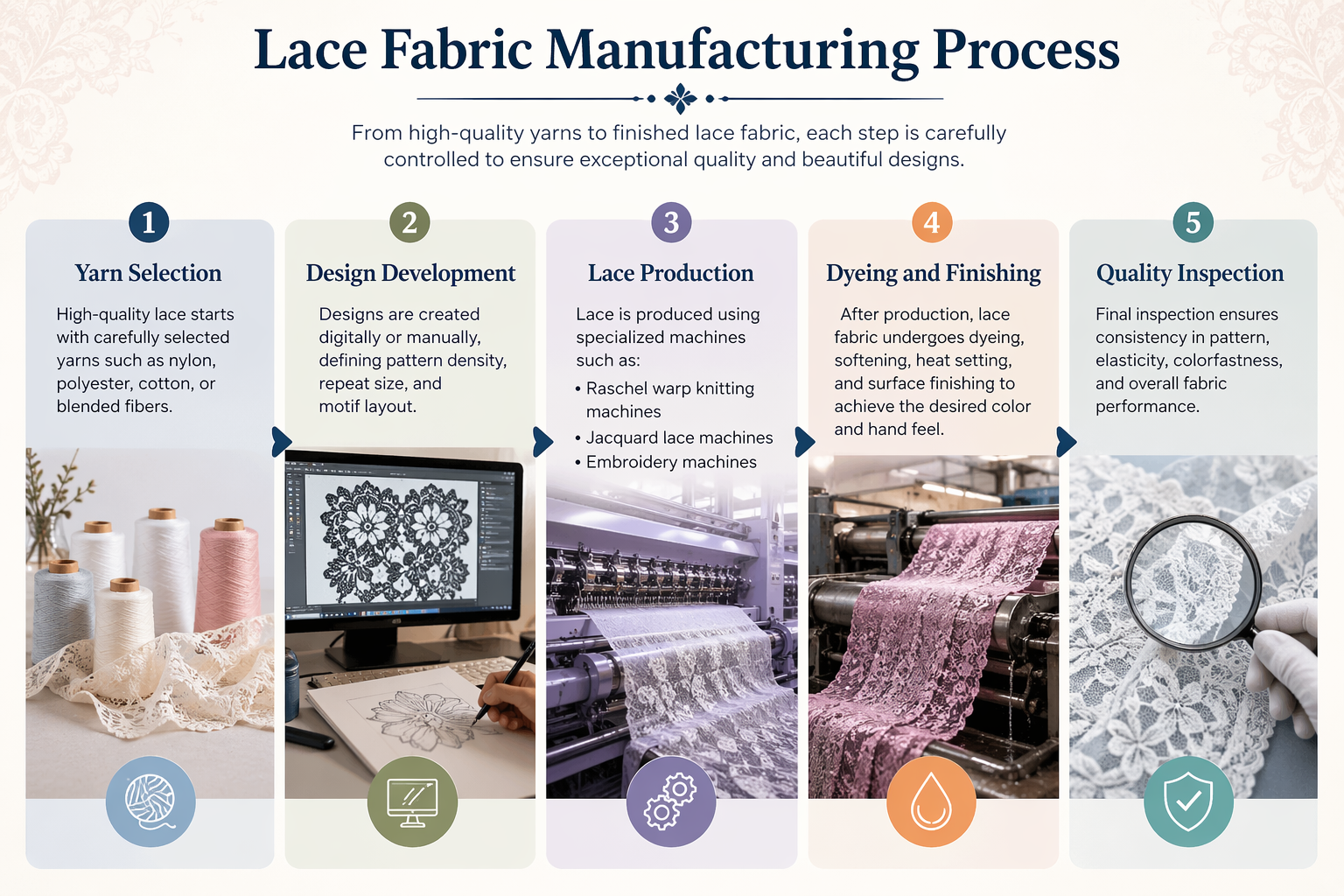
Pattern development is one of the most important steps in lace manufacturing.
A lace pattern is not simply a visual design. It must also meet technical requirements.
During development, designers and technicians consider:
-
Pattern repeat size
-
Yarn structure
-
Machine capability
-
Fabric stability
-
Cutting requirements
Professional lace factories usually have experienced pattern designers who can modify and optimize designs before production.
Common lace pattern styles include:
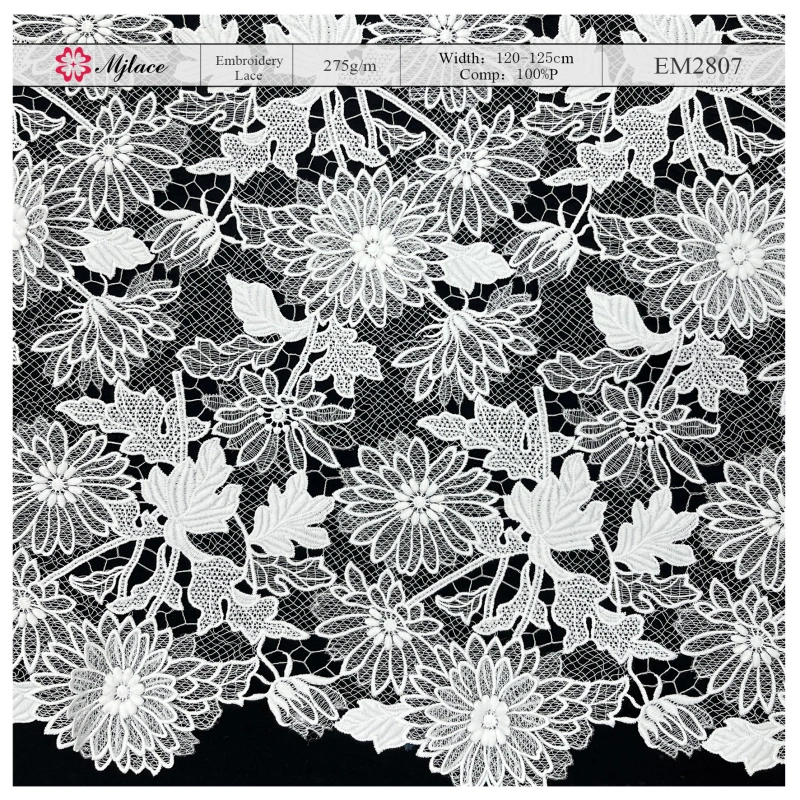
Floral Lace
One of the most widely used designs in fashion.
Applications:
-
Wedding dresses
-
Evening gowns
-
Luxury apparel
-
Romantic fashion collections
Popular elements include:
-
Roses
-
Leaves
-
Vines
-
Botanical motifs
Geometric Lace
Modern fashion brands increasingly use geometric lace patterns.
Features:
-
Clean structure
-
Contemporary appearance
-
Strong visual impact
Often used for:
-
Fashion dresses
-
Blouses
-
Skirts
-
Accessories
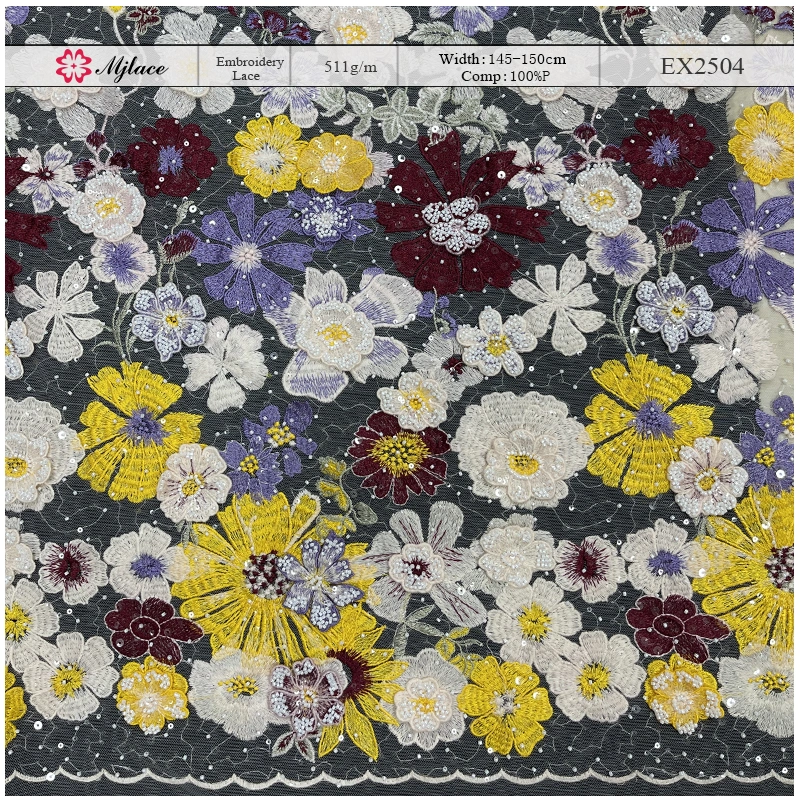
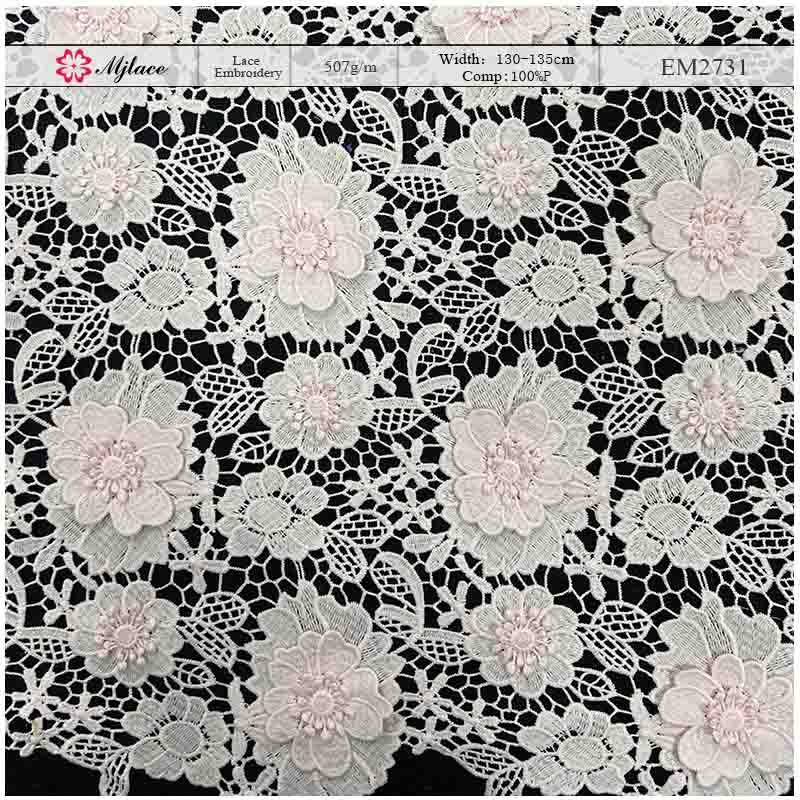
3D Embroidered Lace
Three-dimensional lace has become increasingly popular in premium fashion.
It can include:
-
Raised flowers
-
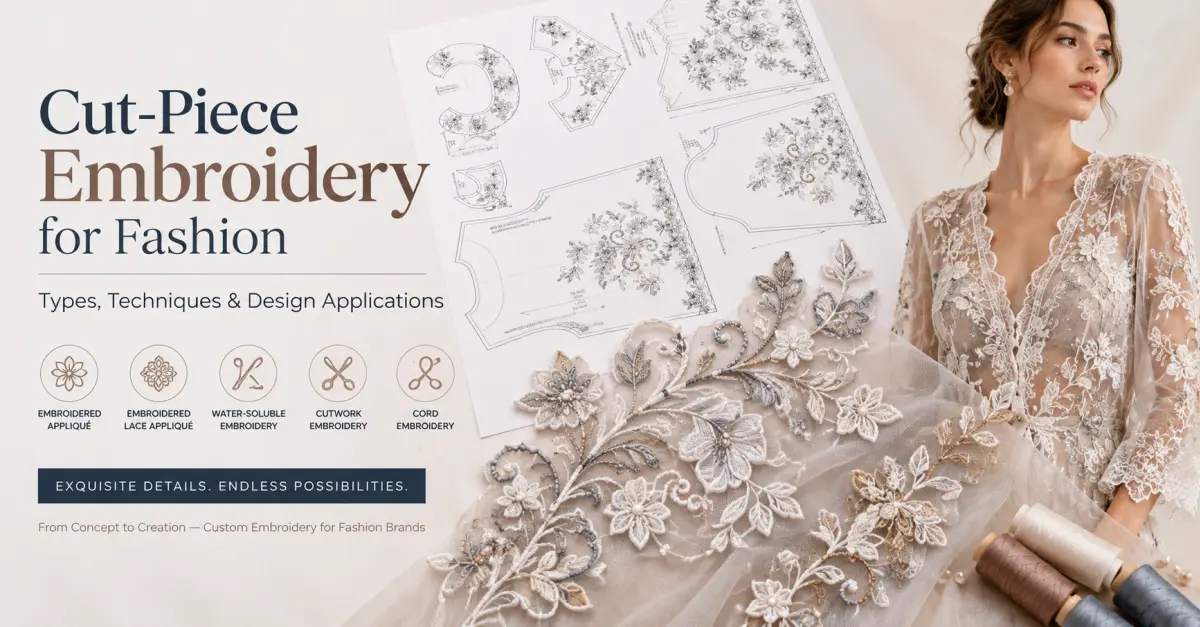
Appliqué elements
-
Beaded decorations
-
Sequin details
This type of lace creates a high-end handmade appearance.
Sample Development Process
Before bulk production, professional lace factories usually create samples for customer approval.
The sampling process allows brands to check:
-
Pattern accuracy
-
Fabric appearance
-
Color effect
-
Hand feel
-
Stretch performance
A typical custom lace sampling process includes:
Step 1: Technical Evaluation
The factory reviews:
-
Design feasibility
-
Material selection
-
Production method
Step 2: First Sample Production
The factory develops the initial sample based on the approved requirements.
Step 3: Customer Feedback
The customer evaluates:
-
Pattern details
-
Color
-
Texture
-
Application effect
Step 4: Sample Modification
Based on feedback, adjustments may include:
-
Pattern size changes
-
Color adjustment
-
Yarn modification
-
Embroidery improvement
For new lace fabric development, the typical sampling period is around:
-
20–25 days for new lace fabric
-
8–10 days for embroidery lace development
The timeline depends on design complexity and production requirements.
Bulk Lace Production
After sample approval, the lace factory begins mass production.
Production usually involves multiple processes.
Step 1: Yarn Preparation
The selection of yarn directly affects lace quality.
Common lace materials include:
-
Polyester
-
Nylon
-
Rayon
-
Spandex
For stretch lace, manufacturers often combine elastic fibers with other yarns to achieve:
-
Better flexibility
-
Comfortable wearing experience
-
Shape recovery
Step 2: Machine Production
Modern lace factories use specialized equipment to produce lace fabrics.
Different machines create different lace structures.
Examples include:
Warp Knitting Lace Machines
Used for:
-
Stretch lace
-
Lace fabric
Advantages:
-
High efficiency
-
Stable quality
-
Suitable for large production
Jacquard Lace Machines
Used for:
-
Complex patterns
-
High-end fashion lace
Advantages:
-
Detailed designs
-
Strong pattern expression
Embroidery Machines
Used for:
-
Embroidered lace
-
Beaded lace
-
Sequin lace
Advantages:
-
Premium appearance
-
Customized decoration
Dyeing and Finishing
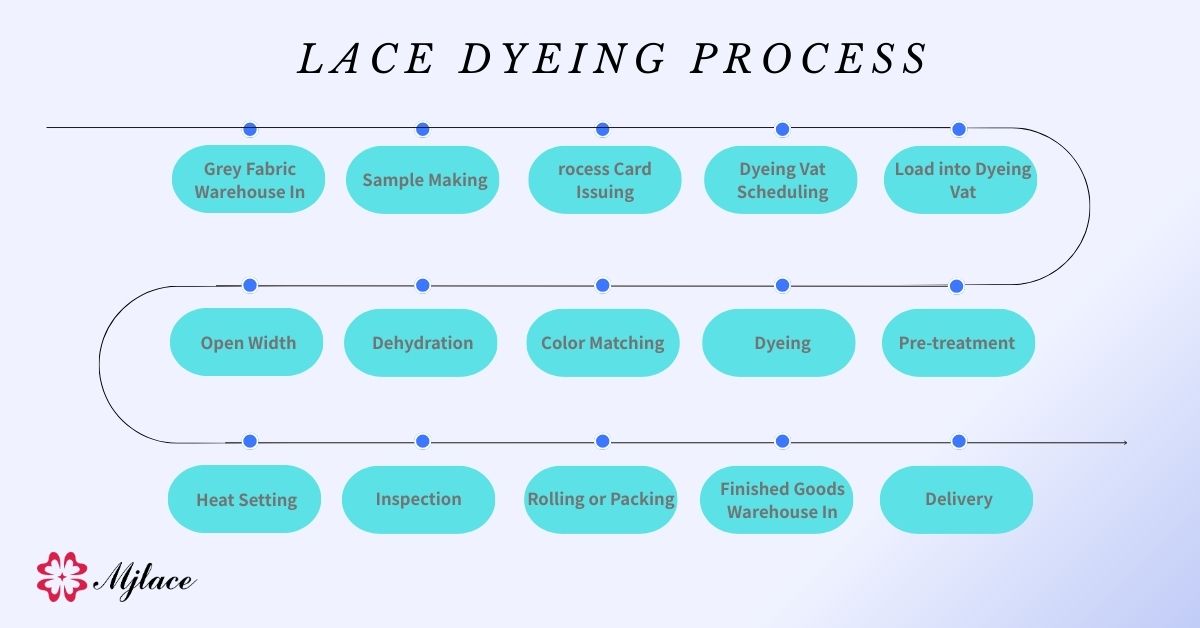
After lace production, fabrics usually require finishing processes to achieve the desired appearance and performance.
Important finishing processes include:
Dyeing
Professional lace factories provide customized colors according to:
-
Pantone codes
-
Customer samples
-
Brand color standards
Color accuracy is especially important for international fashion brands because collections often require consistent colors across multiple production batches.
Printing
Printing technology can create unique visual effects.
Applications:
-
Floral lace
-
Fashion apparel
-
Seasonal collections
Hot Stamping
Metallic effects can be added through hot stamping technology.
Common effects:
-
Gold
-
Silver
-
Metallic patterns
Often used for:
-
Luxury dresses
-
Evening wear
-
Fashion accessories
Flocking
Flocking creates a soft raised surface.
Benefits:
-
Rich texture
-
Velvet-like appearance
-
Premium touch
Types of Lace Fabrics Produced by Professional Lace Factories
A professional lace fabric manufacturer usually offers a wide product range to meet different industries.
Understanding different lace categories helps buyers select suitable materials for their products.
Stretch Lace Fabric
Stretch lace is one of the most popular lace categories.
It usually contains elastic fibers that provide flexibility and comfort.
Main characteristics:
-
Soft hand feel
-
Good elasticity
-
Comfortable wearing experience
Applications:
-
Lingerie
-
Fashion tops
-
Dresses
-
Activewear details
For brands producing fitted garments, stretch performance is a key purchasing consideration.
Bridal Lace Fabric
Bridal lace remains one of the most important segments of the lace industry.
Wedding dress designers usually require lace with:
-
Elegant patterns
-
Rich texture
-
Premium appearance
-
Excellent drape
Popular bridal lace types include:
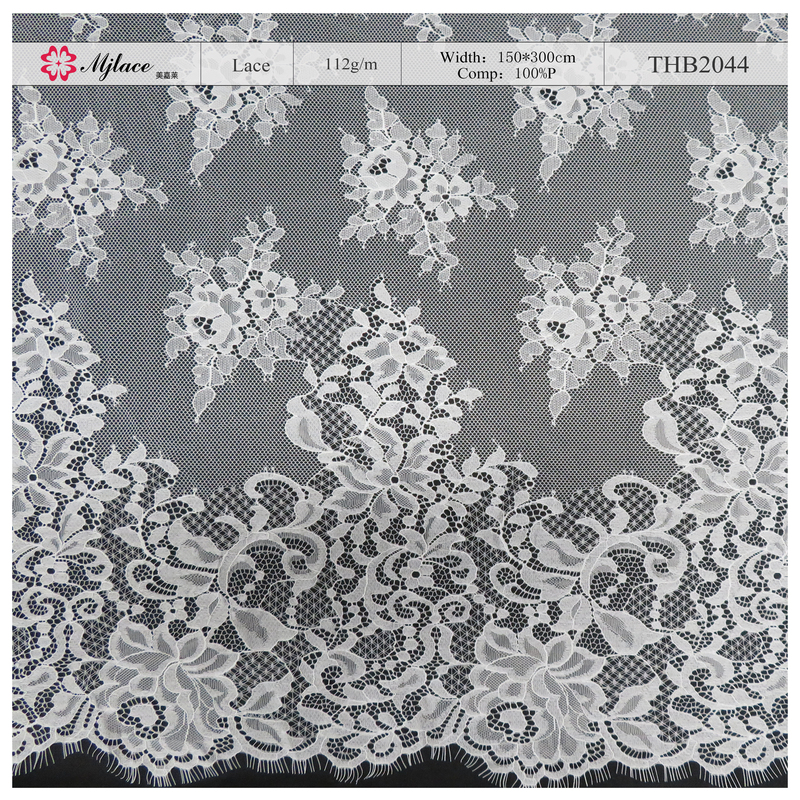
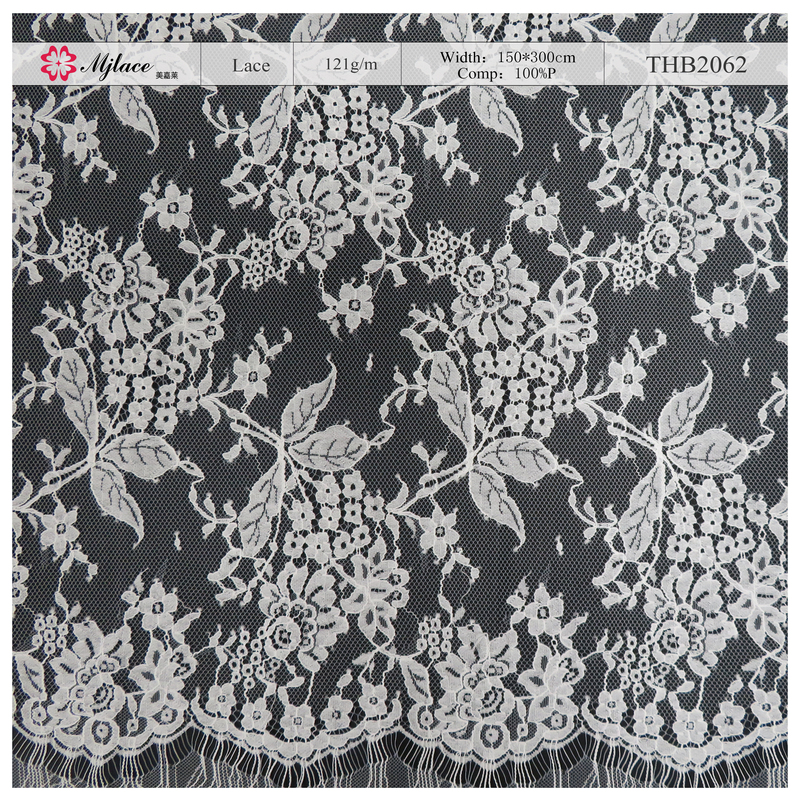
Chantilly Lace
Known for:
-
Fine patterns
-
Lightweight structure
-
Elegant appearance. Explore chantilly lace.

Embroidered Bridal Lace
Features:
-
Raised embroidery
-
Floral motifs
-
Luxury details
Beaded Lace
Includes:
-
Pearls
-
Sequins
-
Crystals
Often used for luxury bridal gowns.
Eyelash Lace Trim
Eyelash lace is recognized by its decorative edge.
Characteristics:
-
Delicate fringe effect
-
Feminine appearance
-
Decorative finish
Applications:
-
Lingerie
-
Sleepwear
-
Fashion garments
-
Accessories
Brands often choose eyelash lace trims to add premium details without increasing garment complexity.
Jacquard Lace Fabric
Jacquard lace uses advanced weaving technology to create complex patterns.
Advantages:
-
Strong design expression
-
Clear patterns
-
Premium texture
Applications:
-
Luxury fashion
-
Designer collections
-
High-end apparel
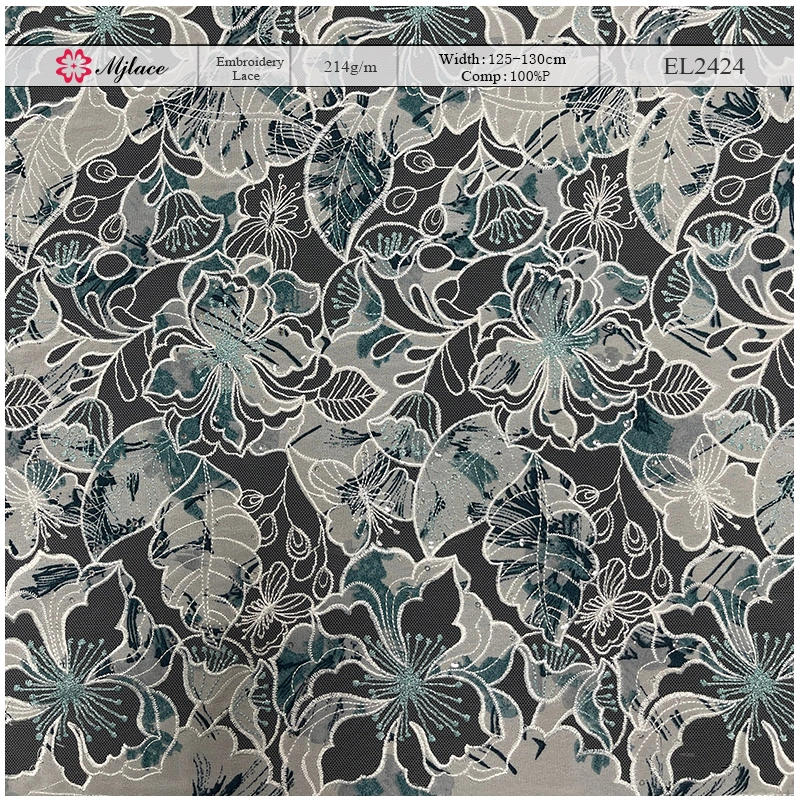
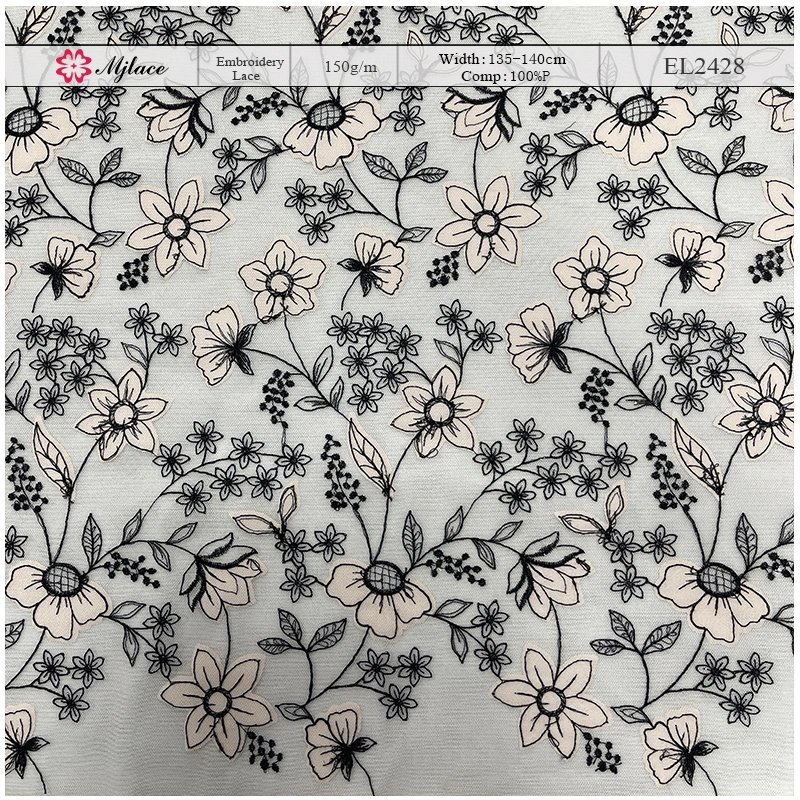
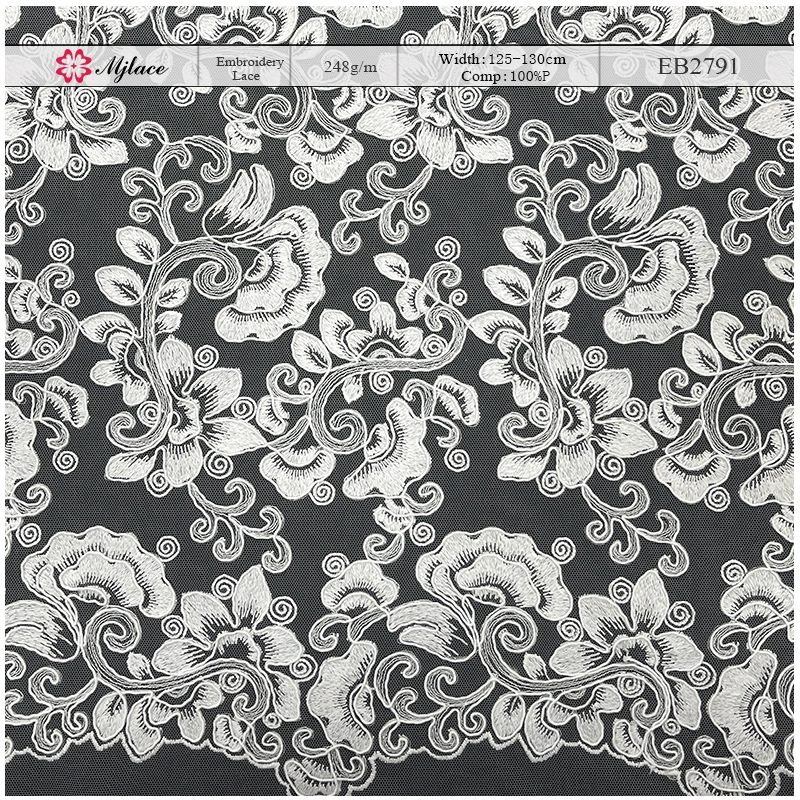
Embroidered Lace Fabric
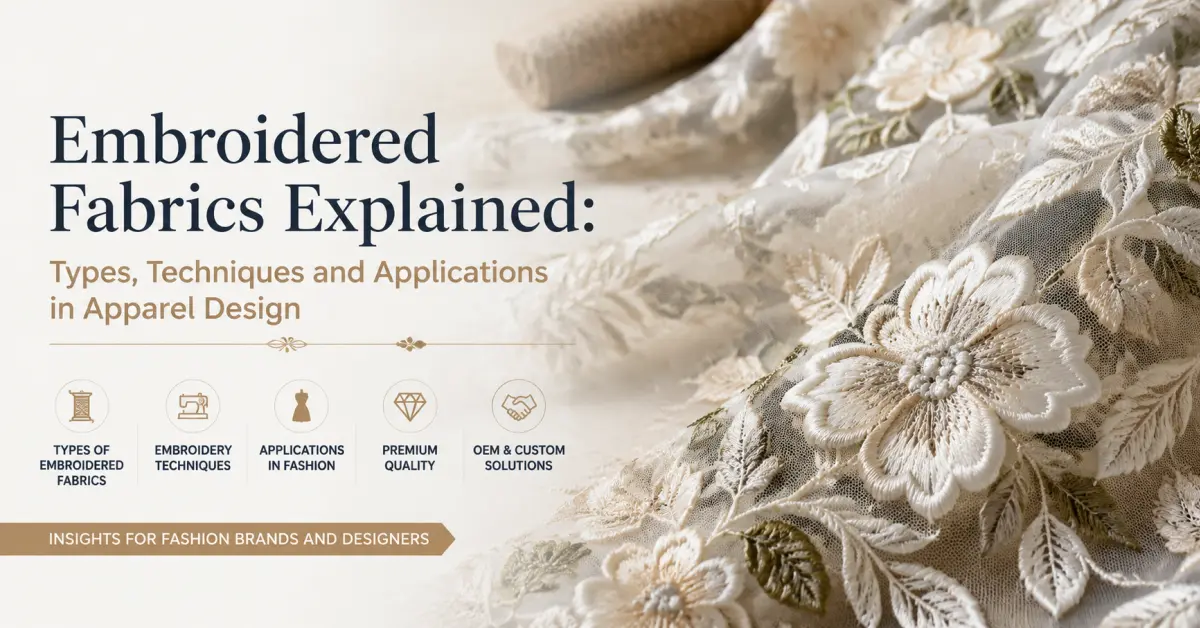
Embroidery adds additional decorative elements to traditional lace.
Common options:
-
Thread embroidery
-
Sequin embroidery
-
Bead embroidery
-
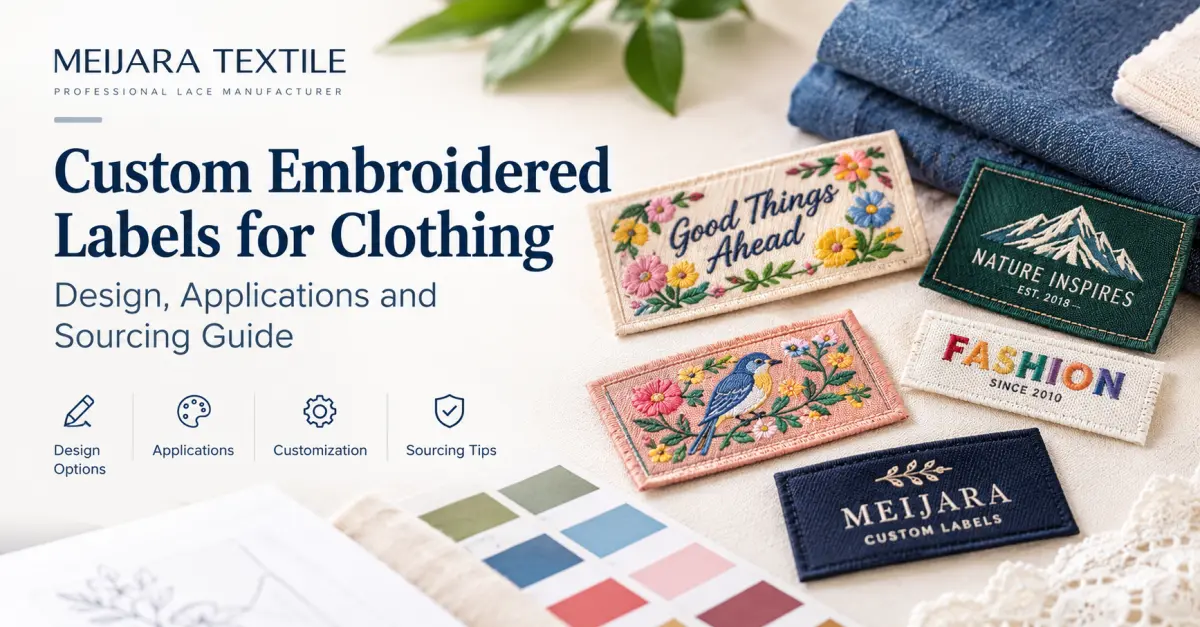
Heavy embroidery. Explore cord embroidery.
This category is especially popular among:
-
Couture designers
-
Bridal brands
-
Evening wear manufacturers
How Fashion Brands Work With a Lace Factory
Successful cooperation between fashion brands and lace factories requires more than purchasing fabric.
It is a collaborative development process.
Many international brands follow a similar workflow.
Initial Product Development
The brand shares:
-
Design requirements
-
Product application
-
Quantity expectations
-
Target market
The lace factory provides:
-
Material recommendations
-
Technical suggestions
-
Development timeline
Sample Approval
Samples are reviewed based on:
-
Appearance
-
Quality
-
Performance
-
Cost
Professional communication during this stage reduces future production problems.
Bulk Production Management
During mass production, manufacturers manage:
-
Raw materials
-
Production scheduling
-
Quality inspection
-
Packaging
For international buyers, production reliability is critical because delayed fabric delivery can affect entire fashion collection launches.
Global Export Support
Experienced lace factories understand international business requirements.
They usually provide:
-
Export documentation
-
Professional packaging
-
Shipping coordination
-
Quality certificates. Learn about importing logistics.
For global brands, choosing a manufacturer with export experience reduces communication costs and supply chain risks.

How to Choose the Right Lace Factory for Your Business?
Choosing the right lace factory is one of the most important decisions for fashion brands, garment manufacturers, and textile sourcing companies.
A reliable lace supplier can help brands achieve:
-
Consistent product quality
-
Faster product development
-
Stable supply chain management
-
Competitive production costs
-
Long-term business growth
However, with many suppliers available in global markets, identifying a truly capable lace manufacturer requires careful evaluation.
The following factors can help international buyers select the right lace factory partner.
Check the Factory's Manufacturing Experience
Experience is one of the strongest indicators of manufacturing capability.
A professional lace factory with years of production experience usually has better knowledge of:
-
Lace structure development
-
Machine operation
-
Pattern optimization
-
Fabric finishing
-
Quality control
For example, producing a complex embroidered bridal lace requires much more technical experience than producing standard lace trims.
Experienced manufacturers understand how different materials behave during production and can provide practical solutions when challenges occur.
When evaluating a lace factory, buyers should consider:
-
How many years has the factory been producing lace?
-
Does it specialize in lace manufacturing?
-
Does it serve international customers?
-
Does it have experience with similar products?
A supplier that understands international fashion requirements can usually provide smoother cooperation.
Evaluate Production Capacity
Production capacity directly affects delivery reliability.
A professional lace factory should have sufficient equipment and production resources to support both small development projects and large-scale orders.
Important factors include:
Machinery Capability
Check whether the factory owns:
-
Lace knitting machines
-
Jacquard machines
-
Embroidery equipment
-
Finishing equipment
Advanced machinery allows manufacturers to produce more complex lace designs.
Production Volume
Fashion brands should evaluate whether the factory can support:
-
Sampling orders
-
Small batch production
-
Seasonal collections
-
Large wholesale orders
For example, a supplier producing only small quantities may not be suitable for brands requiring continuous monthly production.
Lead Time Management
Reliable factories provide clear production schedules.
Typical production timelines:
New Lace Fabric Development
-
Sampling: 20–25 days
-
Bulk production: around 35–40 days
Embroidery Lace Development
-
Sampling: 8–10 days
-
Bulk production: around 18–20 days
Actual timelines depend on design complexity, quantity, and finishing requirements.
Review Product Range and Customization Ability
A professional lace fabric supplier should provide a wide product portfolio.
A broad product range demonstrates technical capability and allows brands to source multiple products from one partner.
Common lace categories include:
-
Stretch lace fabric
-
Non-stretch lace fabric
-
Jacquard lace
-
Bridal lace
-
Chantilly lace
-
Eyelash lace trim
-
Cotton lace
-
Chemical lace
-
Embroidered lace
-
Beaded lace
-
Sequin lace
A strong customization system is also important.
Fashion brands often require:
-
Exclusive patterns
-
Custom colors
-
Different fabric widths
-
Special embroidery effects
-
Private label development. Explore customized processes.
A capable lace factory should be able to support the entire development process from idea to finished fabric.
Check Quality Control Standards
Quality consistency is one of the biggest concerns when sourcing textiles internationally.
A professional lace factory should have a clear quality management process.
Important inspection points include:
Fabric Appearance Inspection
Checking:
-
Broken patterns
-
Missing yarn
-
Uneven embroidery
-
Surface defects
Color Inspection
Checking:
-
Color accuracy
-
Batch consistency
-
Dyeing stability
Performance Testing
Depending on product type:
Stretch lace may require:
-
Elastic recovery testing
-
Shape retention testing
Bridal lace may require:
-
Embroidery strength testing
-
Decoration attachment testing
Final Inspection Before Shipment
Before delivery, factories should inspect:
-
Fabric quantity
-
Packaging condition
-
Product specifications
This reduces problems after goods arrive at the customer's warehouse.
Consider Export Experience
For international buyers, manufacturing capability is not enough.
A reliable lace factory should also understand global export requirements.
Experienced exporters usually provide:
-
Commercial invoices
-
Packing lists
-
Shipping documents
-
Product specifications
-
Customs support
They also understand different market requirements, including:
-
European fashion standards
-
US garment industry requirements
-
International textile regulations
Working with an export-experienced manufacturer helps avoid unnecessary delays.
Lace Factory vs Lace Trading Company: Which One Should You Choose?
When searching for lace suppliers, buyers often encounter two types of companies:
-
Lace factories
-
Lace trading companies
Although both can provide lace products, their advantages are different.
Advantages of Working Directly With a Lace Factory
A direct factory partnership provides several benefits.
Better Price Control
Because there is no middle layer, buyers can usually receive more competitive pricing.
Faster Communication
Direct communication with production teams helps solve:
-
Design questions
-
Technical issues
-
Production adjustments
Better Custom Development
Factories can directly modify:
-
Patterns
-
Materials
-
Production methods
This is especially important for fashion brands developing unique collections.
More Stable Quality
Factories control production internally, making quality consistency easier to maintain.
When a Trading Company May Be Suitable
Trading companies can be useful when buyers need:
-
Multiple textile categories
-
Small quantities from different suppliers
-
Market sourcing support
However, for brands focusing specifically on lace products, working directly with a specialized lace factory usually provides stronger technical support.
Why Global Fashion Brands Choose China Lace Factory Partners
China has become one of the most important sources for global lace products.
International fashion companies choose Chinese lace factories because of several advantages.
Complete Textile Supply Chain
China has a mature textile ecosystem covering:
-
Yarn production
-
Lace manufacturing
-
Dyeing
-
Embroidery
-
Finishing
-
Packaging
-
Export logistics
This integrated supply chain allows faster development and more efficient production.
Strong Product Development Capability
Modern fashion requires continuous innovation.
Chinese lace manufacturers invest in:
-
New machinery
-
Pattern development
-
Production technology
-
Skilled technicians
This enables them to create:
-
Modern fashion lace
-
Luxury bridal lace
-
Customized embroidery
-
Innovative textile effects
Competitive Manufacturing Cost
Cost competitiveness remains one reason global brands source lace from China.
However, professional buyers increasingly focus on more than price.
The best suppliers combine:
-
Reasonable cost
-
Stable quality
-
Reliable delivery
-
Technical support
A low price without quality control can create higher costs through production problems and delays.
Experience Serving International Brands
Many Chinese lace factories work with customers from:
-
Europe
-
North America
-
Southeast Asia
-
Middle East
This experience helps manufacturers understand:
-
Fashion trends
-
Quality expectations
-
Communication requirements
-
Export procedures
OEM and Private Label Lace Manufacturing
For brands that want unique products, OEM lace manufacturing provides an effective solution.
A professional OEM lace factory can help develop exclusive fabrics based on brand requirements.
What Is OEM Lace Manufacturing?
OEM means the factory produces lace products according to the customer's design and specifications.
The customer controls:
-
Design direction
-
Product requirements
-
Brand positioning
The factory provides:
-
Technical development
-
Manufacturing
-
Quality management
OEM Lace Development Process
A typical OEM process includes:
Step 1: Design Consultation
The brand provides:
-
Inspiration
-
Drawings
-
Samples
The factory evaluates feasibility.
Step 2: Product Development
The manufacturer develops:
-
Pattern
-
Material selection
-
Sample fabric
Step 3: Sample Approval
The customer reviews:
-
Appearance
-
Quality
-
Performance
Step 4: Mass Production
After approval:
-
Raw materials are prepared
-
Production begins
-
Quality inspection is completed. Explore cut piece and processing.
Why OEM Is Important for Fashion Brands
OEM manufacturing allows brands to:
-
Create exclusive collections
-
Differentiate from competitors
-
Protect design concepts
-
Develop long-term product lines
For premium fashion and bridal brands, customized lace can become a key part of brand identity.
FAQ About Lace Factory
Q1: What is a lace factory?
A lace factory is a textile manufacturer specializing in producing lace fabrics, lace trims, embroidered lace, and customized lace materials. Professional factories handle design development, production, finishing, and quality inspection.
Q2: How do I choose a reliable lace factory?
When choosing a lace factory, consider:
-
Manufacturing experience
-
Production capacity
-
Product range
-
Customization ability
-
Quality control system
-
Export experience
A factory with strong technical capability and international experience is usually a better long-term partner.
Q3: What types of lace can a lace factory produce?
Professional lace factories can produce:
-
Stretch lace
-
Bridal lace
-
Jacquard lace
-
Chantilly lace
-
Eyelash lace
-
Embroidered lace
-
Beaded lace
-
Sequin lace
Q4: Can a lace factory create custom designs?
Yes. Many professional manufacturers provide OEM and custom lace development services, including:
-
Custom patterns
-
Custom colors
-
Custom embroidery
-
Special finishing
Q5: What is the MOQ for custom lace fabric?
MOQ depends on the product type and development requirements.
Generally:
-
New lace fabric development: around 3000–5000 meters
-
Embroidery lace: around 300–500 meters per color
The final MOQ depends on design complexity and production method.
Q6: How long does lace production take?
Production time depends on the product.
Typical timelines:
-
New lace sample development: 20–25 days
-
Lace fabric bulk production: 35–40 days
-
Embroidery sample development: 8–10 days
-
Embroidery production: 18–20 days
Choosing the Right Lace Factory Builds Long-Term Fashion Success
For fashion brands, selecting a lace factory is not only a sourcing decision. It is a strategic partnership that influences product quality, brand image, and market competitiveness.
A professional lace manufacturer provides much more than fabric supply. It offers:
-
Technical expertise
-
Custom development capability
-
Reliable production
-
Quality assurance
-
Global supply support
As lace continues to play an important role in bridal fashion, luxury apparel, and creative textile design, working with an experienced lace factory allows brands to develop unique products and respond faster to changing market demands.
For companies searching for a reliable lace manufacturing partner, evaluating production capability, customization experience, and quality management is the key to building a successful long-term supply relationship.
Ready to find a reliable lace factory partner? Visit our homepage to explore our collections or contact us for inquiries. You may also submit an inquiry for custom pricing.