

Lace fabric is a staple in high-end fashion, bridal wear, and luxury textiles, but not all lace is created equal. For designers and apparel manufacturers, understanding the differences between cheap and premium lace fabric is essential to achieving quality, durability, and aesthetic appeal. In this article, we break down the distinctions in material, construction, finish, and cost, helping you make informed sourcing decisions for your collections.
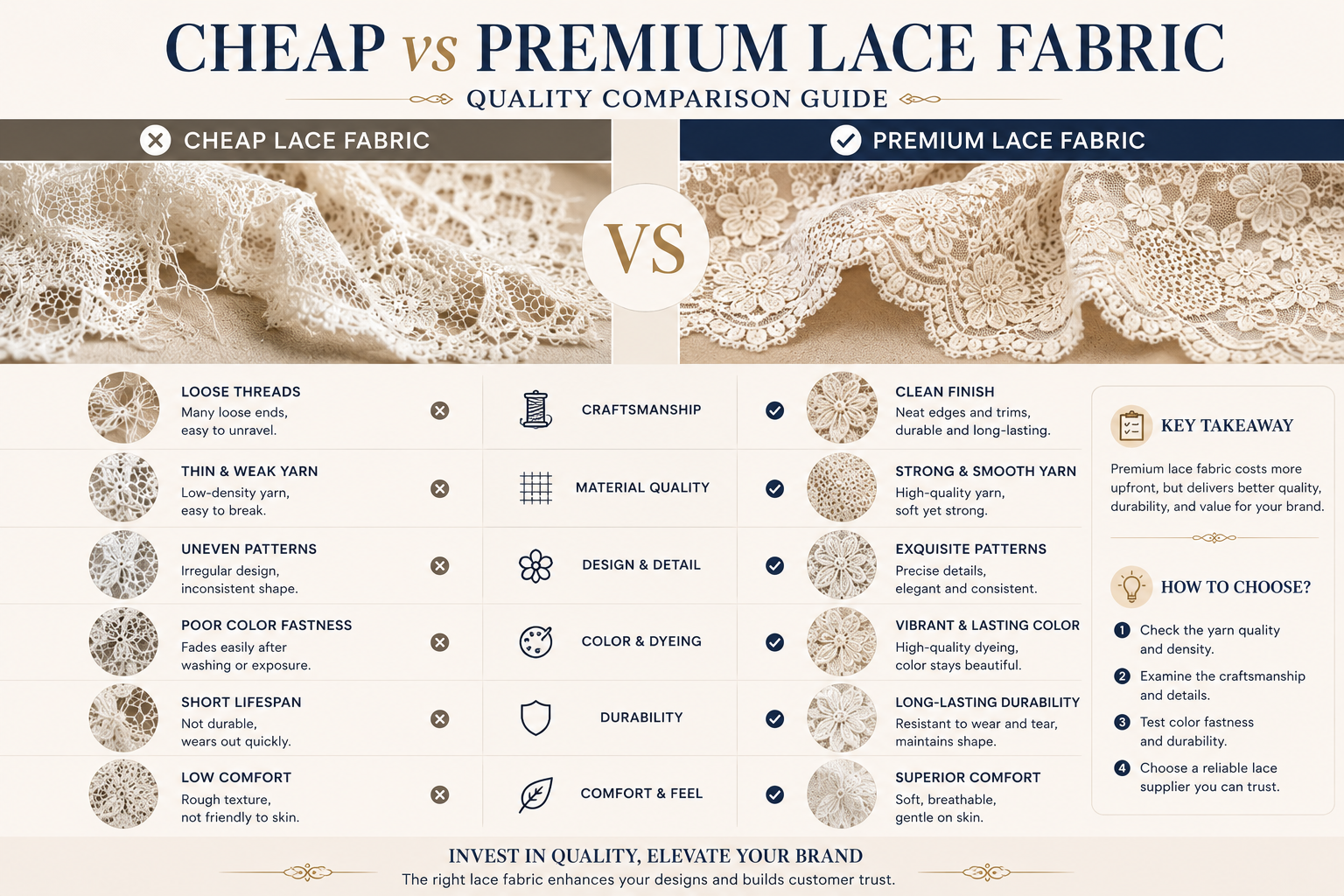
Material Quality
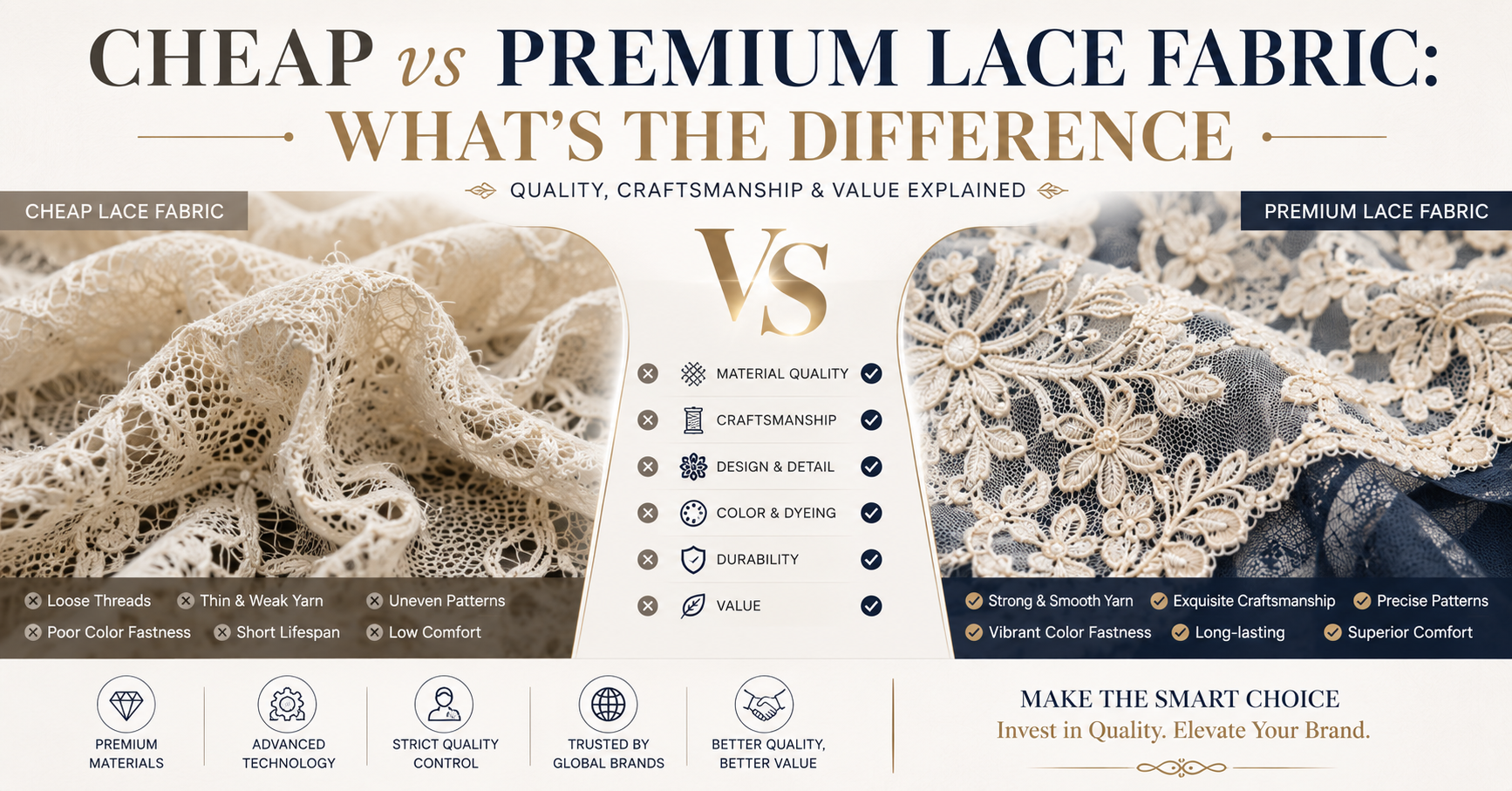
Cheap Lace: Low-cost lace typically uses synthetic fibers such as polyester, nylon, or blends with minimal natural content. These fibers are less durable, may feel stiff, and often have uneven finishes. The threads are prone to fraying or pilling after washing or cutting, limiting the garment's lifespan.
Premium Lace: High-quality lace often incorporates natural fibers such as cotton, silk, or high-grade viscose. These fabrics provide superior drape, softness, and tactile appeal. Premium fibers also allow for finer embroidery, giving patterns more depth and definition. For example, cotton-based chantilly lace has superior breathability and a refined texture that feels luxurious against the skin.
Weaving and Manufacturing Techniques
Cheap Lace: Low-cost lace is often mass-produced using machine-made tulle bases with basic embroidery or chemical lace techniques. These methods allow for fast production but sacrifice intricate detailing and precision. Designs are often repeated with minimal variation, which can result in a less refined appearance.
Premium Lace: Premium lace is crafted using advanced weaving machines such as the Karl Mayer Raschel lace machines, or traditional hand-embroidery methods for luxury lines. Techniques like eyelash lace, sequined embroidery, or 3D floral appliqué create complex textures and dimensionality. For example, jacquard lace woven on MRES42 machines enables high-density patterns with consistent quality across rolls.
Pattern Complexity and Detailing
Cheap Lace: Patterns in inexpensive lace are typically simple geometric or floral motifs, often lacking precision in alignment and stitch density. The edges may be irregular, and repeated patterns can appear less aesthetically pleasing in finished garments.
Premium Lace: Premium lace showcases intricate designs such as multi-layered floral motifs, scalloped edges, or mixed media elements including beads, sequins, and ribbon accents. Fine detailing ensures each piece of lace maintains design consistency and visual impact, making it ideal for couture or bridal wear.
Durability and Finish
Cheap Lace: Low-end lace fabrics may deteriorate quickly due to weak fibers and insufficient finishing. They are less resistant to stretching, snagging, or repeated laundering, making them unsuitable for high-traffic or long-wear garments.
Premium Lace: Premium lace undergoes careful finishing processes including reinforced edging, color stabilization, and softening treatments. This ensures the lace maintains shape, color, and texture over time. High-end laces can withstand multiple washes and handling while preserving intricate detailing.
Cost Considerations
Cheap Lace: Affordable lace is attractive for budget-conscious buyers and mass-produced garments. Pricing is low due to the use of synthetic fibers, simple weaving, and minimal labor costs. However, this cost-saving often comes at the expense of quality, durability, and garment appeal.
Premium Lace: Luxury lace commands higher prices, reflecting superior materials, advanced machinery, and skilled craftsmanship. For example, a 1-meter roll of embroidered eyelash lace with sequins and scalloped edges may cost 3–5 times more than standard chemical lace, but it enhances the perceived value of finished apparel. Explore our sequins and beads embroidery and crystal elegance bead sequin fabric.
Practical Application and Sourcing Advice
Cheap Lace: Best suited for casual apparel, costume design, or projects where the lace will not endure heavy wear. Ideal for experimentation or seasonal collections where low cost is prioritized over longevity.
Premium Lace: Essential for bridal gowns, evening wear, designer collections, and luxury accessories. Premium lace ensures that garments look polished, feel comfortable, and maintain quality through wear and cleaning. Designers often mix and match different premium laces to achieve multi-dimensional textures and elaborate effects.
Conclusion
Understanding the distinctions between cheap and premium lace fabric empowers designers and manufacturers to make informed decisions that align with their brand and product goals. While cheap lace offers cost efficiency, premium lace delivers superior aesthetics, durability, and versatility—key factors in high-end fashion and couture markets.
Investing in premium lace fabric not only enhances garment quality but also elevates brand reputation, ensuring that every design piece meets the high standards expected by discerning clients.
Ready to explore premium lace options for your collection? Visit our homepage to explore our products or contact us for inquiries. You may also submit an inquiry for custom pricing.