

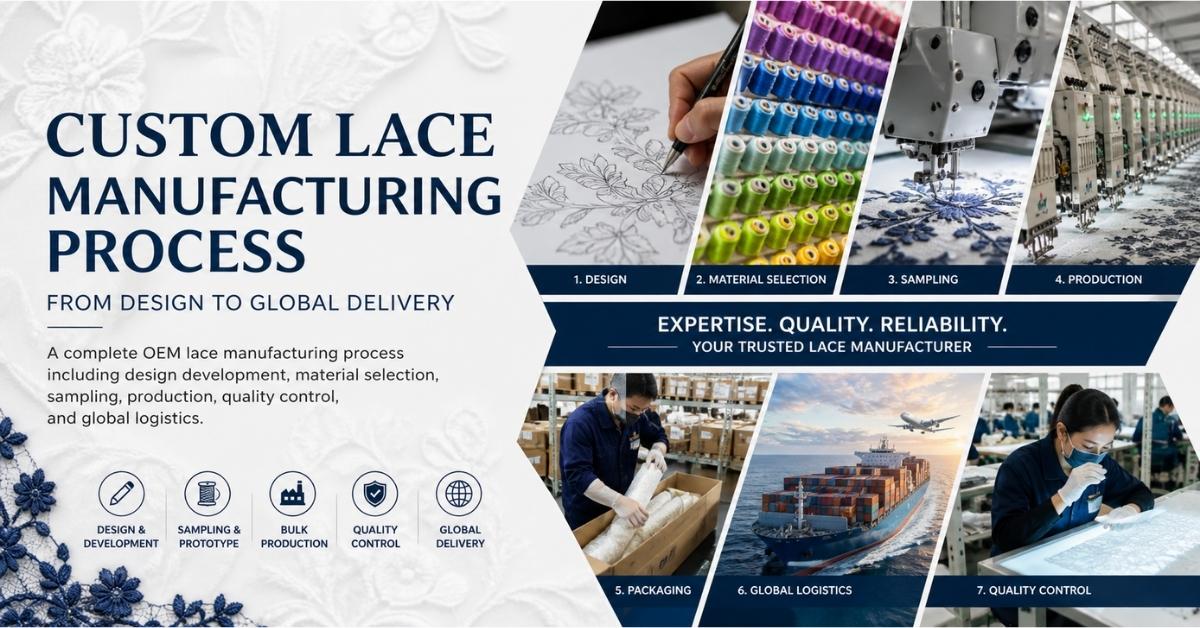
In today’s competitive fashion industry, choosing the right lace manufacturer is no longer just about price—it’s about capability, consistency, and speed. From custom design development to bulk embroidery production and global delivery, every step in the lace manufacturing process directly impacts the success of your collection.
For fashion brands, designers, and garment manufacturers, understanding how custom lace fabrics are developed and produced can significantly reduce risks, improve efficiency, and ensure product quality. This guide takes you behind the scenes of a professional OEM lace supplier, revealing how ideas are transformed into high-quality embroidered fabrics ready for the global market.
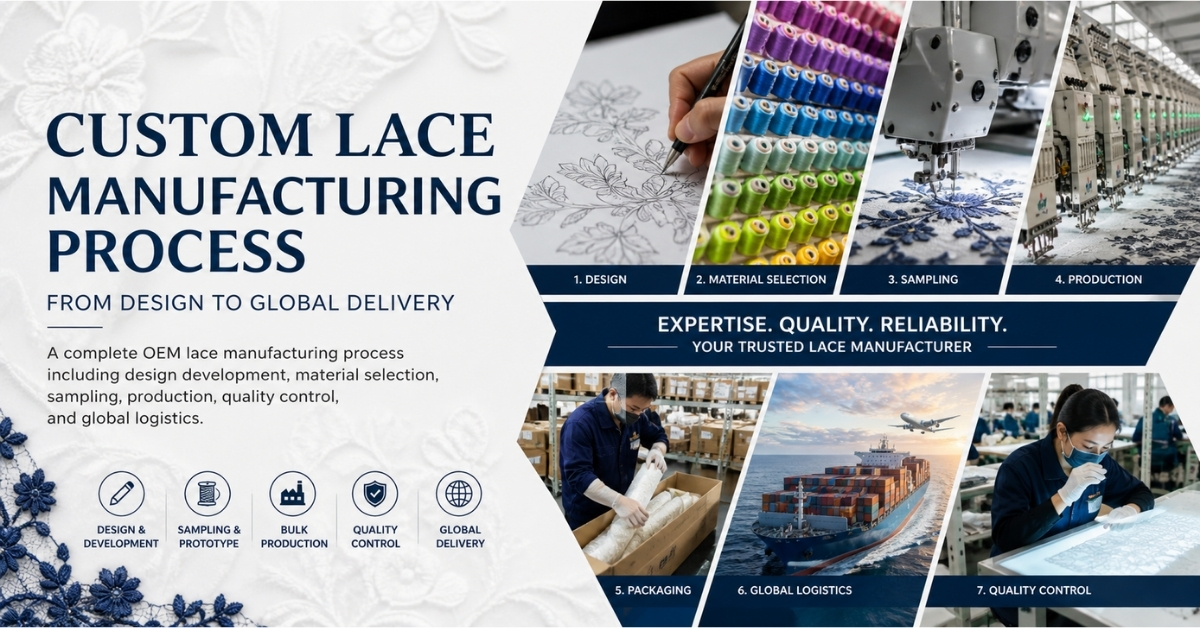
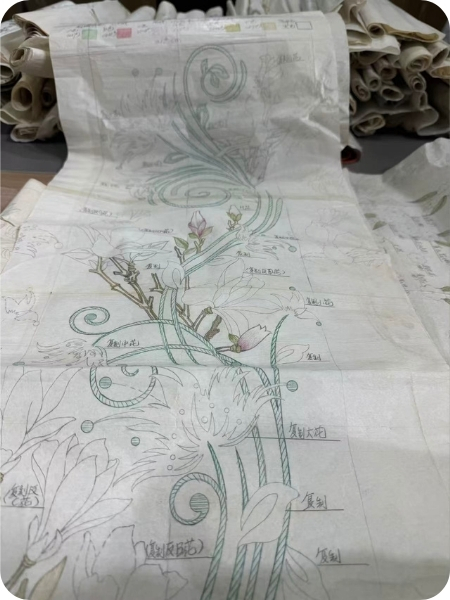
Custom Lace Design & Pattern Development
In today’s competitive fashion industry, custom lace fabric design is no longer optional—it’s essential. Every successful collection begins with a clear design vision, translated into precise patterns and technical specifications.
Professional lace manufacturers work closely with brands to develop:
- Custom embroidery patterns
- Lace motif layouts and repeats
- Fabric structure planning (stretch, density, transparency)
This stage determines not only the visual identity of the fabric but also its production feasibility.
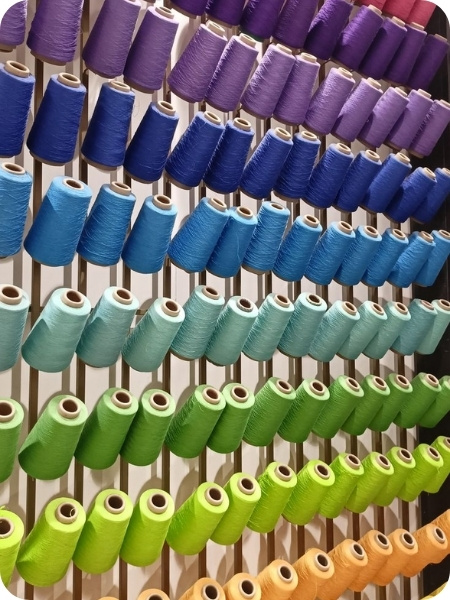
Material Selection & Textile R&D
Choosing the right materials is critical for achieving both aesthetics and performance. Lace fabrics require careful selection of yarns and base materials to ensure:
- Durability and strength
- Soft hand feel
- Dye compatibility
- Stability during embroidery
Common materials include polyester, nylon, cotton blends, and specialty yarns for high-end embroidery.
At this stage, textile R&D teams test different combinations to balance cost, quality, and design intent.
Sampling & Prototype Development
Before bulk production begins, sampling ensures that every detail meets expectations. This phase is especially important for OEM lace manufacturing.
Sampling includes:
- Embroidery strike-offs
- Color matching (lab dips)
- Pattern adjustments
- Fabric performance testing
Fast and accurate sampling helps brands shorten development cycles and reduce costly revisions later.
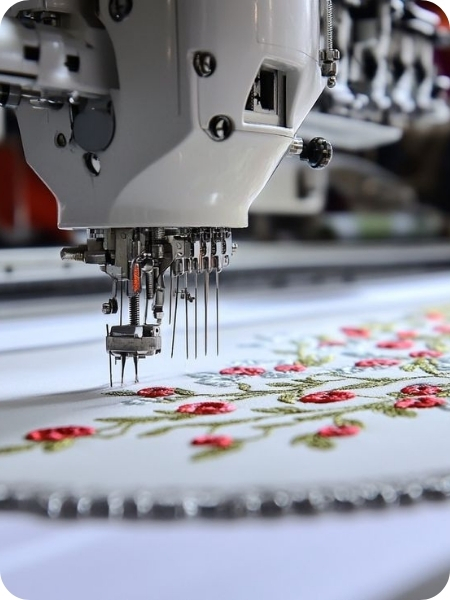
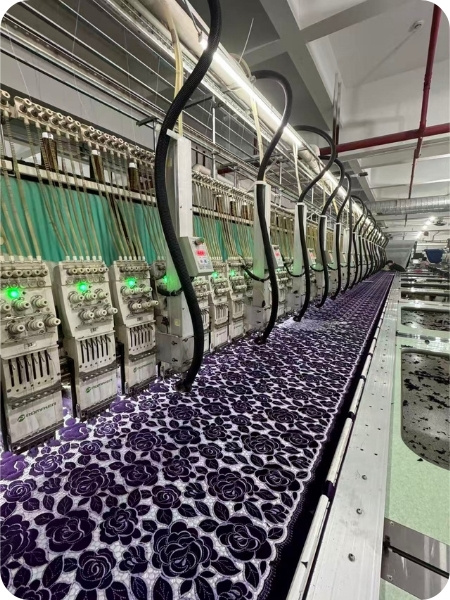
Bulk Production & Embroidery Manufacturing
Once samples are approved, production moves into large-scale manufacturing. This is where a factory’s capability truly matters.
High-quality lace production involves:
- Advanced embroidery machines
- Stable yarn tension control
- Consistent stitch accuracy
- Scalable production capacity
For B2B buyers, reliability at this stage directly impacts delivery timelines and product consistency.
Packaging & Global Export Logistics
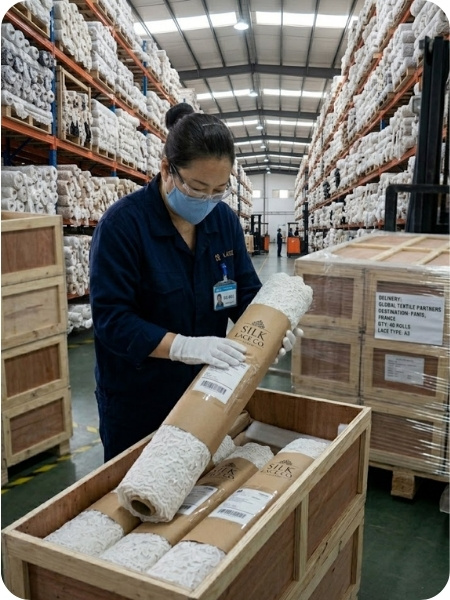
Lace fabrics are delicate and require professional packaging to prevent damage during transportation.
Standard export processes include:
- Protective rolling and wrapping
- Moisture-proof packaging
- Carton or pallet loading
- International shipping coordination
Efficient logistics ensure that fabrics arrive on time and in perfect condition—critical for seasonal fashion production.
Quality Control & Inspection
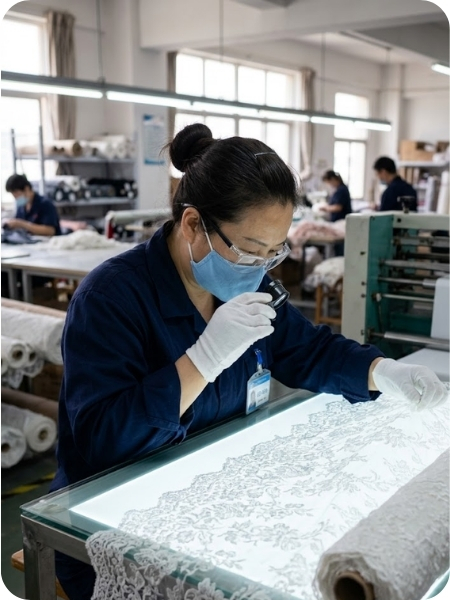
Strict quality control is the backbone of any reliable lace manufacturer. Each batch undergoes inspection to guarantee consistency and compliance.
Quality checks include:
- Fabric defects inspection
- Color consistency verification
- Measurement and weight control
- Embroidery accuracy
For global buyers, this step ensures that every shipment meets international standards.
From Concept to Delivery: A Complete Lace Manufacturing Solution
A professional lace supplier is not just a producer—but a full-service partner covering design, development, production, and global delivery.
For fashion brands, working with an experienced manufacturer means:
- Faster time to market
- Better cost control
- Consistent product quality
- Scalable production capability
Start Your Custom Lace Project Today
Whether you need custom embroidery development, bulk lace production, or global fabric sourcing, working with the right partner makes all the difference.
👉 Contact us today to request samples or discuss your next project.