
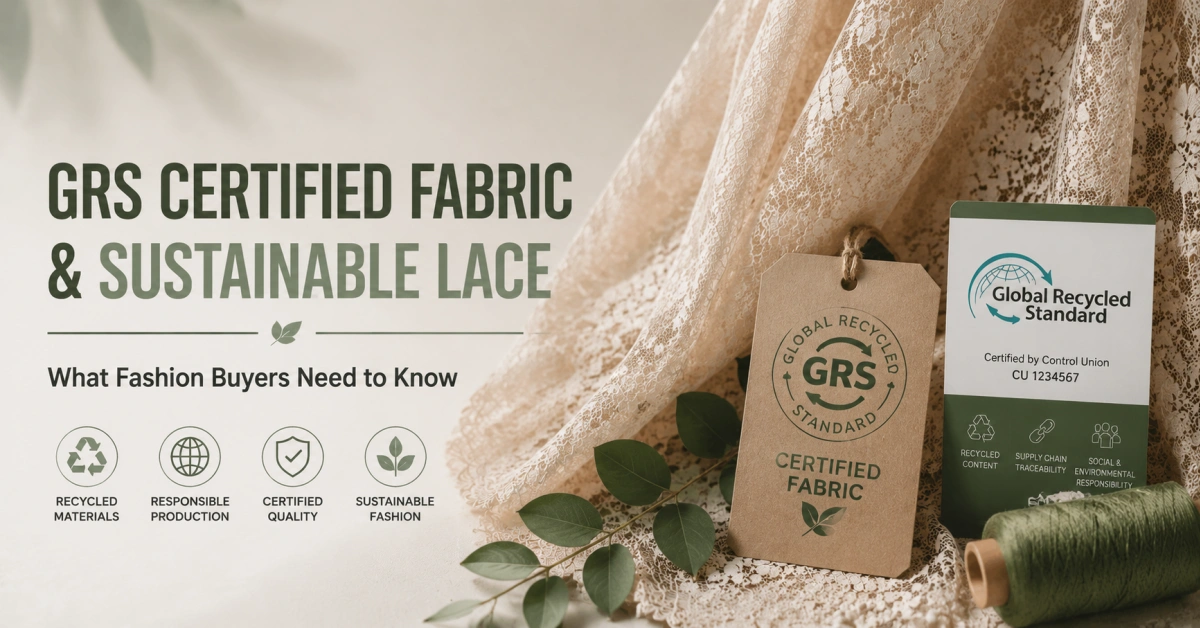

Why Sustainability Matters in the Lace Industry
The global fashion industry is undergoing a significant transformation. As consumers become increasingly aware of environmental issues, fashion brands are no longer focusing only on aesthetics, quality, and price. Sustainability has become a key factor influencing material selection, supplier evaluation, and long-term brand development.
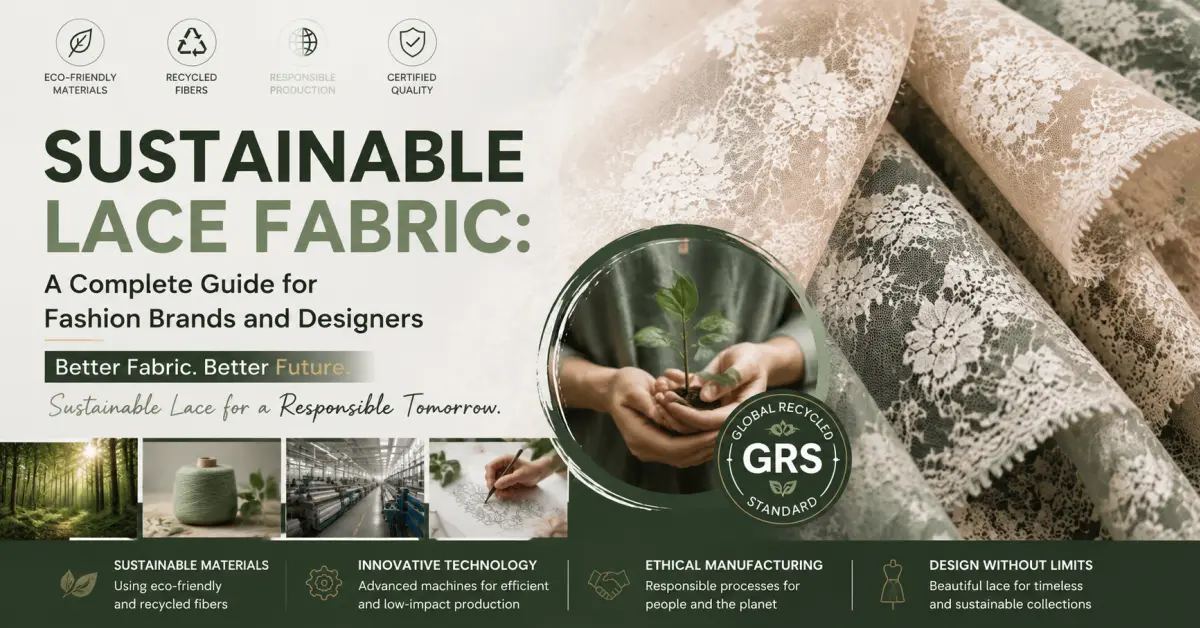
For fashion designers and textile buyers, lace fabric has always represented elegance, craftsmanship, and creativity. However, traditional lace production can involve complex manufacturing processes, synthetic fibers, chemical treatments, and resource consumption. This has encouraged brands to explore more responsible alternatives, including sustainable lace fabric and GRS certified fabric.
Today, recycled materials, responsible production processes, and certified supply chains are becoming essential requirements for global fashion companies. From bridal collections and luxury apparel to lingerie, evening wear, and ready-to-wear fashion, sustainable lace solutions are helping brands achieve both design excellence and environmental responsibility.
For professional buyers sourcing lace materials from China, understanding certifications such as the Global Recycled Standard (GRS) is becoming increasingly important.
A reliable sustainable lace manufacturer should not only provide beautiful designs but also demonstrate transparency, traceability, and compliance with international textile standards.
This guide explains what GRS certified fabric means, how sustainable lace is produced, why fashion brands are choosing eco-friendly lace materials, and what buyers should consider when selecting a sustainable lace supplier.
What Is GRS Certified Fabric?
Understanding the Global Recycled Standard (GRS)
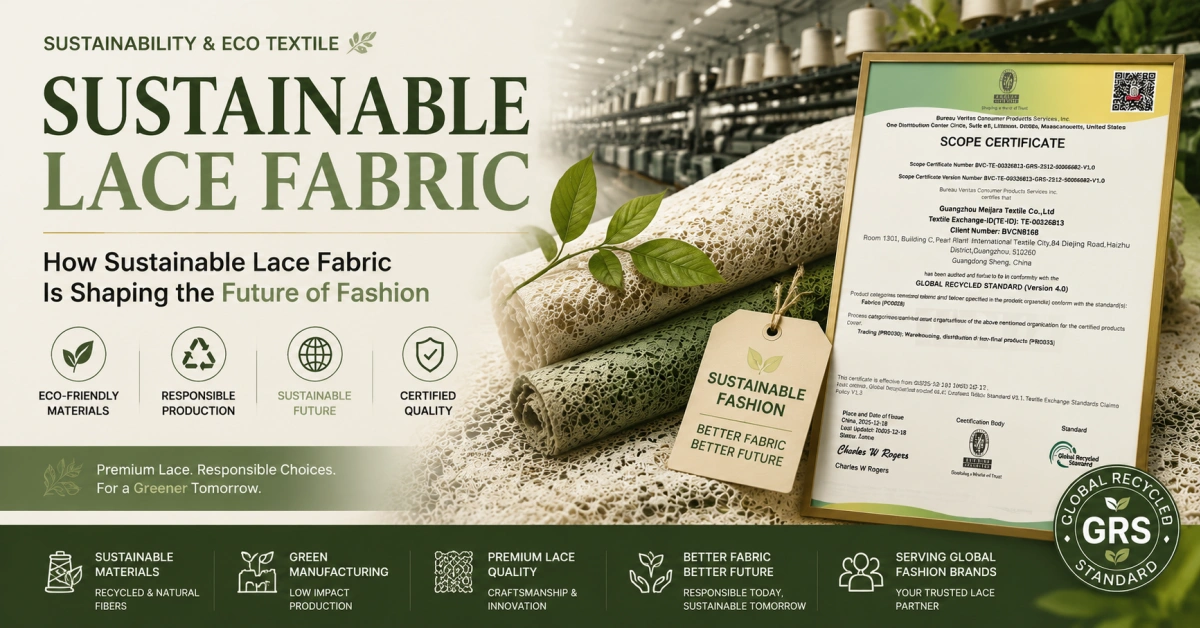
GRS stands for Global Recycled Standard, an internationally recognized certification developed by Textile Exchange. It is designed to verify recycled materials and ensure responsible production throughout the textile supply chain.
For fashion brands purchasing recycled or sustainable fabrics, GRS certification provides confidence that the materials meet specific environmental and social criteria.
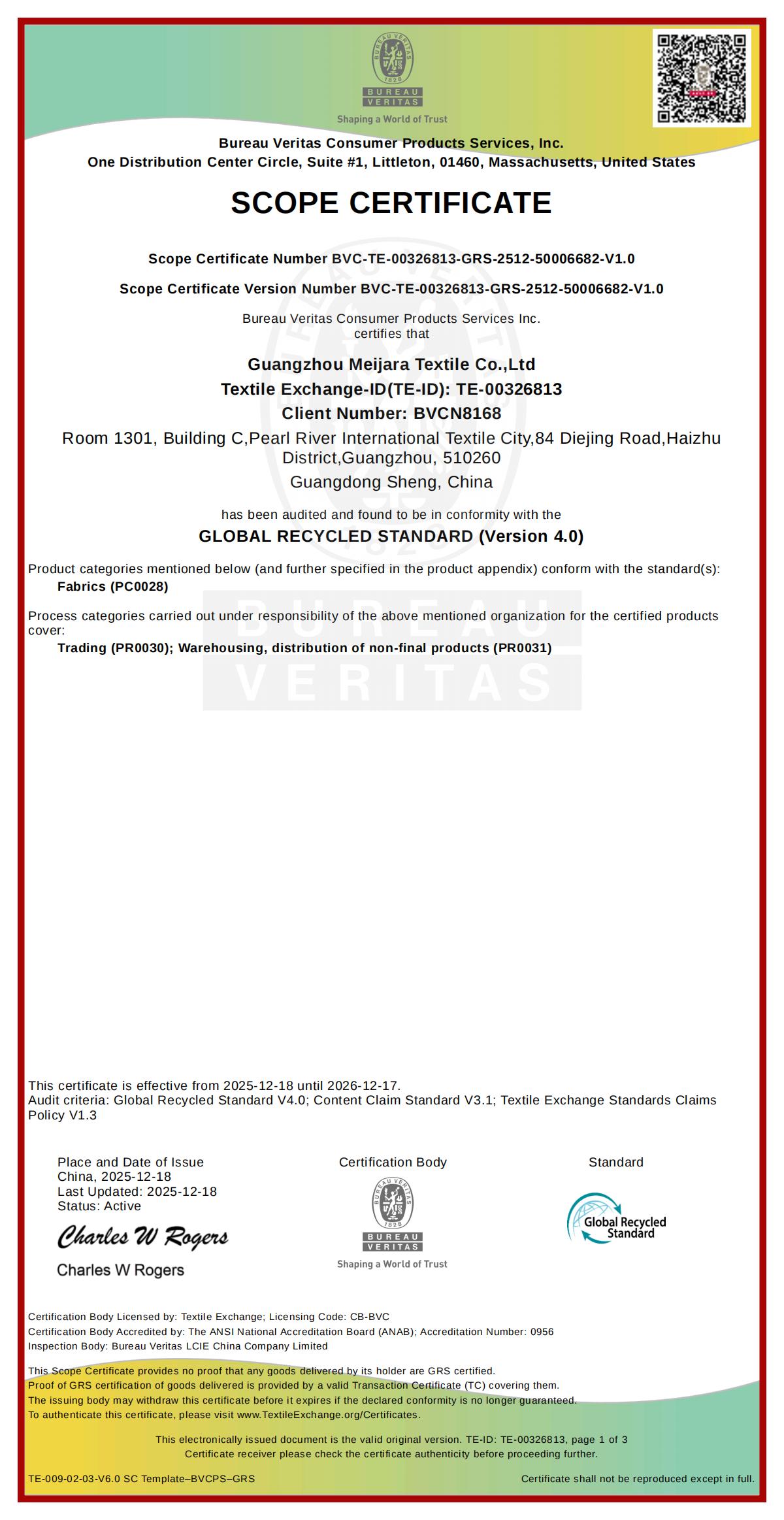
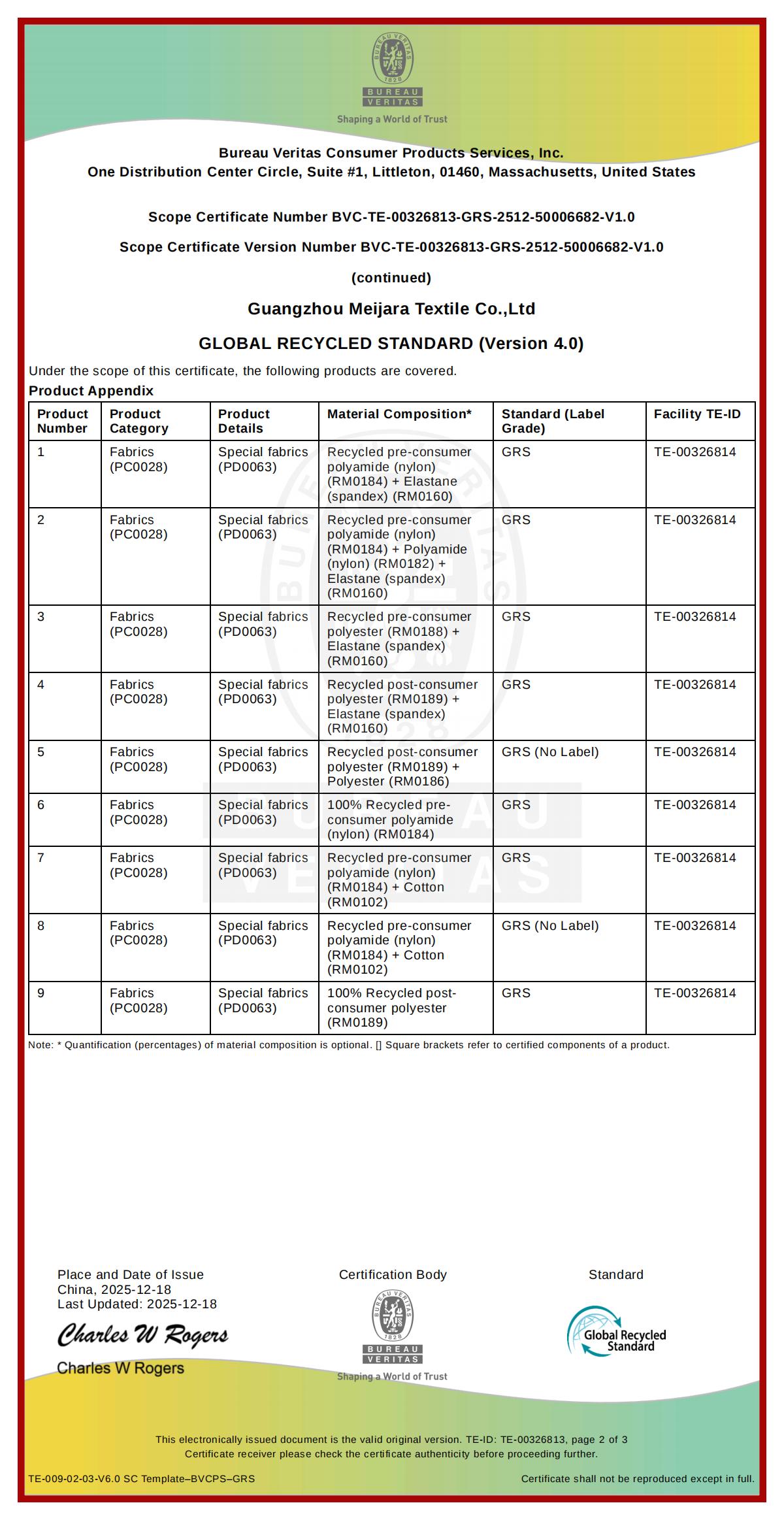
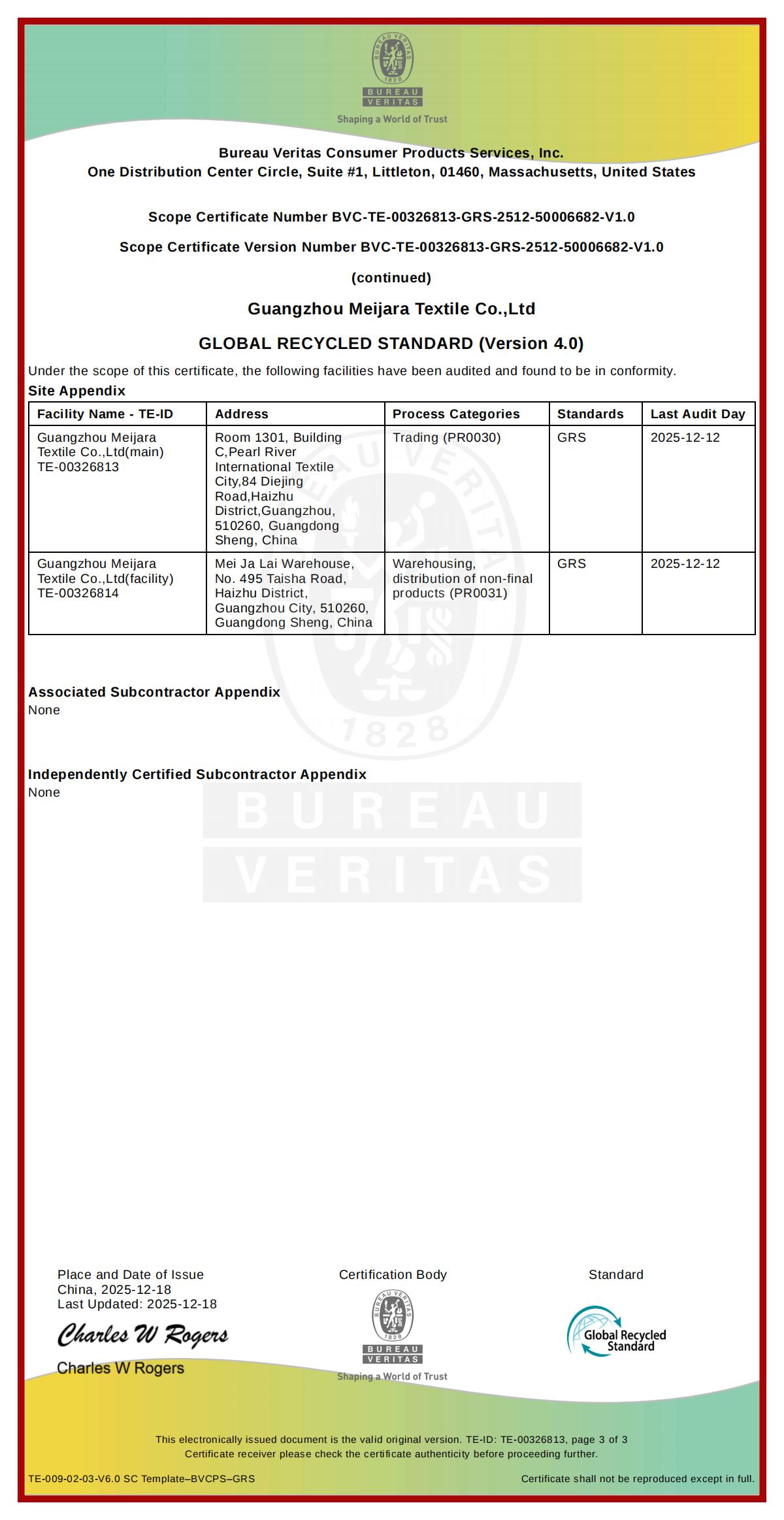
A GRS certified fabric supplier must demonstrate compliance in several areas:
-
Recycled material content verification
-
Supply chain traceability
-
Responsible manufacturing practices
-
Chemical management
-
Social and environmental requirements
Unlike simple claims of "eco-friendly" or "green materials," GRS certification provides third-party verification.
For brands developing sustainable collections, certified materials help improve transparency and strengthen consumer trust.
Key Requirements of GRS Certification
GRS certification covers the complete production chain, including:
Recycled Material Content
One of the most important requirements is verifying the recycled content used in the product.
Common recycled fibers include:
-
Recycled polyester (rPET)
-
Recycled nylon
-
Recycled synthetic fibers
In lace production, recycled polyester is one of the most commonly used sustainable materials because it provides:
-
Good durability
-
Stable performance
-
Soft hand feel
-
Compatibility with lace knitting technology
Supply Chain Traceability
GRS requires materials to be tracked throughout the entire supply chain.
This includes:
-
Raw material suppliers
-
Fiber producers
-
Yarn manufacturers
-
Lace fabric manufacturers
-
Processing facilities
For international buyers, traceability reduces uncertainty when sourcing sustainable textiles.
A transparent supplier can provide documentation showing where materials come from and how they are processed.
Responsible Production Processes
GRS also evaluates environmental and social practices during manufacturing.
Important factors include:
-
Waste management
-
Energy efficiency
-
Chemical control
-
Worker safety
-
Environmental protection
For lace manufacturers, this means sustainability is not only about recycled yarn but also about responsible production methods. Visit our sustainability section.
Why Fashion Brands Are Choosing Sustainable Lace Fabric
Sustainability Has Become a Competitive Advantage
In today's fashion market, sustainability is no longer only a corporate responsibility. It has become a competitive advantage.
Many global brands are setting ambitious sustainability goals, including:
-
Increasing recycled material usage
-
Reducing carbon emissions
-
Improving supply chain transparency
-
Using certified textile materials
As lace plays an important role in fashion design, choosing sustainable lace fabric allows brands to maintain their creative vision while improving environmental performance.
Sustainable Lace Meets Modern Fashion Requirements
Some buyers believe sustainable fabrics may compromise design quality. However, modern textile technology has changed this perception.
Sustainable lace fabrics can provide:
Elegant Appearance
Advanced knitting technology allows recycled fibers to create:
-
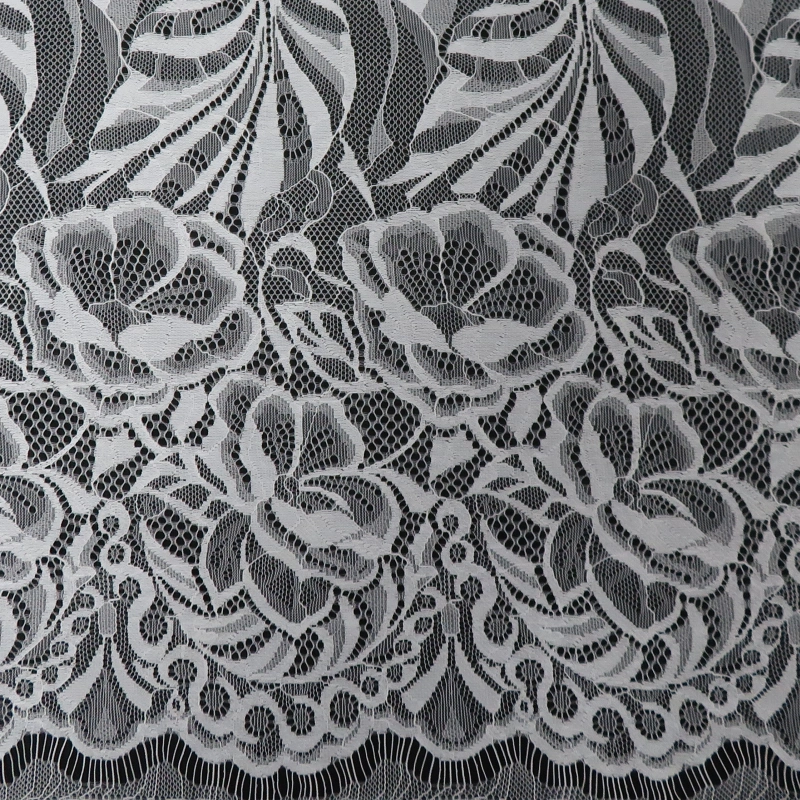
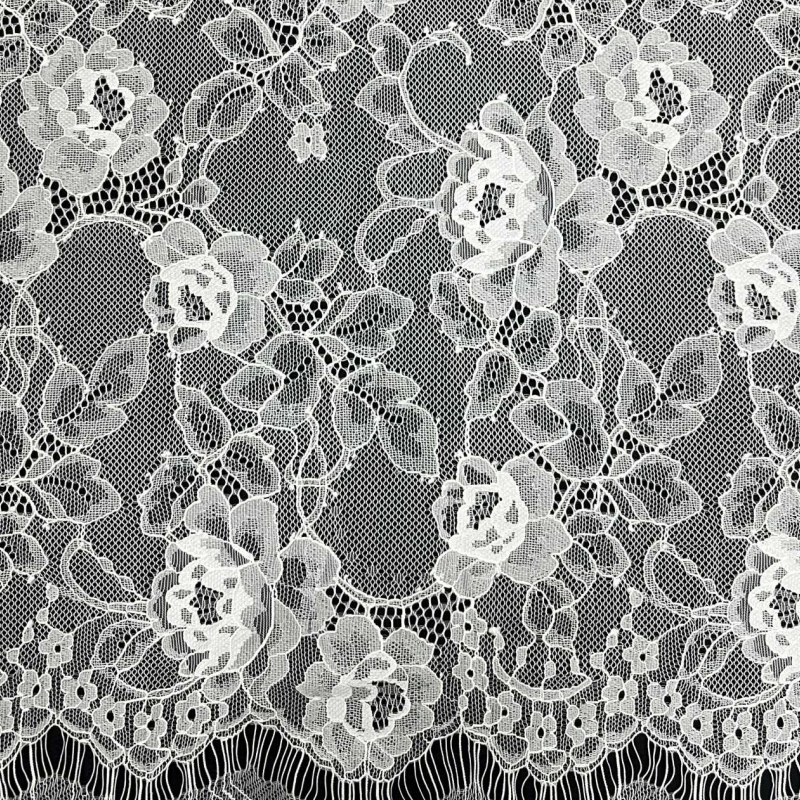
Detailed floral patterns
-
Delicate mesh structures
-
Stretch lace designs
-
Embroidered effects
Excellent Performance
Modern sustainable lace can achieve:
-
Soft texture
-
Good elasticity
-
Shape retention
-
Comfortable wearing experience
Brand Storytelling Value
For premium fashion brands, materials are part of the product story.
A dress made with sustainable lace can communicate:
-
Environmental responsibility
-
Ethical sourcing
-
Innovation
-
Modern luxury
This is especially important for:
-
Bridal brands
-
Luxury fashion labels
-
Sustainable apparel companies
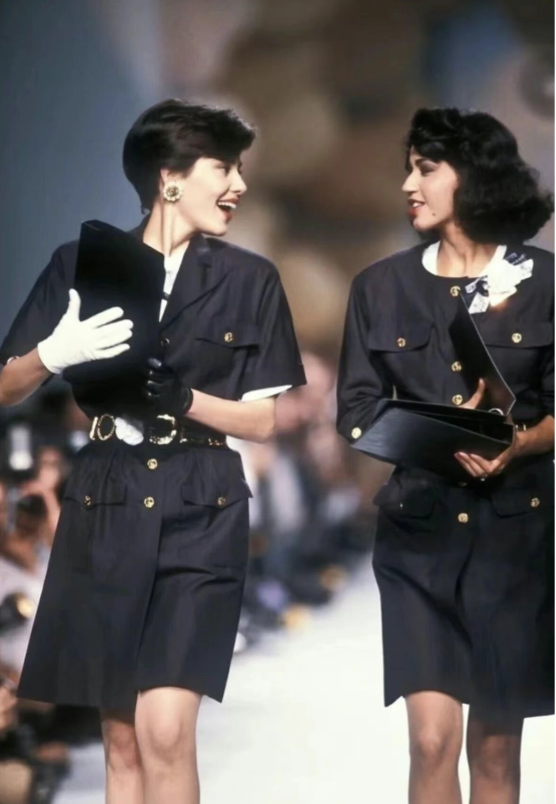
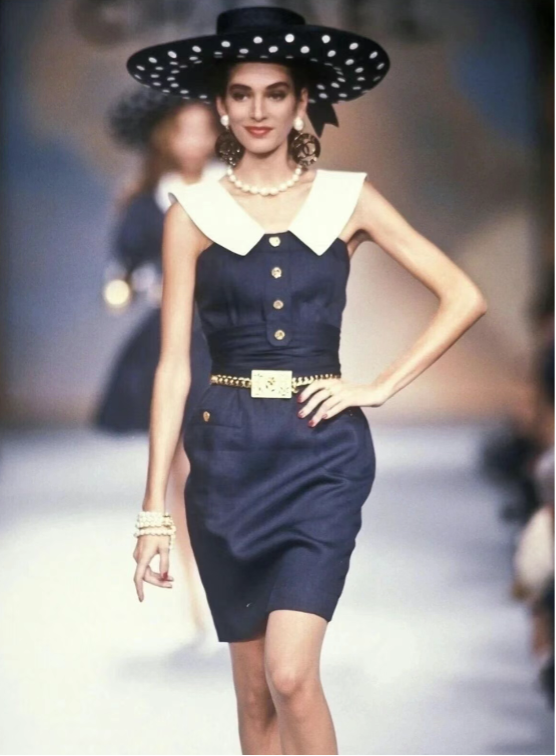

Sustainable Lace Fabric Applications in Fashion
Sustainable Bridal Lace
The bridal industry is one of the largest users of lace materials.
Wedding dress designers often require:
-
Elegant appearance
-
High-quality patterns
-
Lightweight structure
-
Premium hand feel
Sustainable bridal lace provides an opportunity to combine traditional bridal aesthetics with responsible sourcing.
Popular applications include:
-
Wedding gowns
-
Bridal veils
-
Wedding sleeves
-
Decorative panels
-
Bridal accessories
For brands developing eco-conscious wedding collections, recycled lace fabric can help create environmentally responsible bridal products without sacrificing luxury appeal. Explore bridal lace.
Sustainable Luxury Fashion
Luxury fashion brands increasingly use lace as a signature design element.
Applications include:
-
Evening dresses
-
Couture collections
-
Designer tops
-
Skirts
-
Jackets
Sustainable lace enables designers to create premium products while meeting sustainability expectations.
Sustainable Lingerie and Intimate Apparel
Lingerie brands have traditionally relied heavily on lace.
Eco-friendly lace options help brands develop:
-
Sustainable underwear collections
-
Premium lingerie lines
-
Responsible intimate apparel
Important requirements include:
-
Soft touch
-
Stretch recovery
-
Skin-friendly materials
-
Comfortable wearing experience
Types of Sustainable Lace Fabrics Available
Recycled Polyester Lace Fabric
Recycled polyester lace is one of the most widely adopted sustainable lace materials.
Advantages include:
-
Strong durability
-
Stable production performance
-
Wide application range
-
Compatibility with existing lace machinery
It is commonly used for:
-
Fashion garments
-
Bridal wear
-
Accessories
-
Decorative applications
Sustainable Stretch Lace
Stretch lace remains one of the most popular categories in the global market.
By combining recycled fibers with elastic materials, manufacturers can create lace fabrics with:
-
Flexibility
-
Comfort
-
Better fitting performance
Applications:
-
Dresses
-
Lingerie
-
Active fashion
-
Women's apparel
Sustainable Embroidered Lace
Embroidery technology allows manufacturers to add:
-
Floral patterns
-
Beads
-
Sequins. See sequins and beads embroidery.
-
Decorative elements
For fashion brands, sustainable embroidered lace provides more opportunities for customized designs.
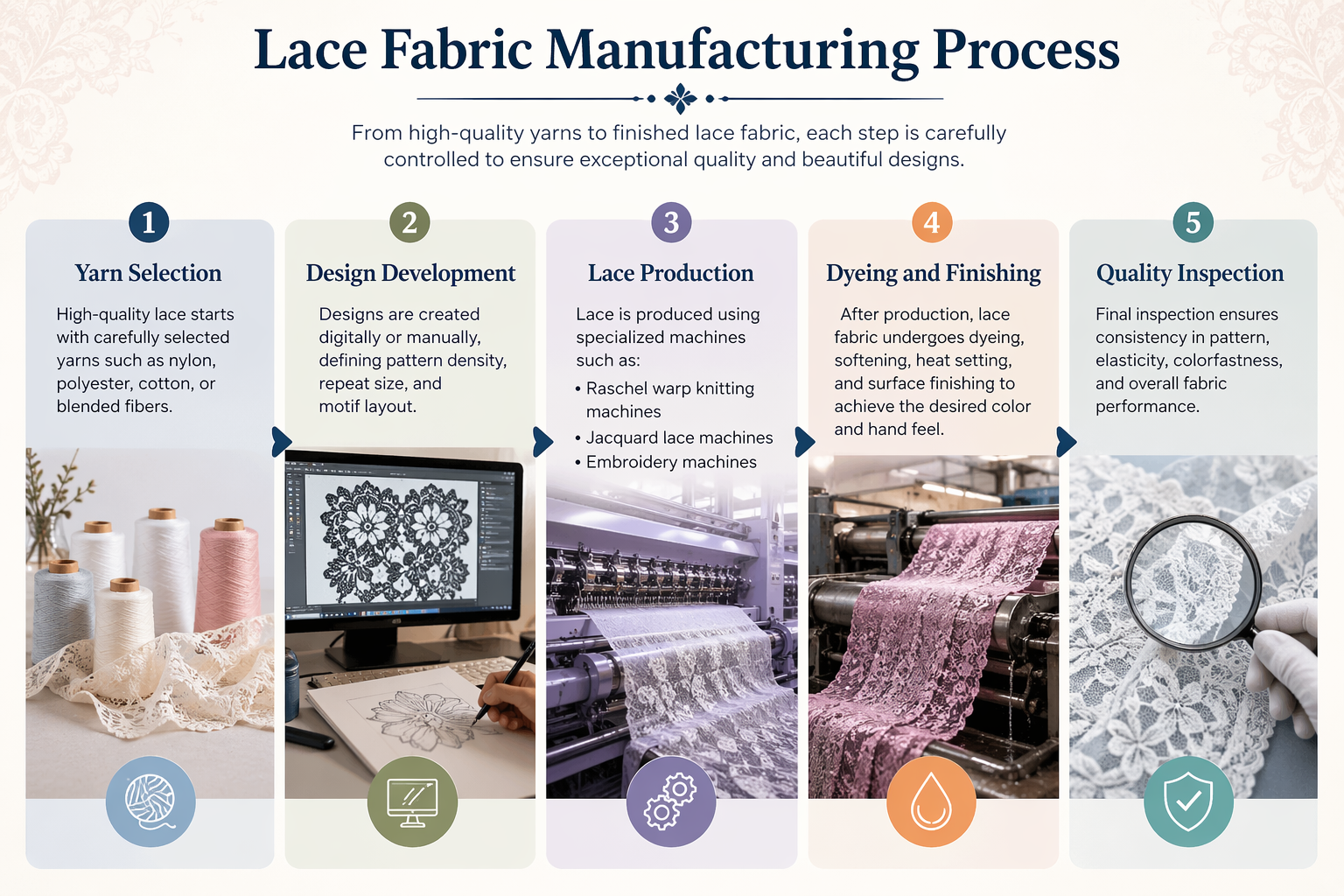
How GRS Certified Lace Fabric Is Manufactured
Sustainable lace production is not simply about replacing traditional yarn with recycled materials. For professional textile buyers, a reliable sustainable lace supplier must demonstrate control over the entire manufacturing process, from material selection to final inspection.
The production of GRS certified lace fabric involves multiple stages, and each step affects the final quality, appearance, and sustainability performance of the fabric.
A professional lace manufacturer needs to balance three key factors:
-
Sustainable material usage
-
Advanced manufacturing technology
-
Consistent quality control. Learn about quality control standards.
Only when these elements work together can sustainable lace meet the expectations of international fashion brands.
Step 1: Selecting Certified Recycled Materials
The first stage of sustainable lace manufacturing begins with the selection of certified recycled fibers.
For most lace applications, recycled polyester is currently one of the most widely used sustainable materials.
Compared with conventional polyester, recycled polyester is produced by processing recycled plastic materials into new polyester fibers.
The benefits include:
-
Reduced dependence on virgin petroleum resources
-
Lower environmental impact
-
Support for circular textile development
-
Similar performance to traditional polyester fibers
For lace manufacturers, recycled polyester provides excellent compatibility with existing knitting and embroidery technologies.
This allows manufacturers to create sustainable lace fabrics without significantly changing the design possibilities available to fashion brands.
Step 2: Yarn Preparation and Quality Testing
Before lace production begins, recycled yarn needs to go through strict preparation processes.
Important testing procedures include:
Yarn Strength Testing
Ensures the yarn can withstand high-speed lace production without breaking.
Color Consistency Testing
Maintains stable dyeing performance between different production batches.
Elastic Recovery Testing
Important for stretch lace fabrics used in garments requiring flexibility.
Material Verification
For GRS certified products, manufacturers must maintain documentation proving recycled material content and supply chain compliance.
This step is especially important for international buyers because sustainable claims must be supported by reliable documentation.
Step 3: Lace Knitting and Fabric Formation
After yarn preparation, the material enters the lace production stage.
Modern lace factories use advanced computerized lace machines to create complex patterns with high precision.
Professional lace manufacturers commonly use machines from international textile equipment suppliers, including:
-
Karl Mayer lace machines
-
Electronic lace systems
-
High-speed jacquard lace machines
These technologies allow manufacturers to produce:
-
Stretch lace fabric
-
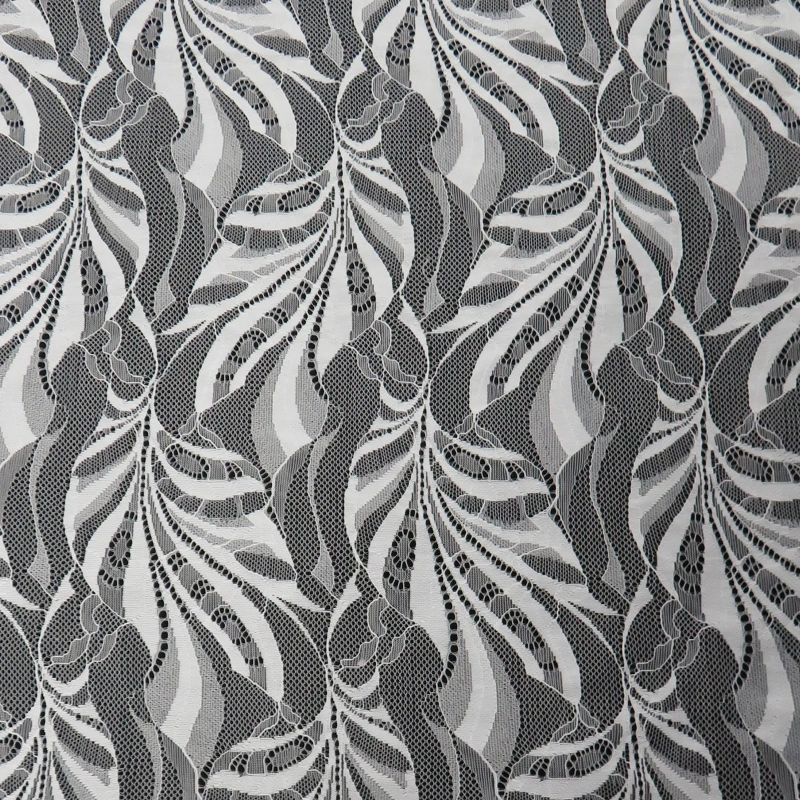
Jacquard lace
-
Floral lace
-
Geometric lace
-
Mesh lace
-
Custom pattern lace. Learn about pattern design development.
For sustainable lace production, advanced machinery also helps improve:
-
Production efficiency
-
Material utilization
-
Pattern accuracy
-
Quality consistency
Step 4: Dyeing and Finishing Processes
After knitting, lace fabric usually requires dyeing and finishing treatments. Learn about dyeing and color matching.
Sustainable lace manufacturers must carefully control this stage because textile processing can significantly influence environmental performance.
Responsible dyeing processes focus on:
Efficient Water Management
Reducing unnecessary water consumption during dyeing.
Chemical Control
Using approved chemicals and maintaining compliance with international textile standards.
Color Stability
Ensuring the final fabric maintains:
-
Washing resistance
-
Light fastness
-
Color consistency
For fashion brands developing seasonal collections, reliable color matching is essential.
A professional supplier should be able to provide:
-
Pantone color matching
-
Custom dyeing services
-
Lab dip approval
-
Bulk production color control
Step 5: Quality Inspection and Certification Documentation
Before shipment, sustainable lace fabric must pass final quality inspection.
Common inspection points include:
Fabric Appearance
Checking:
-
Pattern clarity
-
Surface defects
-
Broken yarns
-
Uneven structures
Width and Length Control
Ensuring production meets customer specifications.
Stretch Performance
Testing elasticity and recovery for stretch lace products.
Packaging Inspection
Ensuring fabrics are properly protected during international transportation.
For GRS certified lace fabrics, suppliers should also maintain certification records and supporting documents.
This provides buyers with confidence when presenting sustainable materials to customers, retailers, and brand partners.
How Fashion Buyers Evaluate Sustainable Lace Suppliers
Choosing a sustainable lace supplier requires more than comparing prices.
For international fashion brands, supplier evaluation should focus on several important areas.
Certification and Compliance
The first consideration is whether the supplier can provide valid sustainability certifications.
For GRS certified fabric, buyers should check:
-
Certificate validity
-
Certification scope
-
Certified product categories
-
Supply chain coverage
A reliable supplier should clearly explain:
-
Which products are certified
-
What percentage of recycled content is included
-
How certification applies to production
Avoid suppliers that only use general terms such as:
"eco fabric"
"green material"
"environmentally friendly lace"
without providing verification.
Manufacturing Experience
Sustainable textile production requires technical experience.
A professional lace factory should understand:
-
Lace structure development
-
Yarn characteristics
-
Dyeing behavior
-
Pattern engineering
-
Garment application requirements
For fashion brands, experienced manufacturers can provide valuable suggestions during product development.
For example:
A bridal brand may require lightweight floral lace with premium softness.
A lingerie brand may require stretch lace with excellent recovery.
A luxury fashion brand may require customized jacquard patterns.
Different applications require different technical solutions.
Custom Development Capability
Many international buyers are not looking for standard lace products.
They need customized designs that match their brand identity. Learn about customized processes.
A capable sustainable lace supplier should provide:
Custom Pattern Development
Including:
-
Floral designs
-
Geometric patterns
-
Logo patterns
-
Exclusive artwork conversion
Custom Color Development
Including:
-
Seasonal fashion colors
-
Brand-specific shades
-
Special dyeing requirements
Custom Finishing
Including:
-
Printing
-
Hot stamping
-
Embroidery
-
Sequins
-
Beading. See crystal elegance bead sequin fabric.
-
Flocking effects
This capability allows brands to create differentiated collections.
Production Capacity and Delivery Reliability
Sustainability is important, but commercial reliability remains essential.
Before cooperation, buyers should evaluate:
-
Factory production capacity
-
Equipment condition
-
Quality management system
-
Lead time control
A professional supplier should provide clear information about:
-
Sampling timeline
-
Bulk production schedule
-
Minimum order quantity
-
Shipping preparation
For fashion companies working with seasonal collections, delayed delivery can directly affect sales opportunities.
Why China Is Becoming a Major Source of Sustainable Lace Fabric
China has become one of the world's most important textile manufacturing centers.
The country's lace industry benefits from:
-
Mature textile supply chains
-
Advanced manufacturing equipment
-
Experienced technicians
-
Strong export capabilities
For international buyers, sourcing sustainable lace fabric from China offers several advantages.
Complete Textile Supply Chain
China has developed a complete textile ecosystem covering:
-
Fiber suppliers
-
Yarn manufacturers
-
Dyeing factories
-
Lace manufacturers
-
Embroidery facilities
-
Garment factories
-
Logistics providers
This integrated supply chain allows lace manufacturers to respond quickly to global fashion demands.
Advanced Lace Manufacturing Technology
Chinese lace factories have invested heavily in modern production equipment.
Many manufacturers use advanced computerized systems to produce:
-
High-density lace
-
Stretch lace
-
Jacquard patterns
-
Embroidered lace
-
Customized fashion lace
Technology improvements have helped Chinese manufacturers move beyond traditional mass production toward customized and sustainable textile solutions.
Strong OEM and ODM Capabilities
Many international fashion brands work with Chinese lace manufacturers because of their OEM and ODM capabilities.
Manufacturers can support:
-
Design development
-
Sample creation
-
Fabric customization
-
Bulk production
-
Export services
This is especially valuable for emerging fashion brands that need flexible supply partners.
MJlace: Sustainable Lace Fabric Solutions for Global Fashion Brands
As sustainability becomes increasingly important in the fashion industry, choosing the right manufacturing partner is critical.
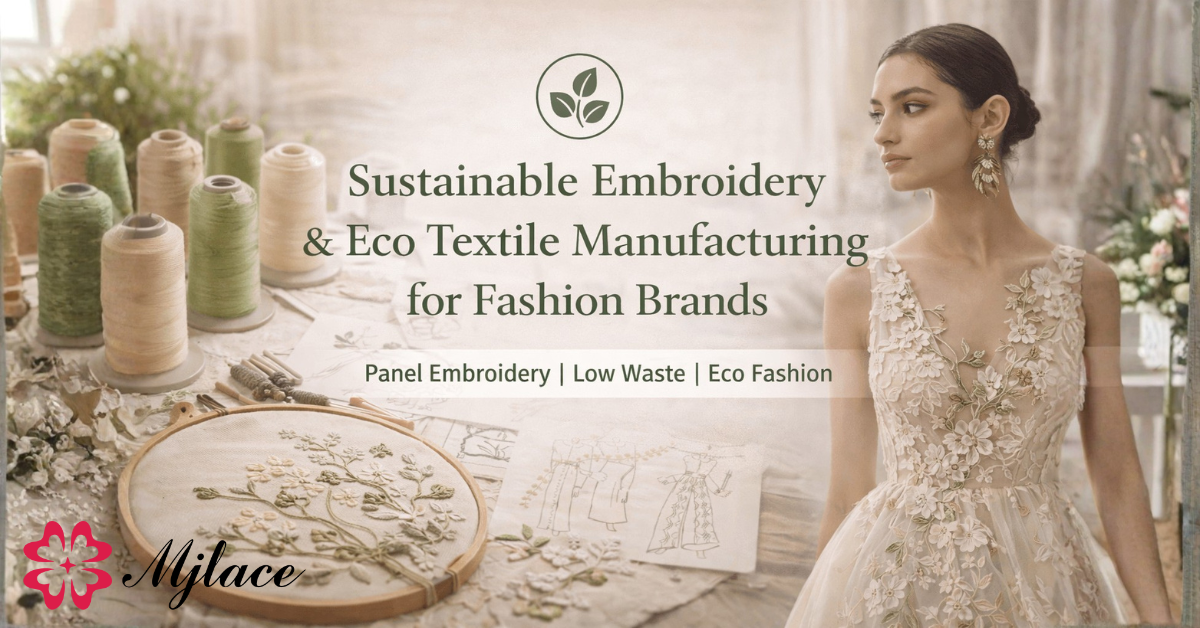
Guangzhou Meijara Textile Co., Ltd (MJlace) specializes in lace fabric development and manufacturing for global fashion customers.
With years of experience in lace production, MJlace provides solutions including:
-
Sustainable lace fabric
-
Stretch lace fabric
-
Jacquard lace
-
Embroidered lace
-
Bridal lace
-
Custom lace development
The company has obtained Global Recycled Standard (GRS) certification, supporting brands that require verified sustainable textile materials.
For fashion buyers, MJlace focuses on:
Sustainable Material Solutions
Supporting the development of recycled and environmentally responsible lace products.
Custom Design Development
Helping brands transform creative concepts into production-ready lace fabrics.
Quality Control
Maintaining consistency throughout sampling and bulk production. Explore cut piece and processing.
Global Export Experience
Supporting international customers with professional textile sourcing services.
How to Source GRS Certified Lace Fabric from China: A Practical Guide for Fashion Buyers
For international fashion brands, sourcing sustainable lace fabric is not only about finding a supplier that offers competitive prices. The real challenge is identifying a manufacturing partner that can provide:
-
Certified recycled materials
-
Stable production quality
-
Reliable delivery schedules
-
Transparent documentation
-
Professional product development support
When purchasing GRS certified lace fabric from China, buyers should follow a structured sourcing process to reduce risks and ensure long-term cooperation.
Step 1: Define Your Sustainable Lace Fabric Requirements
Before contacting suppliers, fashion brands should clearly define their product requirements.
A detailed specification helps manufacturers provide accurate recommendations and quotations.
Important factors include:
Fabric Type
Different applications require different lace structures.
Common options include:
-
Stretch lace fabric
-
Non-stretch lace fabric
-
Jacquard lace
-
Embroidered lace
-
Chantilly lace. Explore chantilly lace.
-
Bridal lace
For example:
A bridal designer may need soft and elegant floral lace with a lightweight structure.
A lingerie brand may require stretch lace with excellent elasticity.
A fashion brand producing evening dresses may prefer embroidered lace with decorative effects.
Material Requirements
Buyers should confirm:
-
Fiber composition
-
Recycled content percentage
-
GRS certification requirements
-
Yarn specifications
Examples:
-
100% recycled polyester lace
-
Recycled polyester blended lace
-
Sustainable stretch lace
Clear material requirements prevent misunderstandings during production.
Design Requirements
For customized lace development, buyers should prepare:
-
Design drawings
-
Reference samples
-
Pattern inspiration
-
Target market positioning
Professional lace manufacturers can then evaluate:
-
Pattern feasibility
-
Production technology
-
Estimated development cost
-
Production timeline
Step 2: Evaluate Supplier Certification
When searching for a sustainable lace manufacturer, certification verification should be one of the first steps.
A professional supplier should be able to provide:
GRS Certificate
The certificate should include:
-
Company information
-
Certification number
-
Valid period
-
Certified product category
-
Certification scope
Buyers should verify whether the certification applies to the actual products they intend to purchase.
For example:
A company may have a GRS certificate for certain recycled fabrics, but not necessarily for every lace product.
Other Sustainability Standards
Depending on market requirements, buyers may also consider:
-
OEKO-TEX® Standard 100
-
Recycled Claim Standard (RCS)
-
Global Organic Textile Standard (GOTS)
Different certifications address different sustainability aspects.
A professional supplier should understand these standards and help buyers select suitable solutions.
Step 3: Request Samples Before Bulk Production
For lace products, physical samples are extremely important.
Photos cannot fully show:
-
Fabric softness
-
Stretch performance
-
Pattern details
-
Transparency
-
Surface texture
Before placing a bulk order, buyers should request:
Existing Samples
Suitable for:
-
Market testing
-
Design selection
-
Initial evaluation
Custom Development Samples
Required when brands need:
-
Exclusive patterns
-
Specific colors
-
Special structures
During sampling, buyers should evaluate:
Appearance
Does the lace match the expected design style?
Hand Feel
Is the fabric suitable for the target garment?
Performance
Does it meet requirements for:
-
Stretch
-
Strength
-
Comfort
-
Durability
Step 4: Confirm MOQ and Production Timeline
Understanding production requirements helps brands plan collections effectively.
For sustainable lace development, MOQ and lead time may vary depending on:
-
Fabric structure
-
Pattern complexity
-
Material availability
-
Dyeing requirements
Typical production process:
Lace Fabric Development
-
Design confirmation
-
Pattern development
-
Sample production
-
Customer approval
-
Bulk manufacturing
For customized lace fabrics:
Sample development: approximately 20–25 days
Bulk production: approximately 35–40 days
Embroidered Sustainable Lace
For embroidered lace products:
Sampling: approximately 8–10 days
Bulk production: approximately 18–20 days
MOQ depends on product type:
-
Standard lace products: flexible quantities may be available
-
New lace fabric development: usually 3000–5000 meters
-
Embroidery lace: around 300–500 meters per color
Buyers should discuss requirements with suppliers before finalizing designs.
Sustainable Lace Fabric Buying Checklist for Fashion Brands
Before selecting a supplier, international buyers can use the following checklist.
Certification
Does the supplier provide valid GRS certification?
Can the supplier provide recycled material documentation?
Are sustainability claims verified?
Product Capability
Does the supplier produce the required lace category?
Can they develop customized designs?
Do they support color customization?
Can they provide special finishing options?
Manufacturing Capability
Does the supplier have professional lace production equipment?
Do they have quality inspection procedures?
Can they support large-scale production?
Communication
Can the supplier provide technical suggestions?
Are responses professional and timely?
Can they understand international market requirements?
Logistics Support
Can they provide export documentation?
Do they have international shipping experience?
Can they support stable delivery schedules? Learn about importing logistics.
Future Trends of Sustainable Lace Fabric Industry
The sustainable textile market continues to develop rapidly.
In the coming years, several trends are expected to influence lace fabric development.
Trend 1: Increased Demand for Certified Sustainable Materials
More fashion brands are moving from general sustainability statements toward verified environmental practices.
Instead of simply saying:
"We use eco-friendly materials"
brands increasingly need:
-
Certified recycled content
-
Transparent supply chains
-
Responsible manufacturing records
This means certifications such as GRS will become increasingly important in textile sourcing.
Trend 2: Sustainable Luxury Fashion Growth
Luxury fashion has traditionally relied on premium materials and craftsmanship.
Today, luxury brands are combining:
-
High-quality design
-
Traditional craftsmanship
-
Sustainable materials
Sustainable lace fits this direction perfectly because it provides:
-
Decorative value
-
Artistic expression
-
Premium appearance
-
Environmental responsibility
Trend 3: Customized Sustainable Lace Development
Fashion brands increasingly want unique materials rather than standard fabrics.
Future lace development will focus on:
-
Exclusive patterns
-
Digital design conversion
-
Customized textures
-
Brand-specific collections
Manufacturers with strong R&D capabilities will have greater advantages.
Trend 4: Digital Textile Development
Technology is changing how lace fabrics are developed.
Digital tools help manufacturers:
-
Create patterns faster
-
Reduce sample waste
-
Improve communication with designers
-
Shorten development cycles
This allows brands to bring sustainable collections to market more efficiently.
Why Partnering with a Professional Sustainable Lace Manufacturer Matters
For fashion brands, selecting the right supplier is a long-term strategic decision.
A reliable sustainable lace manufacturer provides more than fabric.
They provide:
Technical Expertise
Helping brands select suitable materials and structures.
Product Innovation
Supporting new lace concepts and creative designs.
Supply Chain Reliability
Ensuring stable production and delivery.
Sustainability Support
Helping brands achieve environmental goals through certified materials.
In competitive fashion markets, suppliers are becoming important partners in brand development.
FAQ: GRS Certified Fabric and Sustainable Lace
1. What is GRS certified fabric?
GRS certified fabric is textile material verified according to the Global Recycled Standard. It confirms recycled content, supply chain traceability, and responsible production practices.
For fashion brands, GRS certification provides confidence that recycled materials are properly verified.
2. Is GRS certified lace fabric sustainable?
Yes. GRS certified lace fabric supports sustainable textile development by using verified recycled materials and improving supply chain transparency.
However, sustainability also depends on manufacturing processes, energy use, chemical management, and overall production practices.
3. What materials are commonly used in sustainable lace fabric?
The most common material is recycled polyester.
Other sustainable options may include:
-
Recycled nylon
-
Organic fibers. Explore cotton lace trim.
-
Responsible blended materials
The best choice depends on the final application and performance requirements.
4. What products can use sustainable lace fabric?
Sustainable lace is widely used in:
-
Bridal gowns
-
Wedding veils
-
Fashion dresses
-
Lingerie
-
Evening wear
-
Luxury apparel
-
Accessories
5. How can I verify if a lace supplier is GRS certified?
Buyers should request:
-
Valid certification documents
-
Certification scope information
-
Product-related supporting documents
A professional supplier should provide transparent information about certification coverage.
6. Can GRS certified lace fabric be customized?
Yes.
Professional lace manufacturers can customize:
-
Patterns
-
Colors
-
Fabric structures
-
Embroidery designs
-
Finishing effects
Customization allows brands to create unique sustainable collections.
7. What is the MOQ for sustainable lace fabric?
MOQ depends on the product category.
Generally:
-
Custom lace development: around 3000–5000 meters
-
Embroidered lace: around 300–500 meters per color
Existing designs may offer more flexible quantities.
8. How long does sustainable lace production take?
Typical timelines:
-
Custom lace sampling: 20–25 days
-
Bulk production: 35–40 days
Embroidery lace:
-
Sampling: 8–10 days
-
Bulk production: 18–20 days
Actual timing depends on design complexity and order quantity.
Building a More Sustainable Future with Certified Lace Fabrics
The fashion industry is entering a new era where creativity and sustainability must work together.
For fashion brands and designers, choosing GRS certified fabric and sustainable lace materials is no longer only an environmental decision. It is also a way to improve brand value, strengthen consumer trust, and create products that meet future market expectations.
A successful sustainable sourcing strategy requires cooperation with experienced manufacturers that understand:
-
Lace technology
-
Sustainable materials
-
International quality standards
-
Fashion industry requirements
As a professional lace manufacturer, MJlace continues to support global fashion brands with sustainable lace solutions, customized development services, and reliable textile manufacturing expertise.
Whether you are developing bridal collections, luxury fashion lines, or sustainable apparel projects, choosing the right lace partner can help transform creative ideas into high-quality products.
Ready to explore GRS certified lace solutions? Visit our homepage to learn more or contact us for inquiries. You may also submit an inquiry for custom pricing.