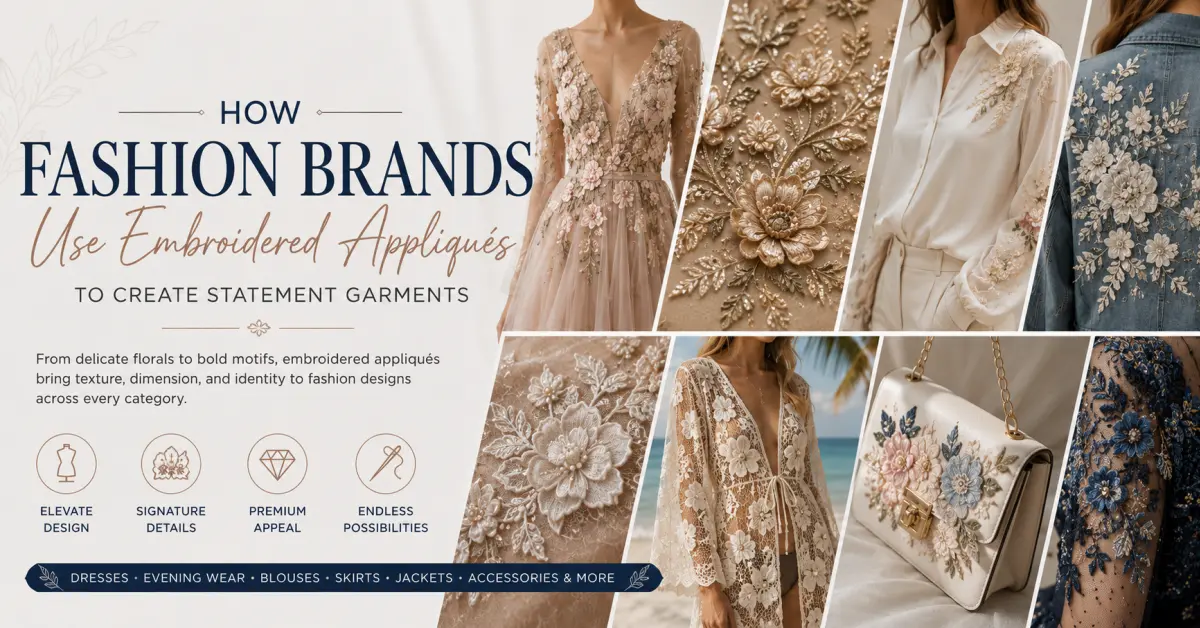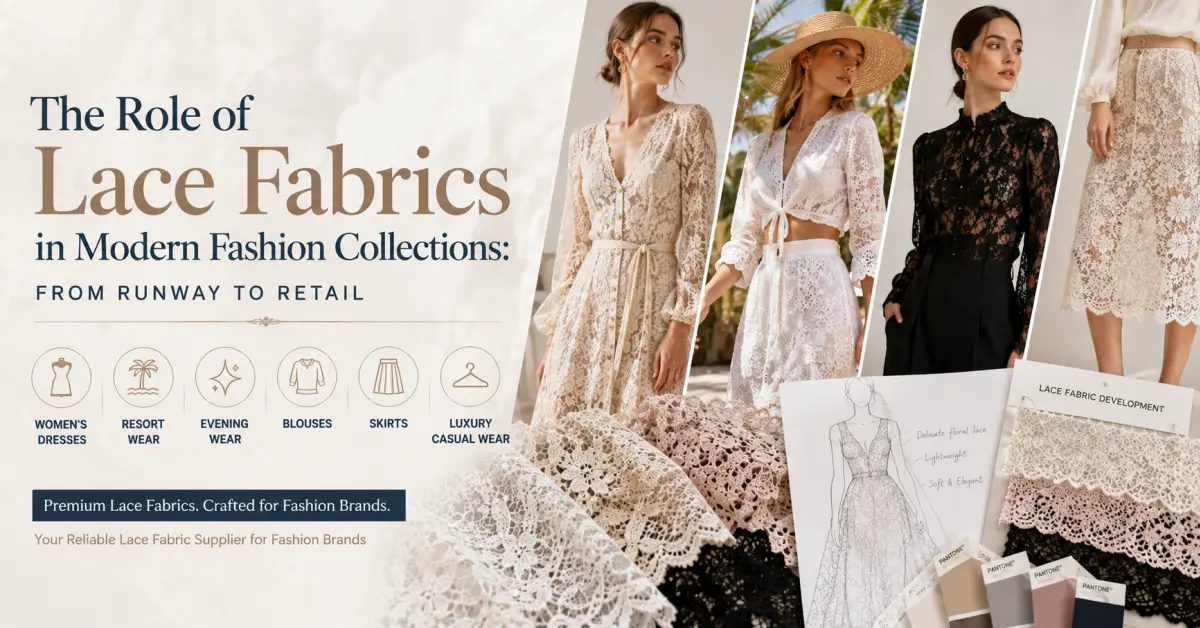




Choosing the right embroidery design is a critical decision for any fashion brand or garment manufacturer. Embroidery is more than decoration—it directly influences brand identity, garment value, production efficiency, and customer perception.
In today’s competitive fashion market, the right embroidery design can elevate a garment line, while the wrong choice may lead to unnecessary costs, production challenges, or design inconsistency.
This guide explains how to select embroidery designs that align with your garment line, covering design intent, fabric compatibility, production methods, and supplier collaboration—drawing on real-world experience from professional embroidery and lace manufacturers like MJ Lace (mjlace).
Start with Your Brand Identity and Target Market
Before selecting any embroidery design, it’s essential to define who your brand is and who you are designing for.
Key Questions to Ask
-
Is your brand minimal, romantic, modern, or decorative?
-
Are you targeting mass-market, boutique, or premium customers?
-
Is the garment line seasonal, limited edition, or core collection?
For example:
-
Minimalist brands may choose subtle, tone-on-tone embroidery
-
Bridal or feminine collections often favor lace embroidery with floral motifs
-
Streetwear brands typically opt for bold logo or emblem embroidery
At MJ Lace, many clients begin by sharing mood boards and brand references so embroidery designs can be developed to match the brand’s aesthetic rather than overpower it.
Match Embroidery Design with Garment Type
Not all embroidery designs work well on every garment.
Common Pairings
-
Shirts & Blouses: Collar embroidery, front panel embroidery, cuff details
-
Dresses: Floral lace embroidery, panel embroidery on bodice or hem
-
Outerwear: Logo embroidery, structured motifs
-
Bridal Wear: Delicate lace embroidery, layered textures
-
Casual Wear: Simple line embroidery or emblem placement
Choosing embroidery that complements the garment’s construction and silhouette ensures the final product looks balanced and wearable.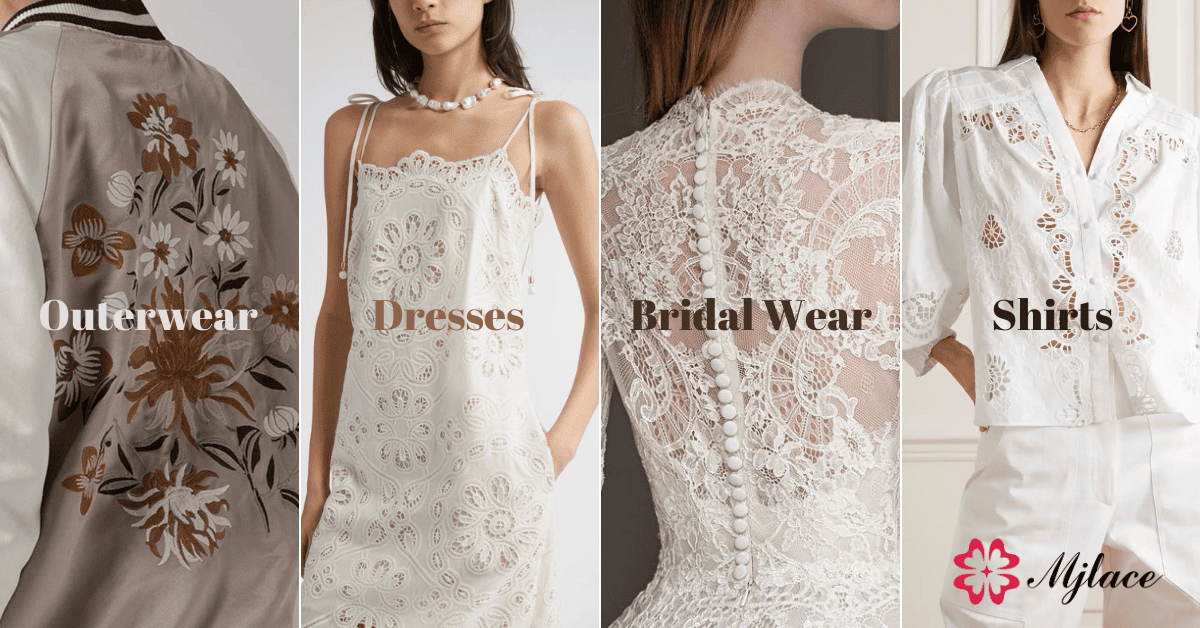
Choose the Right Embroidery Technique
The embroidery technique you choose affects both visual impact and production feasibility.
Popular Embroidery Methods
-
Panel Embroidery (Cut Piece Embroidery)
Ideal for precise placement, reduced waste, and custom designs -
Full Fabric Embroidery
Best for all-over patterns and repeated designs -
Lace Embroidery
Suitable for decorative and high-end garments -
Appliqué or Mixed Techniques
Adds depth and contrast
At mjlace, panel embroidery is frequently recommended for fashion brands that need accurate embroidery placement on collars, sleeves, or garment fronts without embroidering excess fabric.
Consider Fabric Compatibility
Fabric choice plays a crucial role in embroidery success.
Fabric Factors to Evaluate
-
Stretch vs. non-stretch
-
Thickness and stability
-
Surface texture
-
Transparency
For example:
-
Lightweight fabrics require lighter stitch density
-
Stretch fabrics need proper stabilization
-
Lace fabrics demand high-precision embroidery settings
MJ Lace works closely with clients to adjust stitch density, thread tension, and backing materials based on fabric characteristics—ensuring embroidery enhances rather than damages the fabric.
Balance Design Complexity and Production Cost
Highly detailed embroidery can look stunning—but it also increases:
-
Stitch count
-
Production time
-
Cost per unit
Smart Design Tips
-
Focus embroidery on key visual areas
-
Avoid unnecessary density in hidden areas
-
Simplify motifs without losing identity
-
Use panel embroidery to reduce waste
Experienced embroidery suppliers like MJ Lace often help brands optimize designs so they maintain visual impact while staying production-friendly.
Plan Embroidery Placement Early
Embroidery placement should be decided during the design and pattern-making stage, not after sampling.
Best Practices
-
Mark embroidery areas on patterns
-
Leave adequate margins around motifs
-
Align embroidery with seams and garment structure
-
Consider how embroidery interacts with movement
Panel embroidery allows brands to place designs exactly where intended, improving consistency and reducing sewing errors.
Sampling Is Non-Negotiable
Sampling is the most important step in embroidery design selection.
What Sampling Helps You Evaluate
-
Visual appearance
-
Stitch quality
-
Fabric behavior
-
Comfort and wearability
-
Overall garment balance
At mjlace, embroidery samples are often tested on actual garment panels, giving brands a realistic preview before bulk production.
Think About Scalability and Future Collections
A good embroidery design should not only work for one season but also support future growth.
Ask Yourself
-
Can this design be adjusted for different styles?
-
Will it work across multiple sizes?
-
Is it adaptable for future colorways or fabrics?
Modular embroidery designs allow brands to build consistency while evolving creatively.
Collaborate with the Right Embroidery Supplier
The success of your embroidery design depends heavily on your manufacturing partner.
What to Look for in a Supplier
-
Experience with custom embroidery
-
Understanding of garment construction
-
Ability to handle panel embroidery
-
Clear communication and technical support
-
Sampling and OEM flexibility
MJ Lace has supported global fashion brands by offering custom lace embroidery, panel embroidery, and OEM solutions, helping clients transform design ideas into production-ready embroidery.
Final Thoughts
Choosing the right embroidery design for your garment line requires a balance of creativity, technical understanding, and production planning. From defining your brand identity to selecting the right embroidery technique and supplier, every decision impacts the final product.
By working with experienced embroidery manufacturers like MJ Lace, brands gain access to technical expertise, design optimization, and flexible production methods—ensuring embroidery becomes a strength, not a challenge, in garment development.
With the right approach, embroidery can elevate your garment line, strengthen your brand identity, and support efficient, scalable production.