

Karl Lagerfeld's love affair with Chinese aesthetics runs deep throughout his work at Chanel. In this second installment of our "Eastern Narrative" series, we explore two extraordinary creations that transform porcelain poetry into wearable art.
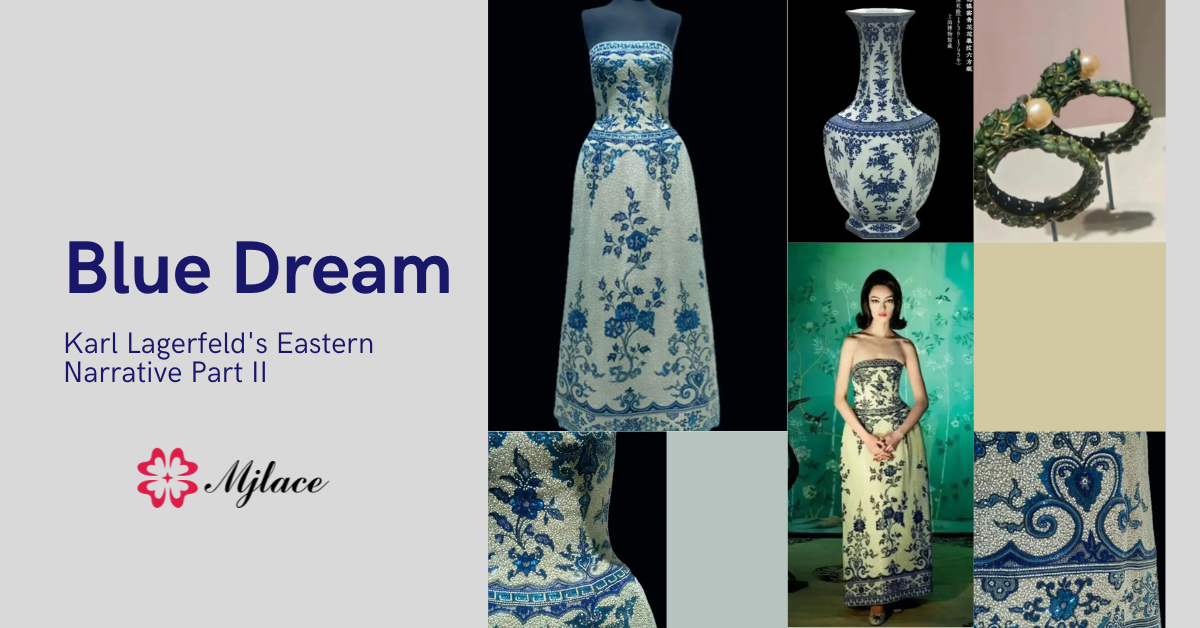
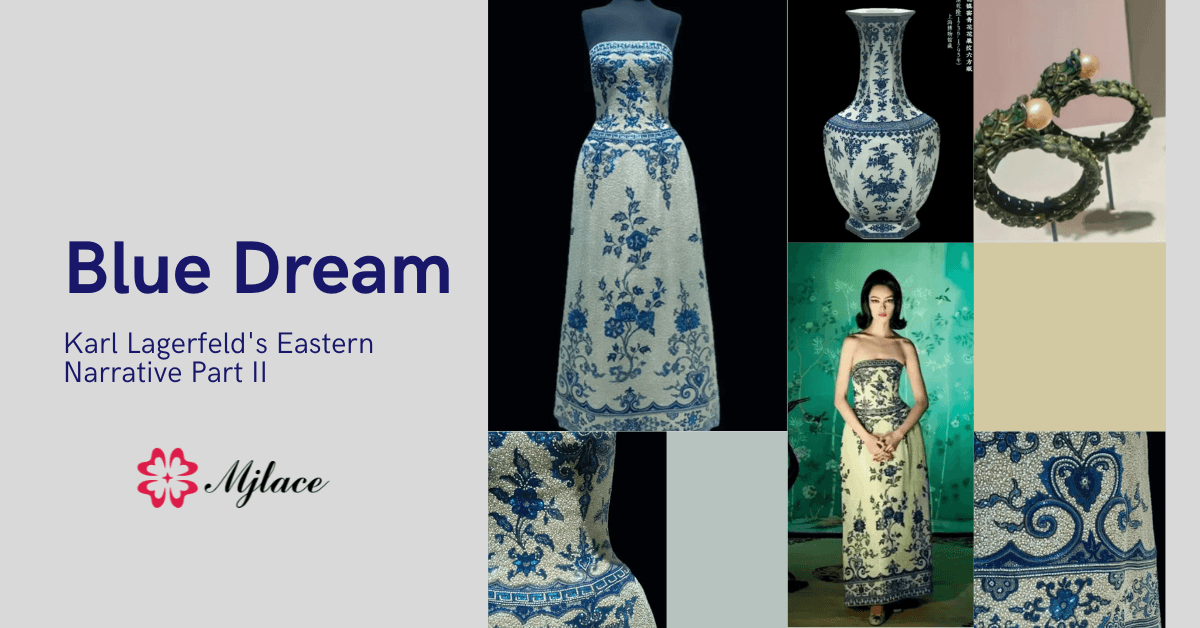
Piece One: The Blue-and-White Porcelain Gown (1984 SS Haute Couture)
| Designer | Karl Lagerfeld |
|---|---|
| Collection | Spring/Summer 1984 Haute Couture |
| Atelier | Lesage (1,200 hours) |
| Inspiration | Chinese blue-and-white porcelain |
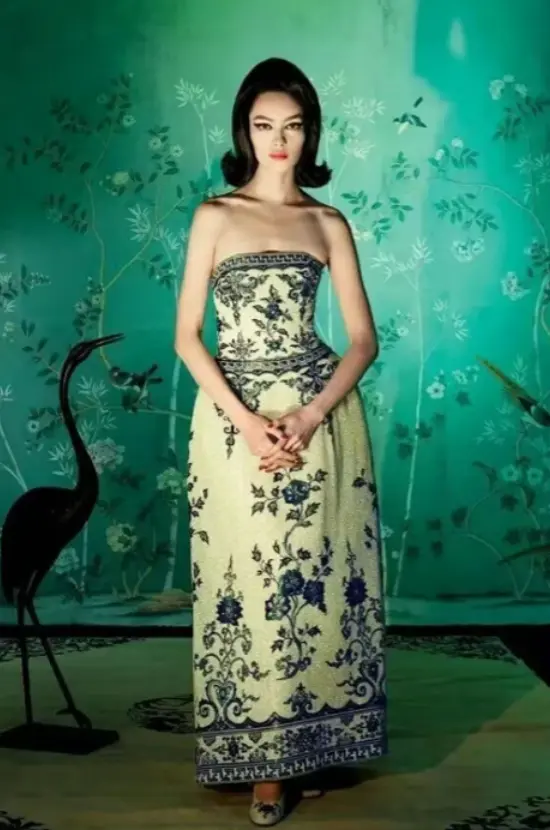
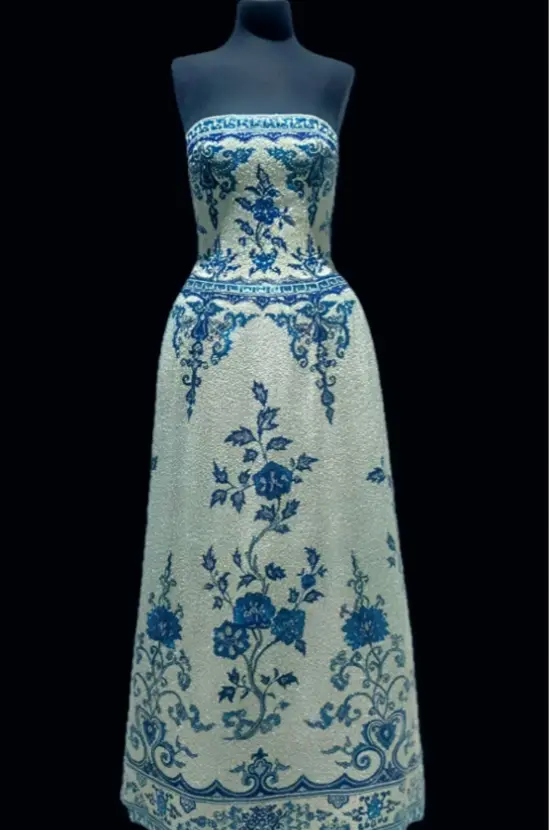
This silk organza gown takes the classic Chinese porcelain vase as its muse — not through direct copying, but through artistic translation.
The white silk organza becomes the "blank porcelain body." The blue patterns — curling vines and floral motifs — are recreated through crystal and glass bead embroidery by the legendary Lesage atelier. Over 1,200 hours of handwork bring the ceramic patterns to life, as if painted onto a luminous three-dimensional canvas.
The princess line silhouette echoes the elegant curves of a porcelain vase. The result is not a costume or a novelty piece — it is a quiet conversation between East and West, expressed through the language of haute couture.
A Masterpiece Recognized by Art History
This gown is more than a fashion statement. It has been collected and exhibited by the Metropolitan Museum of Art in New York — a rare honor that confirms its place not just in fashion history, but in art history.
Under the museum lights, it ceases to be simply a beautiful dress. It becomes an artifact of cultural dialogue, a bridge between two ancient civilizations, and proof that true luxury is not about excess — it is about profound understanding and precise expression.
Piece Two: The Black Petal Gown (2009/10 "Paris-Shanghai" Collection)
| Designer | Karl Lagerfeld |
|---|---|
| Collection | 2009/10 "Paris-Shanghai" Métiers d'Art |
| Inspiration | 1930s Shanghai glamour |
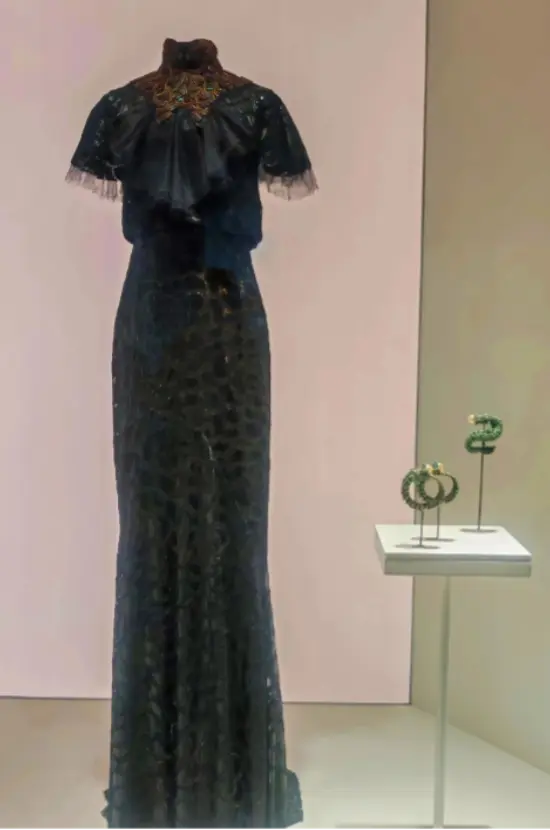
The second piece transports us to 1930s Shanghai — a city of cinematic romance, jazz age energy, and the golden era of the cheongsam (qipao).
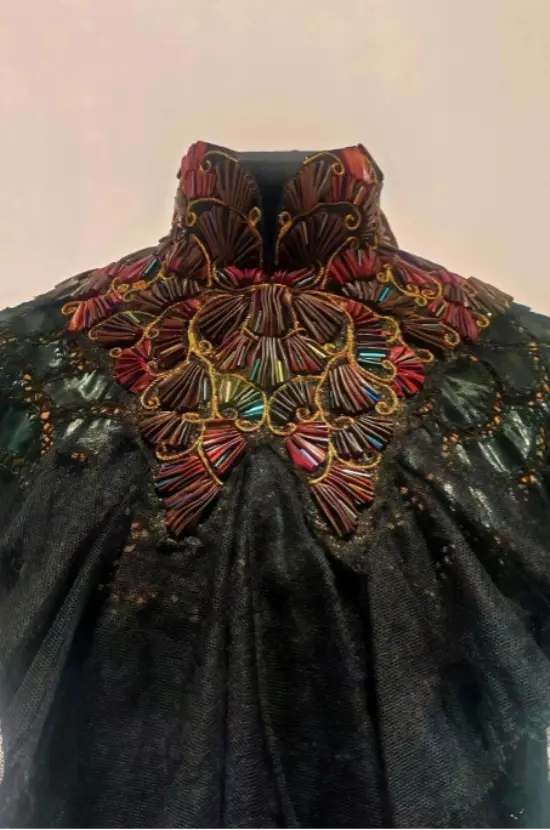
This black embroidered gown features petal or scale-like layers that cascade down the silhouette, evoking the shimmering movement of Shanghai's modern women as they danced through the night in their East-meets-West evening wear.
The color palette — deep black with subtle ornamentation — recalls traditional Chinese lacquerware: mysterious, profound, and quietly luxurious.
The silhouette whispers of the cheongsam's fitted elegance, while the embroidery tells its own story of cultural fusion.
What These Masterpieces Teach Us About Embroidery
| Principle | Lesson from Lagerfeld |
|---|---|
| Cultural respect | Understand deeply before you interpret |
| Material as canvas | Let fabric guide the design story |
| Time as investment | 1,200 hours creates legacy, not just product |
| Subtlety over spectacle | The quietest details often speak loudest |
Final Thoughts
Karl Lagerfeld once said that luxury must be comfortable, otherwise it is not luxury. But these pieces suggest another layer: luxury must also be meaningful.
The blue-and-white porcelain gown and the black petal gown are not mere decorations. They are meditations on beauty, craft, and the timeless dialogue between cultures.
In an era of fast fashion and fleeting trends, they stand as monuments to what happens when a designer truly understands — and truly cares.
Images courtesy of Chanel Heritage.