

In recent years, sustainability has shifted from being a marketing concept to a core operational requirement in the global fashion and textile industry. Driven by regulatory pressure, consumer awareness, and brand responsibility, eco-friendly textiles are no longer optional—they are becoming the foundation of modern supply chains.
For fashion brands, especially those operating in Europe and the United States, sustainability is now directly linked to brand value, market access, and long-term competitiveness.
This article explores the key dimensions of sustainable textile development, with a focus on how lace and embroidered fabric manufacturers are adapting to this global transformation.
The Shift From Fast Fashion to Responsible Production
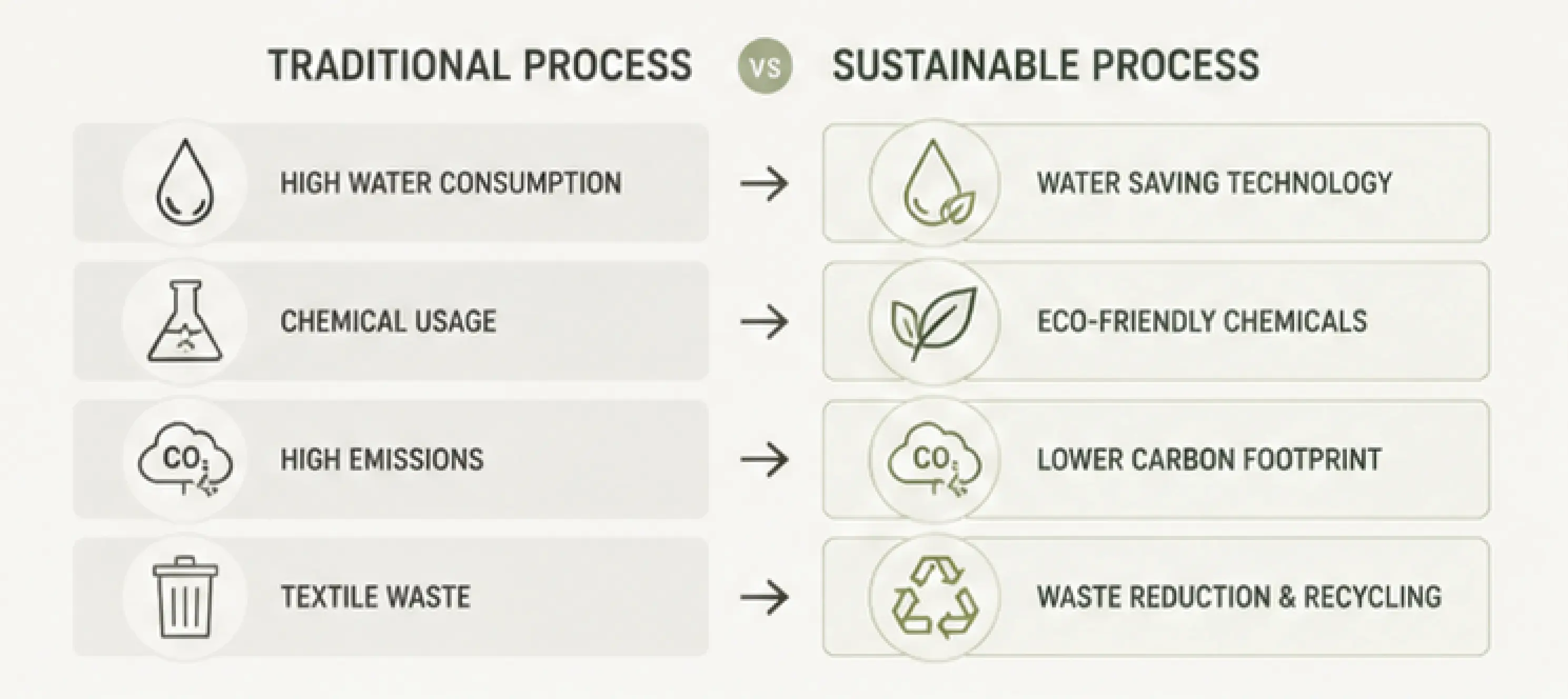
The traditional fast fashion model has been under increasing scrutiny due to its environmental impact:
-
Excessive water consumption
-
Chemical dye pollution
-
Textile waste accumulation
-
Short product life cycles
-
Carbon emissions from global logistics
As a result, both regulators and consumers are pushing brands toward responsible sourcing and transparent production systems.
Today, leading fashion brands are not only asking "How does this product look?" but also:
-
Where does this fabric come from?
-
How is it produced?
-
What is its environmental footprint?
-
Can it be recycled or reused?
This shift has fundamentally changed how textile manufacturers operate.
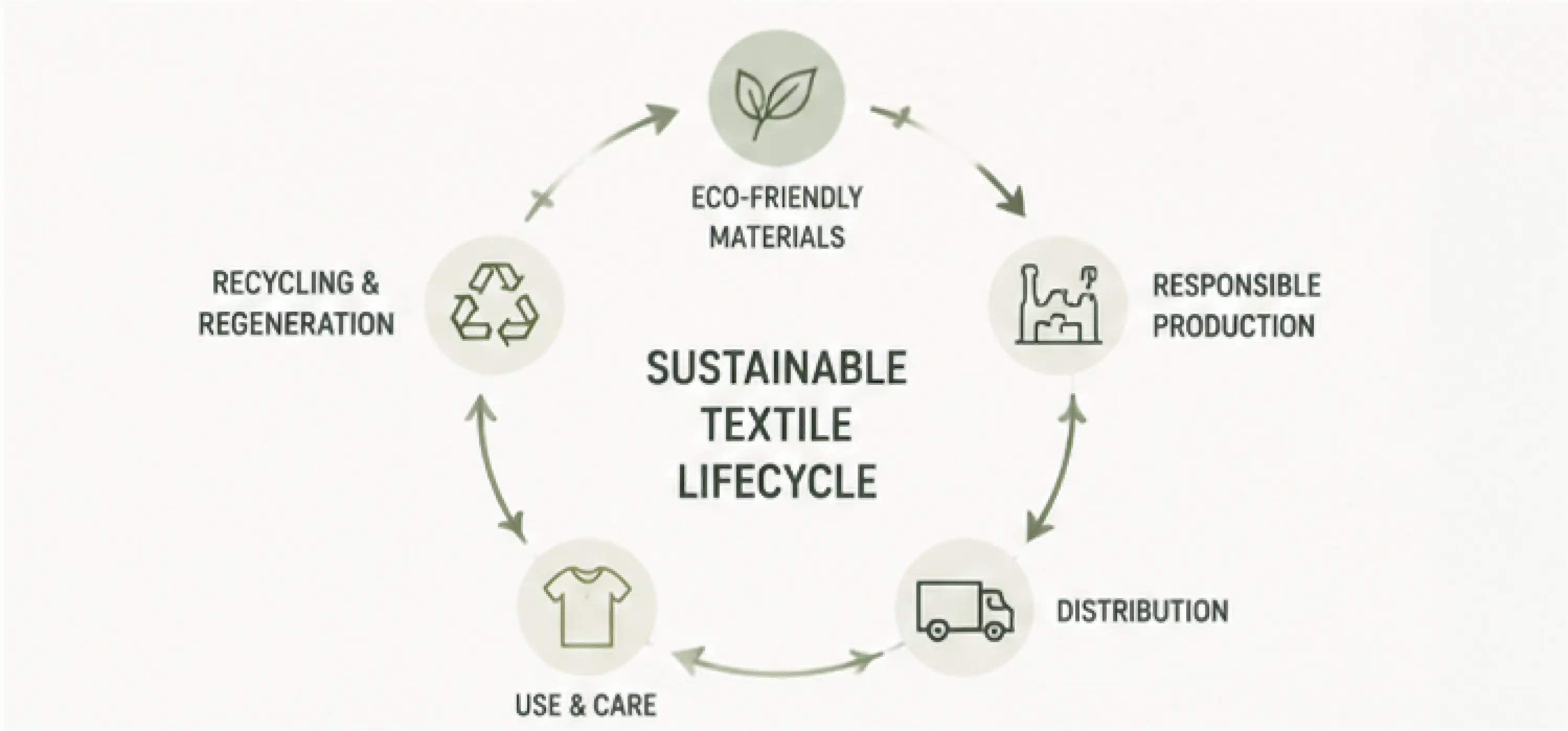
What Defines Eco-Friendly Textile?
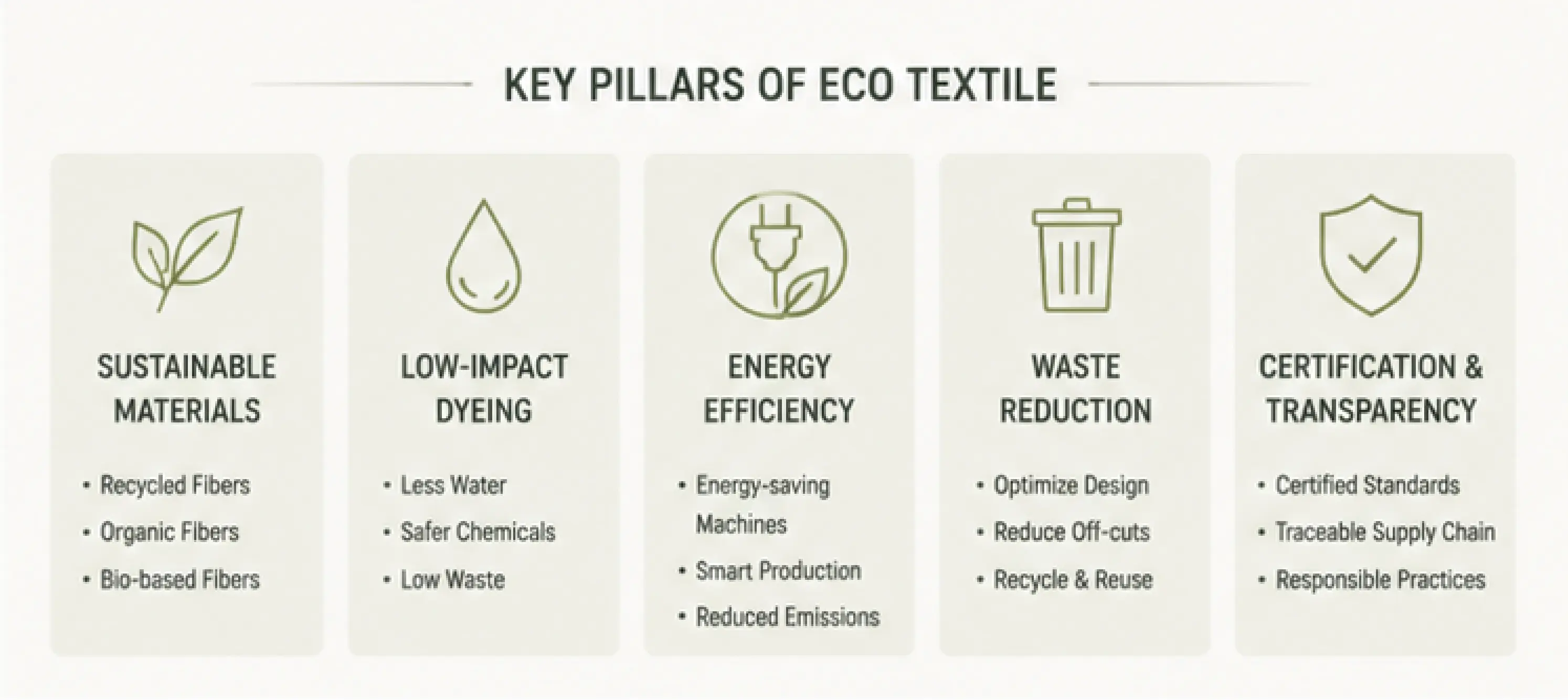
"Sustainability" in textiles is not a single factor—it is a combination of materials, processes, and lifecycle management.
Sustainable Raw Materials
Common eco-friendly fiber options include:
-
Recycled polyester (rPET)
-
Organic cotton
-
Bamboo fiber blends
-
Bio-based nylon alternatives
-
Recycled polyamide
In lace manufacturing, recycled polyester has become particularly important due to its balance of performance, stability, and cost efficiency.
Low-Impact Dyeing Processes
Traditional dyeing methods consume large volumes of water and chemicals. Sustainable alternatives include:
-
Low-liquor ratio dyeing
-
Digital printing technology
-
Dope-dyed yarns
-
Water-saving closed-loop systems
These technologies significantly reduce wastewater discharge while maintaining color consistency. Learn about dyeing and color matching.
Energy-Efficient Manufacturing
Modern textile factories are increasingly investing in:
-
Energy-saving knitting machines
-
Automated embroidery systems
-
Heat recovery systems
-
Smart production scheduling
Efficiency is no longer just about cost—it directly impacts carbon footprint.
Sustainability in Lace Fabric Production
Lace is traditionally considered a delicate and resource-intensive textile. However, modern manufacturing has introduced significant improvements in environmental performance.
Material Optimization in Lace
Advanced lace production now focuses on:
-
Recycled yarn usage
-
Lightweight structural design
-
Reduced material waste during pattern development
By optimizing pattern engineering, manufacturers can reduce yarn consumption without compromising design complexity.
Digital Pattern Development
Computer-aided design (CAD) systems allow manufacturers to:
-
Simulate lace patterns before production
-
Minimize sampling waste
-
Reduce development cycles
-
Improve repeat accuracy
This significantly lowers both material waste and energy usage in early development stages. Explore pattern design development.
Improved Production Efficiency
Modern lace machines, particularly warp knitting and jacquard systems, are capable of:
-
Higher output with lower energy consumption
-
Reduced downtime
-
Greater pattern precision
-
Lower defect rates
Efficiency improvements directly translate into reduced environmental impact per meter of fabric.
Certifications and Industry Standards
For global buyers, sustainability claims must be verified through recognized certifications.
Common textile certifications include:
-
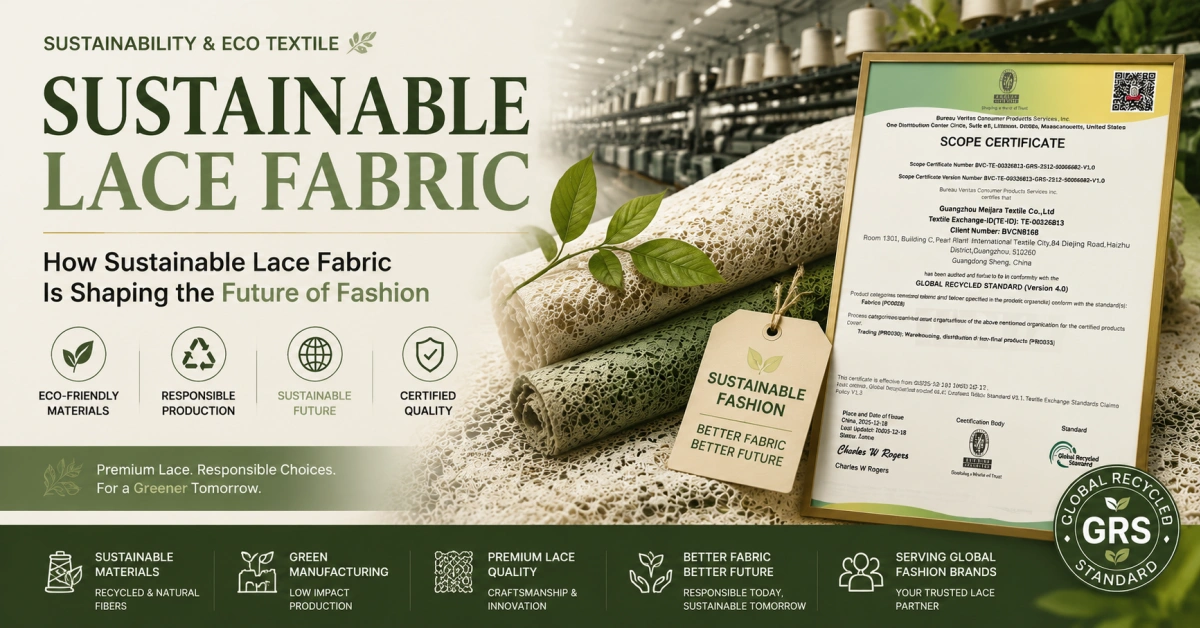
GRS (Global Recycled Standard)
-
OEKO-TEX Standard 100
-
GOTS (Global Organic Textile Standard)
-
ISO environmental management systems
These certifications ensure traceability across the supply chain, from fiber sourcing to finished fabric.
Brands increasingly require suppliers to provide documentation for compliance before entering production agreements. Visit our sustainability section.
Supply Chain Transparency: A New Industry Requirement
Sustainability is not limited to production—it extends across the entire supply chain.
Key transparency factors include:
-
Traceable raw material sourcing
-
Documented production processes
-
Chemical usage disclosure
-
Waste management systems
-
Ethical labor practices
For international brands, especially those selling in regulated markets, transparency is now a mandatory requirement rather than a competitive advantage.
The Role of Manufacturers in Sustainable Transformation
Textile manufacturers play a central role in enabling sustainability. Their responsibilities now extend beyond production to include:
Material Innovation
Developing fabrics that reduce environmental impact while maintaining performance and aesthetics.
Process Optimization
Upgrading machinery and improving workflow efficiency to reduce waste and energy consumption.
Collaboration With Brands
Working closely with designers to:
-
Optimize fabric selection
-
Reduce unnecessary sampling
-
Improve production feasibility
-
Balance creativity and sustainability. Explore customized processes.
Sustainability is most effective when it is integrated early in the design stage.
Challenges in Implementing Sustainable Textiles
Despite progress, the industry still faces several challenges:
-
Higher cost of eco-friendly raw materials
-
Limited scalability of certain sustainable fibers
-
Complex certification processes
-
Balancing aesthetics with environmental constraints
-
Supply chain fragmentation
For many brands, the transition to sustainability is gradual rather than immediate.
Future Trends in Eco Textile Development
Looking ahead, several trends are shaping the future of sustainable textiles:
Circular Fashion Systems
Designing fabrics that can be recycled or reused at end-of-life.
Bio-Based Materials
Development of next-generation fibers derived from natural or renewable sources.
Digital Manufacturing
Greater adoption of AI-driven design and automated production systems.
On-Demand Production
Reducing overproduction by manufacturing only what is needed.
Conclusion: Sustainability as a Long-Term Industry Standard
Sustainability in textiles is no longer a niche concept—it is becoming a structural requirement for global fashion production.
For lace and embroidery manufacturers, the challenge is not only to reduce environmental impact but also to maintain design complexity, product quality, and commercial competitiveness.
The future of the textile industry will belong to companies that can successfully integrate:
-
Material innovation
-
Process efficiency
-
Transparent supply chains
-
Design adaptability
As global demand continues to evolve, sustainable textile production will define not only how fabrics are made, but how fashion brands position themselves in the market.
Ready to explore sustainable lace solutions for your brand? Visit our homepage to learn more or contact us for inquiries. You may also submit an inquiry for custom pricing.