
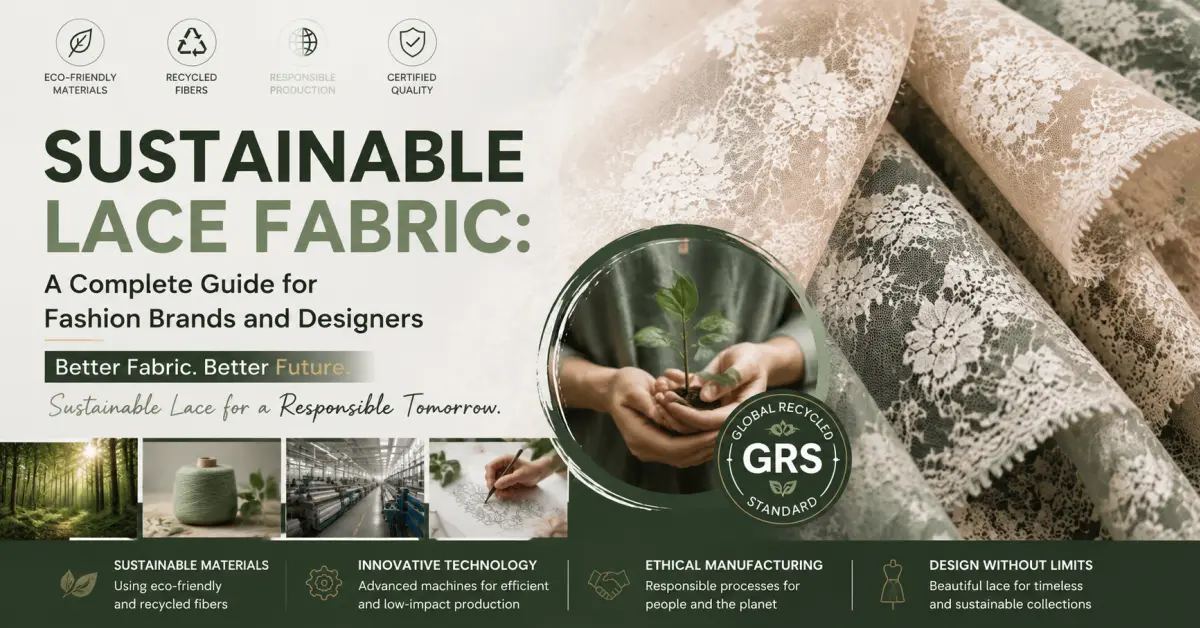

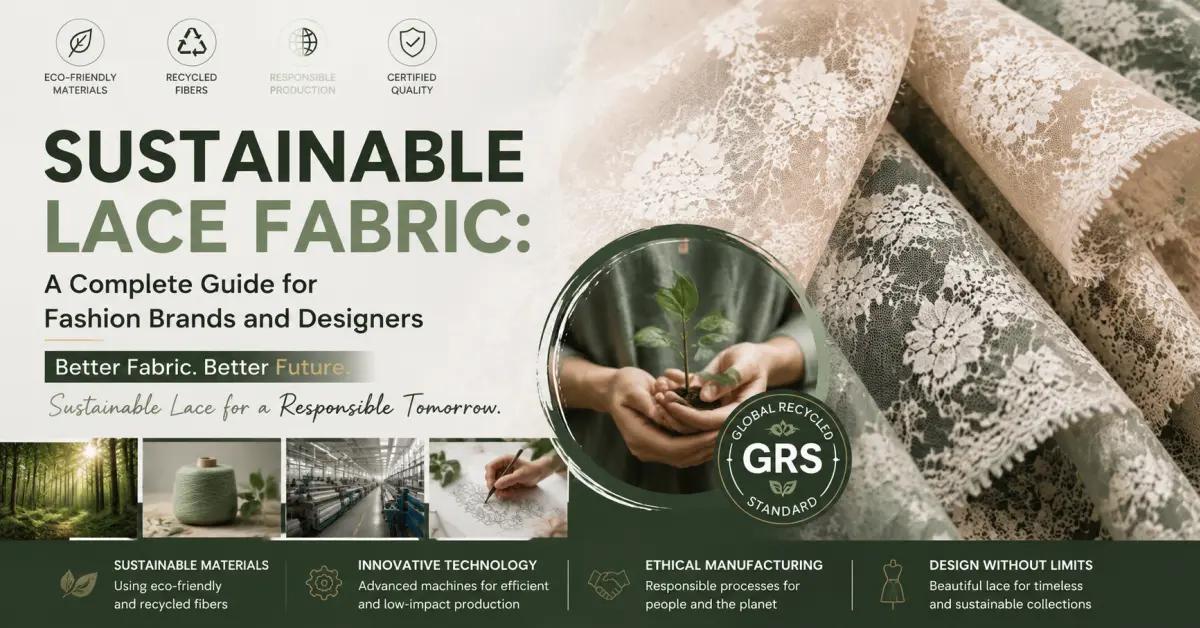
Why Sustainable Lace Fabric Matters in Modern Fashion
Sustainability has become one of the most important factors shaping the future of the global fashion industry. As consumers become more aware of environmental issues and brands face increasing pressure to build responsible supply chains, textile selection is no longer only about appearance, price, and performance.
For fashion brands, choosing the right fabric supplier has become a strategic decision.
Lace fabric, traditionally associated with luxury, bridal wear, lingerie, evening dresses, and premium fashion collections, is now entering a new stage of development. Designers are looking for lace materials that not only deliver delicate textures and elegant patterns but also meet higher environmental standards.
This is where sustainable lace fabric becomes increasingly important.
Sustainable lace fabric combines traditional textile craftsmanship with environmentally responsible materials, improved manufacturing processes, and traceable supply chains. It allows fashion brands to create premium products while reducing environmental impact throughout the production cycle.
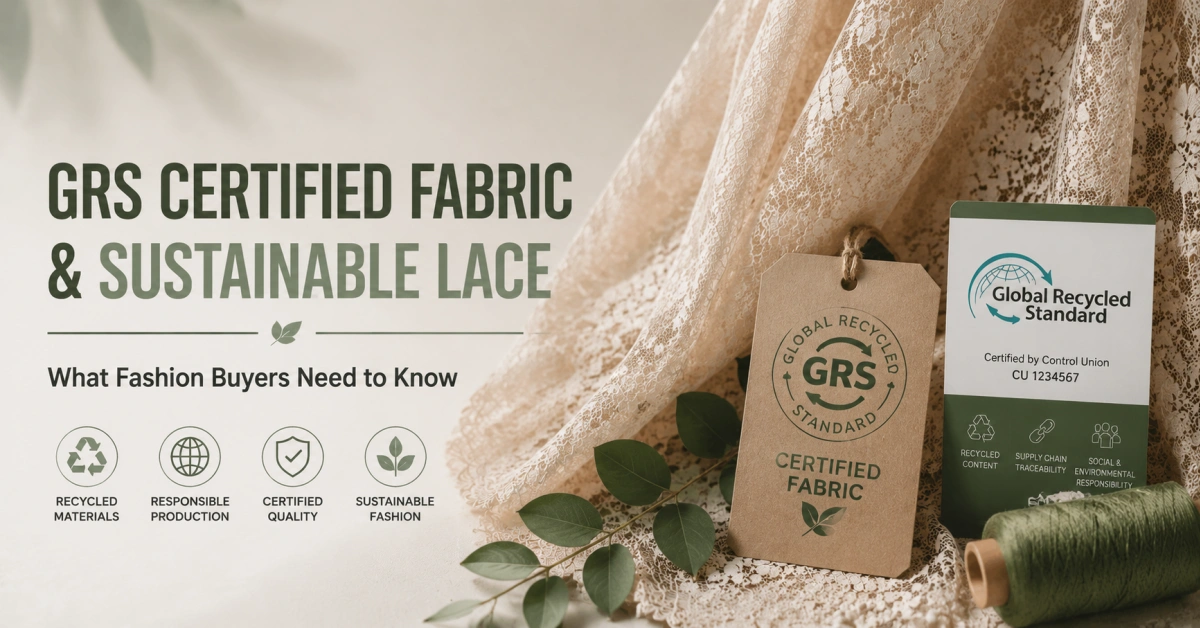
From recycled fibers and responsible sourcing to certifications such as the Global Recycled Standard (GRS), sustainable lace represents a new direction for the lace industry.
For international fashion brands, designers, and garment manufacturers, understanding sustainable lace fabric is essential when selecting long-term textile partners.
This guide explains everything you need to know about sustainable lace fabric, including:
-
What sustainable lace fabric is
-
Types of eco-friendly lace materials
-
Sustainable lace manufacturing processes
-
Certifications and standards
-
Benefits for fashion brands
-
How to source reliable sustainable lace suppliers
-
Future trends in eco textile development. Visit our sustainability section.
What Is Sustainable Lace Fabric?
Definition of Sustainable Lace Fabric
Sustainable lace fabric refers to lace textiles produced through environmentally responsible methods, using materials and processes designed to reduce negative impacts on the planet.
Unlike conventional lace production, which may rely heavily on virgin synthetic fibers, excessive chemical processing, and inefficient resource usage, sustainable lace focuses on:
-
Responsible raw materials
-
Lower energy consumption
-
Reduced waste generation
-
Safer chemical management
-
Transparent supply chains
-
Long-term environmental responsibility
For fashion brands, sustainable lace does not mean sacrificing design possibilities.
Modern sustainable lace can still provide:
-
Intricate patterns
-
Soft hand feel
-
Stretch performance
-
Elegant appearance
-
High durability
-
Premium fashion aesthetics
Today, sustainable lace fabrics are widely used in:
-
Bridal gowns
-
Luxury evening dresses
-
Women's fashion
-
Haute couture collections
-
Lingerie
-
Accessories
-
Sustainable clothing lines
Why Sustainable Lace Fabric Is Becoming Important for Fashion Brands
Growing Demand for Sustainable Fashion
The fashion industry has experienced significant changes in consumer expectations.
Modern customers increasingly care about:
-
Where materials come from
-
How products are manufactured
-
Whether suppliers follow ethical standards
-
The environmental impact of clothing production
For premium fashion brands, sustainability has become part of brand identity.
A wedding dress brand using responsibly sourced lace, for example, can communicate values beyond design:
-
Craftsmanship
-
Responsibility
-
Transparency
-
Environmental awareness
This creates stronger emotional connections with consumers.
Sustainability Is Becoming a Competitive Advantage
In competitive fashion markets, sustainable materials provide brands with differentiation.
A garment made with sustainable lace fabric can support:
-
Premium positioning
-
Eco-conscious marketing
-
Sustainable collections
-
Responsible sourcing strategies
Many international fashion companies now include sustainability information in:
-
Product descriptions
-
Brand stories
-
Marketing campaigns
-
Annual sustainability reports
Therefore, choosing a sustainable lace manufacturer is not only an environmental decision but also a business strategy.
Types of Sustainable Lace Fabric
Sustainable lace is not limited to one material. Different fiber choices and production technologies create different performance characteristics.
Recycled Polyester Lace Fabric
Recycled polyester is one of the most common sustainable materials used in modern lace production.
It is usually made from recycled PET bottles or post-consumer polyester waste.
Compared with traditional polyester:
Recycled polyester helps:
-
Reduce dependence on petroleum-based resources
-
Lower waste entering landfills
-
Support circular textile systems
Recycled polyester lace is widely used for:
-
Fashion dresses
-
Evening wear
-
Bridal applications
-
Decorative trims
For brands looking for certified sustainable materials, recycled polyester lace with GRS certification provides additional traceability.
Organic Cotton Lace Fabric
Cotton lace has always been popular because of its natural softness and breathable properties. Explore our cotton lace trim.
Organic cotton lace is produced using cotton grown without conventional harmful pesticides and chemicals.
Advantages include:
-
Natural fiber characteristics
-
Comfortable skin contact
-
Breathability
-
Premium natural appearance
Organic cotton lace is especially suitable for:
-
Baby clothing
-
Luxury apparel
-
Sustainable fashion collections
-
Natural lifestyle brands
Recycled Nylon Lace Fabric
Recycled nylon is another option for sustainable lace production.
It provides:
-
Excellent strength
-
Elastic performance
-
Lightweight texture
-
Smooth surface
This makes recycled nylon lace suitable for:
-
Stretch lace fabrics
-
Lingerie
-
Bodywear
-
Fashion garments requiring flexibility
Sustainable Embroidered Lace Fabric
Embroidery is an important category within premium lace development.
Sustainable embroidered lace combines:
-
Eco-conscious base fabrics
-
Responsible embroidery threads
-
Efficient production technology
Applications include:
-
Bridal lace
-
Couture dresses
-
Luxury fashion collections
-
Decorative panels
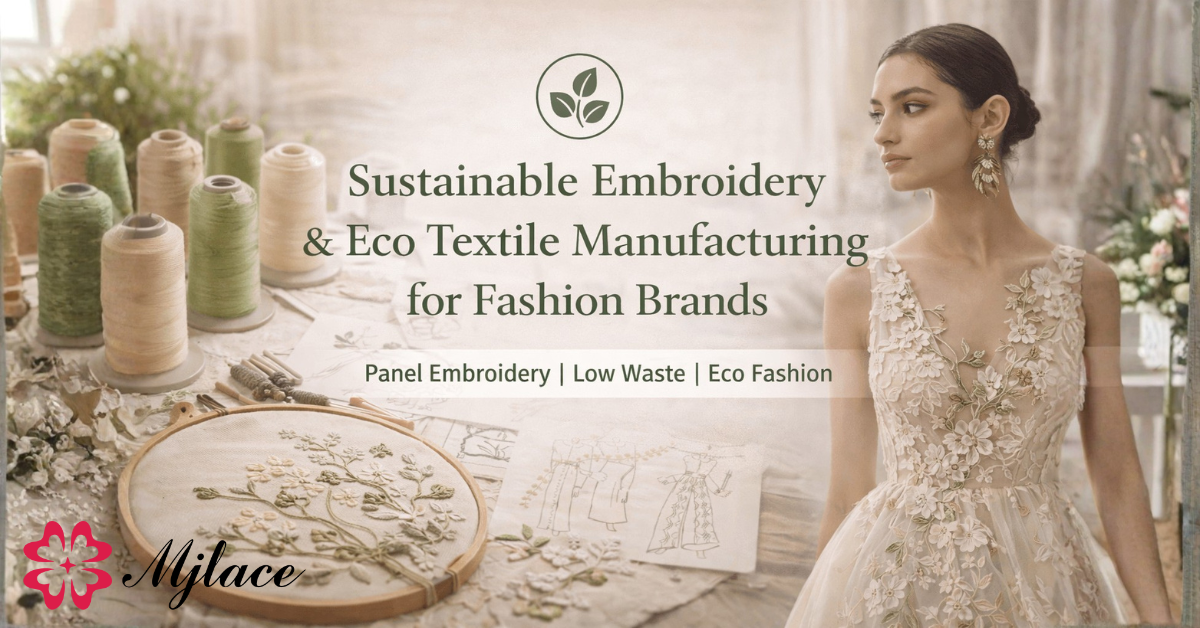
For brands creating customized lace designs, sustainable embroidery solutions allow designers to maintain creativity while meeting environmental goals.
Sustainable Lace Fabric Manufacturing Process
A sustainable lace manufacturer focuses not only on materials but also on every stage of production.
Material Selection
The first step is choosing responsible fibers.
Common sustainable choices include:
-
Recycled polyester yarn
-
Organic cotton
-
Recycled nylon
-
Certified sustainable fibers
Material selection directly affects:
-
Environmental impact
-
Product performance
-
Certification eligibility
Lace Knitting and Weaving
Modern lace production uses advanced textile machinery to create complex patterns.
Professional lace factories typically use:
-
Warp knitting machines
-
Jacquard lace machines
-
Embroidery machines
-
Computer-controlled pattern systems. Learn about pattern design development.
Advanced machinery improves:
-
Pattern accuracy
-
Material efficiency
-
Production consistency
For sustainable production, reducing fabric waste during manufacturing is also an important consideration.
Dyeing and Finishing
Dyeing is one of the most environmentally sensitive stages in textile production. Learn about dyeing and color matching.
Sustainable lace manufacturers focus on:
-
Efficient water usage
-
Responsible dye selection
-
Wastewater treatment
-
Reduced chemical impact
Finishing processes may include:
-
Softening
-
Heat setting
-
Surface treatment
-
Special effects processing
The goal is to maintain lace quality while minimizing environmental impact.
Sustainable Lace Fabric Certifications: What Fashion Brands Should Know
For international fashion brands, sustainability claims must be supported by reliable certifications and transparent documentation.
Today, many buyers no longer evaluate lace suppliers only based on price, MOQ, or production capacity. They also consider whether suppliers can provide traceability, compliance documents, and responsible manufacturing practices.
When sourcing sustainable lace fabric, understanding certifications is an important step.
Global Recycled Standard (GRS) Certified Lace Fabric
The Global Recycled Standard (GRS) is one of the most recognized certifications for recycled textile materials.
GRS certification verifies:
-
Recycled material content
-
Responsible production processes
-
Social and environmental practices
-
Supply chain traceability
For sustainable lace fabric, GRS certification can help brands confirm that recycled fibers used in production meet international standards.
GRS certified lace fabric is especially valuable for:
-
Sustainable fashion collections
-
Eco-conscious apparel brands
-
Luxury brands with environmental commitments
-
Retailers requiring supplier compliance
For example, recycled polyester lace produced under GRS requirements can provide brands with stronger sustainability documentation when communicating with consumers.
OEKO-TEX® Standard 100
OEKO-TEX® certification focuses on textile safety and harmful substance testing.
It evaluates whether textile products contain substances that may negatively affect:
-
Human health
-
Skin safety
-
Consumer usage experience
For lace fabrics used in:
-
Bridal dresses
-
Lingerie
-
Children's clothing
-
Close-to-skin garments
OEKO-TEX® certification provides additional confidence for brands.
A sustainable lace supplier should not only focus on recycled materials but also ensure product safety throughout manufacturing.
Recycled Claim Standard (RCS)
The Recycled Claim Standard (RCS) verifies recycled material content and chain-of-custody processes.
Compared with GRS, RCS mainly focuses on:
-
Recycled material verification
-
Supply chain tracking
For brands developing eco-friendly collections, RCS-certified lace fabrics can support transparent sustainability claims.
Why Certifications Matter for Fashion Brands
Certifications provide several advantages:
Building Consumer Trust
Consumers increasingly want proof behind sustainability statements.
A certified sustainable lace fabric allows brands to communicate:
-
Responsible material choices
-
Transparent sourcing
-
Environmental commitment
Supporting Retail Requirements
Many international retailers and fashion platforms require suppliers to provide:
-
Sustainability certificates
-
Factory audit records
-
Material traceability documents
Improving Brand Positioning
Sustainable certification can help brands create premium positioning.
Instead of competing only through price, brands can compete through:
-
Quality
-
Responsibility
-
Innovation
Sustainable Lace Fabric vs Conventional Lace Fabric
When selecting materials, many fashion brands compare sustainable lace with traditional lace.
The differences are not only related to environmental impact but also supply chain value.
| Comparison | Conventional Lace Fabric | Sustainable Lace Fabric |
|---|---|---|
| Raw Materials | Mainly virgin fibers | Recycled or responsible fibers |
| Environmental Impact | Higher resource consumption | Reduced environmental footprint |
| Traceability | Limited | Better documentation |
| Brand Value | Traditional positioning | Supports sustainable branding |
| Certification Options | Limited | GRS/RCS/OEKO-TEX available |
| Market Demand | Stable | Rapidly growing |
However, sustainable lace does not mean lower quality.
Modern sustainable lace fabrics can achieve:
-
Soft texture
-
High elasticity
-
Complex patterns
-
Color stability
-
Fashion-forward designs
The key difference is the approach behind production.
Sustainable lace combines:
Design + Technology + Responsibility
Benefits of Sustainable Lace Fabric for Fashion Brands
Meeting Consumer Expectations
Fashion consumers are becoming more selective.
Especially in premium markets such as:
-
Europe
-
North America
-
Japan
-
Australia
Customers increasingly consider:
-
Material origin
-
Manufacturing ethics
-
Environmental impact
Using sustainable lace fabric allows brands to respond to these expectations.
Creating Premium Product Stories
Lace has always represented craftsmanship and luxury.
Sustainable lace adds another layer of value.
A fashion brand can communicate:
"This collection combines traditional lace craftsmanship with responsible textile innovation."
This type of storytelling is especially effective for:
-
Bridal brands
-
Designer labels
-
Luxury fashion houses
Supporting Sustainable Fashion Collections
Many brands are developing:
-
Conscious collections
-
Eco-friendly capsule collections
-
Sustainable bridal lines. Explore bridal lace.
Sustainable lace provides designers with more material options while maintaining the elegant appearance expected from premium fashion.
Applications include:
Bridal Fashion
Sustainable lace is widely used for:
-
Wedding gowns
-
Veils
-
Sleeves
-
Bridal accessories
Evening Wear
Luxury dresses often require lace materials with:
-
Elegant patterns
-
Lightweight structure
-
Premium appearance
Women's Apparel
Applications include:
-
Blouses
-
Skirts
-
Dresses
-
Outerwear details
Lingerie and Intimate Apparel
Stretch sustainable lace offers:
-
Comfort
-
Flexibility
-
Breathability
How Fashion Designers Use Sustainable Lace Fabric in Their Collections
For designers, sustainable lace is not only a material choice but also a creative opportunity.
Combining Traditional Patterns with Modern Sustainability
Classic lace patterns remain popular:
-
Floral motifs
-
Botanical designs
-
Geometric patterns
-
Vintage-inspired styles
Sustainable production allows these traditional aesthetics to continue evolving.
Designers can combine:
-
Classic lace appearance
-
Modern silhouettes
-
Eco-friendly concepts
Customized Sustainable Lace Development
Many fashion brands require exclusive lace patterns.
A professional sustainable lace manufacturer can provide:
-
Custom pattern development
-
Color customization
-
Material selection
-
Embroidery enhancement
-
Special finishing. Explore customized processes.
The typical development process includes:
Step 1: Design Concept
Brands provide:
-
Sketches
-
Reference images
-
Pattern ideas
Step 2: Pattern Development
The manufacturer converts ideas into production-ready lace designs.
Step 3: Material Selection
Different sustainable fibers are evaluated based on:
-
Stretch requirements
-
Hand feel
-
Application
Step 4: Sampling
Samples are produced for:
-
Design approval
-
Quality testing
-
Garment fitting
Step 5: Bulk Production
After approval, production begins with consistent quality control.
How to Choose a Sustainable Lace Fabric Supplier
Choosing the right supplier is one of the most important decisions for fashion brands.
A reliable sustainable lace manufacturer should provide more than products.
They should offer:
-
Technical expertise
-
Stable production capability
-
Quality control. Learn about quality control standards.
-
Sustainability documentation
-
Custom development support
Evaluate Manufacturing Experience
Experience matters in lace production.
A professional lace factory should understand:
-
Lace structure
-
Yarn characteristics
-
Pattern development
-
Finishing techniques
Factories with long-term lace manufacturing experience can better control:
-
Pattern accuracy
-
Fabric stability
-
Production consistency
Check Sustainable Material Capability
Ask suppliers:
-
What recycled materials are available?
-
Can they provide certification documents?
-
Do they support sustainable customization?
-
Are production processes environmentally managed?
A supplier claiming sustainability should provide clear evidence.
Review Production Equipment
Advanced machinery directly affects lace quality.
Professional lace factories usually invest in:
-
Modern warp knitting machines
-
Jacquard lace machines
-
Embroidery equipment
-
Digital pattern systems
Better equipment helps achieve:
-
Complex designs
-
Stable production
-
Reduced material waste
Evaluate Quality Control Systems
Sustainable materials are only valuable when combined with reliable quality.
Quality inspection should include:
-
Fabric appearance
-
Color consistency
-
Stretch recovery
-
Pattern accuracy
-
Defect inspection
For international buyers, consistent quality is essential because production problems can affect:
-
Delivery schedules
-
Brand reputation
-
Customer satisfaction
Why Choose China as a Sustainable Lace Fabric Manufacturing Base?
China has become one of the world's major lace production centers.
The country has developed a complete textile supply chain covering:
-
Yarn production
-
Lace knitting
-
Dyeing
-
Embroidery
-
Finishing
-
Garment manufacturing
For international fashion brands, China offers advantages including:
Complete Textile Supply Chain
Unlike regions where lace production depends heavily on imported materials, China's textile clusters provide integrated manufacturing capabilities.
This allows suppliers to manage:
-
Faster development
-
Better cost control
-
Flexible customization
Strong Lace Manufacturing Experience
Chinese lace manufacturers have decades of experience producing:
-
Stretch lace
-
Jacquard lace
-
Embroidered lace
-
Bridal lace
This technical experience helps international brands develop complex designs.
Flexible Customization Capability
Fashion brands often require:
-
Exclusive patterns
-
Specific colors
-
Custom widths
-
Special finishes
Experienced China lace suppliers can support OEM and ODM projects.
Future Trends of Sustainable Lace Fabric in the Fashion Industry
The global fashion industry is entering a new phase where sustainability is no longer considered an optional concept. It is becoming a fundamental requirement across textile development, production, and supply chain management.
For lace manufacturers and fashion brands, the future development of sustainable lace fabric will focus on three major directions:
-
More responsible materials
-
Smarter manufacturing technology
-
Greater supply chain transparency
Increasing Demand for Recycled and Responsible Fibers
One of the most important trends in sustainable textile development is the increasing adoption of recycled fibers.
Traditional lace fabrics are often produced with synthetic fibers such as polyester and nylon. While these materials provide excellent performance, brands are now seeking alternatives with lower environmental impact.
Future sustainable lace collections will increasingly use:
-
Recycled polyester yarn
-
Recycled nylon yarn
-
Organic cotton fibers
-
Bio-based textile materials
For fashion brands, recycled lace fabrics provide an opportunity to maintain the visual appeal of traditional lace while supporting circular fashion concepts.
This trend is particularly important for:
-
Sustainable bridal brands
-
Eco-conscious designer labels
-
Premium fashion companies
-
Responsible apparel manufacturers
Technology-Driven Sustainable Lace Manufacturing
Technology will continue to transform lace production.
Modern lace factories are adopting advanced machinery and digital production systems to improve efficiency and reduce waste.
Future manufacturing improvements will include:
Digital Pattern Development
Digital lace design systems allow manufacturers to:
-
Create complex patterns faster
-
Reduce sampling waste
-
Improve design accuracy
-
Shorten development cycles
For fashion brands, this means faster product development and more flexibility when creating exclusive lace collections.
Efficient Production Equipment
Advanced lace machines help optimize:
-
Yarn consumption
-
Energy usage
-
Production efficiency
Compared with older equipment, modern textile machinery can achieve more stable quality with reduced material waste.
Better Production Data Management
Sustainable textile production increasingly requires traceability.
Manufacturers are improving:
-
Production records
-
Material tracking
-
Quality inspection systems
-
Supply chain documentation
This allows brands to better understand where and how their lace fabrics are produced.
Sustainable Bridal Lace Will Continue Growing
The bridal industry is one of the strongest application areas for lace fabric.
Wedding dress designers have traditionally relied on lace because of its:
-
Romantic appearance
-
Elegant texture
-
Handmade feeling
-
Luxury positioning
However, modern brides are increasingly interested in sustainable weddings.
This creates growing demand for:
-
Eco-friendly bridal lace
-
Recycled lace wedding fabrics
-
Sustainable embroidered lace
-
Responsible luxury materials
Future bridal collections will likely combine:
Traditional craftsmanship + sustainable materials + modern design
Transparency Will Become a Key Supplier Requirement
For international buyers, choosing a supplier will increasingly involve more than product quality and pricing.
Brands will ask:
-
Where do materials come from?
-
Is recycled content verified?
-
Are production processes responsible?
-
Can suppliers provide certification?
Therefore, sustainable lace manufacturers with transparent supply chains will have stronger advantages in global markets.
How Meijara Supports Sustainable Lace Fabric Development
As a professional lace fabric manufacturer, Meijara Textile understands that sustainability is becoming an important part of the future textile industry.
With years of lace manufacturing experience, the company supports fashion brands by providing customized lace solutions with a focus on quality, innovation, and responsible textile development.
Sustainable Material Options
For brands developing eco-conscious collections, Meijara supports sustainable material selection including:
-
Recycled polyester lace
-
Eco-friendly lace fabrics
-
Sustainable embroidered lace
-
Customized lace developments
These materials help brands create collections that balance:
-
Design requirements
-
Performance needs
-
Sustainability goals
GRS Certified Sustainable Textile Supply
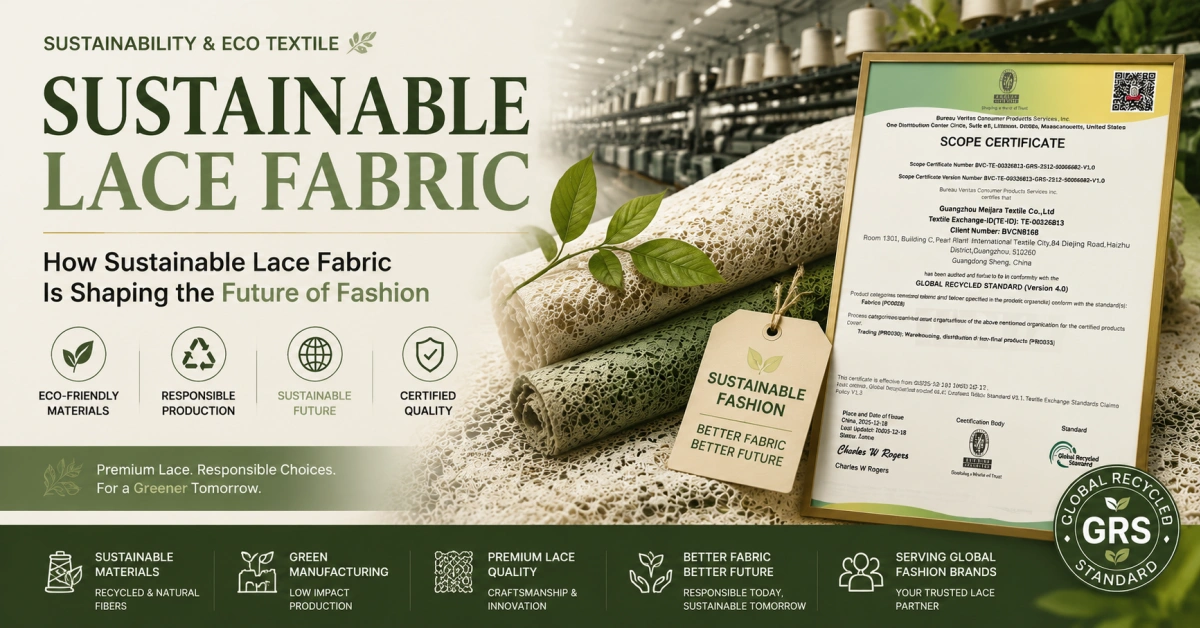
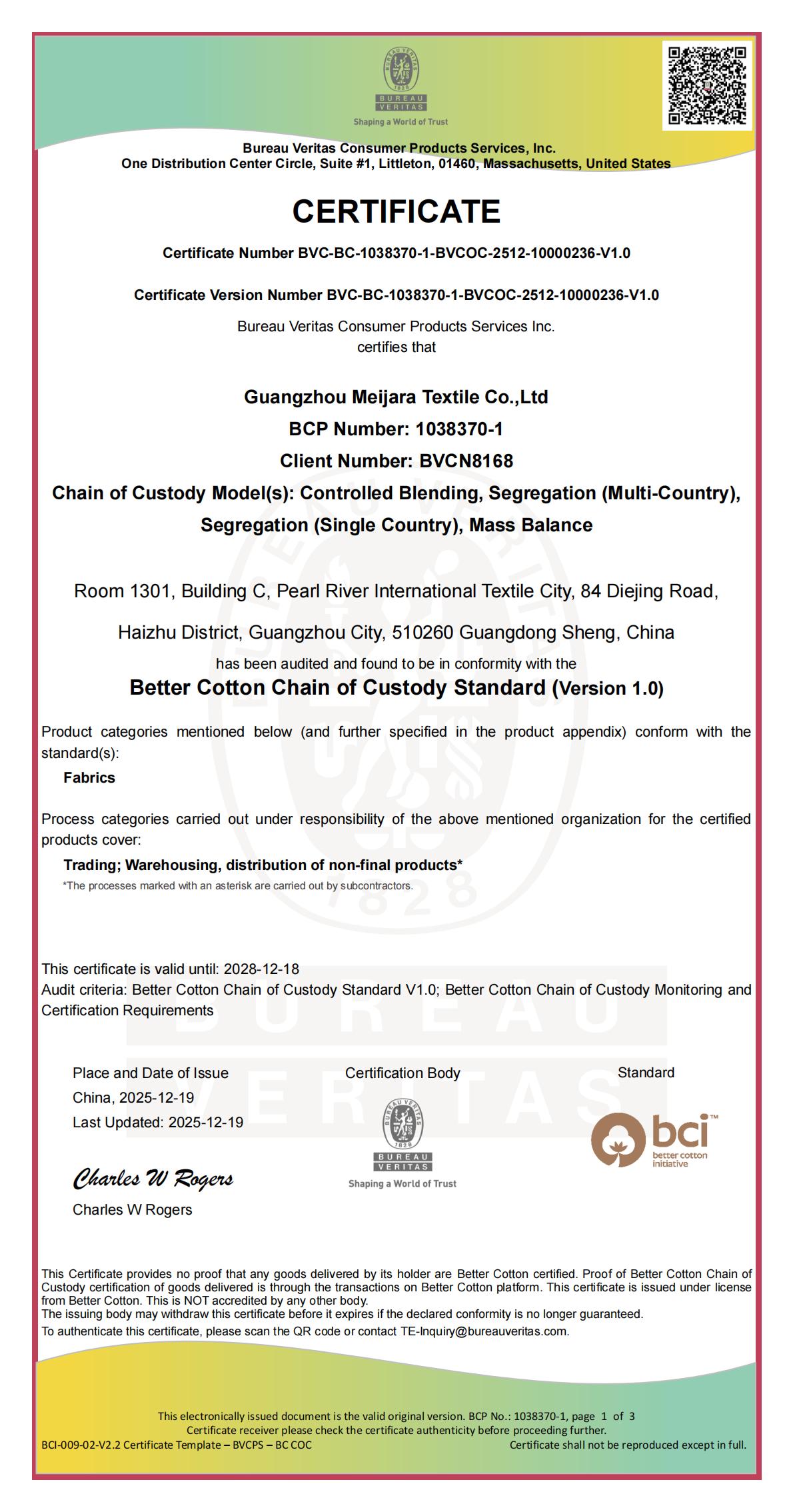
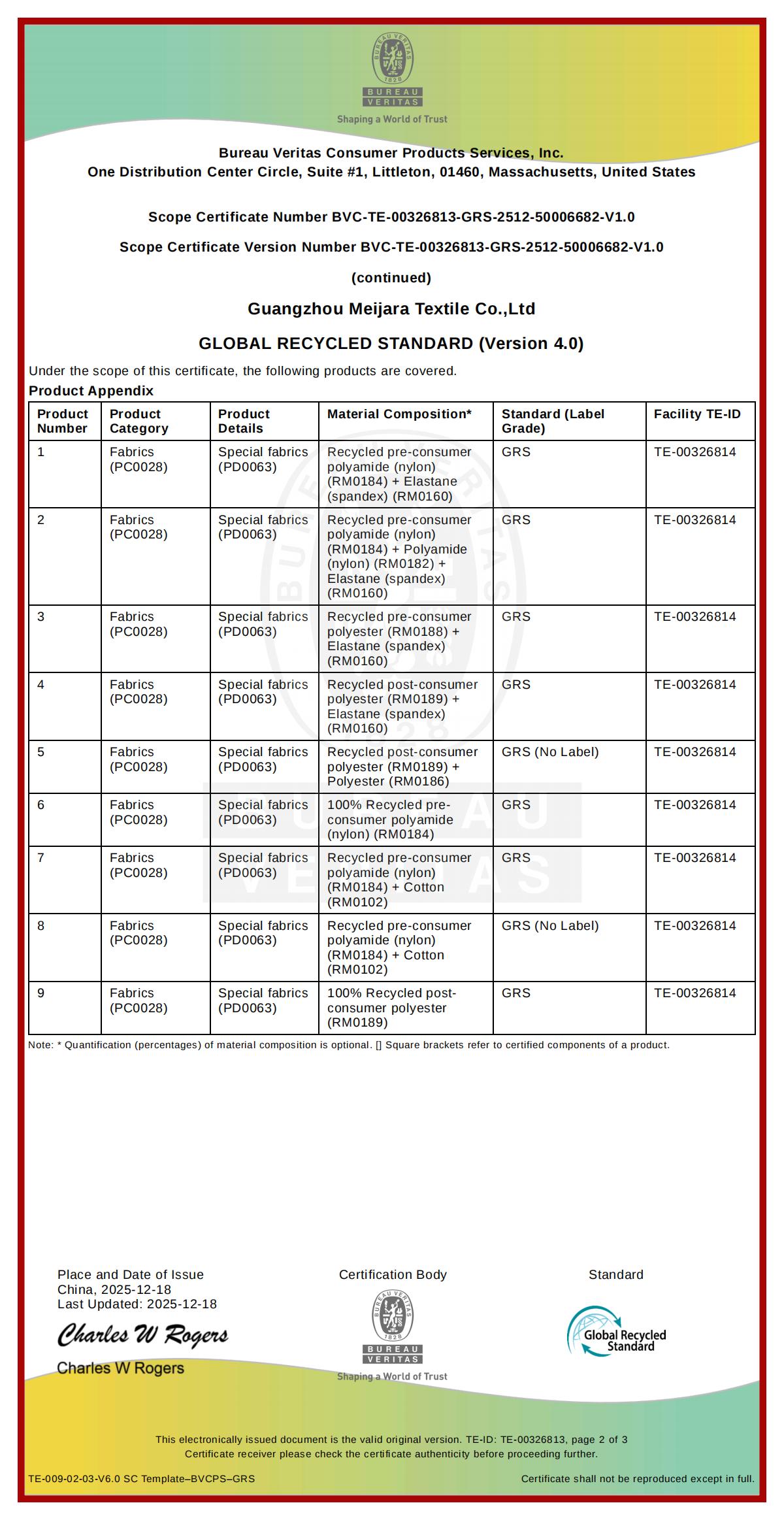
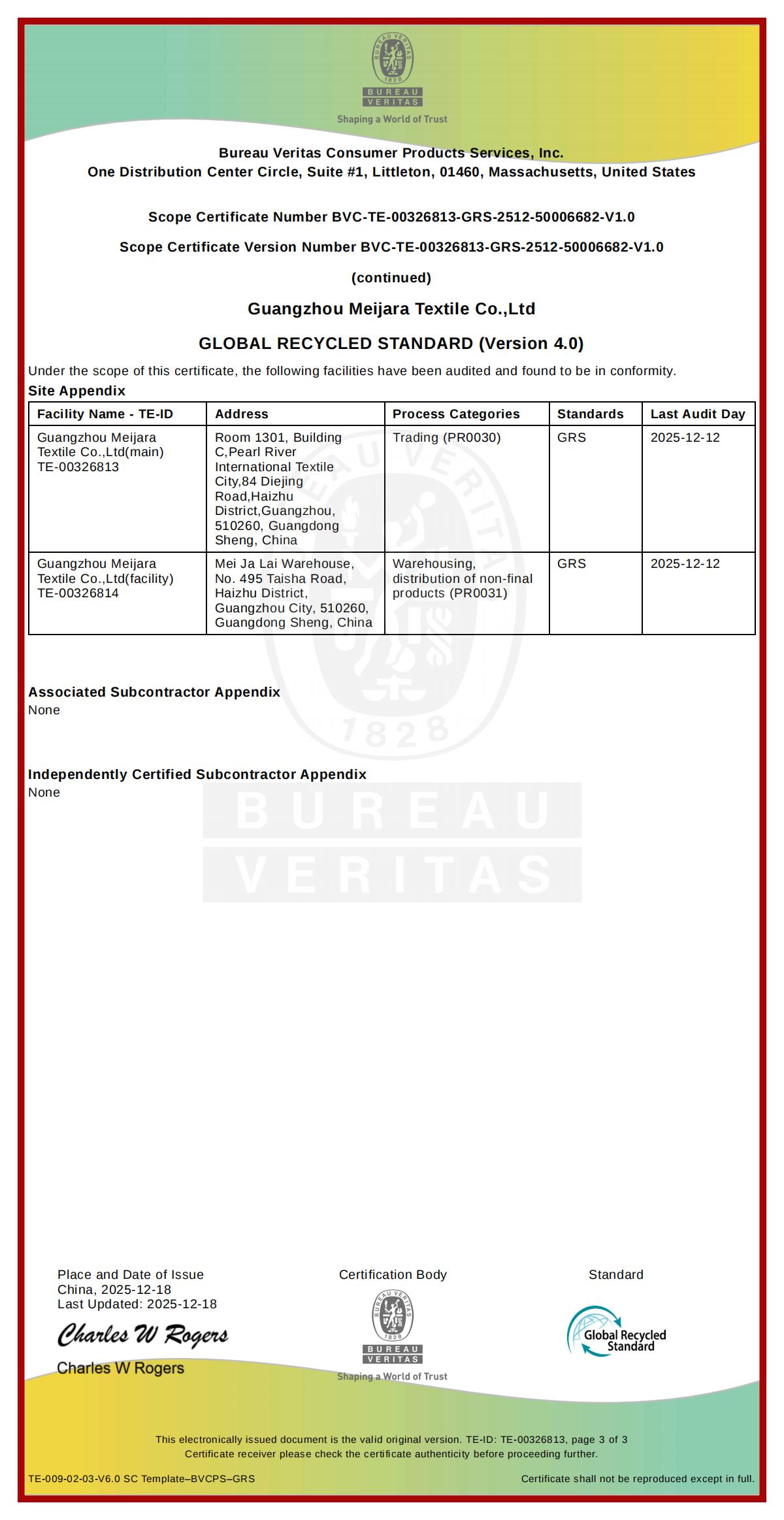
Meijara has obtained Global Recycled Standard (GRS) certification, supporting the development and supply of recycled textile products.
GRS certification helps verify:
-
Recycled material usage
-
Responsible processing
-
Supply chain management
For international fashion brands, working with certified suppliers provides stronger confidence when developing sustainable collections.
Customized Sustainable Lace Development
Every fashion brand has different design requirements.
Meijara provides customized lace development services including:
Pattern Customization
Designers can provide:
-
Sketches
-
Reference samples
-
Inspiration images
The technical team helps transform concepts into production-ready lace designs.
Color Customization
Sustainable lace fabrics can be developed in different colors according to brand requirements.
Options include:
-
Custom dyeing
-
Pantone color matching
-
Seasonal collection colors
Fabric Structure Development
Different applications require different lace characteristics.
Meijara can customize:
-
Stretch level
-
Fabric weight
-
Width
-
Pattern density
-
Surface effects. Explore cut piece and processing.
Sustainable Lace Fabric Sourcing Checklist for International Buyers
Before selecting a sustainable lace supplier, fashion brands should evaluate several important factors.
The following checklist can help buyers make better sourcing decisions.
Supplier Background
Check:
✓ Years of lace manufacturing experience
✓ Factory production capability
✓ Export experience
✓ Customer service ability
✓ Custom development experience
A supplier with long-term industry experience usually has better technical understanding and quality control.
Material Verification
Ask suppliers:
✓ What sustainable materials are available?
✓ Are recycled fibers certified?
✓ Can certification documents be provided?
✓ Is material traceability available?
Avoid suppliers that only use sustainability as a marketing statement without supporting documentation.
Product Development Capability
A reliable sustainable lace manufacturer should support:
✓ Custom patterns
✓ Sample development
✓ Color matching
✓ Fabric testing
✓ Production adjustments
This is especially important for fashion brands creating unique collections.
Quality Control Capability
Before bulk production, evaluate whether suppliers have inspection procedures for:
-
Fabric appearance
-
Color consistency
-
Pattern alignment
-
Stretch performance
-
Packaging standards
Consistent quality is essential for international fashion supply chains.
Production Lead Time
For sustainable lace projects, buyers should confirm:
-
Sample development time
-
Bulk production schedule
-
Shipping preparation
-
Quality inspection time
Clear communication helps avoid delays during seasonal collections.
Sustainable Lace Fabric Applications Across Fashion Categories
Sustainable lace is becoming increasingly versatile.
It is no longer limited to traditional bridal applications.
Sustainable Bridal Wear
Applications:
-
Wedding gowns
-
Bridal veils
-
Sleeves
-
Train decoration
-
Wedding accessories
Popular sustainable bridal lace styles include:
-
Floral lace
-
Chantilly-inspired lace. Explore chantilly lace.
-
Embroidered lace
-
Beaded lace
Sustainable Women's Fashion
Fashion designers use sustainable lace for:
-
Dresses
-
Blouses
-
Skirts
-
Jackets
-
Layered garments
Lace adds:
-
Texture
-
Femininity
-
Visual depth
-
Premium appearance
Sustainable Luxury Collections
Luxury brands often use lace as a statement material.
Sustainable lace supports luxury positioning by combining:
-
Craftsmanship
-
Exclusivity
-
Environmental responsibility
Sustainable Lace Fabric Is the Future of Responsible Fashion
The fashion industry is changing rapidly.
For brands and designers, sustainability is no longer only about choosing environmentally friendly materials. It requires a complete approach that includes:
-
Responsible fibers
-
Better manufacturing processes
-
Transparent supply chains
-
Certified materials
-
Reliable textile partners
Sustainable lace fabric represents an important direction for the future of fashion.
It allows designers to continue creating elegant, detailed, and luxurious garments while responding to growing environmental expectations.
For international fashion brands looking for a reliable lace partner, choosing an experienced sustainable lace manufacturer can help build stronger collections and more responsible supply chains.
By combining textile innovation, manufacturing expertise, and sustainability principles, sustainable lace will continue shaping the future of global fashion.
FAQ: Sustainable Lace Fabric
1. What is sustainable lace fabric?
Sustainable lace fabric is lace produced using environmentally responsible materials and manufacturing processes, including recycled fibers, responsible sourcing, and improved production methods.
2. Is sustainable lace fabric as durable as traditional lace?
Yes. Modern sustainable lace fabrics can provide similar or even improved performance in terms of:
-
Strength
-
Elasticity
-
Appearance
-
Comfort
The quality depends mainly on fiber selection and manufacturing technology.
3. What materials are used for sustainable lace fabric?
Common sustainable lace materials include:
-
Recycled polyester
-
Recycled nylon
-
Organic cotton
-
Other eco-friendly textile fibers
4. What certifications should sustainable lace suppliers have?
Common certifications include:
-
GRS (Global Recycled Standard)
-
OEKO-TEX Standard 100
-
RCS (Recycled Claim Standard)
5. Is recycled lace fabric suitable for bridal dresses?
Yes. Sustainable bridal lace can provide:
-
Elegant patterns
-
Soft texture
-
Premium appearance
-
Environmental benefits
6. Can sustainable lace fabric be customized?
Yes. Professional lace manufacturers can customize:
-
Patterns
-
Colors
-
Width
-
Fabric structure
-
Embroidery details
7. How do fashion brands source sustainable lace fabric from China?
Brands usually evaluate:
-
Supplier experience
-
Certification documents
-
Production capability
-
Sample quality
-
Communication efficiency
8. What is GRS certified lace fabric?
GRS certified lace fabric contains verified recycled materials and follows responsible production requirements throughout the supply chain.
9. What industries use sustainable lace fabric?
Applications include:
-
Bridal fashion
-
Women's apparel
-
Luxury fashion
-
Lingerie
-
Accessories
10. Why choose a China sustainable lace manufacturer?
China has a complete textile supply chain and strong lace manufacturing experience, allowing brands to access:
-
Custom development
-
Competitive production
-
Wide material choices
-
Professional textile technology
Ready to explore sustainable lace solutions for your brand? Visit our homepage to learn more or contact us for inquiries. You may also submit an inquiry for custom pricing.