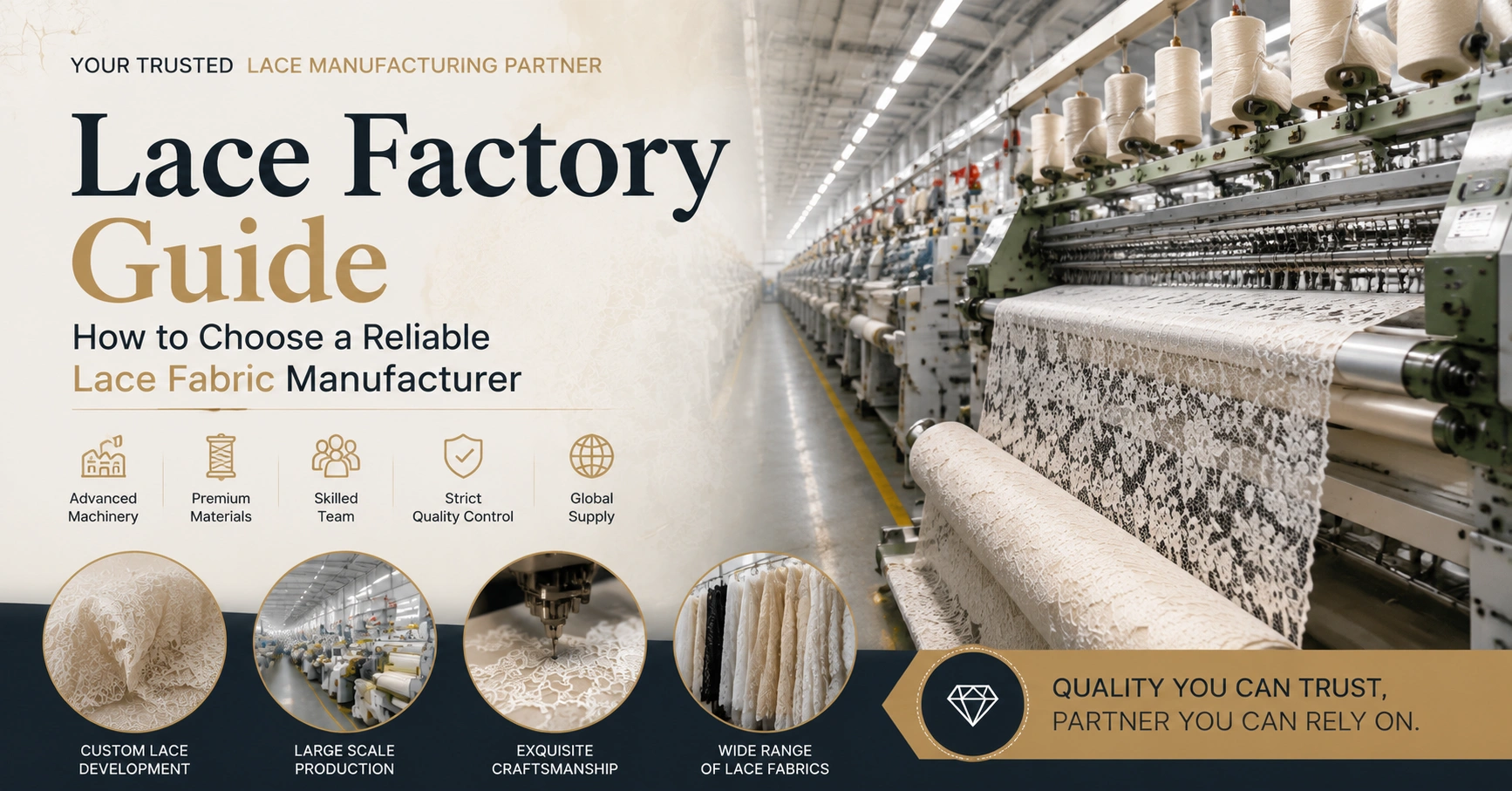

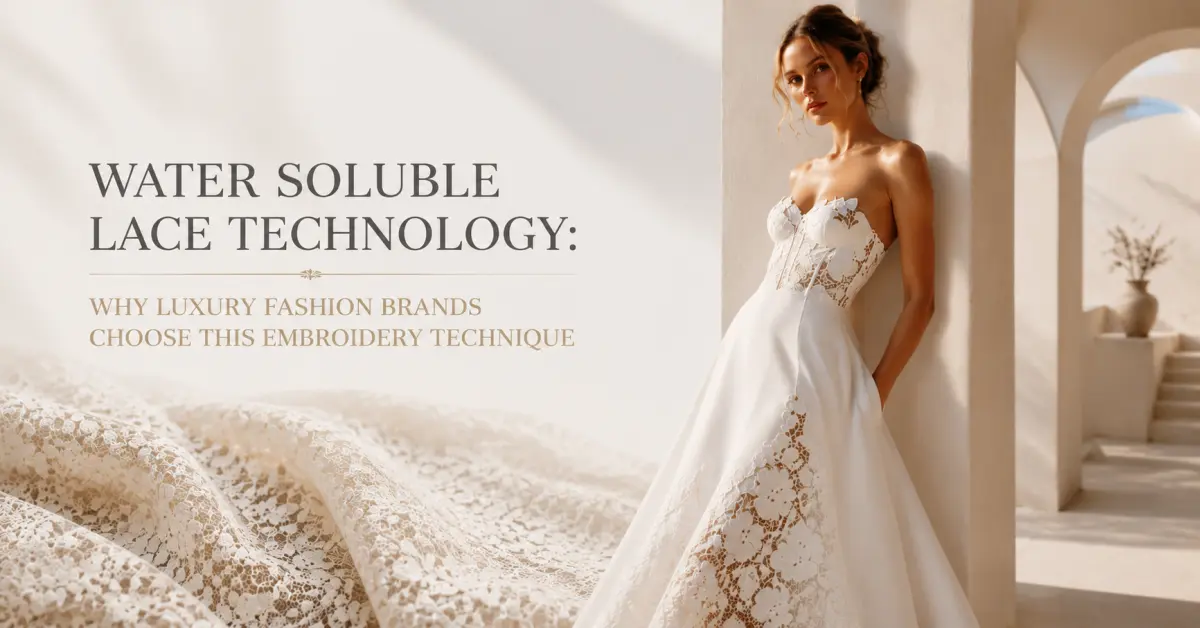

In today's global fashion market, lace is no longer only considered a decorative fabric. For many luxury fashion brands, lace has become a key element that defines product identity, craftsmanship, and brand positioning.
From haute couture collections and premium ready-to-wear garments to designer dresses and high-end eveningwear, fashion companies are constantly searching for lace fabrics that provide greater creativity, better texture, and more exclusive visual effects.
Among various lace manufacturing technologies, water soluble lace technology has become one of the most important embroidery techniques used by premium fashion brands.
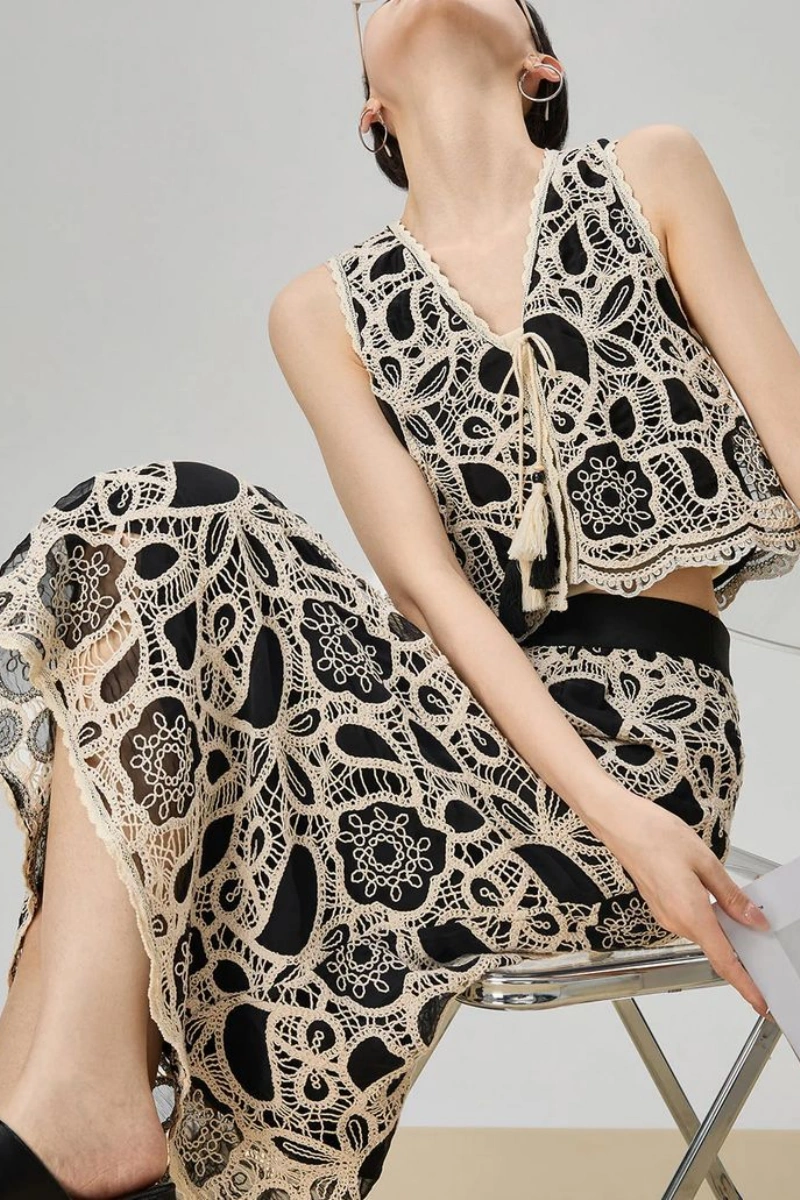
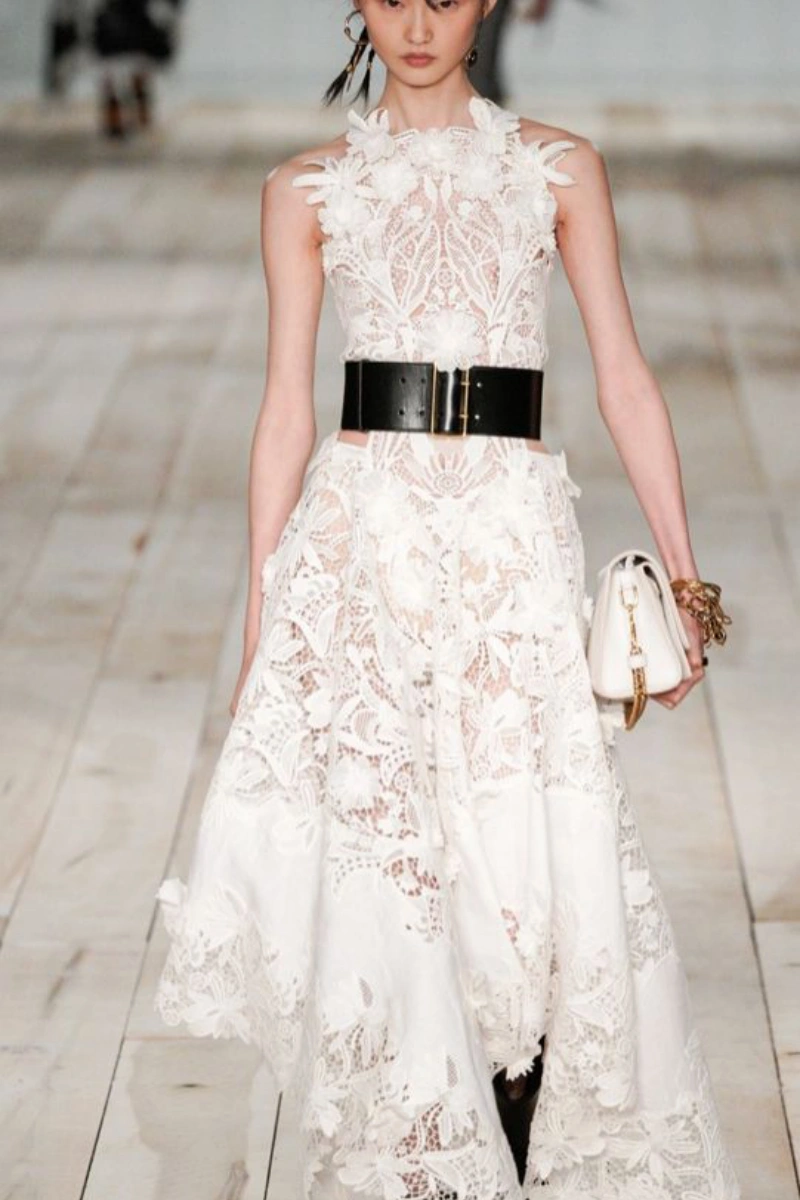
Unlike traditional lace fabrics that are limited by fixed patterns and structures, water soluble lace allows designers and manufacturers to create complex embroidery patterns with high precision. This technology enables the development of lightweight, three-dimensional, and highly detailed lace fabrics that are difficult to achieve through conventional production methods.
For fashion brands looking for exclusive collections, water soluble embroidery lace provides a flexible solution for customized fabric development, OEM production, and premium garment manufacturing.
As a professional lace fabric manufacturer, understanding the production process, technical advantages, and application potential of water soluble lace is essential for brands that want to develop unique fashion products.
What Is Water Soluble Lace Technology?
Water soluble lace is an advanced embroidery lace manufacturing technique that uses a special water-soluble backing material during the embroidery process.
During production, embroidery threads are stitched onto the soluble base fabric according to the designed pattern. After embroidery is completed, the fabric is treated with water to dissolve the temporary backing material, leaving only the embroidered lace structure.
The result is a delicate lace fabric with:
-
Intricate embroidery patterns
-
Lightweight construction
-
Transparent visual effects
-
Three-dimensional texture
-
High design flexibility
Unlike traditional lace, where patterns are created through fixed knitting or weaving structures, water soluble lace is developed through embroidery technology. This allows manufacturers to produce more complicated designs, including:
-
Floral patterns
-
Geometric motifs
-
Abstract artistic designs
-
Custom brand patterns
-
Large-scale embroidered surfaces
For luxury fashion brands, this means designers are no longer limited by standard lace collections.
They can transform creative concepts into exclusive lace fabrics through a professional OEM development process.
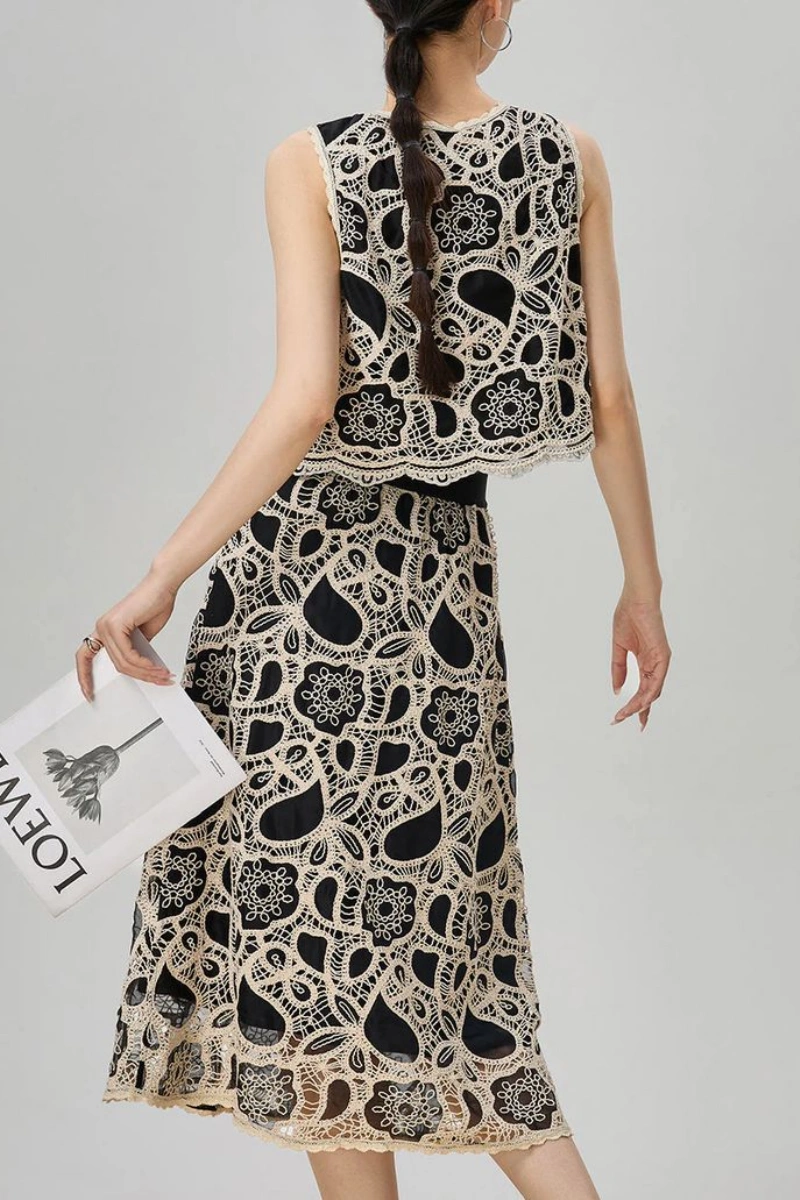
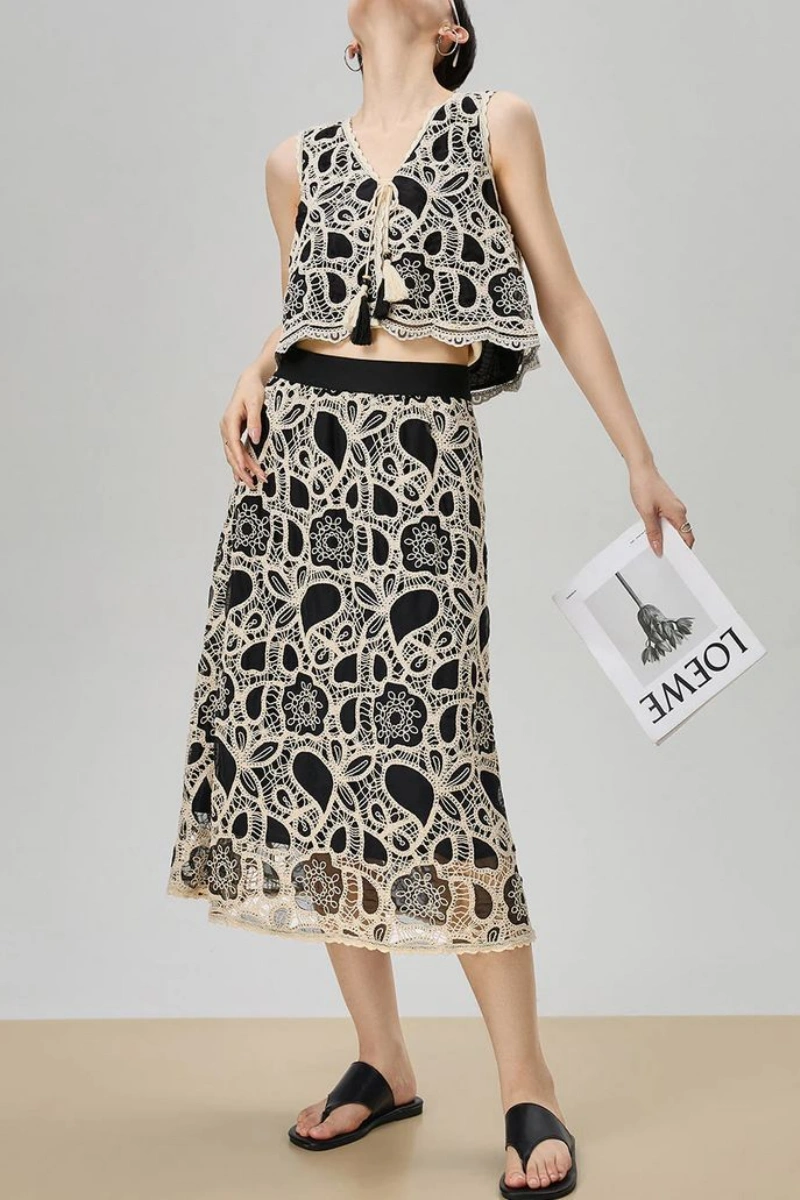
Why Water Soluble Lace Has Become Popular Among Luxury Fashion Brands
The luxury fashion industry has always valued uniqueness.
When multiple brands compete for consumer attention, using common fabrics can make collections look similar. Therefore, many designers increasingly rely on customized fabrics to create differentiation.
Water soluble lace technology provides several advantages that match luxury fashion requirements.
Unlimited Design Possibilities
Traditional lace production usually depends on existing patterns and machine limitations.
However, water soluble lace embroidery works differently.
Designers can provide:
-
Sketches
-
Artwork
-
Digital patterns
-
Brand-specific motifs
Professional lace manufacturers can then convert these concepts into production-ready embroidery designs.
This makes water soluble lace particularly suitable for:
-
Luxury fashion houses
-
Designer brands
-
Boutique labels
-
Premium womenswear companies
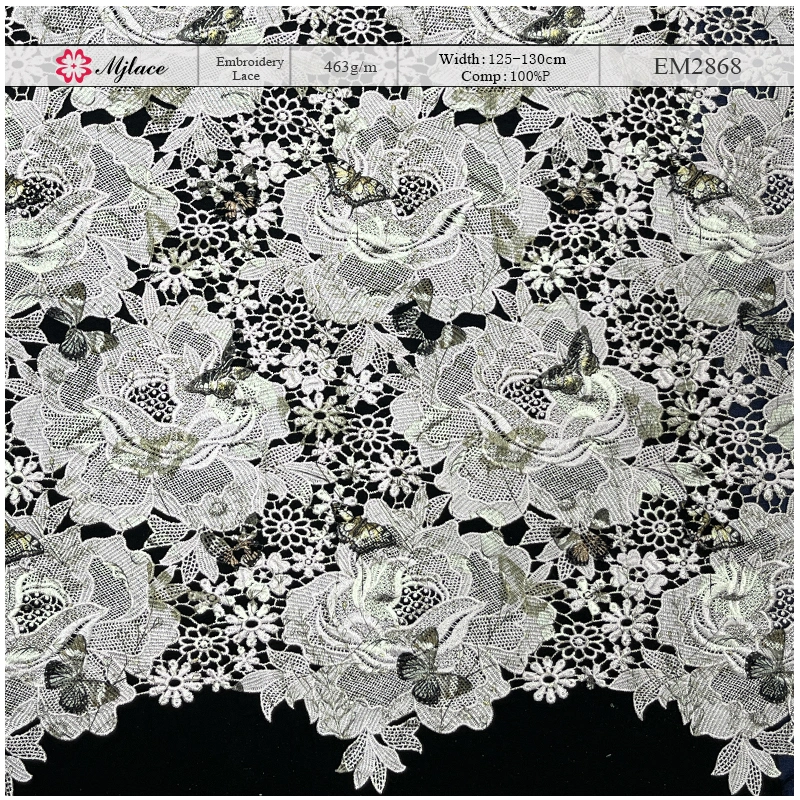
Three-Dimensional Surface Effects
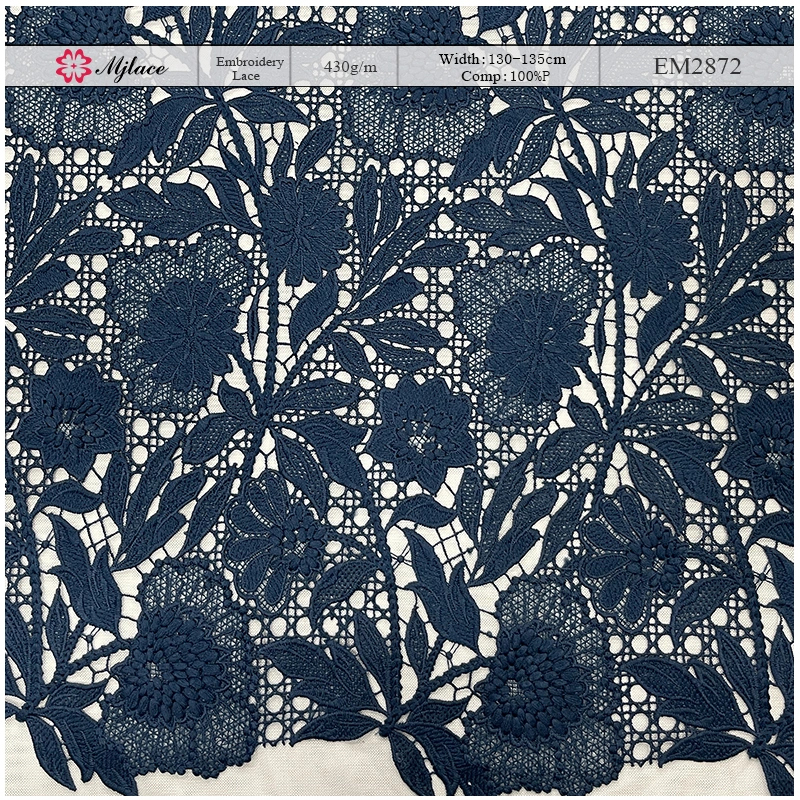
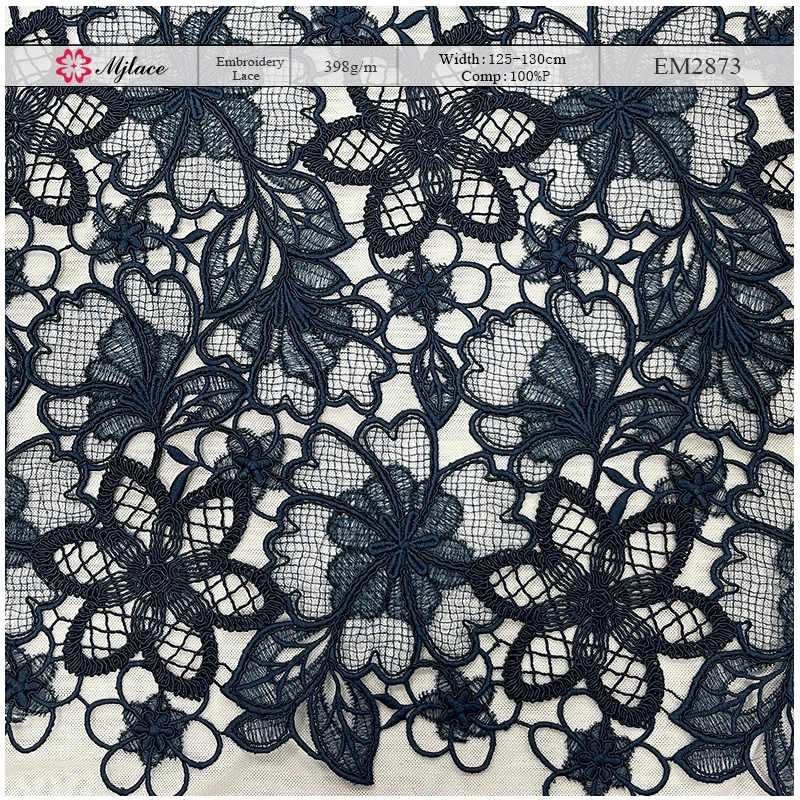
One of the biggest advantages of water soluble embroidery lace is its dimensional appearance.
Through different embroidery techniques, manufacturers can create:
| Feature | Production Effect |
|---|---|
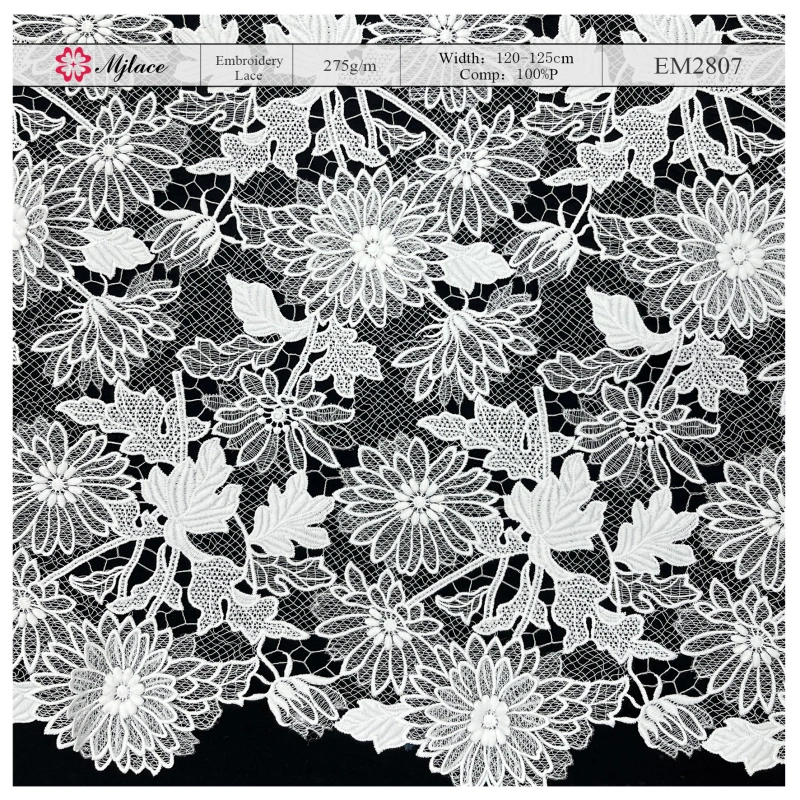
| Dense embroidery | Rich luxury texture |
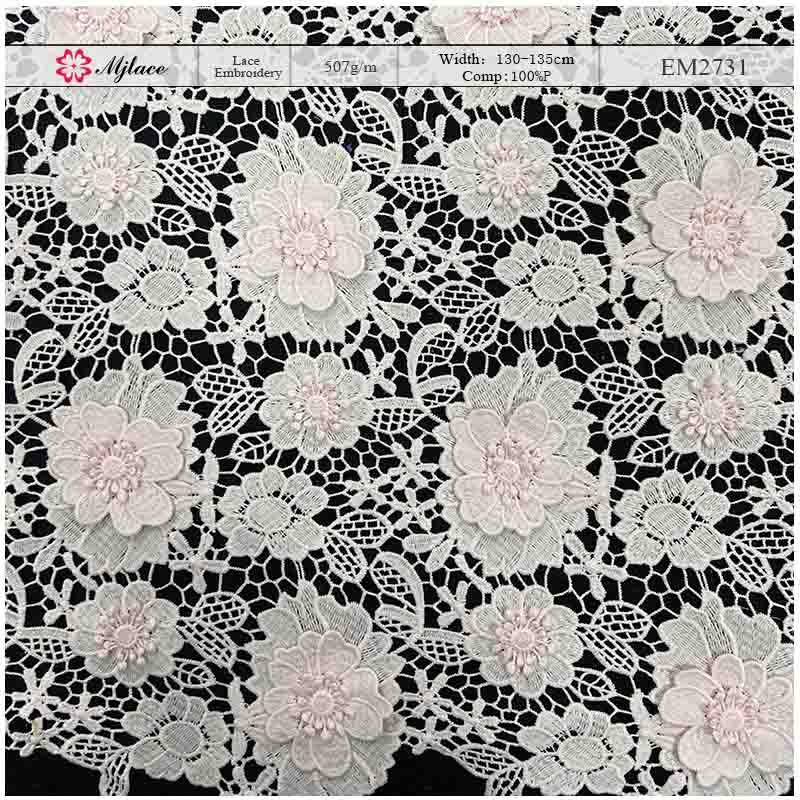
| Raised thread work | 3D floral effects |
| Layered embroidery | Premium visual depth |
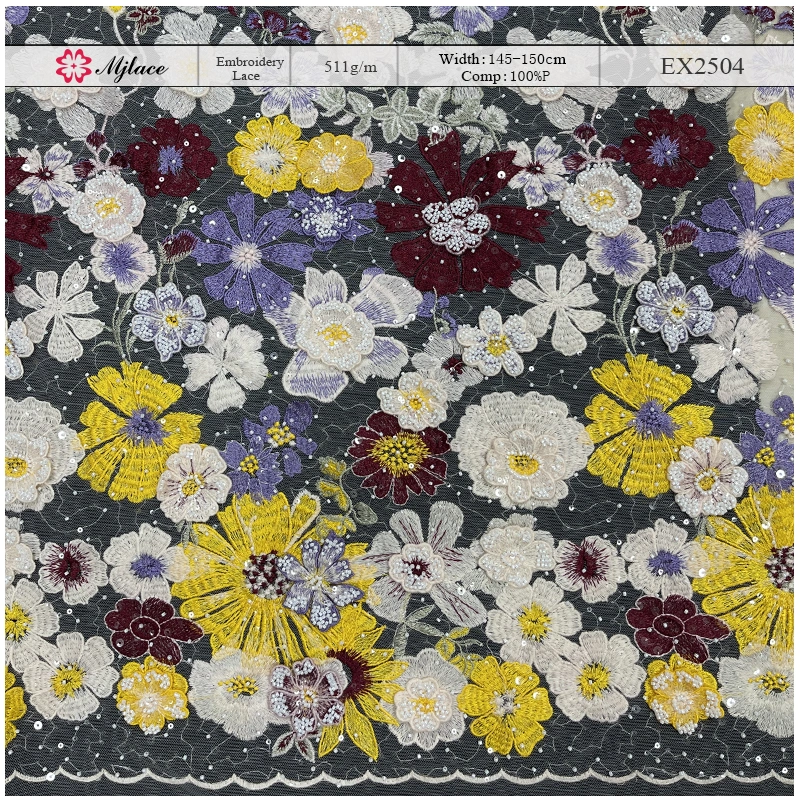
| Mixed thread materials | Unique surface feeling. Explore multi-color embroidery. |
| Appliqué embroidery | Handmade appearance. See sequins and beads embroidery. |
These effects allow garments to achieve a higher perceived value.
A simple dress using standard lace may look ordinary, while the same design developed with customized water soluble lace can create a premium fashion statement.
Lightweight and Comfortable Structure
Luxury fashion brands require fabrics that are not only beautiful but also practical.
Water soluble lace offers:
-
Soft hand feel
-
Flexible structure
-
Lightweight construction
-
Better drape performance
This makes it suitable for garments such as:
-
Evening dresses
-
Designer tops
-
Luxury blouses
-
Skirts
-
Fashion accessories
How Water Soluble Lace Is Manufactured in a Professional Factory
Producing high-quality water soluble lace requires advanced embroidery equipment, experienced technicians, and strict production management.
A professional water soluble lace manufacturer usually follows a controlled production process.
Complete Water Soluble Lace Production Process
| Production Stage | Main Process | Quality Focus |
|---|---|---|
| Design Development | Pattern conversion and artwork preparation | Design accuracy |
| Sampling | Embroidery prototype production | Pattern evaluation |
| Material Selection | Thread and backing selection | Fabric performance |
| Embroidery Production | Computerized embroidery process | Stitch quality |
| Water Dissolution | Removing soluble backing | Lace structure stability |
| Finishing | Washing, trimming, inspection | Final appearance |
| Packaging | Roll inspection and shipment preparation | Product protection |
Design Development: The First Step of Custom Water Soluble Lace
For fashion brands, the success of water soluble lace production begins before manufacturing.
A professional factory does not simply copy an image. Instead, experienced technicians analyze:
-
Pattern complexity
-
Embroidery density
-
Fabric application
-
Cutting requirements
-
Garment construction
The design team converts creative ideas into embroidery files suitable for industrial production. Learn about pattern design development.
This process requires both artistic understanding and technical knowledge.
A professional manufacturer should be able to advise brands on:
-
Whether a pattern is suitable for embroidery
-
How to improve durability
-
How to control production cost
-
Which thread combination creates the best result
Advanced Embroidery Technology Behind Water Soluble Lace
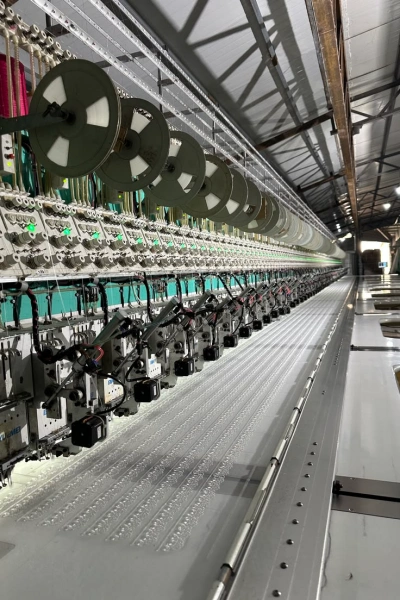
Modern water soluble lace production depends heavily on computerized embroidery systems.
Compared with traditional manual embroidery, industrial embroidery machines provide:
-
Higher consistency
-
Faster production speed
-
Better pattern accuracy
-
Stable quality control
However, equipment alone is not enough.
Experienced technicians are still essential because different designs require adjustments in:
-
Stitch density
-
Thread tension
-
Pattern structure
-
Fabric support. Explore laser embroidery.
This combination of technology and craftsmanship is what allows manufacturers to produce luxury-grade lace fabrics.
Materials Used in Water Soluble Lace Manufacturing
The quality of water soluble lace does not only depend on embroidery technology. Material selection plays an equally important role in determining the final appearance, durability, and application performance of the lace fabric.
A professional lace factory needs to carefully select embroidery threads, soluble backing materials, and finishing processes according to the requirements of different fashion applications.
Embroidery Thread Selection
The embroidery thread is the main visual element of water soluble lace.
Different thread materials create different textures and surface effects.
Common thread options include:
| Thread Type | Characteristics | Typical Applications |
|---|---|---|
| Polyester Thread | High strength, good color stability, durable | Ready-to-wear fashion, commercial collections |
| Rayon Thread | Soft shine and premium appearance | Luxury garments, eveningwear |
| Cotton Thread | Natural texture and matte finish | Sustainable fashion collections |
| Metallic Thread | Reflective luxury effect | Decorative fashion pieces |
| Mixed Fiber Thread | Balanced appearance and performance | Customized designer collections |
For luxury fashion brands, rayon and premium polyester threads are commonly selected because they provide a smoother surface and more elegant visual effects.
However, for brands focusing on sustainability, recycled polyester or eco-friendly thread options are becoming increasingly important.
Water Soluble Backing Material
The temporary backing material is one of the most important components in water soluble embroidery production.
During embroidery, the backing provides structural support and prevents the embroidery pattern from deforming.
After embroidery is completed, the backing is removed through a water dissolution process.
The quality of the soluble material affects:
-
Pattern accuracy
-
Embroidery stability
-
Final softness
-
Lace appearance
A reliable manufacturer must control:
-
Dissolution temperature
-
Washing time
-
Residual material removal
Poor processing may cause:
-
Hard hand feel
-
Uneven lace structure
-
Pattern distortion
Therefore, professional factories usually conduct multiple tests before mass production.
Water Soluble Lace Production Equipment and Factory Capability
For fashion brands purchasing customized lace fabrics, choosing the right supplier is not only about the product itself.
The production capability behind the supplier directly affects:
-
Development efficiency
-
Quality consistency
-
Delivery reliability
A professional water soluble lace manufacturer should have advanced production facilities and experienced technical teams.
Key Factory Capabilities
| Capability | Why It Matters |
|---|---|
| Computerized embroidery machines | Ensure accurate pattern reproduction |
| Experienced pattern designers | Convert creative ideas into production files |
| Skilled technicians | Control embroidery quality |
| Sample development team | Support OEM customization |
| Quality inspection system | Maintain consistent bulk production. Learn about quality control standards. |
| Production management | Ensure delivery schedules |
Computerized Embroidery Technology
Modern water soluble lace production mainly relies on computerized embroidery machines.
These machines allow manufacturers to create complex patterns with thousands of stitches while maintaining consistency.
Compared with traditional embroidery methods, computerized systems provide:
Higher Design Accuracy
Digital embroidery files can precisely control:
-
Stitch position
-
Pattern size
-
Density distribution
-
Layer structure
This is especially important for luxury brands that require repeatable quality across different production batches.
Better Production Efficiency
For wholesale buyers and fashion brands, production capacity matters.
A professional factory can transform a developed sample into bulk production while maintaining the original design effect.
This helps brands:
-
Reduce development cycles
-
Launch collections faster
-
Maintain seasonal production schedules
Water Soluble Lace vs Traditional Lace: Key Differences
When selecting lace fabrics, fashion brands often compare traditional lace with water soluble lace.
Although both belong to the lace category, their production methods and design possibilities are significantly different.
Comparison Between Water Soluble Lace and Traditional Lace
| Comparison Factor | Water Soluble Lace | Traditional Lace |
|---|---|---|
| Production Method | Embroidery technology with soluble backing | Knitting, weaving, or fixed lace construction |
| Design Flexibility | Extremely high | Limited by machine patterns |
| Customization Ability | Suitable for OEM designs | Usually based on existing designs |
| Pattern Complexity | Supports detailed artwork | Limited complexity |
| 3D Effects | Excellent | Moderate |
| Development Cost | Higher for customization | Lower for standard products |
| Suitable Brands | Luxury and designer brands | Mass market and standard collections |
| Product Differentiation | Strong | Moderate |
For brands developing exclusive collections, water soluble lace provides a significant competitive advantage.
Instead of selecting from existing market patterns, brands can create unique lace identities that match their design language.
How Fashion Brands Develop Custom Water Soluble Lace Collections
For professional buyers, purchasing lace fabric is usually not a simple sourcing process.
Especially for luxury fashion collections, brands often require customized development.
A typical OEM water soluble lace development process includes several stages.
Step 1: Design Concept Discussion
The process begins when a brand provides:
-
Design inspiration
-
Reference images
-
Artwork files
-
Color requirements. Learn about dyeing and color matching.
-
Application details
The manufacturer evaluates:
-
Pattern feasibility
-
Production difficulty
-
Estimated cost
-
Recommended materials
Step 2: Digital Pattern Development
After confirming the design concept, the factory creates an embroidery program.
This stage involves:
-
Pattern digitizing
-
Stitch arrangement
-
Density adjustment
-
Size adjustment
Experienced technicians optimize the design to ensure:
-
Beautiful appearance
-
Stable production
-
Suitable garment application
Step 3: Prototype Sampling
Before bulk production, professional manufacturers create samples.
The sample allows brands to evaluate:
-
Lace appearance
-
Transparency
-
Softness
-
Pattern details
-
Color accuracy
Sample approval is a critical step because it reduces production risks.
Step 4: Bulk Production
After sample confirmation, the factory begins mass production.
During production, quality teams monitor:
-
Embroidery consistency
-
Thread tension
-
Pattern alignment
-
Fabric defects
Step 5: Finishing and Inspection
After embroidery and water dissolution, lace fabrics go through finishing processes.
Typical finishing includes:
| Process | Purpose |
|---|---|
| Washing | Remove soluble material residue |
| Drying | Stabilize fabric structure |
| Softening | Improve hand feel |
| Edge trimming | Improve appearance |
| Quality inspection | Ensure shipment standards |
Quality Control Standards for Water Soluble Lace Production
For international fashion brands, quality consistency is one of the most important supplier evaluation factors.
A professional water soluble lace factory should have a complete quality control system.
Common Inspection Points
| Inspection Item | Quality Requirement |
|---|---|
| Pattern Accuracy | Design matches approved sample |
| Embroidery Density | Even and consistent stitches |
| Thread Quality | No breakage or loose threads |
| Fabric Structure | Stable after washing |
| Color Accuracy | Matches approved color standard |
| Surface Appearance | No obvious defects |
| Packaging | Protect fabric during transportation |
Why Quality Control Matters for Global Fashion Brands
A small defect in lace fabric can affect the final garment appearance.
For example:
-
Uneven embroidery may create visual imbalance
-
Incorrect density may affect transparency
-
Poor finishing may reduce fabric softness
Therefore, professional suppliers must treat quality inspection as part of production rather than a final checking step.
Applications of Water Soluble Lace in Modern Fashion
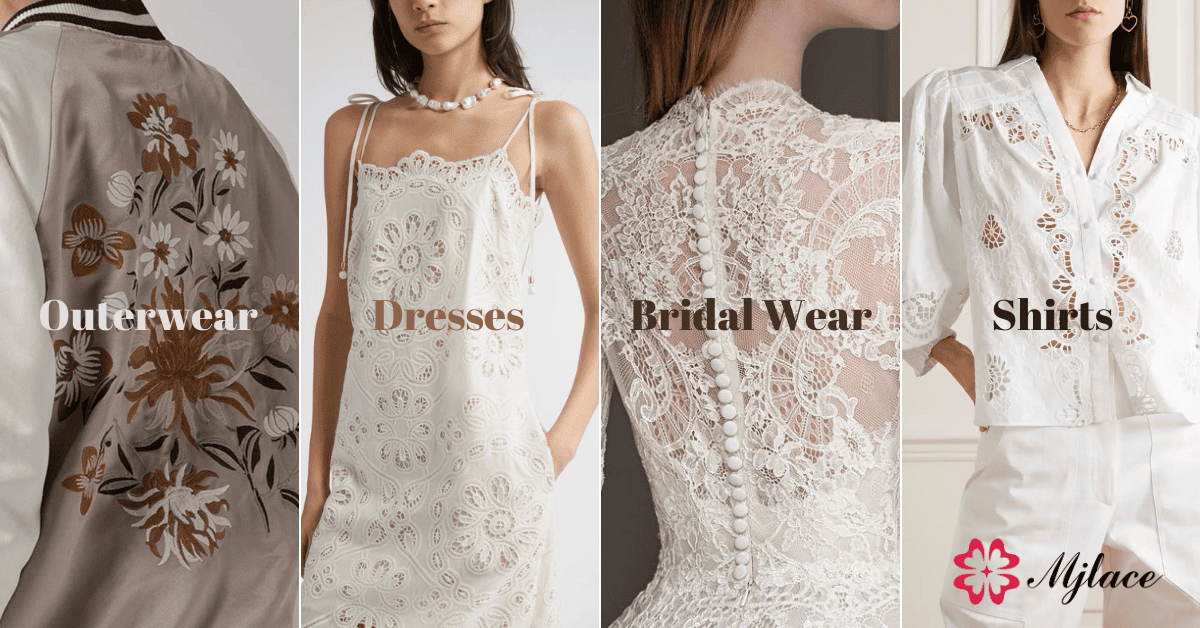
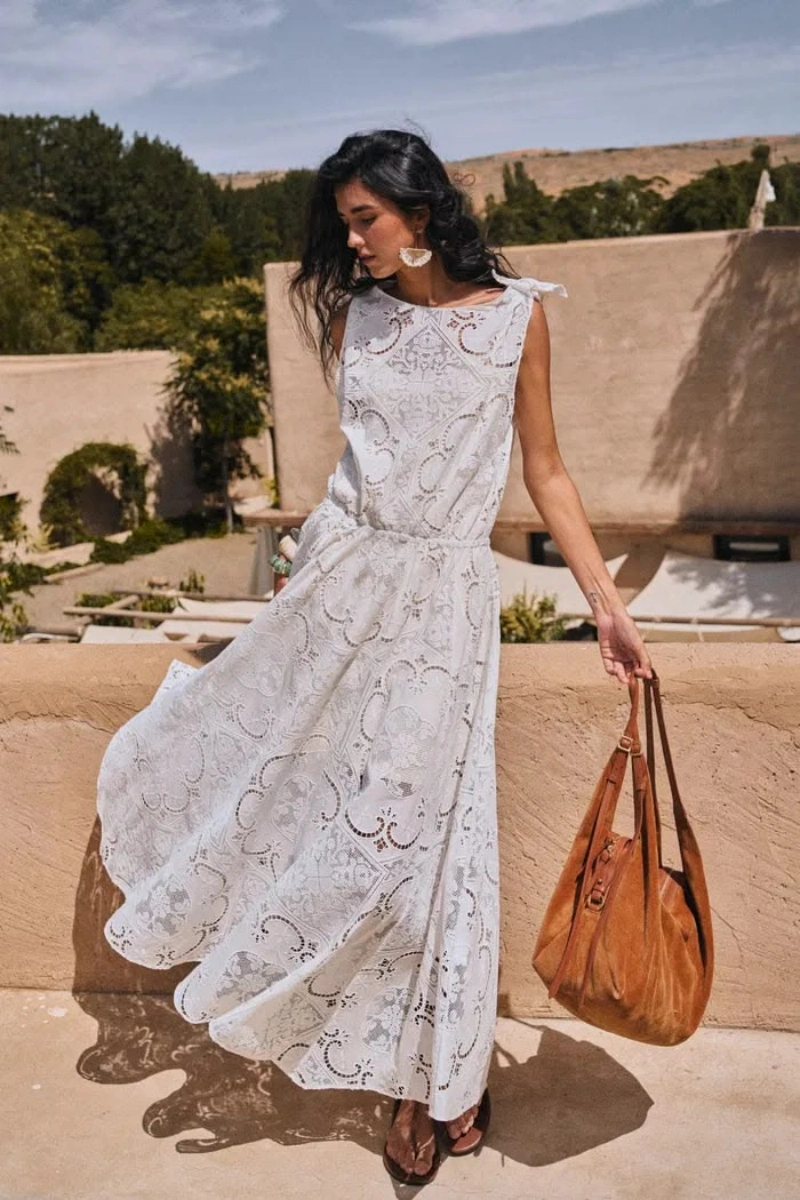
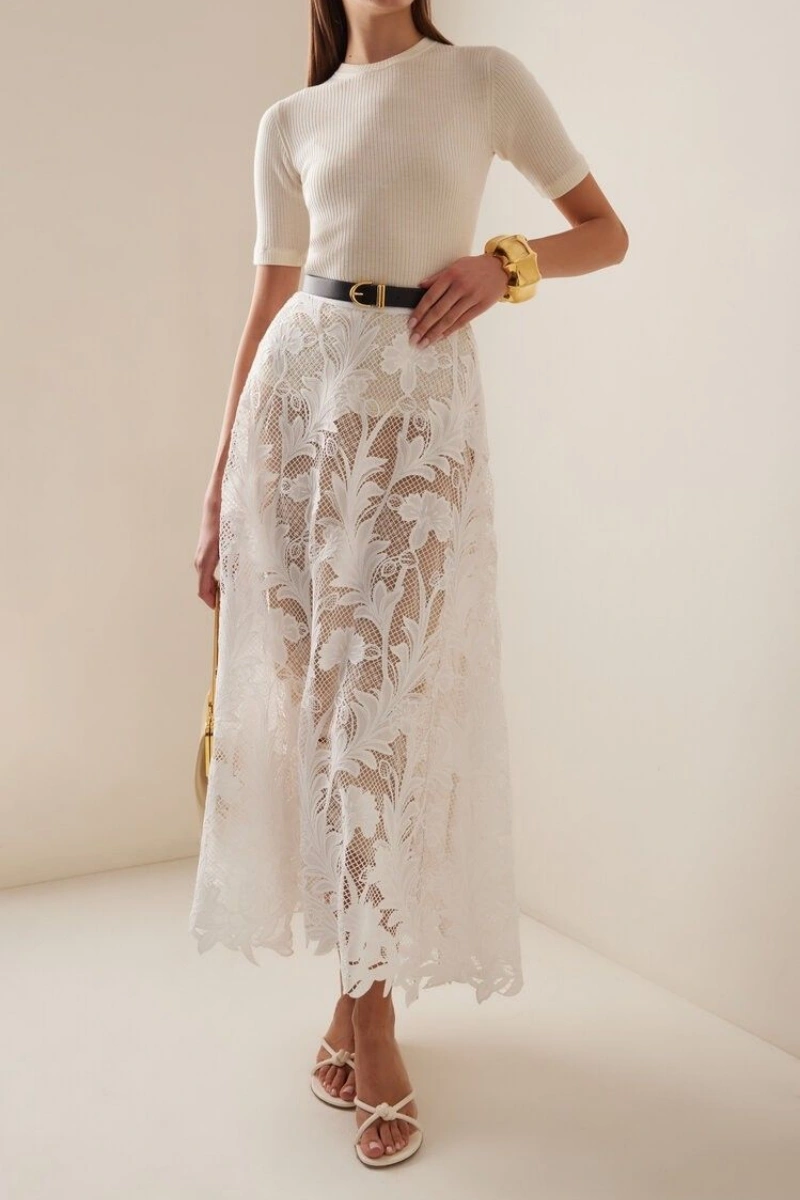
Although water soluble lace has traditionally been associated with bridal fashion, its applications have expanded significantly.
Today, luxury and contemporary fashion brands use this technology in various product categories.
Fashion Applications
| Product Category | Application Examples |
|---|---|
| Luxury Dresses | Full lace panels, decorative surfaces |
| Eveningwear | Elegant textures and premium details |
| Designer Tops | Sleeves, collars, overlays |
| Skirts | Lightweight layered structures |
| Jackets | Decorative embroidery panels |
| Accessories | Fashion details and trims. Explore lace trim. |
Water Soluble Lace in Ready-to-Wear Collections
Modern consumers increasingly value unique garment details.
For ready-to-wear brands, customized lace provides opportunities to create:
-
Signature designs
-
Limited collections
-
Premium product lines
Instead of competing only on price, brands can compete through design value.
Water Soluble Lace in Sustainable Fashion Development
Sustainability has become an important consideration in global fashion.
Although lace itself is a decorative material, manufacturers can support sustainable development through:
-
Responsible material selection
-
Reduced production waste
-
Digital pattern optimization
-
Longer-lasting garment design
High-quality lace fabrics can improve garment lifespan because they create products with stronger aesthetic value. Visit our sustainability section.
How to Choose a Reliable Water Soluble Lace Manufacturer in China
For international fashion brands, selecting a water soluble lace supplier is not simply a sourcing decision.
The right manufacturing partner can influence:
-
Product quality
-
Collection uniqueness
-
Development speed
-
Production stability
-
Long-term brand competitiveness
With many lace suppliers available in China, fashion buyers need to evaluate suppliers based on technical capability rather than only price.
A professional water soluble lace manufacturer should have experience in:
-
Custom lace development
-
Embroidery technology
-
Fashion application understanding
-
International quality requirements
-
OEM production management
Evaluate the Manufacturer's Design Development Capability
Water soluble lace is different from standard lace products.
Because the production process starts from a design concept, the supplier's development ability is extremely important.
A capable manufacturer should be able to transform:
-
Hand sketches
-
Fashion references
-
CAD drawings
-
Existing fabric samples
-
Brand concepts
into production-ready lace designs.
Important Questions Buyers Should Ask
| Question | Why It Matters |
|---|---|
| Can you develop custom lace patterns? | Determines OEM capability |
| Can you convert artwork into embroidery files? | Shows technical expertise |
| Do you provide sample development? | Reduces production risks |
| Can you modify existing designs? | Supports product differentiation |
| Do you understand garment applications? | Ensures practical usability |
For luxury fashion brands, a supplier that only provides existing lace collections may not be enough.
The ability to create exclusive patterns is becoming a key competitive advantage.
Check Factory Production Capability
Many companies describe themselves as lace suppliers, but their actual production capabilities can vary significantly.
Some suppliers mainly operate as trading companies, while professional manufacturers control the complete development and production process.
A direct manufacturer usually provides better advantages in:
-
Communication efficiency
-
Product customization
-
Cost control
-
Quality management
Manufacturer vs Trading Supplier Comparison
| Factor | Direct Lace Manufacturer | Trading Supplier |
|---|---|---|
| Product Development | Strong technical support | Limited |
| Customization Ability | High | Medium or low |
| Communication | Direct with factory team | Through sales channel |
| Production Control | Better visibility | Depends on factory |
| Cost Structure | More competitive | Additional margins |
| Technical Problem Solving | Faster response | Requires coordination |
For brands developing seasonal collections, working directly with a manufacturer can significantly improve efficiency.
Review Sample Quality Before Bulk Orders
Sample evaluation is one of the most important steps before cooperation.
A high-quality water soluble lace sample should demonstrate:
Pattern Accuracy
The embroidery design should match the approved artwork.
Important details include:
-
Flower shape
-
Edge structure
-
Stitch density
-
Pattern symmetry
Fabric Hand Feel
Luxury garments require lace fabrics with comfortable touch.
The lace should be:
-
Soft
-
Lightweight
-
Flexible
-
Suitable for sewing
Structural Stability
After the soluble backing is removed, the lace should maintain:
-
Original shape
-
Pattern clarity
-
Proper strength
A poor-quality lace may become too fragile, uneven, or distorted after finishing.
OEM Water Soluble Lace Development Checklist for Fashion Buyers
Before starting a custom lace project, fashion brands should prepare clear product information.
This helps manufacturers provide accurate recommendations and quotations.
Buyer Preparation Checklist
| Information Required | Examples |
|---|---|
| Product Category | Dress, blouse, skirt, jacket |
| Lace Type | Water soluble lace, embroidered lace |
| Design Reference | Images, sketches, samples |
| Pattern Style | Floral, geometric, abstract |
| Material Preference | Polyester, rayon, recycled fiber |
| Color Requirement | Pantone or sample reference |
| Width Requirement | 120cm, 130cm, customized |
| Quantity | Sampling and bulk quantity |
| Target Market | Luxury, premium, contemporary |
Providing detailed information at the beginning can reduce unnecessary communication and shorten the development cycle.
Common Challenges in Water Soluble Lace Production and Solutions
Although water soluble lace offers many advantages, the production process requires strong technical experience.
Challenge 1: Complex Pattern Development
Highly detailed designs may contain thousands of embroidery points.
Potential problems include:
-
Uneven density
-
Excessive thread overlap
-
Pattern deformation
Solution:
Experienced technicians optimize:
-
Stitch direction
-
Pattern structure
-
Embroidery sequence
before production.
Challenge 2: Maintaining Consistency During Bulk Production
A sample may look perfect, but maintaining the same quality during mass production requires strict management.
Important controls include:
-
Machine calibration
-
Thread tension monitoring
-
Production inspection
Challenge 3: Balancing Beauty and Durability
Luxury lace needs to look delicate but remain practical.
Too much embroidery density may create:
-
Heavy fabric
-
Reduced flexibility
Too little density may affect:
-
Visual impact
-
Pattern definition
Professional manufacturers adjust embroidery parameters according to final garment usage.
Future Trends of Water Soluble Lace Technology in Fashion
The global fashion industry continues to move toward:
-
Personalization
-
Sustainable development
-
Premium craftsmanship
-
Limited collections
These trends create new opportunities for water soluble lace.
Growing Demand for Custom Lace Development
More brands are moving away from standardized fabrics.
Instead, they prefer:
-
Exclusive patterns
-
Brand-specific textures
-
Limited edition materials
Custom lace helps brands build stronger visual identities. Explore customized processes.
Integration of Digital Design Technology
Digital tools are improving lace development efficiency.
Future lace production will increasingly combine:
-
Digital embroidery programming
-
3D fashion design
-
AI-assisted pattern development
-
Virtual sampling
These technologies help reduce development time and improve accuracy.
Sustainable Material Development
Sustainability will continue influencing textile choices.
Future water soluble lace production may focus on:
-
Recycled polyester threads
-
Responsible manufacturing processes
-
Lower waste production
-
Environmentally friendly finishing methods
For brands targeting conscious consumers, sustainable lace solutions will become increasingly valuable.
Why Luxury Fashion Brands Work with Professional Lace Manufacturers
Luxury fashion is built on differentiation.
The fabric choice directly influences:
-
Product perception
-
Customer experience
-
Brand positioning
Water soluble lace provides designers with a unique material solution because it combines:
-
Artistic flexibility
-
Technical craftsmanship
-
Premium appearance
However, achieving consistent quality requires professional manufacturing experience.
A reliable lace partner can support brands from:
Concept development → Sample creation → Bulk production → Global delivery. Explore cut piece and processing.
Why Choose MJlace as Your Water Soluble Lace Manufacturing Partner
As a professional lace fabric supplier, MJlace focuses on providing customized lace solutions for fashion brands, designers, and international buyers.
Our capabilities include:
Custom Lace Development
We support brands with:
-
Original pattern development
-
Customized embroidery designs
-
Color and material adjustment
-
Sample production
Professional Manufacturing Support
Our production process covers:
-
Design conversion
-
Embroidery production. Explore cord embroidery.
-
Finishing treatment
-
Quality inspection
This allows customers to work with one reliable partner throughout the development process.
Solutions for Global Fashion Applications
Our lace fabrics are suitable for:
-
Luxury fashion collections
-
Ready-to-wear garments
-
Evening dresses
-
Designer projects. Explore bridal lace.
-
Premium apparel
FAQ: Water Soluble Lace Technology
1. What is water soluble lace?
Water soluble lace is an embroidered lace fabric created on a temporary soluble backing material. After embroidery is completed, the backing is dissolved through washing, leaving only the lace structure.
2. Why do luxury fashion brands use water soluble lace?
Luxury brands choose water soluble lace because it allows highly customized designs, complex embroidery patterns, and exclusive fabric development that helps differentiate their collections.
3. Is water soluble lace suitable for ready-to-wear fashion?
Yes. Water soluble lace is widely used in dresses, tops, skirts, jackets, and other fashion products because of its lightweight appearance and design flexibility.
4. Can manufacturers produce custom water soluble lace designs?
Yes. Professional lace manufacturers can develop customized patterns based on sketches, images, samples, or designer concepts.
5. What is the minimum order quantity for custom lace?
MOQ depends on factors including:
-
Design complexity
-
Fabric width
-
Material selection
-
Production requirements
Many manufacturers offer sampling before bulk production.
6. How long does custom lace development take?
Development time depends on design complexity.
Generally, the process includes:
-
Pattern development
-
Sample production
-
Customer approval
-
Bulk manufacturing
7. What fabrics can be made with water soluble embroidery technology?
Common applications include:
-
Lace fabric
-
Embroidered panels
-
Decorative fashion materials
-
Garment overlays
8. How do I choose a reliable water soluble lace supplier?
Buyers should evaluate:
-
Factory capability
-
Custom development experience
-
Sample quality
-
Production management
-
International export experience. Learn about importing logistics.
9. Is water soluble lace environmentally friendly?
Water soluble lace can support sustainable fashion when combined with responsible materials and production methods, such as recycled fibers and efficient manufacturing processes.
10. Can water soluble lace be used for luxury fashion collections?
Yes. Its ability to create detailed and exclusive patterns makes it especially suitable for luxury and premium fashion brands.
Conclusion
Water soluble lace technology represents the combination of traditional embroidery craftsmanship and modern textile manufacturing.
For luxury fashion brands, it is more than a decorative fabric. It is a design tool that helps create distinctive collections with strong visual identity.
From custom pattern development to bulk production, choosing the right manufacturing partner is essential for achieving consistent quality and reliable supply.
As fashion continues moving toward personalization and premium materials, water soluble lace will remain an important solution for brands seeking innovation, craftsmanship, and differentiation.
Ready to explore water soluble lace for your collection? Visit our homepage to learn more or contact us for inquiries. You may also submit an inquiry for custom pricing.