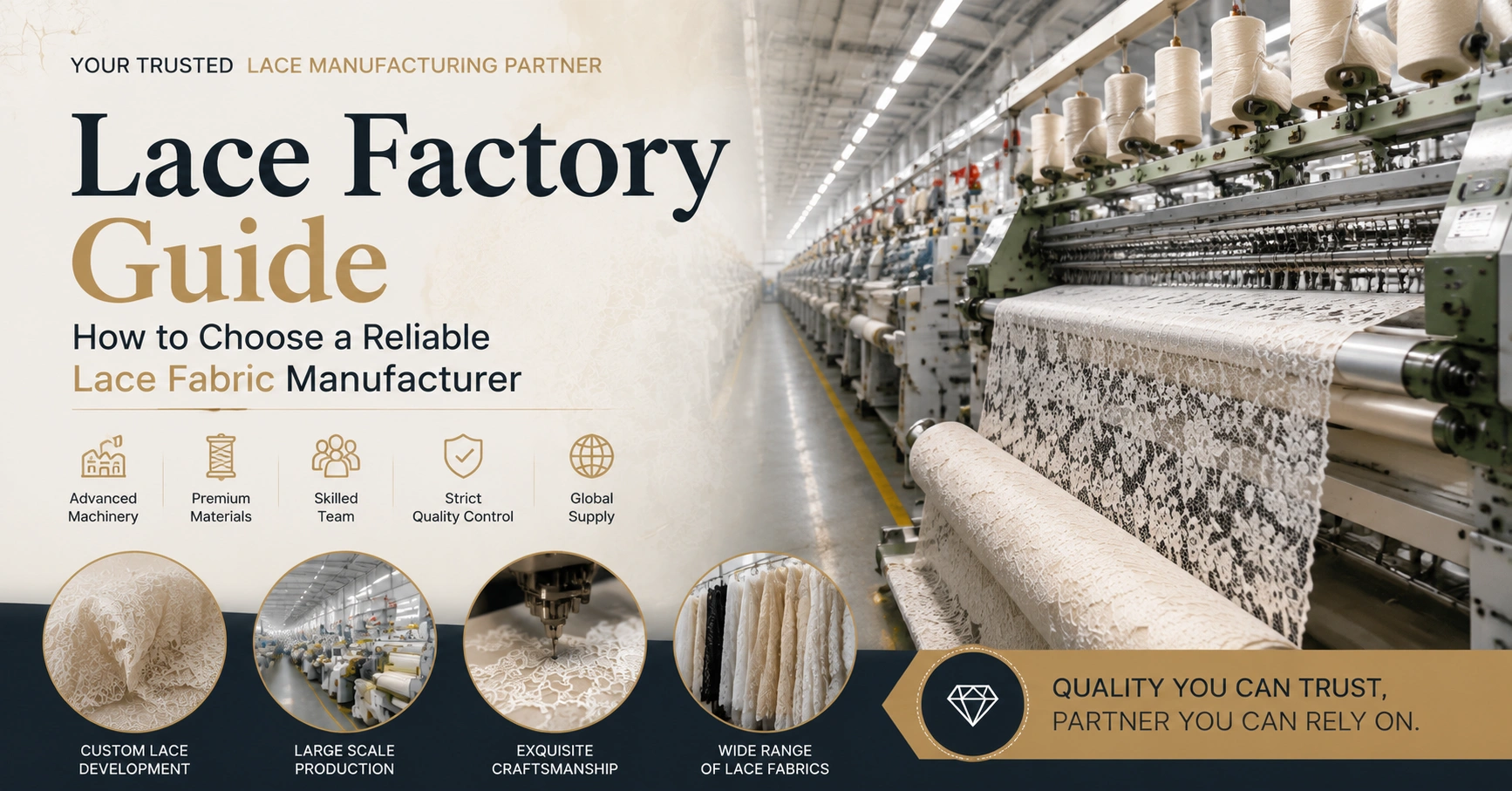

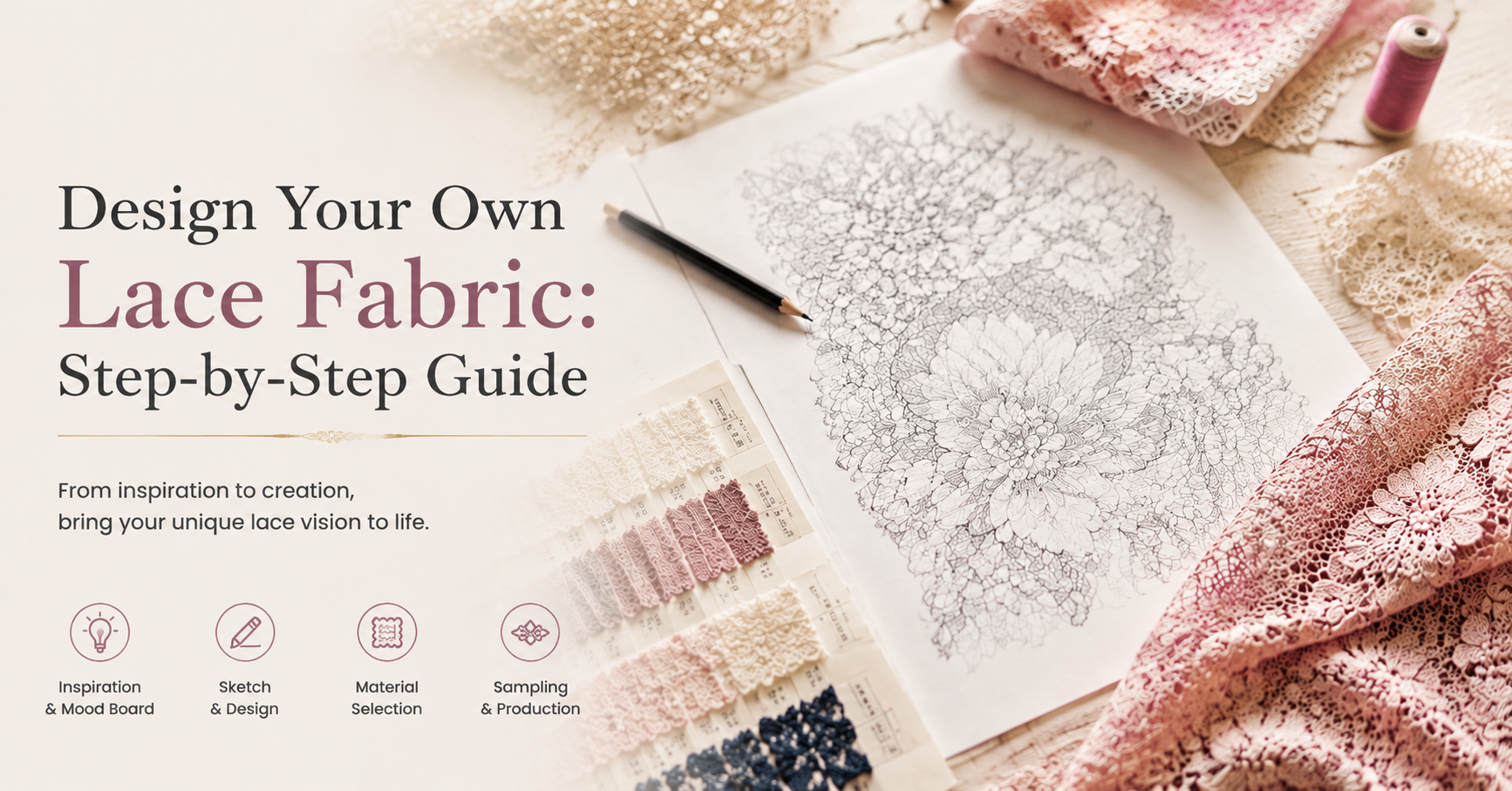

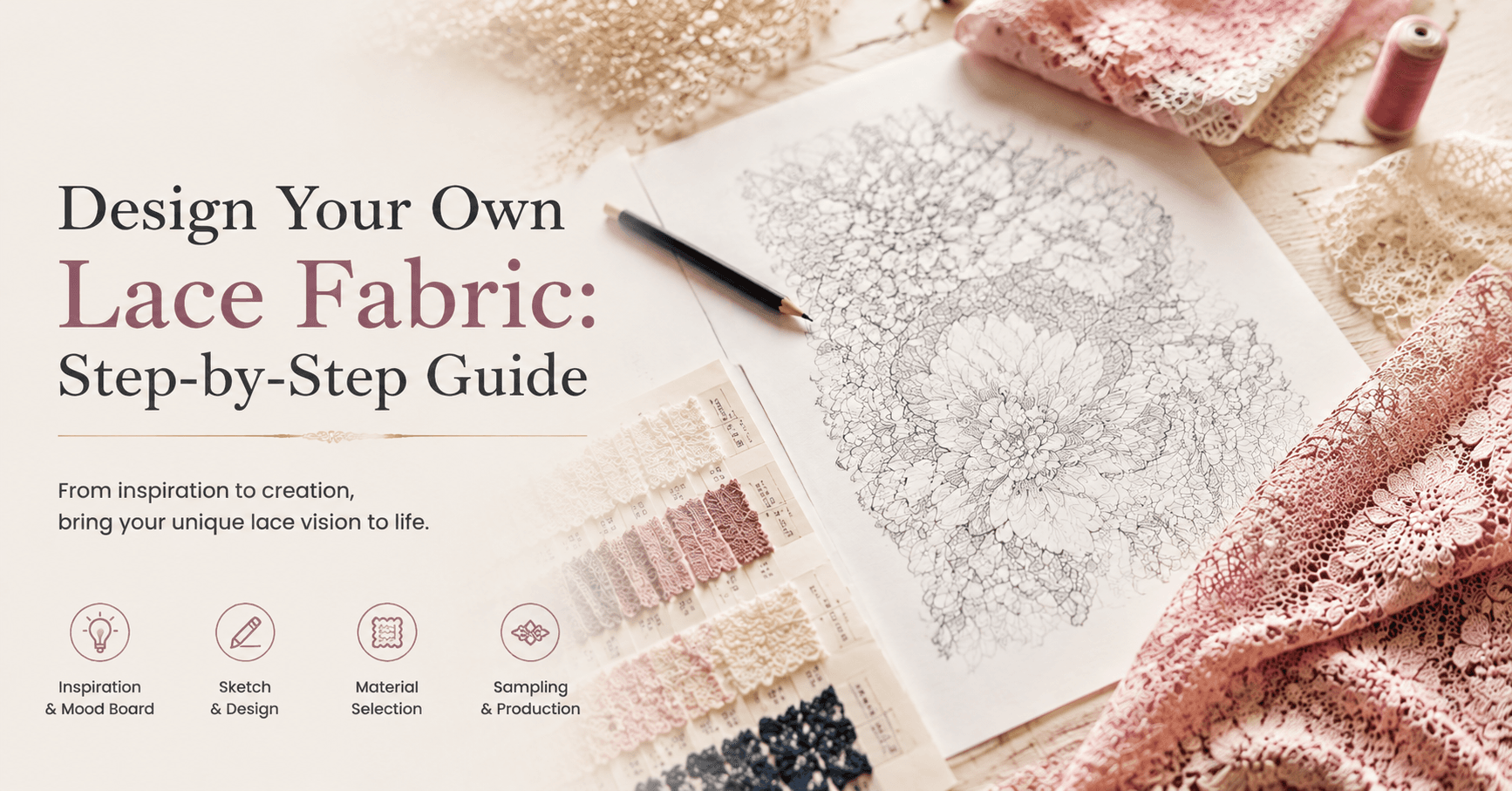
Lace fabric is one of the most elegant and versatile textiles in the fashion industry. From bridal gowns to high-end evening wear, lace adds sophistication, texture, and visual interest. For fashion brands, designers, and B2B buyers, creating custom lace fabric is not only a way to stand out in the market but also an opportunity to align materials with a brand's unique aesthetic. In this guide, we'll walk you through the step-by-step process of designing your own lace fabric.
Understanding the Basics of Lace Fabric
Before designing your own lace, it is essential to understand its composition and types.
What is Lace Fabric?
Lace is an openwork fabric, often featuring intricate patterns created by looping, twisting, or knitting threads. It can be made from natural fibers such as cotton or silk, as well as synthetic fibers like polyester and nylon.
Types of Lace
-
Embroidered Lace: A base fabric embroidered with lace patterns.
-
Guipure Lace: Heavy, dimensional lace without a net background.
-
Chantilly Lace: Fine lace with delicate floral patterns.
-
Water-Soluble Lace: Lace that dissolves in water, perfect for appliqué work.
Understanding these types helps you determine which lace style aligns with your brand's design and functional requirements.
Step 1 — Define Your Design Goals
Identify Target Market and Product Application
Knowing your end use is crucial. Are you designing lace for bridal wear, luxury fashion, or casual garments? Each application requires specific fabric qualities, such as softness, durability, or stretch.
Choose Patterns and Motifs
Consider your brand's identity. Floral motifs, geometric shapes, or abstract designs can create distinctive looks. For B2B brands, patterns that are easily scalable for bulk production are often preferred. Explore our pattern design development resources.
Step 2 — Selecting the Right Materials
Yarn Selection
Choosing the correct yarn type and thickness impacts both the lace's texture and its cost. For instance:
-
Cotton thread: Soft, breathable, ideal for bridal lace. See our cotton lace trim.
-
Polyester thread: Durable, easier to maintain, suitable for mass production.
-
Silk thread: Luxurious and smooth, high cost, suitable for premium collections.
Base Fabric Considerations
Some lace designs require a base fabric (e.g., tulle or mesh) to attach embroidery. Consider the weight, stretch, and color of the base material.
Step 3 — Create the Lace Pattern
Manual vs. Digital Design
-
Hand-drawn sketches: Useful for highly artistic, one-off designs.
-
CAD software: Essential for precision, repeat patterns, and bulk manufacturing. Leading B2B lace manufacturers often prefer CAD patterns for large orders.
Repeat Patterns and Symmetry
Lace production requires patterns that can seamlessly repeat. Ensuring symmetry in floral or geometric motifs prevents errors during machine embroidery or knitting.
Step 4 — Sampling and Prototyping
Work with a Reliable Lace Manufacturer
Partnering with a lace manufacturer ensures your design can be executed accurately. Key factors include:
-
Minimum order quantity (MOQ)
-
Lead time for sample production
-
Technical expertise in embroidery or water-soluble lace
A manufacturer may produce a small sample swatch to verify color, texture, and pattern accuracy before mass production. Learn about our customized processes and OEM services.
Evaluate Samples
Check for:
-
Consistency of pattern
-
Thread tension and stitch quality
-
Overall fabric hand-feel
This step is critical for B2B brands, as it ensures your product will meet buyer expectations. Review our quality control standards.
Step 5 — Color Selection and Dyeing
Color choice can define the mood and style of the lace. Options include:
-
Pre-colored yarns: Color is embedded before production.
-
Post-dyeing: Allows flexibility in shades but requires testing to prevent bleeding or shrinkage. See our dyeing and color matching resources.
Step 6 — Production Considerations
Production Methods
-
Embroidery machines: Perfect for water-soluble lace or complex motifs. Explore our cord embroidery and multi-color embroidery.
-
Knitting machines: Efficient for guipure or stretch lace.
-
Laser cutting and bonding: Modern technique for precision and custom designs. See our laser embroidery.
Quality Control
Regular QC checks on thread tension, pattern consistency, and color accuracy are essential for B2B orders.
Step 7 — Packaging and Delivery
Lace fabric is delicate. Ensure proper packaging with tissue paper, rolls, or protective plastic. Clear labeling helps B2B buyers track orders efficiently. Learn about our cut piece and processing services.
Tips for Designing Successful Custom Lace
-
Keep scalability in mind: Designs should be suitable for both small and bulk production.
-
Collaborate with experts: Engage manufacturers who understand both design and technical requirements.
-
Balance creativity with functionality: While unique patterns are attractive, the fabric must also perform well in garments. Browse our product catalog for inspiration.
Conclusion
Designing your own lace fabric is a blend of creativity, technical knowledge, and collaboration with reliable manufacturers. By following this step-by-step guide, fashion brands and B2B buyers can create exclusive lace collections that stand out in the market.
Custom lace not only enhances the garment's aesthetics but also elevates the brand's identity in competitive markets. Whether you are designing embroidered, water-soluble, or guipure lace, the key is meticulous planning, sampling, and partnership with skilled manufacturers.
Ready to start your custom lace journey? Visit our homepage to explore our collections or contact us for inquiries. You may also submit an inquiry for custom pricing.