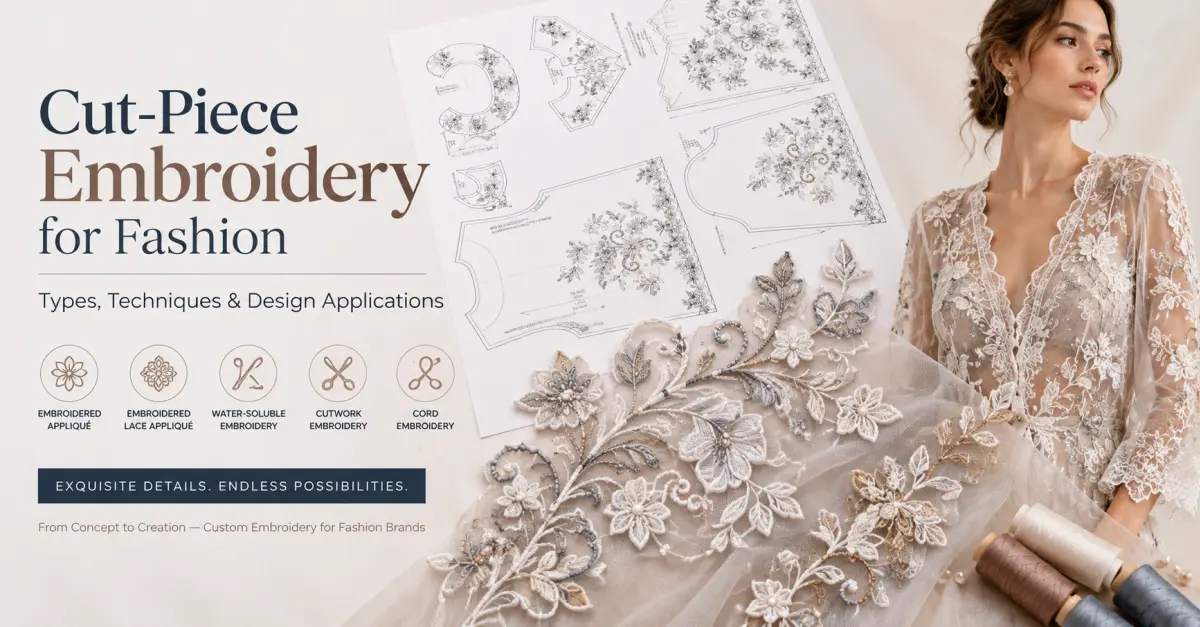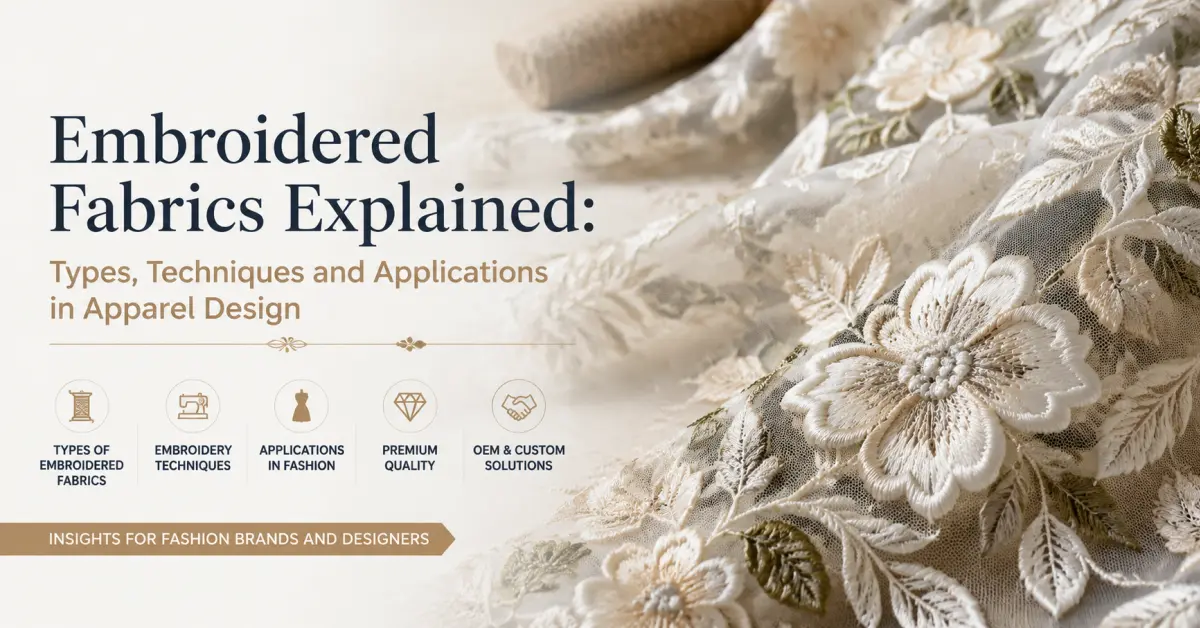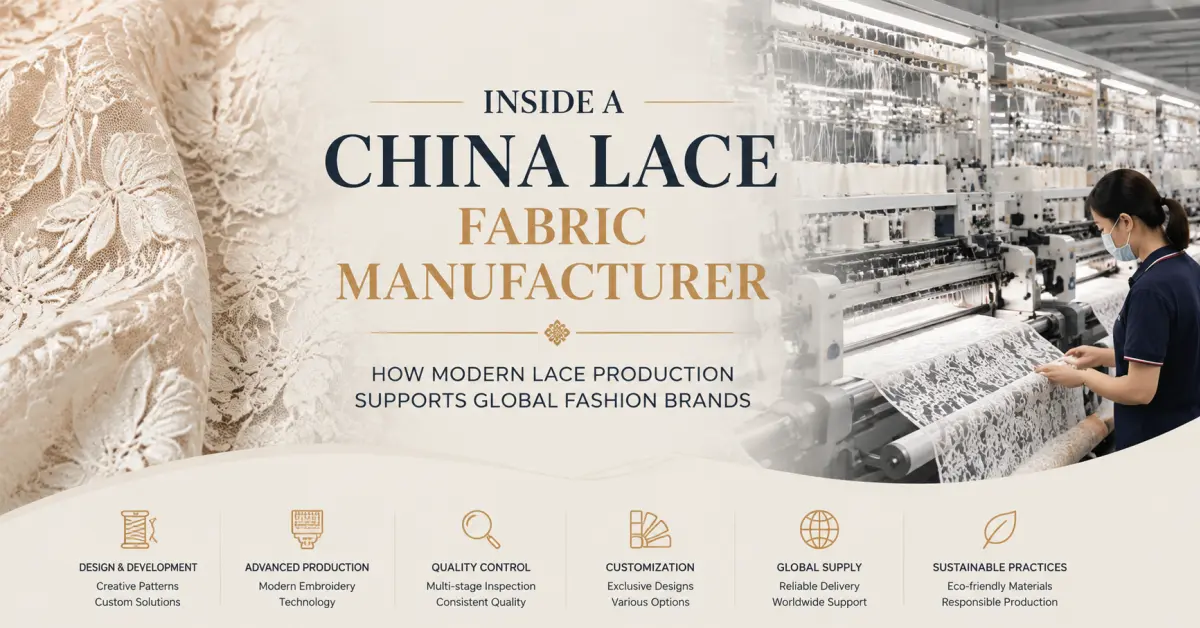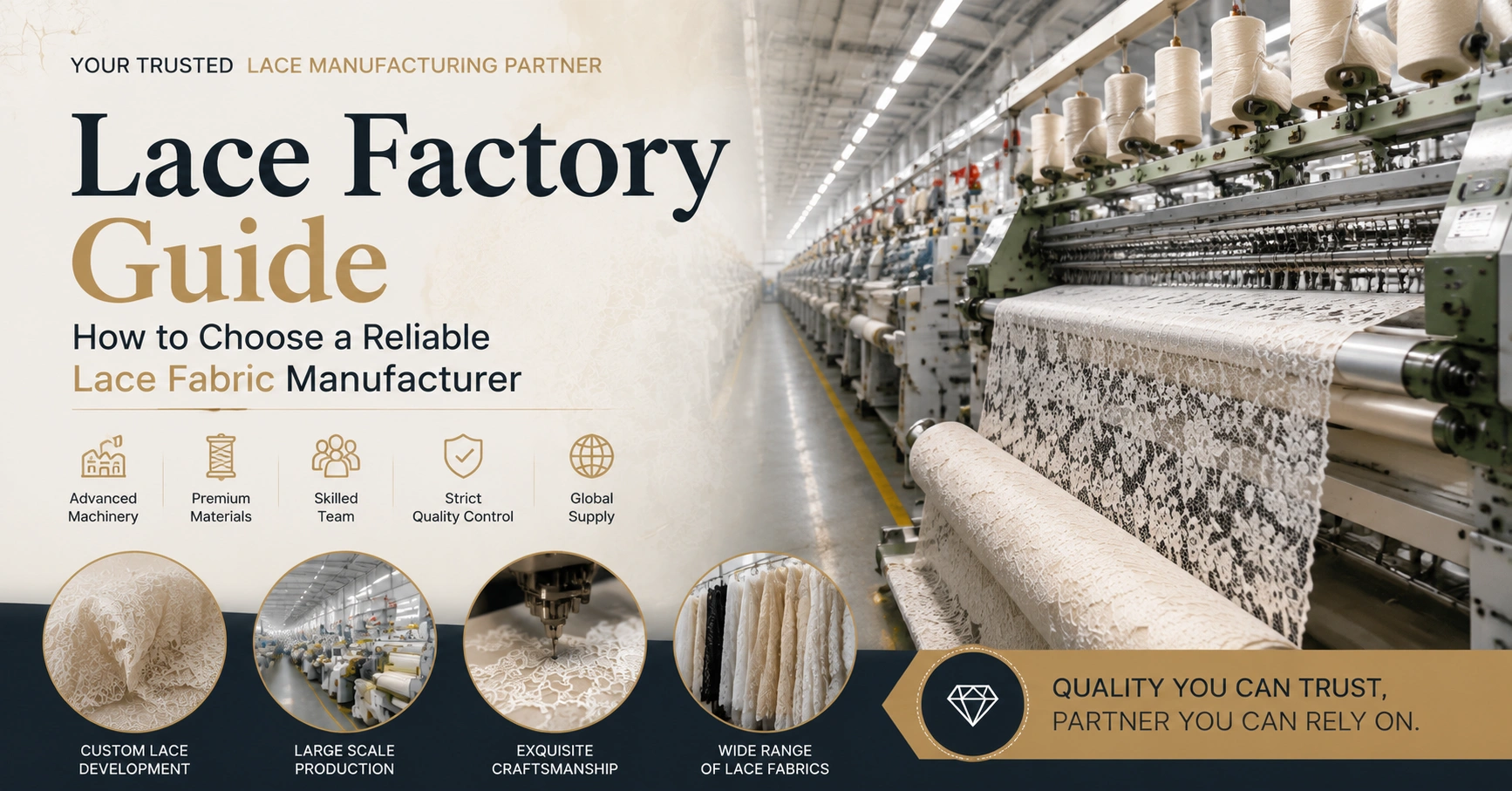

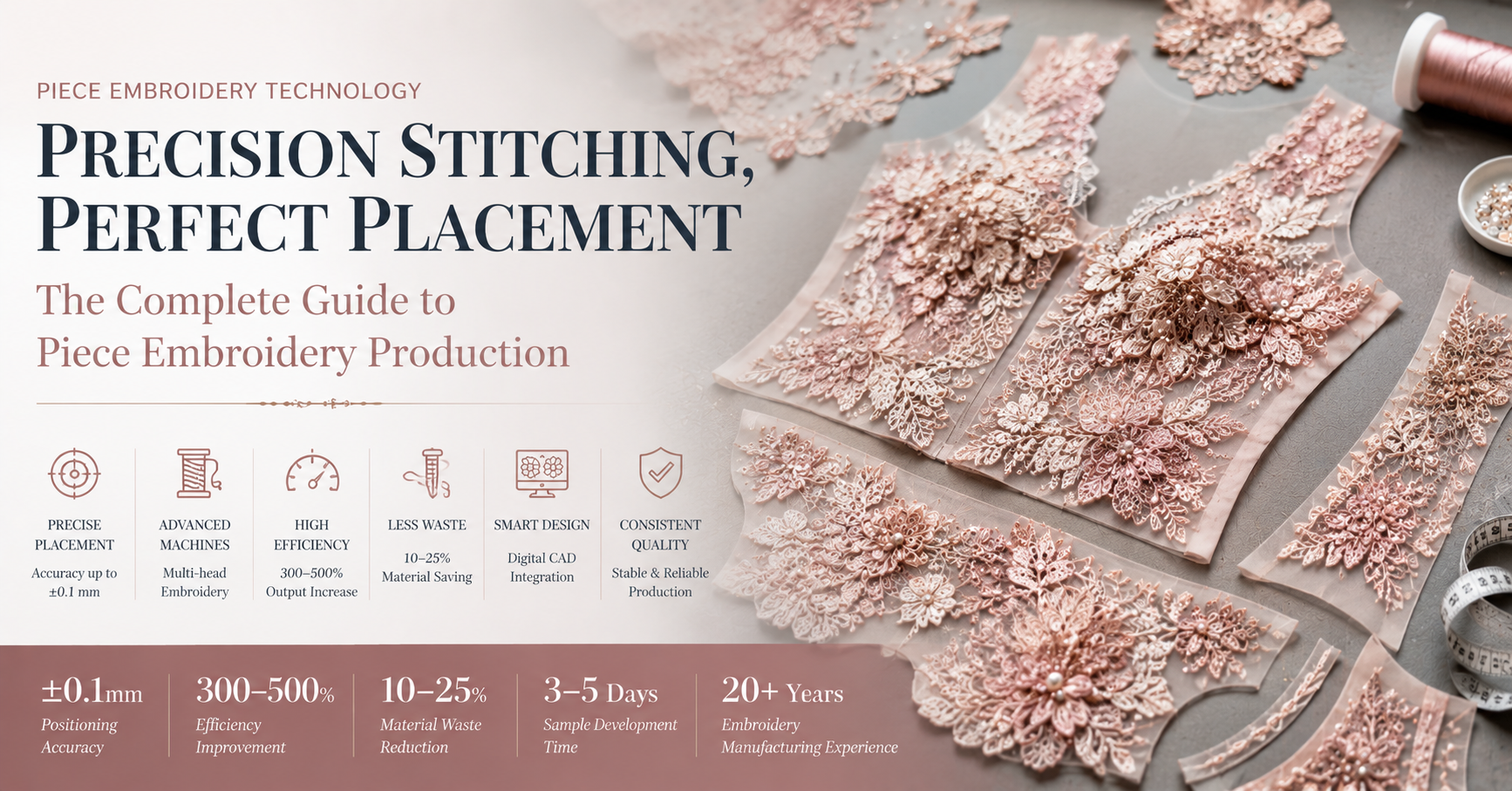

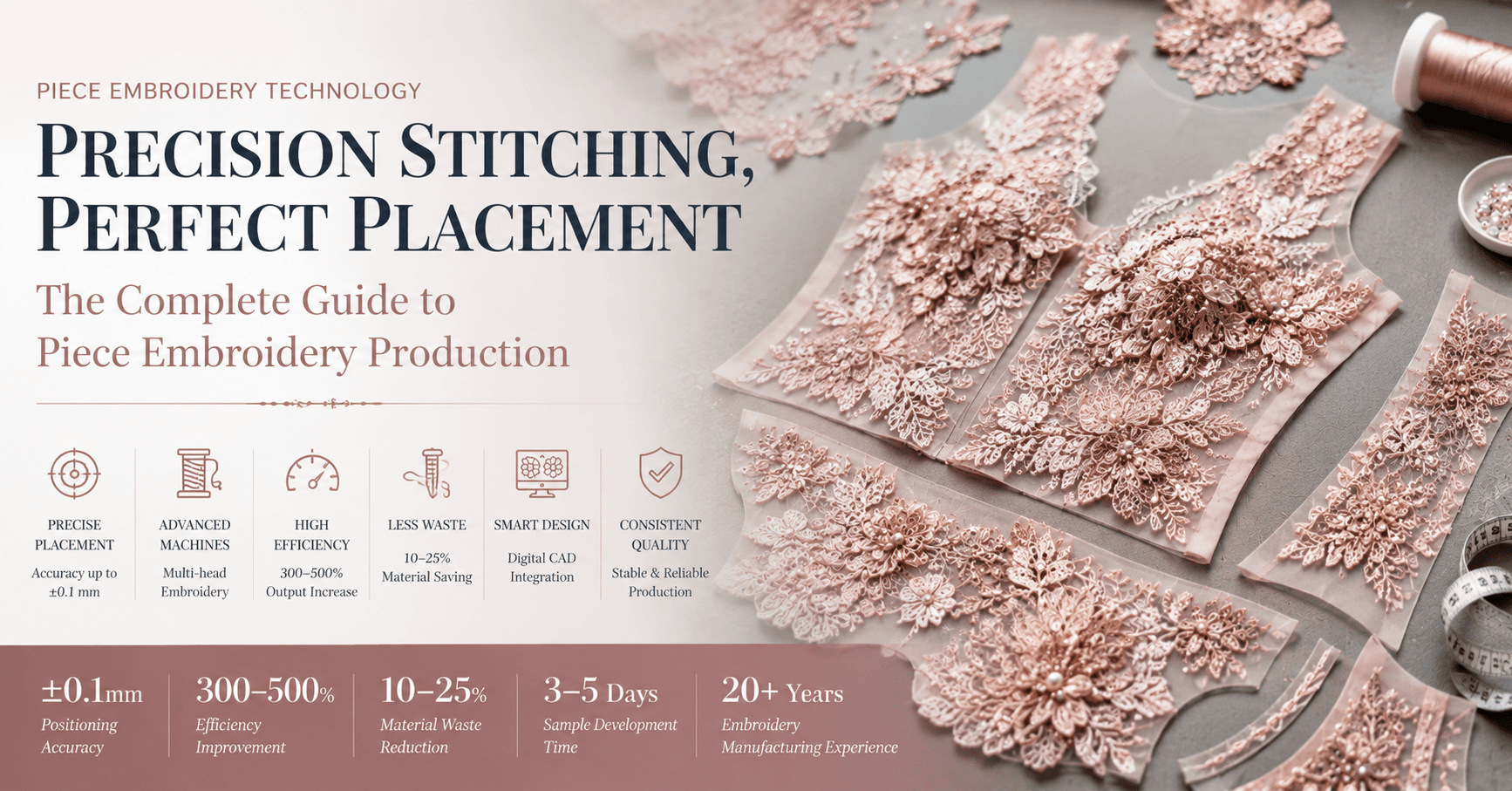
In modern apparel manufacturing, piece embroidery has become one of the most important decorative techniques for premium fashion, bridalwear, sportswear, lingerie, and luxury ready-to-wear collections. Compared with traditional continuous embroidery methods, piece embroidery offers greater flexibility, higher design precision, improved material utilization, and more efficient customization capabilities.
For fashion brands and B2B buyers, piece embroidery is no longer simply a decorative process — it has become a strategic manufacturing solution that directly affects sampling speed, production flexibility, labor efficiency, embroidery precision, and overall product value.
Today's high-end garment market increasingly demands:
-
More complex embroidery placement
-
Precise motif positioning on garment panels
-
Faster sampling turnaround
-
Lower fabric waste
-
Better compatibility with small-batch production
-
More efficient multi-style manufacturing
-
Stable embroidery quality across different garment sizes
Traditional roll-to-roll embroidery production often struggles to meet these requirements. Problems such as embroidery misalignment, cutting inaccuracies, unstable positioning, excessive fabric waste, and slow style switching create major production inefficiencies for fashion manufacturers.
Modern piece embroidery systems solve these challenges through advanced embroidery machinery, laser positioning systems, automated frame alignment, CAD pattern integration, AI-assisted embroidery programming, and digital production management systems.
This article explains the technical principles behind piece embroidery, the machinery used in modern production, the efficiency advantages compared with traditional embroidery methods, and why more fashion brands are shifting toward piece embroidery manufacturing.
Why Is Piece Embroidery Becoming More Popular?
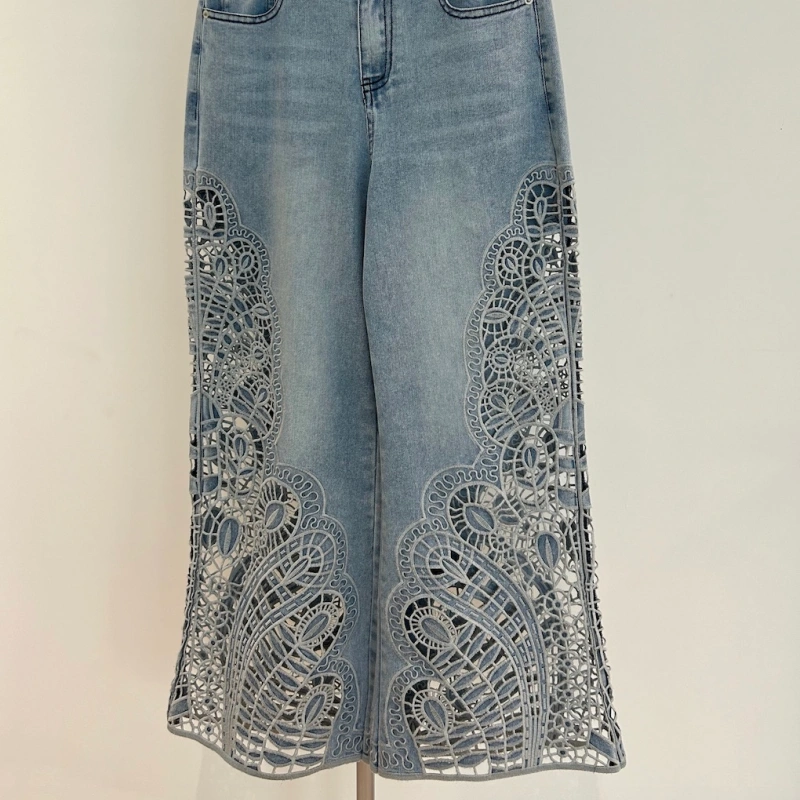
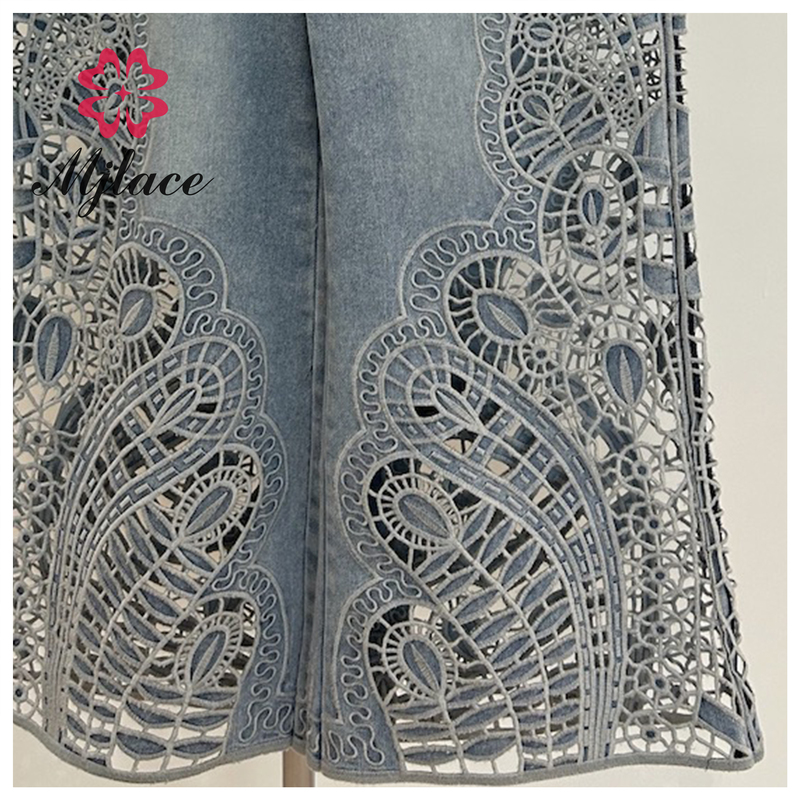
Piece embroidery allows embroidery to be applied directly onto pre-cut garment panels rather than onto continuous fabric rolls.
This production method offers several major advantages:
| Production Factor | Piece Embroidery Advantage |
|---|---|
| Embroidery Precision | More accurate motif positioning |
| Fabric Utilization | Lower material waste |
| Customization | Faster style switching |
| Small MOQ Production | More flexible manufacturing |
| Production Efficiency | Reduced secondary cutting |
| Garment Integration | Better alignment with garment structure |
Key Conclusion
For modern fashion brands, piece embroidery provides:
-
Better embroidery accuracy
-
Faster development cycles
-
More flexible production planning
-
Improved luxury appearance
-
Higher customization capability
This is especially valuable for:
-
Bridalwear
-
Couture fashion
-
Sportswear branding
-
Luxury lingerie
-
Fashion embroidery collections
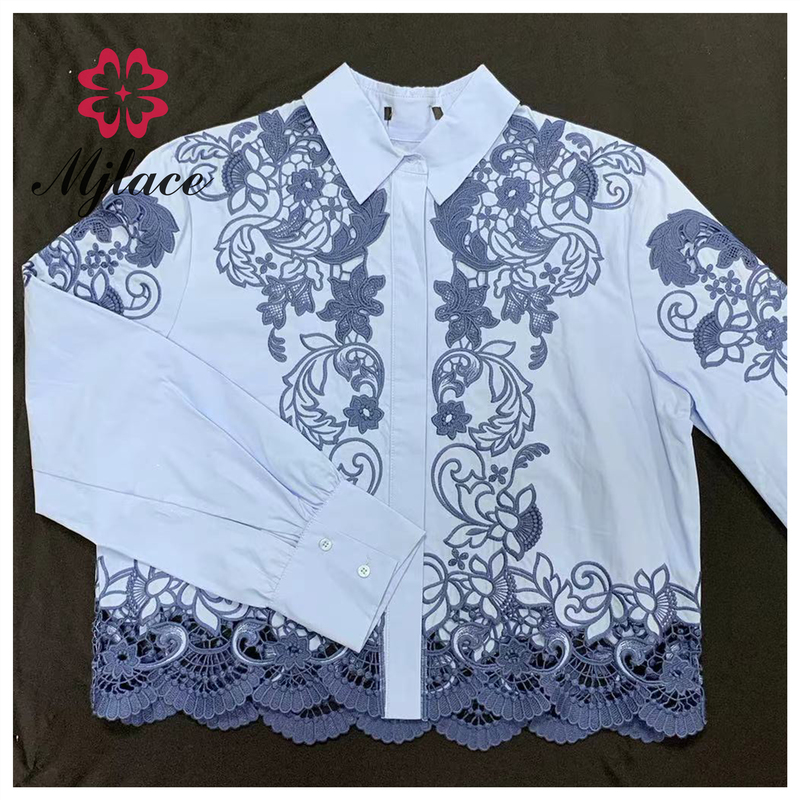
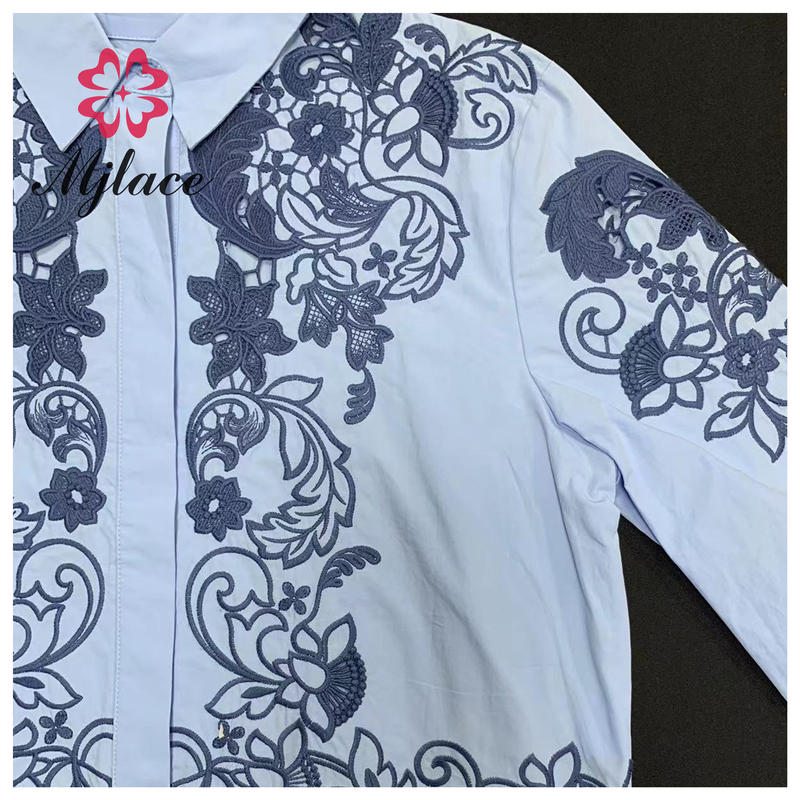
What Is Piece Embroidery?
Piece embroidery refers to an embroidery process where individual garment panels or pre-cut fabric pieces are embroidered separately before final garment assembly.
Unlike traditional embroidery production where embroidery is first applied to continuous fabric rolls and later cut into garment components, piece embroidery works directly on:
-
Front panels
-
Sleeves
-
Collars
-
Cuffs
-
Bodice sections
-
Appliqué components
-
Decorative inserts
This method significantly improves embroidery positioning precision.
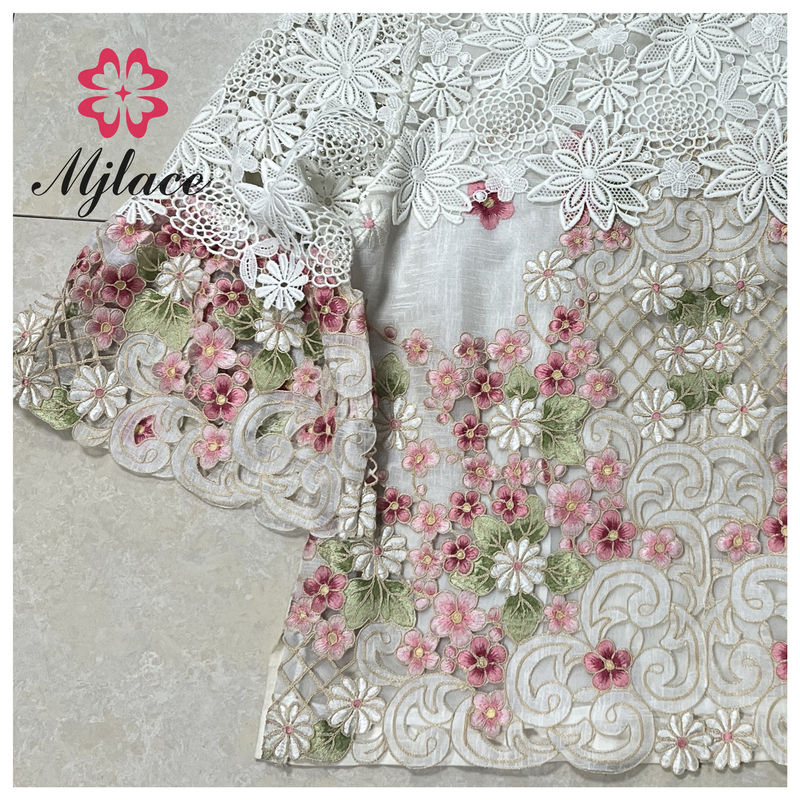
Why Traditional Roll Embroidery Has Limitations
Traditional embroidery methods are still widely used in mass textile production. However, they present several technical limitations for modern fashion manufacturing.
1. Fabric Waste After Cutting
In roll embroidery production, embroidery is applied continuously across large fabric widths.
After embroidery completion, garment panels are cut from the embroidered fabric.
This often results in:
-
High embroidery waste
-
Unused embroidered sections
-
Increased material cost
For expensive embroidered fabrics, waste rates may reach 15–30% depending on pattern layout.
Piece embroidery reduces this waste significantly.
2. Motif Alignment Problems
Continuous embroidery systems may create positioning inconsistencies during garment cutting.
Common issues include:
-
Misaligned floral motifs
-
Inconsistent symmetry
-
Uneven embroidery placement
These problems are especially visible in:
-
Bridal gowns
-
Corset bodices
-
Luxury dresses
Piece embroidery solves this by embroidering directly onto garment components.
3. Lower Flexibility for Small Orders
Traditional embroidery production is optimized for long production runs.
Frequent style switching creates:
-
Production downtime
-
Reprogramming inefficiency
-
Higher labor cost
Piece embroidery systems are better suited for:
-
Small MOQ orders
-
Frequent collection updates
-
Fast fashion development
Main Machines Used in Piece Embroidery Production
Modern piece embroidery relies on multiple integrated technologies.
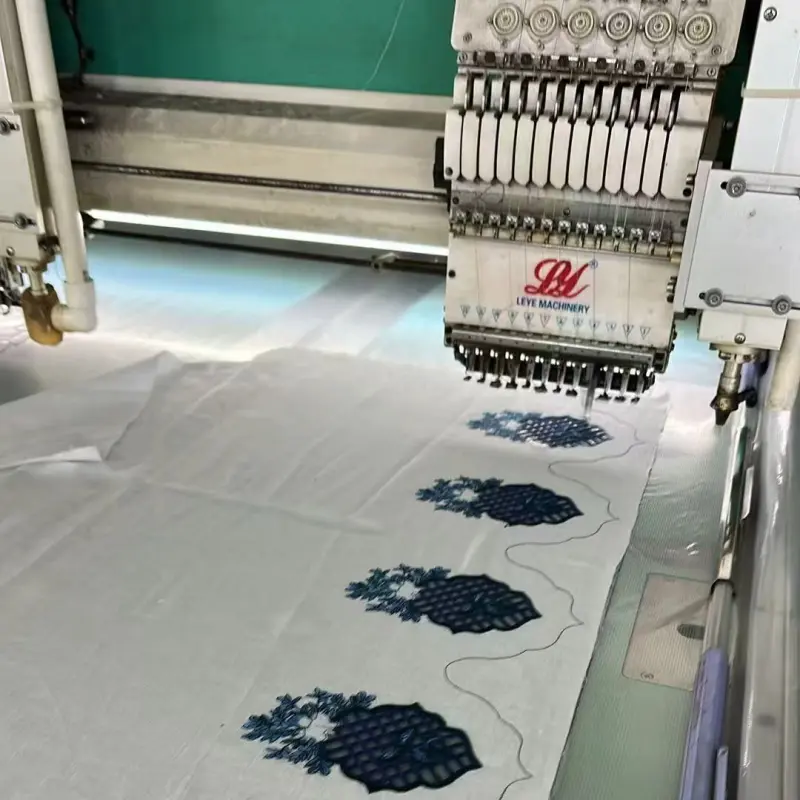
Multi-Head Piece Embroidery Machines
Multi-head embroidery machines are the core equipment in modern piece embroidery factories.
These systems use multiple independent embroidery heads operating simultaneously.
Technical Structure
Modern systems include:
-
Servo-driven embroidery heads
-
Pneumatic thread trimming
-
Automatic color-changing systems
-
Digital frame positioning
-
Independent tension management
Advanced industrial systems may support:
| Specification | Typical Range |
|---|---|
| Embroidery Heads | 12–120 heads |
| Maximum Speed | 1000–1200 RPM |
| Needle Types | Flat, sequin, cording |
| Positioning Accuracy | ±0.1 mm |
Why Multi-Head Systems Are Important
Faster Production Efficiency
Modern systems can embroider multiple garment panels simultaneously.
Compared with manual embroidery production, output efficiency increases by 300–500% depending on embroidery complexity.
Better Pattern Consistency
Computerized synchronization improves:
-
Stitch uniformity
-
Motif repeat accuracy
-
Embroidery density consistency
This is critical for luxury fashion production.
Rapid Style Switching
Digital embroidery programming allows fast design changes between orders.
This reduces:
-
Machine downtime
-
Sampling delays
-
Production setup time
Explore our embroidery and multi-color embroidery options.
Laser Positioning Systems in Piece Embroidery
Modern piece embroidery increasingly relies on laser positioning technology.
Laser systems project alignment markers directly onto garment panels.
Why Laser Positioning Matters
Without accurate positioning systems, embroidery misalignment becomes a major risk.
Laser systems improve:
-
Embroidery placement accuracy
-
Garment symmetry
-
Pattern repeat consistency
This is especially important for:
-
Bridal bodices
-
Corsetry
-
Sleeve embroidery
-
Neckline placement embroidery
Technical Advantages
Modern laser positioning systems achieve ±0.1–0.3 mm positioning accuracy.
This significantly improves garment consistency during mass production. See our laser embroidery options.
Automatic Frame Alignment Systems
Frame alignment is one of the most critical aspects of piece embroidery.
Poor frame stability causes:
-
Fabric shifting
-
Wrinkling
-
Distorted embroidery
-
Uneven stitch density
Modern embroidery systems use:
-
Pneumatic clamping
-
Servo-controlled frame movement
-
Dynamic tension balancing
to stabilize delicate materials during embroidery.
CAD Embroidery Design Systems
Modern piece embroidery is fully integrated with digital CAD systems.
Professional embroidery software allows manufacturers to:
-
Digitize embroidery patterns
-
Simulate stitch density
-
Optimize embroidery paths
-
Generate automatic repeats
-
Reduce thread waste
Common Industrial Embroidery Software
| Software System | Main Function |
|---|---|
| Wilcom | Embroidery digitizing |
| Tajima DG | Industrial embroidery programming |
| Pulse | Luxury embroidery editing |
| ZSK Design System | Multi-head control |
Why Digital Embroidery Design Improves Efficiency
CAD integration reduces:
-
Manual programming time
-
Sampling errors
-
Production inconsistencies
Some factories report 30–50% faster sampling development after fully digitalizing embroidery programming. Explore pattern design development.
Piece Embroidery and Material Compatibility
One of the biggest advantages of piece embroidery is its compatibility with multiple fabric structures.
Modern systems can embroider on:
-
Tulle
-
Mesh
-
Satin
-
Velvet
-
Organza
-
Lycra
-
Stretch fabrics
Stretch Fabric Embroidery Challenges
Stretch fabrics are difficult to embroider because of material deformation during stitching.
Advanced systems solve this through:
-
Dynamic frame tension control
-
Real-time stitch compensation
-
Servo-driven fabric feeding
This significantly improves embroidery stability on activewear and lingerie fabrics.
Sequin and Bead Integration in Piece Embroidery
Modern piece embroidery increasingly combines:
-
Sequins
-
Pearls
-
Beads
-
Metallic yarns
-
Cording embroidery
within a single production process.
Why Integrated Decoration Improves Production Efficiency
Traditional production often separates embroidery and embellishment into different processes.
Integrated systems reduce:
-
Labor handling
-
Production steps
-
Alignment errors
Some factories achieve 20–35% lower labor cost through integrated embroidery production. See our sequins and beads embroidery and cord embroidery collections.
AI and Smart Manufacturing in Piece Embroidery
The embroidery industry is increasingly adopting AI-assisted manufacturing systems.
Modern smart embroidery systems can:
-
Detect thread breakage automatically
-
Monitor stitch consistency in real time
-
Predict machine maintenance needs
-
Optimize embroidery paths automatically
Smart Factory Benefits
Factories using AI-assisted embroidery systems report:
| Production Area | Efficiency Improvement |
|---|---|
| Sampling Speed | +40% |
| Defect Reduction | -25% |
| Machine Downtime | -30% |
| Production Stability | +20% |
Sustainability Advantages of Piece Embroidery
Sustainability is becoming increasingly important in fashion manufacturing.
Piece embroidery reduces:
-
Fabric waste
-
Excessive embroidery coverage
-
Sampling material consumption
Compared with roll embroidery, optimized piece embroidery layouts may reduce material waste by 10–25% depending on garment structure.
Visit our sustainability section for more information.
Piece Embroidery Applications Across Fashion Categories
Bridal and Couture Fashion
Piece embroidery is heavily used for:
-
Corset bodices
-
3D floral appliqués
-
Sleeve embroidery
-
Veil decoration
because precise motif placement is critical. Explore our bridal lace collection.
Sportswear and Athleisure
Modern sportswear brands use piece embroidery for:
-
Logos
-
Branding
-
Decorative panels
-
Stretch embroidery applications
Luxury Lingerie
Piece embroidery improves precision on:
-
Lace cups
-
Side panels
-
Delicate mesh structures
High-End Ready-to-Wear
Luxury ready-to-wear brands increasingly use piece embroidery for:
-
Jacket detailing
-
Decorative collars
-
Structured embroidery placement
Future Trends in Piece Embroidery for 2026
The future of piece embroidery is moving toward:
-
AI-assisted embroidery optimization
-
Smart production integration
-
Sustainable embroidery systems
-
Hybrid digital embroidery technologies
-
Ultra-high-speed servo systems
-
3D embroidery automation
Factories investing in advanced embroidery systems will gain major competitive advantages in speed, customization, and production quality.
Conclusion
Piece embroidery has become one of the most important technologies in modern fashion manufacturing. Compared with traditional embroidery production, it offers higher precision, lower material waste, faster development speed, and greater flexibility for customized fashion collections.
For fashion brands and B2B buyers, understanding piece embroidery technology is essential when evaluating embroidery suppliers and developing premium products.
Factories equipped with advanced multi-head embroidery machines, laser positioning systems, CAD embroidery software, automated frame alignment systems, and integrated embellishment technologies are far more capable of delivering stable, high-quality embroidery production for luxury fashion markets.
As fashion manufacturing continues evolving toward smaller production runs, faster collection updates, and higher decorative complexity, piece embroidery will remain one of the key technologies shaping the future of premium apparel production.
Ready to source high-quality embroidered fabrics? Visit our homepage to explore our collections or contact us for inquiries. You may also submit an inquiry for custom pricing.