
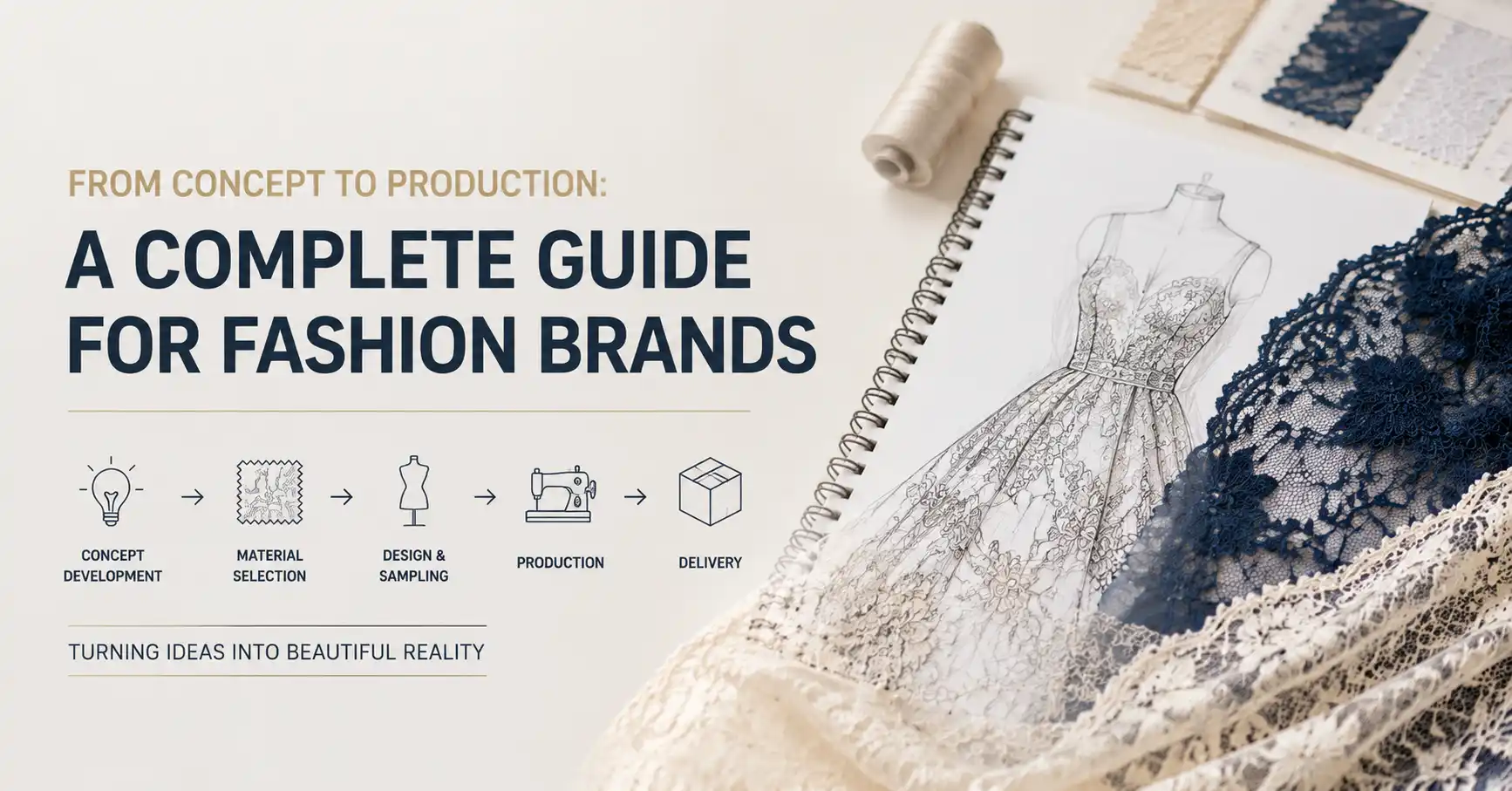

In today's highly competitive fashion industry, turning an idea into a finished garment is no longer a linear process. It is a structured system that involves creative direction, technical development, fabric sourcing, sampling, compliance checks, and scalable production planning.
For fashion brands, especially those working with delicate materials such as lace, embroidery, or embellished fabrics, the gap between concept and production often determines whether a collection succeeds in the market or fails in execution.
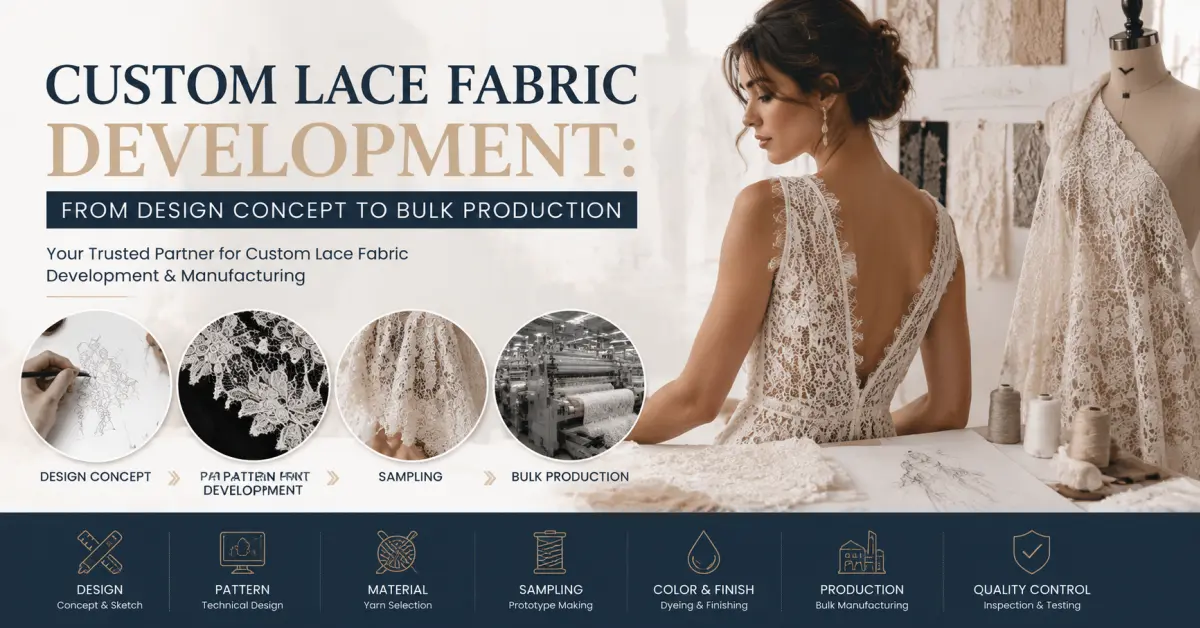
This guide breaks down the full product development journey—from initial concept to bulk production—based on real manufacturing workflows used in the textile and lace industry.
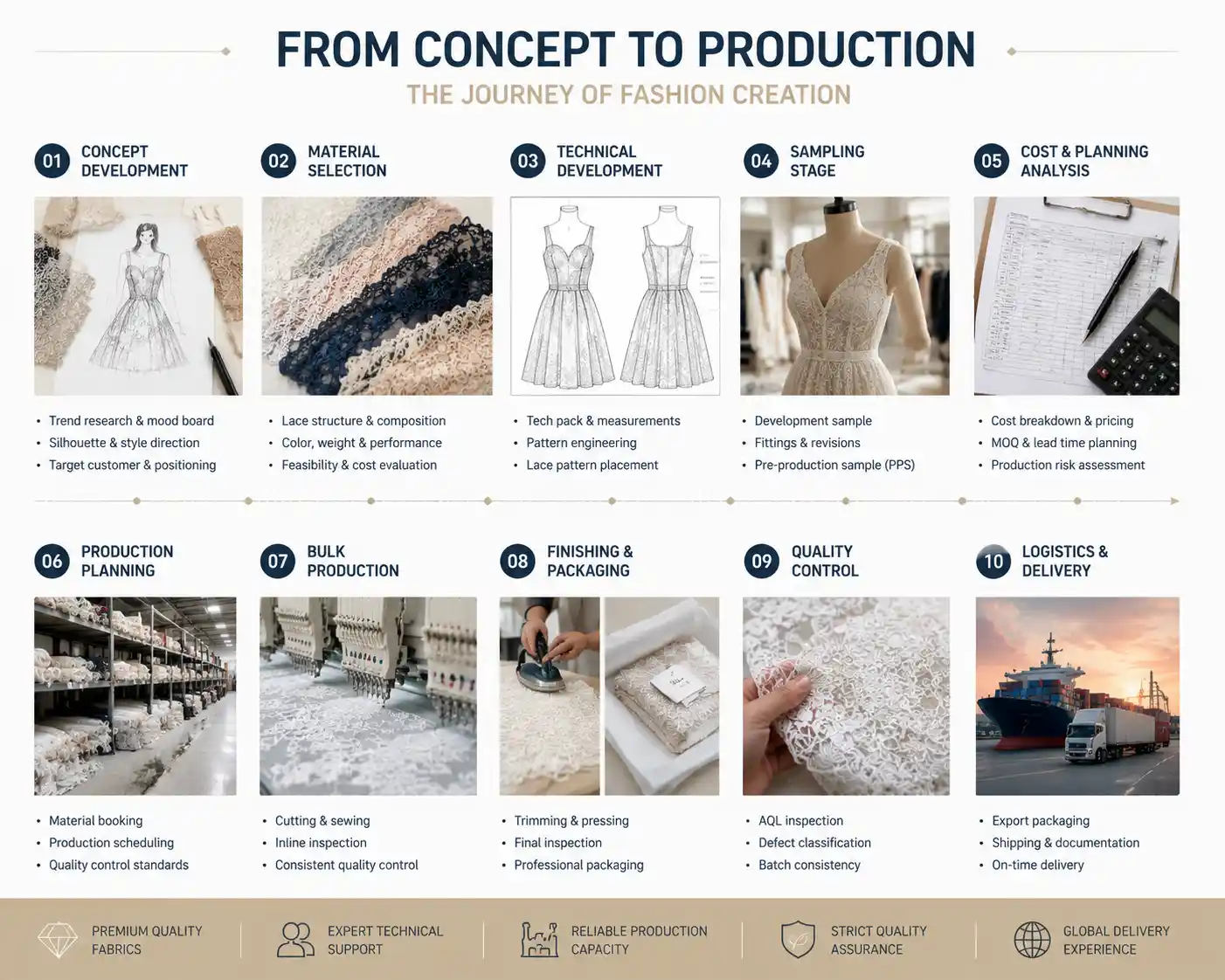
Concept Development: Where Every Product Begins
Every garment starts with an idea, but in professional fashion development, a "concept" is more than inspiration. It is a structured direction that defines:
-
Target customer profile
-
Seasonal theme (SS / AW collections)
-
Fabric direction (lace, mesh, embroidery, blends)
-
Silhouette and garment category
-
Price positioning (luxury, premium, mass market)
At this stage, designers usually work with mood boards, runway references, and trend forecasting reports. However, one of the most overlooked factors is fabric feasibility.
A concept is only as strong as the materials that can support it. For example:
-
Heavy couture lace requires structural embroidery bases
-
Stretch lace must balance elasticity and pattern stability
-
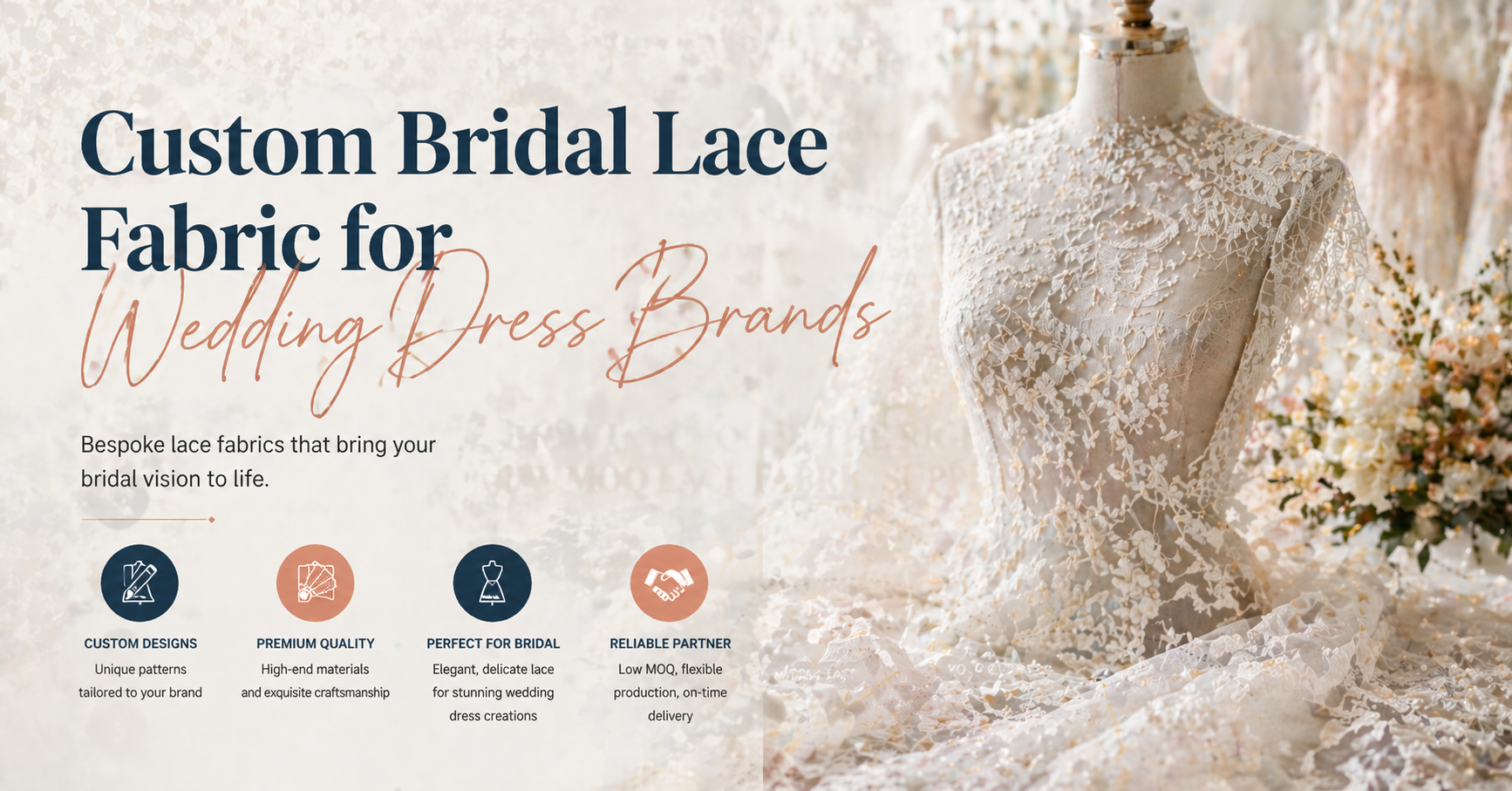
Bridal lace needs high-density detailing and soft handfeel
Brands that align design vision with fabric engineering early in the process avoid costly revisions later.
Material Selection: Turning Ideas into Technical Reality
Once the concept direction is clear, the next step is material selection. This is where design meets manufacturing reality.
For lace and embroidered textiles, key considerations include:
Fabric Structure
-
Raschel lace
-
Jacquard lace
-
Embroidered mesh
-
Chantilly lace
Each structure behaves differently in cutting, sewing, and draping.
Composition & Performance
-
Polyester: cost-efficient, stable, widely used
-
Nylon: softer touch, better elasticity
-
Cotton blends: natural texture, premium positioning
-
Spandex blends: stretch applications
GSM & Density
Fabric weight determines how a garment behaves:
-
Lightweight lace: lingerie, summer dresses
-
Medium weight: daily wear fashion
-
Heavy lace: couture, bridal, stagewear
Color & Dye Compatibility
Different lace structures react differently to dyeing and finishing processes. Early testing is essential to avoid shade variation during bulk production.
At this stage, experienced suppliers provide not just fabric, but technical recommendations based on garment end-use.
Technical Development: Translating Design into Production Language
After selecting materials, the design must be converted into technical specifications.
This includes:
-
Tech packs (measurements, construction details)
-
Fabric swatches and strike-offs
-
Pattern engineering
-
Embroidery placement mapping
-
Lace motif scaling and repetition control
For lace fabrics, one of the most critical steps is pattern repeat engineering.
A well-designed lace pattern must:
-
Align seamlessly across garment panels
-
Maintain symmetry in dresses and skirts
-
Avoid distortion during cutting or stretching
This is where collaboration between designers and textile engineers becomes essential. Explore pattern design development.
Sampling Stage: From Paper to Physical Product
Sampling is where most design risks are identified.
A typical sampling process includes:
Development Sample
The first interpretation of the design using closest available materials.
Revised Sample
Adjustments based on feedback:
-
Pattern correction
-
Fabric substitution
-
Embroidery density optimization
-
Color refinement
Pre-production Sample (PPS)
Final approved version used as a standard for bulk production.
Sampling time varies depending on complexity:
-
Standard lace: 7–15 days
-
Embroidered lace: 10–25 days
-
Heavy couture pieces: longer due to handwork and detailing
The goal of sampling is not perfection in the first attempt, but controlled iteration toward production readiness.
Cost Structure Understanding: Before Scaling Production
Before moving into bulk production, brands must understand how cost is built.
For lace-based garments, cost is typically influenced by:
Fabric Cost
Determined by:
-
Yarn type
-
Machine complexity
-
Pattern density
-
Embellishment level. See our sequins and beads embroidery.
Labor Cost
-
Cutting precision requirements
-
Sewing complexity
-
Hand embroidery or finishing work
Development Cost
-
Sampling rounds
-
Custom pattern development
-
Color matching sessions. Learn about dyeing and color matching.
Order Quantity Impact
Higher volumes reduce per-unit cost due to:
-
Machine efficiency optimization
-
Reduced setup time
-
Bulk material procurement advantages
Understanding this structure helps brands make informed decisions between design ambition and commercial viability.
Production Planning: Bridging Sample and Scale
Once PPS is approved, production planning begins.
Key elements include:
Material Booking
Fabric must be locked in advance to avoid:
-
Color variation between batches
-
Yarn shortages
-
Pattern inconsistency
Production Scheduling
Factories plan:
-
Knitting or embroidery machine allocation
-
Dyeing schedules
-
Cutting and sewing flow
Quality Control Standards
A professional production system includes:
-
Inline inspection
-
Final inspection (AQL standards)
-
Defect categorization (minor / major / critical). Learn about quality control standards.
Consistency is more important than perfection in a single piece.
Bulk Production: Where Execution Matters Most
In mass production, even small inconsistencies become amplified.
Common risks include:
-
Pattern misalignment in lace panels
-
Color deviation between batches
-
Fabric shrinkage differences
-
Embroidery tension inconsistency
To manage these risks, experienced suppliers implement:
-
Batch sampling before full production
-
Machine calibration control
-
Standard operating procedures (SOPs)
-
Continuous inline inspection
This stage defines whether a brand can scale reliably.
Finishing, Packaging, and Export Preparation
After production, finishing processes ensure product readiness:
-
Trimming excess threads
-
Steaming and shaping
-
Final pressing
-
Folding or hanging packaging
For export-oriented brands, packaging is especially important:
-
Moisture-resistant wrapping
-
Roll packaging for lace fabrics
-
Export carton labeling
-
Barcode or SKU management
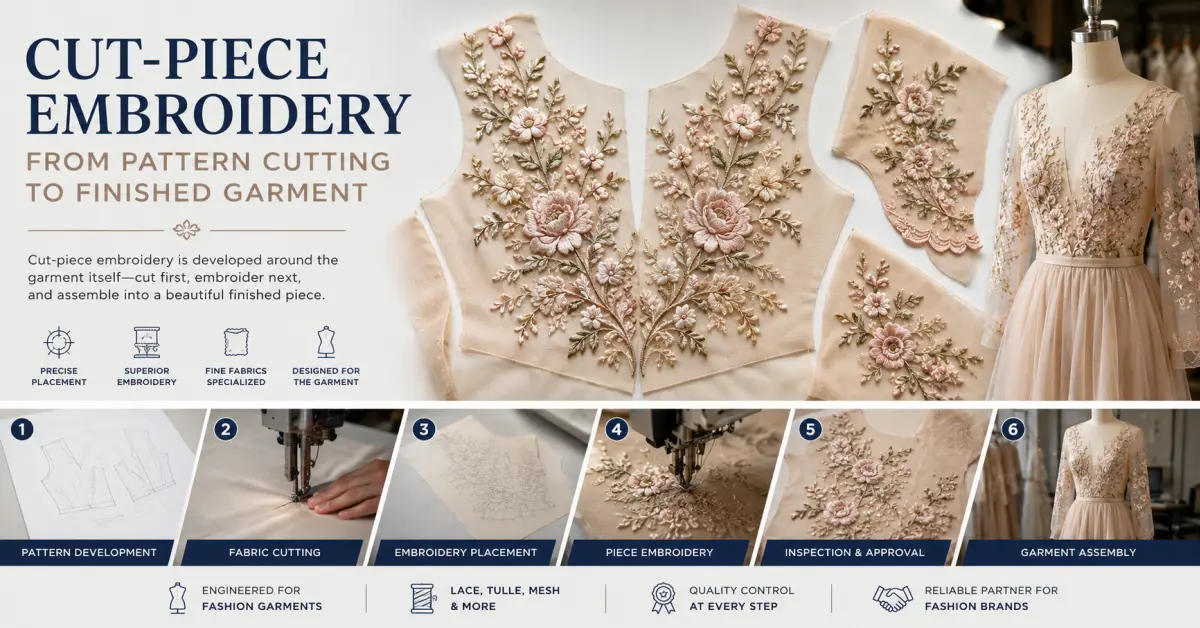
Improper packaging can damage even the highest quality fabric. Explore cut piece and processing services.
Logistics and Delivery: The Final Step in the Chain
The production cycle does not end at manufacturing—it ends at delivery.
Brands must consider:
-
Shipping method (air / sea / express)
-
Customs documentation
-
Lead time planning
-
Seasonal delivery windows
Lace fabrics, being lightweight but high-volume, often require optimized packing strategies to reduce shipping costs. Learn about importing logistics.
The Role of a Reliable Textile Partner
From concept to production, the most critical factor is not just process—it is partnership.
A reliable lace manufacturer should provide:
-
Fabric development capability
-
Technical support for design adaptation
-
Stable bulk production capacity
-
Consistent quality control systems
-
Export experience for global markets
For brands working with complex lace designs, this partnership reduces uncertainty and accelerates product launch cycles. Explore customized processes and OEM services.
Conclusion: Turning Design Vision into Commercial Reality
The journey from concept to production is not just about manufacturing—it is about coordination between creativity, engineering, and execution.
Brands that succeed in today's fashion market are not necessarily those with the most complex designs, but those who can consistently translate ideas into scalable, high-quality products.
Whether developing bridal lace, couture embroidery, or ready-to-wear lace fabrics, the key lies in understanding each stage of the process and working with partners who can support both design ambition and production discipline.
Ready to bring your concept to production? Visit our homepage to learn more or contact us for inquiries. You may also submit an inquiry for custom pricing.