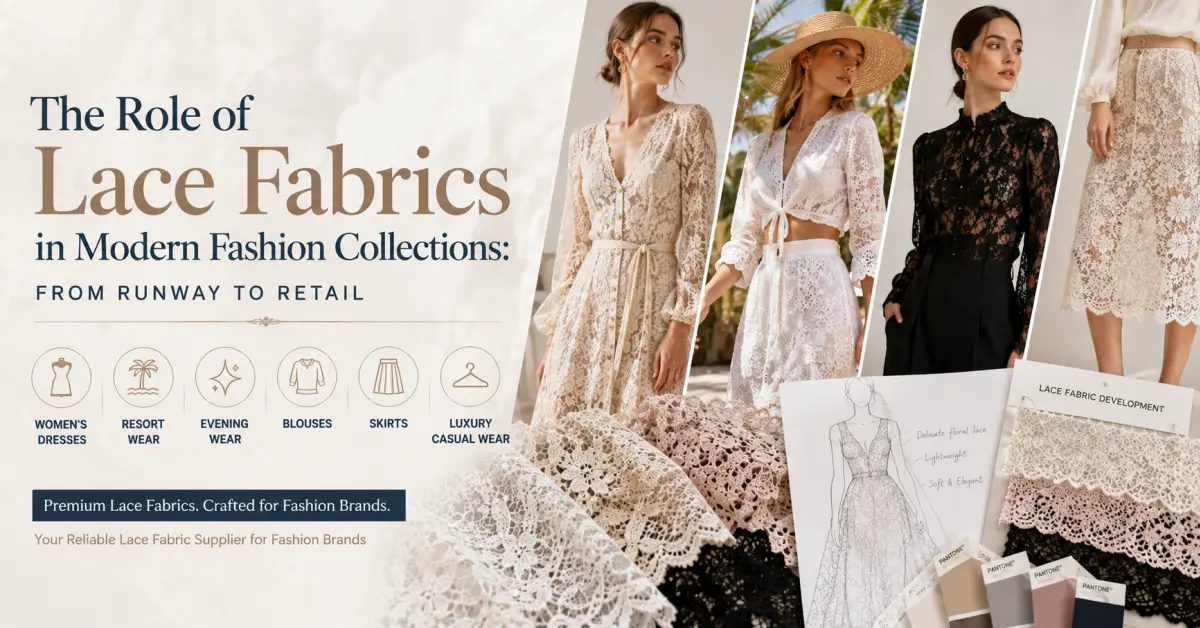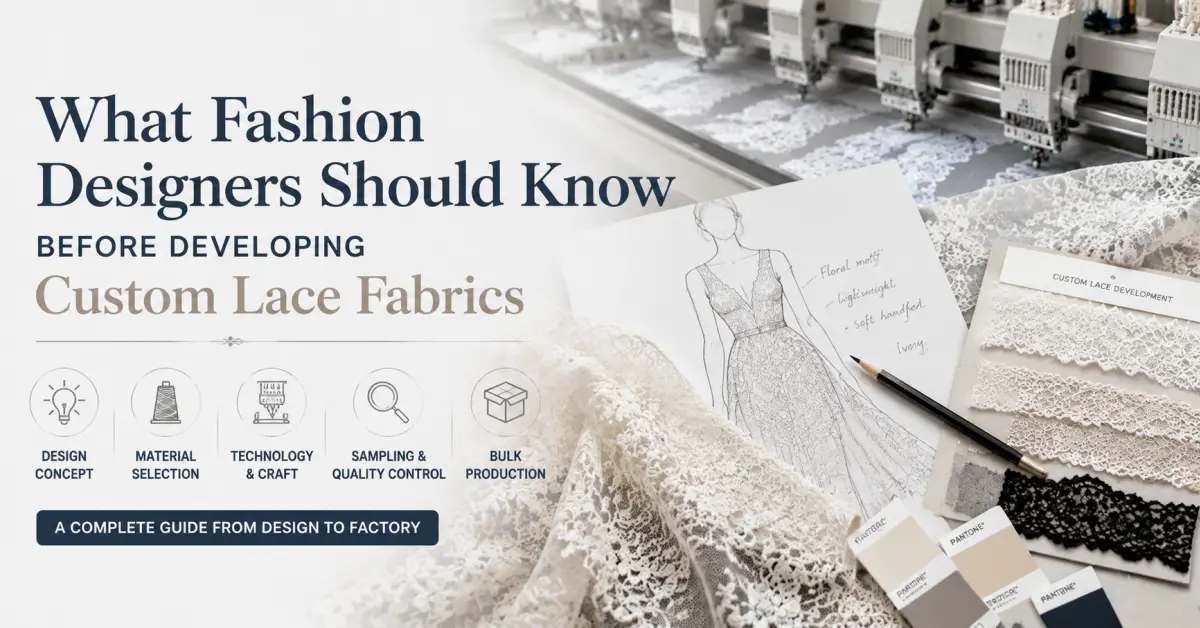

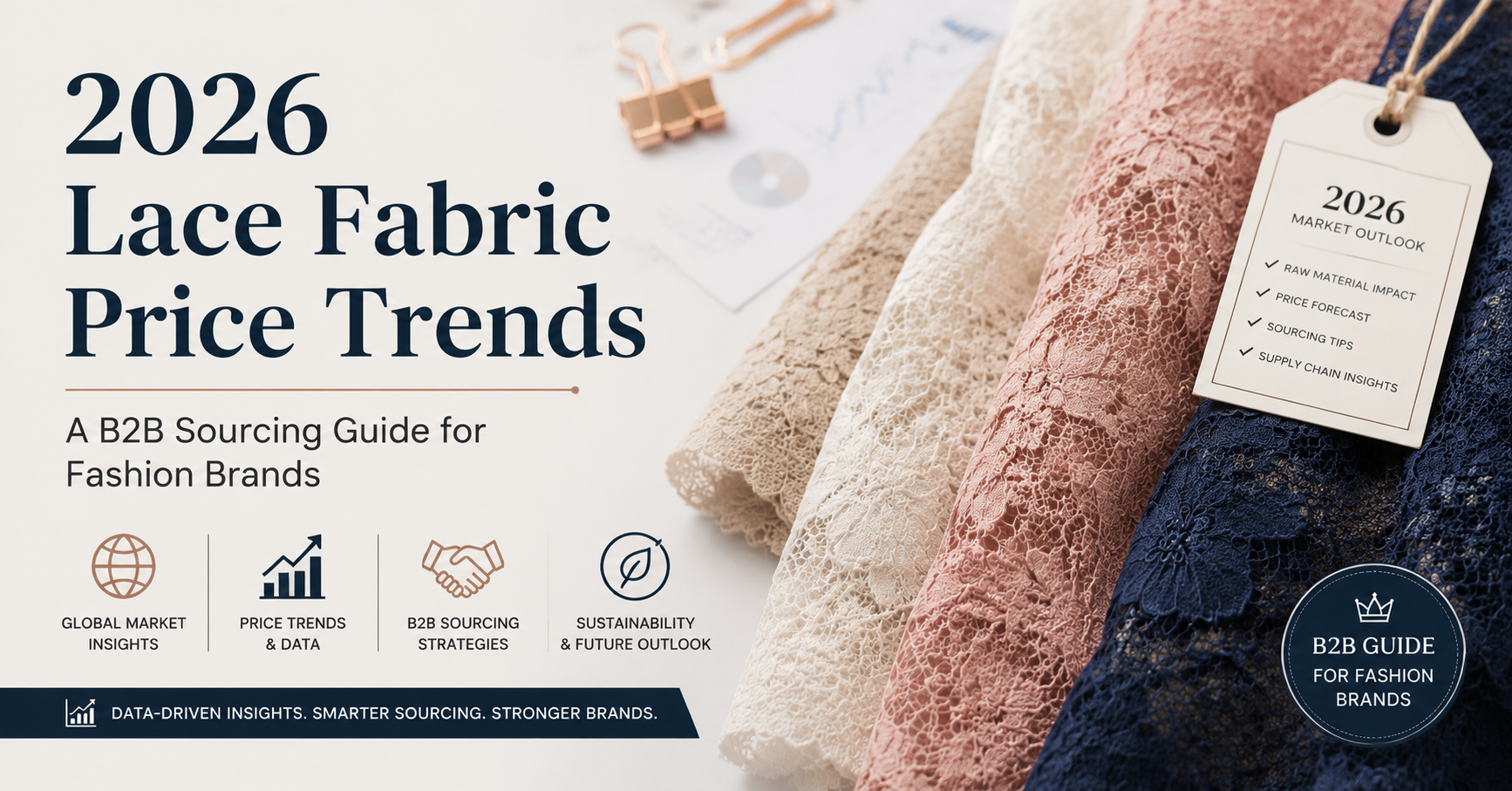

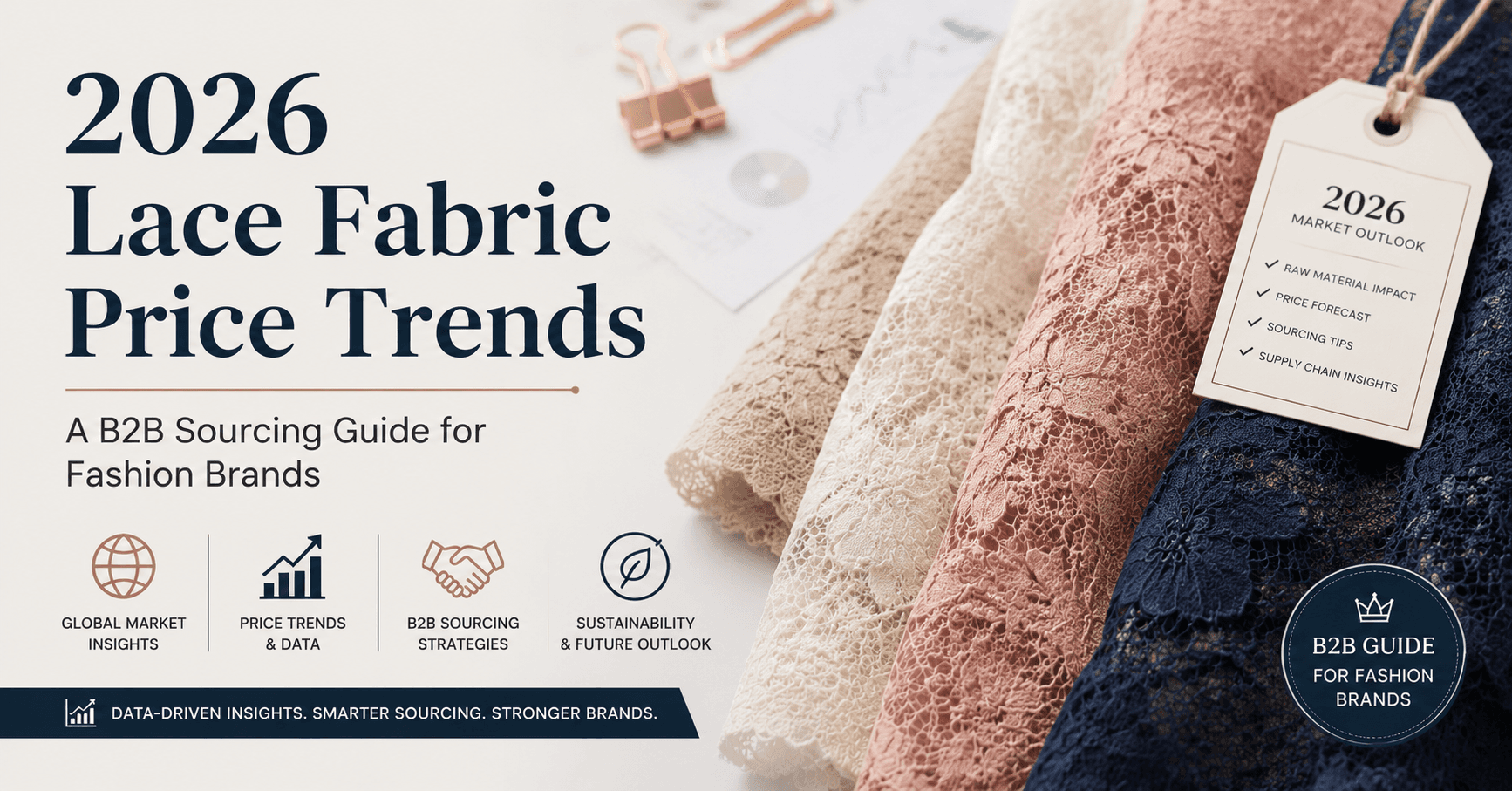
As the global fashion industry continues to evolve, sourcing high-quality lace fabric has become increasingly critical for brands, designers, and wholesale buyers. In 2026, the lace fabric market is influenced by factors such as raw material costs, labor rates, global supply chain fluctuations, and fashion trends. This B2B guide provides an in-depth analysis of lace fabric price trends, sourcing tips, and market insights to help fashion brands make informed purchasing decisions.
Overview of the Global Lace Fabric Market in 2026
The global lace fabric market is expected to grow steadily in 2026, with a focus on sustainable, high-quality, and customizable materials. According to market reports, the estimated growth rate of the lace and embroidered textiles sector is 4.2% CAGR (Compound Annual Growth Rate), driven largely by bridal wear, luxury fashion, and high-end ready-to-wear collections.
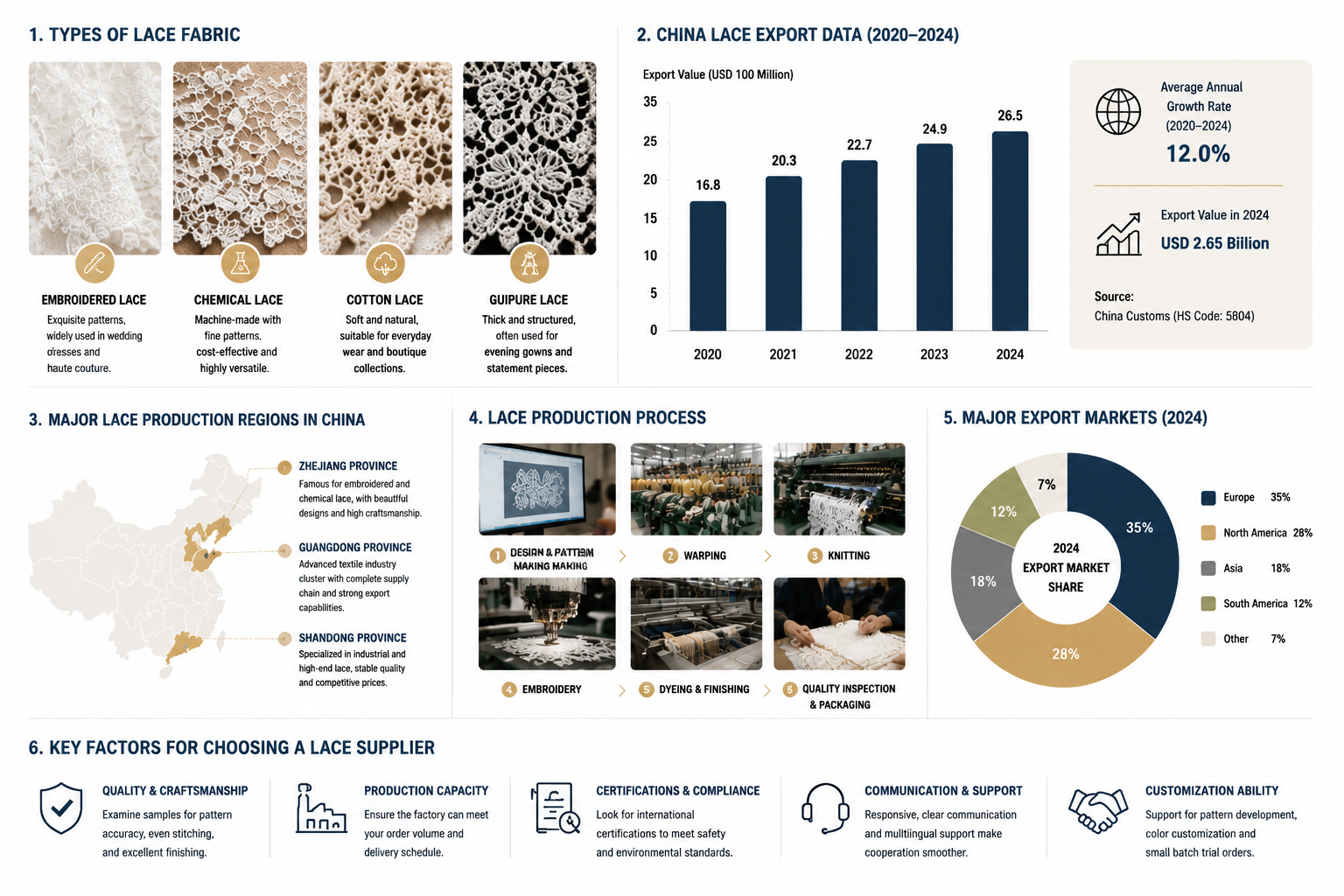
Key factors affecting lace fabric prices in 2026 include:
-
Raw material prices: Cotton, nylon, polyester, and silk prices have risen approximately 6-10% year-on-year due to global supply chain disruptions.
-
Labor and production costs: China, as a leading lace manufacturer, has seen labor costs increase by roughly 5% in 2025-2026, impacting final fabric pricing.
-
Global demand trends: Luxury and wedding markets are driving demand for embroidered and Guipure lace, while casual fashion brands focus on stretch lace and cotton blends.
Regional Production Insights
-
China: Largest exporter of lace fabrics, with competitive pricing for both OEM and bulk orders. Average prices for standard embroidered lace range $8-$15 per yard, while high-end bridal Guipure lace can reach $25-$40 per yard.
-
Europe: Known for premium lace craftsmanship (e.g., France's Alençon lace), prices are higher, averaging $50-$100 per yard, suitable for luxury bridal brands.
-
India & Southeast Asia: Competitive suppliers for cotton and embroidered lace, pricing around $5-$12 per yard, primarily for casual and semi-formal fashion lines.
Price Breakdown by Lace Fabric Type
Understanding different lace types is crucial for budgeting and procurement. Here's a breakdown based on 2026 market observations:
Embroidered Lace
-
Use: Bridal wear, high-end evening dresses, fashion collections
-
Price Range (China): $10--$25 per yard
-
Trend: Increasing use of eco-friendly threads and 3D embroidery, slightly raising prices
Guipure Lace
-
Use: Statement pieces, bridal overlays, haute couture
-
Price Range (China): $20--$40 per yard
-
Trend: Strong demand for bold, dense patterns; customization is a major driver of pricing
Chantilly Lace
-
Use: Delicate bridal, light fashion garments
-
Price Range (China): $12--$30 per yard
-
Trend: Light, intricate designs remain popular, especially for overseas B2B buyers in Europe and North America. Explore our Chantilly lace collection.
Tulle Lace & Stretch Lace
-
Use: Casual wear, fashion tops, skirts
-
Price Range (China): $6--$15 per yard
-
Trend: Functional fabrics (stretchable, breathable) are increasingly in demand, particularly for younger fashion brands
Key Factors Influencing Lace Fabric Prices
Raw Material Fluctuations
The cost of cotton, silk, nylon, and polyester affects lace pricing significantly. For example:
-
Cotton surged ~8% due to climate impacts on crop yields in India and the US.
-
Synthetic fibers (nylon/polyester) rose 5--7% due to petrochemical cost increases.
Labor Costs and Automation
Chinese factories have invested in automated embroidery and laser-cutting machines, which reduce labor dependence but require upfront capital. Small-scale OEM producers may have higher per-yard costs due to manual craftsmanship. Learn more about our quality control standards.
Supply Chain and Shipping
Global shipping costs remain volatile:
-
Container shipping from China to Europe/US increased ~12% YoY in 2025.
-
Lead times for bulk orders may stretch 3--6 weeks depending on port congestion and customs. See our importing logistics resources.
Seasonal and Trend-Driven Demand
-
Spring/Summer 2026 collections drive lightweight and colorful lace demand
-
Autumn/Winter 2026 favors heavier, embellished Guipure lace for coats and gowns
B2B Sourcing Tips for Fashion Brands
Evaluate Supplier Capabilities
-
Confirm OEM/ODM capacity for custom designs
-
Request quality samples to check embroidery, thread density, and finishing
-
Assess production lead times and logistics reliability. Explore our cut piece and processing services.
Negotiate MOQ and Pricing
-
Many Chinese lace factories allow flexible MOQs for B2B clients: 50--500 yards for custom lace
-
Consider bulk purchase for seasonal collections to reduce unit cost. Browse our product catalog.
Sustainability and Compliance
-
Eco-friendly lace (organic cotton, recycled polyester) is trending
-
Ensure suppliers comply with OEKO-TEX Standard 100 and other international certifications. Visit our sustainability section.
Digital Tools and Sample Management
-
Use online catalogs, digital pattern previews, and video walkthroughs for faster sourcing. Explore pattern design development.
-
Reduces the risk of errors in bulk orders and ensures consistency
Forecast for 2026--2027 Lace Fabric Market
-
Price Trend: Expect moderate increases of 3--7% across most lace categories due to raw material costs
-
Demand Shift: Higher focus on customization, functional lace, and sustainable materials
-
B2B Strategy: Buyers who plan ahead and negotiate directly with factories can secure better pricing and priority production slots
Conclusion
For fashion brands and B2B buyers, understanding 2026 lace fabric price trends is essential for effective procurement and cost management. China remains the leading hub for lace fabric sourcing, offering a balance of quality, variety, and competitive pricing. By carefully evaluating suppliers, requesting samples, and aligning orders with seasonal demand, brands can maximize efficiency, reduce costs, and access premium lace fabrics for both bridal and fashion collections.
Ready to start sourcing? Visit our homepage to explore our collections or contact us for inquiries. You may also submit an inquiry for custom pricing and bulk orders.