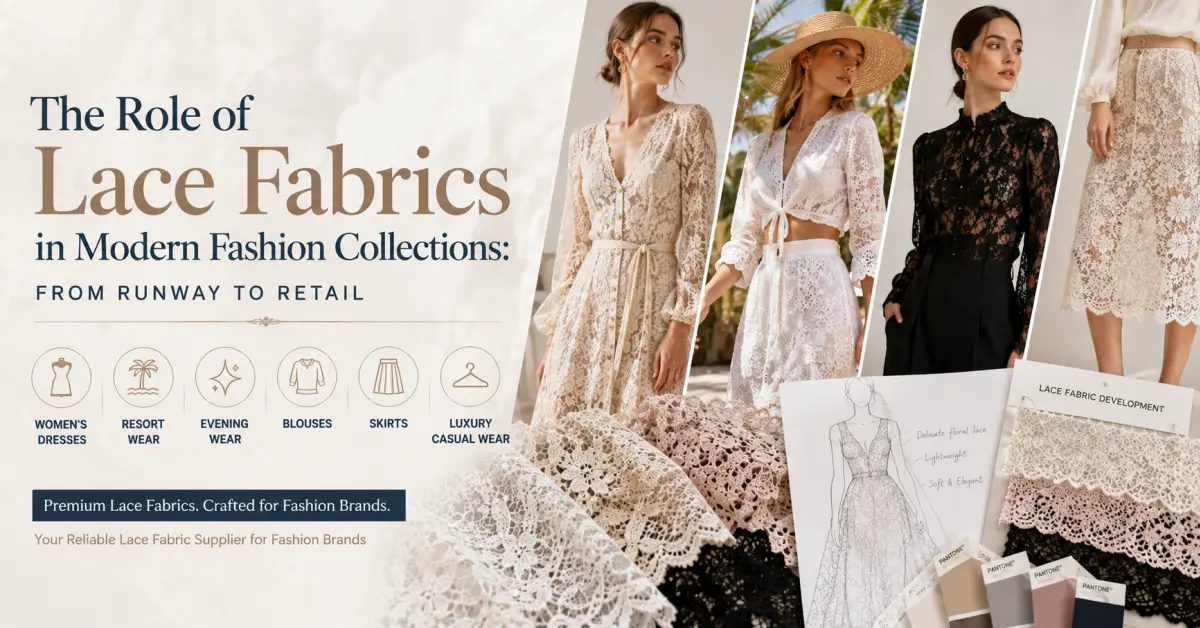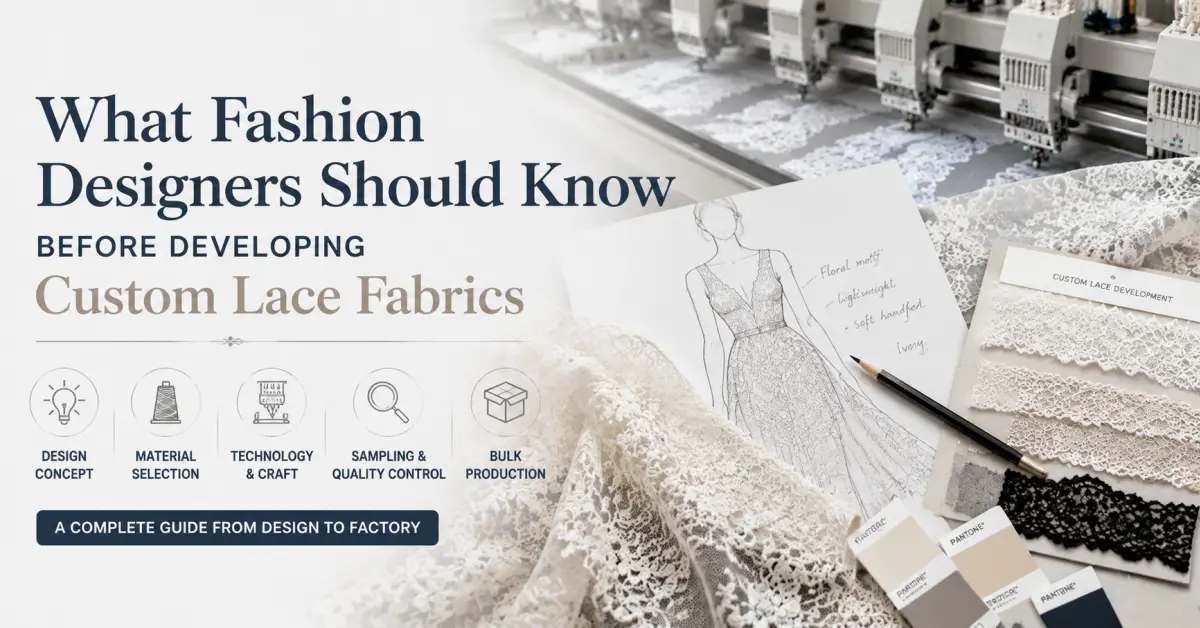

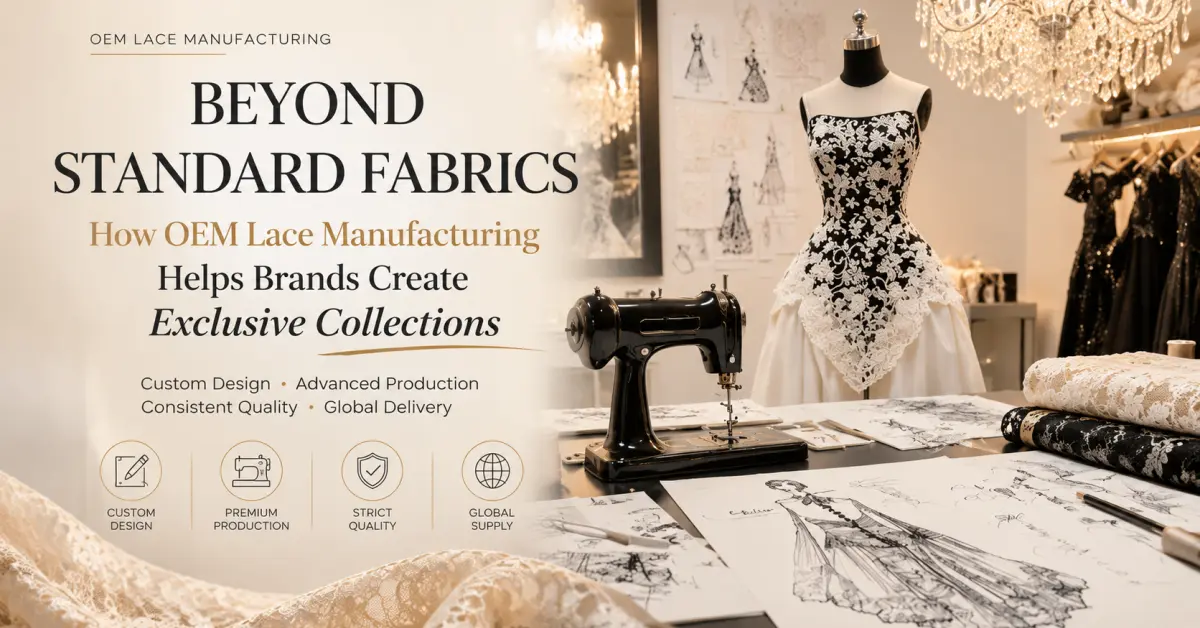

Why fashion brands are turning to custom lace development
In today's highly competitive fashion market, fabric selection has become one of the most important factors affecting brand differentiation.
For years, fashion companies have relied on standard fabrics sourced from traditional textile suppliers. Purchasing personnel select existing styles, confirm colors, place orders, and then directly enter the garment production stage.
However, this traditional approach is becoming increasingly challenging.
The reason is simple:
When multiple brands use the same fabric, it can be difficult to create a unique brand image.
Modern fashion consumers are no longer satisfied with basic designs. They are attracted to:
-
Unique texture
-
Exclusive pattern
-
Recognizable brand aesthetic
-
Limited collection concept
-
Differentiated product experience
Therefore, more and more fashion brands are turning toOEM lace production to create fabrics developed specifically for their own collections.
With common standards on the marketLace productsDifferent, OEM lace allows brands to participate in the entire development process, from initial concept and artistic creation to sample approval and mass production.
ProfessionalOEM lace manufacturersdo more than just produce fabrics.
It becomes a development partner, helping to transform ideas into commercially viable textile solutions.
For fashion brands, this means:
-
Exclusive lace pattern
-
Customized colors
-
Controlled production quality
-
Stronger brand image
-
Better market positioning
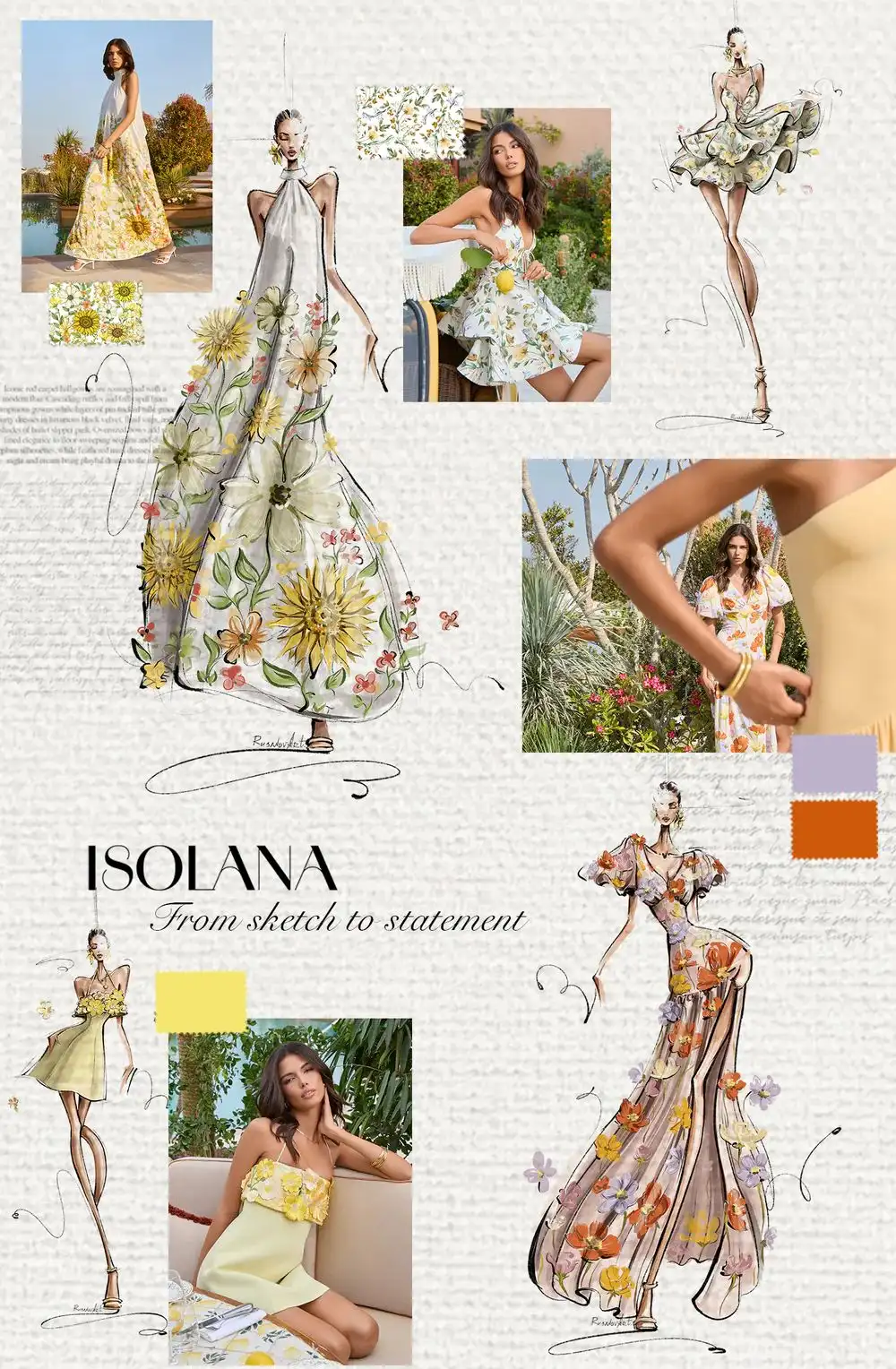
Why ordinary lace fabrics can no longer meet the needs of fashion brands
Standard lace fabrics still play an important role in the textile industry.
They have the following advantages:
-
Fast delivery
-
Reduce development costs
-
More convenient purchase process
However, for brands competing in the global fashion market, standard materials often create limitations.
Problems using ready-made lace fabrics
Brands often face many challenges when sourcing existing lace fabrics.
Limited design differentiation
Common lace patterns may have been used by the following brands:
-
Competing brands
-
Online retailer
-
Local manufacturer
This can reduce the uniqueness of the product.
Lack of brand recognition
Fabric is one of the most visually impactful elements of clothing.
Unique lace patterns can convey the following message:
-
Luxury positioning
-
Romantic style
-
Modern aesthetics
-
Craftsmanship value
Using generic fabrics can make it harder for a brand to establish a recognizable design language.
Difficulty matching collection concepts
Fashion collections are often designed around a specific theme.
For example:
Spring collection may require:
-
PlantsEmbroidery
-
Lightweight structure
-
Soft pastels
A luxury dinner series may require:
-
High density embroidery
-
3D texture
-
Complex patterns
Standard fabrics may not fully meet these creative needs.
Standard lace supply and OEM lace production
| Comparison factors | Standard lace fabric | OEM Lace Manufacturing |
|---|---|---|
| Design Selection | Existing market designs | Custom-developed designs |
| Brand Exclusivity | Limited | High |
| Pattern Modification | Restricted | Flexible |
| Color Development | Standard options | Customized colors |
| Collection Matching | General application | Designed for specific collections |
| Brand Differentiation | Lower | Higher |
| Development Support | Limited | Professional technical support |
For brands aiming to build long-term market recognition, OEM development provides greater flexibility.
What Is OEM Lace Manufacturing?
OEM stands for Original Equipment Manufacturing.
In the textile industry, OEM lace manufacturing refers to a production model where a manufacturer develops and produces lace fabrics according to a brand's requirements.
The brand provides:
-
creative direction
-
design references
-
product requirements
-
application goals
The manufacturer provides:
-
technical development
-
production expertise
-
manufacturing capability
-
quality management
OEM Lace Manufacturing Is More Than Fabric Production
Many buyers misunderstand OEM manufacturing as simply producing customized products.
In reality, professional OEM lace manufacturing includes multiple development stages.
A complete OEM process involves:
-
Design communication
-
Pattern development
-
Material selection
-
Sample production
-
Testing and adjustment
-
Bulk manufacturing
-
Quality inspection. Learn about quality control standards.
-
Global delivery
Each stage requires technical experience.
The Role of an OEM Lace Manufacturer in Fashion Development
A professional OEM lace manufacturer supports brands in several ways.
Design Translation
Fashion designers often provide:
-
sketches
-
inspiration images
-
mood boards
-
reference fabrics
The manufacturer converts these creative concepts into production-ready lace designs.
Technical Feasibility Evaluation
Not every creative idea can immediately enter production.
Manufacturers evaluate:
-
embroidery complexity
-
fabric structure
-
production efficiency
-
material compatibility
This prevents expensive mistakes during development.
Production Optimization
Experienced manufacturers can recommend:
-
suitable base fabrics
-
appropriate embroidery density
-
efficient production methods
The goal is to achieve the desired appearance while maintaining commercial feasibility.
Inside an OEM Lace Manufacturing Factory
The ability to create exclusive lace collections depends heavily on factory capability.
A professional lace factory combines:
-
design development
-
production technology
-
quality management
-
experienced technicians
Unlike simple textile trading companies, manufacturing facilities control more stages of the process.
Design and Development Department
The first stage of OEM lace production begins with design development.
The factory development team analysis:
-
customer artwork
-
pattern requirements
-
garment application
-
target market positioning. Learn about pattern design development.
The team then creates production files suitable for embroidery machines.
Main Responsibilities of the Development Team
| Task | Purpose |
|---|---|
| Artwork analysis | Understand design requirements |
| Pattern adjustment | Adapt artwork for textile production |
| Sample preparation | Create first fabric prototype |
| Technical improvement | Optimize production feasibility |
This stage determines whether a creative idea can successfully become a finished fabric.
Advanced Embroidery Production Capability
Modern OEM lace manufacturing relies heavily on computerized embroidery technology.
Advanced equipment allows manufacturers to produce:
-
complex floral patterns
-
geometric structures
-
multi-layer embroidery
-
high-density designs
-
dimensional lace effects
Common Lace Production Equipment
| Equipment | Function |
|---|---|
| Computerized embroidery machines | Produce detailed lace patterns |
| Digital design systems | Convert artwork into production files |
| Dyeing equipment | Achieve customized colors |
| Finishing machines | Improve softness and stability |
| Inspection equipment | Maintain quality consistency |
A factory's equipment directly affects:
-
production efficiency
-
pattern accuracy
-
repeatability
-
final fabric quality
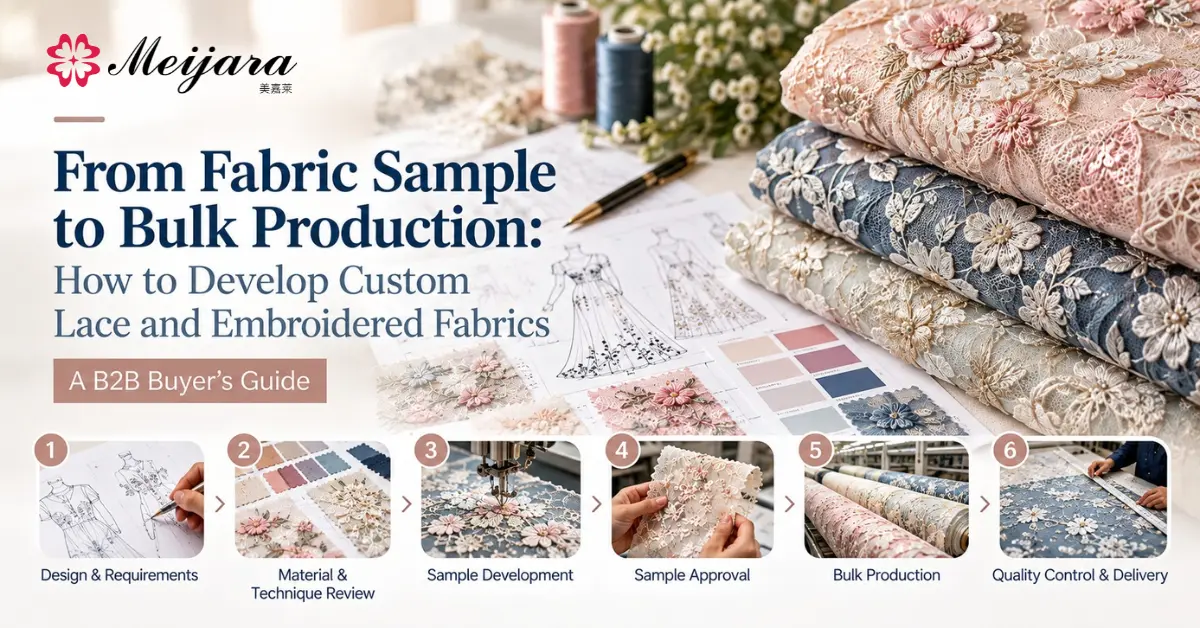
The Complete OEM Lace Manufacturing Process: From Concept to Bulk Production
For fashion brands, developing exclusive lace fabrics is not simply a design activity. It is a complete manufacturing process that requires close cooperation between designers, textile engineers, and production teams.
A professional OEM lace manufacturer should be able to support every stage of development, ensuring that creative concepts can be transformed into stable, production-ready fabrics.
The complete OEM lace manufacturing process usually includes:
-
Design concept communication
-
Artwork preparation
-
Technical development
-
Sample production
-
Sample evaluation and modification
-
Bulk production
-
Quality inspection. Explore cut piece and processing.
-
Packaging and delivery
Each stage directly influences the final product quality.
Stage 1: Design Concept Communication
Every custom lace project begins with an idea.
Fashion brands may provide:
-
original sketches
-
inspiration images
-
existing fabric references
-
seasonal trend direction
-
target garment applications
For example, a brand developing a luxury women's collection may require:
-
elegant floral lace
-
lightweight transparent structure
-
soft hand feeling
-
premium visual effect
A professional manufacturer does not immediately move into production.
Instead, the technical team first evaluates the design requirements.
Information Required Before OEM Lace Development
| Information Required | Why It Matters |
|---|---|
| Design reference | Understand creative direction |
| Fabric application | Determine suitable structure |
| Target market | Define quality and positioning |
| Color requirements | Prepare dyeing solutions |
| Quantity expectation | Plan production method |
| Delivery schedule | Arrange manufacturing capacity |
Clear communication at the beginning reduces unnecessary revisions later.
Stage 2: Artwork Conversion and Pattern Development
One of the biggest differences between standard lace suppliers and OEM manufacturers is development capability.
A fashion designer's idea is usually artistic and conceptual.
However, textile production requires precise technical files.
The manufacturer must transform creative ideas into:
-
embroidery patterns
-
production programs
-
fabric structures
From Design Idea to Production File
The process usually includes:
Step 1: Design Analysis
The development team reviews:
-
pattern complexity
-
embroidery density
-
repeat size
-
fabric structure
Step 2: Digital Pattern Creation
The design is converted into production-compatible data.
Technical adjustments may include:
-
line thickness
-
pattern spacing
-
embroidery sequence
-
stitch den sity
Step 3: Prototype Development
The first sample is produced for evaluation.
The team checks:
-
appearance
-
softness
-
transparency
-
stability
Stage 3: Lace Sample Development
Sample development is one of the most important stages in OEM lace manufacturing.
Before bulk production, brands need to confirm:
-
visual appearance
-
fabric performance
-
garment compatibility
A professional factory usually provides several rounds of adjustments.
Common Sample Adjustment Areas
| Adjustment Area | Example |
|---|---|
| Pattern | Increase or reduce floral size |
| Color | Adjust shade according to brand requirement |
| Texture | Improve softness or structure |
| Density | Modify embroidery thickness |
| Fabric base | Change mesh or backing material |
This stage allows brands to achieve the desired final effect before large-scale production.
Stage 4: Bulk OEM Lace Production
After sample approval, the project enters bulk manufacturing.
At this stage, factory management becomes critical.
Large-scale production requires:
-
stable machine operation
-
experienced technicians
-
standardized processes
-
strict quality control
Key Elements of Successful Bulk Production
| Production Factor | Importance |
|---|---|
| Equipment stability | Maintains consistent output |
| Skilled operators | Reduces production errors |
| Material control | Ensures fabric consistency |
| Process management | Improves efficiency |
| Quality inspection | Prevents defective shipments |
For global fashion brands, production consistency is often more important than simply achieving low prices.
How OEM Lace Manufacturers Create Exclusive Collections for Fashion Brands
Exclusive collections require more than customized patterns.
A successful lace collection must combine:
-
creative design
-
technical feasibility
-
market positioning
-
production capability
A professional OEM supplier helps brands build fabrics that support their overall collection strategy.
Developing Brand-Specific Lace Patterns
One of the biggest advantages of OEM manufacturing is exclusivity.
Brands can develop:
-
original floral motifs
-
signature embroidery styles
-
unique geometric patterns
-
customized decorative effects
These fabrics become part of the brand's visual identity.
Example: How Custom Lace Supports Brand Positioning
| Brand Positioning | Lace Development Direction |
|---|---|
| Luxury fashion | High-density embroidery, premium textures |
| Contemporary fashion | Modern patterns, lightweight structures |
| Resort wear | Natural motifs, breathable lace |
| Evening wear | Elegant details, dimensional effects |
| Sustainable fashion | Eco-friendly materials and processes |
Different market positions require different textile solutions.
Color Development and Seasonal Collections
Color plays a major role in fashion collections.
Standard lace suppliers usually provide limited color options.
OEM manufacturers can develop customized colors based on:
-
seasonal trends
-
brand color systems
-
garment requirements
Common Custom Color Services
| Service | Application |
|---|---|
| Pantone matching | Accurate brand colors |
| Seasonal color development | Fashion collections |
| Custom dyeing | Exclusive fabric identity |
| Multi-color embroidery | Complex visual effects. Explore multi-color embroidery. |
For international brands, customized color development helps create stronger collection consistency.
Creating Small-Batch Exclusive Collections
Modern fashion brands are increasingly moving toward:
-
limited collections
-
capsule collections
-
seasonal drops
This creates demand for flexible OEM production.
Compared with traditional mass production, OEM lace manufacturing can support:
-
smaller development quantities
-
customized designs
-
faster product testing
Quality Control in OEM Lace Manufacturing
Quality control is one of the most important factors when selecting a lace manufacturer.
A fabric may look attractive in a sample but fail during bulk production if the factory lacks proper inspection systems.
Professional manufacturers implement quality control throughout the entire production process.
Raw Material Inspection
Before production begins, factories inspect incoming materials.
Common inspection items include:
-
yarn quality
-
fiber composition
-
color consistency
-
material strength
Production Process Inspection
During manufacturing, technicians monitor:
-
embroidery accuracy
-
pattern alignment
-
fabric tension
-
machine performance
Problems detected early can be corrected before large quantities are produced.
Finished Fabric Inspection
Before shipment, finished lace fabrics are inspected.
Lace Fabric Quality Inspection Checklist
| Inspection Item | Purpose |
|---|---|
| Color consistency | Ensure batch uniformity |
| Pattern accuracy | Maintain design quality |
| Fabric width | Match production requirements |
| Surface defects | Remove imperfections |
| Strength and durability | Ensure garment performance |
| Packaging condition | Protect products during transport |
OEM Lace Manufacturing vs Traditional Lace Supply
Many fashion buyers compare suppliers mainly based on price.
However, OEM manufacturing provides additional value beyond fabric cost.
Comparison Table: OEM Manufacturer vs Standard Supplier
| Category | Standard Lace Supplier | OEM Lace Manufacturer |
|---|---|---|
| Product source | Existing collections | Custom development |
| Design ownership | Shared market designs | Brand-specific designs |
| Development support | Limited | Full technical support |
| Pattern customization | Low flexibility | High flexibility |
| Color options | Standard colors | Custom colors |
| Sampling service | Basic | Professional development |
| Long-term cooperation | Transaction-based | Partnership-based |
For brands building long-term collections, OEM manufacturing creates more strategic value.
Why Fashion Brands Prefer Working Directly With Lace Manufacturers
Working directly with manufacturers provides several advantages.
Better Control Over Product Development
Direct communication allows brands to discuss:
-
design changes
-
technical requirements
-
production improvements
This reduces communication delays.
More Competitive Production Solutions
Without multiple intermediaries, brands can better understand:
-
material costs
-
production processes
-
customization possibilities
Stronger Long-Term Partnership
Many successful fashion brands develop long-term relationships with manufacturers.
A reliable OEM lace partner can support:
-
future collections
-
seasonal product development
-
continuous fabric innovation. Explore customized processes.
The Role of China Lace Fabric Manufacturers in Global OEM Supply Chains
China has become one of the important textile manufacturing centers globally due to:
-
complete textile supply chains
-
experienced production teams
-
advanced manufacturing equipment
-
strong export capabilities
For international fashion brands, Chinese lace manufacturers provide access to professional textile development resources.
Advantages of Partnering With a China Lace Fabric Manufacturer
| Advantage | Benefit for Brands |
|---|---|
| Mature textile ecosystem | Faster development process |
| Manufacturing experience | Stable quality |
| Custom capability | Exclusive collections |
| Production scale | Reliable supply |
| Export experience | Smooth international cooperation. Learn about importing logistics. |
How OEM Lace Manufacturing Supports Long-Term Fashion Brand Growth
For many fashion companies, choosing an OEM lace manufacturer is not only a sourcing decision. It is a strategic decision that directly affects product development, brand differentiation, and long-term competitiveness.
In the past, textile suppliers were mainly responsible for providing materials.
Today, leading fashion brands expect more from their manufacturing partners.
They need suppliers who can:
-
understand fashion trends
-
participate in product development
-
provide technical recommendations
-
maintain consistent production quality
-
support future collections
A professional custom lace fabric manufacturer becomes an extension of the brand's product development team.
From Supplier Relationship to Development Partnership
Traditional supplier relationships are usually based on transactions:
Buyer selects fabric → Supplier produces → Order completed
However, modern OEM cooperation follows a different model:
Brand concept → Technical discussion → Fabric development → Collection launch → Long-term cooperation
This partnership model allows both sides to continuously improve products.
Traditional Sourcing Model vs OEM Partnership Model
| Aspect | Traditional Purchasing | OEM Manufacturing Partnership |
|---|---|---|
| Main focus | Price and availability | Product development and value |
| Communication | Order-based | Project-based |
| Fabric selection | Existing products | Customized solutions |
| Innovation | Limited | Continuous improvement |
| Relationship | Short-term | Long-term cooperation |
| Brand advantage | Limited differentiation | Exclusive product identity |
For brands competing in premium and fashion markets, OEM manufacturing provides greater strategic value.
Supporting Seasonal Fashion Collections
Fashion brands usually release multiple collections every year.
Each season may require different textile directions.
For example:
Spring / Summer Collections
Common lace requirements:
-
lightweight structures
-
breathable fabrics
-
floral patterns
-
soft colors
Autumn / Winter Collections
Common lace requirements:
-
richer textures
-
layered effects
-
heavier embroidery
-
luxury appearance
Seasonal Lace Development Example
| Collection Type | Lace Direction | Manufacturing Focus |
|---|---|---|
| Resort Collection | Natural patterns, lightweight lace | Softness and comfort |
| Contemporary Fashion | Modern geometric lace | Pattern innovation |
| Evening Wear | Premium embroidery lace | Texture and visual impact |
| Casual Fashion | Comfortable lace structures | Wearability |
| Luxury Collection | Exclusive custom lace | Craftsmanship |
An experienced OEM manufacturer helps brands quickly adapt to seasonal requirements.
Sustainability Trends in OEM Lace Manufacturing
Sustainability has become one of the most important topics in global fashion.
Fashion brands are increasingly looking for textile partners who can support responsible production.
Modern OEM lace manufacturing is also evolving toward more sustainable solutions.
Sustainable Materials in Lace Production
Depending on product requirements, manufacturers can explore:
-
recycled polyester lace
-
recycled nylon lace
-
organic fiber options
-
environmentally conscious materials
These materials allow brands to develop collections aligned with sustainability goals.
Sustainable Lace Development Factors
| Area | Sustainable Approach |
|---|---|
| Material selection | Recycled and responsible fibers |
| Production efficiency | Reduced material waste |
| Process optimization | Lower resource consumption |
| Certification support | Improved supply chain transparency. Visit our sustainability section. |
Why Sustainability Matters for Fashion Buyers
For international fashion brands, sustainability is no longer only a marketing concept.
It influences:
-
consumer purchasing decisions
-
brand reputation
-
retail partnerships
-
compliance requirements
Working with a manufacturer experienced in sustainable textile production helps brands build stronger supply chains.
How to Choose the Right OEM Lace Manufacturer
Selecting the right manufacturing partner is one of the most important decisions for fashion companies.
A suitable supplier should have both:
-
manufacturing capability
-
development experience
Evaluate Factory Production Capability
Before cooperation, buyers should understand:
-
factory equipment
-
production capacity
-
product categories
-
technical team experience
Factory Evaluation Checklist
| Evaluation Item | What Buyers Should Check |
|---|---|
| Production equipment | Modern embroidery and finishing machines |
| Development team | Experienced textile technicians |
| Quality system | Standard inspection procedures |
| Product range | Different lace categories |
| Export experience | International customer support |
Evaluate Custom Development Ability
A strong OEM manufacturer should not only copy existing products.
It should have the ability to create new solutions.
Important capabilities include:
-
artwork conversion
-
pattern modification
-
fabric structure adjustment
-
color development. Learn about dyeing and color matching.
-
sample improvement
Evaluate Communication and Project Management
International cooperation requires efficient communication.
Important factors include:
-
response speed
-
technical explanation ability
-
sample management
-
production updates
A manufacturer with strong communication skills reduces development risks.
Typical Cooperation Process Between Fashion Brands and OEM Lace Manufacturers
A professional OEM project usually follows a structured process.
OEM Lace Manufacturing Workflow
| Step | Process | Manufacturer Responsibility |
|---|---|---|
| 1 | Initial consultation | Understand brand requirements |
| 2 | Design review | Analyze technical feasibility |
| 3 | Pattern development | Create production design |
| 4 | Sample production | Produce prototype fabric |
| 5 | Customer approval | Adjust according to feedback |
| 6 | Bulk production | Manufacture final order |
| 7 | Quality inspection | Ensure consistency |
| 8 | Shipment | Complete global delivery |
This structured workflow ensures that creative concepts can successfully enter commercial production.
Common Mistakes Fashion Brands Make When Choosing Lace Suppliers
Even experienced buyers can encounter problems when selecting textile partners.
Understanding common mistakes helps brands make better decisions.
Choosing Only Based on Price
Low prices may appear attractive initially.
However, cheaper suppliers may create problems such as:
-
inconsistent quality
-
limited customization ability
-
unstable delivery
For fashion products, fabric quality directly affects the final garment.
Ignoring Development Capability
A supplier that only provides existing fabrics may not support future brand growth.
Fashion brands need partners who can continuously develop new products.
Not Testing Production Capability
Before placing large orders, buyers should evaluate:
-
sample quality
-
communication efficiency
-
factory capability
Small development projects can help establish confidence before long-term cooperation.
The Future of OEM Lace Manufacturing: More Custom, More Flexible, More Brand-Focused
The future of lace manufacturing will continue moving toward customization.
Several trends are shaping the industry.
Increased Demand for Exclusive Fabrics
Brands want products that cannot be easily copied.
This creates demand for:
-
private label lace
-
exclusive embroidery patterns
-
customiz ed textile solutions
Faster Fashion Development Cycles
Modern brands need shorter product development timelines.
Manufacturers must provide:
-
faster sampling
-
flexible production
-
efficient communication
Stronger Integration Between Design and Manufacturing
Future textile development will involve closer cooperation between:
-
fashion designers
-
textile engineers
-
production teams
The most successful manufacturers will not simply produce fabrics.
They will help brands create better products.
OEM Lace Manufacturing Creates More Than Fabric
The role of lace manufacturers has changed significantly.
Modern fashion brands are no longer looking for simple material suppliers.
They need manufacturing partners who can provide:
-
creative development support
-
technical expertise
-
customization capability
-
stable production
-
sustainable solutions
Through professional OEM lace manufacturing, brands can move beyond standard fabrics and create exclusive collections that reflect their unique identity.
For fashion companies seeking differentiation in a competitive market, working with an experienced custom lace fabric manufacturer provides the foundation for stronger products and long-term growth.
Ready to create your exclusive lace collection? Visit our homepage to learn more or contact us for inquiries. You may also submit an inquiry for custom pricing.
Frequently Asked Questions (FAQ)
1. What is OEM lace manufacturing?
OEM lace manufacturing is a production service where a lace factory develops and produces customized lace fabrics according to a fashion brand's requirements.
The process usually includes:
-
design development
-
pattern creation
-
sample production
-
customization
-
bulk manufacturing
2. What is the difference between standard lace fabric and OEM lace fabric?
Standard lace fabric uses existing designs available in the market.
OEM lace fabric is developed specifically for a brand and can include:
-
exclusive patterns
-
custom colors
-
customized structures
OEM allows brands to create stronger product differentiation.
3. Can an OEM lace manufacturer create exclusive designs?
Yes.
Professional manufacturers can develop exclusive lace designs based on:
-
sketches
-
inspiration images
-
brand concepts
-
seasonal trends
4. How long does OEM lace development take?
Development time depends on:
-
design complexity
-
sample requirements
-
modification rounds
Simple projects may require several weeks, while complex exclusive developments may take longer.
5. What types of lace can OEM manufacturers produce?
Common OEM lace products include:
-
embroidered lace fabric
-
floral lace
-
stretch lace
-
cotton lace
-
water-soluble lace
-
3D embroidery lace
6. Why should fashion brands work directly with lace manufacturers?
Direct cooperation provides:
-
better communication
-
stronger customization ability
-
improved quality control
-
more efficient product development
7. Can OEM lace manufacturing support sustainable fashion brands?
Yes.
Many manufacturers can provide sustainable material options and production solutions according to brand requirements.