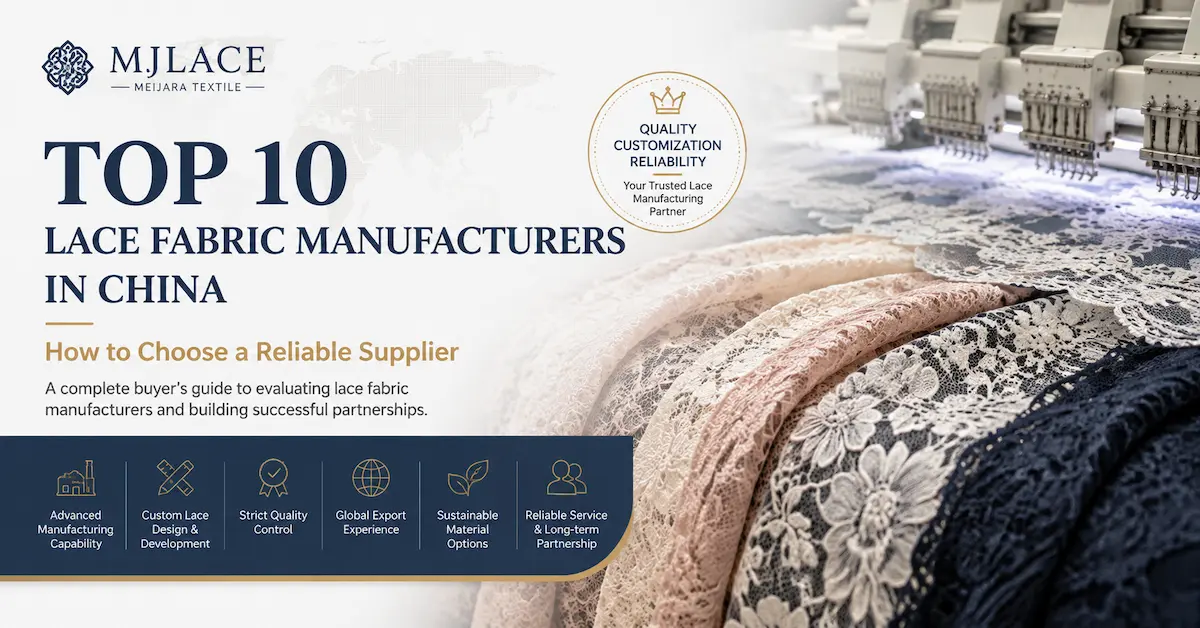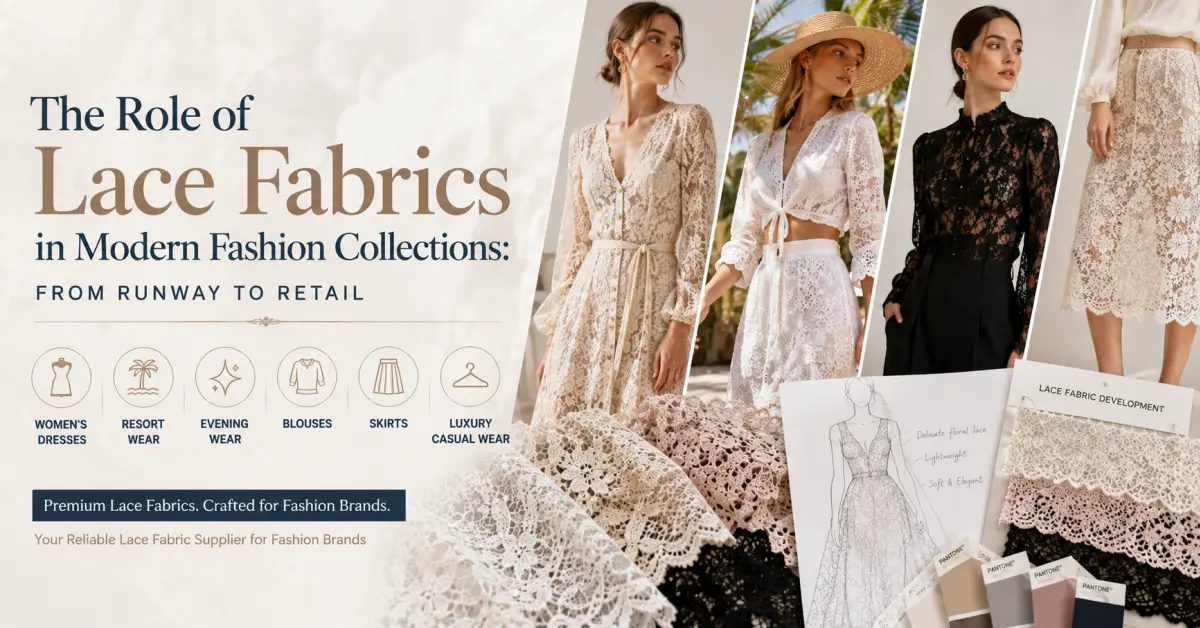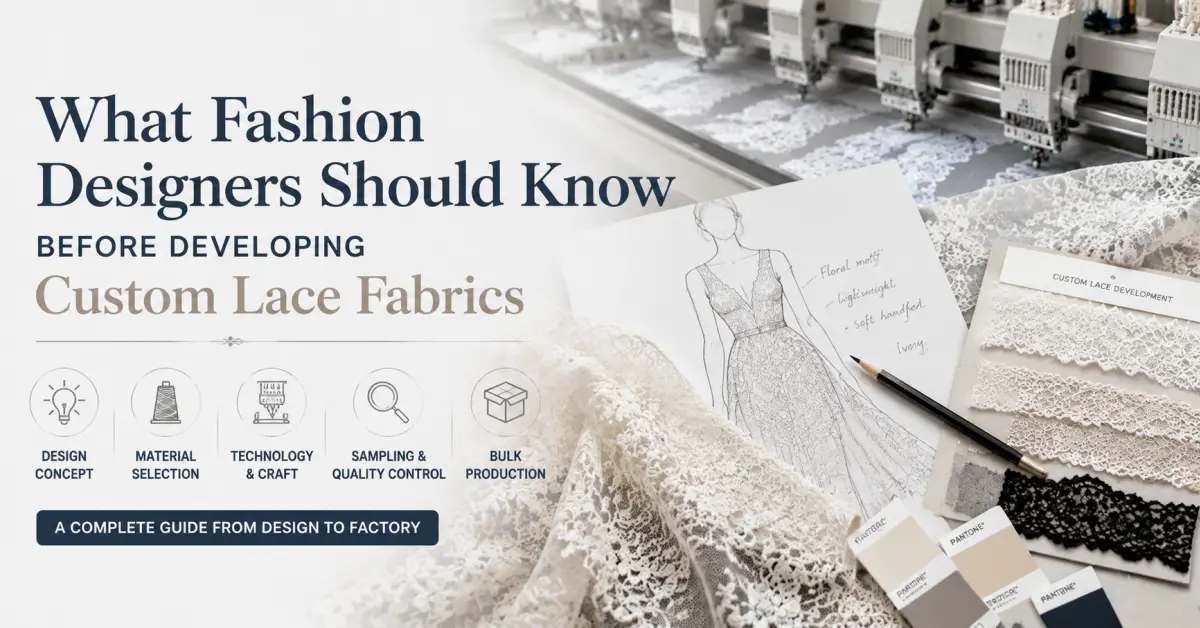

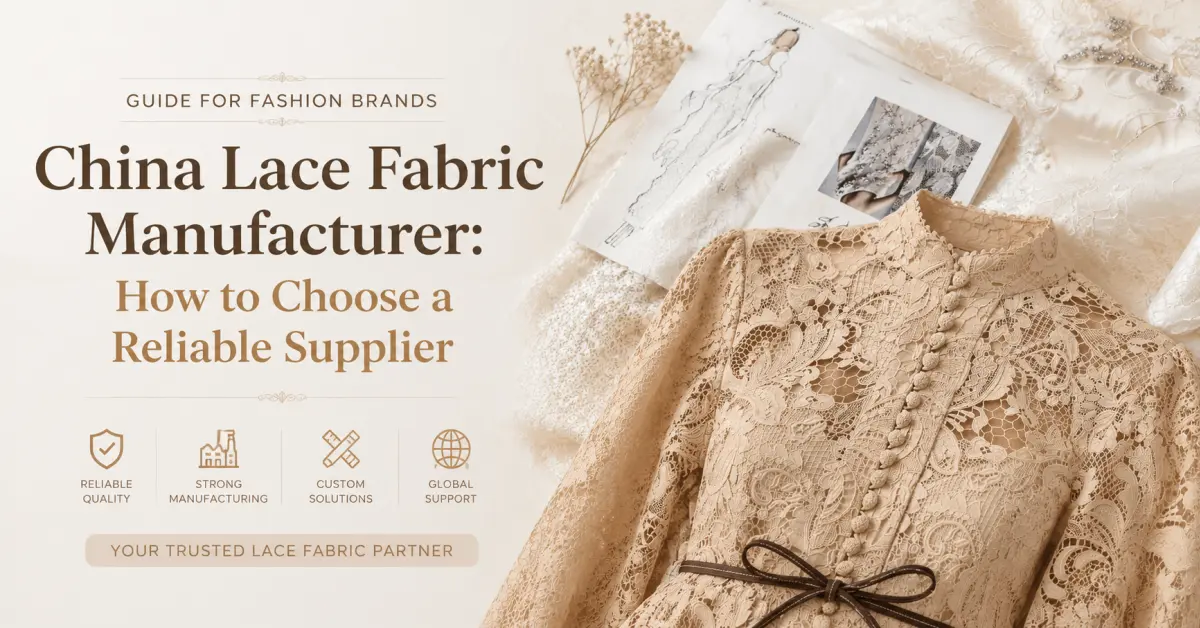

For fashion brands, garment manufacturers, and sourcing companies, choosing the right China lace fabric manufacturer is one of the most important decisions when developing lace-based products. Whether you are creating bridal gowns, evening dresses, lingerie collections, luxury apparel, or seasonal fashion lines, the quality and reliability of your lace supplier directly influence product appearance, production efficiency, and brand reputation.
China has become one of the world's major textile manufacturing hubs, offering a wide range of lace fabrics, advanced production technologies, competitive pricing, and flexible customization capabilities. However, with thousands of suppliers available in the market, finding a trustworthy manufacturer is not always easy.
A professional lace supplier should provide much more than competitive prices. They should have strong technical experience, stable production capacity, strict quality control systems, and the ability to transform a designer's concept into finished fabric.
This guide explains how global buyers can evaluate and select a reliable China lace fabric manufacturer, covering supplier verification, product quality, customization processes, production capabilities, pricing factors, certifications, and long-term cooperation strategies.
Why Choose a China Lace Fabric Manufacturer?
China has been one of the world's leading textile manufacturing centers for decades. The country has developed a complete textile supply chain covering yarn production, knitting, weaving, dyeing, finishing, embroidery, and garment manufacturing.
For international fashion brands, working directly with a China lace fabric manufacturer offers several advantages.

Wide Range of Lace Fabric Options
Chinese lace manufacturers usually provide extensive product categories, including:
-
Stretch lace fabric
-
Non-stretch lace fabric
-
Jacquard lace
-
Chantilly lace
-
Embroidered lace
-
Sequin lace
-
Beaded lace. See sequins and beads embroidery.
-
Cotton lace. Explore cotton lace trim.
-
Chemical lace
-
Lace appliques

Different fashion categories require different lace structures and performance characteristics. A professional supplier can recommend suitable materials based on garment design, production requirements, and target market.
For example:
-
Bridal brands may need delicate embroidered lace with elegant patterns.
-
Lingerie manufacturers often require elastic lace with excellent recovery.
-
Luxury fashion brands may prefer heavy embroidery, sequins, or customized patterns.
A reliable manufacturer should have experience supporting different applications.
Competitive Manufacturing Cost
One major reason global buyers source lace fabric from China is cost efficiency.
China's mature textile supply chain allows manufacturers to control production costs through:
-
Local material sourcing
-
Advanced machinery
-
Skilled workers
-
Large-scale production capabilities
-
Efficient supply chain management
However, the lowest price should not be the only factor when choosing a supplier.
A cheaper lace fabric may result in:
-
Uneven pattern quality
-
Poor color consistency
-
Fabric deformation
-
Higher defect rates
-
Production delays
For fashion brands, consistent quality and reliable delivery are usually more valuable than simply purchasing the cheapest fabric.
Strong Customization Capability
Modern fashion brands increasingly require unique materials rather than standard fabrics.
A professional custom lace fabric manufacturer can help develop:
-
Exclusive lace patterns
-
Custom colors
-
Different fabric compositions
-
Embroidery designs
-
Special finishing effects
-
Printed lace
-
Beaded and sequined lace
This allows brands to create differentiated collections and maintain unique market positioning.
What Makes a Reliable Lace Fabric Supplier?

Choosing a lace supplier requires evaluating several important factors.
A reliable manufacturer should have:
Manufacturing Experience
Experience determines whether a supplier understands complex lace production requirements.
An experienced factory can better handle:
-
Pattern development
-
Machine adjustment
-
Color matching. Learn about dyeing and color matching.
-
Fabric stability
-
Quality issues
For example, lace production requires precise control of yarn tension, machine settings, and finishing processes. Small technical differences can significantly affect the final fabric appearance.
Stable Production Capacity
A professional lace factory should have:
-
Modern production equipment
-
Skilled technicians
-
Organized production management
-
Reliable raw material supply
This is especially important for brands launching seasonal collections.
Late delivery can cause:
-
Missed fashion seasons
-
Delayed production schedules
-
Increased inventory costs
A dependable supplier should provide realistic production timelines and maintain consistent delivery performance.
Professional Communication
International sourcing involves many details:
-
Design requirements
-
Fabric specifications
-
Color references
-
Packaging requirements
-
Shipping arrangements
A good supplier should communicate clearly and efficiently.
Professional communication reduces:
-
Sampling errors
-
Production misunderstandings
-
Delivery problems
How to Evaluate a Lace Fabric Manufacturer in China
Before placing an order, fashion brands should conduct a supplier evaluation.
Here are key steps:
Step 1: Check Company Background
Start by reviewing:
-
Company history
-
Factory location
-
Production facilities
-
Customer experience
-
Export experience
A manufacturer with years of industry experience usually has stronger technical knowledge and quality management systems.
For example, companies specializing in lace manufacturing for many years often understand international requirements better than general textile traders.
Step 2: Confirm Factory Capability
Many companies online describe themselves as manufacturers, but some are trading companies.
Before cooperation, buyers should confirm:
-
Is it a direct factory?
-
Does the company own production equipment?
-
Can they develop custom lace?
-
Do they control production processes?
Working directly with a factory usually provides:
-
Better pricing
-
Faster communication
-
More customization options
-
Better production control
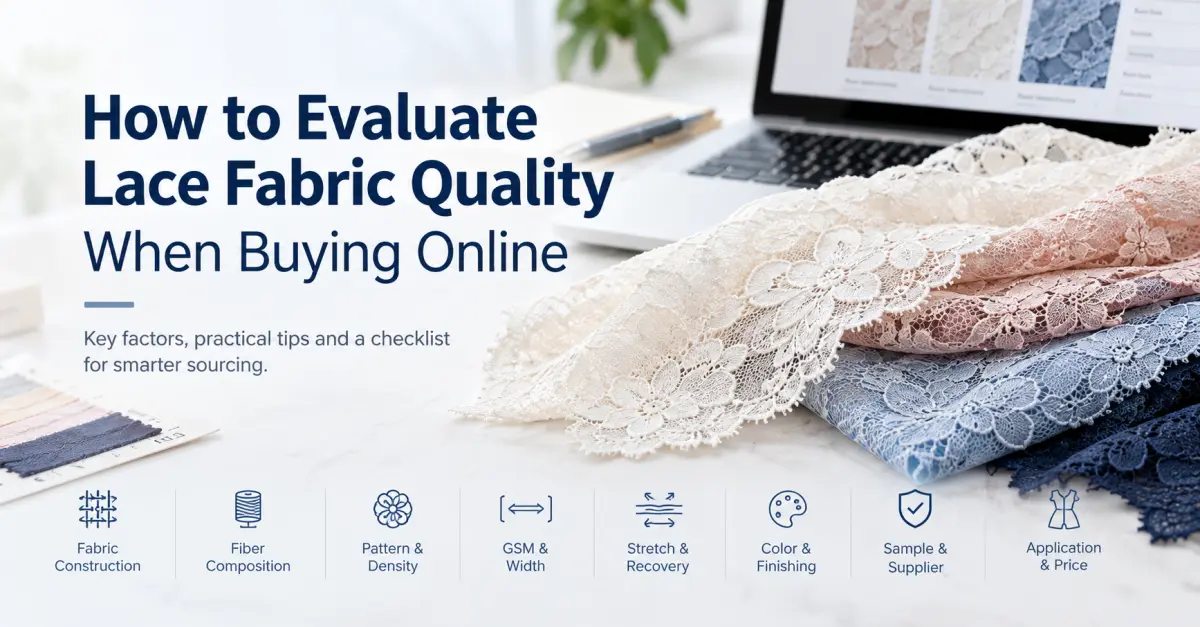
Step 3: Request Product Samples
Samples are essential when evaluating lace suppliers.
A professional supplier should provide samples showing:
-
Pattern clarity
-
Fabric softness
-
Stretch recovery
-
Color accuracy
-
Edge finishing
-
Embroidery quality
For customized lace projects, sampling helps confirm whether the supplier can achieve the required design.
Check Manufacturing Experience and Production Capability
A professional lace fabric manufacturer China should have comprehensive production capabilities.
Lace manufacturing involves multiple technical processes.
Lace Knitting
Knitted lace is widely used in:
-
Fashion dresses
-
Lingerie
-
Apparel decoration
The manufacturer needs precise control of:
-
Yarn selection
-
Pattern structure
-
Elasticity
-
Thickness
Embroidery Production
Embroidery lace requires additional craftsmanship.
Important factors include:
-
Embroidery density
-
Thread quality
-
Pattern accuracy
-
Fabric stability
For high-end fashion applications, embroidery quality directly affects the final garment appearance.
Finishing Technology
Advanced finishing techniques can improve lace performance and appearance.
Common finishing processes include:
-
Dyeing
-
Printing
-
Hot stamping
-
Flocking
-
Sanding
-
Sequin application. Explore multi-color embroidery.
A manufacturer with diverse finishing capabilities can provide more creative solutions for designers.
Evaluate Lace Fabric Quality Standards
Quality control is one of the most important considerations when selecting a supplier.
Fashion brands should evaluate:
Fabric Appearance
Check:
-
Pattern consistency
-
Surface cleanliness
-
Missing stitches
-
Broken yarns
-
Uneven embroidery
Color Consistency
For bulk production, color variation can become a major issue.
Reliable suppliers should control:
-
Dyeing process
-
Color matching
-
Batch consistency
Professional manufacturers usually use color references such as:
-
Pantone standards
-
Approved lab dips
-
Customer color samples
Fabric Performance
Depending on the application, buyers should test:
Stretch Recovery
Important for:
-
Lingerie
-
Bodywear
-
Stretch dresses
Durability
Important for:
-
Bridal gowns
-
Premium garments
Wash Resistance
Important for:
-
Ready-to-wear fashion
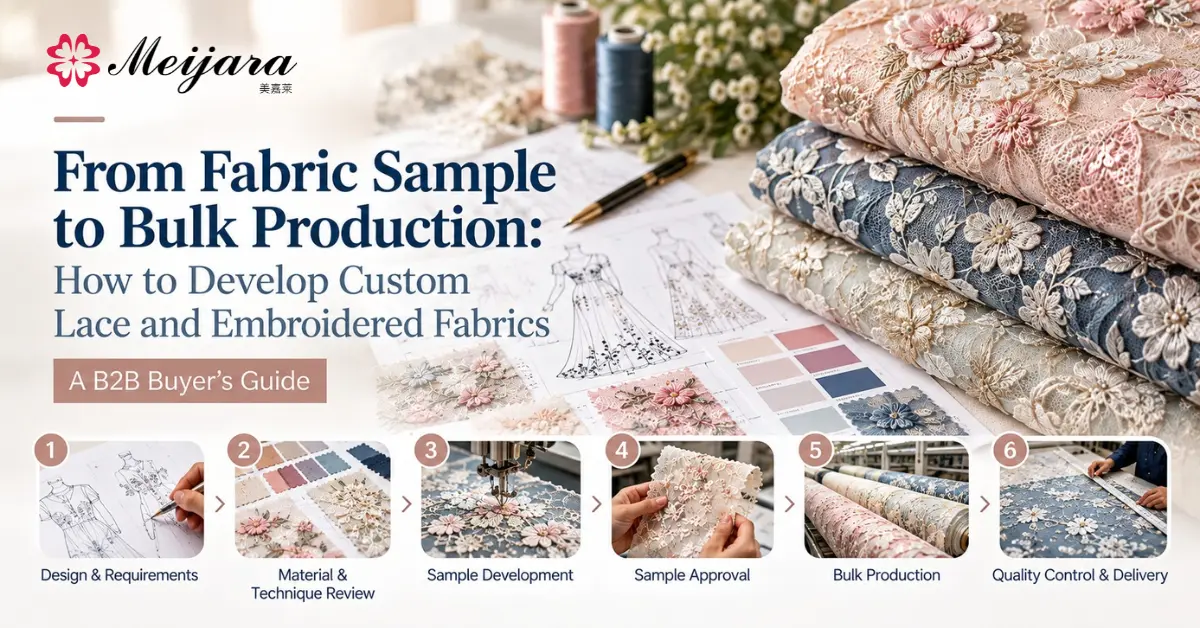
Understand Custom Lace Fabric Development Process

Many fashion brands require customized lace instead of ready-made designs.
A professional supplier should have a structured development process.
Step 1: Design Confirmation
Customers provide:
-
Sketches
-
Reference images
-
Existing samples
-
Pattern ideas
The manufacturer analyzes:
-
Feasibility
-
Material requirements
-
Production method
Step 2: Pattern Development
The technical team develops the lace structure according to design requirements.
This stage may involve:
-
Pattern adjustment
-
Machine programming
-
Yarn selection. Explore pattern design development.
Step 3: Sample Production
Before bulk production, suppliers create samples for approval.
Customers check:
-
Pattern
-
Color
-
Texture
-
Hand feel
Step 4: Bulk Production
After approval, production begins.
A professional manufacturer manages:
-
Material preparation
-
Production scheduling
-
Quality inspection
-
Packaging
Confirm MOQ, Sampling, and Production Lead Time
Before cooperation, buyers should understand supplier terms.
Minimum Order Quantity (MOQ)
MOQ varies depending on:
-
Fabric type
-
Customization level
-
Production method. Explore OEM services.
Typical examples:
-
Stock lace: lower MOQ
-
Customized lace fabric: higher MOQ
For new lace development, many manufacturers require approximately 3,000–5,000 meters for custom lace fabric.
Sampling Time
Typical sampling periods:
-
Standard lace: several days
-
Custom lace development: around 20–25 days
Embroidery projects may vary depending on complexity.
Bulk Production Time
Production time depends on:
-
Quantity
-
Fabric structure
-
Finishing requirements
Generally:
-
Standard lace production: 2–4 weeks
-
Customized lace projects: 35–40 days
A reliable supplier should provide realistic timelines.
Review Technology and Equipment Capability
Technology plays an important role in lace quality.
Professional manufacturers usually invest in advanced machinery.
Modern lace machines allow:
-
More complex patterns
-
Better consistency
-
Higher production efficiency
Equipment capability directly influences:
-
Pattern accuracy
-
Fabric quality
-
Production stability
When evaluating suppliers, ask about:
-
Production machines
-
Technical team
-
Maintenance systems
-
Development capability
Consider Quality Control and Inspection Systems

A reliable manufacturer should have quality inspection throughout production.
Quality control usually includes:
Raw Material Inspection
Checking:
-
Yarn quality
-
Color
-
Composition
Production Inspection
Monitoring:
-
Machine operation
-
Fabric structure
-
Pattern accuracy
Final Inspection
Checking:
-
Fabric defects
-
Packaging
-
Quantity
A complete quality system reduces risks for international buyers.
Communication and International Service Capability
For overseas customers, communication ability is essential.
A professional export supplier should understand:
-
International trade procedures
-
Shipping documents
-
Packaging requirements
-
Customer specifications. Learn about importing logistics.
They should provide support for:
-
Sample shipment
-
Production updates
-
Quality reports
-
Logistics coordination
Common Mistakes When Choosing a Lace Supplier
Choosing Only Based on Price
Low prices often come with compromises.
Consider:
-
Quality stability
-
Production capability
-
Service level
Ignoring Sample Testing
Never place large orders without confirming samples.
Samples reveal:
-
Real fabric quality
-
Supplier capability
-
Production standards
Working With Unverified Suppliers
Always check:
-
Factory information
-
Production ability
-
Customer reviews
-
Export experience
Why Work with an Experienced China Lace Fabric Factory?
For fashion brands, a long-term supplier relationship creates significant value.
An experienced manufacturer can provide:
-
Faster product development
-
Better quality control
-
Professional recommendations
-
Stable supply chain
Instead of simply purchasing fabric, brands can build a strategic partnership with a supplier who understands their product goals.
How Meijara Textile Supports Global Fashion Brands
Meijara Textile is a professional lace manufacturer specializing in lace fabric development and production for global fashion brands.
With years of lace manufacturing experience, Meijara Textile provides:
Wide Lace Product Range
Including:
-
Stretch lace fabric
-
Jacquard lace
-
Bridal lace
-
Embroidered lace
-
Eyelash lace trim
-
Chemical lace
-
Sequin lace
Custom Development Service
From concept to production, the team supports:
-
Pattern development
-
Sampling
-
Color matching
-
Bulk production. Explore cut piece and processing.
Professional Manufacturing Capability
The company focuses on delivering stable quality lace solutions for:
-
Fashion brands
-
Garment manufacturers
-
Bridal designers
-
Textile distributors
For brands looking for a reliable China lace fabric manufacturer, choosing an experienced production partner can improve efficiency and reduce sourcing risks.
FAQ About China Lace Fabric Manufacturers
Q1: How do I find a reliable China lace fabric manufacturer?
Look for manufacturers with:
-
Factory experience
-
Production equipment
-
Custom development capability
-
Quality control systems
-
Export experience
Request samples before placing bulk orders.
Q2: What types of lace fabric can Chinese manufacturers produce?
Most professional suppliers produce:
-
Stretch lace
-
Embroidery lace
-
Bridal lace
-
Jacquard lace
-
Chantilly lace
-
Lace trims
Q3: What is the MOQ for custom lace fabric from China?
MOQ depends on the design and production method.
Customized lace fabric usually requires around 3,000–5,000 meters.
Q4: How long does lace fabric production take?
Production time depends on complexity.
Typical customized lace production requires around 35–40 days after sample approval.
Q5: Can China lace suppliers make custom designs?
Yes. Many professional manufacturers provide OEM and ODM services, including:
-
Custom patterns
-
Colors
-
Embroidery
-
Special finishing
Q6: Why do fashion brands source lace fabric from China?
China offers:
-
Complete textile supply chains
-
Competitive pricing
-
Strong manufacturing capability
-
Flexible customization
Conclusion
Selecting the right China lace fabric manufacturer is not only about finding a supplier with competitive pricing. For fashion brands, the ideal partner should combine manufacturing experience, product quality, customization capability, reliable communication, and consistent delivery.
A professional lace supplier helps transform creative ideas into commercially successful products.
By carefully evaluating factory capability, production technology, quality systems, and service experience, global buyers can build a reliable supply chain and develop high-quality lace collections with confidence.
Ready to find a reliable China lace fabric manufacturer? Visit our homepage to explore our collections or contact us for inquiries. You may also submit an inquiry for custom pricing.