
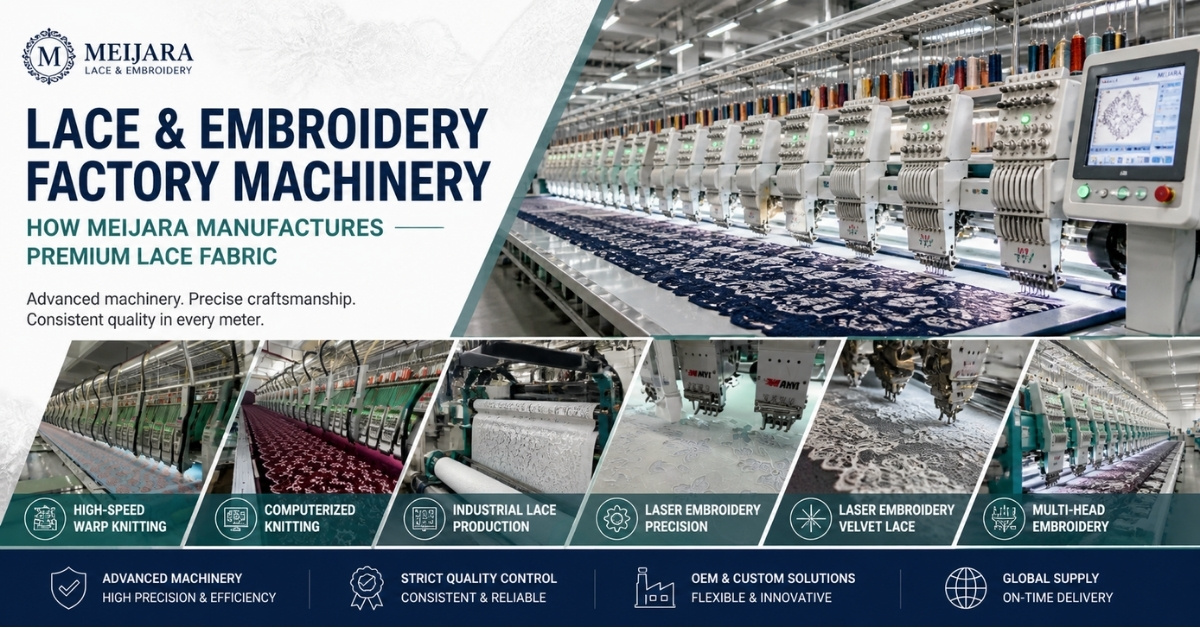

When fashion brands and apparel manufacturers source lace and embroidery fabric at scale, one of the most important questions they ask is: Can this supplier actually deliver consistent quality — at volume, on time, every time?
The answer doesn't begin with a catalog. It begins on the factory floor.
At Meijara Textile, we've been manufacturing premium lace and embroidery fabrics since 1997. Over nearly three decades, we've invested heavily in industrial-grade machinery — not as a talking point, but as the operational backbone that makes every order possible. In this article, we give you a transparent, technical look at the equipment we use, what each machine does, and why it matters for the products you receive.
Why Factory Machinery Matters to Buyers
Before we walk the floor, it's worth addressing a question that sophisticated buyers often ask: Why should I care what machines a supplier uses?
Here's why it matters:
- Consistency: Industrial machinery produces repeatable results. Hand-adjusted or outdated equipment introduces variation — in tension, pattern alignment, and thread density — that affects every roll.
- Scalability: The right machines allow a manufacturer to scale from a sample order to a full production run without quality degradation.
- Capability: Not all machines can produce all fabric types. A factory's machinery defines what it can and cannot make, and how well.
- Lead time: Machine speed, automation level, and changeover time directly determine how quickly your order ships.
According to a 2023 industry report by the China Textile Machinery Association (CTMA), manufacturers who have invested in computerized and high-speed textile equipment show a 40%+ improvement in defect rates compared to those still running legacy mechanical systems. The equipment matters.
The Meijara Production Floor: 6 Key Machine Types
1. High-Speed Warp Knitting Machine
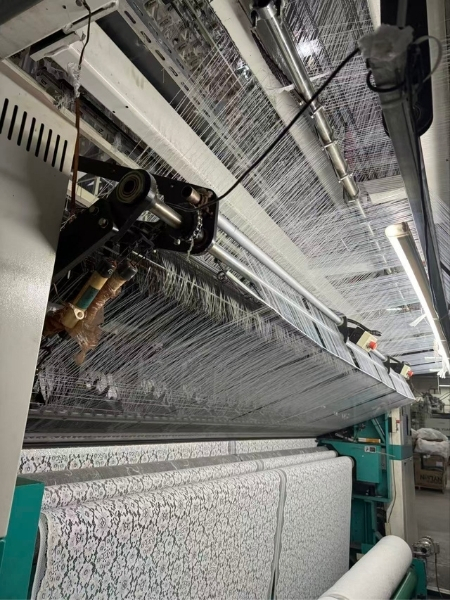
Warp knitting is the foundation of many of our core lace products. Unlike weft knitting, where yarn runs horizontally, warp knitting interlocks yarns vertically — producing fabrics with exceptional dimensional stability, minimal stretch distortion, and a clean structural repeat.
Our high-speed warp knitting machines operate at speeds of up to 1,200 courses per minute, enabling high-volume production without sacrificing the tight, even structure that premium lace requires.
What this means for your order:
- Consistent selvedge edges, roll after roll
- Stable fabric width — critical for cutting efficiency in garment production
- Suitable for base fabrics used in Chantilly lace , eyelash lace trim , and bridal lace
2. Lace Computerized Knitting Machine
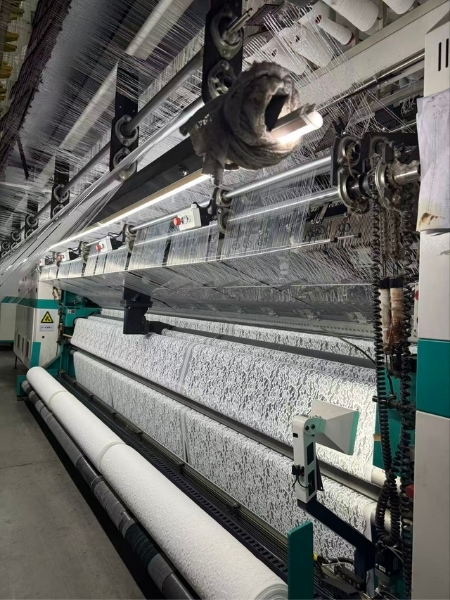
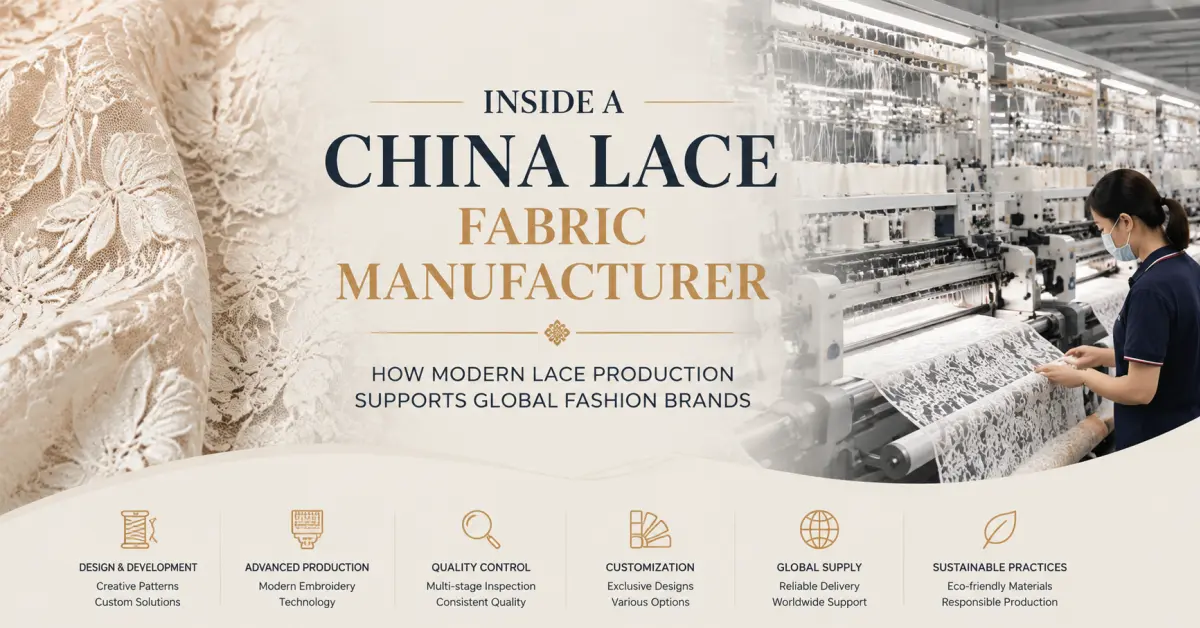
Modern lace production is driven by CNC (Computer Numerical Control) knitting systems. Our computerized lace knitting machines receive pattern data directly from digital design files, eliminating the mechanical punch-card systems of earlier decades and allowing for rapid pattern switching.
This technology is central to how we produce intricate all-over lace patterns with consistent repeat accuracy across every meter of fabric.
Key capabilities:
- Pattern repeat accuracy within +/- 0.5mm
- Rapid changeover between designs — essential for OEM custom orders
- Compatible with a wide range of yarn types: nylon, polyester, rayon, cotton blends
This machine is the workhorse behind our lace fabric collection and the primary reason we can offer custom pattern development at competitive minimums.
3. Industrial Lace Fabric Production Machine
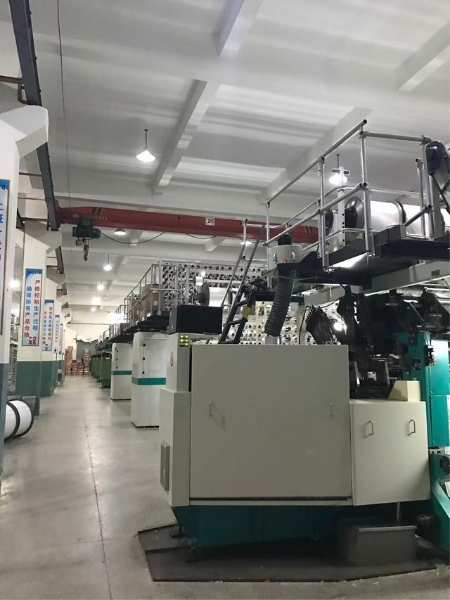
Beyond specialized knitting, our production floor includes wide-bed industrial lace machines capable of producing broad-width fabric panels — typically 150cm to 300cm in finished width — essential for the wedding and eveningwear market.
Wide-width production eliminates unsightly seams in applications like bridal gowns and formal dresses, where uninterrupted lace fabric is a non-negotiable quality requirement.
Production specs:
- Fabric width: up to 300cm
- Compatible with multi-layer constructions (base net + embroidery layer)
- Output suitable for direct cut-and-sew without additional finishing
These machines supply the base fabric for our water-soluble embroidery and cord embroidery lines.
4. Laser Embroidery Machine (Lace Fabric)
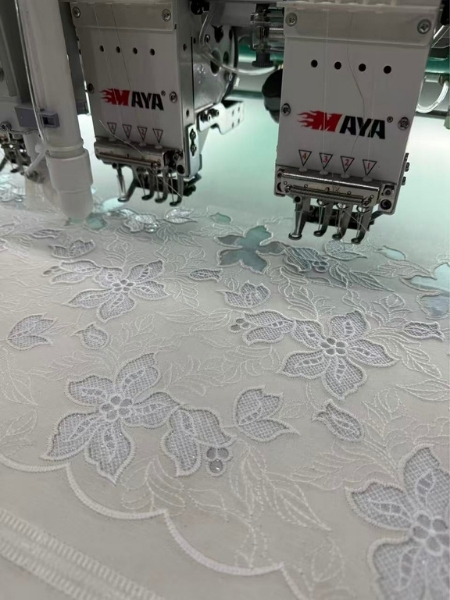
Laser embroidery technology has transformed how fine openwork patterns are created on lace fabric. Rather than using needles and thread alone, laser-equipped machines use a focused beam to precisely cut or burn away layers of fabric — creating delicate hollow patterns, scalloped edges, and intricate cutwork designs that would be impossible or prohibitively slow to produce mechanically.
This is the technology behind our burn-out lace fabric and our laser embroidery line.
Technical advantages:
- Edge precision of 0.1mm — no fraying on finished cuts
- Suitable for delicate base fabrics including chiffon, organza, and mesh
- Enables complex geometric and floral openwork motifs at production speed
- No mechanical pressure on fabric — preserves fabric hand and drape
For fashion brands creating intricate eveningwear or bridal collections, this capability means you can source the exact aesthetic you've designed — not a simplified approximation.
5. Laser Embroidery Machine (Velvet & Lace Combination)
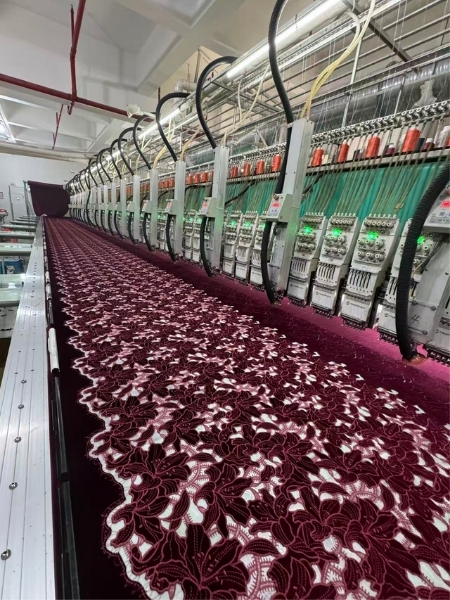
One of our more specialized capabilities is laser embroidery on velvet and pile fabrics. This process uses a calibrated laser to selectively burn down pile height, creating a burnout relief effect — the signature look of devore velvet lace.
This is distinct from standard laser embroidery. The machine parameters — beam intensity, dwell time, focal depth — must be precisely calibrated for each fabric type to achieve clean pattern definition without damaging the base weave underneath.
Our velvet laser production is primarily used for:
- Burn-out lace fabric in seasonal fashion collections
- Velvet-base embroidery for evening and luxury garments
- Custom devore designs as part of our OEM processing service
This level of specialization is uncommon even among large-volume textile manufacturers, and it reflects the investment Meijara has made in serving the upper end of the fashion market.
6. Multi-Head Embroidery Machine
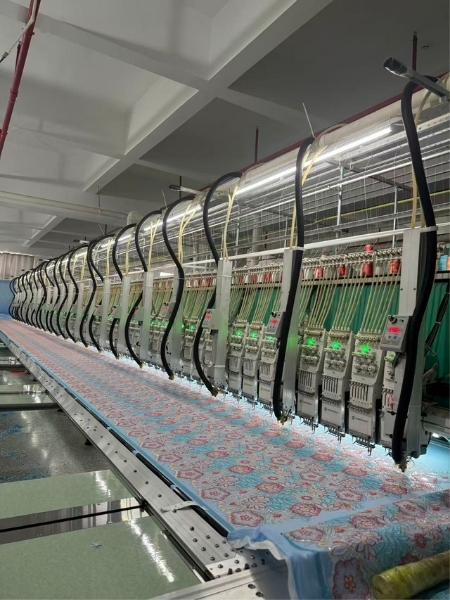
For thread-based surface embroidery — cord embroidery, sequin embroidery, heavy work designs, and panel embroidery — we operate multi-head embroidery machines with up to 120 heads running simultaneously.
Each head replicates the same design in perfect synchronization, allowing a single production run to yield dozens of embroidered panels at identical quality. This is the machine behind our multi-color embroidery, sequins and beads embroidery, heavy work embroidery, and cut piece embroidery lines.
Production capabilities:
- Up to 120 simultaneous heads per machine run
- Compatible with 3D cord, flat chain stitch, satin stitch, sequin attachment, and bead work
- Maximum frame size: 800mm x 500mm per head (for panel embroidery)
- DST / EMB / JEF digital file formats accepted for custom designs
For apparel brands ordering custom embroidered cut pieces — whether for jacket backs, collar panels, or full-body garment inserts — this machine delivers both scale and precision.
From Machinery to Finished Product: The Meijara Quality Pipeline
Owning the right machines is step one. The second step is quality control at every stage of production.
At Meijara, each production run goes through:
- Pre-production sample approval — before full production begins, a confirmed sample is produced for buyer review
- In-line inspection — our QC team monitors production in real time for tension, color consistency, and pattern alignment
- Final batch inspection — finished rolls are measured, inspected under standardized lighting, and checked against the confirmed sample before packing
- AQL standard compliance — we operate to AQL 2.5 standards for defect tolerance
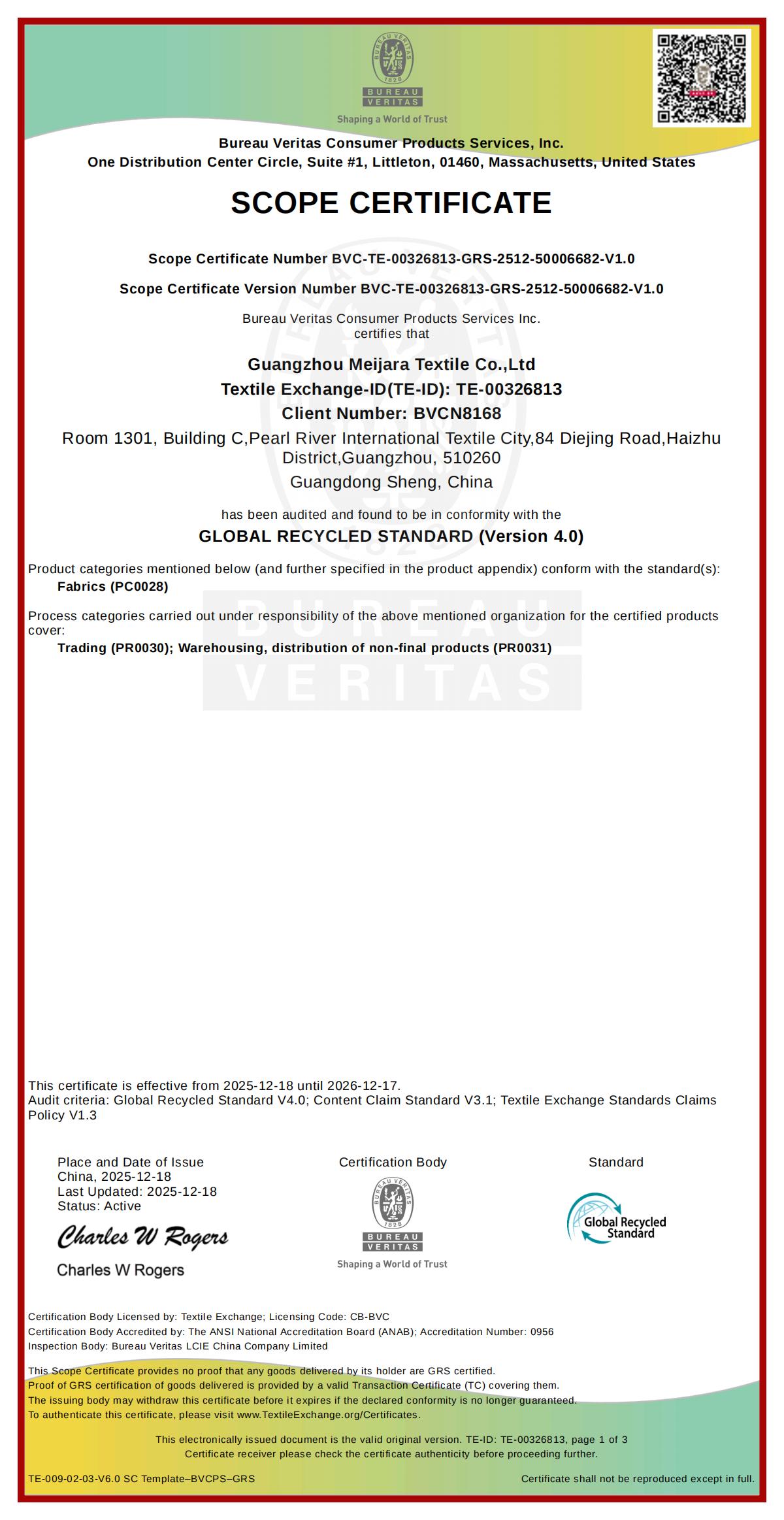
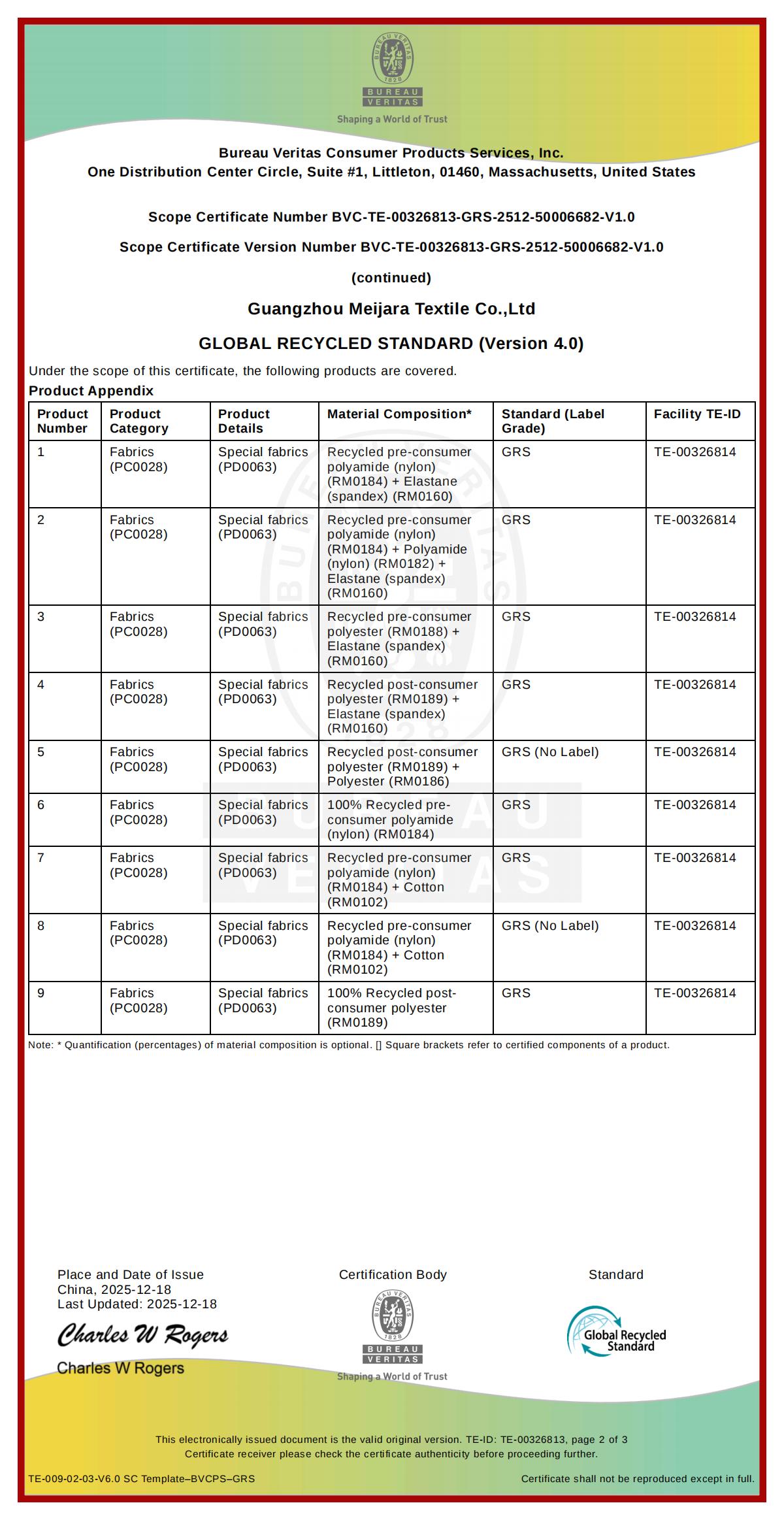
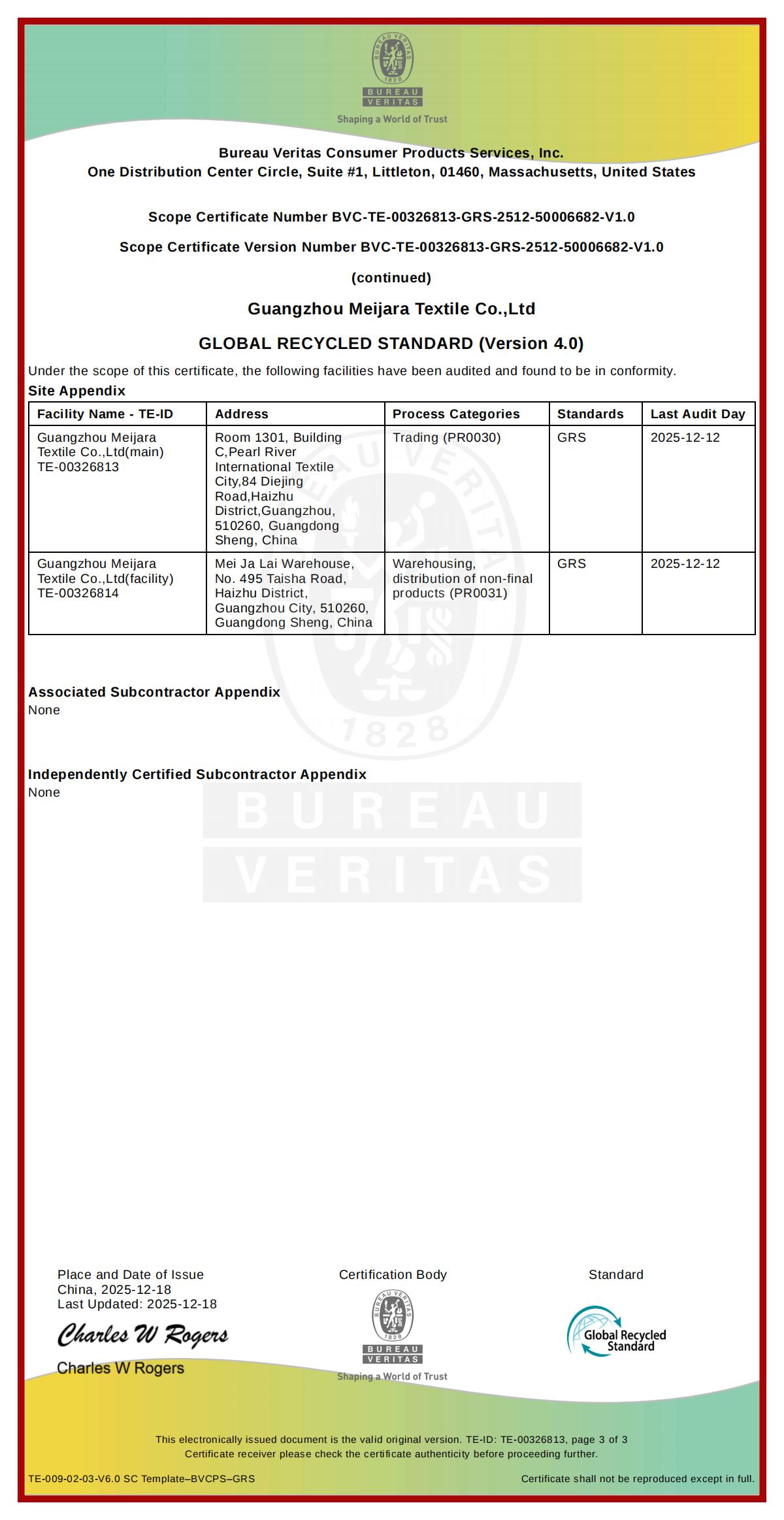
You can learn more about our standards on the certifications page and review our full customized production process.
Capability Summary
| Machine Type | Primary Application | Key Buyer Benefit |
|---|---|---|
| High-Speed Warp Knitting | Base lace fabric | Volume output + structural consistency |
| Computerized Lace Knitting | All-over pattern lace | Pattern accuracy + fast design changeover |
| Industrial Wide-Bed Production | Bridal and wide-width lace | Seamless full-width panels up to 300cm |
| Laser Embroidery (Lace) | Openwork and cutwork designs | 0.1mm precision, clean edges, no fraying |
| Laser Embroidery (Velvet) | Burnout and devore lace | Luxury pile contrast effects |
| Multi-Head Embroidery | Surface embroidery, cut panels | Up to 120 heads, consistent at scale |
What This Means When You Place an Order
Every piece of machinery described here is owned and operated in-house at our Shantou, Guangdong facility. We do not outsource core production. This means:
- Direct manufacturer pricing — no middleman markup
- In-house quality control — we are responsible from yarn to finished roll
- Predictable lead times — we control our own production schedule
- Real custom development — our machines accept your design files and can be programmed for your specific patterns
Whether you're a fashion brand looking for a reliable lace supplier, a wedding dress manufacturer sourcing bridal fabric, or a buyer developing a private-label embroidery collection — the equipment above is what produces your goods.
Ready to See What We Can Make for You?
We invite serious buyers to request samples or share their design requirements with our team. Our technical staff can advise on the best production route for your specific application — fabric type, construction method, and finishing requirements.
- View our full lace fabric range
- Explore our embroidery collections
- Learn about our customized production process
- Contact us for a quote or sample request
Frequently Asked Questions
Can I visit the factory before placing an order? Yes. We welcome factory visits by appointment. Buyers from Europe, North America, and the Middle East regularly visit our Shantou facility. Contact us to arrange your visit.
What is your minimum order quantity (MOQ)? MOQ varies by product type and construction. For standard stocked fabrics, MOQ starts from 100 meters. For custom designs, MOQ is typically 3000 to 5000 meters. Contact our team for specifics on your project.
Can you produce my own pattern design? Yes. For computerized and multi-head embroidery machines, we accept DST, EMB, and JEF digital embroidery files. For warp knitting, our pattern development team can work from your technical sketch or a reference fabric sample.
What quality standards do you comply with? We operate to AQL 2.5 inspection standards. Our fabrics can be tested to OEKO-TEX Standard 100 upon request. See our certifications page for current documentation.
How long does a custom order take from design to delivery? For new pattern development with sampling: approximately 3 to 4 weeks to a confirmed sample. Full production typically runs 2 to 4 weeks depending on order volume and complexity.