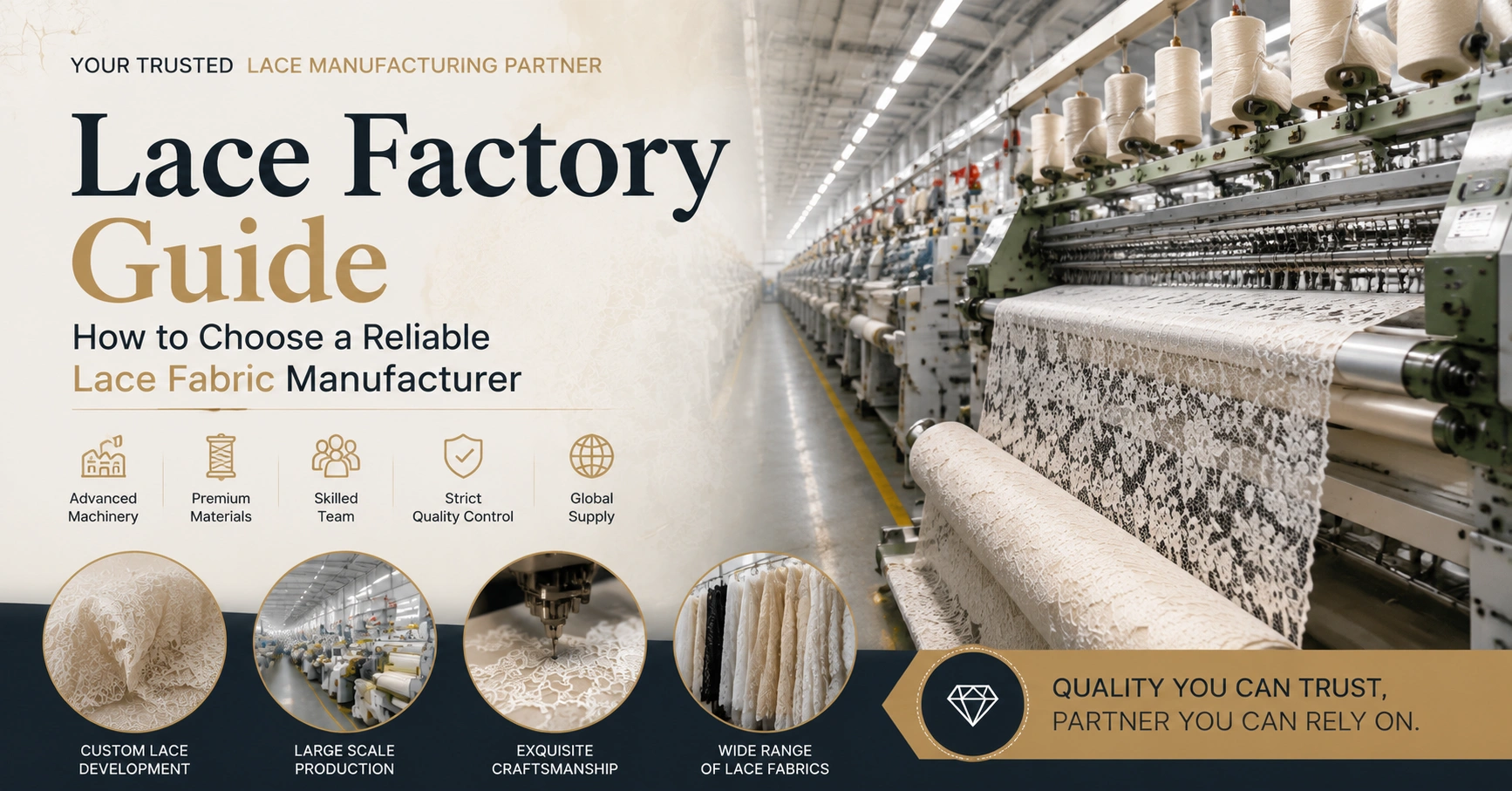

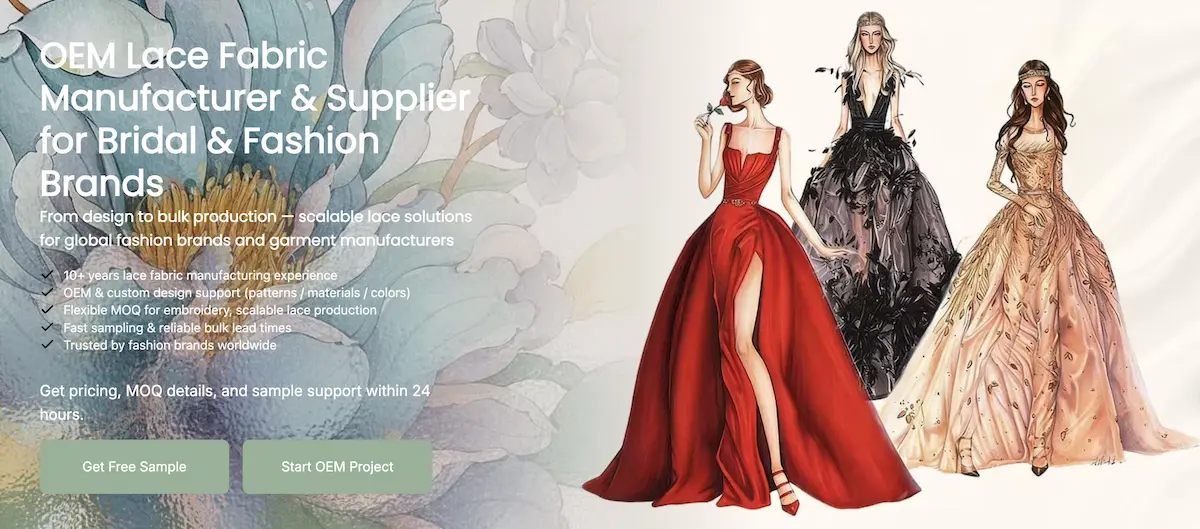

When fashion brands, bridal designers, and garment manufacturers search for a lace fabric supplier, they are usually not only looking for beautiful patterns. They are looking for a manufacturing partner who can help them control quality, develop custom designs, match colors accurately, and deliver fabrics consistently for seasonal collections.
MJLace, also known as Meijara Textile, is a professional lace and embroidery fabric manufacturer serving global fashion brands, wedding dress manufacturers, apparel factories, and textile wholesalers. The company focuses on OEM/ODM custom lace development, bulk lace fabric wholesale, embroidered fabric supply, and export-ready textile solutions.
For buyers who need a reliable lace fabric factory in China, MJLace combines traditional lace craftsmanship with modern textile production technology. Its product range covers Chantilly lace, embroidered lace, lace trim, water-soluble embroidery, hand cord lace, sequins and beads embroidery, laser embroidery, digital printed lace, tie-dye lace, stretch lace, and cut-piece embroidery solutions.
More importantly, MJLace is not positioned as a simple fabric trader. It is built around manufacturing capability, design development, dyeing control, quality inspection, and export service. This makes it suitable for brands that need both creative fabric development and stable bulk production.
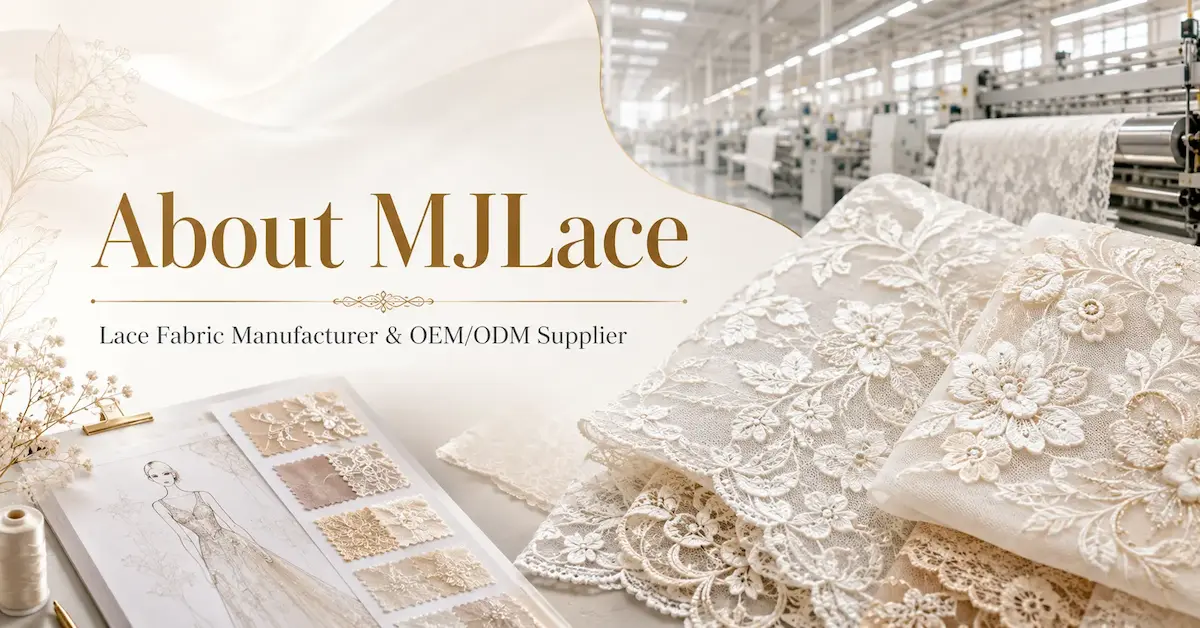
What Is MJLace and Why Do Fashion Buyers Choose It?
MJLace is a China-based lace and embroidery fabric manufacturer that provides OEM/ODM development and wholesale supply for the global garment industry. Its main customers include fashion brands, bridalwear companies, garment factories, designers, fabric importers, and wholesale distributors.
The company’s role is to help buyers turn lace ideas, seasonal themes, artwork, or sample references into manufacturable fabrics. This includes fabric selection, pattern development, embroidery adjustment, color matching, production planning, inspection, and international shipment.
For B2B buyers, this matters because lace is not a standard commodity. A fabric may look attractive in a photo, but real purchasing decisions depend on softness, weight, stretch, color accuracy, pattern repeat, embroidery density, and whether the same quality can be repeated in bulk production.
Who Is MJLace Suitable For?
MJLace is suitable for buyers who need:
- Custom lace fabric for fashion collections
- Bridal lace fabric for wedding dress brands
- Embroidered fabric for garment production
- Lace trim and decorative textile accessories
- OEM/ODM lace design development
- Bulk embroidered fabric wholesale supply
- China lace fabric factory cooperation
- Color matching and dyeing support
- Export packaging and global delivery
Why This Company Page Matters for Buyers
A professional buyer usually wants to know three things before contacting a supplier:
- Can this supplier make the fabric type I need?
- Can they control quality, color, and production consistency?
- Can they support custom development and export delivery?
This page answers those questions by explaining MJLace’s product range, manufacturing capability, quality control system, OEM/ODM process, and cooperation model.
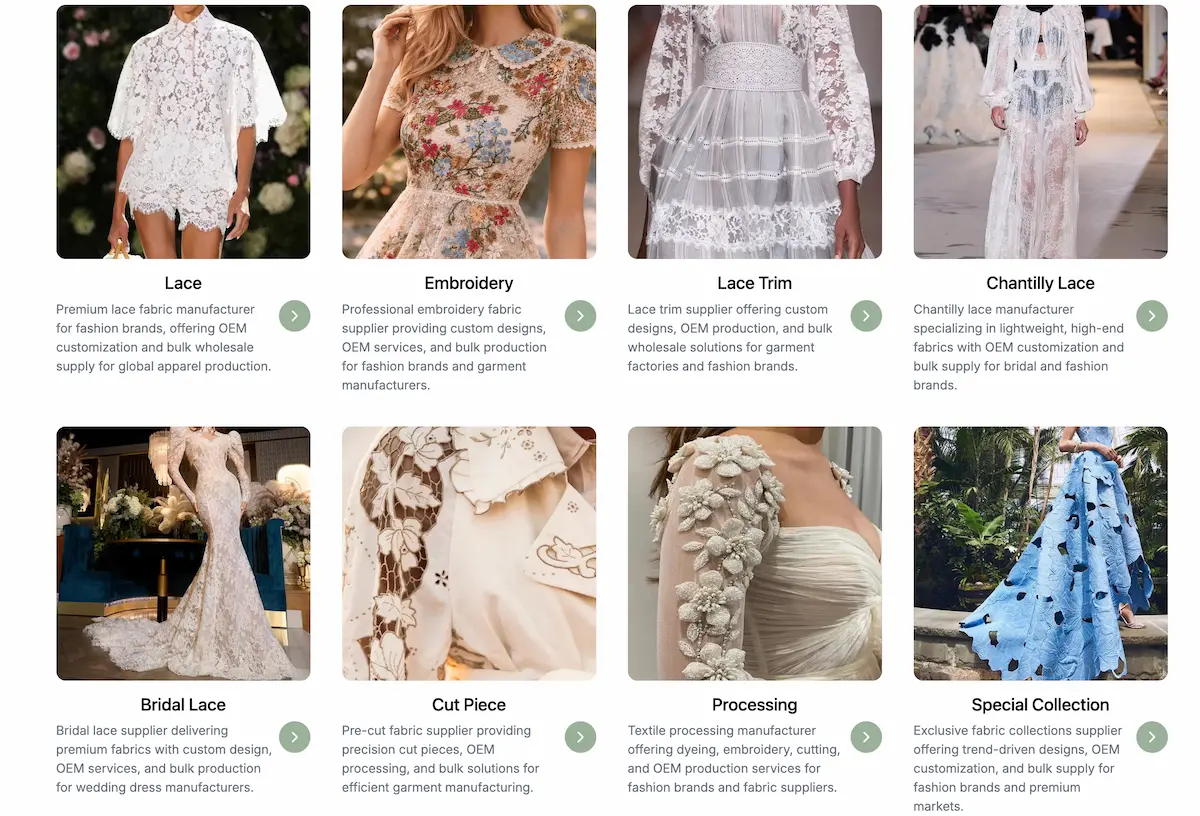
What Products Does MJLace Manufacture?
MJLace manufactures lace fabrics, embroidery fabrics, lace trims, and custom-developed textile materials for fashion and garment production. Its product system covers both classic lace categories and trend-driven seasonal fabrics.
Lace and High-End Fashion Fabrics
MJLace supplies premium lace fabrics used in bridalwear, eveningwear, couture-inspired apparel, women’s fashion, and designer collections.
Main lace products include:
- Chantilly lace
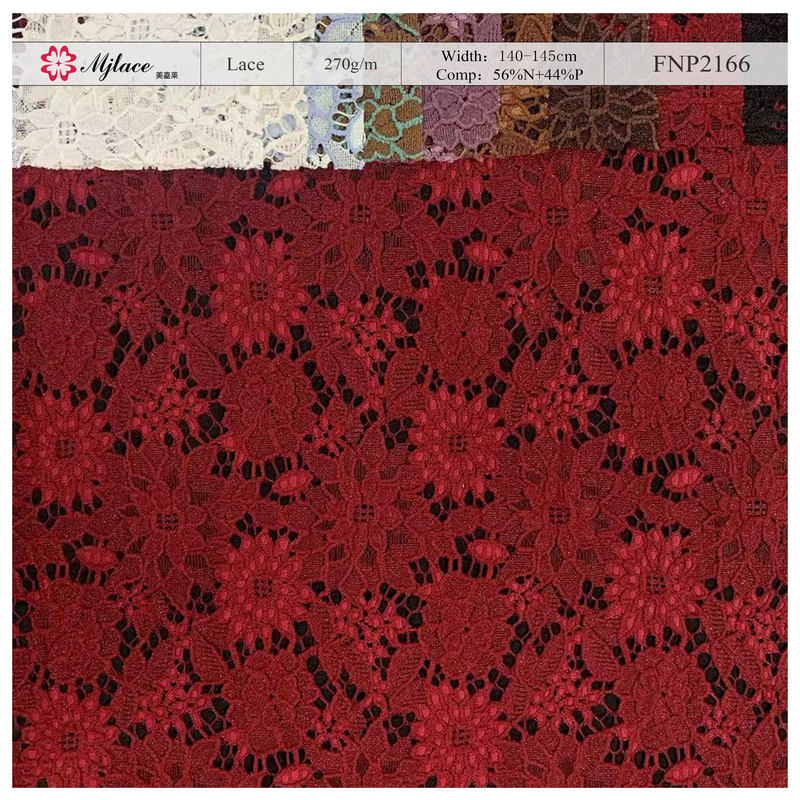
- Nylon blended floral lace
- Water-soluble embroidered lace
- Hand cord lace
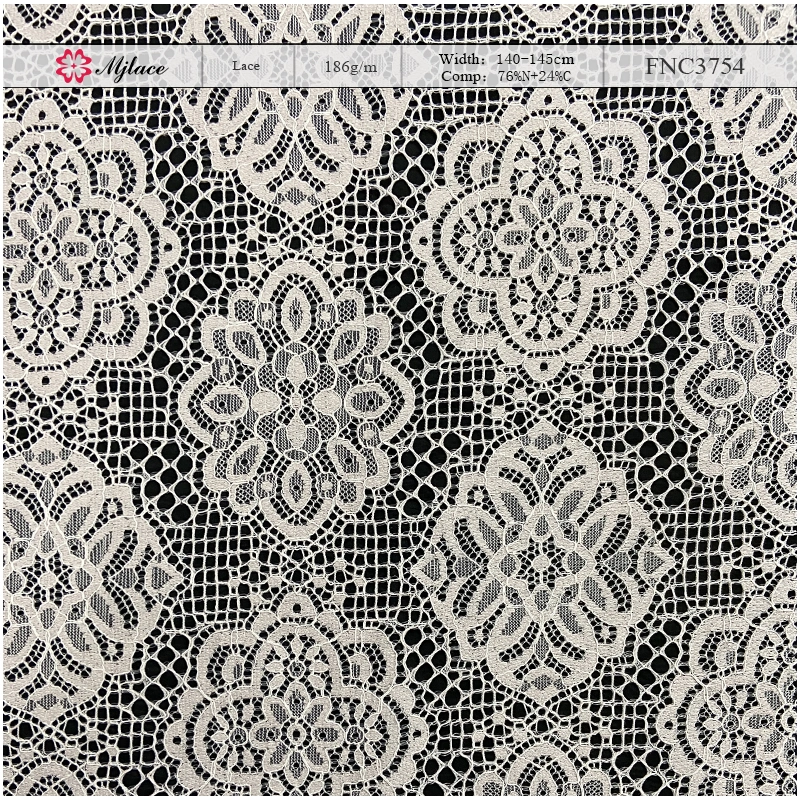
- Guipure-style lace
- Heavy embroidered lace
- Sheer lace fabric
- Stretch lace
- Burnout lace
- Wide lace fabric
Chantilly Lace for Bridal and Luxury Fashion
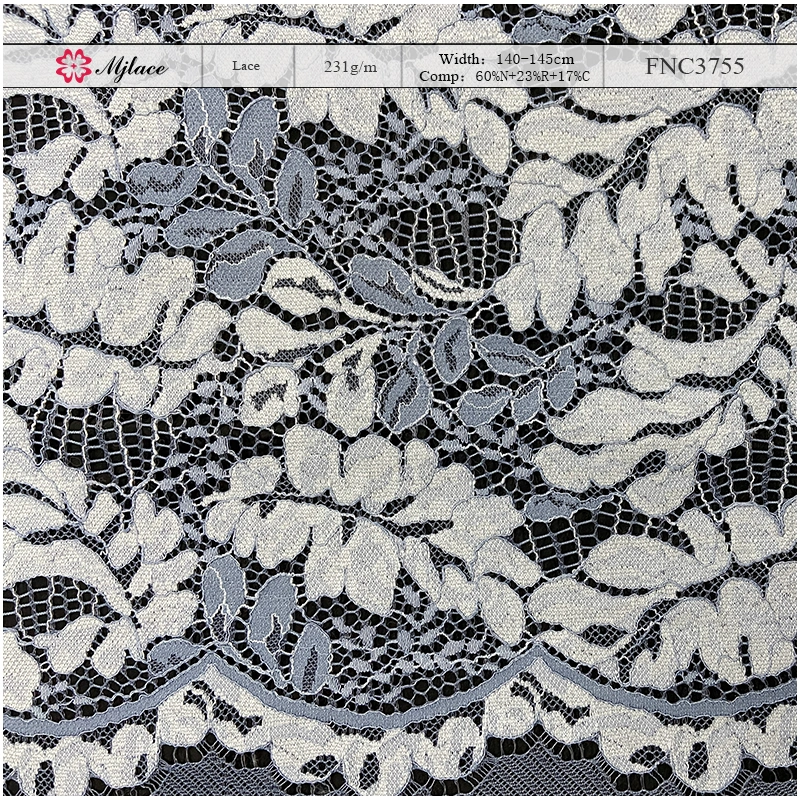
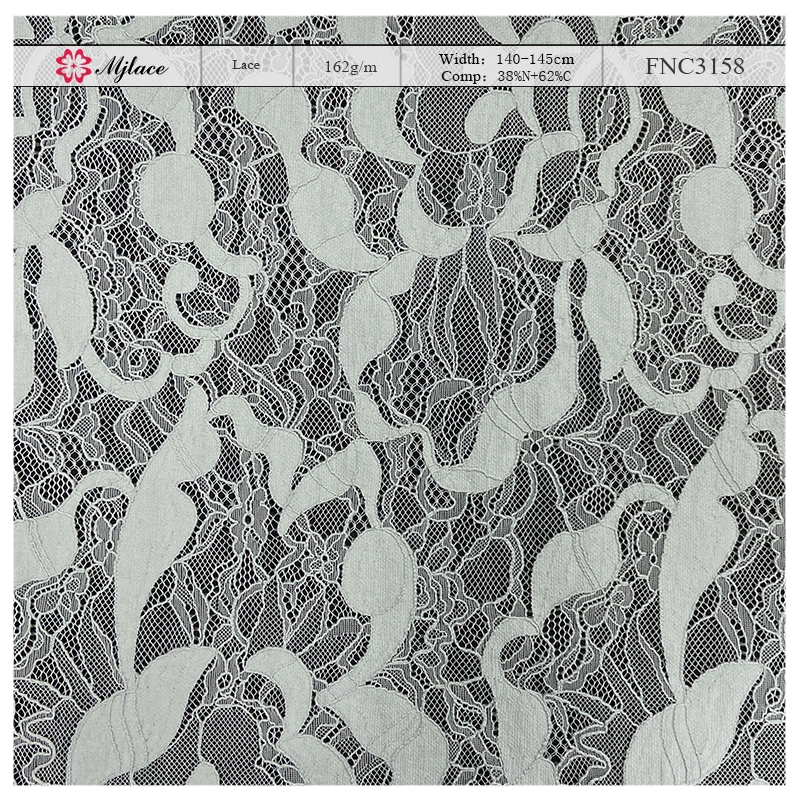
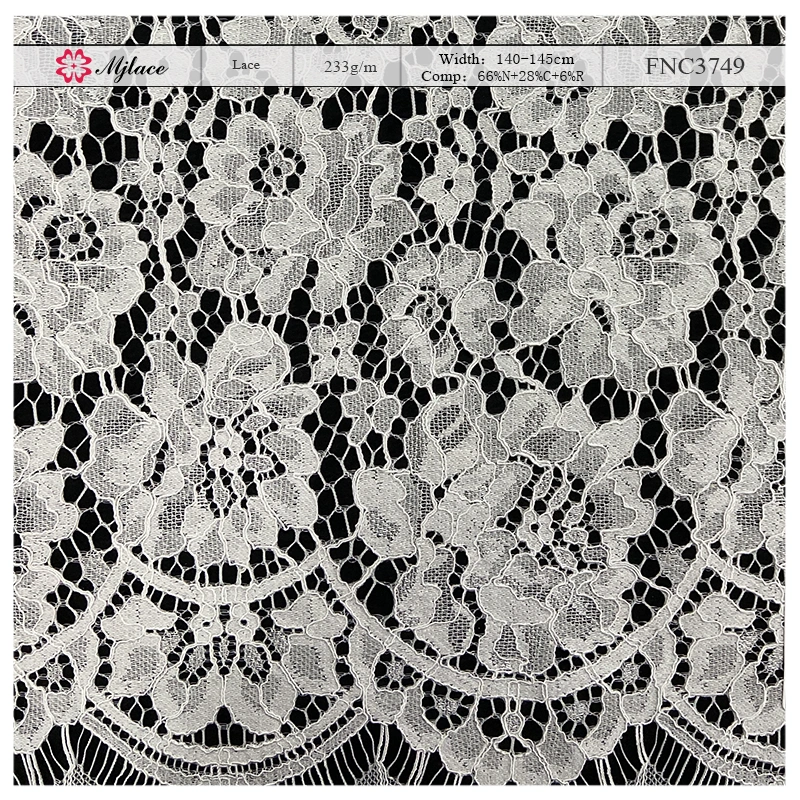
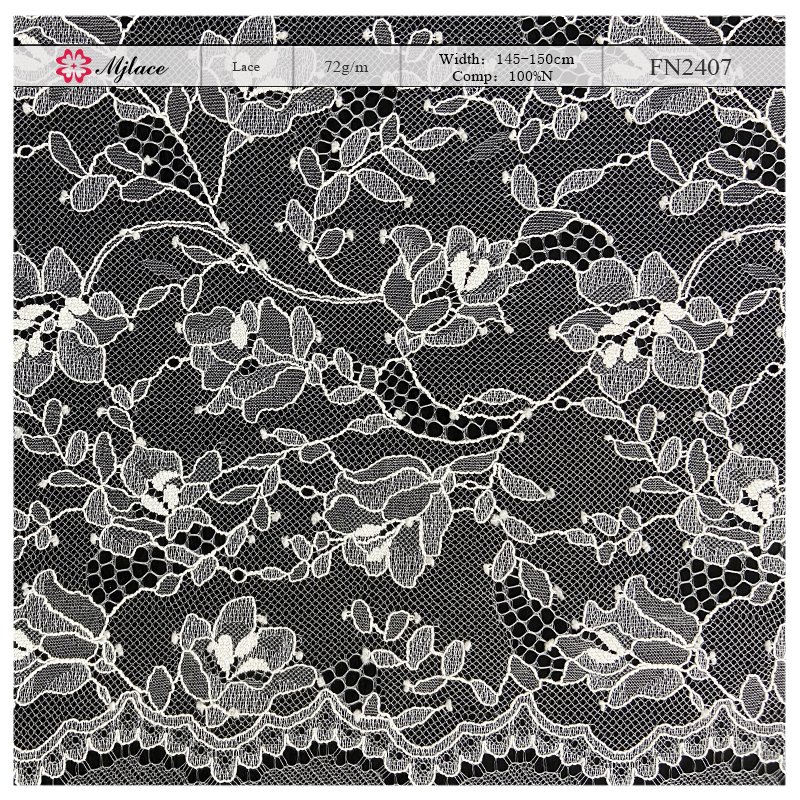
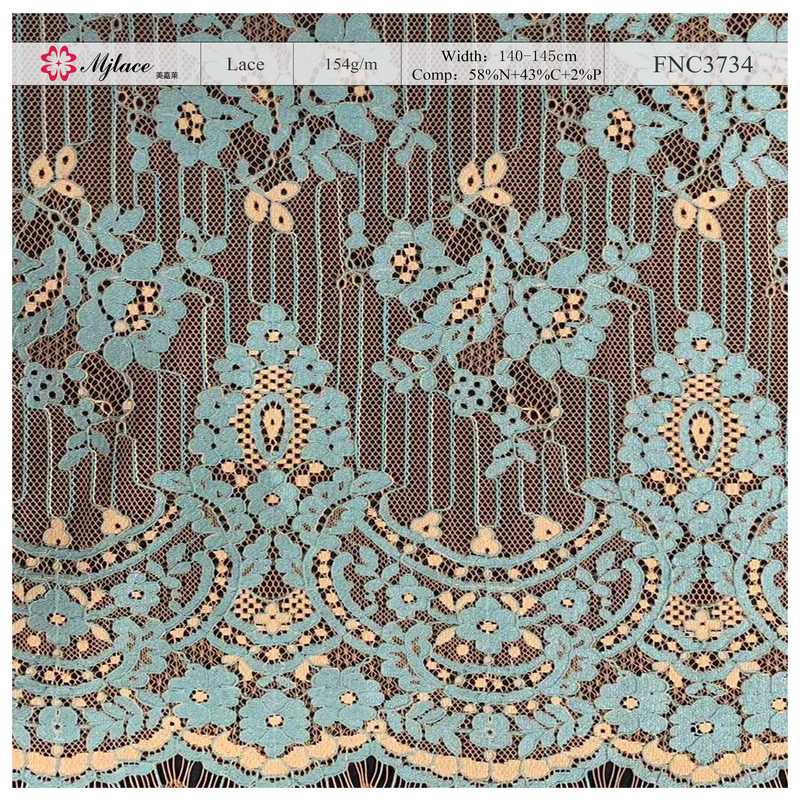
Chantilly lace is valued for its fine mesh base, delicate floral motifs, and elegant drape. It is often used for bridal gowns, veils, sleeves, overlays, and luxury dresses.
For bridal brands, Chantilly lace requires more than visual beauty. Buyers need to evaluate net strength, pattern clarity, softness, color consistency, and whether the lace can be produced repeatedly across different production batches.
Water-Soluble Embroidery Lace for Premium Design
Water-soluble embroidered lace is commonly used for heavier, more structured designs. During production, embroidery is created on a temporary base that dissolves later, leaving a dense and decorative lace structure.
This type of lace is suitable for:
- Bridal gowns
- Evening dresses
- Couture-inspired garments
- Statement panels
- Decorative garment details
Hand Cord Lace for Textured Fabric Collections
Hand cord lace creates raised, dimensional texture through cord embroidery. It gives fabrics a handcrafted look and is often used in high-value garment designs where surface texture is important.
For brands that want fabric with stronger visual identity, hand cord lace offers a more distinctive appearance than ordinary flat lace.
Embroidery Fabrics and Decorative Materials
MJLace also manufactures embroidery fabrics and decorative textile materials for apparel brands and garment factories.
Main embroidery-related products include:
- Embroidered fabric
- Sequins and beads embroidery
- Heavy work embroidery
- Cord embroidery
- Laser embroidery
- Multi-color embroidery
- Cut-piece embroidery
- Appliqué embroidery
These fabrics are widely used in women’s fashion, dresses, tops, skirts, eveningwear, bridalwear, stagewear, and decorative garment panels.
Sequins and Beads Embroidery for Statement Apparel
Sequins and beads embroidery adds shine, dimension, and luxury detail to garments. This category is often selected by brands developing evening collections, occasionwear, performance garments, and high-impact seasonal pieces.
For B2B buyers, the key concerns are bead attachment strength, sequin durability, embroidery density, and whether decoration remains stable during cutting, sewing, packaging, and transportation.
Cut-Piece Embroidery for Garment Factories
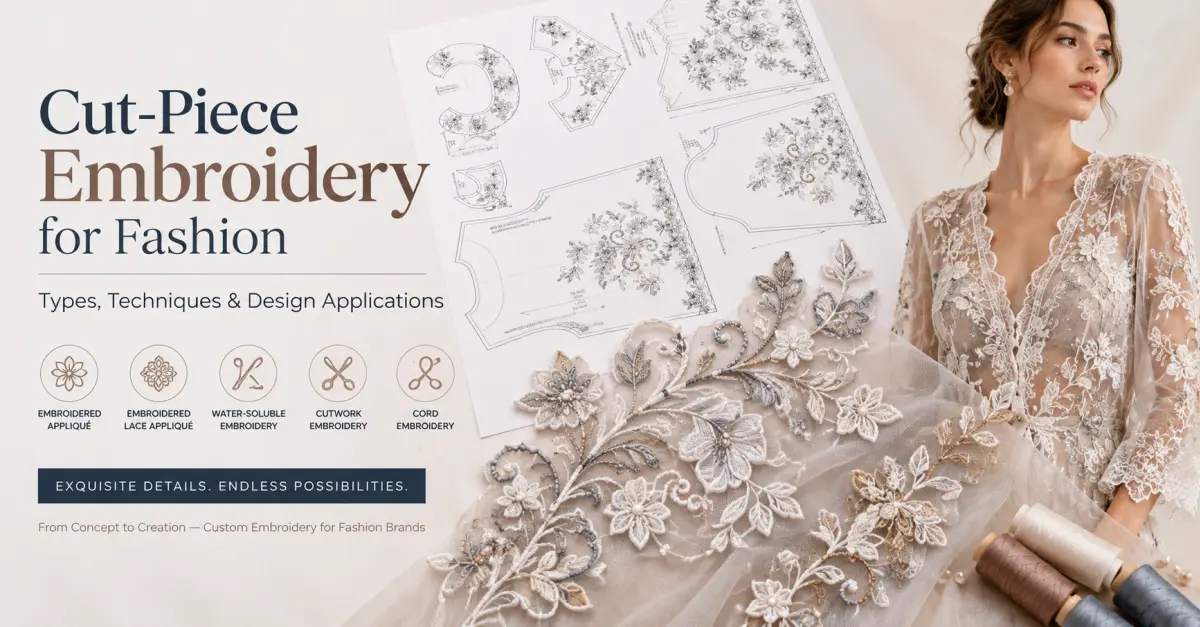
Cut-piece embroidery is useful when brands need embroidery placed on specific garment panels, such as collars, sleeves, bodices, pockets, or decorative inserts. Instead of buying full-width embroidered fabric, the buyer can develop embroidery based on garment pattern pieces.
This helps garment factories reduce material waste and improve design accuracy.
Lace Trim and Garment Accessories
MJLace supplies lace trim for lingerie, dresses, veils, collars, cuffs, hems, children’s wear, and decorative apparel details.
Main lace trim types include:
- Eyelash lace trim
- Cotton lace trim
- Chemical lace trim
- Embroidered lace trim
- Decorative lace edging
For buyers, lace trim sourcing requires attention to width, edge finish, softness, shrinkage, color matching, and sewing compatibility.
Seasonal and Custom Fabric Series
Fashion brands often need new fabrics every season. MJLace supports trend-based textile development, including:
- Digital printed lace
- Tie-dye lace
- Four-way stretch lace
- Laser-cut embroidery
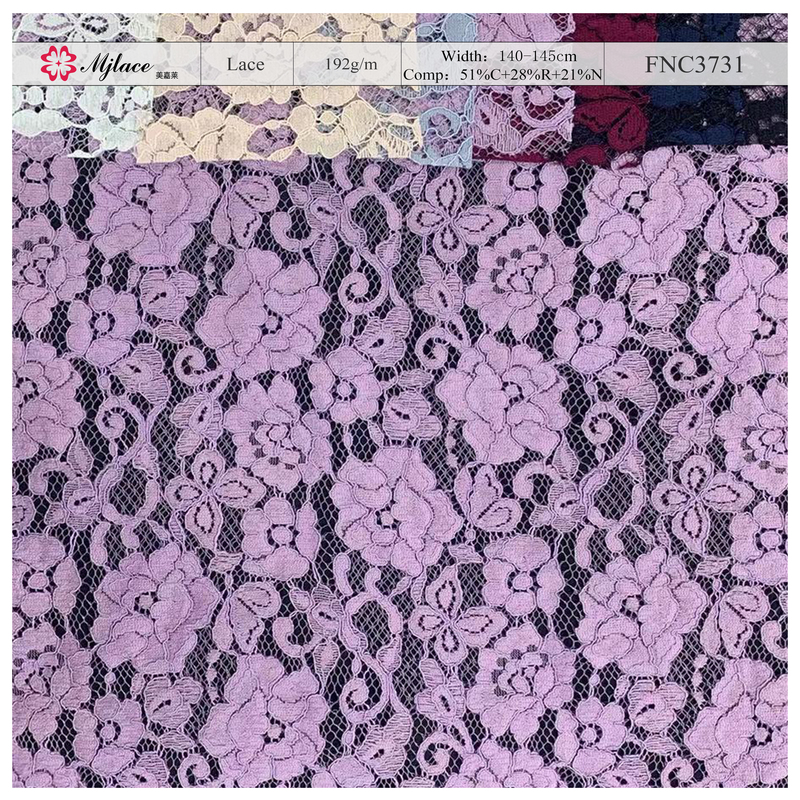
- Custom floral lace
- Custom geometric lace
- Seasonal color lace collections
These fabrics are suitable for brands that need differentiation instead of buying the same designs available in every wholesale market.
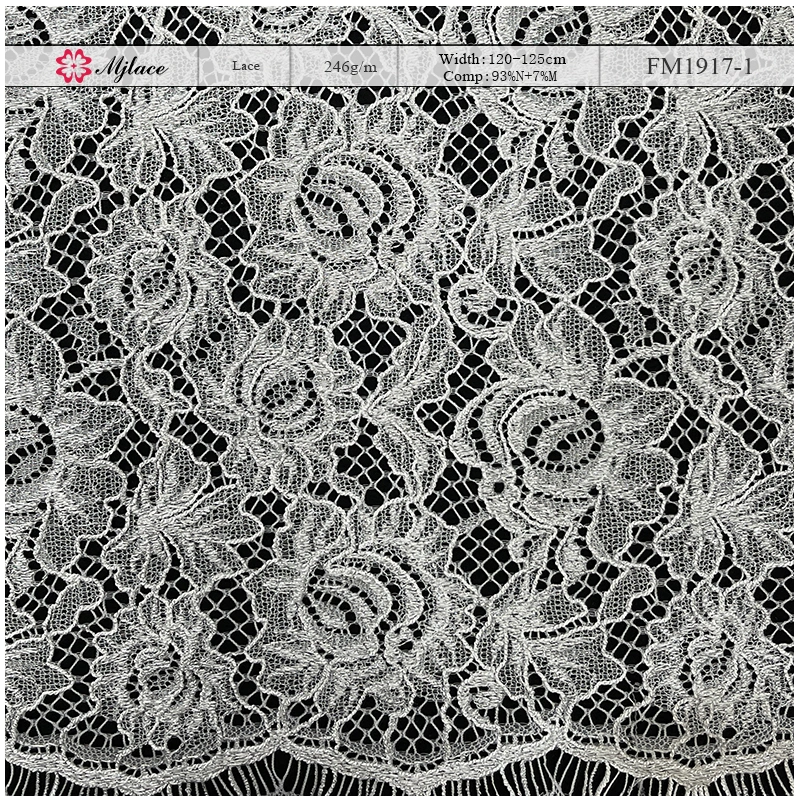
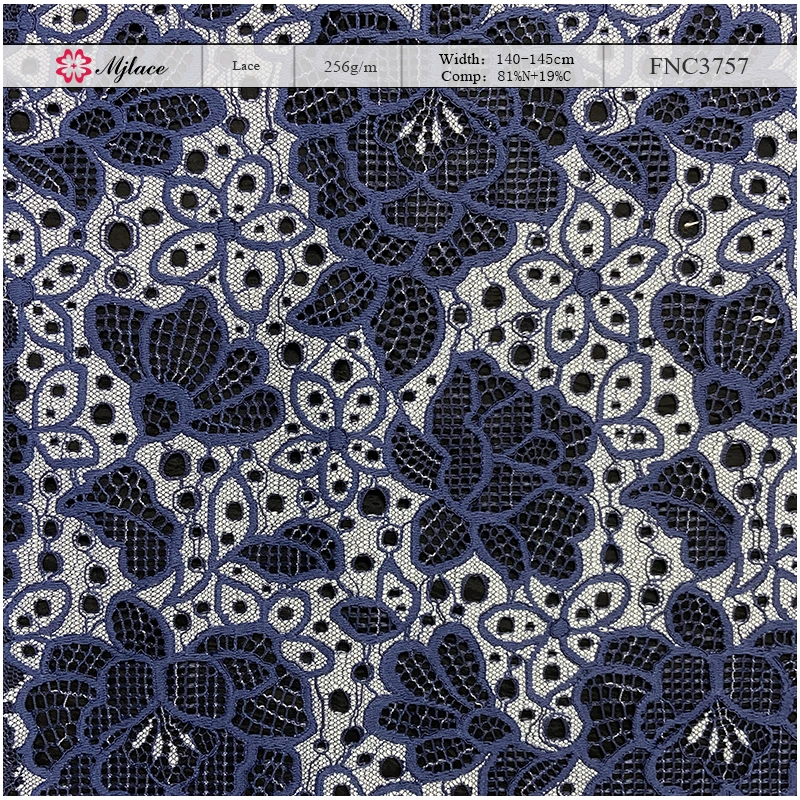
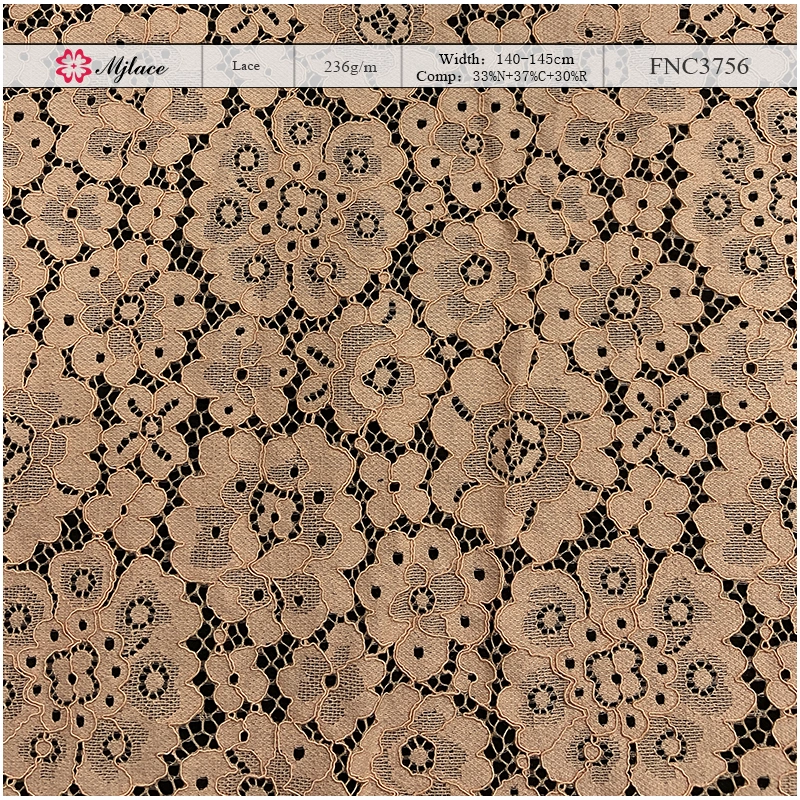
Product Capability Overview for B2B Buyers
| Product Category | Main Fabric Types | Common Applications | Buyer Value |
|---|---|---|---|
| Lace Fabrics | Chantilly lace, floral lace, sheer lace, stretch lace | Bridalwear, dresses, overlays, veils | Elegant appearance and flexible design use |
| Embroidery Fabrics | Cord embroidery, multi-color embroidery, heavy embroidery | Fashion apparel, eveningwear, decorative panels | Custom patterns and stronger visual identity |
| Water-Soluble Lace | Heavy lace, guipure-style lace, textured embroidery | Bridal gowns, couture dresses, luxury garments | Premium structure and high-end detailing |
| Lace Trim | Eyelash lace trim, cotton trim, chemical lace trim | Hems, collars, lingerie, accessories | Easy garment decoration and finishing |
| Cut-Piece Embroidery | Panel embroidery, garment piece embroidery | Sleeves, bodices, collars, pockets | Less fabric waste and accurate garment placement |
| Seasonal Fabrics | Printed lace, tie-dye lace, stretch lace, laser embroidery | Fashion collections, trend-driven apparel | Faster response to market trends |
How Does MJLace Support OEM/ODM Custom Lace Development?
Many buyers do not want generic fabrics. They want exclusive patterns, special colors, adjusted weights, different base fabrics, or embroidery that matches a garment collection.
MJLace supports OEM/ODM lace development by helping buyers move from concept to sample and then from sample to bulk production.
Step 1: Design Requirement Review
The buyer can provide:
- Artwork
- Reference fabric
- Physical sample
- Garment sketch
- Mood board
- Color standard
- Technical drawing
- Target application
The MJLace team reviews whether the idea can be produced through embroidery, lace knitting, dyeing, printing, laser cutting, or cut-piece processing.
What Buyers Should Prepare Before Sampling
To make development more efficient, buyers should prepare:
- Target fabric use
- Desired hand feel
- Color reference or Pantone number
- Required width
- Estimated order quantity
- Delivery timeline
- Garment application
- Market requirements
The clearer the brief, the faster the supplier can evaluate technical feasibility.
Step 2: Fabric and Technique Selection
Different lace techniques produce different effects. For example:
- Chantilly lace is suitable for soft and refined bridal designs.
- Water-soluble lace is better for heavier structure.
- Cord embroidery creates raised surface texture.
- Laser embroidery works well for sharp cut-out effects.
- Stretch lace is suitable for garments needing elasticity.
A professional supplier should not simply say “yes” to every design. They should recommend the most suitable production method based on the buyer’s application, target cost, and expected quality.
Step 3: Sample Development
Sampling may include:
- Pattern adjustment
- Base fabric selection
- Embroidery density testing
- Trial dyeing
- Color correction
- Texture confirmation
- Hand feel review
For custom lace, sampling is one of the most important stages. It helps both buyer and supplier identify potential issues before bulk production.
Step 4: Bulk Production and Quality Control
After the sample is approved, bulk production begins. During this stage, MJLace controls:
- Yarn consistency
- Machine settings
- Pattern repeat accuracy
- Embroidery tension
- Dyeing consistency
- Fabric width
- Defect rate
- Packaging requirements
Step 5: Export Delivery
MJLace supports global shipment by sea freight, air freight, and express delivery through carriers such as DHL and FedEx, depending on buyer urgency, order volume, and destination market.
OEM/ODM Development Process
| Stage | Buyer Input | Supplier Action | Output |
| Design Review | Artwork, sample, sketch, trend direction | Check feasibility and recommend technique | Development plan |
| Material Selection | Hand feel, color, use, target cost | Select yarn, base fabric, embroidery method | Material proposal |
| Sampling | Color standard, pattern approval | Make samples and adjust details | Approved sample |
| Bulk Production | Quantity, delivery date, packaging needs | Produce fabric under controlled process | Finished bulk fabric |
| Quality Inspection | Buyer standard or internal QC | Inspect color, defects, width, weight, packaging | Shipment approval |
| Delivery | Shipping method and destination | Arrange export shipment | Delivered order |
What Manufacturing Capabilities Does MJLace Have?
A strong lace fabric manufacturer needs more than a product catalog. It needs production systems that can support repeatable quality.
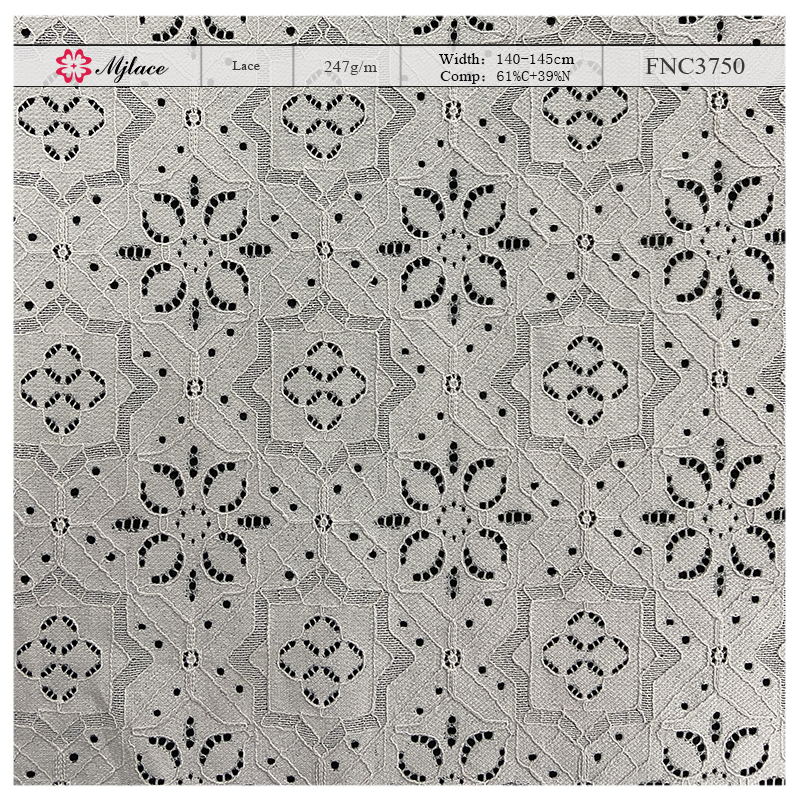
MJLace has manufacturing and processing capabilities that cover dyeing, embroidery, printing, laser cutting, cut-piece work, and finishing.
In-House Dyeing and Color Matching
Color is one of the most sensitive issues in textile sourcing. A small color difference can affect the entire garment collection.
MJLace has dyeing-related equipment and processes, including:
- Industrial dyeing tanks
- Sample dyeing machines
- Yarn dyeing machines
- Batch color matching
- Color correction support
This helps buyers control color accuracy before and during bulk production.
Why Dyeing Capability Matters for Lace Buyers
Lace fabrics often include different fibers, mesh bases, embroidery threads, or decorative elements. These materials may absorb dye differently. Without proper dyeing control, the final fabric may show uneven tone, poor color fastness, or batch variation.
A supplier with dyeing capability can respond faster when buyers need custom colors, lab dips, or corrections.
Embroidery Production Capability
Embroidery is central to many MJLace products. The company supports multiple embroidery techniques, including cord embroidery, multi-color embroidery, heavy embroidery, sequins and beads embroidery, laser embroidery, and cut-piece embroidery.
For garment factories, embroidery capability affects:
- Pattern accuracy
- Stitch density
- Repeat consistency
- Fabric stability
- Production speed
- Custom development flexibility
Post-Processing and Finishing
MJLace offers post-processing services such as:
- Fabric dyeing
- Printing
- Laser cutting
- Position embroidery
- Cut-piece processing
- Fabric finishing
- Packaging preparation
This one-stop processing model helps buyers reduce supplier coordination costs.
Why Quality Control Is Critical in Lace Fabric Manufacturing
Lace is a delicate fabric category. Many defects are difficult to identify from photos but become obvious during garment production.
Common lace sourcing problems include:
- Pattern distortion
- Uneven embroidery
- Broken threads
- Dyeing inconsistency
- Width variation
- Weak mesh base
- Poor trim edge quality
- Shrinkage after washing
- Decorative elements falling off
- Color mismatch between sample and bulk
MJLace’s quality control approach focuses on raw material inspection, in-process monitoring, and final inspection before shipment.
Raw Material Inspection
Before production begins, raw materials should be checked for:
- Yarn strength
- Fiber consistency
- Base fabric stability
- Dye compatibility
- Supplier reliability
- Batch traceability
This stage reduces the risk of defects appearing later in bulk production.
In-Process Quality Control
During production, the team monitors:
- Embroidery precision
- Machine calibration
- Pattern repeat consistency
- Fabric tension
- Stitch density
- Cutting accuracy
- Surface defects
For custom lace development, in-process control is especially important because pattern, texture, and structure must remain consistent across production batches.
Final Inspection Before Shipment
Before shipment, finished fabrics are inspected for:
- Surface defects
- Color matching
- Measurement and width
- Weight verification
- Packaging and labeling
- Order consistency
Only products that pass inspection should be approved for delivery.
Lace Fabric Quality Control Checklist
| Inspection Stage | What to Check | Why It Matters for Buyers |
| Raw Material | Yarn strength, base fabric, dye compatibility | Prevents production instability |
| Sampling | Pattern accuracy, hand feel, color | Confirms design before bulk order |
| In-Process QC | Stitching, tension, embroidery density | Reduces defects during production |
| Dyeing Control | Color matching, batch consistency | Avoids color complaints |
| Final Inspection | Defects, width, weight, packaging | Ensures order meets shipment standard |
| Export Preparation | Labeling, packing, documents | Reduces customs and delivery issues |
What Certifications and Compliance Should Buyers Confirm?
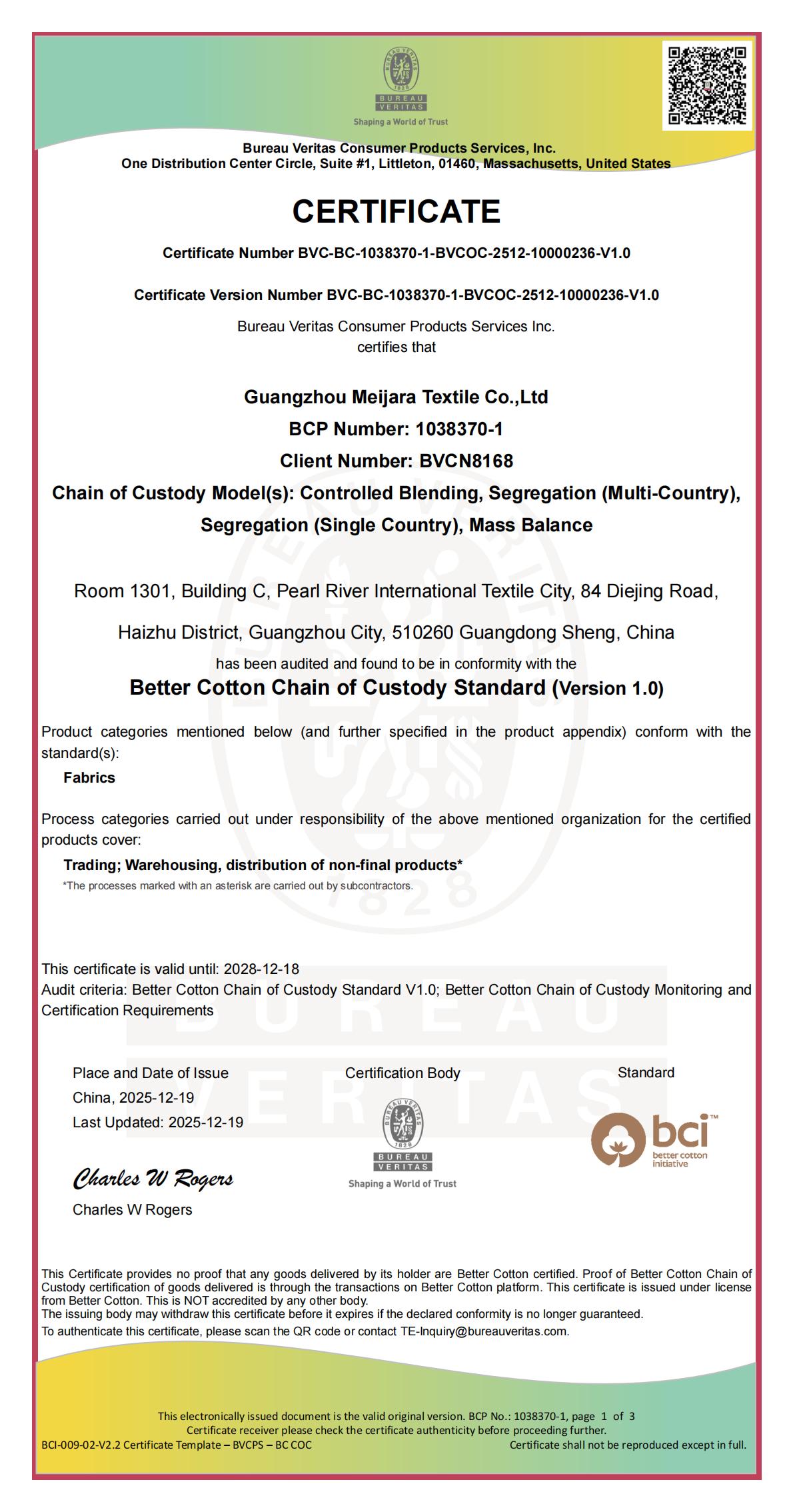
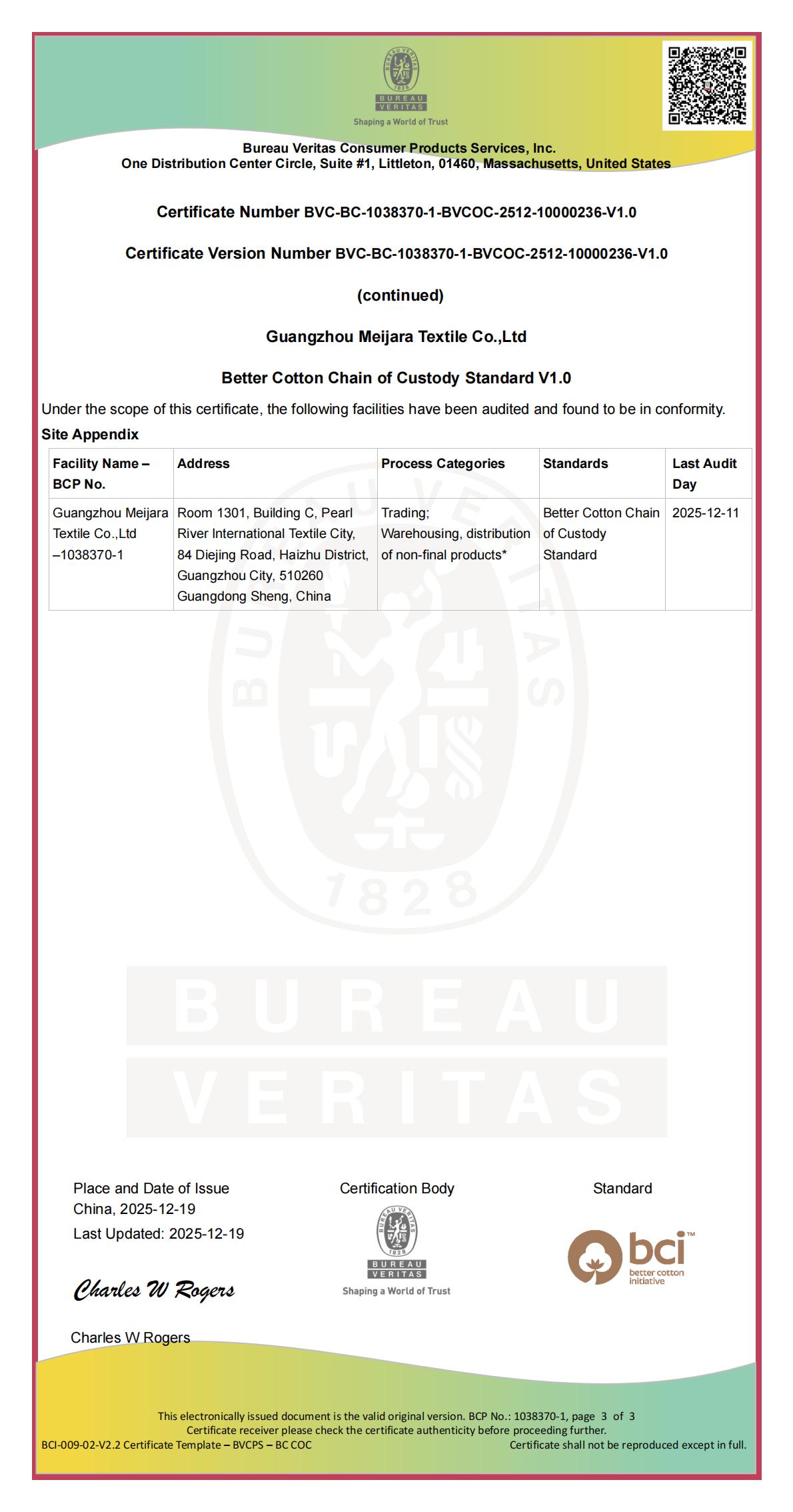
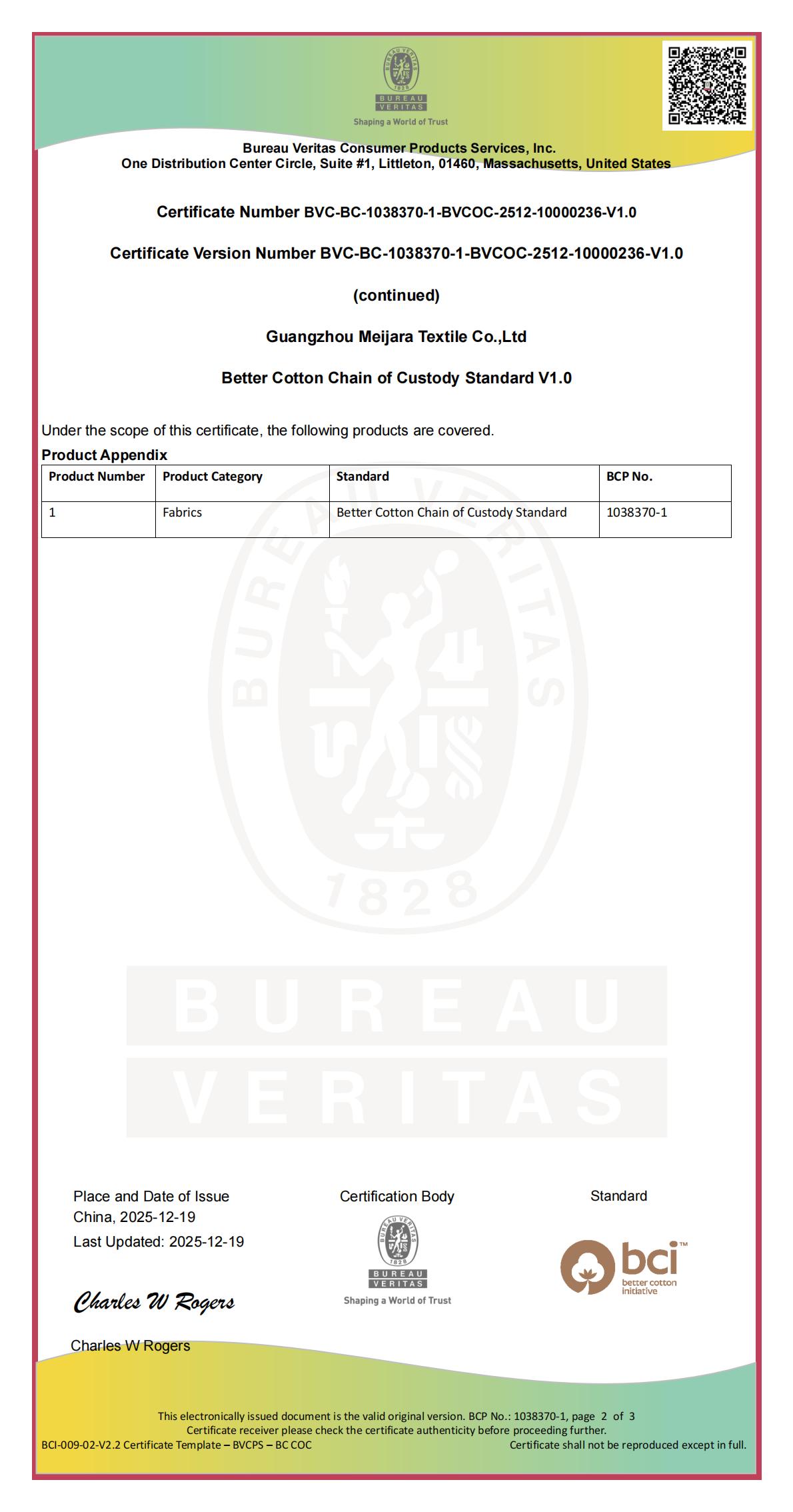
For global textile buyers, certifications help reduce purchasing risk. MJLace works with industry quality and environmental requirements such as ISO and OEKO-TEX related compliance where applicable.
Buyers should confirm the exact certificate scope before placing an order, because certification may apply to the company system, specific materials, specific production processes, or selected product batches.
Common Compliance Questions Buyers Ask
Does the fabric meet environmental requirements?
For fashion brands selling in Europe, North America, Japan, or other regulated markets, buyers may need documentation related to harmful substance control, dye safety, or material traceability.
Can the supplier provide test reports?
For bulk orders, buyers may request test reports for color fastness, shrinkage, composition, or other performance requirements.
Is the supply chain traceable?
Traceability helps brands understand where materials come from and how production is controlled.
How MJLace Supports Global Fashion Brands
MJLace mainly serves B2B buyers in the global fashion supply chain. Its services are designed around the needs of brands, factories, and importers.
For Fashion Brands
Fashion brands need uniqueness, seasonal freshness, and reliable production. MJLace helps with custom lace development, trend-based fabric series, and repeatable supply.
For Bridal Manufacturers
Bridal manufacturers need refined lace, stable ivory and white tones, soft hand feel, and consistent pattern quality. MJLace provides bridal lace and embroidery solutions for wedding dress production.
For Garment Factories
Garment factories care about sewing compatibility, lead time, price stability, and material consistency. MJLace supports bulk supply, cut-piece embroidery, lace trim, and processing services.
For Wholesalers and Importers
Wholesalers need product variety, stable availability, export packaging, and flexible logistics. MJLace offers broad lace categories and international delivery support.
Factory vs Trading Company: Why Direct Lace Manufacturing Matters
When sourcing lace fabric, buyers often compare factories and trading companies. Both can serve different needs, but direct manufacturing gives buyers better control over custom work and bulk consistency.
| Buyer Concern | Factory Advantage | Trading Company Limitation |
| Custom Design | Direct technical adjustment | Often depends on outside factory |
| Color Matching | Faster lab dip and correction | Longer communication chain |
| Quality Control | Direct process monitoring | Less control over production |
| Lead Time | Better planning visibility | More delay risk |
| Cost Structure | More transparent production cost | Additional margin layer |
| Long-Term Development | Stronger product continuity | Supplier changes may affect consistency |
For brands that need OEM/ODM lace development, working with a factory can reduce communication loss and improve production control.
What Should Buyers Ask Before Working with a Lace Fabric Manufacturer?
Before placing a lace fabric order, buyers should ask practical questions instead of only asking for price.
Questions About Product Fit
- What lace type is best for my garment application?
- Can this fabric be used for bridalwear, eveningwear, or lingerie?
- Does the fabric need stretch, structure, softness, or transparency?
Questions About Customization
- Can the pattern be adjusted?
- Can the embroidery density be changed?
- Can the fabric be dyed to our color standard?
- Can the supplier work from artwork or sample references?
Questions About Production
- What is the MOQ?
- What is the sampling lead time?
- What is the bulk production lead time?
- Can the same quality be repeated in future orders?
Questions About Quality
- How is raw material inspected?
- How is color consistency controlled?
- What defects are checked before shipment?
- Can test reports be provided if required?
Questions About Export
- What shipping methods are available?
- Can the supplier support DHL, FedEx, air, or sea shipping?
- What packaging options are available?
- Can shipment documents be prepared for import?
MOQ, Sampling, Lead Time, and Export Support
MOQ and lead time depend on fabric type, customization level, material availability, dyeing requirement, and production schedule.
For simple existing designs, sampling and order preparation may be faster. For fully customized lace or complex embroidery, buyers should allow more time for artwork adjustment, sampling, dyeing, and production confirmation.
Practical Buyer Notes
- Existing designs usually have lower development risk.
- Custom patterns require sample approval before bulk production.
- Special colors require lab dip confirmation.
- Beaded or sequined fabrics may require longer inspection.
- Bridal lace often needs stricter color and hand-feel control.
- Export lead time depends on shipping method and destination.
Why MJLace Fits Long-Term B2B Cooperation
Long-term supplier cooperation is valuable in the fashion industry because brands need continuity across seasons. A supplier who understands a buyer’s style, quality level, color preferences, and production rhythm can make future development faster and more stable.
MJLace’s value lies in its combination of:
- Lace fabric manufacturing
- Embroidery fabric production
- OEM/ODM development
- Dyeing and color matching
- Post-processing services
- Quality inspection
- Export shipment support
This makes the company suitable for buyers who want more than one-time fabric sourcing.
Sustainability and Responsible Textile Manufacturing
Sustainability is becoming more important in fashion sourcing. Buyers increasingly ask about material traceability, dyeing control, waste reduction, and responsible production.
MJLace supports this direction through controlled production processes, quality management, and environmental compliance awareness. For buyers developing eco-conscious collections, the company can discuss suitable material options, dyeing requirements, and documentation needs.
What Sustainable Sourcing Means for Lace Buyers
Sustainable lace sourcing is not only about using one eco material. It also includes:
- Reducing failed samples
- Improving batch consistency
- Avoiding overproduction
- Choosing suitable materials
- Controlling dyeing waste
- Improving product durability
- Using responsible packaging where possible
For brands, sustainability and quality control are closely connected. A stable fabric that lasts longer and produces fewer rejects is already a better sourcing choice.
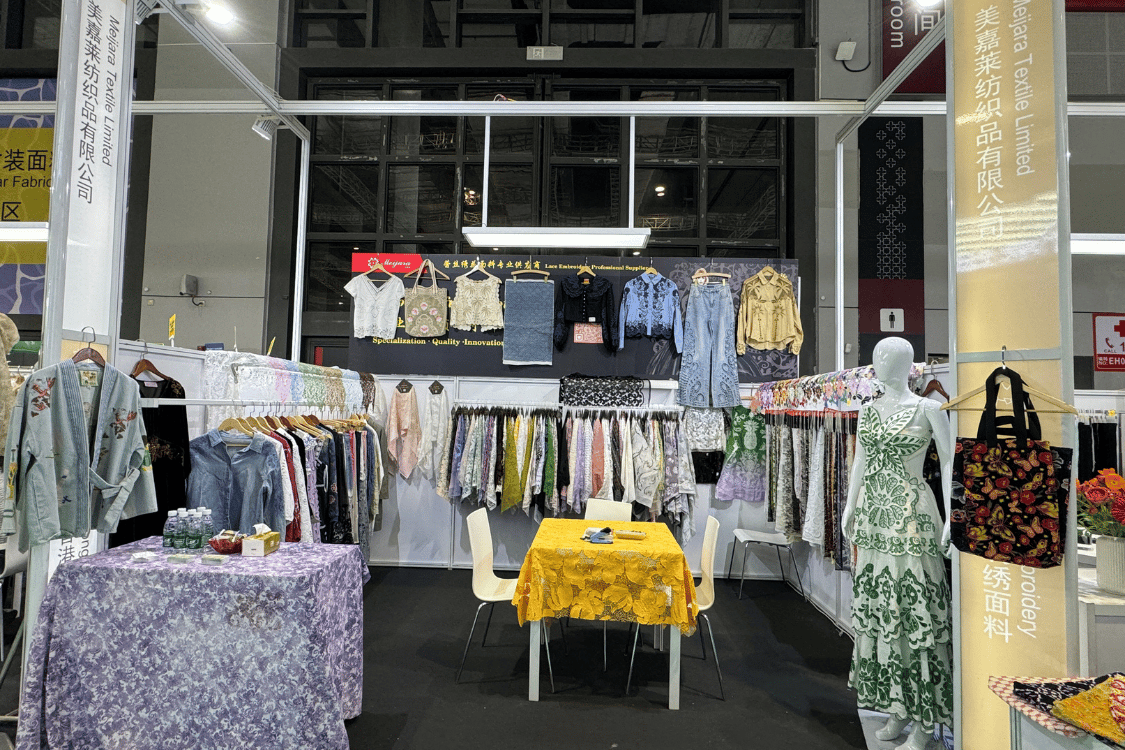
How to Start a Project with MJLace
Buyers can contact MJLace with a product idea, sample request, or custom development requirement.
To speed up communication, it is helpful to provide:
- Fabric type
- Application
- Quantity estimate
- Target color
- Required width
- Reference photo or artwork
- Market destination
- Expected delivery date
- Certification or test requirements
The MJLace team can then evaluate whether an existing collection, custom development, or special processing solution is most suitable.
Common Buyer Scenarios
| Buyer Scenario | Recommended Service |
| A bridal brand needs ivory lace for gowns | Bridal lace fabric and color matching |
| A garment factory needs embroidered panels | Cut-piece embroidery or embroidery fabric |
| A fashion brand needs seasonal fabric | Custom lace development or printed lace |
| A wholesaler needs multiple lace categories | Bulk lace fabric wholesale |
| A designer needs an exclusive pattern | OEM/ODM lace pattern development |
| A buyer needs special texture | Hand cord lace or heavy embroidery |
| A brand needs shipment urgently | Existing designs with express delivery |
FAQ: MJLace, Lace Fabric Manufacturing, and OEM/ODM Orders
What is MJLace?
MJLace, also known as Meijara Textile, is a professional lace and embroidery fabric manufacturer that supplies OEM/ODM custom lace, embroidered fabrics, lace trims, and bulk textile products for global fashion brands and garment factories.
Is MJLace a factory or a trading company?
MJLace is positioned as a manufacturing-focused lace fabric supplier with production, dyeing, embroidery, processing, quality control, and export support capabilities.
What types of lace fabric does MJLace produce?
MJLace produces Chantilly lace, embroidered lace, water-soluble lace, hand cord lace, stretch lace, lace trim, sequins and beads embroidery, laser embroidery, printed lace, tie-dye lace, and cut-piece embroidery.
Can MJLace support OEM or ODM lace development?
Yes. Buyers can provide artwork, fabric samples, garment sketches, or design references. MJLace can help evaluate the production method, develop samples, adjust patterns, and produce bulk orders.
What industries use MJLace fabrics?
MJLace fabrics are used in bridalwear, eveningwear, women’s fashion, lingerie, garment manufacturing, textile wholesale, stagewear, and designer collections.
Can MJLace make custom colors?
Yes. MJLace supports dyeing and color matching through dyeing equipment and sample development processes. Buyers should provide color references or Pantone standards when possible.
What should buyers prepare before requesting samples?
Buyers should prepare the intended application, fabric reference, desired color, quantity estimate, required width, target market, timeline, and any test or certification requirements.
Does MJLace support bulk embroidered fabric wholesale?
Yes. MJLace supplies embroidered fabrics and lace materials for wholesale buyers, garment factories, and importers who need bulk production and export delivery.
What affects the price of custom lace fabric?
Price is affected by yarn type, base fabric, embroidery density, lace width, color requirement, finishing process, quantity, decoration such as beads or sequins, and packaging needs.
What affects the lead time of lace fabric orders?
Lead time depends on whether the fabric is existing or custom-developed, whether dyeing is required, how complex the embroidery is, and whether special finishing or testing is needed.
Can MJLace ship internationally?
Yes. MJLace can support international delivery by sea freight, air freight, DHL, FedEx, or other shipping methods depending on buyer requirements.
Can MJLace provide certifications?
MJLace works with quality and environmental compliance requirements such as ISO and OEKO-TEX related documentation where applicable. Buyers should confirm exact certificate scope based on the product and order.
Why choose a lace fabric factory in China?
A China lace fabric factory can provide integrated production, custom development, competitive wholesale supply, flexible processing, and export experience for global apparel buyers.
How can buyers reduce sourcing risk?
Buyers should confirm samples, color standards, MOQ, lead time, QC process, packaging, shipment method, and documentation before placing bulk orders.
Conclusion: A Manufacturing Partner for Scalable Lace Fabric Development
MJLace (Meijara Textile) is more than a lace catalog supplier. It is a lace fabric manufacturer and embroidery fabric supplier built around product development, production control, dyeing capability, quality inspection, and export service.
For global fashion brands, bridal manufacturers, garment factories, and textile wholesalers, the company offers a practical combination of creative fabric development and scalable manufacturing.
If you are sourcing lace fabric for a new collection, developing exclusive embroidery designs, or looking for a long-term lace fabric factory in China, MJLace can support your project from sample development to bulk production and global delivery.

Start Your Custom Lace Project
Share your fabric idea, artwork, reference sample, or target collection with the MJLace team. We can help you evaluate the suitable lace type, production method, MOQ, sample process, and delivery plan for your next fashion collection.