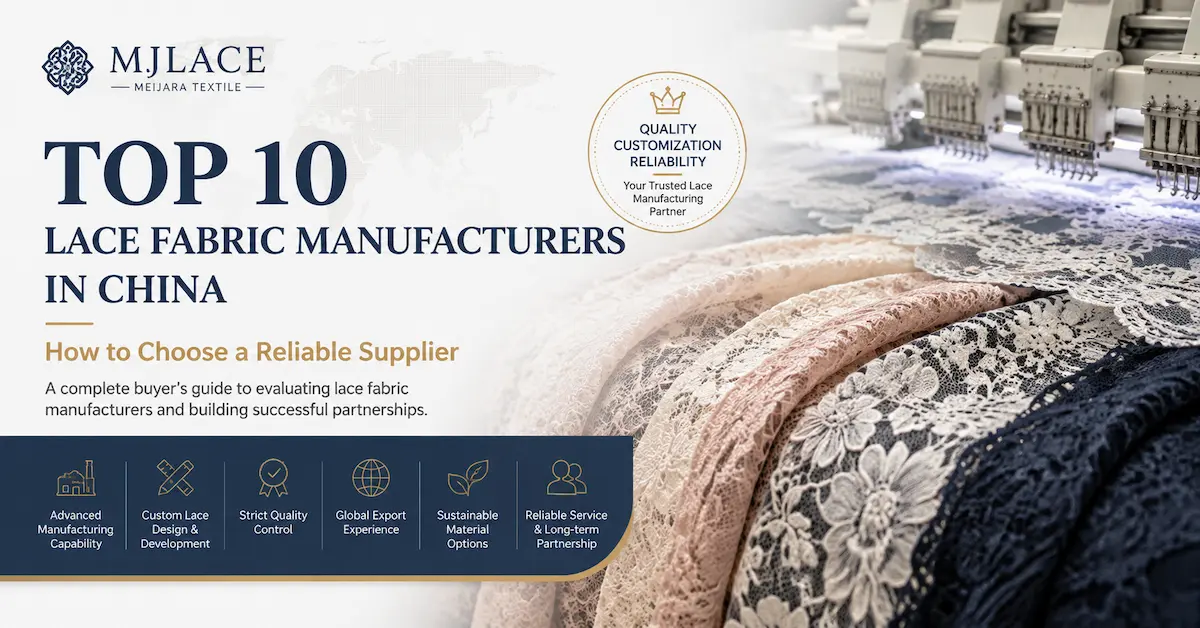


Find the right lace fabric supplier in China for your fashion business
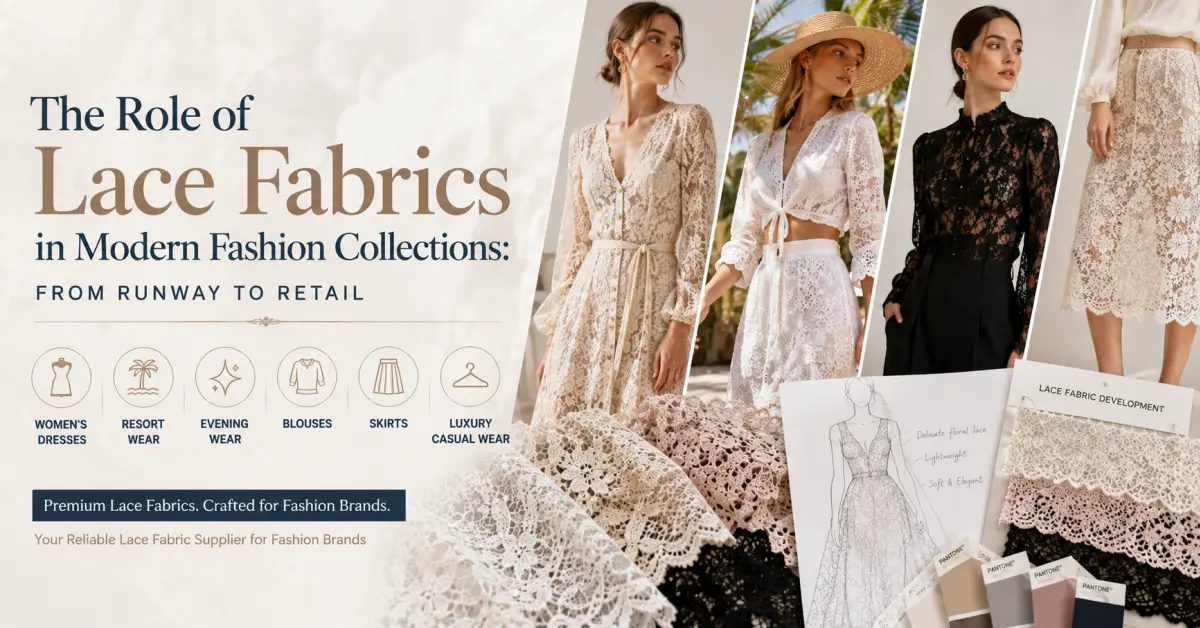
In today's global fashion industry,Lace fabric is no longer limited to traditional wedding dress uses. Modern designers and fashion brands are increasingly using lace as a key material for contemporary clothing collections, including dresses, shirts, skirts, evening gowns, resort collections, lingerie and high-end ready-to-wear products.
However, for international buyers, Finding a reliable lace fabric supplier in China is not just as simple as finding a company that can provide fabrics at competitive prices.
A successful procurement partnership requires much more:
-
Stable product quality
-
Powerful customization capabilities
-
Reliable production capabilities
-
Professional communication
-
Continuous Delivery Performance
-
Understanding of global fashion trends
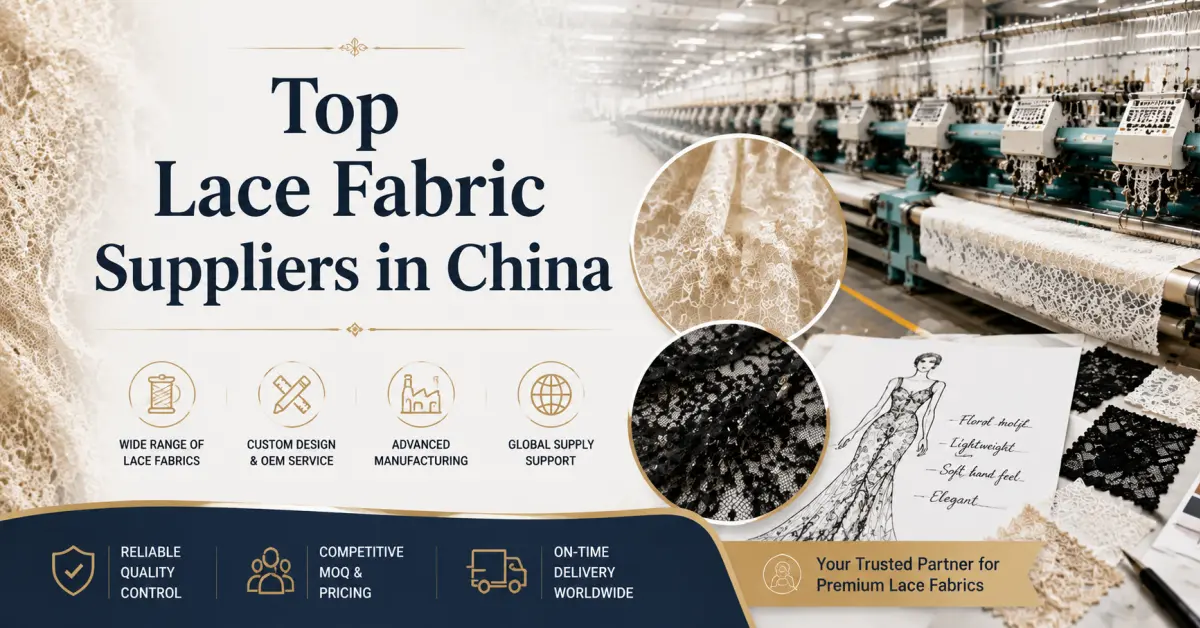
China has become one of the most important textile manufacturing centers in the world, with a complete lace fabric production and supply chain. FromEmbroidered lace, Jipur lace to custom lace fabrics and decorative trims, Chinese suppliers provide solutions for fashion brands of different sizes.
For emerging designers, working with the right supplier can help them turn their ideas into commercial collections.
For established brands, professionalChinese lace fabric suppliers can become important partners to support seasonal product development and long-term development.
This guide explains how to evaluate lace fabric suppliers in China, what services professional suppliers provide, and how fashion brands can choose the right production partner.
Why do fashion brands choose Chinese lace fabric suppliers?
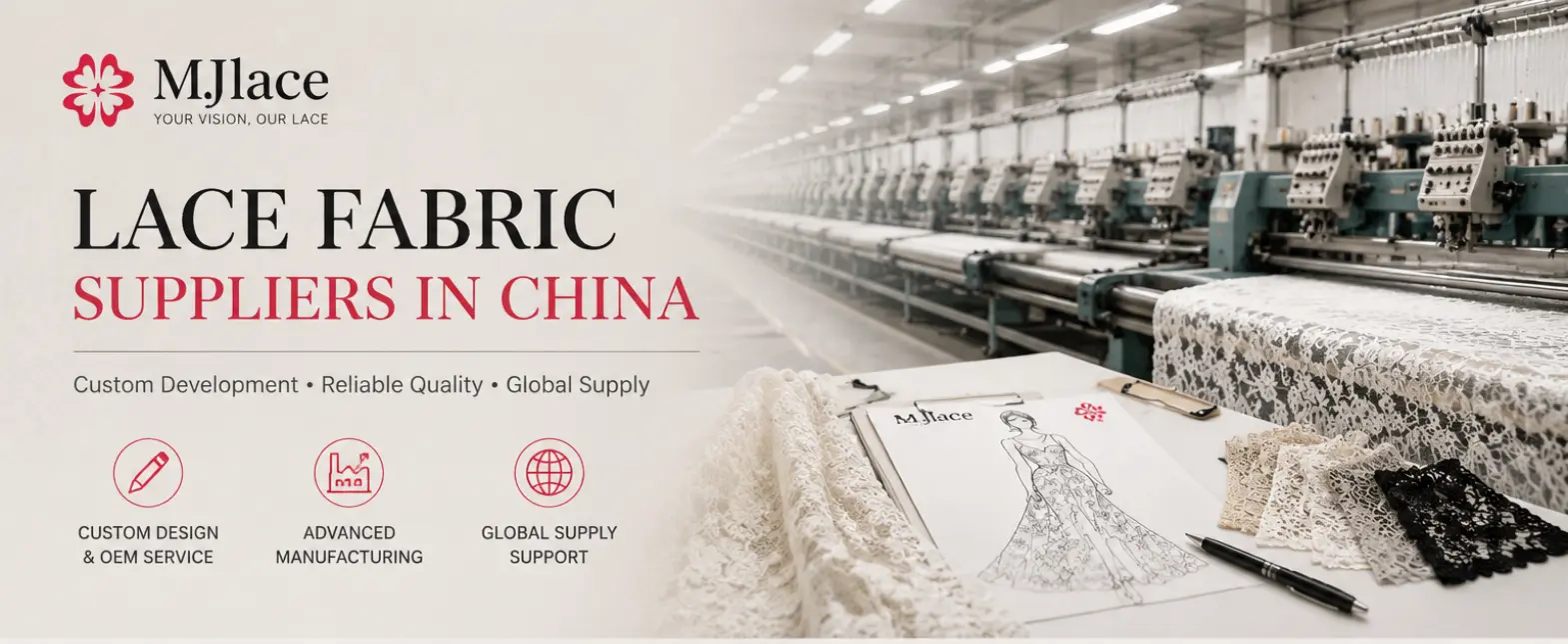
China has developed a mature textile ecosystem that can support almost every aspect of lace fabric production.
Unlike simple trading markets, many Chinese lace suppliers operate within complete manufacturing clusters that integrate design development, embroidery production, fabric finishing, quality inspection and logistics services.
For international fashion companies, this creates many advantages.
Complete lace textile supply chain
One of the biggest advantages of sourcing from China is having a complete textile supply chain.
Professional lace suppliers can coordinate multiple production links:
-
Fabric preparation
-
Embroidery design development
-
Pattern programming
-
Embroidery production
-
Dyeing and finishing
-
Quality inspection
-
Packaging and exporting
This integrated supply chain enables suppliers to respond more quickly to customer needs.
Advantages of China's lace fabric supply chain
| Supply chain advantages | Benefits for fashion brands |
|---|---|
| A complete textile ecosystem | More convenient product development |
| Experienced production team | Better production consistency |
| Multiple material options | More design possibilities |
| Flexible customization | Exclusive product development |
| Extensive export experience | Smoother international cooperation |
This flexibility is especially important for brands developing seasonal collections.
Fashion trends are changing rapidly, and suppliers need to support faster sample production and product adjustments.
Powerful custom lace development capabilities
Many fashion brands today are no longer only interested in sourcing standard fabrics.
They want unique materials that represent their brand image.
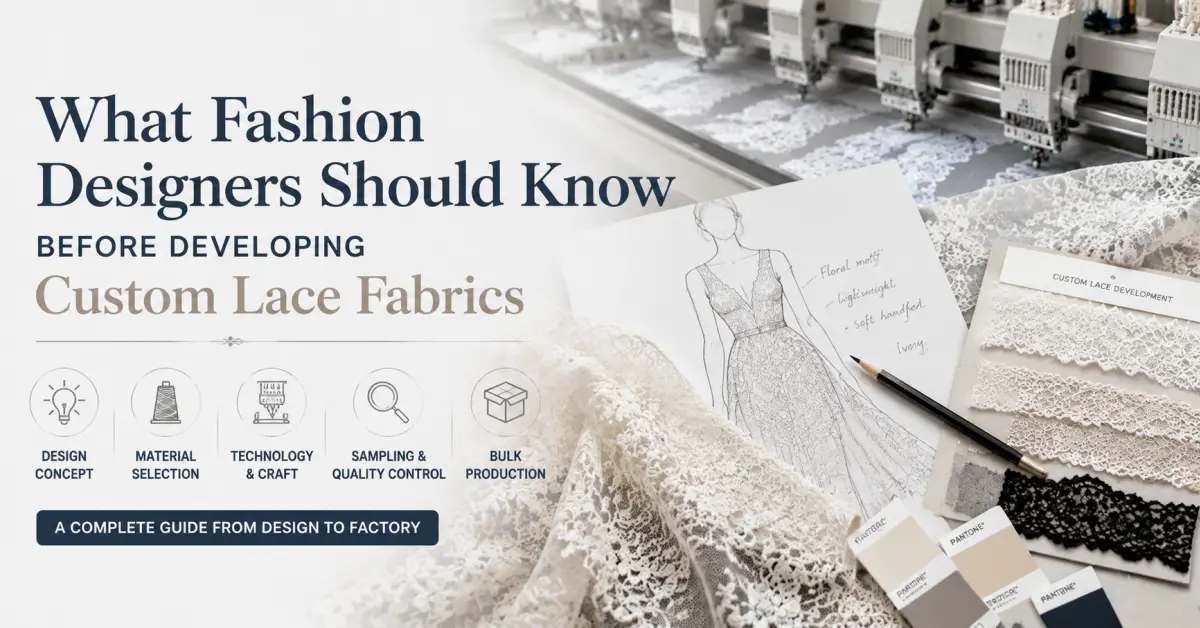
Because of this, Custom lace fabric developmenthas become an important service provided by professional suppliers. ExploreCustomized process.
A good lace supplier can help with branding:
-
Exclusive embroidery pattern
-
Custom floral design
-
Unique texture
-
Special color combinations
-
Different fabric structures
Standard lace fabric and custom lace fabric
| Features | Standard lace fabric | Customized lace fabric |
|---|---|---|
| Design | Existing mode | Brand exclusive design |
| Availability | In stock | Requires development |
| Exclusivity | Limited | Higher |
| Brand differentiation | low | Strong |
| Applies to | Basic collection | High-end fashion brand |
For fashion companies competing in a highly competitive market, custom lace offers a way to create stronger product identity.
A variety of lace fabrics to choose from
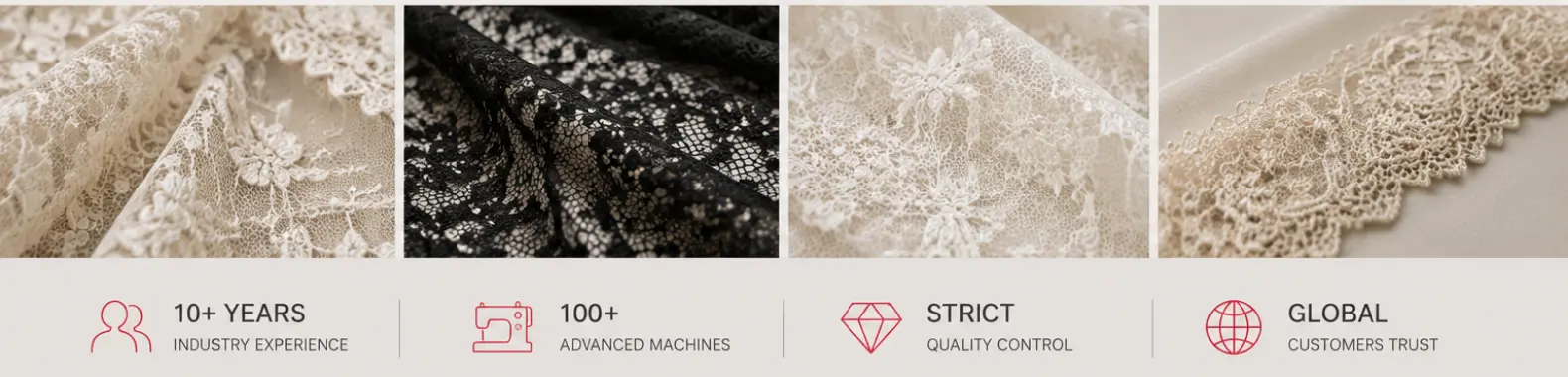
ProfessionalChina lace fabric suppliersusually offer different kinds of lace to meet various fashion application needs.
Different lace structures will produce different visual effects and clothing performance.
Common lace fabric types provided by Chinese suppliers
| Lace type | Main features | Common applications |
|---|---|---|
| Embroidery lace | Decorative pattern with embroidery details | Dress, fashion |
| Jipur Lace | Rich texture and three-dimensional appearance | Luxury clothing |
| Stretch lace | Flexible and comfortable | Tights |
| Water-soluble lace | Exquisite luxury effect | High-end fashion |
| Cotton lace | Natural texture | Casual fashion |
| Lace | Decorative edge details | Clothing accessories |
Proper lace structure depends on:
-
Clothing design
-
Target market
-
Price positioning
-
Production requirements
Specialized suppliers can recommend suitable materials based on the end use.
How to choose the right lace fabric supplier in China
For fashion buyers, choosing the right supplier is one of the most important decisions.
Suppliers with attractive prices but weak R&D capabilities may cause problems in the production process.
Before working together, buyers should evaluate several important factors.
Assess product development capabilities
A reliable supplier should not only own production equipment.
They should have the ability to understand design concepts and translate them into production-ready fabrics.
Important development capabilities include:
-
artwork analysis
-
pattern adjustment
-
sample creation
-
color matching
-
technical recommendations. Learn about pattern design development.
Questions Buyers Should Ask
Before working with a lace supplier, consider:
Can the supplier develop custom patterns?
Fashion brands often need exclusive designs rather than common market products.
Can the supplier provide samples before bulk production?
Sampling allows brands to check:
-
appearance
-
texture
-
quality
-
suitability
before making large investments.
Can the supplier improve designs technically?
Sometimes a design concept may not be suitable for production directly.
Experienced suppliers can suggest:
-
pattern modifications
-
material adjustments
-
structural improvements
Check Manufacturing Capability
Production capability directly affects order reliability.
International buyers should understand:
-
factory scale
-
production equipment
-
quality control process
-
monthly capacity
Factory Evaluation Checklist
| Evaluation Area | What Buyers Should Check |
|---|---|
| Production equipment | Modern embroidery machines |
| Technical team | Experienced textile professionals |
| Quality inspection | Standard QC procedures |
| Capacity | Ability to handle bulk orders |
| Export experience | International shipping knowledge |
A strong manufacturing foundation helps avoid problems such as:
-
inconsistent batches
-
delayed delivery
-
quality differences
Consider OEM and Private Label Services
For fashion brands, OEM capability is becoming increasingly important.
An OEM lace supplier does not only produce fabrics.
They support brands from concept development to final production.
OEM Lace Manufacturing Services
| Service | Description |
|---|---|
| Design consultation | Discuss product requirements |
| Pattern development | Create customized lace designs |
| Sample production | Test before bulk orders |
| Color customization | Match brand colors |
| Bulk manufacturing | Large-scale production |
| Quality inspection | Ensure consistency |
For brands building unique collections, OEM cooperation creates stronger market advantages.
Top Lace Fabric Suppliers in China for Fashion Brands
When searching for lace suppliers in China, buyers usually consider:
-
manufacturing experience
-
product range
-
customization ability
-
export capability
The following supplier categories represent the main types of lace suppliers available in China.
Custom Lace Fabric Manufacturers
Custom lace manufacturers focus on product development and exclusive designs.
They are suitable for:
-
fashion brands
-
designer labels
-
premium apparel companies
Their main advantages include:
-
stronger customization
-
better technical support
-
product exclusivity
Embroidery Lace Fabric Suppliers
Embroidery lace suppliers specialize in decorative textile production.
Typical products include:
-
floral embroidery lace
-
mesh embroidery lace
-
3D embroidery lace
-
fashion embroidery fabrics
These suppliers are widely used by apparel manufacturers.
Wholesale Lace Fabric Suppliers
Wholesale suppliers usually provide:
-
larger product selections
-
standard designs
-
competitive pricing
They are suitable for:
-
distributors
-
small fashion brands
-
retailers
Lace Trim Suppliers
Lace trim suppliers focus on decorative applications.
Products include:
-
edge lace
-
ribbon lace
-
garment decoration lace
They are commonly used in:
-
women's apparel
-
accessories
-
home textiles
How International Fashion Brands Work With Lace Fabric Suppliers in China
Choosing a lace supplier is only the first step.
For international fashion brands, the most important question is:
How can a supplier support the entire product development process?
Modern lace sourcing is no longer simply a purchasing activity.
Successful cooperation usually involves multiple stages:
-
concept communication
-
material selection
-
design development
-
sampling
-
production
-
quality inspection. Learn about quality control standards.
-
international delivery
A professional China lace fabric supplier should be able to support brands throughout the entire process.
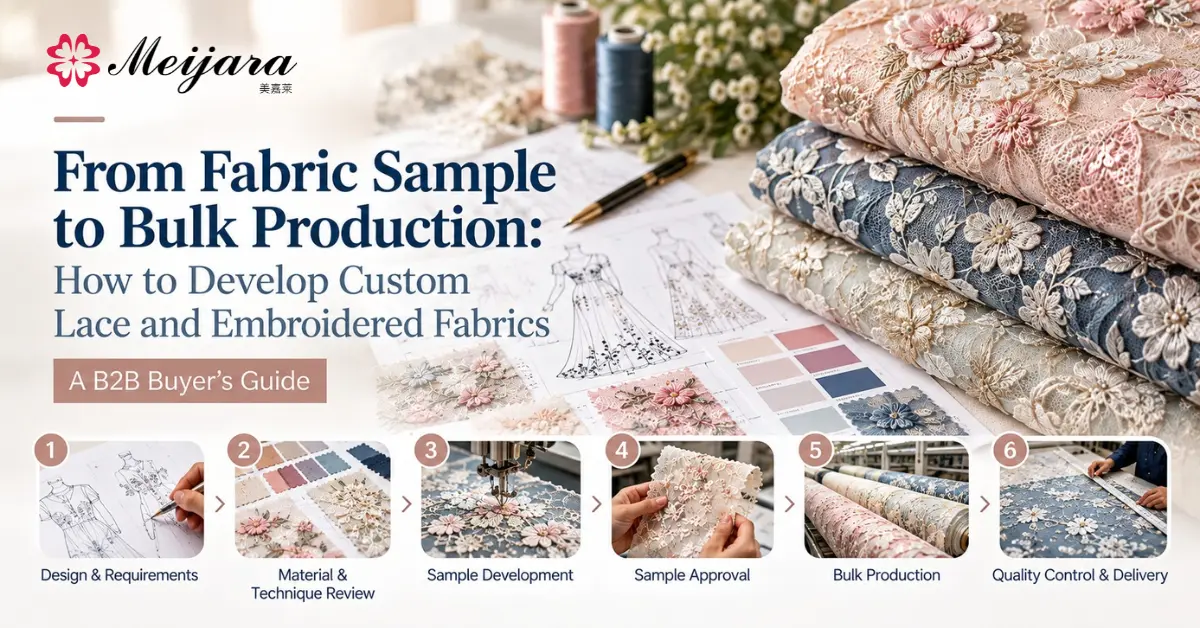
The Complete Cooperation Process With a Chinese Lace Supplier
Step 1: Initial Design Discussion
The first stage begins with communication between the brand and supplier.
Fashion buyers usually provide:
-
design references
-
inspiration images
-
sketches
-
existing fabric samples
-
product requirements
The supplier evaluates:
-
technical feasibility
-
suitable lace structures
-
production methods
-
estimated development requirements
Example:
A fashion brand may require:
A lightweight floral lace fabric for a summer women's collection with a soft hand feel and premium appearance.
The supplier may recommend:
-
embroidered mesh lace
-
lightweight polyester lace
-
cotton blend lace
-
customized floral embroidery
This technical consultation helps brands avoid unsuitable fabric choices.
Step 2: Lace Design Development
After confirming the concept, the supplier begins fabric development.
This stage may include:
-
artwork preparation
-
pattern digitization
-
embroidery programming
-
material selection
-
color adjustment
Custom Lace Development Process
| Development Stage | Main Activity |
|---|---|
| Design analysis | Review customer requirements |
| Artwork preparation | Convert design into production format |
| Pattern development | Create lace structure |
| Sample production | Produce prototype fabric |
| Customer feedback | Adjust design details |
| Final approval | Confirm bulk production |
For brands developing exclusive collections, this stage is critical.
A professional supplier can help transform creative ideas into manufacturable products.
Step 3: Sample Approval
Before bulk production, most international buyers require samples.
Sample approval allows brands to evaluate:
-
fabric appearance
-
embroidery details
-
softness
-
stretch performance
-
color accuracy
What Buyers Should Check During Sampling
| Inspection Item | Purpose |
|---|---|
| Pattern accuracy | Ensure design matches expectations |
| Fabric weight | Confirm garment suitability |
| Color consistency | Match brand requirements |
| Edge finishing | Improve garment appearance |
| Durability | Ensure product performance |
A reliable supplier will usually keep communication open during this stage and make necessary adjustments.
Step 4: Bulk Lace Fabric Production
After sample approval, the order moves into production.
During bulk manufacturing, professional suppliers focus on:
-
production scheduling
-
material preparation
-
machine operation
-
quality inspection
Typical Lace Fabric P roduction Timeline
| Production Stage | Estimated Time |
|---|---|
| Design confirmation | 3-7 days |
| Sample development | 7-15 days |
| Material preparation | 5-10 days |
| Bulk production | 20-45 days |
| Final inspection | 3-5 days |
Actual production time depends on:
-
order quantity
-
fabric complexity
-
customization requirements
Step 5: Quality Control and Shipment
For international fashion brands, quality consistency is one of the most important supplier evaluation factors.
A professional lace supplier should have inspection procedures covering:
-
fabric appearance
-
color consistency
-
embroidery quality
-
dimensions
-
packaging
Quality Control Checklist for Lace Fabric
| Inspection Area | Common Checks |
|---|---|
| Surface quality | Missing embroidery, defects |
| Pattern quality | Design accuracy |
| Fabric structure | Strength and stability |
| Color | Shade consistency |
| Packaging | Protection during shipping |
Strong quality control reduces risks during garment production.
Wholesale Lace Fabric Buying Guide for International Buyers
For buyers purchasing lace fabric in bulk, several factors should be considered before placing orders.
1. Understanding Lace Fabric MOQ
MOQ (Minimum Order Quantity) is an important consideration when selecting suppliers.
Different suppliers have different MOQ requirements depending on:
-
customization level
-
fabric type
-
production process
Typical MOQ Situation
| Order Type | Suitable Buyers |
|---|---|
| Sample quantity | Designers testing concepts |
| Small batch order | Emerging brands |
| Medium production order | Growing fashion companies |
| Large bulk order | Established brands |
For customized lace fabrics, MOQ is usually higher because suppliers need to arrange:
-
special patterns
-
production setup
-
material preparation
2. Understanding Lace Fabric Pricing Factors
The price of lace fabric depends on many factors.
It is not determined only by the material.
Important factors include:
-
design complexity
-
embroidery density
-
fabric composition
-
finishing process
-
order quantity
Main Factors Affecting Lace Fabric Cost
| Factor | Impact on Price |
|---|---|
| Pattern complexity | More details increase development cost |
| Embroidery density | Higher density requires more production time |
| Material selection | Premium fibers increase cost |
| Customization | Exclusive designs require development investment |
| Quantity | Larger orders improve cost efficiency |
For fashion brands, choosing only the lowest price supplier may create long-term problems.
A better approach is evaluating:
quality + reliability + development capability
3. Lead Time Considerations
Fashion brands often operate according to seasonal schedules.
Therefore, delivery time is critical.
A reliable supplier should provide clear production planning.
Factors That Influence Delivery Time
| Factor | Effect |
|---|---|
| New design development | Requires additional time |
| Fabric availability | Affects preparation speed |
| Order quantity | Larger orders require longer production |
| Quality inspection | Ensures final consistency |
International buyers should communicate timelines early to avoid delays.
China Lace Fabric Suppliers vs Overseas Suppliers
When sourcing lace fabrics, many brands compare suppliers from different regions.
China has become one of the preferred sourcing destinations because of its combination of:
-
production capability
-
product variety
-
customization experience
Comparison Table
| Factor | China Lace Suppliers | Other Regions |
|---|---|---|
| Production capacity | Strong | Depends on region |
| Product variety | Wide range | Often limited |
| OEM capability | Advanced | Varies |
| Custom development | Strong | Depends on supplier |
| Cost efficiency | Competitive | Often higher |
| Export experience | Extensive | Different by market |
For brands requiring customized fashion fabrics, supplier capability is often more important than location alone.
Why Fashion Brands Prefer OEM Lace Suppliers in China
The fashion industry is becoming more competitive.
Brands need materials that help products stand out.
This is why OEM lace suppliers are becoming increasingly important.
1. Creating Exclusive Brand Identity
Using common fabrics makes it difficult for brands to differentiate.
Custom lace allows brands to create:
-
unique visual language
-
signature patterns
-
exclusive collections
2. Improving Product Differentiation
A unique lace fabric can influence:
-
garment appearance
-
customer perception
-
brand positioning
For premium fashion brands, fabric selection is part of brand strategy.
3. Supporting New Collection Development
Fashion companies frequently develop:
-
seasonal collections
-
capsule collections
-
limited editions
An experienced OEM supplier can support faster product innovation.
How to Verify a Lace Fabric Supplier Before Cooperation
Before selecting a supplier, international buyers should conduct basic verification.
1. Review Supplier Experience
Important questions:
-
How many years has the supplier operated?
-
What markets do they serve?
-
Do they work with fashion brands?
Experience often reflects manufacturing stability.
2. Request Product Samples
Samples provide direct information about:
-
fabric quality
-
craftsmanship
-
finishing
Before placing large orders, sample testing is highly recommended.
3. Understand Factory Capability
Buyers should understand whether the supplier:
-
owns production facilities
-
controls manufacturing processes
-
has technical development teams
A supplier with stronger factory capability usually provides better control over quality and delivery.
4. Check Communication Efficiency
International cooperation requires clear communication.
A good supplier should provide:
-
fast responses
-
technical explanations
-
production updates
-
professional documentation
Communication quality directly affects project efficiency.
Leading Lace Fabric Supplier Categories in China
Instead of selecting suppliers only by company size, buyers should consider which type of supplier matches their needs.
Category 1: OEM Lace Fabric Manufacturers
Best for:
-
fashion brands
-
designer labels
-
exclusive collections
Main advantages:
-
custom development
-
technical support
-
product exclusivity
Category 2: Wholesale Lace Fabric Suppliers
Best for:
-
distributors
-
retailers
-
standard product purchasing
Advantages:
-
faster ordering
-
wider ready-made selections
-
easier inventory management
Category 3: Embroidery Lace Specialists
Best for:
-
premium apparel
-
decorative fashion products
Strengths:
-
detailed embroidery
-
complex patterns
-
luxury appearance
Category 4: Lace Trim Suppliers
Best for:
-
garment decoration
-
accessories
-
fashion details
Products include:
-
lace edges
-
decorative trims
-
finishing elements
Building Long-Term Partnerships With China Lace Fabric Suppliers
For fashion brands, selecting a lace fabric supplier is not only a short-term purchasing decision.
The most successful brands usually establish long-term partnerships with suppliers that understand their product direction and can support future collection development.
A reliable supplier becomes more than a material provider.
They become a manufacturing partner that helps brands:
-
improve product quality
-
develop new designs
-
respond to market trends
-
reduce production risks
-
maintain supply chain stability
1. From Fabric Supplier to Strategic Textile Partner
Traditional sourcing focuses mainly on:
-
price
-
availability
-
delivery time
However, modern fashion brands require deeper cooperation.
They need suppliers who can participate in:
-
design discussions
-
material selection
-
product optimization
-
production planning
Traditional Supplier Relationship vs Strategic Partnership
| Factor | Traditional Supplier | Strategic Lace Partner |
|---|---|---|
| Main purpose | Purchase existing products | Develop products together |
| Communication | Order-based | Project-based |
| Design involvement | Limited | Active participation |
| Customization | Low | High |
| Long-term value | Transaction focused | Partnership focused |
For brands creating seasonal collections, strategic cooperation creates stronger advantages.
2. How Lace Suppliers Support Fashion Brand Growth
A professional lace fabric supplier for fashion brands can provide support beyond manufacturing.
Trend-Based Product Development
Fashion trends change constantly.
Suppliers with strong development capabilities can help brands explore:
-
new lace patterns
-
updated textures
-
innovative fabric structures
-
seasonal color directions
This allows brands to react faster to market changes.
Faster Collection Development
Fashion companies often work under strict seasonal timelines.
A capable supplier can shorten development cycles through:
-
efficient sampling
-
technical experience
-
production optimization
This helps brands launch products faster.
Consistent Supply Chain Support
For growing brands, maintaining consistency is critical.
A reliable supplier can ensure:
-
stable fabric quality
-
repeat production capability
-
predictable delivery schedules
This is especially important when a product becomes successful and requires repeat orders.
3. Sustainability and the Future of Lace Fabric Sourcing
Sustainability has become an important factor in global fashion sourcing.
Many brands are now evaluating suppliers based not only on production capability but also on environmental responsibility.
The future of lace manufacturing will increasingly focus on:
-
responsible materials
-
efficient production
-
supply chain transparency. Visit our sustainability section.
Sustainable Lace Fabric Development
Modern lace suppliers are exploring solutions such as:
-
recycled polyester lace
-
recycled nylon lace
-
eco-conscious materials
-
improved production efficiency
Sustainability Factors Buyers Should Consider
| Sustainability Area | What Buyers Should Evaluate |
|---|---|
| Materials | Responsible fiber options |
| Production | Waste reduction processes |
| Certifications | Available compliance documents |
| Efficiency | Resource-saving manufacturing |
| Transparency | Supply chain information |
For fashion brands developing sustainable collections, choosing the right supplier is an important part of achieving sustainability goals.
4. Technology Development in Modern Lace Manufacturing
The lace industry has experienced significant technological improvements.
Modern suppliers increasingly use:
-
digital design systems
-
computerized embroidery machines
-
automated production management
-
advanced quality inspection methods
How Technology Improves Lace Production
| Technology | Production Benefit |
|---|---|
| Digital pattern design | More accurate customization |
| Computer embroidery systems | Complex design capability |
| Automated inspection | Better quality consistency |
| Production tracking systems | Improved delivery management |
Technology allows suppliers to create more detailed and innovative lace fabrics.
5. Why MJlace Represents the Modern China Lace Fabric Supplier Model
For international fashion brands, the ideal supplier is not simply a company that sells lace fabrics.
It should provide complete textile solutions.
MJlace focuses on supporting fashion companies through:
-
custom lace fabric development
-
embroidery lace production
-
lace trim solutions
-
OEM manufacturing services
-
professional export support. Explore bridal lace.
By combining design understanding with manufacturing experience, MJlace helps brands transform creative concepts into finished textile products.
Product Development Capability
MJlace supports customers through different stages:
-
Design communication
-
Pattern development
-
Sample production
-
Product adjustment
-
Bulk manufacturing
-
Quality inspection. Explore cut piece and processing.
This process helps ensure that customized lace fabrics meet both creative and production requirements.
Common Mistakes When Choosing Lace Fabric Suppliers in China
Selecting the wrong supplier can create significant problems.
Many buyers focus only on price but overlook important factors.
Mistake 1: Choosing Only Based on Low Cost
The cheapest supplier may not always provide the best value.
Low-cost suppliers may have limitations in:
-
quality consistency
-
customization ability
-
communication
-
production stability
For fashion products, fabric quality directly affects the final garment.
Mistake 2: Ignoring Development Capability
A supplier may provide attractive existing products but lack innovation ability.
For brands planning long-term growth, development capability is essential.
Mistake 3: Not Testing Samples Before Bulk Orders
Before large production, buyers should always evaluate samples.
Sample testing helps identify:
-
fabric problems
-
color differences
-
design issues
before they become expensive production problems.
Mistake 4: Lack of Clear Communication
Many international sourcing problems come from unclear communication.
Brands should clearly define:
-
product specifications
-
quality requirements
-
delivery expectations
-
packaging requirements
A professional supplier should actively communicate throughout the project.
Questions to Ask Before Working With a Lace Fabric Supplier
Before cooperation, fashion buyers should prepare a supplier evaluation checklist.
Supplier Evaluation Questions
| Question | Why It Matters |
|---|---|
| Do you manufacture lace fabrics directly? | Understand production capability |
| Can you develop custom designs? | Evaluate OEM ability |
| What lace categories do you produce? | Confirm product suitability |
| Can you provide samples? | Check quality before ordering |
| What is your production capacity? | Evaluate order capability |
| Do you export internationally? | Ensure communication experience |
These questions help buyers identify reliable partners.
FAQ: Lace Fabric Suppliers in China
1. Why should fashion brands source lace fabric from China?
China has a mature textile supply chain, experienced manufacturers, and strong customization capabilities. Fashion brands can access a wide range of lace products while receiving professional development support.
2. What types of lace fabrics can Chinese suppliers provide?
Chinese lace suppliers commonly provide:
-
embroidered lace fabric
-
guipure lace
-
stretch lace
-
water soluble lace
-
cotton lace
-
lace trims
-
customized lace fabrics
The available options depend on supplier capability.
3. Can lace fabric suppliers in China make custom designs?
Yes.
Professional suppliers can develop custom lace based on:
-
design sketches
-
artwork files
-
reference fabrics
-
brand concepts
The development process usually includes pattern creation, sampling, adjustment, and bulk production.
4. What is the MOQ for wholesale lace fabric orders?
MOQ depends on:
-
fabric type
-
customization level
-
production requirements
Standard fabrics may have lower MOQ, while exclusive custom lace usually requires higher quantities due to development costs.
5. How long does lace fabric production take?
Production time depends on project complexity.
Typical processes include:
-
design confirmation
-
sample development
-
bulk production
-
quality inspection
Customized projects usually require more time than ready-made fabrics.
6. How can I verify a China lace fabric supplier?
Buyers should check:
-
factory capability
-
product samples
-
production experience
-
quality systems
-
export history. Learn about importing logistics.
A supplier visit or sample testing can also help confirm reliability.
7. Do Chinese lace suppliers support OEM services?
Many professional manufacturers provide OEM services, including:
-
custom pattern development
-
color customization. Learn about dyeing and color matching.
-
fabric modification
-
bulk production
OEM cooperation is commonly used by fashion brands seeking exclusive collections.
8. Are sustainable lace fabrics available from Chinese suppliers?
Yes.
Many suppliers are developing sustainable solutions using:
-
recycled fibers
-
responsible materials
-
improved manufacturing processes
Brands should communicate sustainability requirements before development.
Choosing the Right Lace Fabric Supplier Builds Long-Term Fashion Success
The right lace fabric supplier is not simply a company that provides materials.
For modern fashion brands, a supplier should provide:
-
manufacturing expertise
-
customization capability
-
stable quality
-
professional communication
-
long-term development support
China's lace manufacturing industry provides global buyers with strong production capabilities and flexible textile solutions.
By choosing an experienced China lace fabric supplier, fashion brands can develop unique collections, improve supply chain efficiency, and create products that stand out in competitive markets.
For brands looking beyond standard fabrics, the right manufacturing partner can become an important foundation for future growth.
Ready to find your reliable lace fabric supplier in China? Visit our homepage to explore our collections or contact us for inquiries. You may also submit an inquiry for custom pricing.