
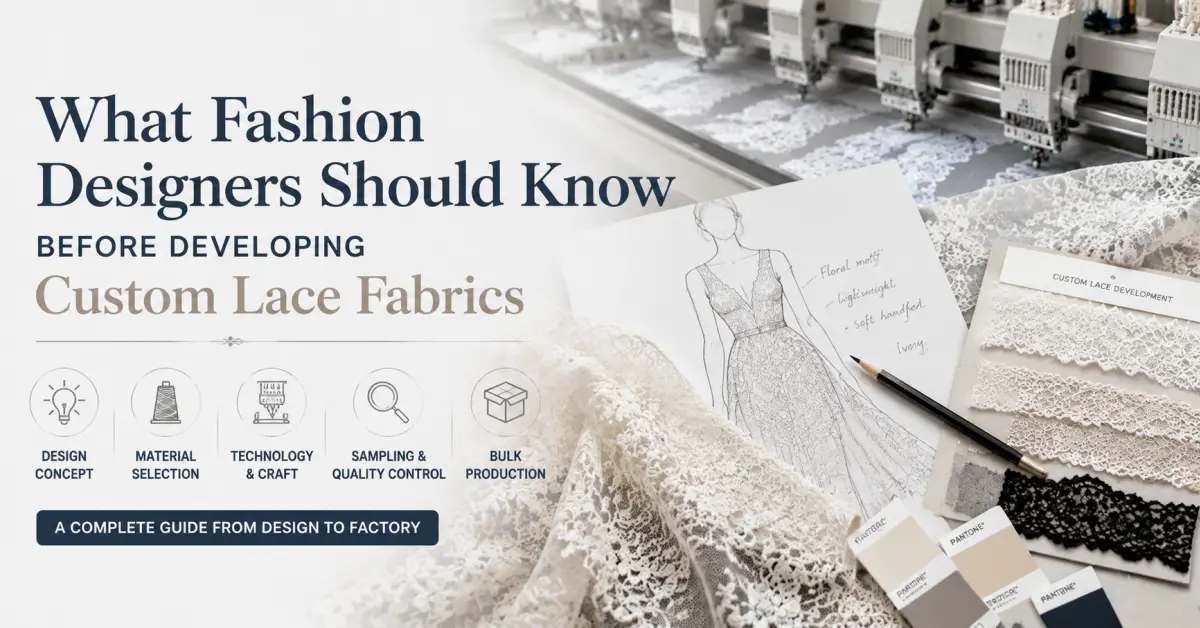

A Complete Guide From Design Concept to Factory Production
In today's fashion industry, lace is no longer limited to traditional bridal gowns or delicate eveningwear. Modern fashion designers increasingly use lace fabrics as a key element to define brand identity, create visual storytelling, and develop exclusive collections.
From luxury ready-to-wear collections to contemporary womenswear, custom lace fabrics allow designers to transform creative ideas into unique textile solutions that cannot be replicated by standard materials.
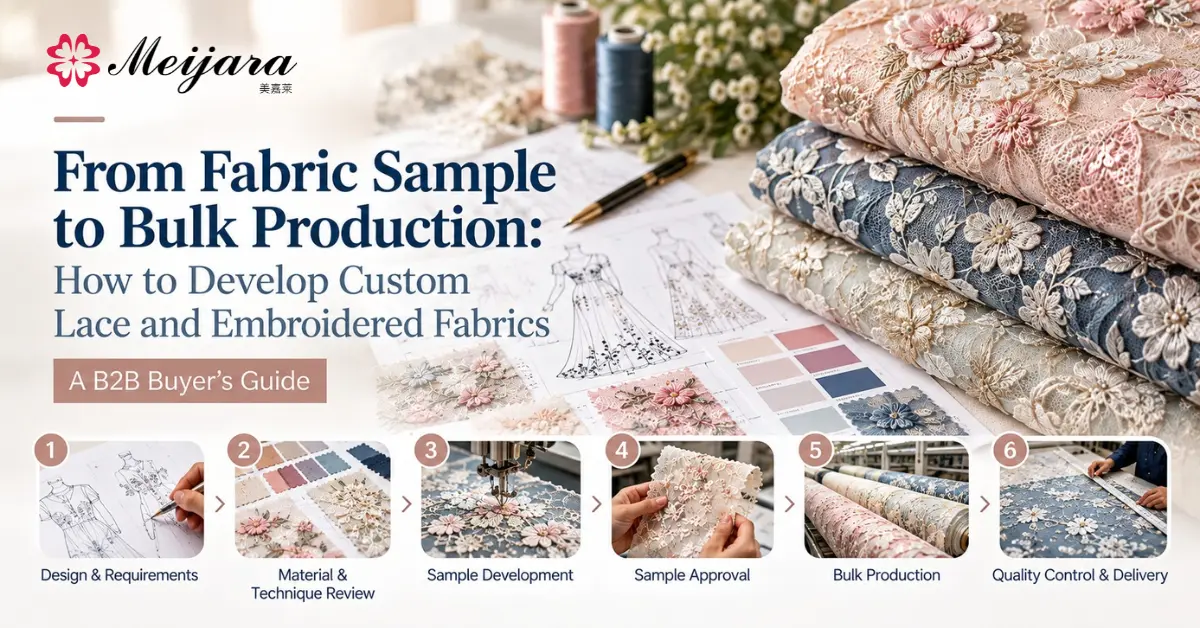
However, developing a custom lace fabric is far more complex than simply selecting a pattern from a supplier catalog. It involves multiple stages, including design interpretation, embroidery technology selection, yarn and base fabric development, sampling, technical adjustment, and bulk production management.
For fashion brands looking to create distinctive collections, understanding how lace manufacturers develop customized fabrics can significantly improve communication with factories and reduce unnecessary development costs.
As an experienced lace fabric manufacturer in China, MJlace works with fashion brands, garment manufacturers, and designers worldwide to develop custom lace solutions from initial concepts to final production.
This guide explains the essential factors every fashion designer should understand before starting a custom lace fabric project.
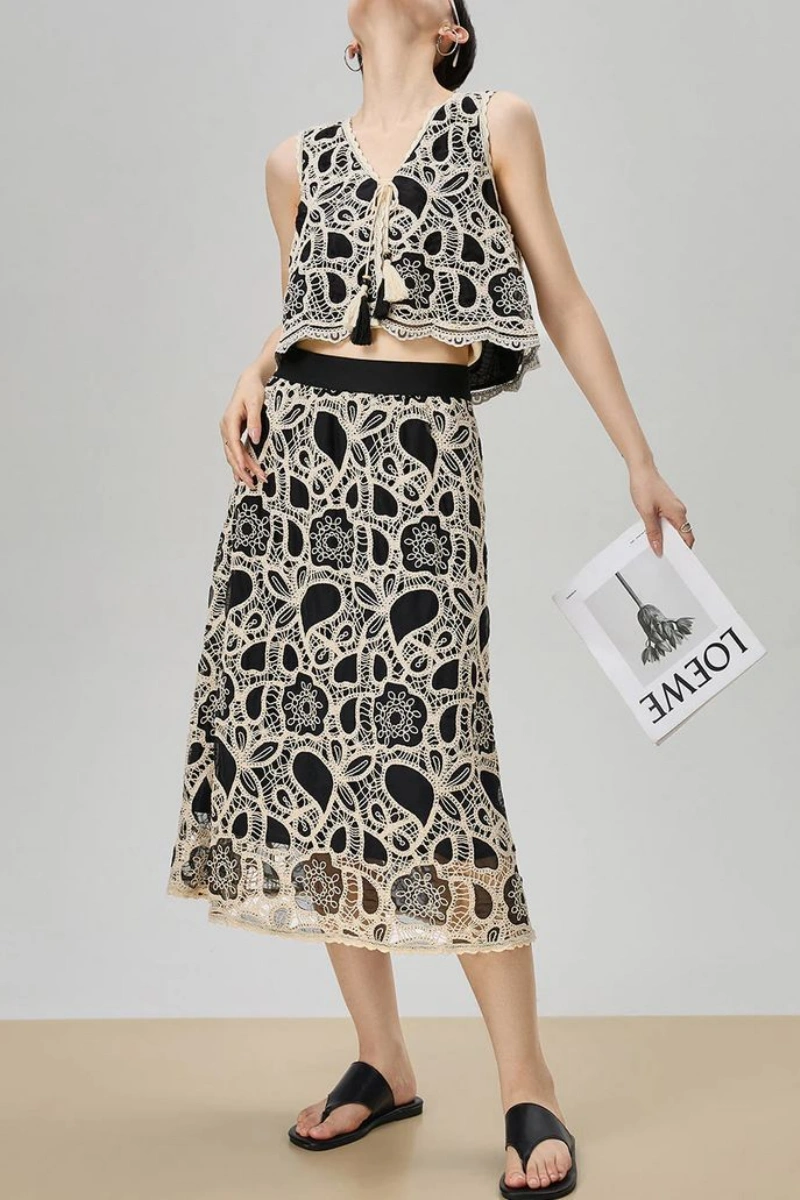
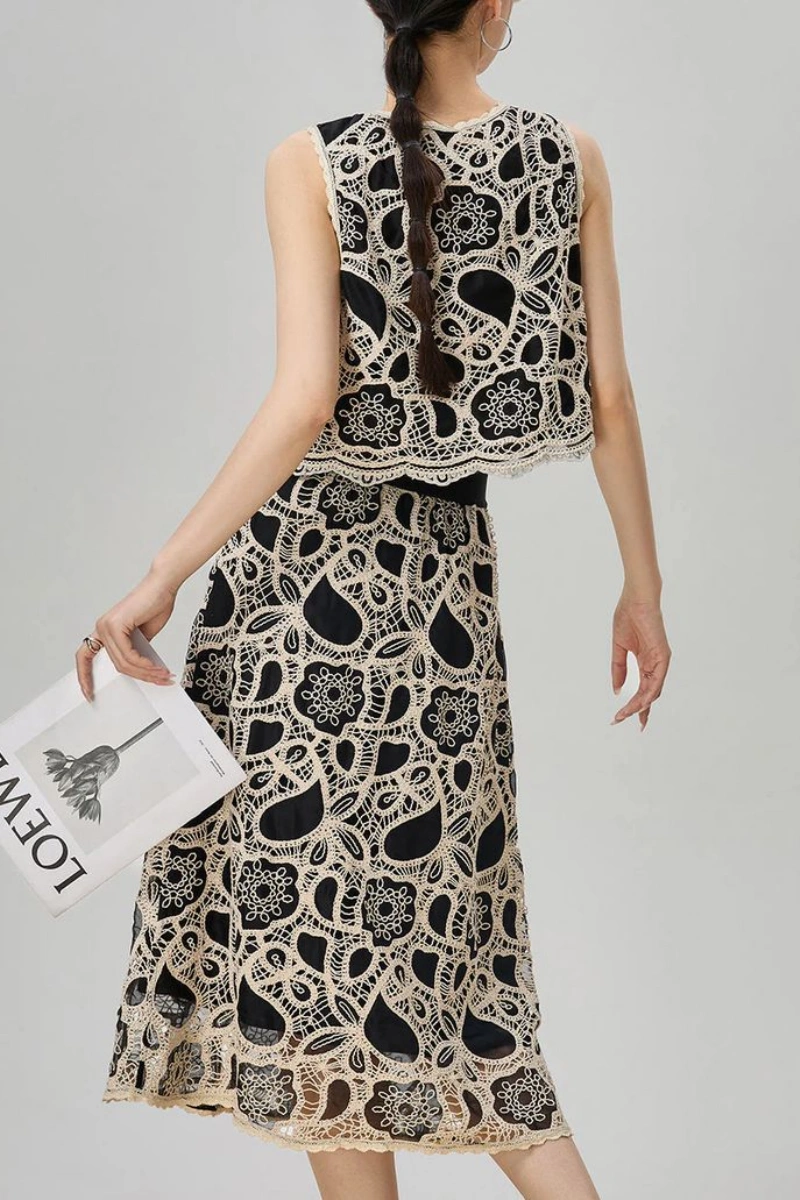
Why Custom Lace Fabrics Matter for Fashion Brands
The fashion market has become increasingly competitive. Many brands no longer compete only through silhouettes and styling but also through exclusive materials.
A unique lace fabric can become a signature element of a collection.
For example:
-
A bridal brand may require customized floral lace with specific motifs.
-
A luxury womenswear brand may develop exclusive embroidered lace panels.
-
A designer label may need lightweight lace with special transparency and texture.
-
A fashion house may request customized patterns that represent its brand identity.
Compared with purchasing ready-made lace fabrics, custom development provides greater creative control. Explore customized processes.
Custom Lace vs Standard Lace Fabrics
| Feature | Standard Lace Fabric | Custom Lace Fabric |
|---|---|---|
| Design selection | Limited existing patterns | Fully customized designs |
| Brand uniqueness | Similar products may exist | Exclusive appearance |
| Pattern modification | Limited | Adjustable according to concept |
| Color options | Standard colors | Custom dye matching. Learn about dyeing and color matching. |
| Fabric structure | Fixed specifications | Developed according to requirements |
| Brand identity | General market positioning | Strong differentiation |
For emerging fashion brands and luxury designers, exclusivity is often one of the most important factors.
A customized lace fabric helps create:
-
Unique product positioning
-
Higher perceived value
-
Stronger brand recognition
-
Better protection against direct competition
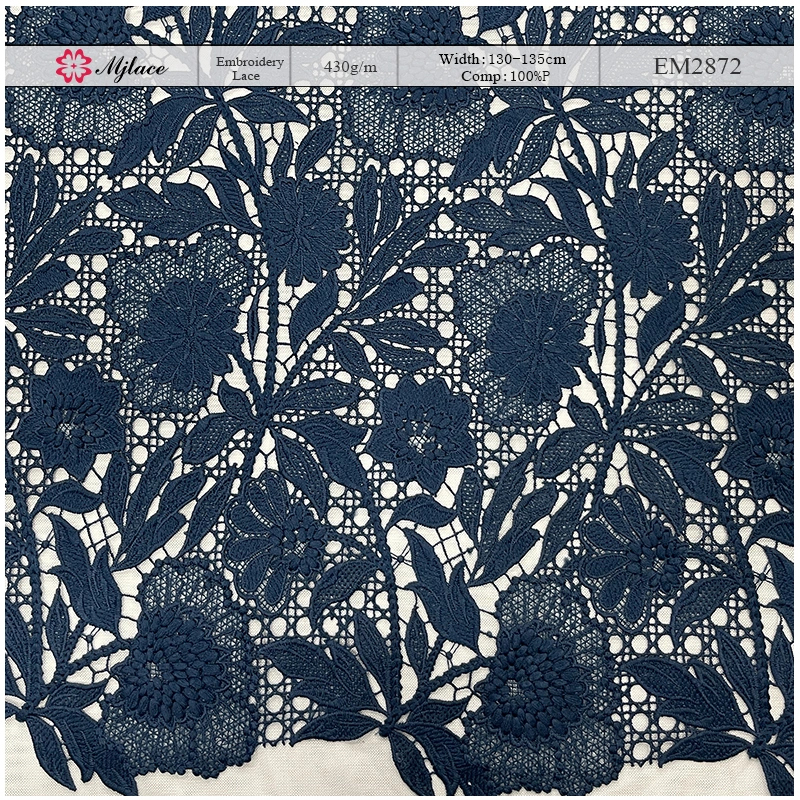
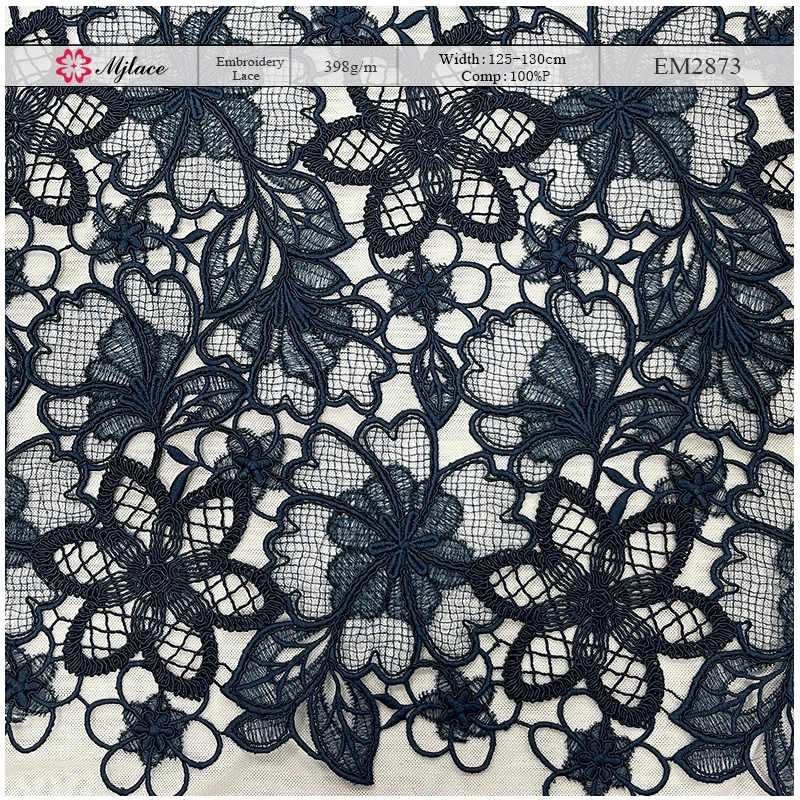
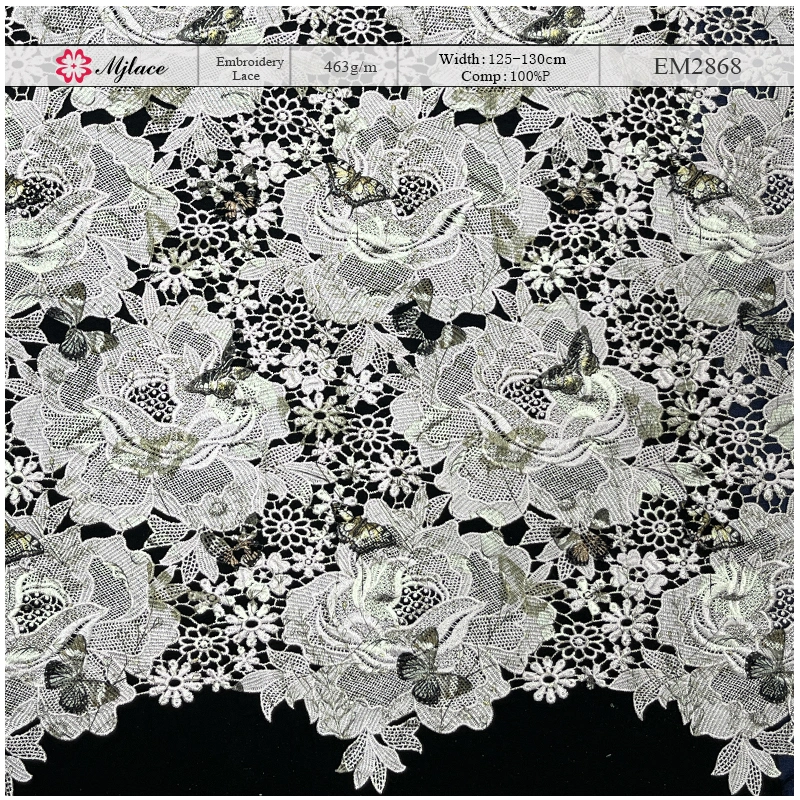
Understanding Custom Lace Fabric Development
Many designers assume that creating custom lace is simply about providing a pattern. In reality, professional lace development requires collaboration between designers and technical teams.
A complete development process usually includes:
Design Concept Analysis
The first stage begins with the designer's creative idea.
The factory needs to understand:
-
Inspiration source
-
Target market
-
Garment application
-
Desired visual effect
-
Required fabric performance
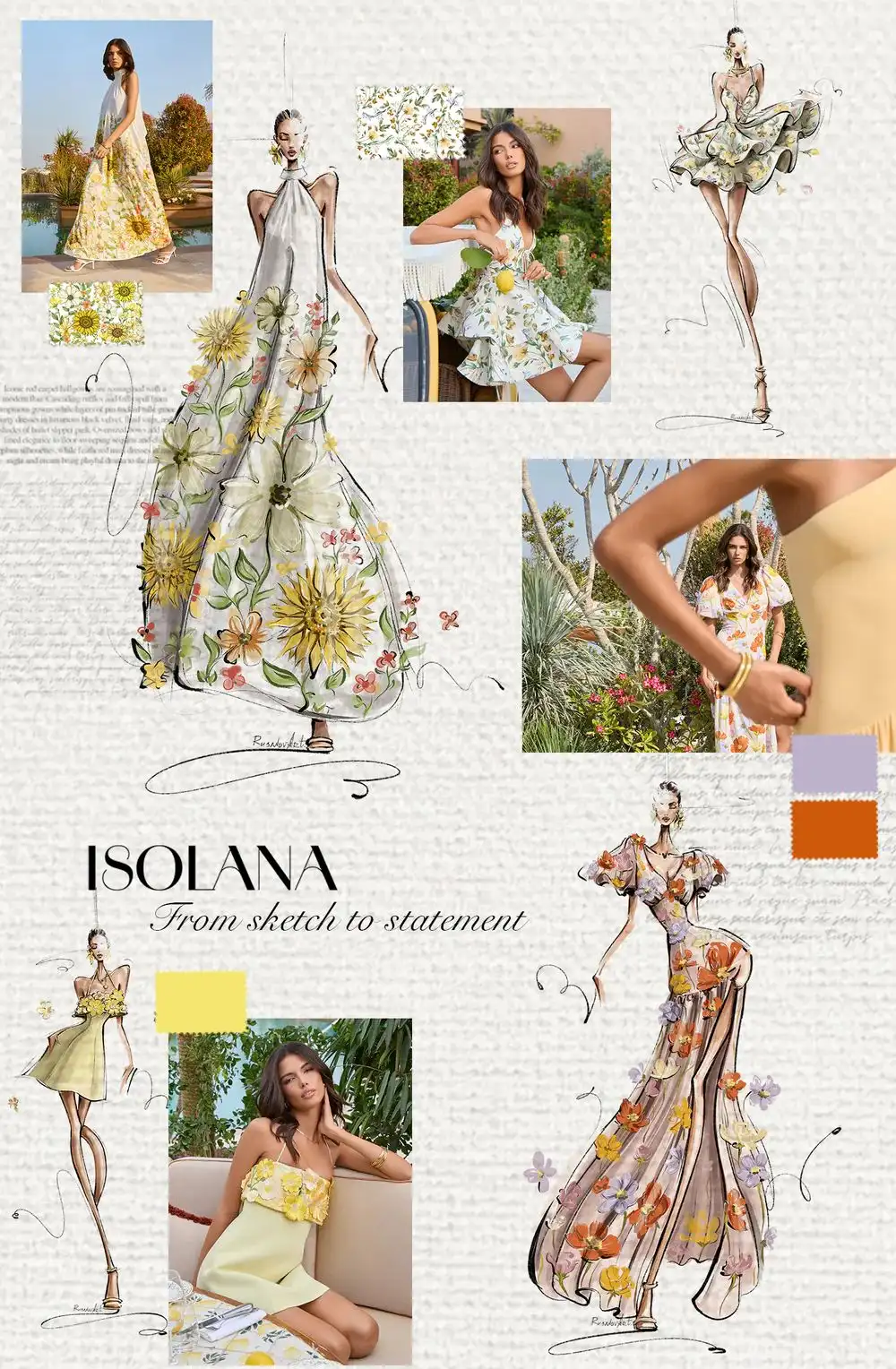
Design references may include:
-
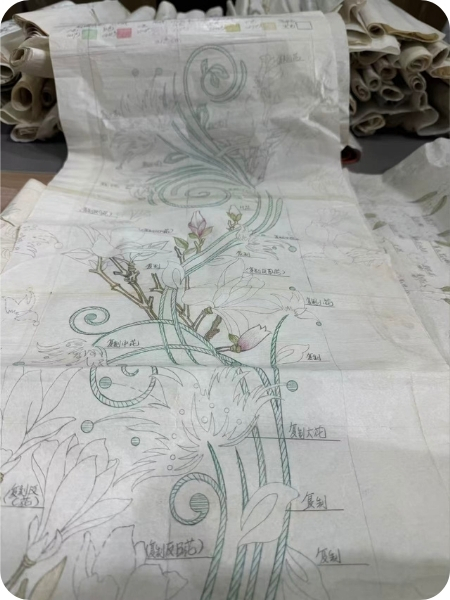
Hand drawings
-
CAD designs
-
Fashion sketches
-
Existing fabric samples
-
Mood boards
-
Brand style references
A professional lace manufacturer does not simply copy a design. Instead, the technical team analyzes whether the concept can be achieved through embroidery technology.
Technical Design Conversion
A fashion sketch must be converted into a production-ready embroidery design.
This process includes:
| Development Element | Factory Consideration |
|---|---|
| Pattern size | Suitable for embroidery machine production |
| Motif density | Balance between appearance and fabric flexibility |
| Thread direction | Affects texture and durability |
| Mesh structure | Determines softness and transparency |
| Edge design | Important for garment finishing |
| Repeat size | Influences fabric utilization |
For example, a designer may request:
"A delicate floral lace inspired by vintage gardens."
The factory must determine:
-
How large should the flowers be?
-
Should the embroidery be raised or flat?
-
Should the mesh be soft tulle or structured net?
-
How much embroidery density is suitable?
These decisions directly affect the final fabric result.
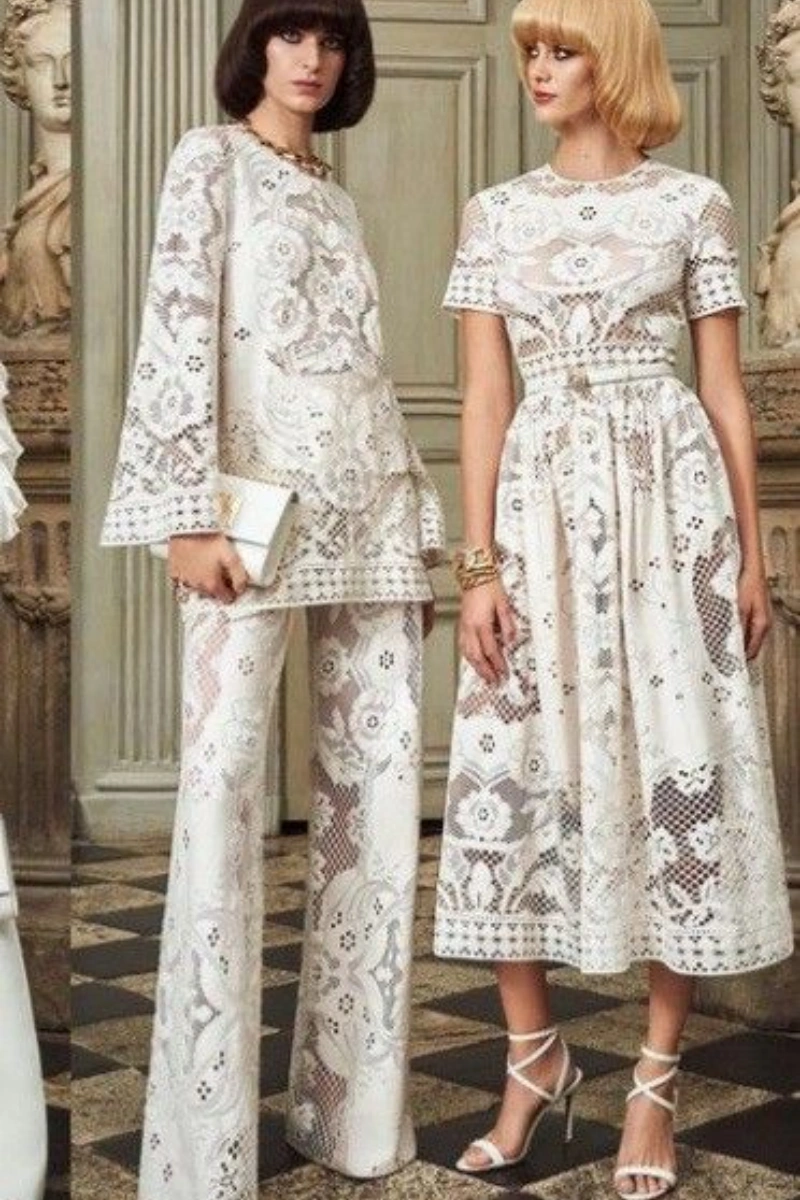
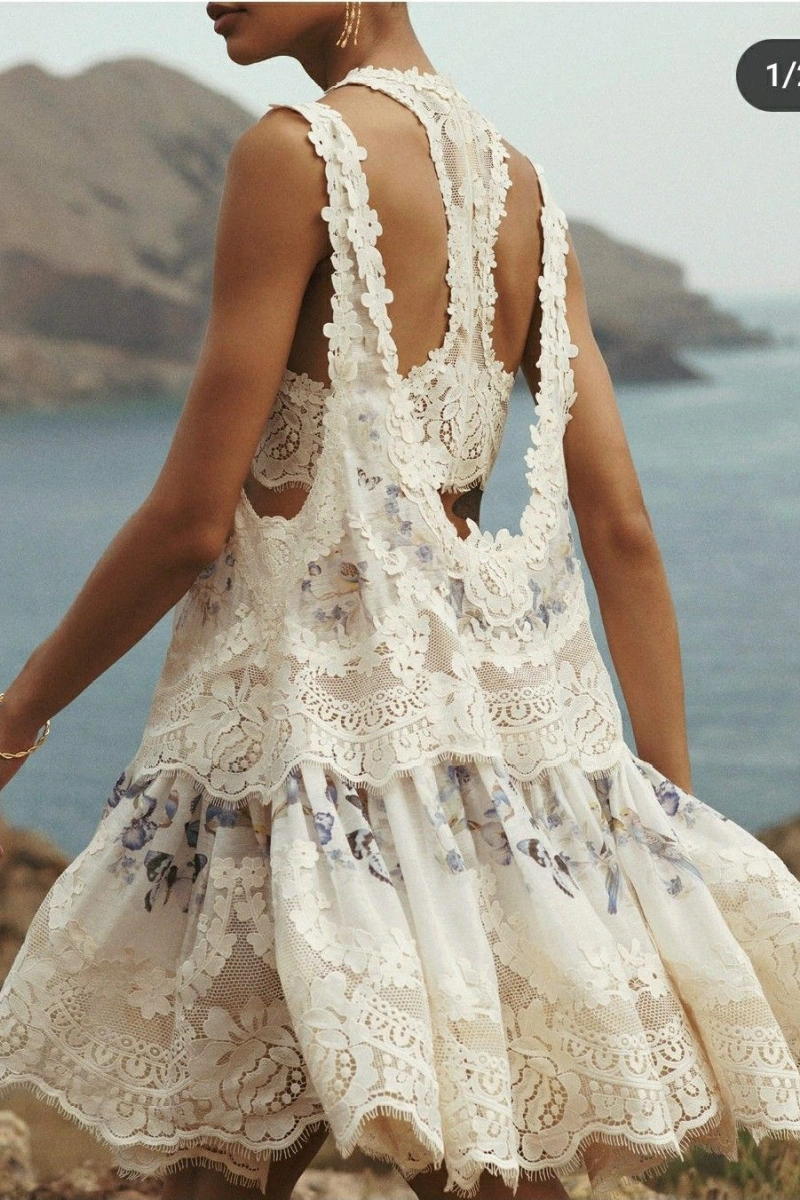
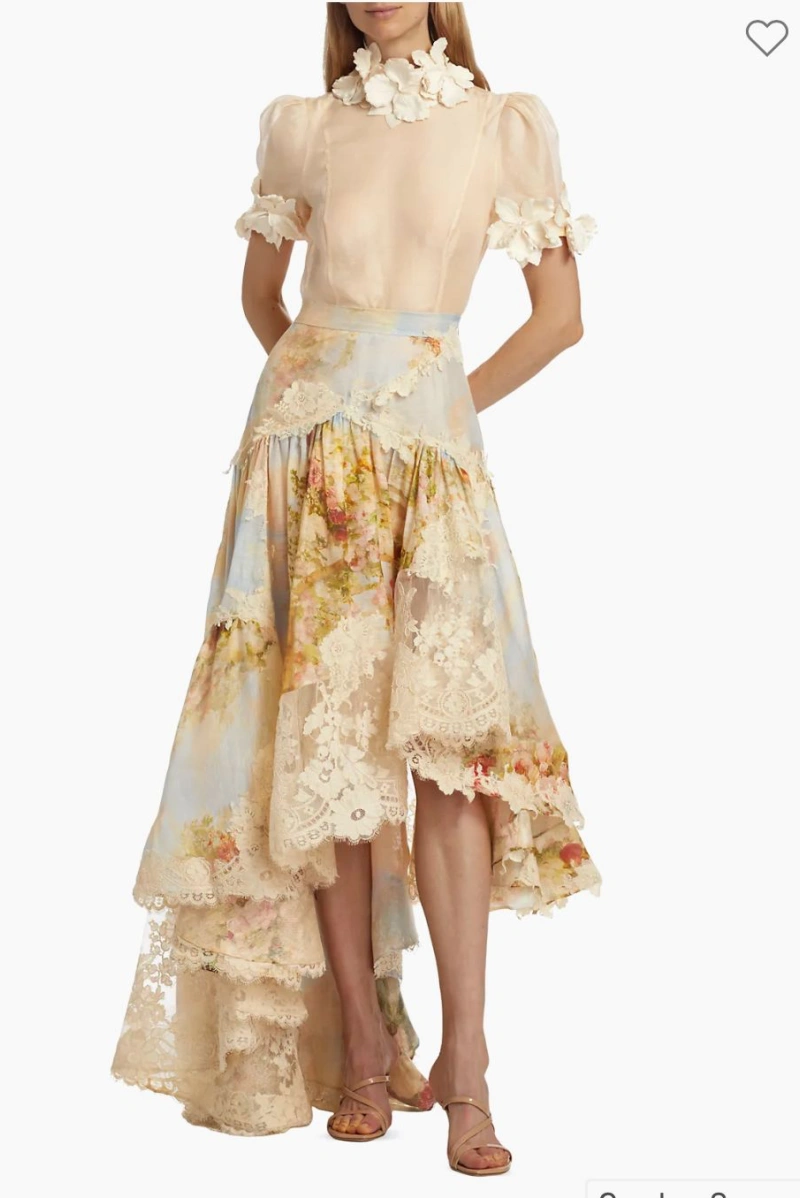
What Fashion Designers Should Prepare Before Developing Custom Lace
Before contacting a lace fabric manufacturer, designers should prepare clear project information.
A detailed design brief helps factories provide accurate suggestions and quotations.
Essential Information Checklist
| Information Required | Why It Matters |
|---|---|
| Fabric application | Determines suitable lace construction |
| Target garment category | Different products require different performance |
| Design reference | Helps understand creative direction |
| Estimated quantity | Influences production planning |
| Color requirements | Determines dyeing process |
| Fabric width requirement | Affects production setup |
| Desired delivery timeline | Helps arrange development schedule |
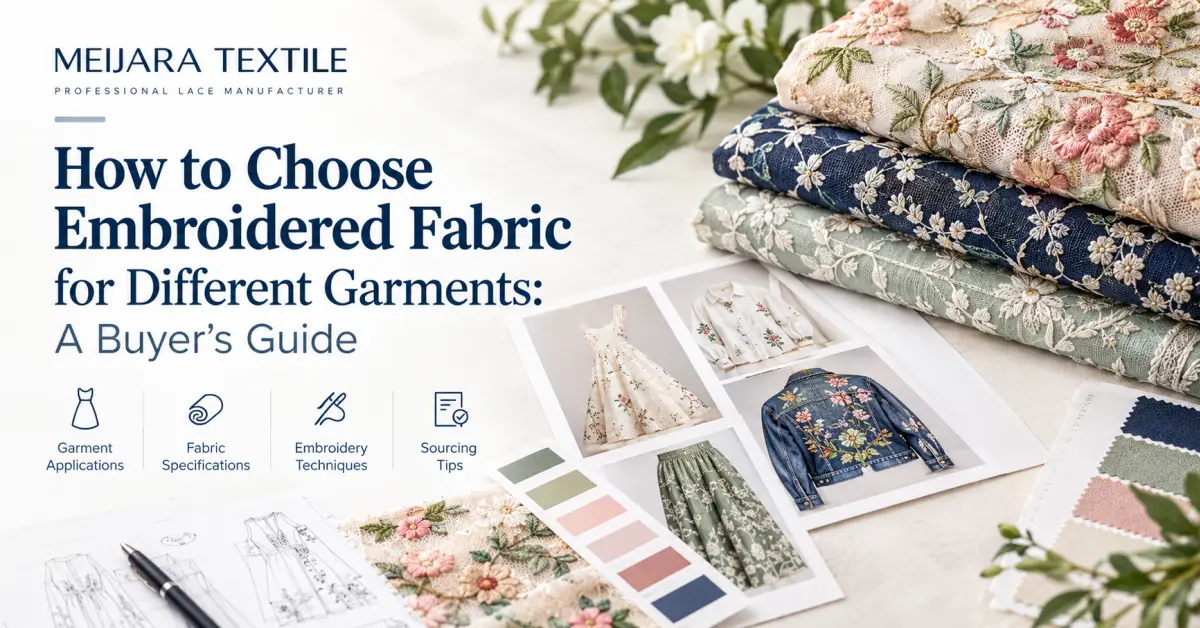
Define the Final Garment Application
The same lace fabric can perform very differently depending on the garment.
For example:
Bridal Wear
Requirements:
-
Elegant appearance
-
High embroidery quality
-
Soft hand feeling
-
Stable structure
Common choices:
-
Floral lace
-
Embroidered tulle
-
Guipure lace
Evening Dresses
Requirements:
-
Luxury appearance
-
Rich texture
-
Strong visual impact
Common choices:
-
Heavy embroidery lace
-
Beaded lace
-
3D floral lace
Ready-to-Wear Fashion
Requirements:
-
Comfortable wearing experience
-
Production efficiency
-
Cost control
Common choices:
-
Lightweight lace
-
Stretch lace
Selecting the Right Lace Construction for Custom Development
One of the biggest challenges for designers is choosing the correct lace type.
Different lace constructions create completely different visual effects.
Common Custom Lace Fabric Types
| Lace Type | Main Features | Typical Applications |
|---|---|---|
| Embroidered Lace | Decorative embroidery on mesh base | Dresses, blouses, luxury garments |
| Water Soluble Lace | High-detail embroidery with dissolvable base | Couture, bridal gowns |
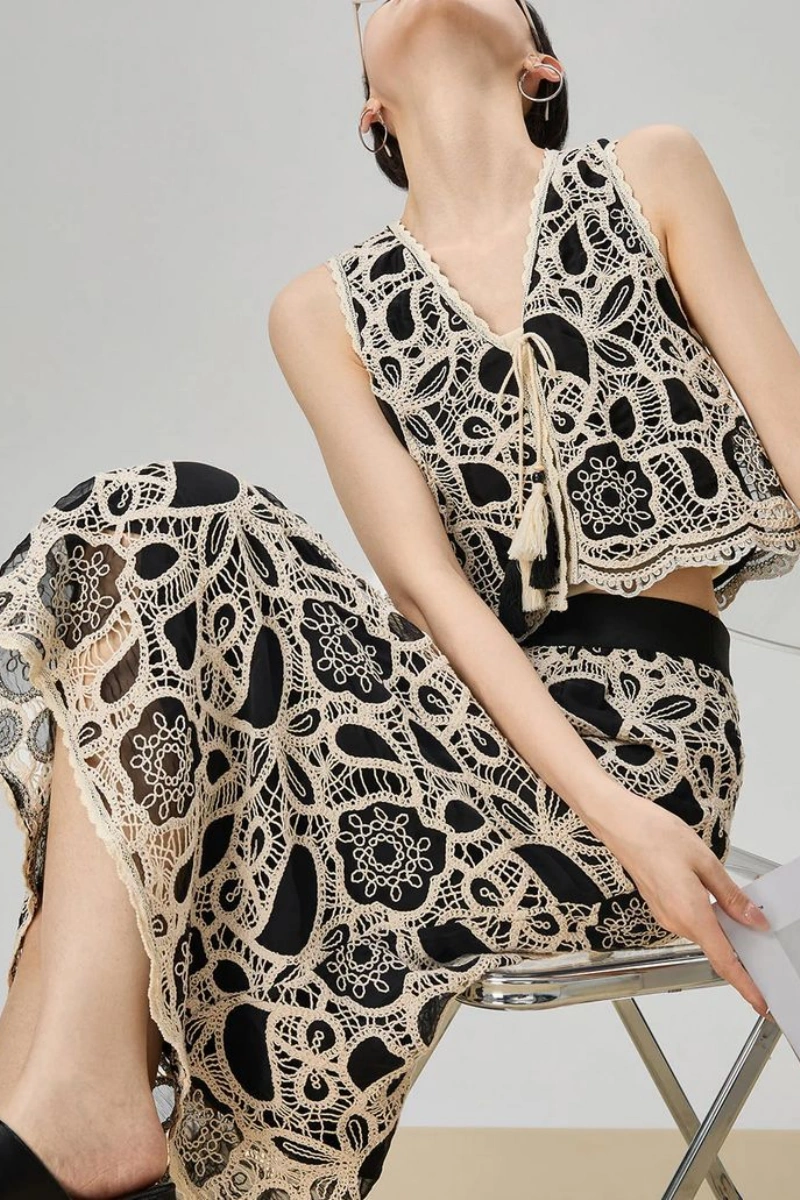
| Guipure Lace | Structured raised motifs | Premium fashion collections |
| Cotton Lace | Natural texture and softness | Casual fashion, vintage styles |
| Stretch Lace | Elastic and comfortable | Bodywear, fitted garments |
| Chemical Lace | Complex patterns and 3D effects | Luxury apparel |
Embroidered Lace Development
Embroidered lace is one of the most widely used custom lace solutions.
The production process usually includes:
-
Selecting base fabric
-
Creating embroidery artwork
-
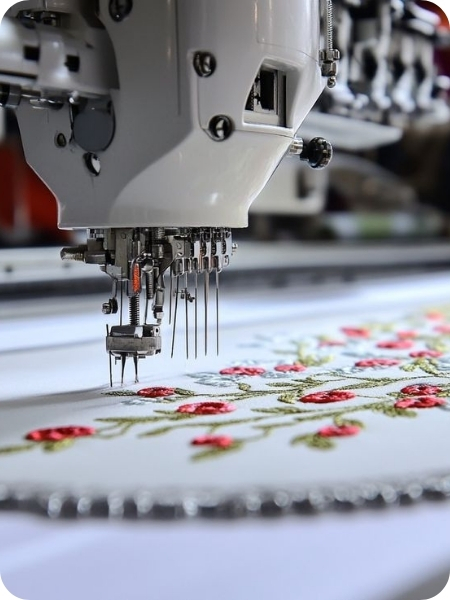
Programming embroidery machines
-
Testing thread density
-
Producing samples
-
Adjusting details
-
Confirming bulk production
The challenge is maintaining the balance between:
-
Beauty
-
Durability
-
Production efficiency
-
Cost control
A pattern that looks beautiful on paper may require technical modification before it can become a stable fabric.
How Lace Factories Transform Design Concepts Into Production Fabrics
A professional lace factory plays an important role in connecting creativity with manufacturing reality.
The factory development team usually includes:
-
Textile designers
-
Embroidery technicians
-
Pattern engineers
-
Production managers
-
Quality inspectors. Learn about quality control standards.
Their role is to ensure that creative ideas can be successfully manufactured.
Factory Development Workflow
| Stage | Main Responsibility | Output |
|---|---|---|
| Concept Review | Analyze design requirements | Development proposal |
| Artwork Creation | Convert ideas into embroidery files | Digital pattern. Learn about pattern design development. |
| Prototype Sampling | Produce first sample | Initial fabric sample |
| Technical Adjustment | Improve structure and appearance | Revised sample |
| Approval | Confirm final specifications | Production standard |
| Bulk Manufacturing | Large-scale production | Finished lace fabric |
Choosing the Right Embroidery Technology for Custom Lace Development
For fashion designers, the visual effect of lace is often the first priority. However, from a factory perspective, achieving the desired appearance depends heavily on selecting the correct production technology.
Different embroidery techniques create different levels of texture, transparency, softness, and dimensional effects.
A professional lace manufacturer will evaluate the design concept and recommend the most suitable production method based on:
-
Fabric application
-
Pattern complexity
-
Required durability
-
Target price level
-
Production quantity
-
Final garment requirements
Main Lace Manufacturing Techniques Used by Modern Factories
| Production Technique | Manufacturing Characteristics | Suitable Applications |
|---|---|---|
| Computer Embroidery | Precise digital embroidery production with high design flexibility | Fashion dresses, blouses, luxury garments |
| Water Soluble Embroidery | Embroidery on dissolvable base to create independent lace patterns | Bridal gowns, couture garments |
| Chemical Lace Processing | Uses chemical treatment to remove base fabric and create 3D structures | Premium fashion collections |
| Appliqué Lace | Separate embroidered motifs attached onto fabric | Wedding dresses, eveningwear |
| Corded Lace | Additional thread creates raised outlines and texture | Luxury apparel. Explore cord embroidery. |
| Sequin & Beaded Embroidery | Adds decorative elements for high-end appearance | Stagewear, luxury dresses. See sequins and beads embroidery. |
Water Soluble Lace Development: Creating High-End Fashion Effects
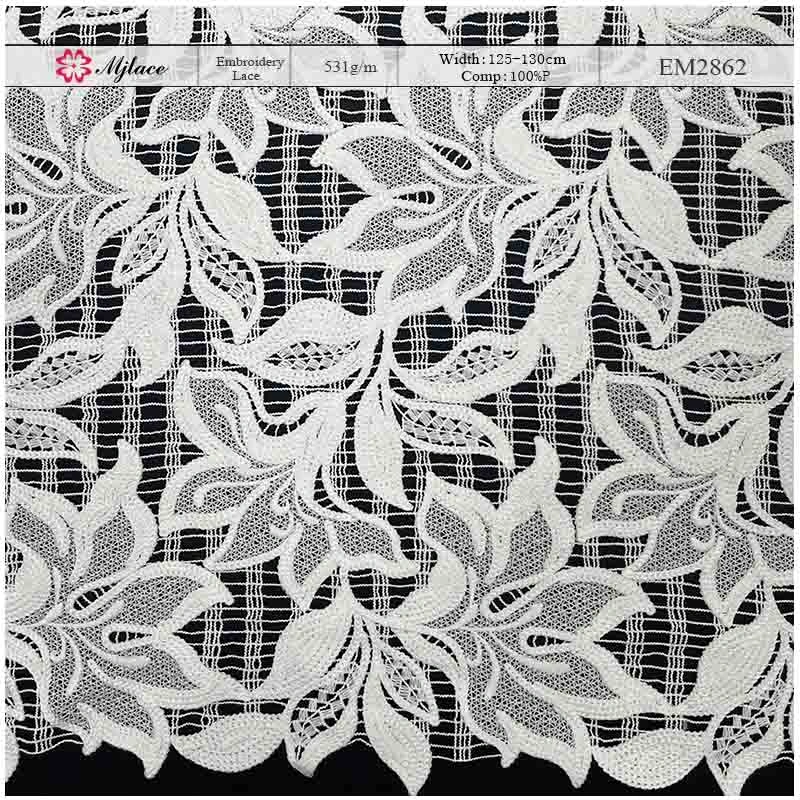
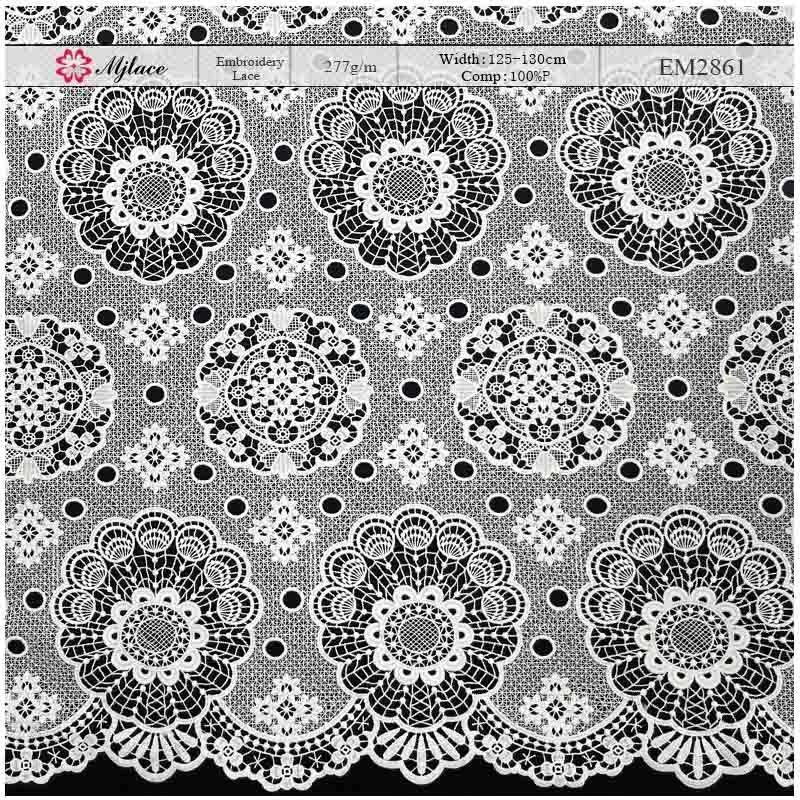
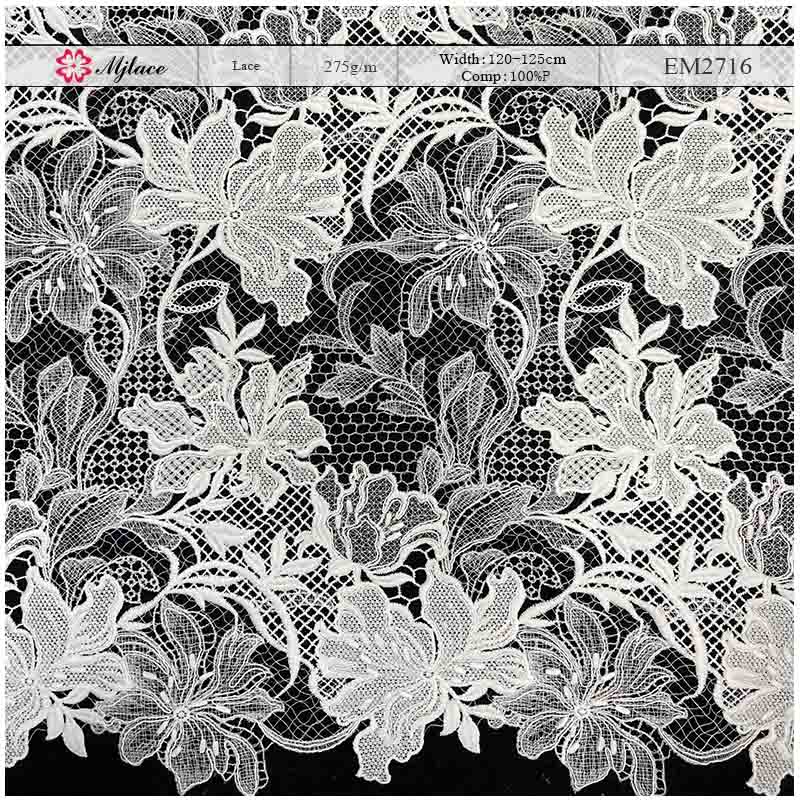
Water soluble lace is one of the most technically demanding lace categories.
Unlike traditional embroidered lace, the embroidery is first created on a temporary water-soluble backing material.
After embroidery completion, the base material is dissolved, leaving only the embroidered structure.
This allows manufacturers to create:
-
Independent lace motifs
-
Complex floral patterns
-
High-dimensional textures
-
Lightweight but luxurious fabrics
Why Luxury Brands Prefer Water Soluble Lace
| Advantage | Value for Fashion Brands |
|---|---|
| High design freedom | Allows complex artistic patterns |
| Premium appearance | Creates couture-level visual effects |
| Lightweight structure | Suitable for elegant garments |
| Customizable motifs | Supports exclusive collections |
| Strong craftsmanship feeling | Improves product value |
For designers developing luxury collections, water soluble lace provides more creative possibilities than standard lace fabrics.
However, it also requires higher technical capability from the factory.
The manufacturer must control:
-
Embroidery tension
-
Thread density
-
Dissolving process
-
Pattern stability
-
Final fabric consistency
Selecting the Right Base Fabric for Custom Lace
The embroidery pattern is important, but the base fabric also determines the final performance of lace.
A common mistake among designers is focusing only on the surface pattern while ignoring the foundation structure.
The base fabric affects:
-
Softness
-
Stretchability
-
Transparency
-
Garment comfort
-
Sewing performance
Common Lace Base Materials
| Base Material | Characteristics | Recommended Use |
|---|---|---|
| Polyester Mesh | Stable, durable, cost-effective | Large-scale fashion production |
| Nylon Mesh | Soft and flexible | Women's apparel, lingerie |
| Cotton Base | Natural feeling and breathable | Vintage and premium casual wear |
| Tulle | Lightweight and transparent | Bridal and eveningwear |
| Stretch Mesh | Elastic and comfortable | Body-fitting garments |
How Thread Selection Influences Lace Quality
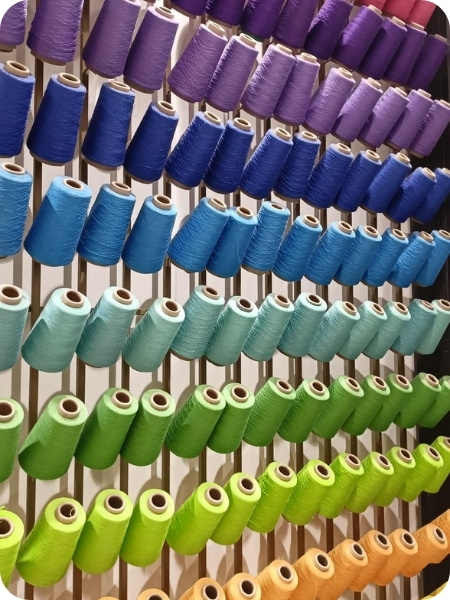
Thread selection is another important factor in custom lace development.
Different threads create different visual effects.
A lightweight thread produces a delicate appearance, while thicker thread creates stronger texture.
Common Embroidery Thread Options
| Thread Type | Visual Effect | Application |
|---|---|---|
| Polyester Thread | Strong color stability and durability | Commercial fashion |
| Cotton Thread | Natural matte appearance | Premium casual designs |
| Metallic Thread | Decorative shine | Luxury fashion |
| Rayon Thread | Smooth and glossy finish | High-end embroidery |
A professional factory will consider:
-
Thread thickness
-
Color matching
-
Tensile strength
-
Washing resistance
-
Compatibility with base materials
Understanding the Custom Lace Fabric Development Timeline
Many fashion brands underestimate the time required for custom lace development.
Unlike ready-stock fabrics, customized lace involves multiple technical stages.
A realistic development timeline usually includes:
| Development Stage | Estimated Time |
|---|---|
| Design discussion | 1-3 days |
| Artwork preparation | 3-7 days |
| First sample production | 7-15 days |
| Sample adjustment | 5-10 days |
| Final approval | 3-7 days |
| Bulk production | 20-45 days |
The actual timeline depends on:
-
Pattern complexity
-
Production capacity
-
Quantity requirement
-
Number of sample revisions
The Importance of Sampling Before Bulk Production
Sampling is one of the most important steps in custom lace manufacturing.
A factory cannot guarantee the final result only from a digital design file.
Physical samples allow designers to evaluate:
-
Actual texture
-
Fabric weight
-
Transparency
-
Color accuracy
-
Embroidery quality
-
Sewing performance
Typical Custom Lace Sampling Process
Step 1: Design File Preparation
The factory converts the design concept into an embroidery production file.
This includes:
-
Pattern positioning
-
Stitch density
-
Embroidery direction
-
Repeat arrangement
Step 2: First Sample Production
The factory creates the initial sample based on the approved design.
At this stage, designers usually evaluate:
-
Overall appearance
-
Pattern proportion
-
Fabric feeling
Step 3: Technical Adjustment
Based on feedback, the factory may adjust:
-
Flower size
-
Embroidery density. Explore multi-color embroidery.
-
Mesh transparency
-
Thread color
-
Edge finishing
Step 4: Final Sample Confirmation
Once the sample meets requirements, the factory establishes production standards.
These standards include:
-
Approved sample
-
Color reference
-
Fabric specifications
-
Quality requirements
Factors That Affect Custom Lace Fabric Development Cost
Custom lace pricing is influenced by multiple factors.
Many designers only consider fabric quantity, but professional manufacturers calculate costs based on the complete development process.
Main Cost Factors
| Cost Factor | Impact on Price |
|---|---|
| Pattern complexity | More complex designs require longer production time |
| Embroidery density | Higher density increases thread consumption |
| Fabric material | Premium materials increase cost |
| Custom artwork | New designs require development investment |
| Production quantity | Larger orders reduce unit cost |
| Special finishing | Additional processes increase cost. See laser embroidery. |
How Production Quantity Influences Custom Lace Pricing
MOQ (Minimum Order Quantity) is an important consideration when developing custom fabrics.
Different factories have different MOQ requirements depending on production processes.
For example:
| Order Type | Typical Situation |
|---|---|
| Small quantity | Suitable for sample collections and designer projects |
| Medium quantity | Suitable for emerging fashion brands |
| Large quantity | Suitable for established apparel companies |
A reliable lace fabric supplier should provide flexible solutions according to brand development stages.
Quality Control in Professional Lace Fabric Manufacturing
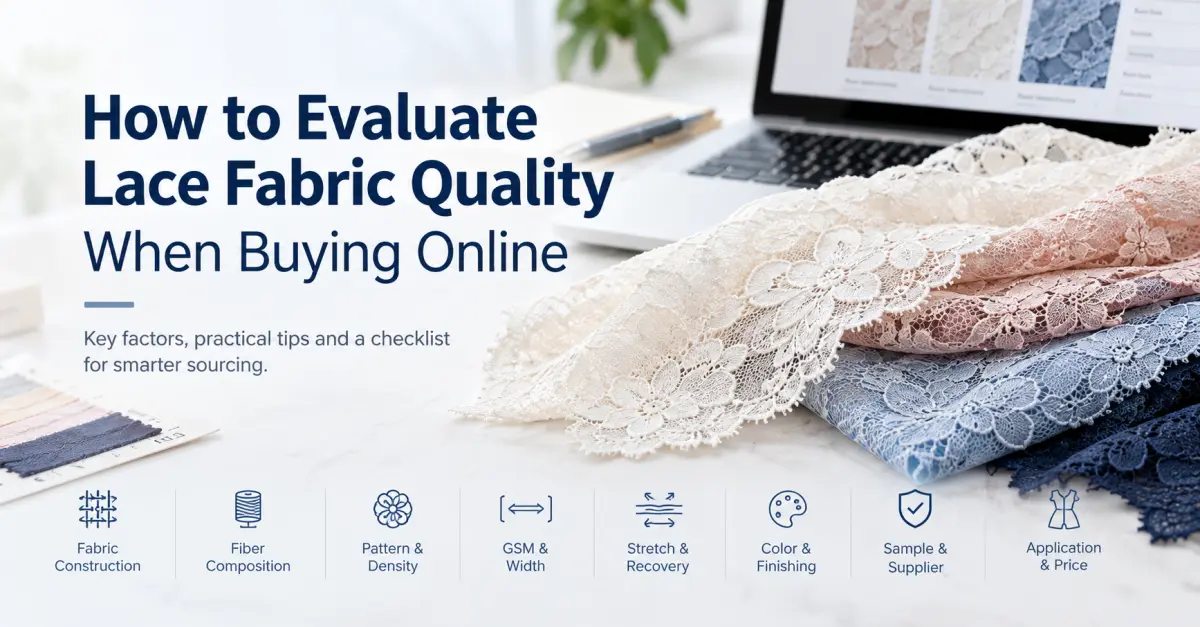
Quality control is essential because lace fabrics contain complex embroidery structures.
Small defects that may not be obvious in raw fabric can become serious problems after garment production.
Professional lace factories usually conduct inspections throughout production.
Lace Fabric Quality Inspection Points
| Inspection Item | Quality Standard |
|---|---|
| Pattern accuracy | Matches approved design |
| Embroidery density | Consistent across fabric |
| Thread quality | No broken or loose threads |
| Fabric width | Meets production requirements |
| Color consistency | Matches approved color sample |
| Surface defects | No visible damage |
| Washing performance | Maintains structure after testing |
Why Fashion Brands Choose OEM Lace Fabric Manufacturers
OEM cooperation allows brands to develop exclusive lace fabrics without investing in their own production facilities.
A capable OEM lace supplier provides:
-
Design support
-
Technical consultation
-
Prototype development
-
Bulk manufacturing
-
Quality management
-
Export support. Learn about importing logistics.
OEM Lace Development Process
| Stage | Brand Responsibility | Factory Responsibility |
|---|---|---|
| Concept stage | Provide design direction | Analyze feasibility |
| Development stage | Review samples | Create prototypes |
| Approval stage | Confirm specifications | Prepare production standards |
| Manufacturing stage | Monitor progress | Produce and inspect |
| Delivery stage | Receive goods | Arrange shipment |
How MJlace Supports Fashion Designers in Custom Lace Development
For fashion brands, selecting the right manufacturing partner is as important as the design itself.
A professional lace factory should not only produce fabric but also provide technical solutions.
MJlace supports global fashion customers through:
Custom Design Development
Our technical team helps transform creative ideas into production-ready lace designs.
Support includes:
-
Pattern development
-
Embroidery adjustment
-
Material recommendation
-
Sample optimization
Flexible OEM Production
Different brands have different requirements.
We provide solutions for:
-
Designer collections
-
Fashion brands
-
Garment manufacturers
-
Wholesale buyers
Complete Manufacturing Control
From raw materials to finished lace fabrics, professional production management ensures:
-
Stable quality
-
Consistent output
-
Reliable delivery. Explore cut piece and processing.
How Fashion Designers Should Choose a Reliable Custom Lace Fabric Manufacturer
Developing custom lace fabrics is a long-term collaboration between designers and manufacturers. The right factory does not simply provide production capacity; it becomes a technical partner that helps transform creative concepts into commercially successful fabrics.
For fashion brands, choosing a lace fabric manufacturer only based on price often creates problems later, including:
-
Poor sample accuracy
-
Limited design support
-
Unstable quality
-
Production delays
-
Difficulty scaling from samples to bulk orders
A professional lace factory should have both creative development capability and industrial production experience.
Key Factors When Selecting a Lace Fabric Factory
| Evaluation Factor | Why It Matters |
|---|---|
| Design development ability | Determines whether the factory can transform concepts into fabrics |
| Embroidery technology | Affects pattern quality and production possibilities |
| Production capacity | Ensures stable supply for commercial orders |
| Quality control system | Reduces defects during bulk manufacturing |
| Communication efficiency | Improves development accuracy |
| Export experience | Ensures smooth international cooperation |
Evaluate the Factory's Custom Development Capability
Many suppliers can provide standard lace fabrics, but fewer manufacturers have the ability to develop completely customized designs.
Before starting cooperation, fashion brands should ask:
-
Can the factory develop original lace patterns?
-
Does the supplier have an in-house design team?
-
Can they modify existing patterns?
-
Can they create samples based on sketches?
-
Can they recommend suitable embroidery techniques?
A strong custom lace manufacturer should be able to participate in the early design stage rather than only producing after everything is finalized.
Check Manufacturing Experience and Equipment
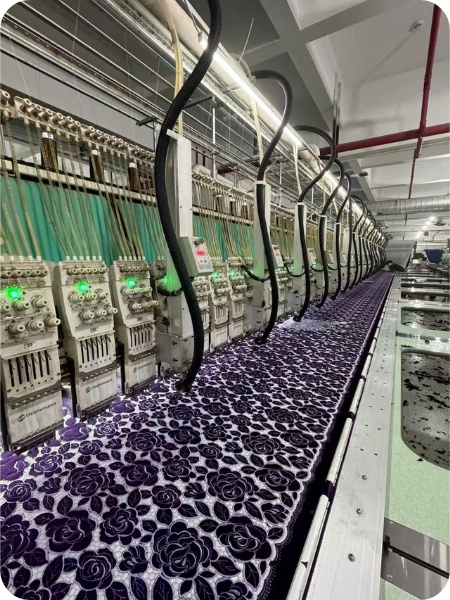
Lace production requires specialized machinery and technical knowledge.
Modern lace factories typically use:
-
Computerized embroidery machines
-
Digital pattern development systems
-
Fabric inspection equipment
-
Color matching systems
-
Finishing equipment
The production environment directly affects:
-
Pattern accuracy
-
Fabric consistency
-
Delivery reliability
Factory Capability Comparison
| Supplier Type | Capability | Suitable For |
|---|---|---|
| Trading company | Limited technical involvement | Standard lace purchasing |
| Small workshop | Flexible but limited production capacity | Small projects |
| Professional lace factory | Full development and production capability | Fashion brands and OEM projects |
For brands developing seasonal collections, working directly with a manufacturer usually provides better control.
Understand the Factory's Production Process
A reliable lace manufacturer should have a clear production workflow.
A typical professional process includes:
Design Development
↓
Digital Pattern Creation
↓
Embroidery Production
↓
Fabric Finishing
↓
Quality Inspection
↓
Packaging & Shipment
This structured process ensures that every production stage can be monitored.
Common Mistakes Fashion Designers Make When Developing Custom Lace Fabrics
Even experienced designers can face challenges when developing new lace materials.
Understanding common mistakes helps brands avoid unnecessary delays and additional costs.
Mistake 1: Providing Only Visual References Without Technical Information
Many designers send only inspiration images and expect factories to understand the exact requirements.
However, a visual reference does not always explain:
-
Fabric weight
-
Transparency level
-
Stretch requirement
-
Garment application
-
Desired hand feel
A better approach is preparing a detailed development brief.
Recommended Design Brief Information
| Required Information | Example |
|---|---|
| Product category | Wedding gown / evening dress |
| Lace style | Floral embroidered lace |
| Fabric feeling | Soft and lightweight |
| Color | Ivory / custom Pantone color |
| Width | 130-150cm |
| Quantity | Estimated production volume |
The more information provided, the more accurate the factory's recommendation will be.
Mistake 2: Ignoring Production Feasibility
Some designs look attractive but may not be practical for manufacturing.
For example:
-
Extremely dense embroidery may affect fabric flexibility.
-
Very thin threads may reduce durability.
-
Oversized motifs may create difficulties in garment cutting.
Experienced manufacturers help designers balance creativity and production feasibility.
Mistake 3: Developing Samples Without Considering Final Garment Use
A lace fabric sample may look beautiful alone but perform differently when applied to clothing.
Designers should consider:
-
How the fabric drapes
-
How seams will be sewn
-
Whether embroidery affects comfort
-
Whether the lace maintains shape
For example:
A bridal gown requires elegant structure. Explore bridal lace.
A summer dress requires breathability and softness.
A fitted garment requires elasticity.
The same lace design may need different construction depending on the application.
Mistake 4: Focusing Only on Price
Price is important, but it should not be the only consideration.
A lower-priced supplier may result in:
-
More sample revisions
-
Higher defect rates
-
Longer production cycles
-
Additional inspection costs
For fashion brands, production reliability often creates more value than a small difference in material price.
Future Trends in Custom Lace Fabric Development
The fashion industry continues to evolve, and lace manufacturers are adapting to new market demands.
Several trends are shaping the future of lace development.
More Demand for Exclusive Brand Materials
Fashion brands increasingly prefer unique fabrics instead of common market materials.
Custom lace allows brands to:
-
Create signature designs
-
Strengthen brand identity
-
Differentiate from competitors
Exclusive textile development is becoming an important part of premium fashion strategies.
Sustainable Lace Production
Sustainability is becoming increasingly important. Visit our sustainability section.
Brands are paying more attention to:
-
Responsible material sourcing
-
Reduced production waste
-
Longer-lasting garment materials
-
Environmentally conscious manufacturing
Lace manufacturers are exploring:
-
Recycled fibers
-
Sustainable yarn options
-
More efficient production methods
Combination of Traditional Craft and Modern Technology
Modern lace production combines craftsmanship with digital manufacturing.
Advanced technology allows factories to achieve:
-
More accurate patterns
-
Faster sampling
-
More complex designs
-
Better production consistency
This combination helps designers create fabrics that were previously difficult to manufacture.
Increasing Demand for Small-Batch Custom Production
In the past, custom fabric development was mainly used by large fashion houses.
Today, emerging designers and independent brands also require customized materials.
Manufacturers are adapting by offering:
-
Flexible MOQ options
-
Faster sampling
-
Development support for smaller collections
Why China Has Become an Important Hub for Lace Fabric Manufacturing
China has developed a complete textile supply chain, making it one of the major destinations for global lace sourcing.
Advantages include:
Complete Manufacturing Chain
From yarn suppliers to embroidery production and garment factories, China provides integrated textile resources.
Strong Production Experience
Chinese lace manufacturers have extensive experience producing:
-
Bridal lace
-
Embroidered fabrics
-
Fashion lace
-
Decorative trims
-
Custom textile solutions
Competitive Development Capability
Compared with many traditional textile markets, Chinese manufacturers can often provide:
-
Faster development cycles
-
Flexible customization
-
Competitive production costs
Working With MJlace for Custom Lace Fabric Development
For fashion designers and brands looking for a reliable lace manufacturing partner, MJlace provides complete custom development support.
Our capabilities include:
Custom Lace Design
Support for:
-
Original embroidery patterns
-
Modified designs
-
Exclusive collections
Professional Sampling
We help brands evaluate:
-
Fabric appearance
-
Pattern details
-
Material performance
-
Production feasibility
Bulk Production Management
Our manufacturing process focuses on:
-
Consistent quality
-
Stable production
-
Professional inspection
-
Reliable delivery
FAQ About Custom Lace Fabric Development
What is custom lace fabric development?
Custom lace fabric development is the process of creating unique lace materials according to a brand's design requirements, including pattern creation, embroidery development, material selection, sampling, and bulk production.
How long does it take to develop custom lace fabric?
The development timeline depends on design complexity and production requirements.
Generally:
-
Initial design discussion: 1-3 days
-
Sample development: 7-15 days
-
Final approval: 2-4 weeks
-
Bulk production: 20-45 days
Can lace manufacturers create designs from sketches?
Yes. Professional lace manufacturers can convert fashion sketches, drawings, or inspiration images into production-ready embroidery designs.
The factory usually adjusts:
-
Pattern structure
-
Embroidery density
-
Fabric construction
What information should designers provide before requesting a quotation?
Designers should provide:
-
Fabric application
-
Reference images
-
Desired material
-
Color requirements
-
Width requirements
-
Estimated quantity
What is the MOQ for custom lace fabric?
MOQ depends on:
-
Production technology
-
Fabric type
-
Pattern complexity
-
Factory requirements
Professional suppliers can often provide different solutions for small brands and large manufacturers.
What types of lace fabrics can be customized?
Common custom lace options include:
-
Embroidered lace
-
Water soluble lace
-
Guipure lace
-
Cotton lace
-
Stretch lace
-
Bridal lace
Why should fashion brands work directly with lace manufacturers?
Working directly with manufacturers provides:
-
Better technical communication
-
Faster development
-
More customization options
-
Better production control
How can brands ensure lace quality before bulk production?
Brands should always approve samples before production and confirm:
-
Fabric specifications
-
Color standards
-
Pattern accuracy
-
Quality requirements
Custom Lace Development Starts With the Right Manufacturing Partner
Custom lace fabrics give fashion designers the opportunity to create distinctive collections and strengthen brand identity.
However, successful lace development requires more than creative ideas. It requires cooperation between designers and experienced manufacturers who understand textile technology, embroidery techniques, and production requirements.
From initial concept development to final bulk manufacturing, choosing the right lace fabric factory can determine the success of a collection.
For fashion brands looking to develop exclusive lace fabrics, partnering with an experienced OEM lace manufacturer provides the technical support needed to transform creative visions into high-quality finished textiles.
MJlace continues to support global designers and fashion brands with customized lace solutions, professional manufacturing capabilities, and reliable production services.
Ready to start your custom lace development project? Visit our homepage to explore our capabilities or contact us for inquiries. You may also submit an inquiry for custom pricing.