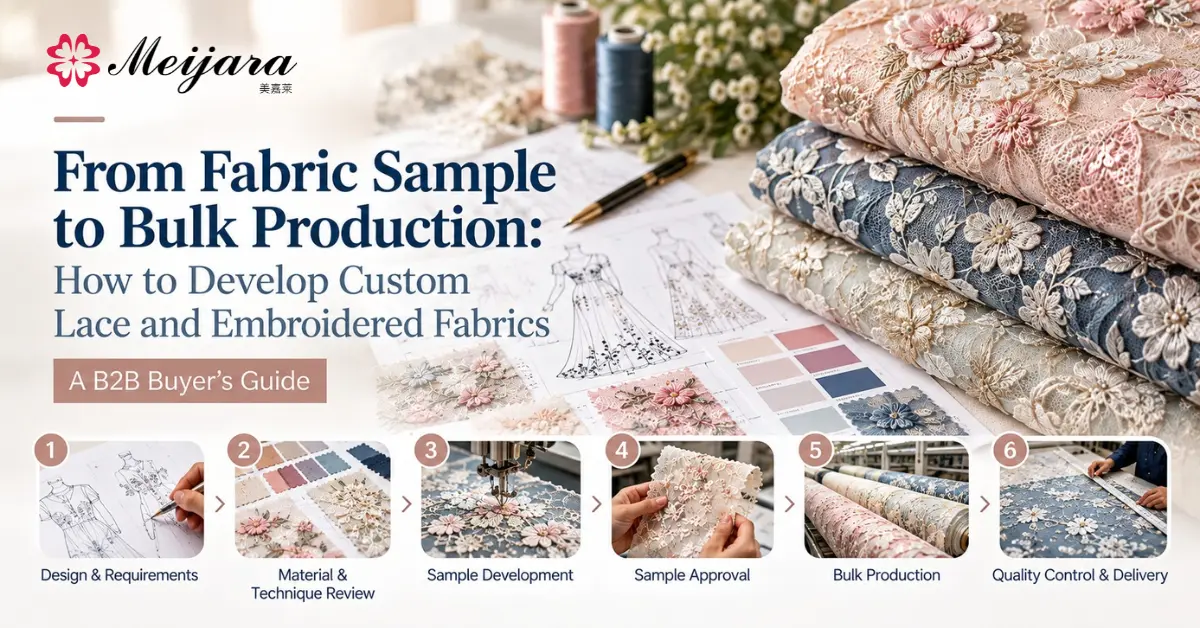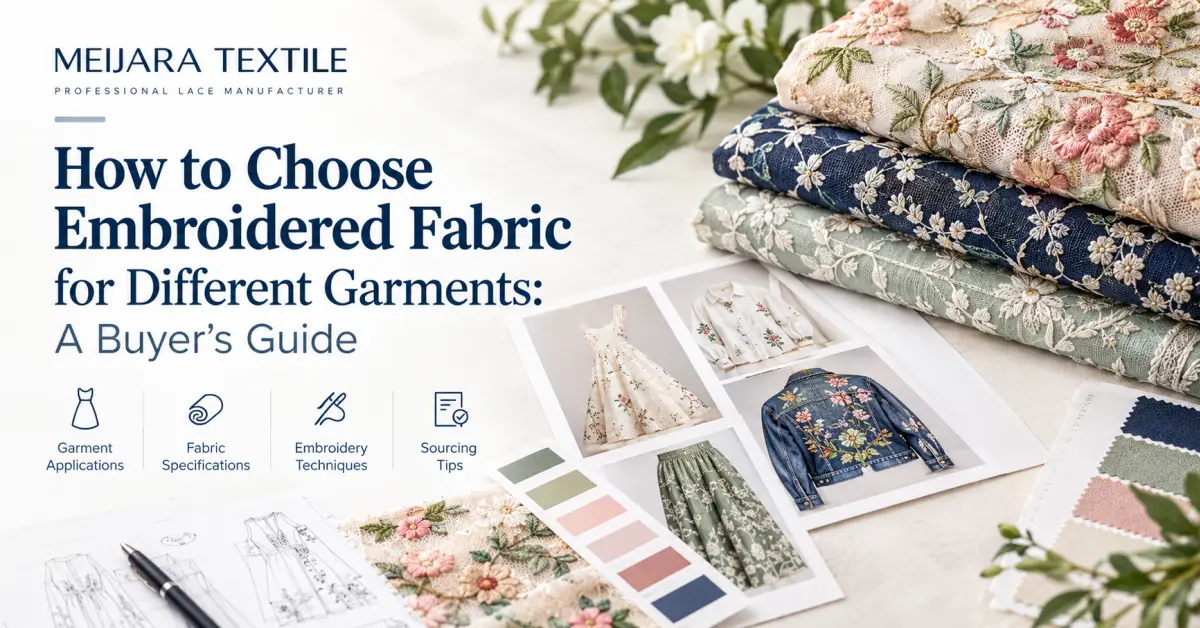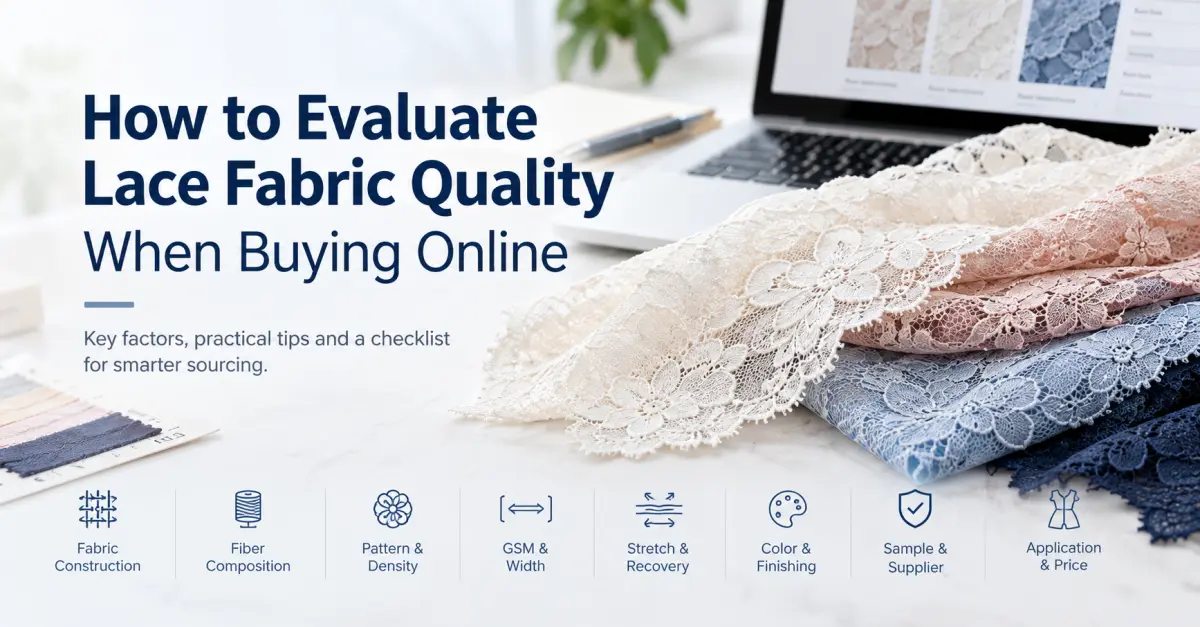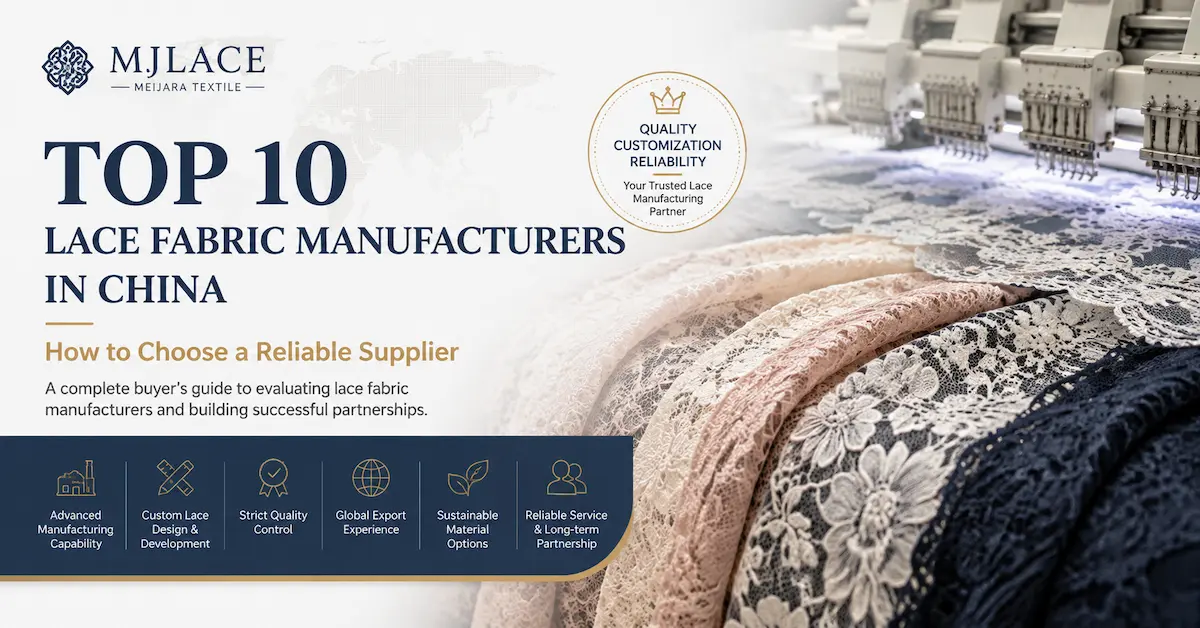

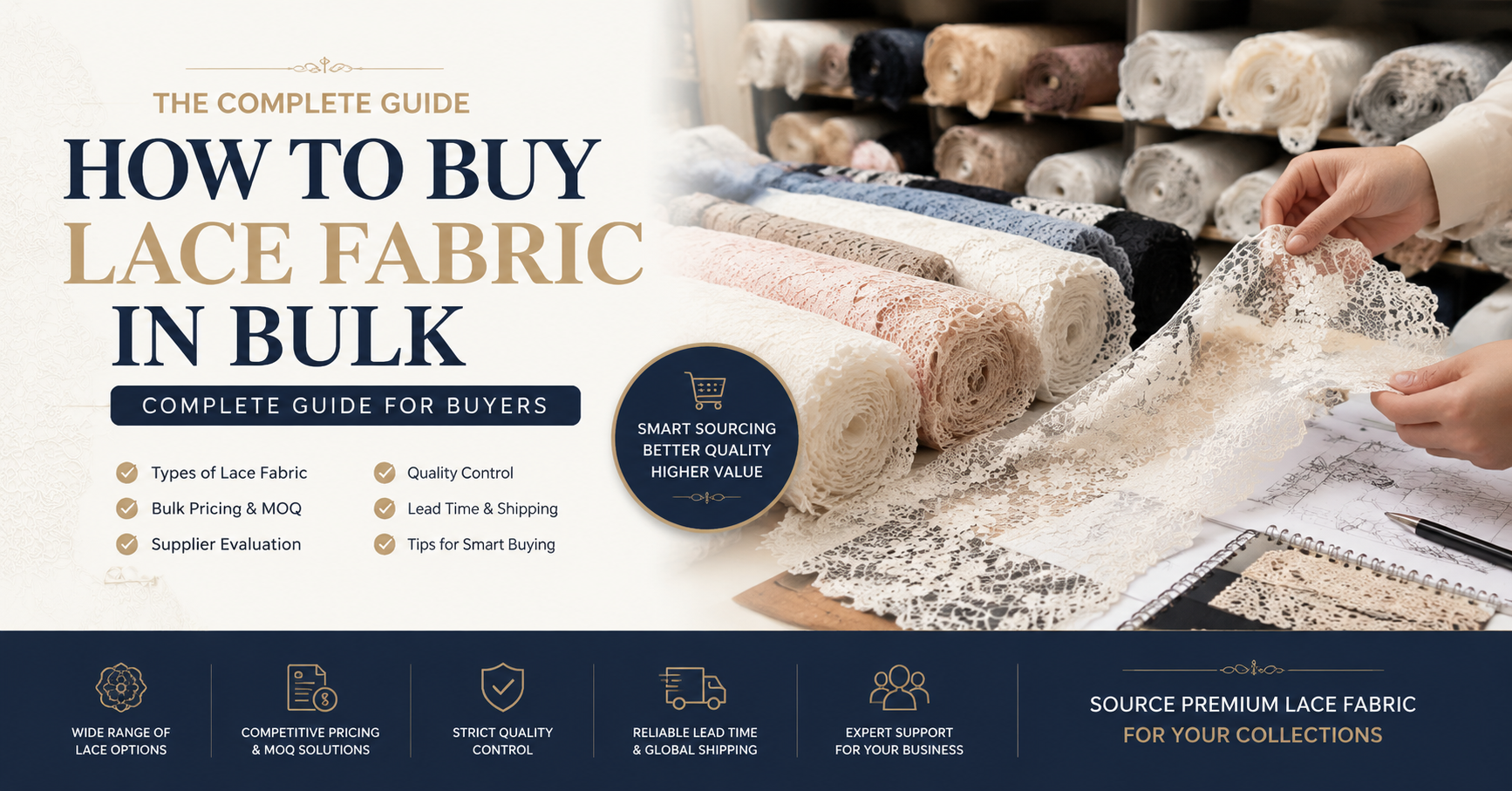

Buying lace fabric in bulk is a critical decision for fashion brands, garment manufacturers, and wholesalers. Whether you are sourcing for bridal collections, ready-to-wear garments, lingerie, or haute couture, choosing the right lace supplier and understanding bulk purchasing details can significantly impact your product quality, cost efficiency, and production stability.
This guide will walk you through everything you need to know about buying lace fabric in bulk—from material selection and pricing structure to supplier evaluation and quality control.
Understanding Different Types of Lace Fabric
Before placing a bulk order, buyers must understand the key lace categories available in the market:
Embroidered Lace Fabric
Embroidery lace is one of the most widely used types in fashion apparel. It is created by stitching intricate patterns onto mesh bases, often using cotton, polyester, or metallic threads.
-
Ideal for: dresses, bridal gowns, evening wear
-
Key advantage: high visual richness and design flexibility
Eyelash Lace Trim
Eyelash lace features delicate fringe edges that resemble eyelashes. It is commonly used for trims and garment finishing.
-
Ideal for: lingerie, blouses, skirts
-
Key advantage: soft romantic aesthetic
Water-Soluble Lace
This type is made using water-soluble backing that is removed after embroidery, creating a freestanding lace structure.
-
Ideal for: couture garments, appliqués
-
Key advantage: premium handcrafted appearance
Stretch Lace Fabric
Stretch lace contains spandex or elastane, providing elasticity and comfort.
-
Ideal for: lingerie, fitted garments
-
Key advantage: flexibility and body-fit performance
Key Factors to Consider When Buying Lace in Bulk
Fabric Width and Application
Lace fabrics come in different widths depending on application:
-
Narrow trims: 1–10 cm (lace trim, edging)
-
Medium lace: 10–35 cm (garment decoration, panels)
-
Wide lace fabric: up to 150–300 cm (full garments, dresses)
Choosing the right width reduces waste and improves production efficiency.
Material Composition
Common fiber compositions include:
-
Polyester (P): durable, cost-effective
-
Cotton (C): natural feel, breathable
-
Nylon (PA): soft and flexible
-
Spandex (SP): stretch functionality
For high-end fashion, blended compositions are often preferred to balance aesthetics and performance.
Design Complexity
More complex lace designs (heavy embroidery, 3D floral patterns, beadwork) increase production cost and lead time.
Buyers should align design complexity with target retail positioning.
Bulk Pricing Structure of Lace Fabric
Bulk lace pricing is influenced by several key elements:
Yarn and Material Cost
High-quality threads (viscose, rayon, metallic yarns) increase cost but enhance luxury appearance.
Embroidery Density
Higher stitch density leads to:
-
Higher material consumption
-
Longer machine time
-
Increased unit price
MOQ (Minimum Order Quantity)
Typical lace MOQ ranges:
-
Standard lace fabric: 100–300 meters per design
-
Custom embroidered lace: 300–500 meters per color
-
New development projects: 3000–5000 meters
How to Evaluate a Reliable Lace Supplier
Choosing the right supplier is essential for stable production.
Production Capability
Check whether the supplier has:
-
Advanced embroidery machines (e.g., Karl Mayer equipment)
-
In-house design and sampling teams
-
Stable production capacity for bulk orders
Sampling Efficiency
A professional supplier should offer:
-
Sample development within 7–25 days
-
Clear revision process for design adjustments
Quality Control System
Key QC checkpoints include:
-
Color consistency
-
Pattern alignment
-
Embroidery density accuracy
-
Fabric shrinkage testing. Learn about our quality control standards.
Lead Time and Production Planning
Bulk lace production typically follows this timeline:
-
Sampling: 8–25 days
-
Bulk production: 18–40 days
-
Special complex designs: up to 45 days
Early planning is essential for seasonal collections and runway deadlines.
Packaging and Shipping Considerations
Lace fabric is lightweight but voluminous, so packaging efficiency matters.
Best practices include:
-
Rolling fabric to avoid creases
-
Moisture-proof packaging
-
Vacuum compression for export
-
Clear labeling for SKU management
For international buyers, optimizing volume reduces shipping costs significantly. Learn about importing logistics.
Common Mistakes When Buying Lace in Bulk
Ignoring Sample Approval
Skipping sampling often leads to color mismatch and design errors.
Focusing Only on Price
Low-cost lace may compromise:
-
Durability
-
Design precision
-
Colorfastness
Poor Communication on Specifications
Always confirm:
-
Width
-
GSM (weight)
-
Color standard (Pantone code)
-
Application use
Conclusion: How to Make Smart Bulk Lace Purchases
Buying lace fabric in bulk requires a balance between cost, quality, and supplier capability. Buyers should prioritize:
-
Clear technical specifications
-
Reliable production capacity
-
Consistent quality control
-
Long-term supplier partnerships
A strategic sourcing approach ensures not only better pricing but also stable supply for fashion collections and brand development.
Ready to source lace in bulk? Visit our homepage to explore our collections or contact us for inquiries. You may also submit an inquiry for custom pricing.