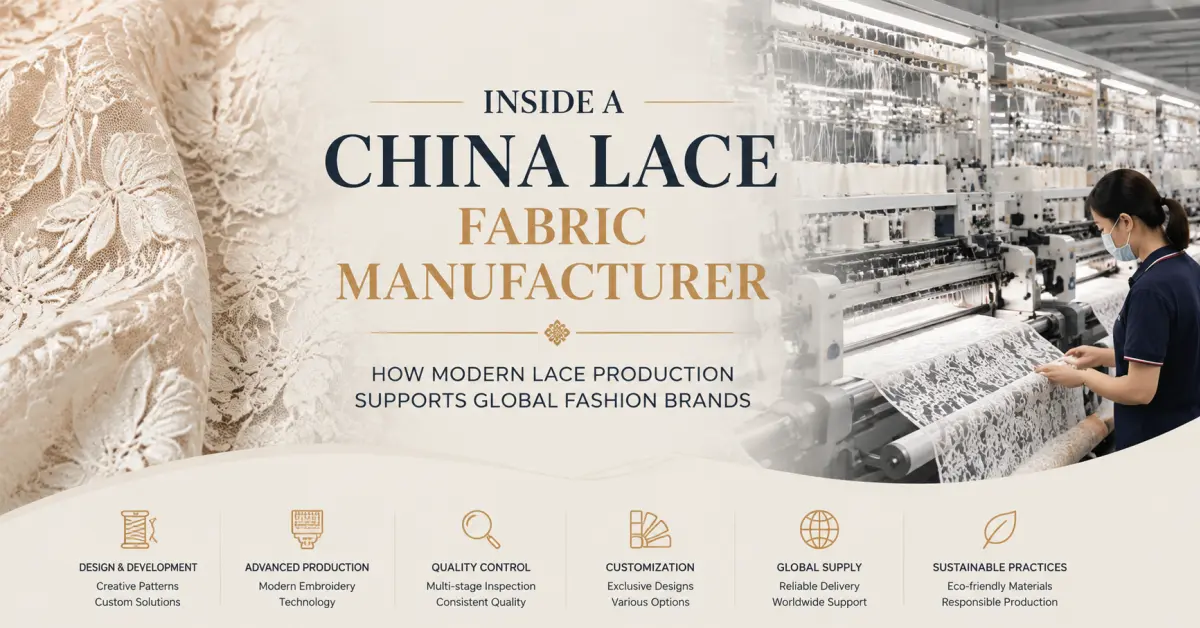

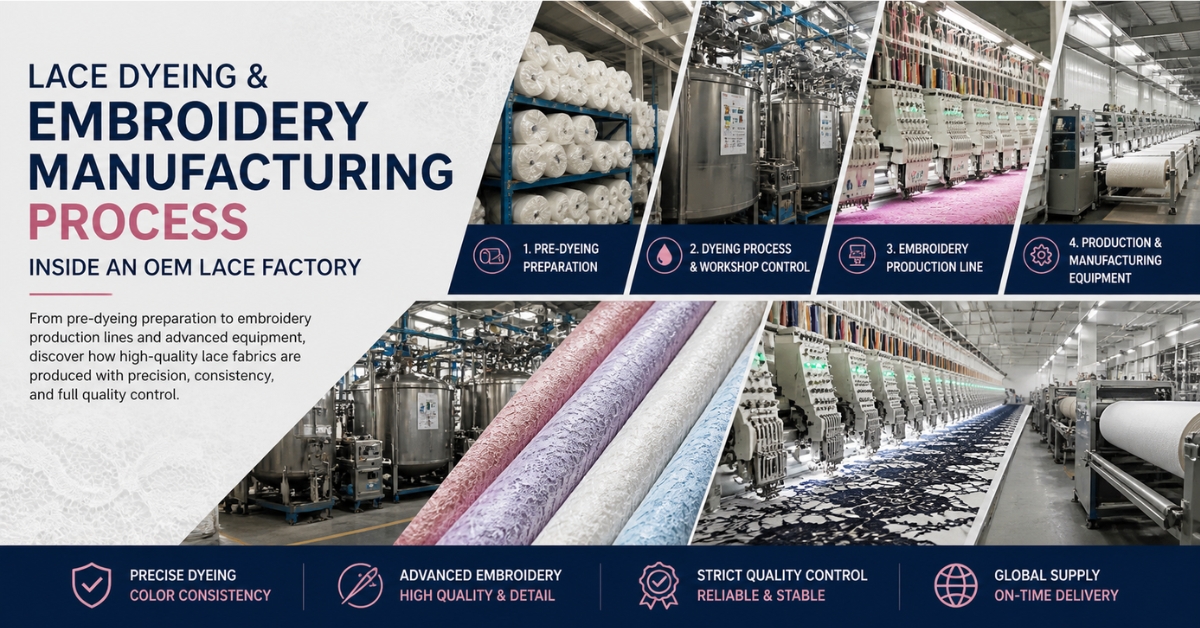

In modern lace manufacturing, dyeing and production are two of the most critical stages that determine fabric quality, consistency, and final visual impact. For fashion brands and buyers, understanding how lace fabrics are dyed, processed, and manufactured inside a professional factory can significantly reduce sourcing risks and improve decision-making.
This guide provides an inside look at lace dyeing preparation, embroidery production lines, and textile manufacturing equipment—revealing how high-quality lace fabrics are produced at scale by an experienced OEM lace manufacturer.
Lace Fabric Pre-Dyeing Preparation
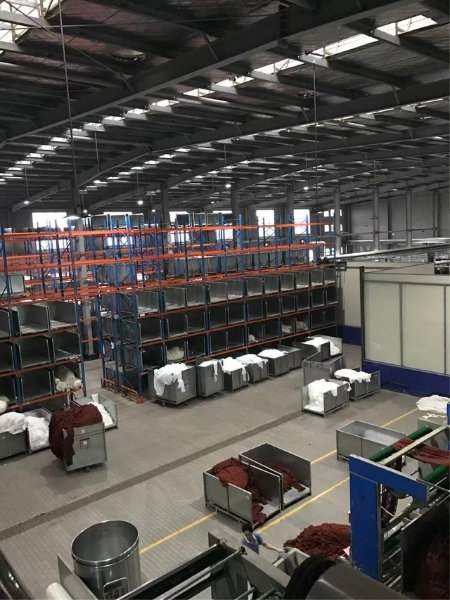
Before dyeing begins, lace fabrics must go through a careful preparation stage to ensure consistent color absorption and fabric stability.
This process includes:
- Fabric inspection and sorting
- Cleaning and pre-treatment
- Moisture and tension adjustment
- Storage under controlled conditions
Improper preparation can lead to uneven dyeing, color variation, and fabric distortion—issues that directly impact final product quality.
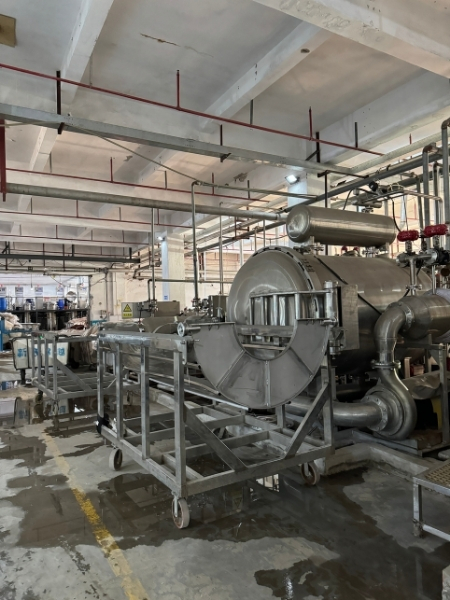
Lace Dyeing Process & Workshop Control
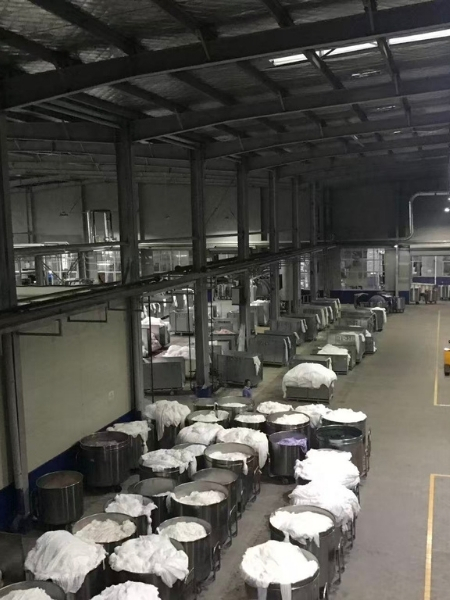
Dyeing lace fabrics requires precision, experience, and advanced equipment. Unlike standard textiles, lace structures are delicate and require controlled dye penetration.
Professional dyeing workshops focus on:
- Accurate color matching (lab dips & Pantone control)
- Temperature and chemical balance
- Even dye penetration across embroidery and base fabric
- Consistency across production batches
High-quality dyeing ensures that the final fabric meets both aesthetic expectations and international colorfastness standards.
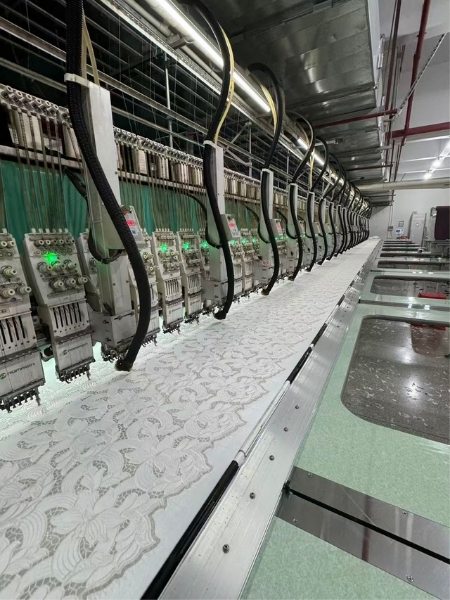
Embroidery Production Machine Line
Once dyeing is completed, lace fabrics move into embroidery production. This is where design becomes reality.
Modern embroidery production lines include:
- Multi-head embroidery machines
- Computer-controlled pattern execution
- High-speed stitching systems
- Automated thread management
Precision at this stage determines:
- Pattern clarity
- Stitch consistency
- Overall fabric texture
For OEM buyers, this directly affects product positioning and brand perception.
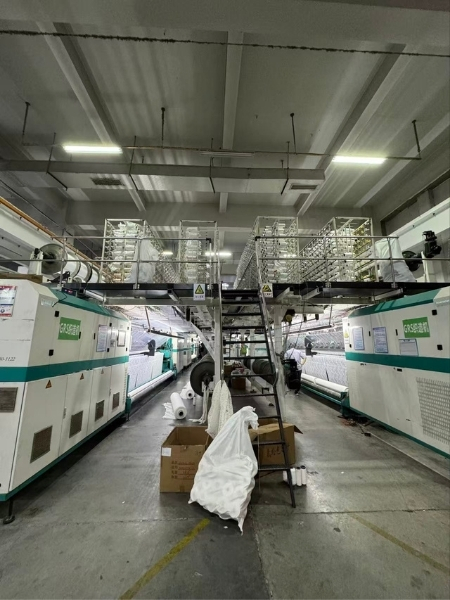
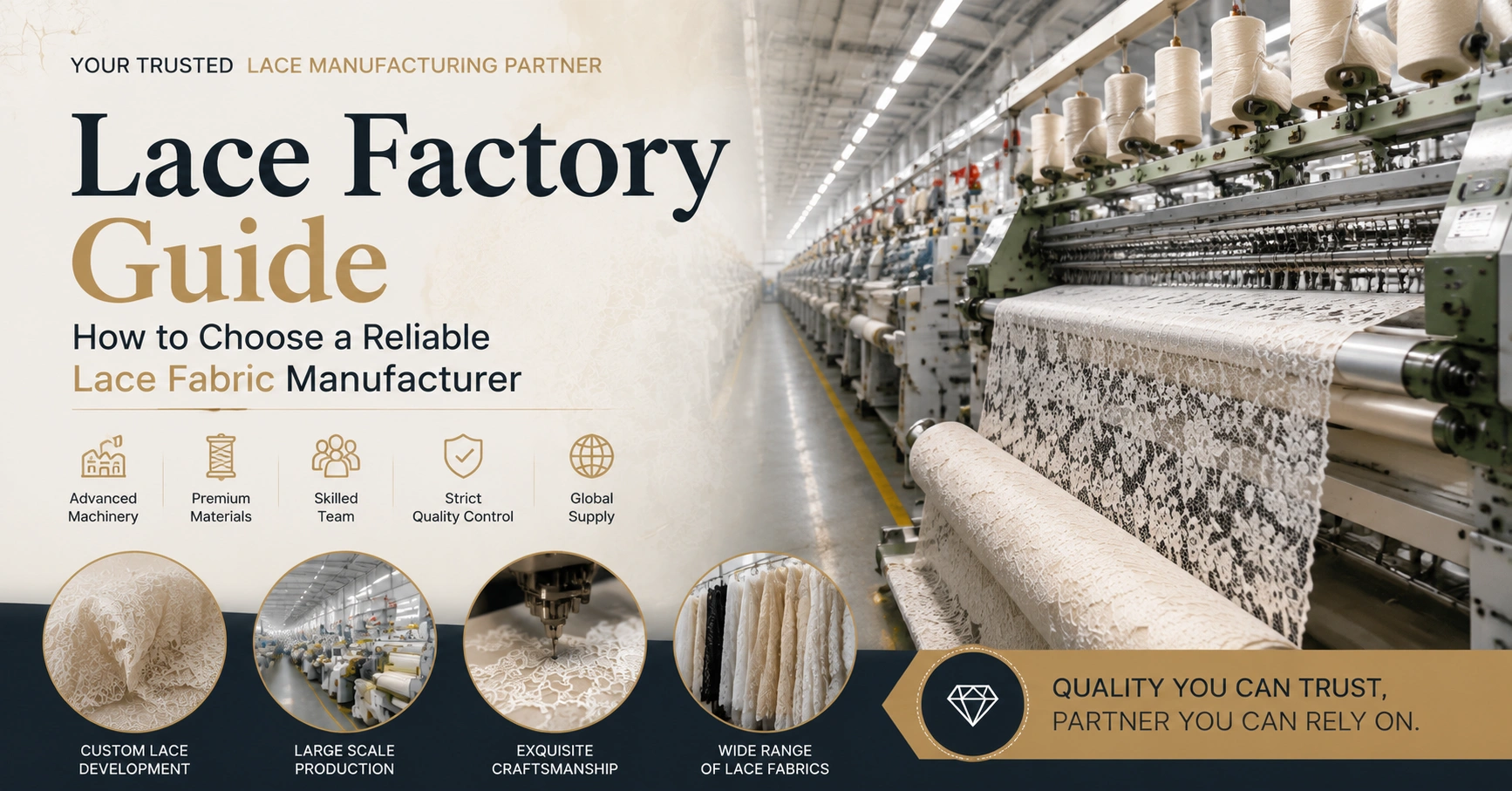
Lace Fabric Production & Manufacturing Equipment
Beyond embroidery, a complete lace factory relies on a full ecosystem of textile production equipment.
Key capabilities include:
- Fabric handling systems
- Yarn feeding and tension control
- Finishing and shaping processes
- Continuous production line management
A well-equipped factory ensures:
- Stable output
- Reduced defects
- Scalable production
What Determines Lace Fabric Quality?
From real manufacturing experience, three factors define lace quality:
| Factor | Impact |
|---|---|
| Dyeing precision | Color consistency & visual appeal |
| Embroidery accuracy | Pattern quality & texture |
| Production stability | Delivery reliability |
Professional lace manufacturers control all three stages to deliver consistent, high-quality fabrics for global brands.
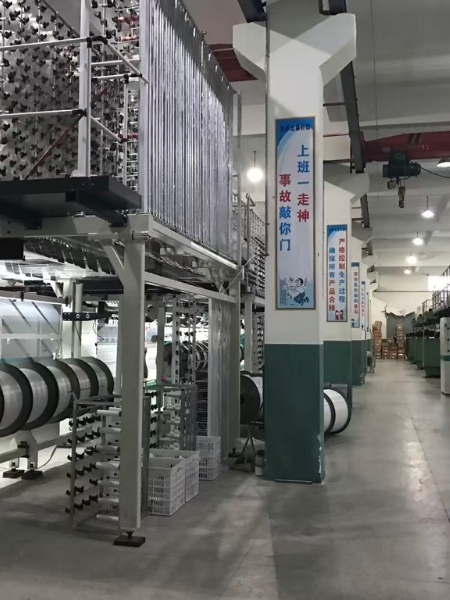
How to Choose a Reliable Lace Manufacturer?
When selecting a lace supplier, buyers should evaluate:
- Dyeing capability and color consistency
- Embroidery machine quality and capacity
- Sampling speed and flexibility
- Quality control systems
- Export and logistics experience
Choosing the right partner reduces risk and improves long-term collaboration efficiency.
Work with a Professional Lace Manufacturing Partner
At Mjlace, we provide a complete solution covering:
- Custom lace design and development
- Precision dyeing and color matching
- Advanced embroidery production
- Strict quality control
- Global export and logistics
👉 Contact us today to request samples or discuss your lace production needs.