

Lace fabric has long been valued for its elegance, complexity, and adaptability. Whether used in bridal gowns or luxury evening wear, lace adds texture and refinement to garments. For fashion brands and B2B buyers, knowing the ins and outs of lace—its types, production methods, applications, and sourcing considerations—is key to building standout collections.
The Essence of Lace Fabric
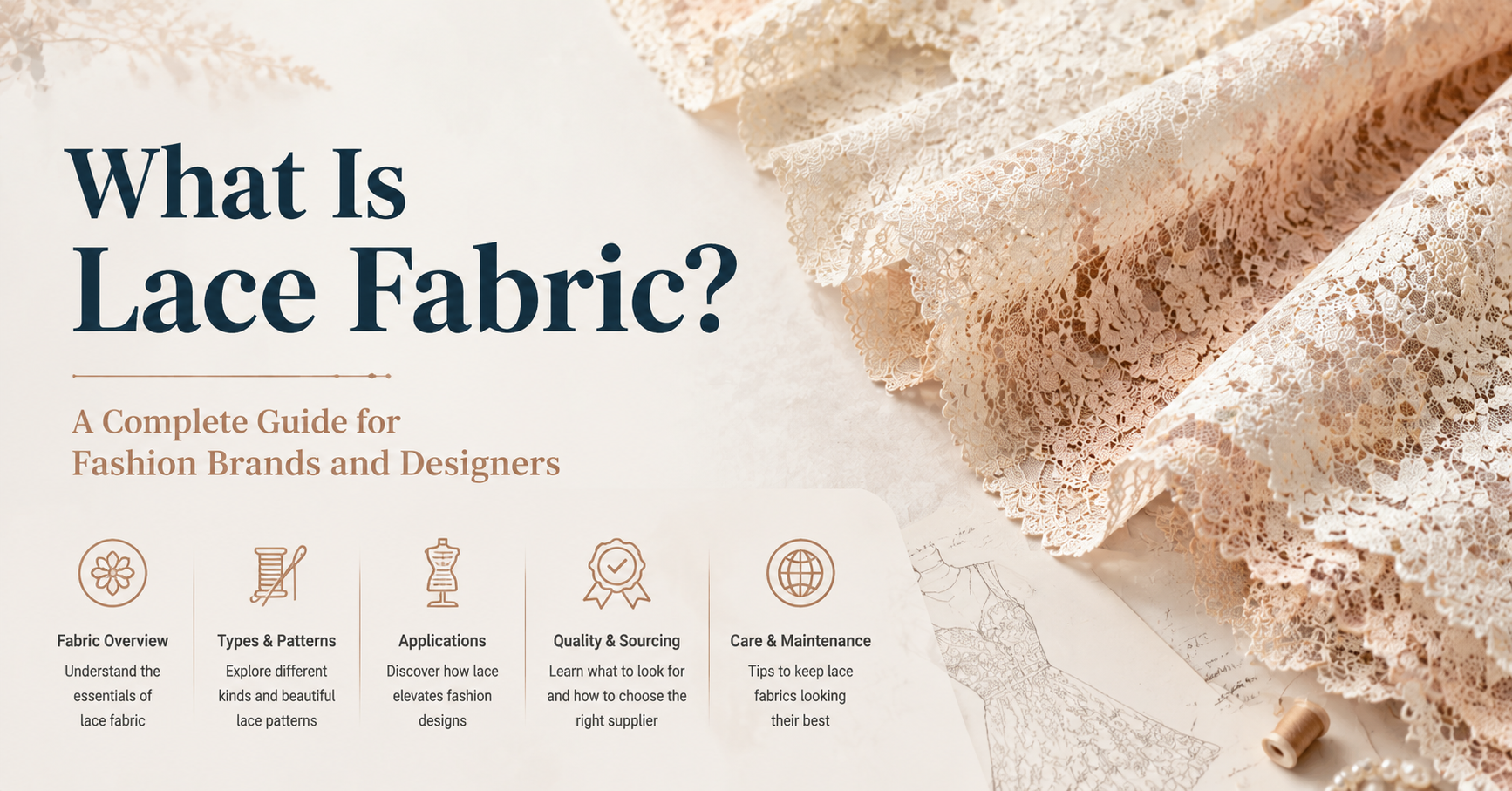
Lace is a delicate, openwork textile typically created by intertwining threads into intricate patterns. Its structure offers strong visual appeal while keeping the fabric lightweight and breathable. Unlike many standard fabrics, lace can turn a simple silhouette into a statement piece.
Detailed Overview of Lace Fabric Categories
Understanding lace categories helps fashion brands, designers, and buyers choose the right material for each product line. Below are the main types, along with their characteristics, uses, and sourcing considerations.
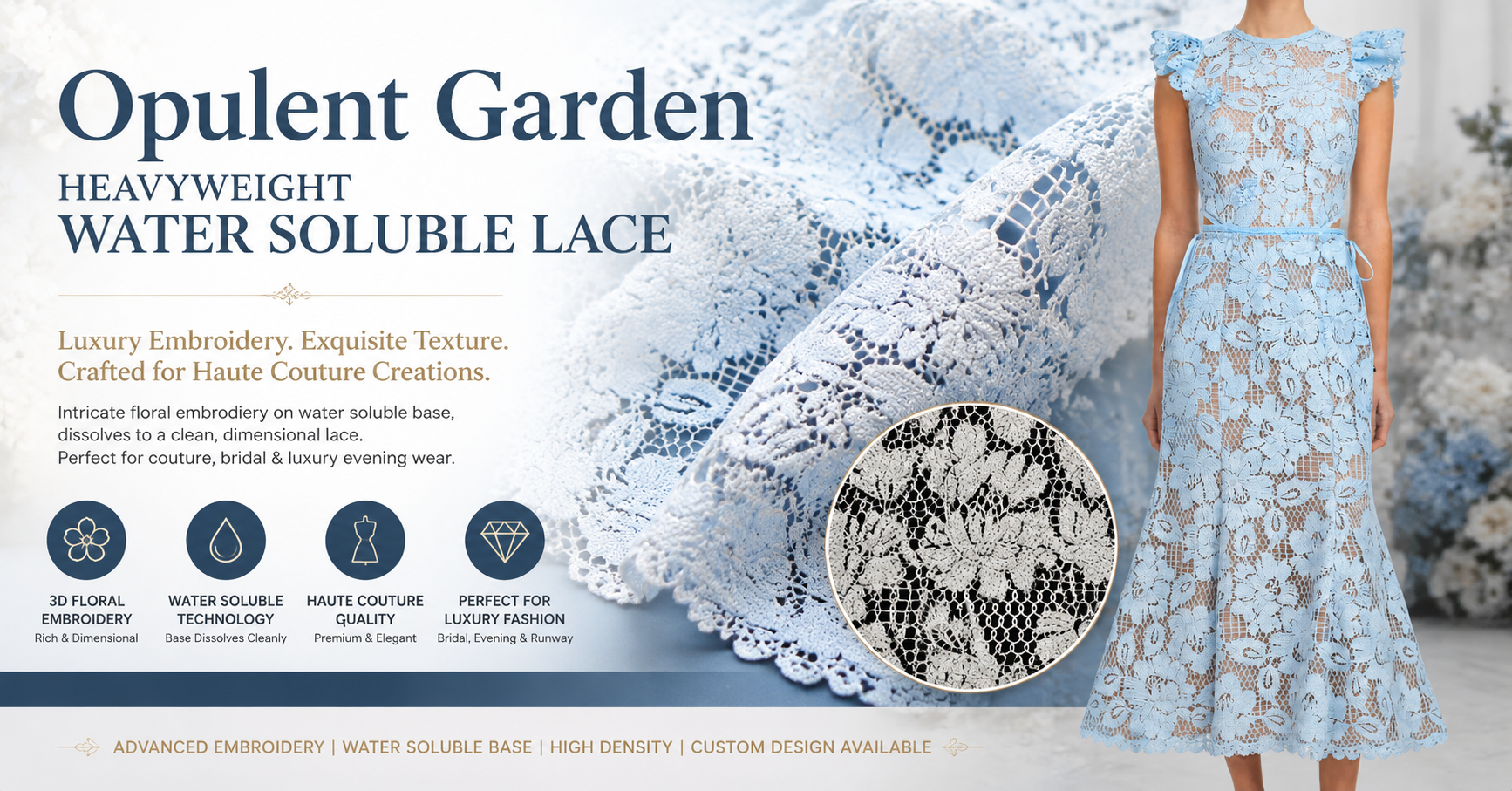
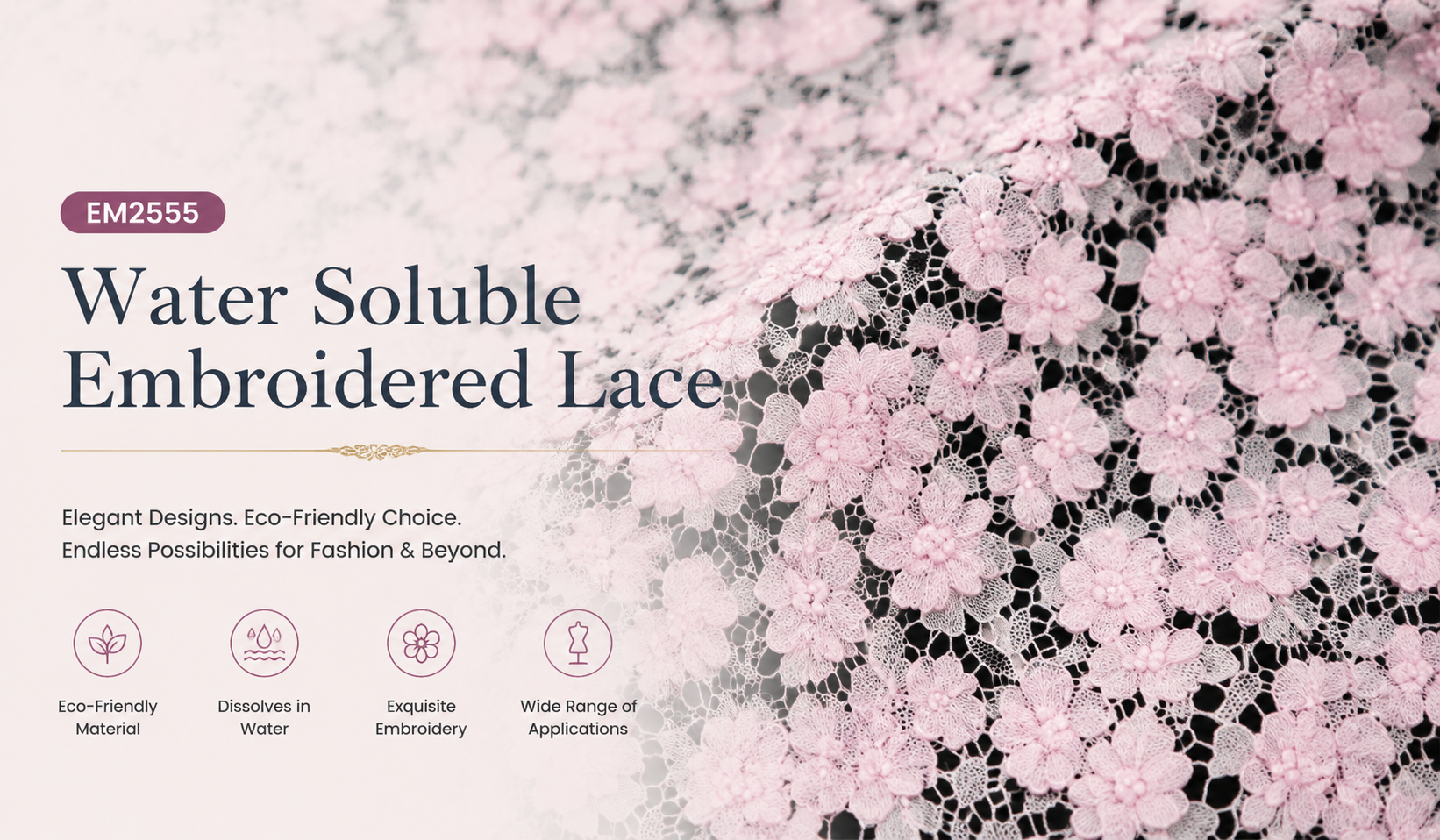
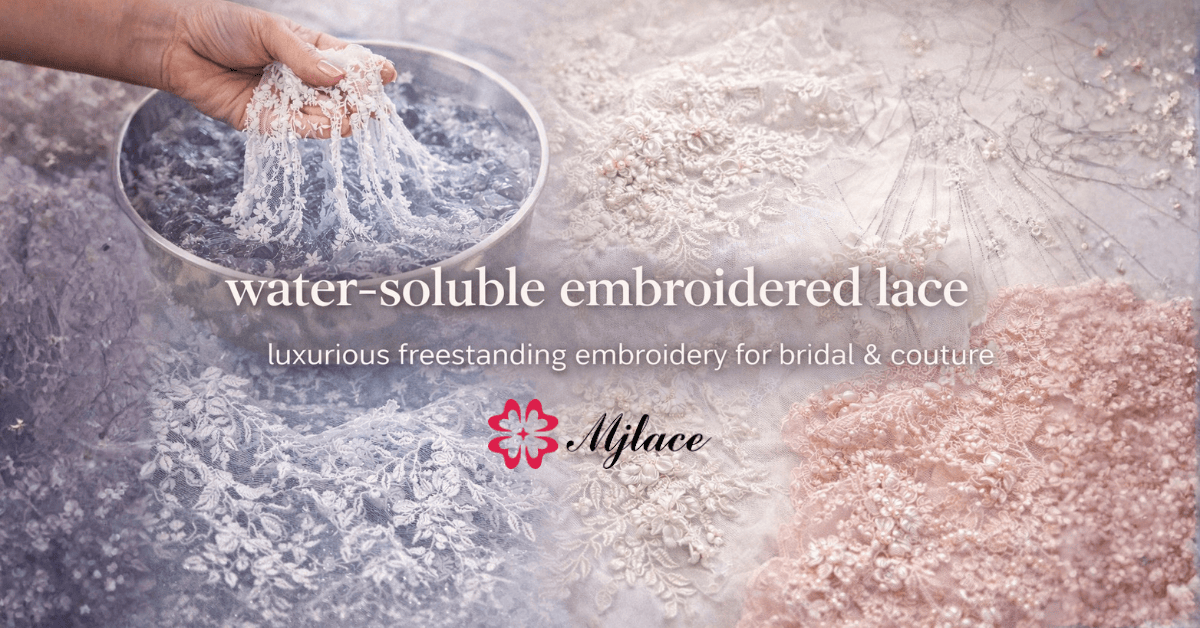
Water-Soluble Embroidered Lace
-
Description: Lace embroidered onto a water-soluble base; once dissolved, the lace stands alone.
-
Applications: Bridal gowns, couture dresses, overlays, appliqués.
-
Advantages: Supports intricate, custom designs; clean edges; lightweight.
-
B2B Tips: Verify supplier experience. Request sample swatches.
Embroidered Lace
-
Description: Patterns stitched onto a base fabric such as mesh or tulle.
-
Applications: Evening wear, casual fashion, trims, decorative panels.
-
Advantages: Versatile; allows color variation and dense patterns.
-
B2B Tips: Check stitching uniformity. Ask about MOQs for custom embroidery.
Guipure Lace
-
Description: Dense lace with motifs connected without a net background; heavier and textured.
-
Applications: Statement gowns, luxury outerwear, high-end fashion.
-
Advantages: Dramatic three-dimensional look; works well with embellishments.
-
B2B Tips: Evaluate motif durability and fabric weight.
Chantilly Lace
-
Description: Fine, delicate lace with floral motifs on a net base.
-
Applications: Bridal wear, delicate evening gowns, lingerie.
-
Advantages: Soft drape, elegant appearance, high-end feel.
-
B2B Tips: Ensure the net base is strong enough for handling.
Sequin, Bead, and Ribbon Enhanced Lace
-
Description: Lace enhanced with sequins, beads, or ribbons for added shine.
-
Applications: Luxury bridal, evening wear, stage costumes.
-
Advantages: Adds dimension to motifs, allows brand customization.
-
B2B Tips: Confirm embellishments are securely attached.
Stretch Lace
-
Description: Lace with elastic fibers for flexibility.
-
Applications: Activewear, lingerie, fitted dresses.
-
Advantages: Retains intricate patterns while offering stretch.
-
B2B Tips: Test elasticity and recovery after washing.
Specialty Lace (Custom / Seasonal)
-
Description: Custom-designed lace or seasonal motifs for brand exclusivity.
-
Applications: Limited editions, designer collaborations.
-
Advantages: Strengthens brand identity, allows logos or signature patterns.
-
B2B Tips: Work closely with suppliers on digital pattern approval.
Key Materials and Threads
Material choice affects lace quality, durability, and look. In 2026, more designers are incorporating decorative elements—like sequins, beads, and ribbons—into water-soluble and embroidered lace.
Basic Threads and Fibers
-
Cotton Lace: Soft, breathable. Suitable for bridal and casual wear.
-
Silk Lace: Luxurious, smooth. Ideal for high-end fashion.
-
Polyester/Nylon Lace: Durable, cost-effective. Good for bulk production.
-
Metallic Threads: Adds shimmer for evening wear.
Decorative Materials
-
Sequins – Small, reflective discs for sparkle. Common in bridal and couture.
-
Beads – Tiny spherical embellishments for dimensional patterns.
-
Ribbons and Cords – Narrow decorative bands stitched into lace.
B2B Sourcing Tips
-
Ensure consistent quality of decorative elements across batches.
-
Check for secure stitching and durability.
-
Suppliers offering custom color and placement provide more flexibility.
Lace Production Techniques: Machinery and Weaving Methods
High-end lace relies on advanced machinery. Understanding these technologies helps buyers evaluate suppliers.
Embroidery Machines
-
Multi-head machines ensure uniform pattern repetition.
-
Single-head machines for custom or small-batch production.
-
3D embroidery machines for raised, dimensional motifs.
Lace Knitting and Weaving Machines
-
Raschel knitting machines produce large volumes efficiently.
-
Leavers lace machines for fine, delicate lace like Chantilly.
-
Jacquard knitting machines for complex, repeating designs.
Water-Soluble Lace Production
-
Embroidered onto a dissolvable base, then washed away to leave freestanding lace.
-
Allows highly detailed designs for high-fashion garments.
Quality Control in Manufacturing
-
Regular checks on thread tension and stitch uniformity.
-
Digital scanning for pattern accuracy.
-
Color fastness testing for bulk consistency.
Applications in Fashion Design
-
Bridal Wear: Gowns, veils, accessories.
-
Evening Wear: Texture and pattern.
-
Ready-to-Wear: Trims, overlays, full garments.
-
Accessories: Scarves, gloves, decorative motifs.
B2B Considerations for Lace Buyers
Quality Assurance
Ensure consistent thread tension and color stability. Look for OEKO-TEX or ISO certification.
Minimum Order Quantities
Many manufacturers offer flexible MOQs for custom designs, helping with sampling and limited collections.
Lead Times
Efficient production and delivery help brands meet seasonal deadlines.
Customization Capabilities
Reliable suppliers provide OEM/ODM services, including bespoke patterns and finishes.
Lace Fabric Trends for 2026 – Insights for B2B Buyers
1. Sustainable and Eco-Friendly Lace
Organic cotton, recycled polyester, and eco-friendly dyeing are in demand.
2. 3D and Textured Embroidery
Raised motifs popular in bridal and couture. Adds uniqueness and value.
3. Oversized Floral and Organic Motifs
Large-scale patterns add drama, especially in gowns and outerwear.
4. Pastel, Gradient, and Dual-Tone Colors
Soft pastels and ombre effects. See 2026 color trends.
5. Metallic and Iridescent Threads
Gold, silver, and iridescent threads enhance luxury appeal.
6. Mixed Media and Layering
Lace combined with tulle, chiffon, or satin for premium garments.
7. Functional and Stretch Lace
Stretch lace with spandex for casual and fitted wear.
8. Interactive and Transformative Lace
Water-soluble lace that reveals hidden motifs, for high fashion.
9. Custom and Brand-Specific Motifs
Unique lace patterns that strengthen brand identity.
10. Seasonal and Regional Adaptation
Light lace for spring/summer; heavier guipure for fall/winter.
Tips for Choosing the Right Lace Supplier
-
Prioritize manufacturers with technical expertise in water-soluble, guipure, and embroidered lace.
-
Request sample swatches before bulk orders.
-
Check production capacity.
-
Look for suppliers offering design consultation and digital previews.
Conclusion
Lace fabric remains essential in fashion, bridging tradition and innovation. By understanding lace types, materials, production methods, and trends, brands can make smarter sourcing decisions. Partnering with an experienced lace manufacturer ensures quality, flexibility, and reliable delivery—key for staying competitive in 2026 and beyond.