
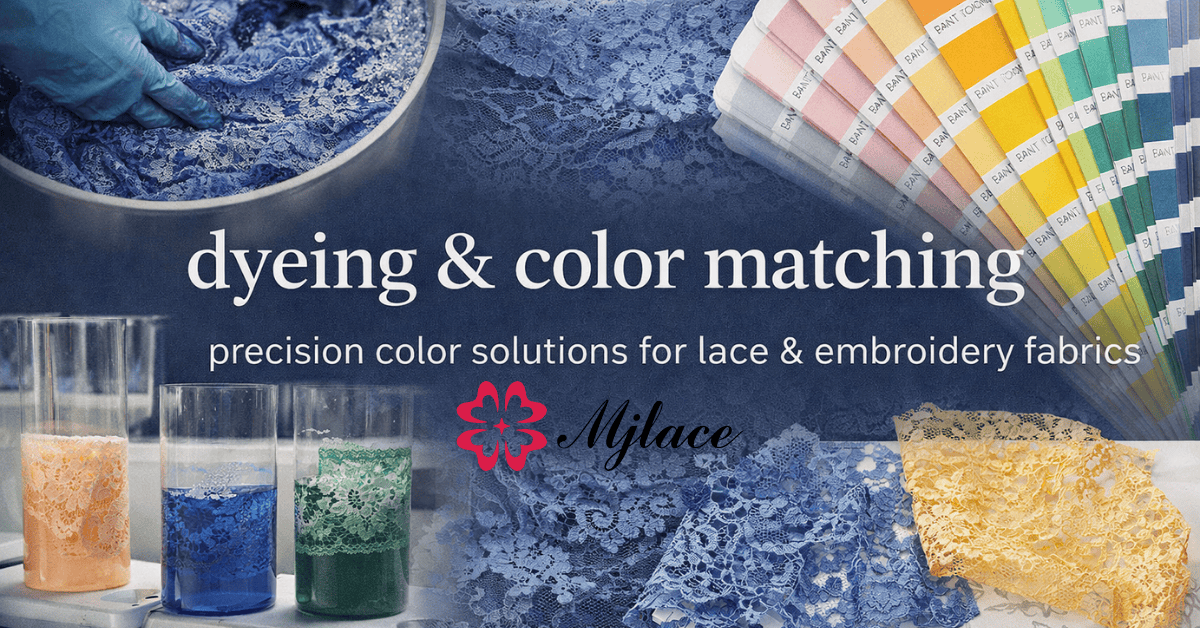

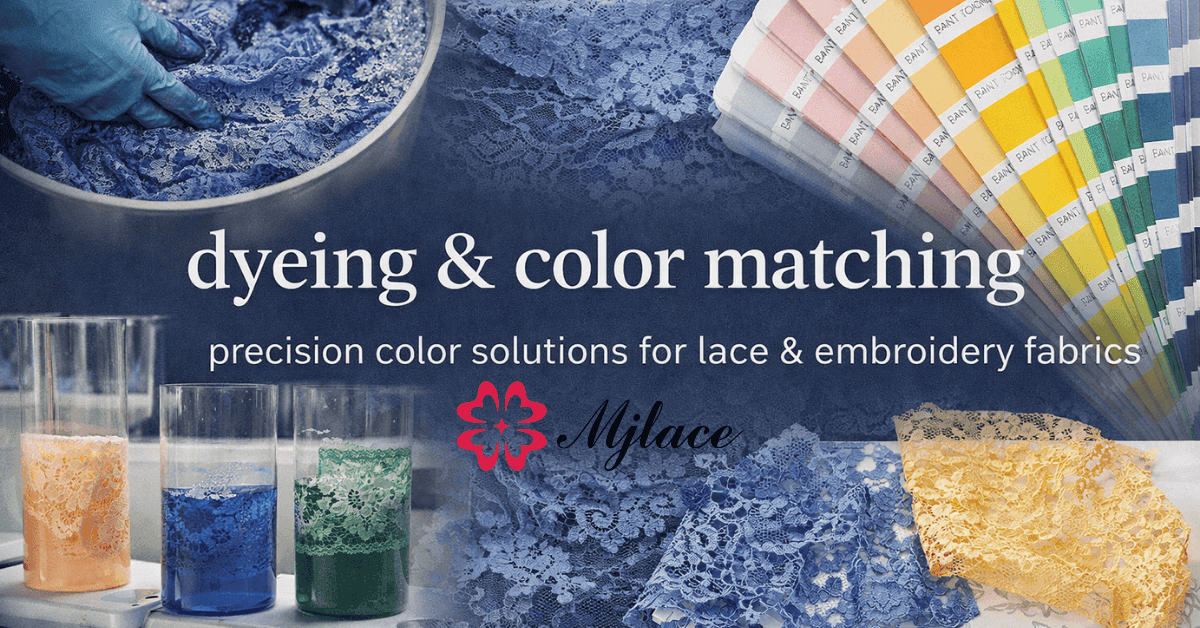
In lace and embroidery development, color is never just a surface decision. It defines mood, elevates texture, influences perceived quality, and ultimately determines whether a fabric feels luxurious, contemporary, or commercially viable. For fashion brands, lingerie labels, and bridal designers, accurate dyeing and professional color matching are as critical as pattern and material selection.
At Meijara (MJ Lace), dyeing is not treated as a finishing step—but as an integrated part of fabric development. From yarn selection to final bulk production, color precision is managed systematically to ensure consistency, durability, and visual harmony across collections.
This article explores how professional dyeing and color matching work in lace and embroidery production, why they matter, and how brands can avoid common pitfalls when sourcing dyed textiles.
Why Dyeing Is Especially Challenging for Lace & Embroidery
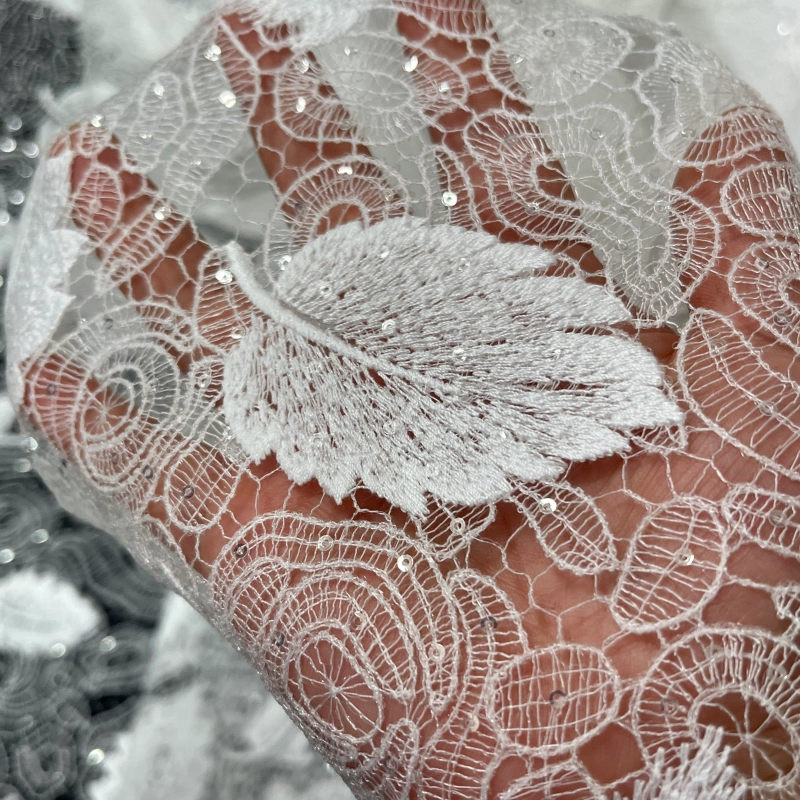
Unlike flat woven fabrics, lace and embroidery structures are complex and multi-dimensional. They involve:
-
Open constructions with varying densities
-
Different yarn types within one fabric
-
Raised embroidery elements interacting with base net
-
Light reflection differences caused by texture
These characteristics mean that color behaves differently on lace than on standard fabrics.
A shade that looks perfect on a cotton poplin can appear:
-
Lighter on sheer mesh
-
Darker in dense embroidery areas
-
Inconsistent across motifs
That’s why professional lace dyeing requires structure-aware color engineering, not just standard dye recipes.
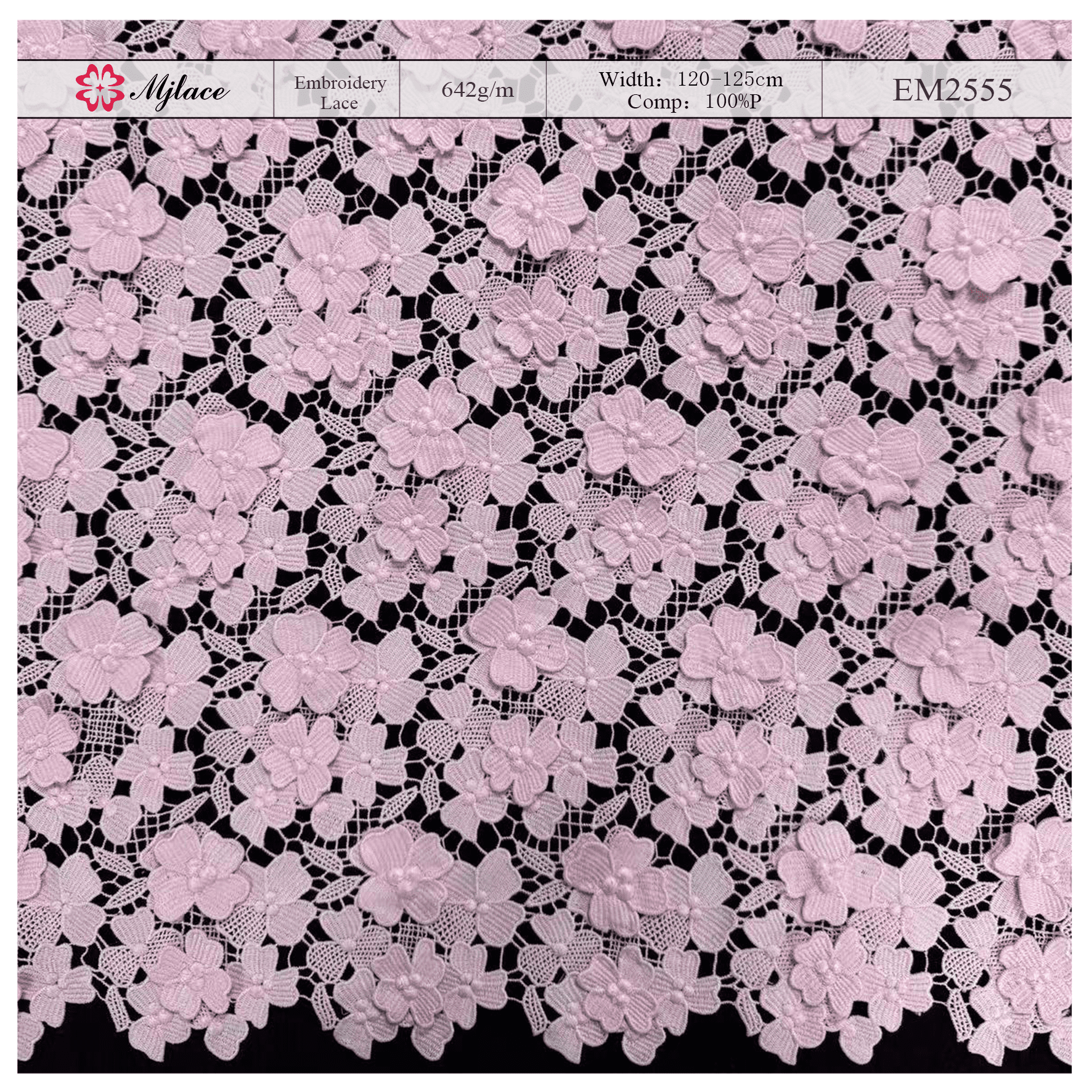
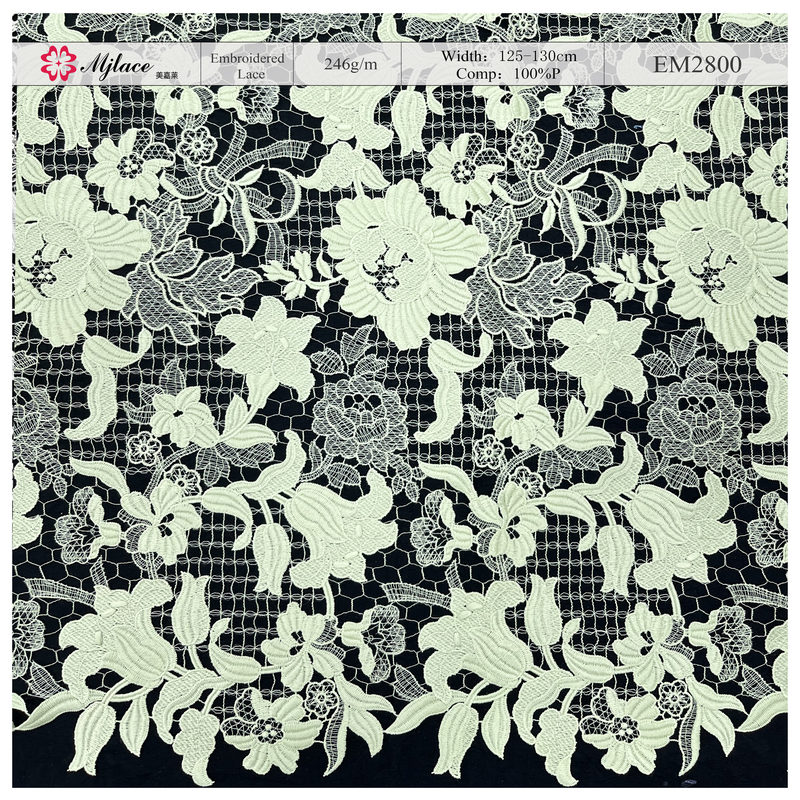
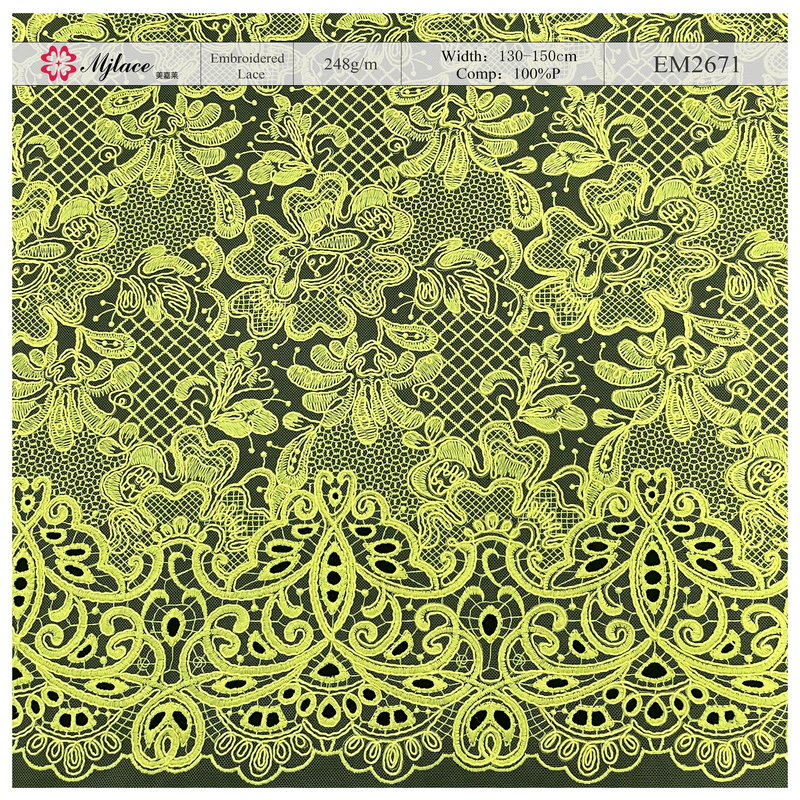
Understanding the Dyeing Process for Lace Fabrics
Yarn Dyeing vs. Piece Dyeing
Yarn Dyeing
-
Color is applied before knitting or embroidering
-
Best for:
-
Consistent tone control
-
Subtle mélange effects
-
Offers superior depth and colorfastness
Piece Dyeing
-
Fabric is dyed after construction
-
More flexible for:
-
Small MOQs
-
Fast trend colors
-
Sampling stages
-
-
Requires precise penetration control to avoid patchiness
At MJ Lace, the choice between yarn dyeing and piece dyeing is determined by end use, cost target, and performance requirements.
The Art and Science of Color Matching
From Pantone to Physical Reality
Color matching starts with a reference—usually:
-
Pantone TPX / TCX
-
Brand seasonal palette
-
Physical swatch from previous collection
But achieving an exact match on lace requires accounting for:
-
Fiber type (polyamide, polyester, cotton blends)
-
Base net color
-
Embroidery thickness
What looks like “Pantone 13-1106” on paper may require multiple lab dips to reach the same perceived color on lace.
Lab Dips: The Key to Accurate Color Approval
A lab dip is a small-scale dyed sample used to test and approve color before bulk production.
Professional lab dip evaluation includes:
-
Viewing under multiple light sources (D65, TL84)
-
Checking contrast between net and embroidery
-
Evaluating color depth consistency
-
Testing against original reference
MJ Lace typically provides 2–3 optimized lab dips per color to ensure brands can confidently approve before scaling.
Managing Multi-Color & Contrast Lace Designs
Modern lace trends often involve:
-
Two-tone effects
-
Ombre dyeing
-
Contrast embroidery on sheer nets
These designs require:
-
Separate dye baths
-
Controlled shrinkage rates
-
Stable base colors that won’t bleed or migrate
For contrast lace, color sequencing is critical—base fabric dyeing must be finalized before embroidery color matching, or visual imbalance may occur.
Colorfastness & Performance Testing
Beautiful color is meaningless if it doesn’t last.
Professional dyeing must meet international performance standards:
-
Washing colorfastness
-
Rubbing (dry & wet)
-
Lightfastness
-
Sweat resistance (especially for lingerie & intimates)
At MJ Lace, dye formulas are optimized not just for appearance, but for end-use durability, ensuring fabrics remain vibrant throughout the garment lifecycle.
Sustainable Dyeing & Eco Color Solutions
As sustainability becomes central to sourcing decisions, dyeing processes must evolve.
Eco-conscious dyeing includes:
-
Low-water dye systems
-
Certified dyes compliant with OEKO-TEX®
-
Reduced chemical discharge
-
Energy-efficient temperature control
MJ Lace integrates eco dyeing options into custom development, helping brands meet environmental goals without compromising color quality.
Common Dyeing Mistakes Brands Should Avoid
Approving color on flat fabrics only
Always test color on actual lace structure.
Ignoring lighting conditions
A color approved under office lighting may fail in retail.
Skipping bulk confirmation
Bulk production should always include a pre-production color check.
Underestimating lead time
Custom color development requires planning—especially for yarn-dyed lace.
How MJ Lace Supports Custom Color Development
Our dyeing and color matching service includes:
-
Pantone-based color engineering
-
Custom lab dip development
-
Multi-material color balancing
-
Small-batch and bulk production support
-
Trend-driven seasonal palette consultation
Whether you are developing a fashion-forward collection or a timeless bridal line, our team ensures color precision aligns with your brand vision.
Final Thoughts: Color Is a Strategic Asset
In lace and embroidery, color is not decorative—it is strategic. It influences brand identity, perceived value, and customer satisfaction.
By partnering with an experienced supplier who understands both the technical and aesthetic sides of dyeing, brands can transform color from a risk factor into a competitive advantage.
At MJ Lace, we believe that perfect color is never accidental—it is engineered.