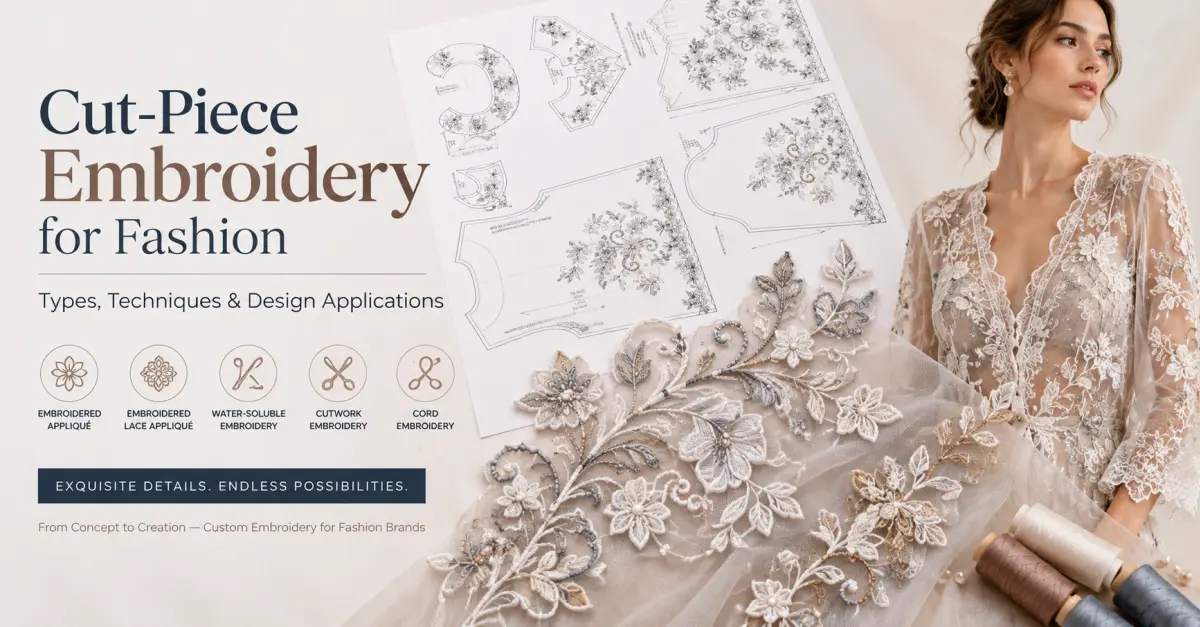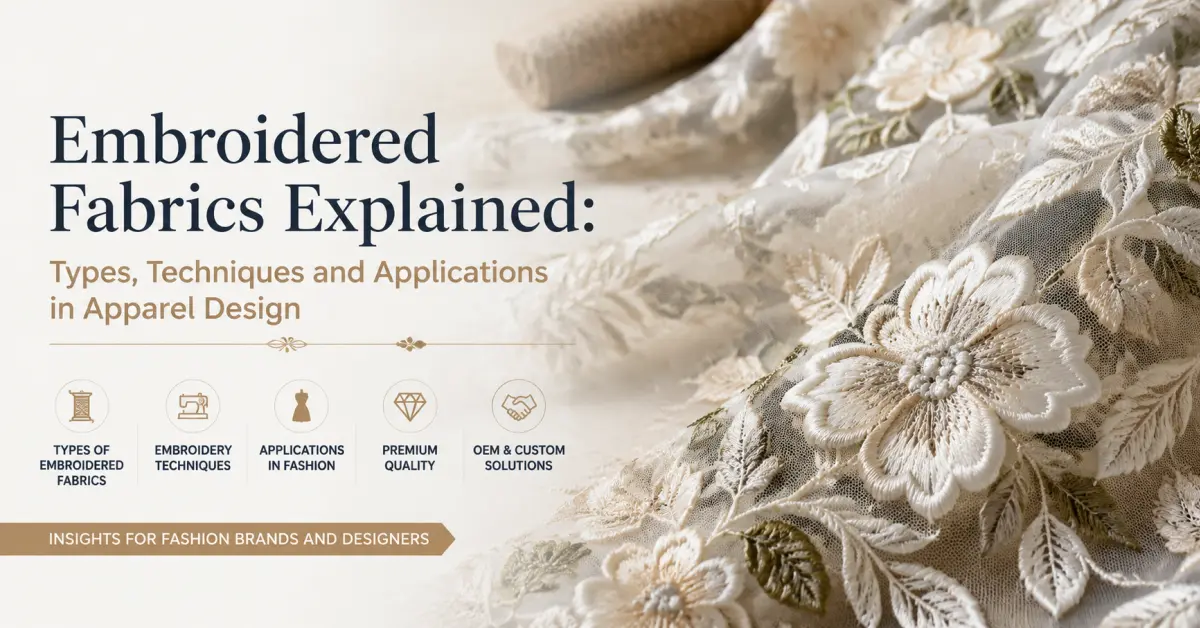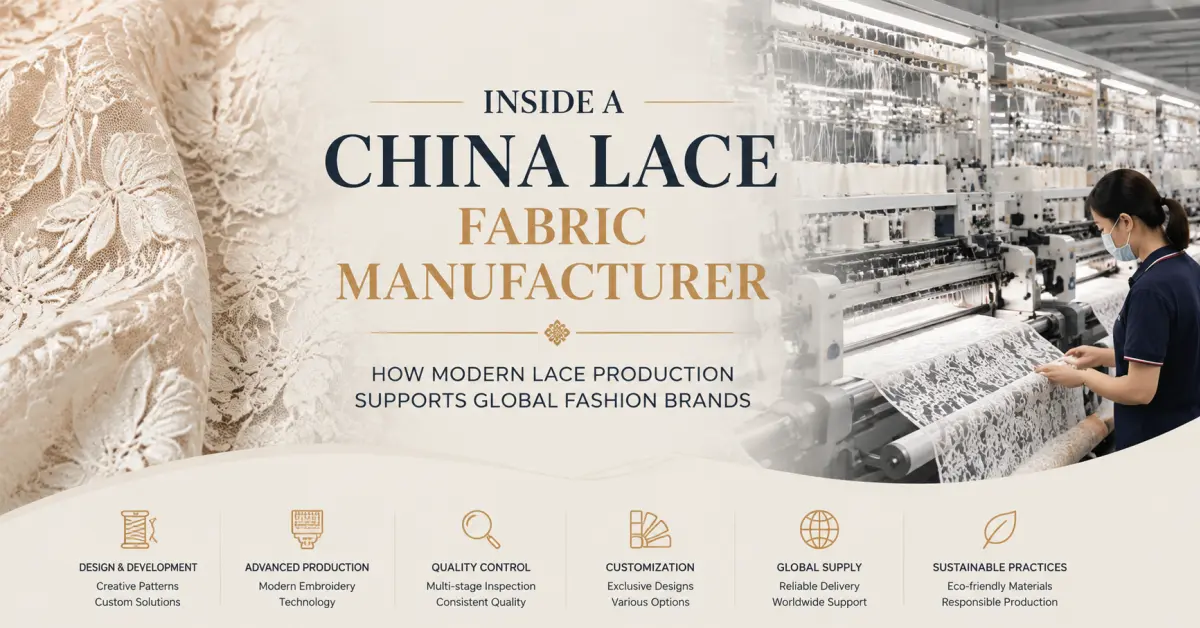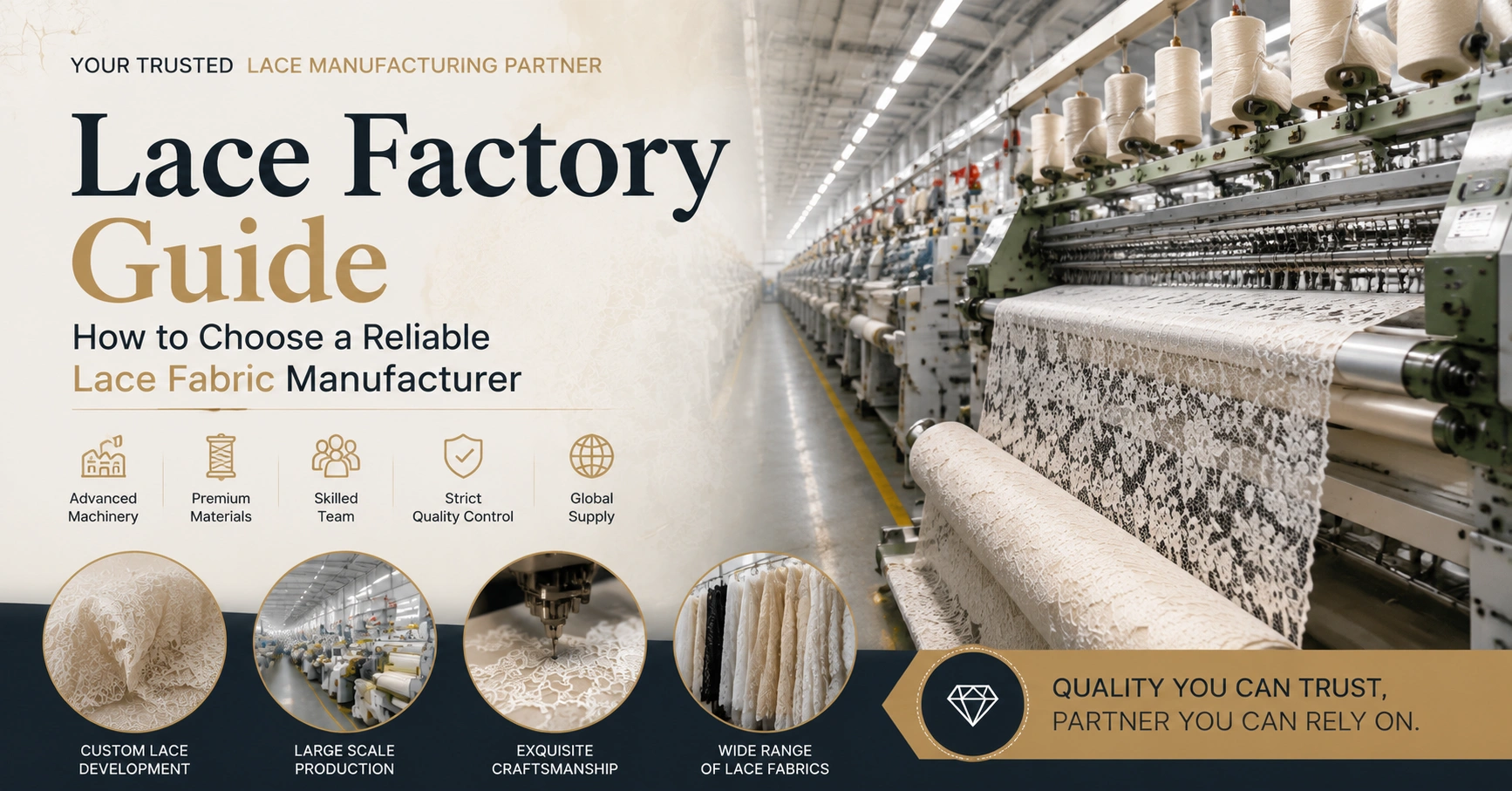

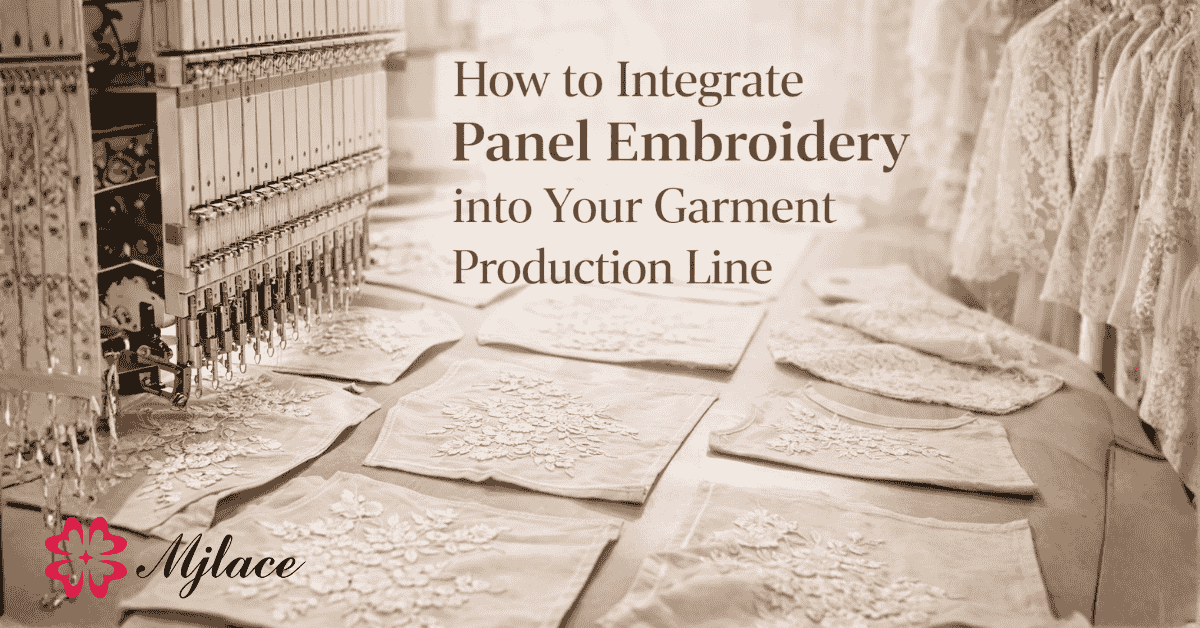

As fashion brands continue to pursue greater design flexibility, cost efficiency, and production control, panel embroidery has become an increasingly popular embroidery solution. Unlike traditional full-fabric embroidery, panel embroidery is performed on pre-cut garment pieces, allowing brands to achieve precise placement, customized motifs, and reduced material waste.
In this guide, we will walk you through how to seamlessly integrate panel embroidery into your garment production line, from design planning to final assembly. Whether you are a fashion brand, OEM buyer, or garment manufacturer, this article will help you understand how to use panel embroidery effectively and at scale.
What Is Panel Embroidery in Garment Manufacturing?
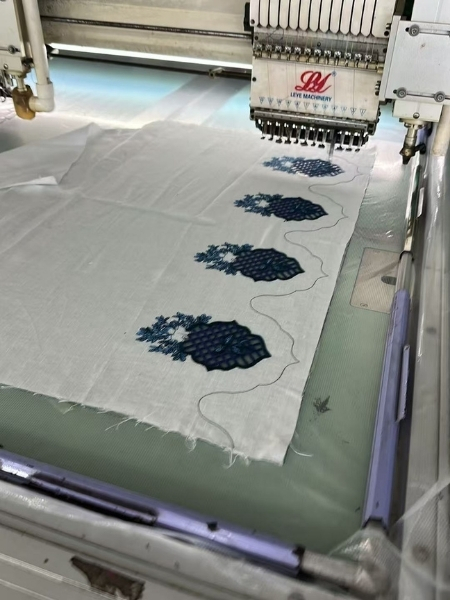
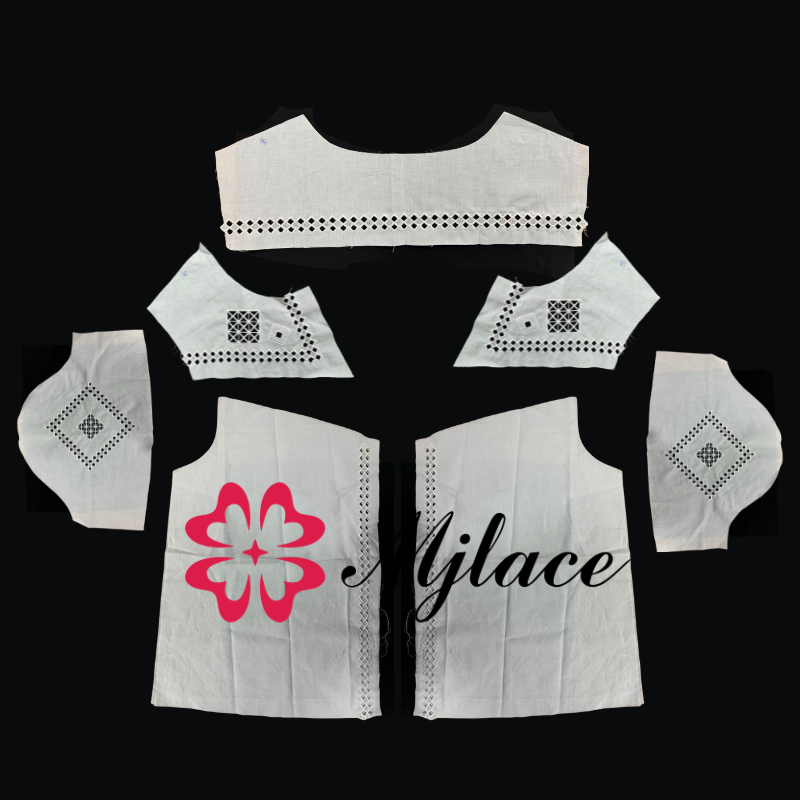
Panel embroidery refers to an embroidery method where individual garment panels are embroidered after cutting but before sewing. Instead of embroidering an entire roll of fabric, embroidery is applied only to specific areas—such as collars, cuffs, sleeves, fronts, or yokes.
This method is widely used in:
-
Designer menswear
-
Small-batch or high-end collections
Panel embroidery is especially suitable for brands that require high design accuracy, complex embroidery patterns, or flexible production schedules.
Why Integrate Panel Embroidery into Your Production Line?
Before discussing how to integrate panel embroidery, it’s important to understand why many brands are shifting to this approach.
Key Advantages of Panel Embroidery
-
Precise motif placement aligned with garment design
-
Reduced fabric waste, since only required areas are embroidered
-
Greater customization freedom for patterns and layouts
-
Simplified operations for apparel companies
-
Lower embroidery costs for complex designs
-
Ideal for OEM and custom orders
For brands producing embroidered garments regularly, panel embroidery offers both creative and operational advantages.
Step 1: Design Planning and Embroidery Placement
Successful integration begins at the design stage.
Define Embroidery Areas Clearly
When designing a garment intended for panel embroidery, determine:
-
Which panels require embroidery (front, collar, sleeve, back, etc.)
-
Exact embroidery dimensions and placement
-
Directional alignment (important for lace and floral patterns)
Designers should mark embroidery zones directly on:
-
Tech packs
-
CAD drawings
-
Pattern layouts
Clear design instructions reduce errors and speed up sampling.
Step 2: Pattern Making and Cutting Preparation
Panel embroidery requires accurate pattern cutting, as embroidery is done after cutting.
Best Practices for Pattern Preparation
-
Leave sufficient embroidery margins around the design area
-
Ensure consistency in panel sizes
-
Mark reference points for embroidery alignment
-
Use stable interlinings if necessary for fine fabrics
Once patterns are finalized, garment panels are cut and sorted according to embroidery requirements.
Step 3: Sending Panels for Embroidery Processing
After cutting, the garment panels are sent to the embroidery supplier.
What to Provide to the Embroidery Factory
To ensure smooth processing, brands should supply:
-
Cut panels (clearly labeled)
-
Embroidery artwork files
-
Stitch density and thread color references
-
Sample photos or mockups
-
Quantity breakdown by size and panel type
In many OEM setups, the embroidery factory handles only the embroidery process, while sewing remains with the garment manufacturer—streamlining responsibilities.
Step 4: Embroidery Execution and Quality Control
At the embroidery stage, precision and consistency are critical.
Embroidery Execution
Professional embroidery factories will:
-
Secure panels to prevent distortion
-
Match embroidery alignment with pattern reference points
-
Adjust stitch density based on fabric type
-
Ensure clean edges and stable stitching
Quality Control Checklist
-
Pattern accuracy and symmetry
-
Thread tension and stitch consistency
-
No puckering or fabric damage
-
Clean backing and finishing
Early quality checks help avoid costly rework after sewing.
Step 5: Panel Return and Garment Assembly
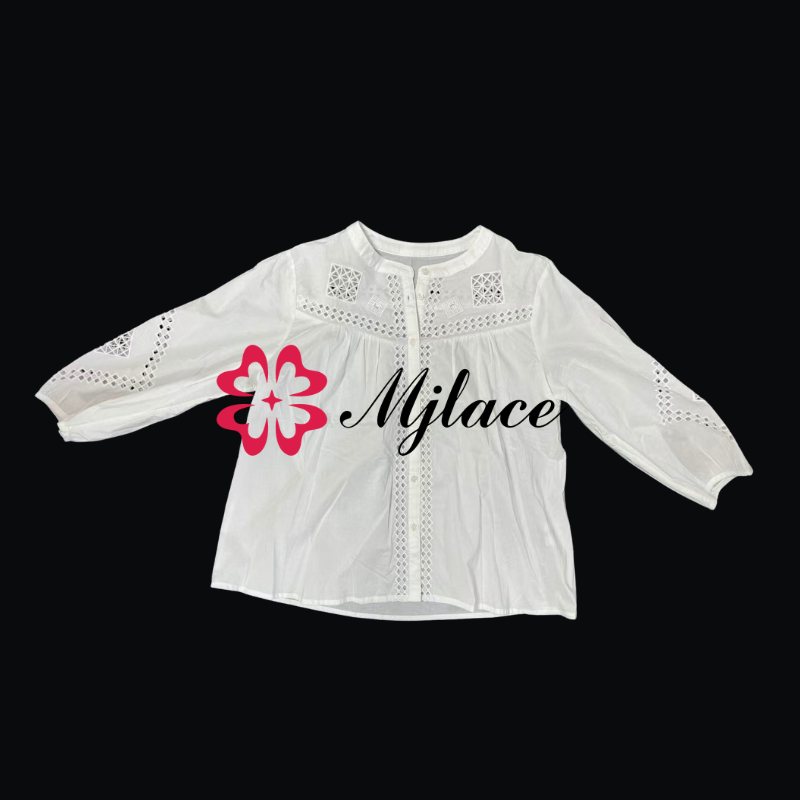
Once embroidery is complete, the embroidered panels are returned to the garment factory for sewing.
Sewing Considerations
-
Handle embroidered panels carefully to avoid distortion
-
Align seams to maintain embroidery symmetry
-
Use appropriate needle types for embroidered areas
Because embroidery is already completed, the sewing process becomes more predictable and efficient, especially for complex designs
.
How Panel Embroidery Improves Production Efficiency
Integrating panel embroidery into your production line can simplify workflow management.
Operational Benefits
-
Clear division between embroidery and sewing
-
Reduced embroidery lead times
-
Easier production scheduling
-
Lower rejection rates
-
More flexible MOQ options
For brands managing multiple styles or seasonal drops, panel embroidery offers superior production control.
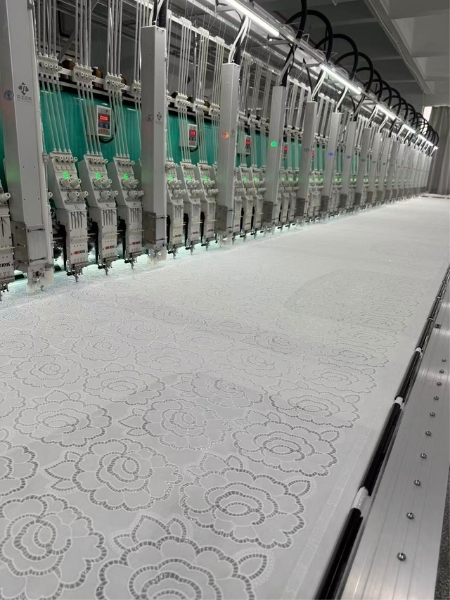
Panel Embroidery vs Traditional Full Fabric Embroidery
| Aspect | Panel Embroidery | Full Fabric Embroidery |
|---|---|---|
| Embroidery Stage | After cutting | Before cutting |
| Material Waste | Minimal | High |
| Design Flexibility | Very high | Limited |
| Placement Accuracy | Precise | Approximate |
| OEM Suitability | Excellent | Moderate |
This comparison shows why panel embroidery is especially favored by fashion-forward and custom garment brands.
Common Mistakes to Avoid When Using Panel Embroidery
-
Inaccurate panel cutting
-
Missing embroidery reference points
-
Insufficient embroidery margins
-
Poor communication with embroidery suppliers
-
Ignoring fabric behavior during stitching
Avoiding these mistakes ensures smoother integration and higher finished-garment quality.
Who Should Use Panel Embroidery?
Panel embroidery is ideal for:
-
Fashion brands with embroidered designs
-
Designers seeking customization
-
Small to medium production runs
-
High-end or premium apparel lines
If your brand values precision, creativity, and efficiency, panel embroidery is a strategic production choice.
Final Thoughts
Integrating panel embroidery into your garment production line is not just a technical decision—it’s a smart manufacturing strategy. By embroidering cut panels instead of full fabric rolls, brands gain greater control over design execution, cost management, and production efficiency.
With proper planning, clear communication, and experienced embroidery partners, panel embroidery can elevate your garment quality while simplifying your supply chain.