
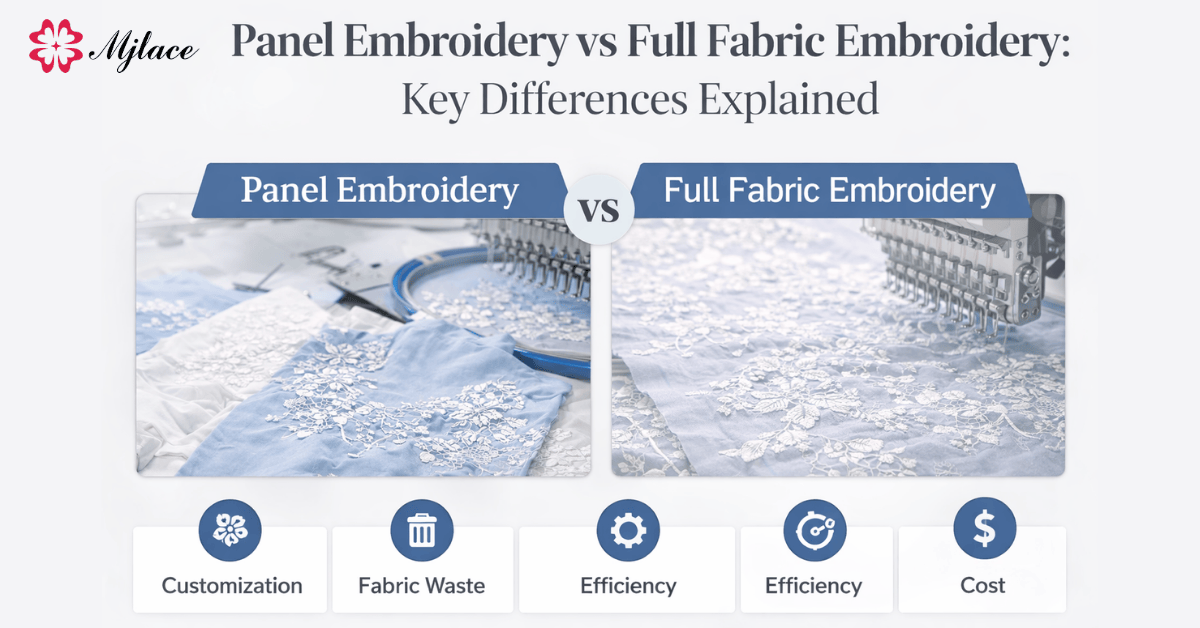

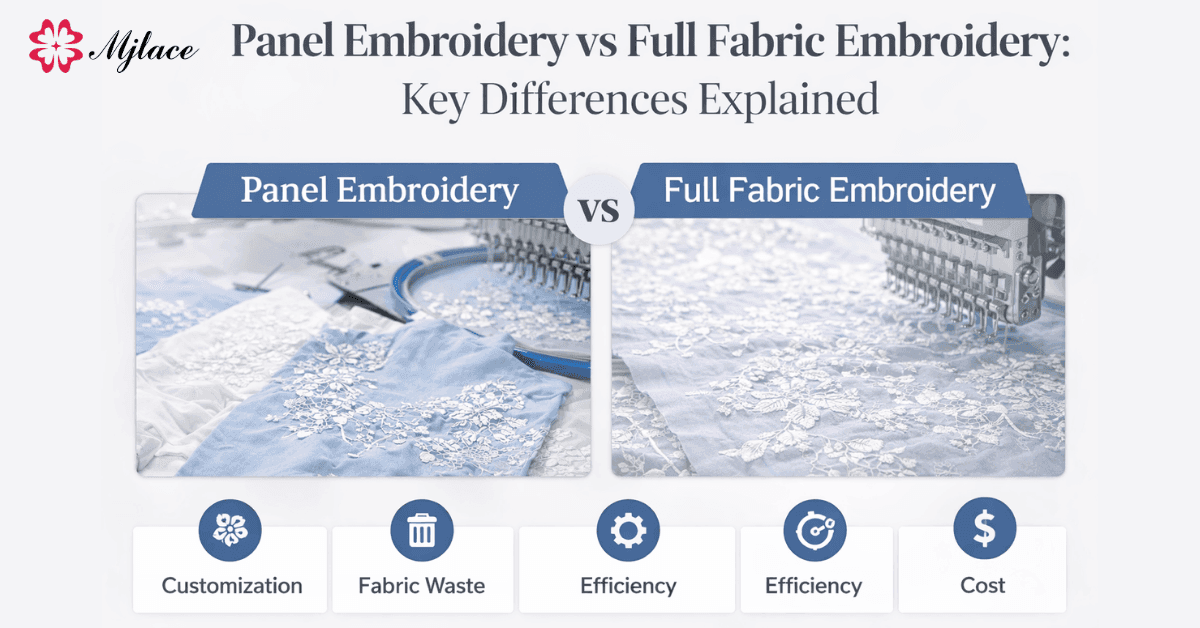
Which embroidery method is more suitable for modern garment production?
Embroidery plays a vital role in modern clothing design, adding texture, depth, and sophistication to garments. However, not all embroidery techniques achieve the same effect. The two most common methods in garment manufacturing are patchwork embroidery (also known as patchwork embroidery)and traditional full-width embroidery.
For fashion brands, apparel manufacturers, and designers, choosing the right embroidery method can significantly impact cost-effectiveness, production flexibility, fabric utilization, and the quality of the final garment.
In this comprehensive guide, we will explore the key differences between patchwork embroidery and full-width embroidery,explain how each technique works, and help you determine which solution is best suited for your production needs.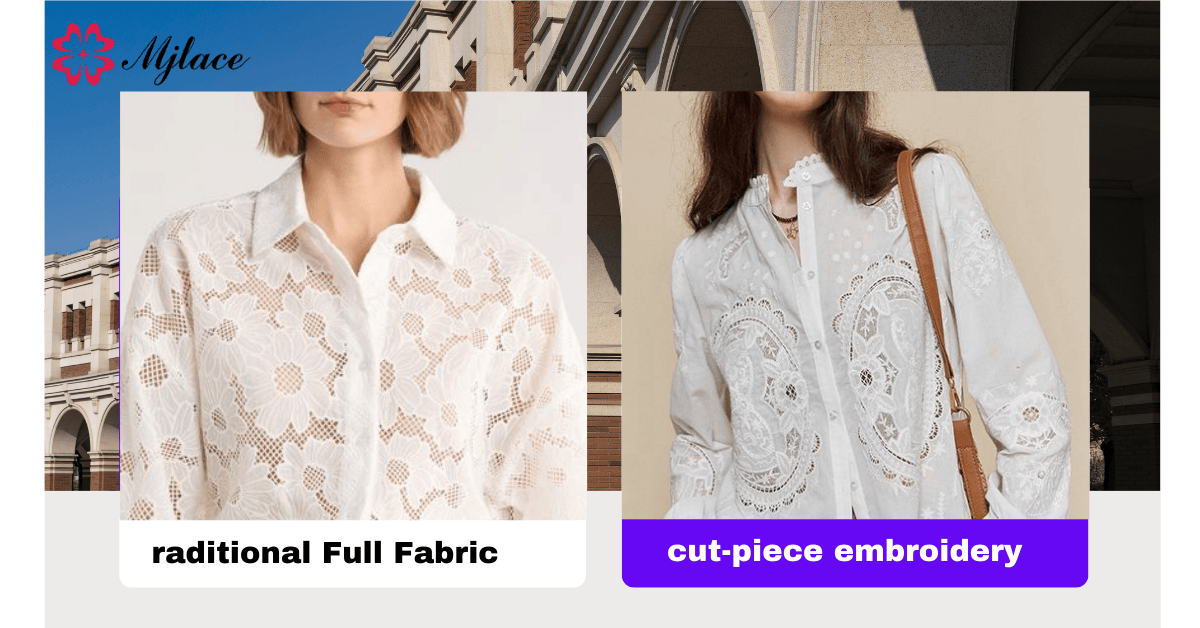
What is panel embroidery?
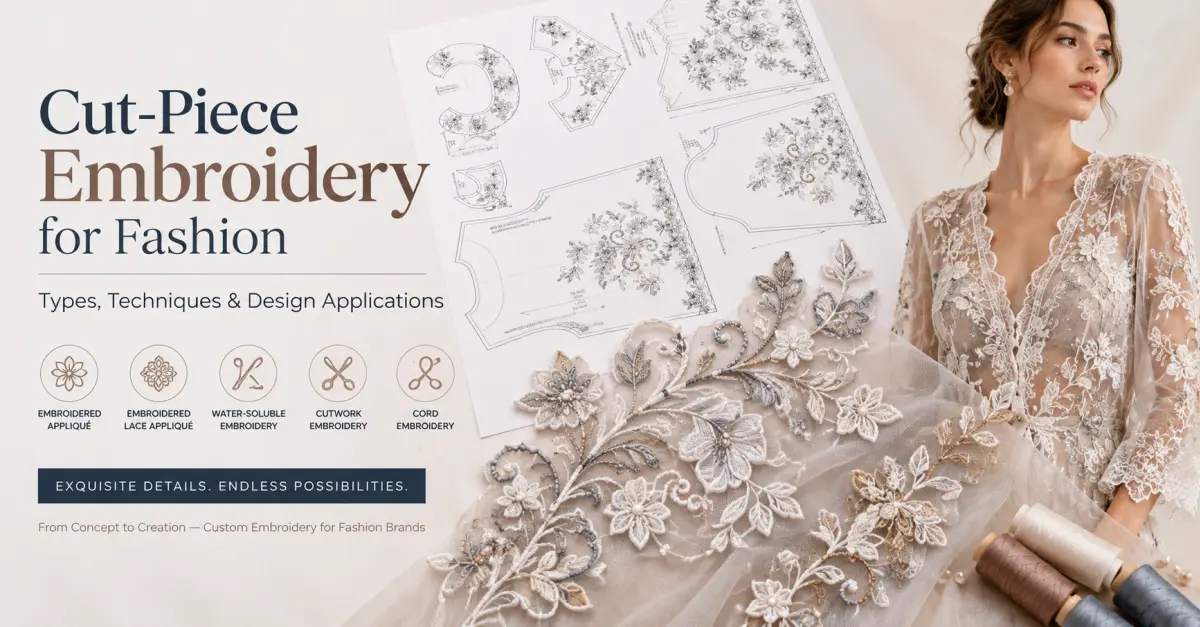
Panel embroidery,also known as cut-piece embroidery, is a production method in which clothing fabric is cut into individual pattern pieces and thenembroidered.
Working principle of panel embroidery
-
The final design of the clothing has been completed.
The client completed the garment design, including the placement of the embroidery. -
The fabric is cut according to the paper pattern.
Each garment component (front piece, back piece, collar, sleeves, etc.) is cut to size. -
The cut fabric will be sent for embroidery.
Only the required fabric will be sent to the embroidery factory. -
The embroidery technique is precisely applied to every piece of fabric.
The placement of the pattern is also entirely based on the design of the garment's pattern. -
After the embroidery is completed, the cut fabric pieces will be sent back for garment assembly.
Then, the individual pieces of fabric are sewn together to form the final garment.
Important Note:In the piece embroidery technique, the embroidery supplier is only responsible for the embroidery part; the sewing of the garment is completed by the customer or their factory.
What is traditional full-width embroidery?
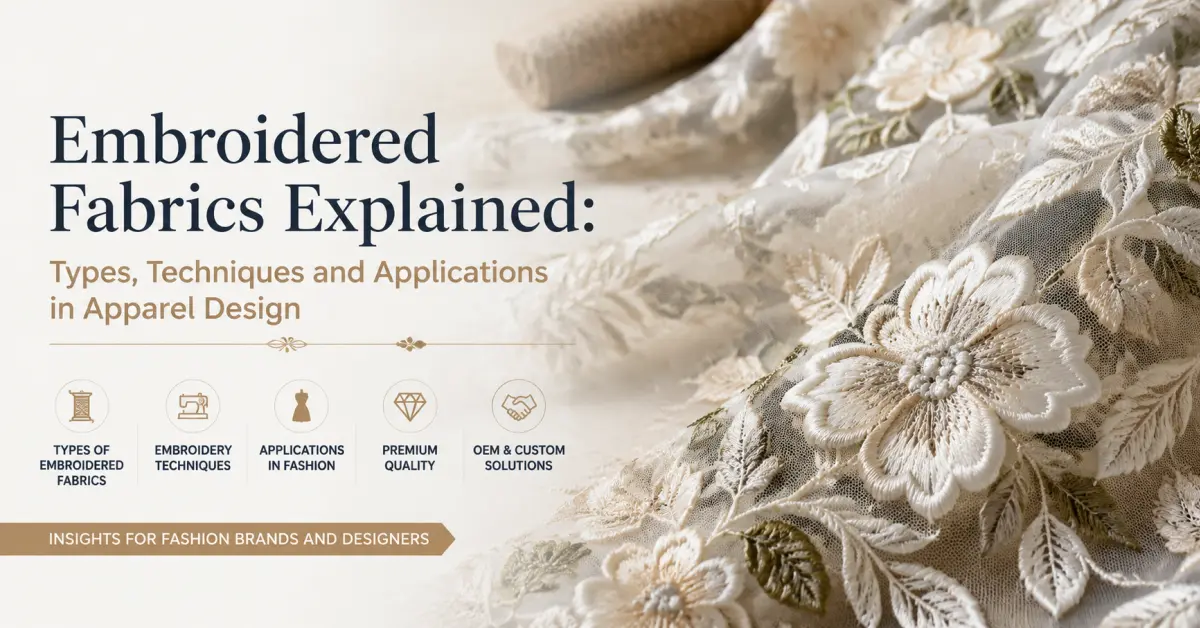
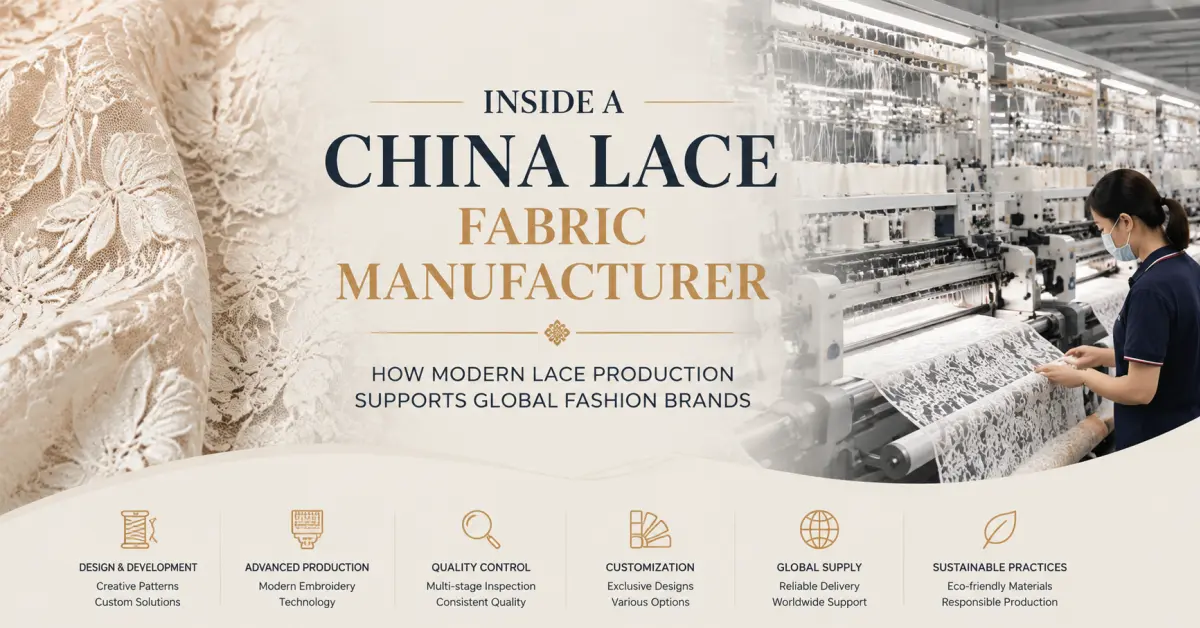
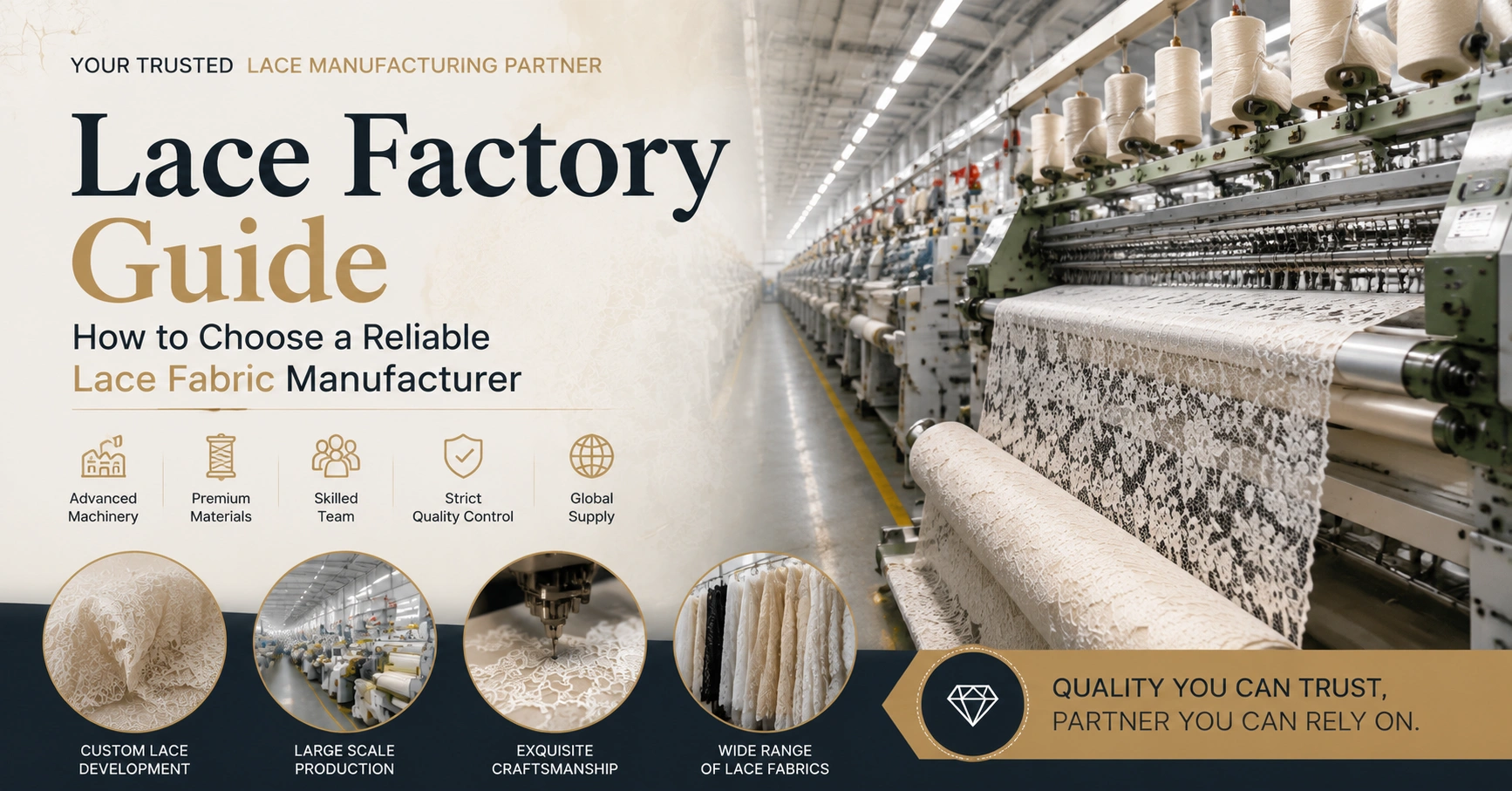
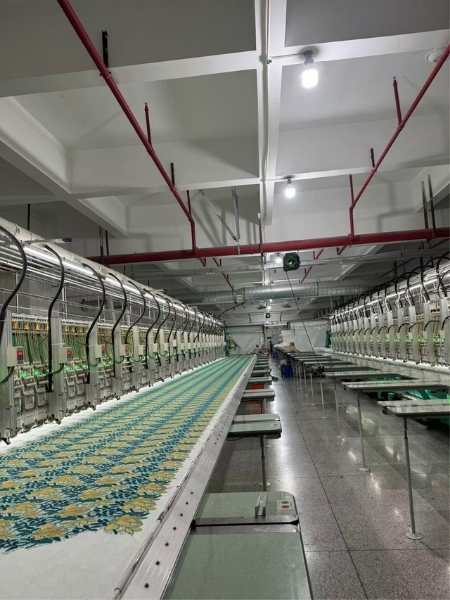
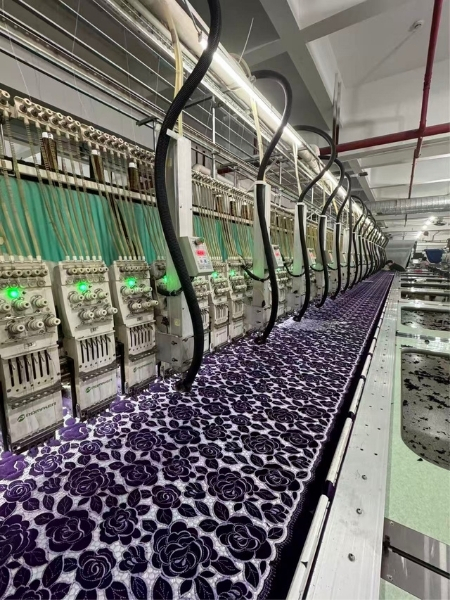
Traditional full-width embroidery is a relatively traditional technique thatinvolvesembroideringon a continuous roll of fabric before cutting.
The working principle of full-width embroidery
-
Continuous embroidery on rolled fabric
-
The embroidery pattern repeats in a fixed layout.
-
The fabric is cut after the embroidery is completed.
-
This garment is made of embroidered fabric.
This method is widely used in lace fabrics, all-over embroidery, and repeating pattern textiles.
The main differences between patchwork embroidery and full-coverage embroidery
1. Customization and design flexibility
Panel embroidery
-
Allows for unique designs for specific clothing areas
-
Ideal for creating logos, borders, asymmetrical patterns, and striking details.
Full-width embroidery
-
Only applicable to repeating patterns
-
Once the embroidery pattern is finalized, there is relatively little room for adjustment.
-
More suitable for a unified overall design
Award-winning custom piece:Panel embroidery
2. Fabric utilization rate and waste reduction
Panel embroidery
-
Only the parts that need to be cut need to be embroidered.
-
Significantly reduce fabric waste
-
Especially suitable for high-value or rare fabrics
Full-width embroidery
-
The embroidery pattern is applied to the entire roll of fabric.
-
Cutting the pattern may render some embroidery areas unusable.
-
Complex clothing designs can lead to significant material waste.
Sustainability and Efficiency Award Winner:Panel Embroidery
3. Cost-effectiveness
Panel embroidery
-
Small or medium batch embroidery has lower costs.
-
There is no need to embroider on unused areas of fabric.
-
Reducing material waste can lower overall production costs.
Full-width embroidery
-
Suitable for large-scale, repetitive designs, cost-effective and efficient.
-
High initial embroidery costs
-
This method is not very economical for small orders or designs that require fine layout.
The best choice depends on the order size and the complexity of the design.
4. Production process and convenience
Panel embroidery
-
Seamless integration into garment production
-
This is more convenient for apparel brands that manage multiple suppliers.
-
Simplify embroidery control at fashion companies
Full-width embroidery
-
Precise coordination is required between embroidery and cutting.
-
If design changes are needed, flexibility will be reduced.
-
It is more conducive to the standardized production of textiles
Award-winning works from garment factories and brands:Panel embroidery
5. Embroidery precision and garment fit
Panel embroidery
-
Precise positioning ensures that the embroidery pattern is perfectly aligned with the stitches and outline.
-
Ideal for use on collars, cuffs, plackets, and shoulder yokes.
-
Improve the overall appearance and fit of clothing
Full-width embroidery
-
Positioning accuracy depends on cutting accuracy
-
Risk of embroidery misalignment in complex patterns
Design Precision Award Winner:Panel Embroidery
When should panel embroidery be chosen?
Piece embroidery is very suitable for:
-
Fashion brands with custom designs
-
Shirts, dresses, women's blouses and custom-made clothing
-
Small batch production
-
High-end or premium clothing
-
Embroidery is mainly concentrated on specific parts of clothing.
Typical applications include:
-
embroidered collar
-
Decorative cuffs
-
The front is decorated with an embroidered logo.
-
Partial floral or lace embroidery
When is full-body embroidery a better choice?
Full-width embroidery is best suited for:
-
Mass production of textiles
-
Full-coverage embroidery pattern
-
Lace and embroidered fabrics
-
Standardized clothing design
-
Home textiles and decorative fabrics
A Brief Comparison of Piece Embroidery and Full-Length Embroidery
| feature | Panel embroidery | Full-width embroidery |
|---|---|---|
| Custom location | ✅ Excellent | ❌ Limited |
| Textile waste | ✅ Minimalism | ❌Higher |
| Small batch orders | ✅ Economical and affordable | ❌ Expensive |
| Large-scale repetition | ❌ Not very suitable | ✅ Ideal choice |
| Clothing fit | ✅ High | ⚠️ Medium |
Why are more and more fashion brands choosing panel embroidery?
With fashion cycles shortening and personalization becoming increasingly important, patchwork embroidery has become the preferred solution for many modern apparel brands.
It provides:
-
Greater design freedom
-
Better cost control
-
Reduce fabric waste
-
Easier to integrate into garment production
Forbrands that produce embroidered shirts, dresses, and custom lace garments, patchwork embroidery is both aesthetically pleasing and can improve operational efficiency.
Conclusion
Both sheet embroidery and traditional full-width embroidery have their place in the textile and apparel industry. Which method you choose depends on your design goals, production volume, budget, and sustainability considerations.
If your brand values customization, flexibility, and precise embroidery placement, then segmented embroidery is a wiser choice. For large, repeating patterns, full-width embroidery remains a reliable option.
Understanding these differences allows fashion brands and manufacturers to optimize production processes and deliver higher-quality apparel to the market.