

A complete B2B guide for fashion brands and buyers
For fashion brands, apparel manufacturers, and private label buyers, sourcing lace fabrics is crucial. Unlike ordinary textiles, lace has a complex structure, requiring specialized machinery and meticulous finishing processes, all of which directly impact quality, cost, and production reliability. A prudent sourcing strategy not only ensures consistent product quality but also mitigates risks arising from delays, quality issues, and discrepancies between expectations and reality.
This comprehensive buying guide explains how to choose the right lace fabric and how to effectively source from reliable manufacturers.
As a professional lace fabric manufacturer with over 16 years of industry experience, MJlace (Meijara Textile)has a deep understanding of the technical and commercial complexities of lace sourcing. MJlace serves global fashion brands, lingerie manufacturers, and private label buyers, supporting the entire sourcing process—from fabric selection and sampling to mass production and delivery. 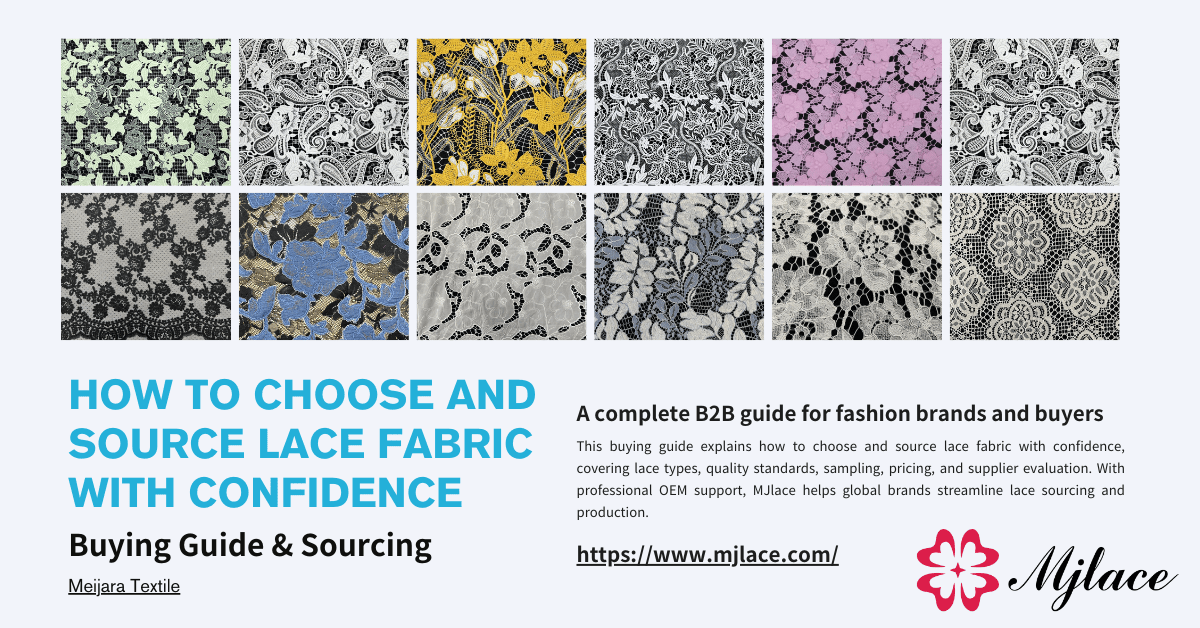
Understand your application requirements
Before contacting suppliers, be sure to clarify the intended use of the lace fabric. Different uses require different technical specifications.
Key questions to ask
-
Is this lace used for lingerie, fashion, wedding dresses, or home textiles?
-
Should this dress be made of stretch lace or non-stretch lace?
-
Will lace be used as the main fabric or as a decorative trim?
-
Is this garment meant to be worn close to the skin? Does it need to be soft and breathable?
Clearly defining these requirements helps narrow down the range of suitable lace types, avoiding costly modifications later in production.
Choose suitable lace fabric
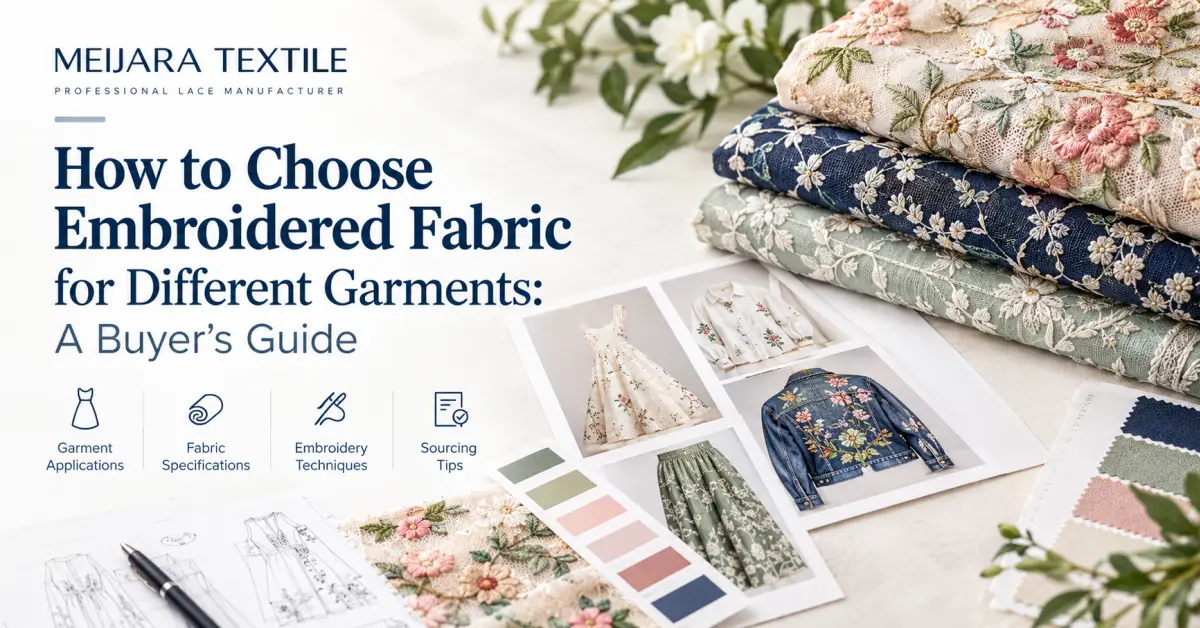
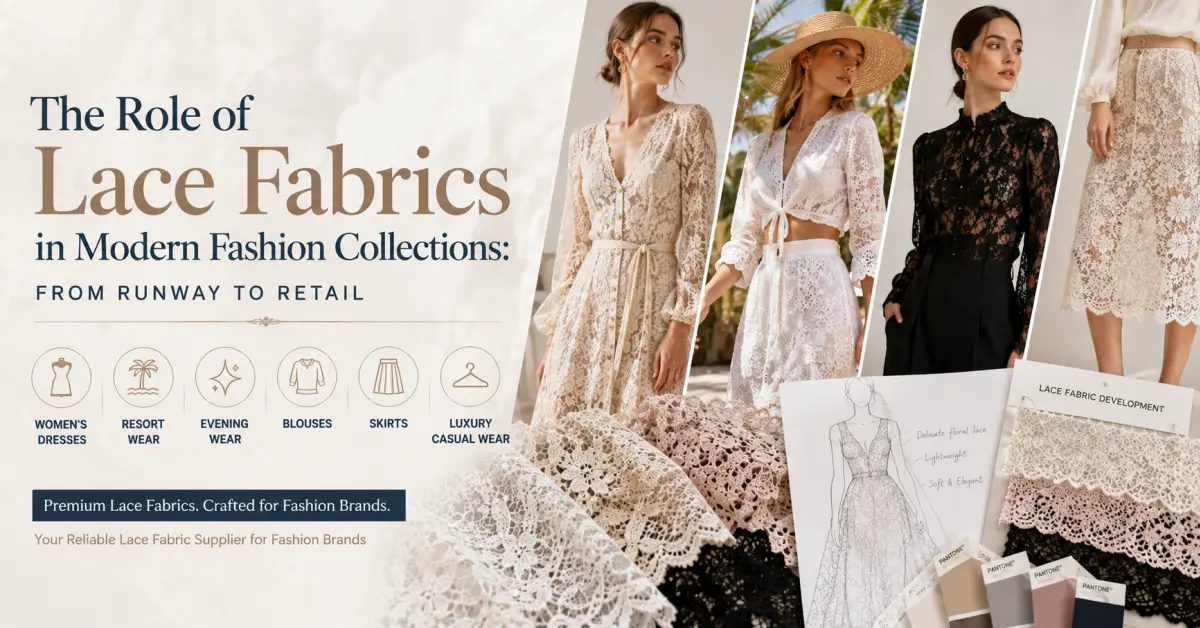
Lace fabrics vary greatly in structure and properties. Understanding these differences helps buyers choose the most suitable style.
Common types of lace
-
Elastic lace– perfect for lingerie, intimate apparel, shapewear, and tight-fitting garments.
-
Jacquard lace– suitable for fashion dresses and structured designs
-
Embroidered lace– adds texture and three-dimensional effect
-
Chantilly lace– light and delicate, often used in wedding dresses.
-
Chemical (Gipple) lace– heavy and luxurious, it's the perfect choice for creating eye-catching pieces.
The cost impact, delivery time, and production constraints vary for each type.
Evaluate material composition
Fiber content directly affects comfort, durability, and price.
Common fiber optic options
-
Polyester – economical, durable, and easy to dye
-
Nylon – softer to the touch and more elastic
-
Spandex (elastic fiber) – a key element in the performance of elastic lace.
-
Cotton blended fabrics – with a natural feel, often used in high-end or eco-friendly product lines.
Buyers should request detailed composition information and test samples to ensure that the fabric meets performance expectations.
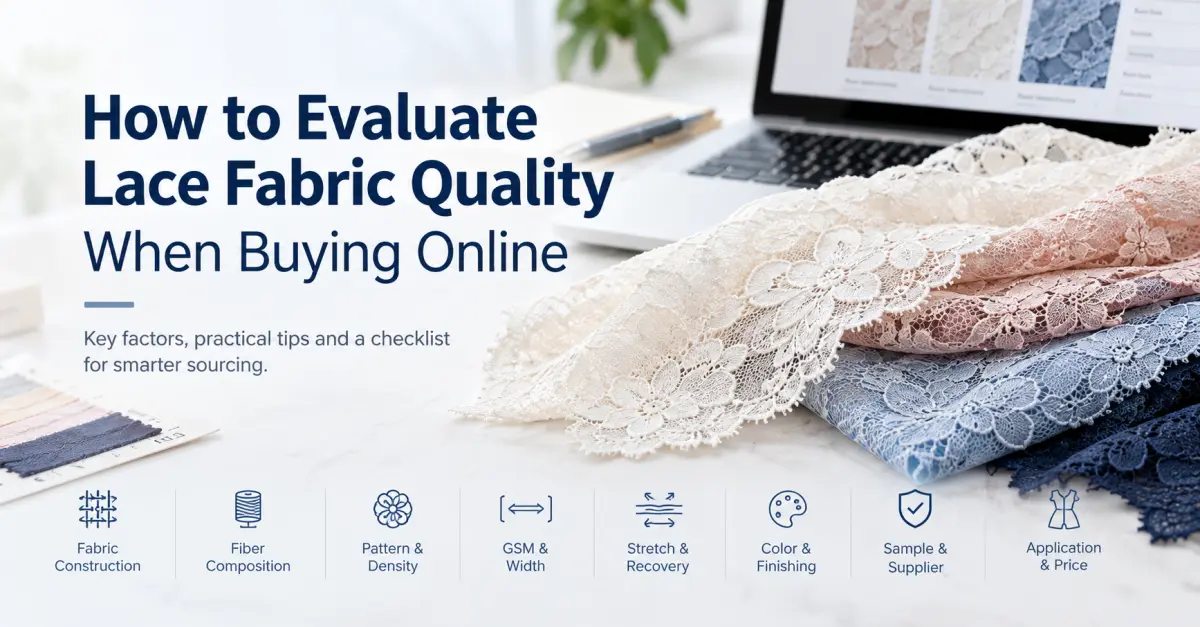
Evaluate lace quality standards
Quality control is one of the most important factors in lace sourcing. Even minor flaws can severely impact the appearance of a garment and the brand's reputation.
Key quality indicators
-
Pattern clarity and consistency
-
Uniform stretching and recovery
-
The edges are clear and the structure is stable.
-
Color fastness and dyeing uniformity
-
Anti-snagging and anti-deformation
Professional suppliers should provide internal quality standards or third-party testing reports as required.
Color selection and matching
Color accuracy is crucial, especially for fashion brands with strict design guidelines.
Best Practices
-
Please refer to Pantone color codes.
-
Send physical color swatches whenever possible.
-
Confirm batch consistency of dyes in bulk orders
-
Test its colorfastness under washing and light exposure.
Custom color development may require additional preparation time, which should be factored into the production plan.
MJlace has in-house dyeing equipment that allows for precise color matching based on Pantone color charts or customer-provided color charts. This ensures color consistency across different batches of dye, helping the brand maintain color uniformity in seasonal collections and repeat orders.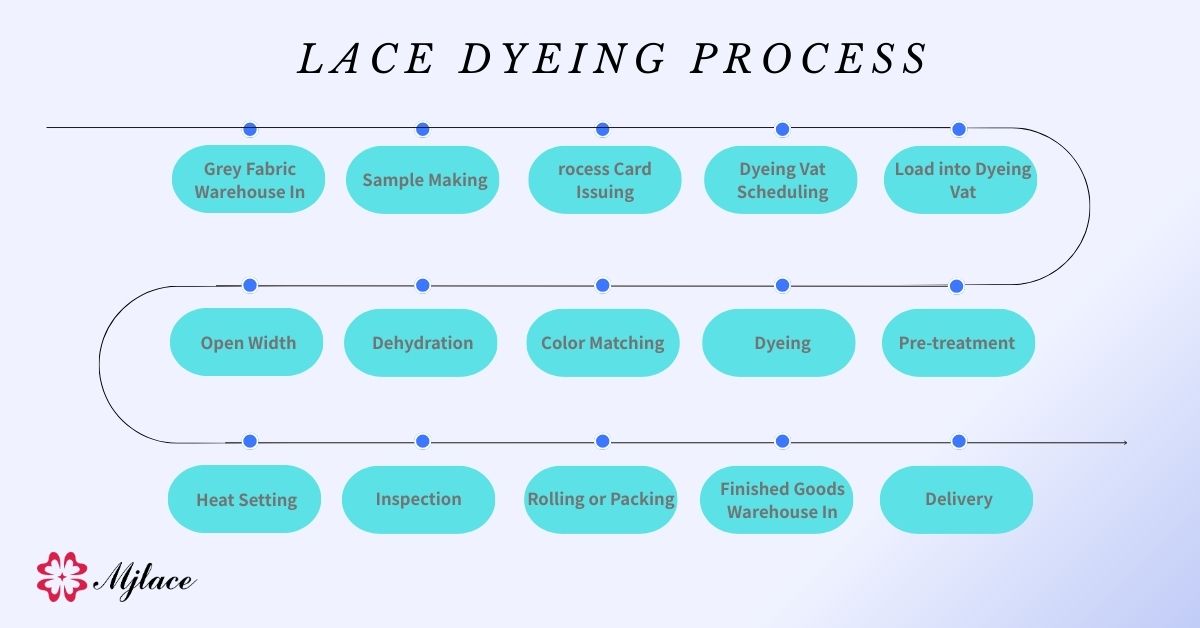
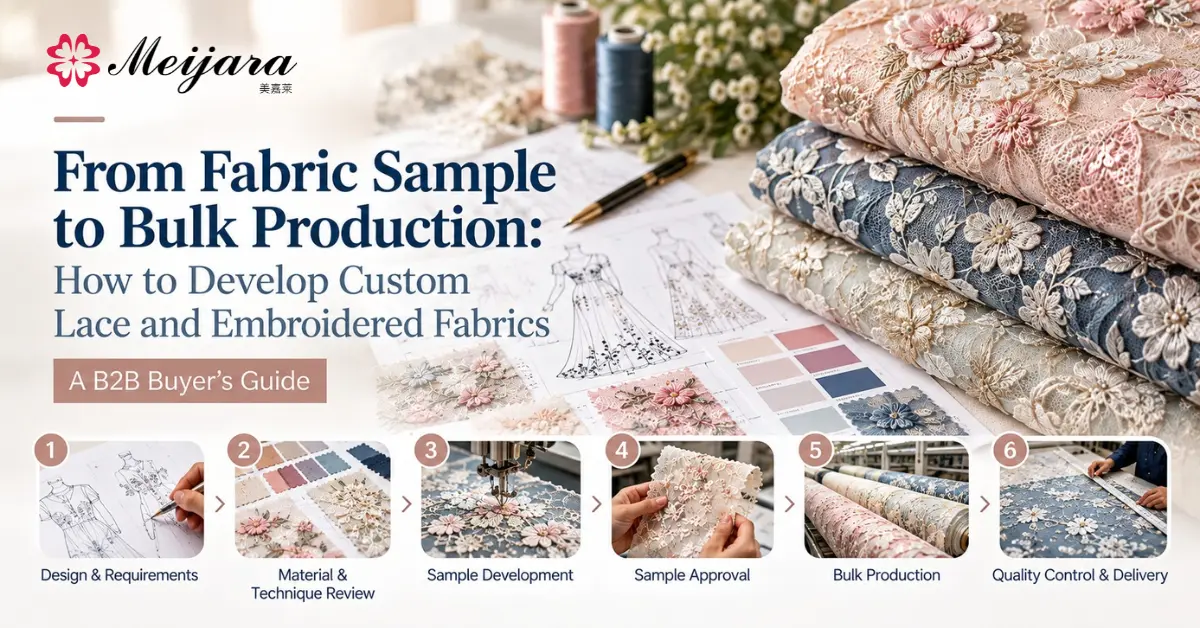
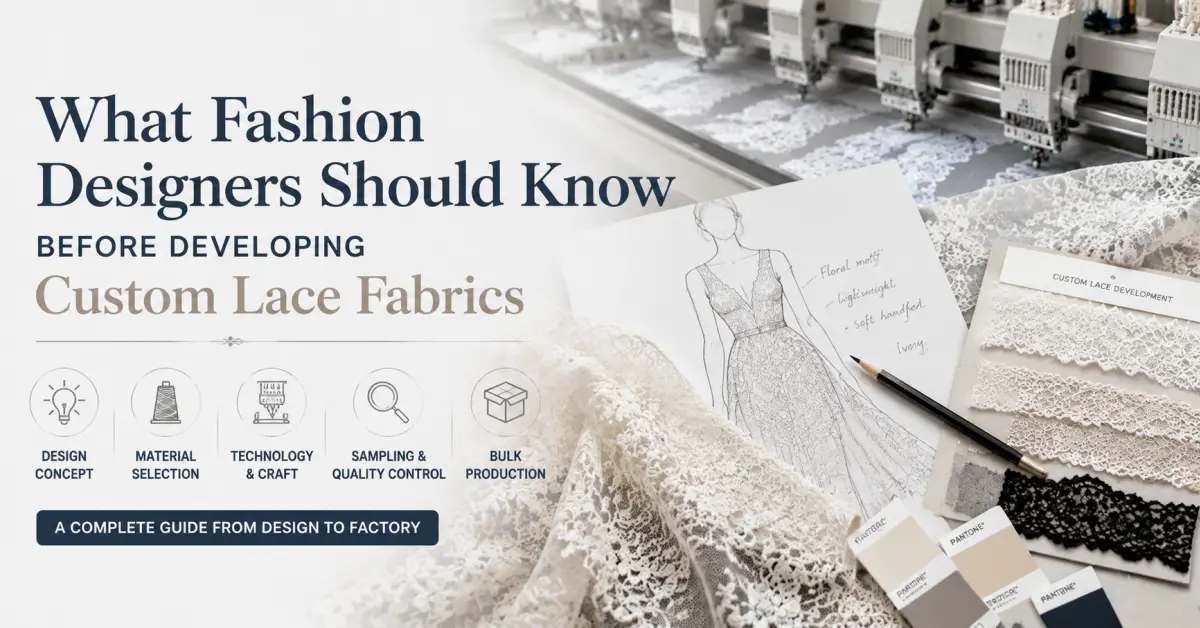
Sampling and Development Process
Sample collection is an important step in sourcing lace fabrics. It allows buyers to evaluate the fabric before deciding on mass production.
Sampling techniques
-
Please request a small color chart and a large sample.
-
Testing fabrics during actual garment manufacturing process
-
Check the tensile properties after washing.
-
Confirm pattern proportions and repeat dimensions
Clear communication during the sampling process helps prevent misunderstandings and ensures smoother mass production.
At MJlace, sample making is considered a crucial step in successfully sourcing lace. Our R&D team works closely with buyers to continuously optimize pattern proportions, elasticity, yarn composition, and finishing details. We offer both in-stock lace samples and custom designs, enabling brands to test the fabric in actual garment applications before mass production.
Minimum Order Quantity (MOQ) and Pricing
The minimum order quantities and pricing structures of lace manufacturers vary greatly.
Factors affecting cost
-
Lace types and complexity
-
Yarn quality and composition
-
Custom patterns or ready-made designs
-
Dyeing and finishing requirements
-
Order quantity and delivery terms
Buyers should compare not only prices, but also overall value, including quality consistency and supplier reliability.
Delivery cycle and production capacity
Understanding a supplier’s production capacity is crucial for planning seasonal product lines.
Typical delivery cycle breakdown
-
Pattern formation: 7-15 days
-
Sampling time: 5-10 days
-
Mass production: 15-30 days
-
Dyeing and finishing: 7-14 days
A reliable supplier will provide a reasonable schedule and proactively communicate with the customer throughout the process.
Supplier Evaluation and Communication
Choosing the right lace supplier is just as important as choosing the lace fabric itself.
Key Evaluation Criteria
-
Manufacturing experience and professional skills
-
Equipment and technical level
-
Quality Control System
-
Communication efficiency
-
OEM and customization capabilities
Establishing long-term partnerships typically leads to better pricing, priority production, and more flexible development support.
When evaluating lace suppliers, partneringwith an experienced manufacturer like MJlacecanbring long-term value. MJlace possesses advanced warp knitting and jacquard equipment, along with a comprehensive quality control system, ensuring stable production capacity, reliable delivery times, and consistent fabric quality to meet the needs of global buyers.
Logistics, Packaging and Distribution
Proper packaging and logistics planning can protect the quality of fabrics during transportation.
Important Note
-
Roll-up packaging
-
Moisture-proof
-
Tags and Documents
-
Transportation method and transportation time
International buyers should also confirm export documents, HS codes, and customs requirements.
Sustainable and responsible sourcing
Sustainability is increasingly influencing consumers' purchasing decisions.
Sustainable Procurement Solutions
-
Recycled yarn lace
-
Environmentally friendly dyeing process
-
Reduce water and energy consumption
-
Comply with environmental regulations
Partnering with responsible suppliers helps brands meet market expectations and regulatory requirements.
In response to the growing demand for responsible sourcing, MJlacecontinues to explore sustainable lace solutions, including the use of recycled yarns and environmentally friendly dyeing processes. This allows the brand to meet environmental expectations without compromising design flexibility or fabric performance.
Common mistakes to avoid when buying lace
-
Choose lace based solely on price
-
Skip sampling or testing
-
Ignore delivery time restrictions
-
Underestimating the complexity of color matching
-
Poor communication regarding technical requirements
Avoiding these mistakes can save a lot of time and money.
In summary
Sourcing lace fabric is more than just choosing the material; it's about selecting the right production partner. With professional production lines, strong OEM development capabilities, and a customer-centric philosophy, MJlacehelps brands source lace fabric confidently, consistently, and reliably. From concept design to final delivery, MJlace is committed to providing global clients with tailored, high-quality lace solutions to meet their market demands.