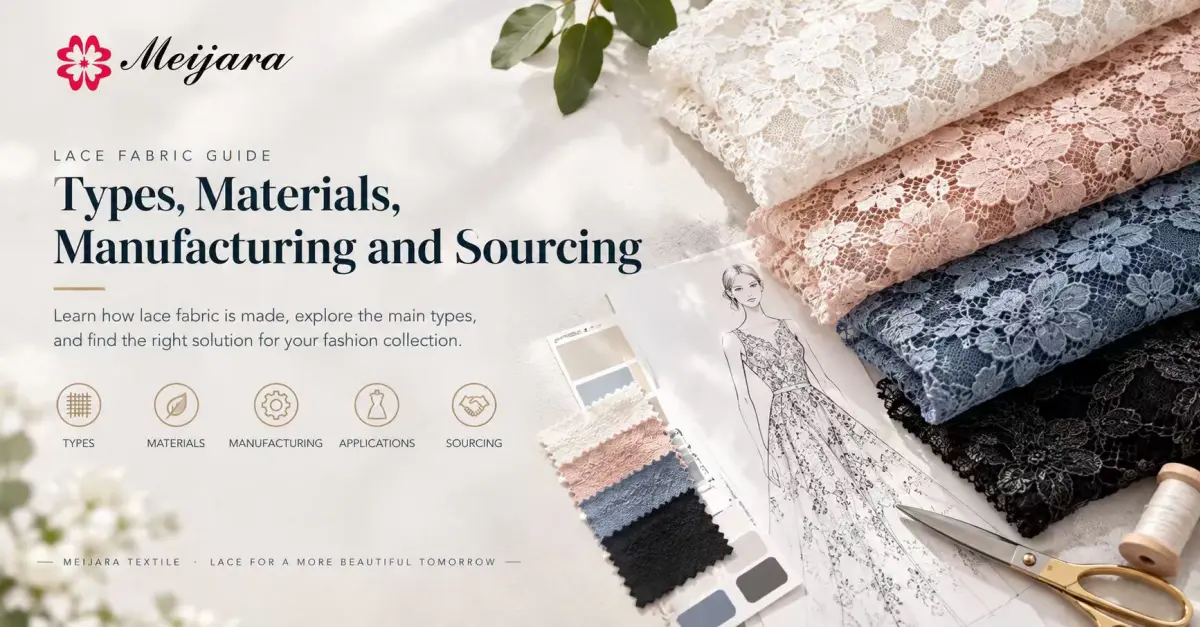


Lace is one of the most versatile and decorative textiles in the fashion industry. From exquisite wedding dresses to practical lingerie, from hand embroidery to advanced jacquard weaving, lace exists in a variety of forms, structures, and manufacturing methods.
However, many designers, buyers, and even manufacturers often ask the same question:
How many types of lace fabric are there? How are they classified?
This guide provides a comprehensive and professional overview of the types and categories of lace,explaining it from the perspectives of structure, materials, production methods, and applications . It also helps buyers and designers select the right lace fabrics for different garments and markets.
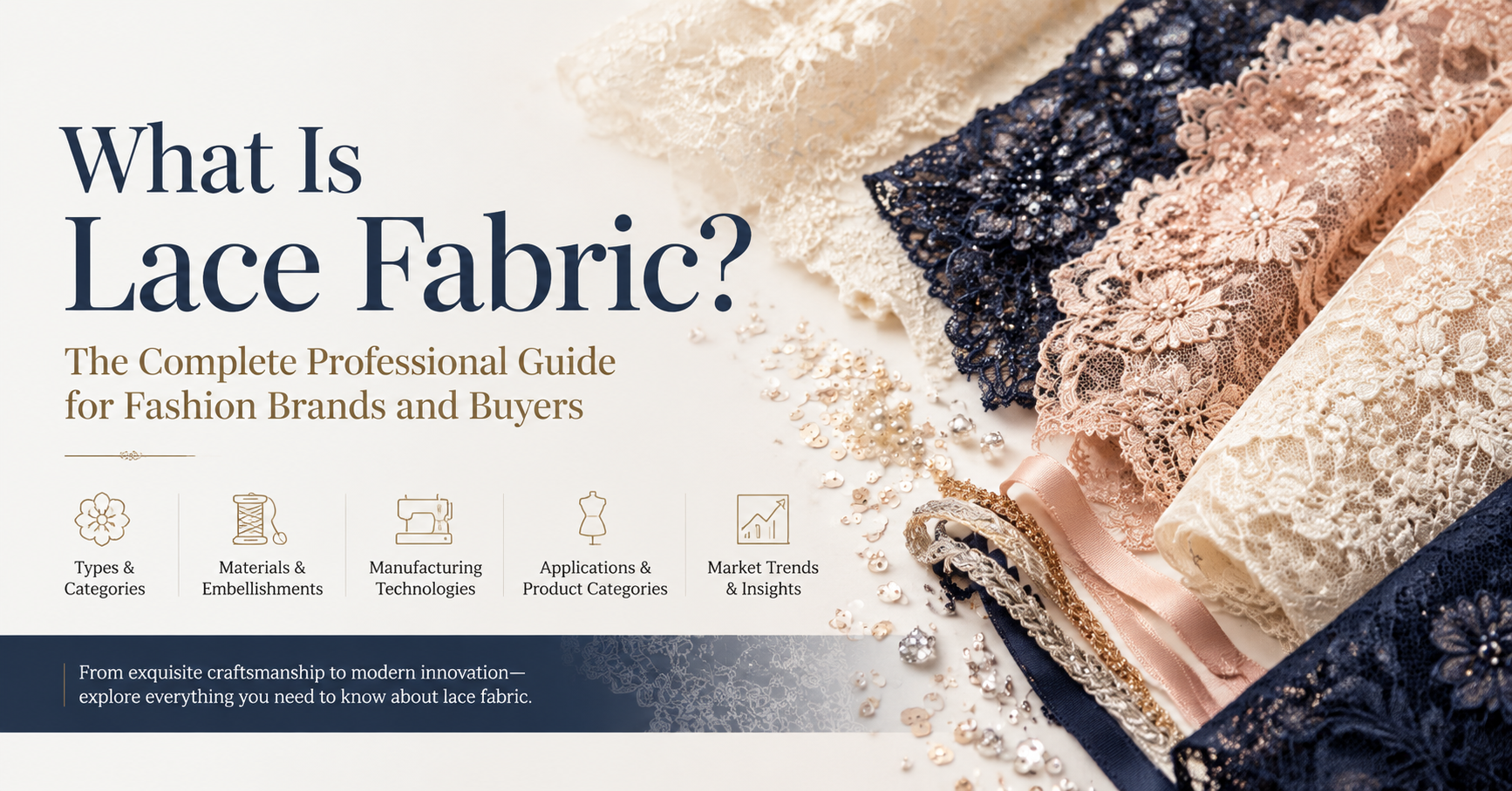
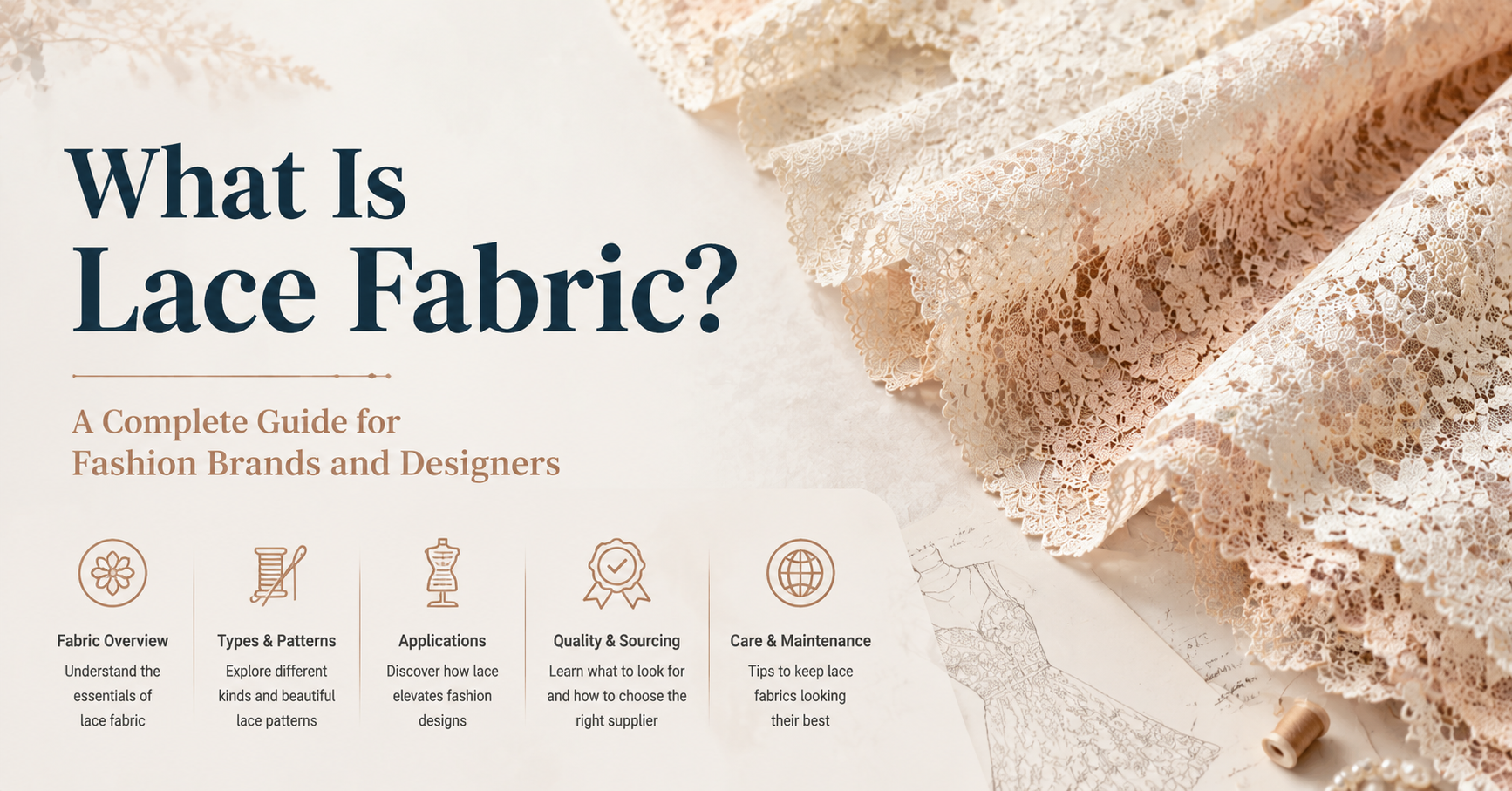
What is lace fabric ?
Lace is a decorative textile made by winding, twisting, or embroidering threads into open-work patterns. Unlike irregular fabrics, lace is characterized by:
-
Hollow design
-
Floral, geometric or decorative patterns
-
Lightweight and breathable structure
-
Decorative and functional uses
Historically, lace was handmade using needles or spools of thread. Today, depending on the desired effect and cost, lace can be handmade, machine-made, knitted, woven, embroidered, or chemically treated.
How many types of lace fabric are there?
Although there are no unified official figures, lace fabrics are generally divided into the following four main dimensions:
-
Structure and elasticity
-
Through manufacturing methods
-
Through pattern forming technology
-
According to material composition
Each category contains multiple types of lace. Below is a clear and systematic classificationcommonly used by professional lace manufacturers and global buyers .
Lace types classified by structure and elasticity
1. Elastic lace fabric
Elastic lace contains elastic fibers such as spandex or elastic fibers, which allows the fabric to stretch and return to its original shape.
Main features:
-
High elasticity and comfort
-
Fitted style
-
Clothing that is perfect for high-intensity exercise
Common applications:
-
Underwear and intimate apparel
-
bras and panties
-
shapewear
-
Sports Apparel Details
Elastic lace is typically produced by knitting machines or elastic warp knitting machines, making it ideal for mass production and ensuring consistent quality.
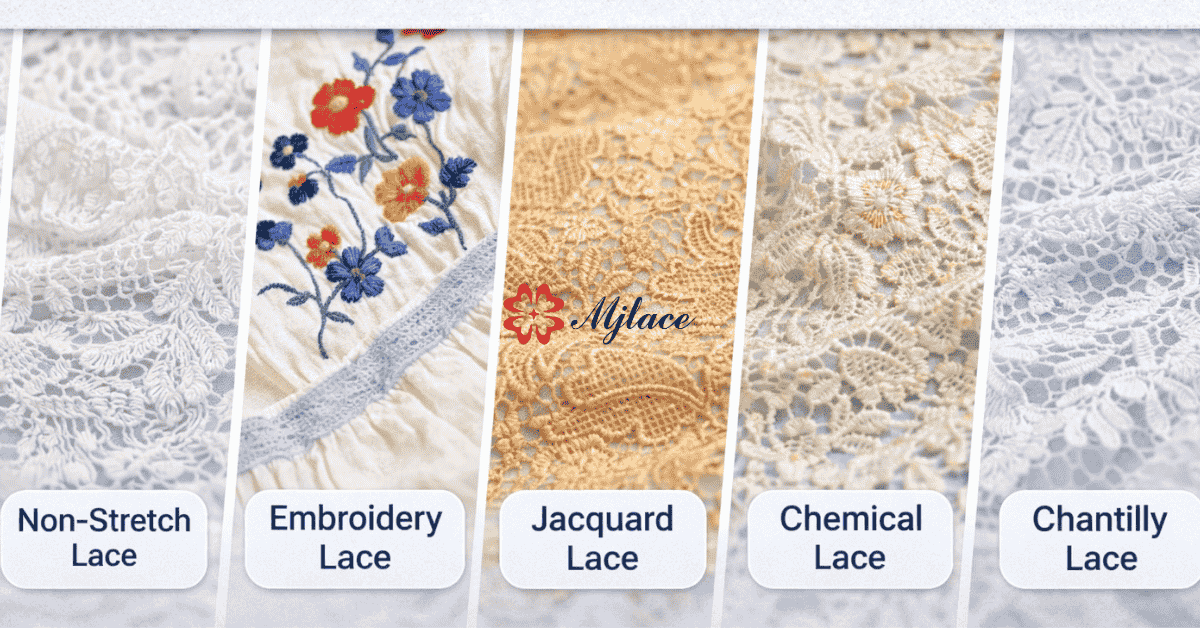
2. Non-elastic lace fabric
Non-elastic lace contains no elastic fibersand relies entirely on its structural design to maintain its elasticity.
Main features:
-
Stable shape
-
Clear and distinct pattern
-
Elegant drape
Common applications:
-
bridal gown
-
Evening dress
-
Fashion Clothing
-
Decorative trim
When structural, shape, and visual precisionare more important than flexibility , non-elastic lace is a better choice.
Lace types classified by manufacturing method
1. Embroidered lace
Embroidered laceis made by sewing lace patterns onto a base fabric or temporary backing.
feature:
-
Rich and three-dimensional appearance
-
It can include beads, sequins, rope, or thread.
-
Suitable for custom and luxury designs
Application areas:
-
wedding dress
-
High fashion
-
Traditional clothing
Embroidered lace offers maximum design freedom, making it popular in the high-end market.
2. Jacquard lace
Jacquard laceis produced using jacquard weaving or knitting machines, which can digitally program complex patterns.
feature:
-
High consistency
-
Repeatable patterns
-
Suitable for mass production
Application areas:
-
Fashion Clothing
-
Lingerie lace patchwork
-
ready-to-wear
Jacquard lace combines design sophistication with production efficiency, making it an ideal choice for global brands.
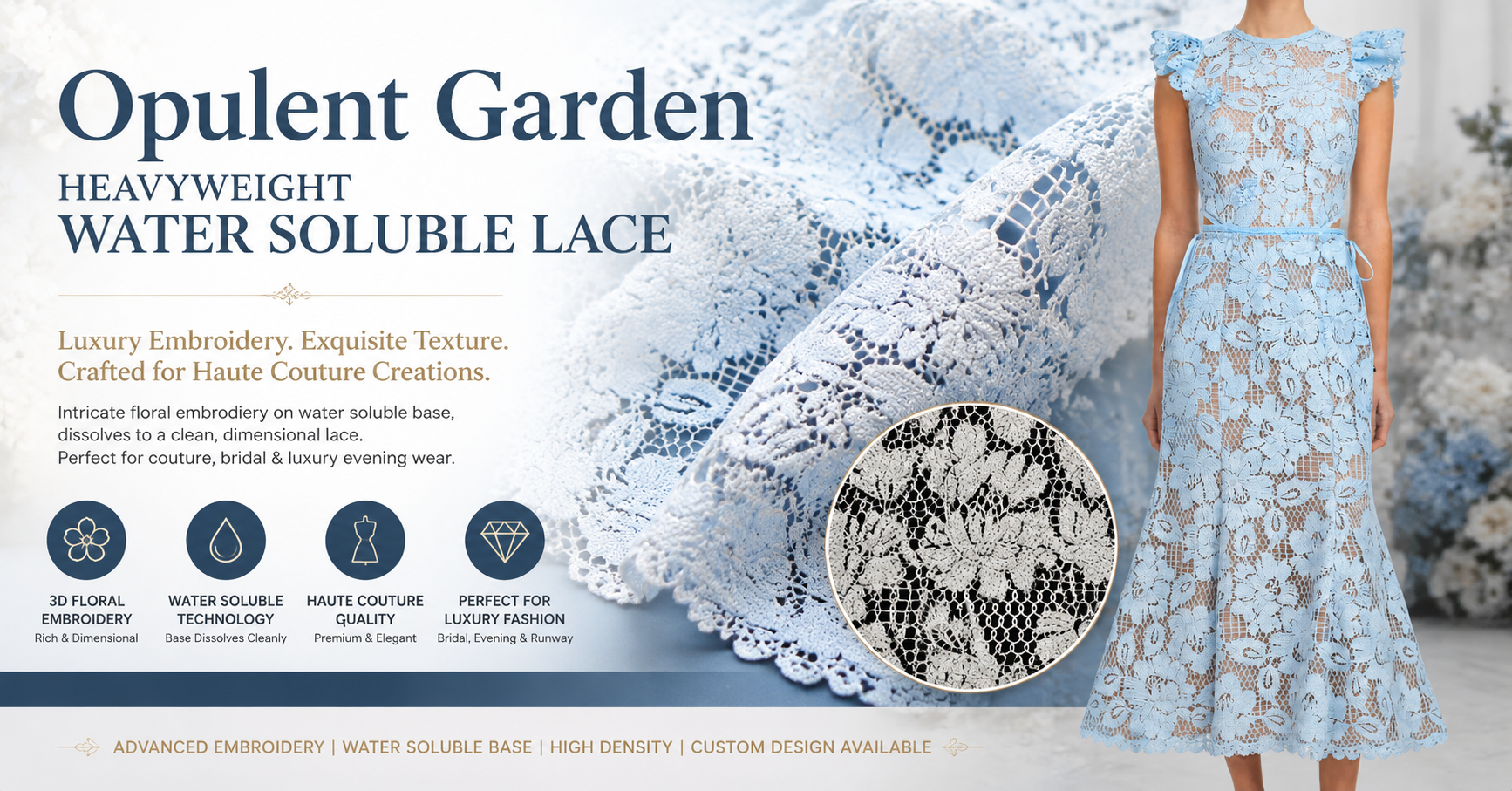
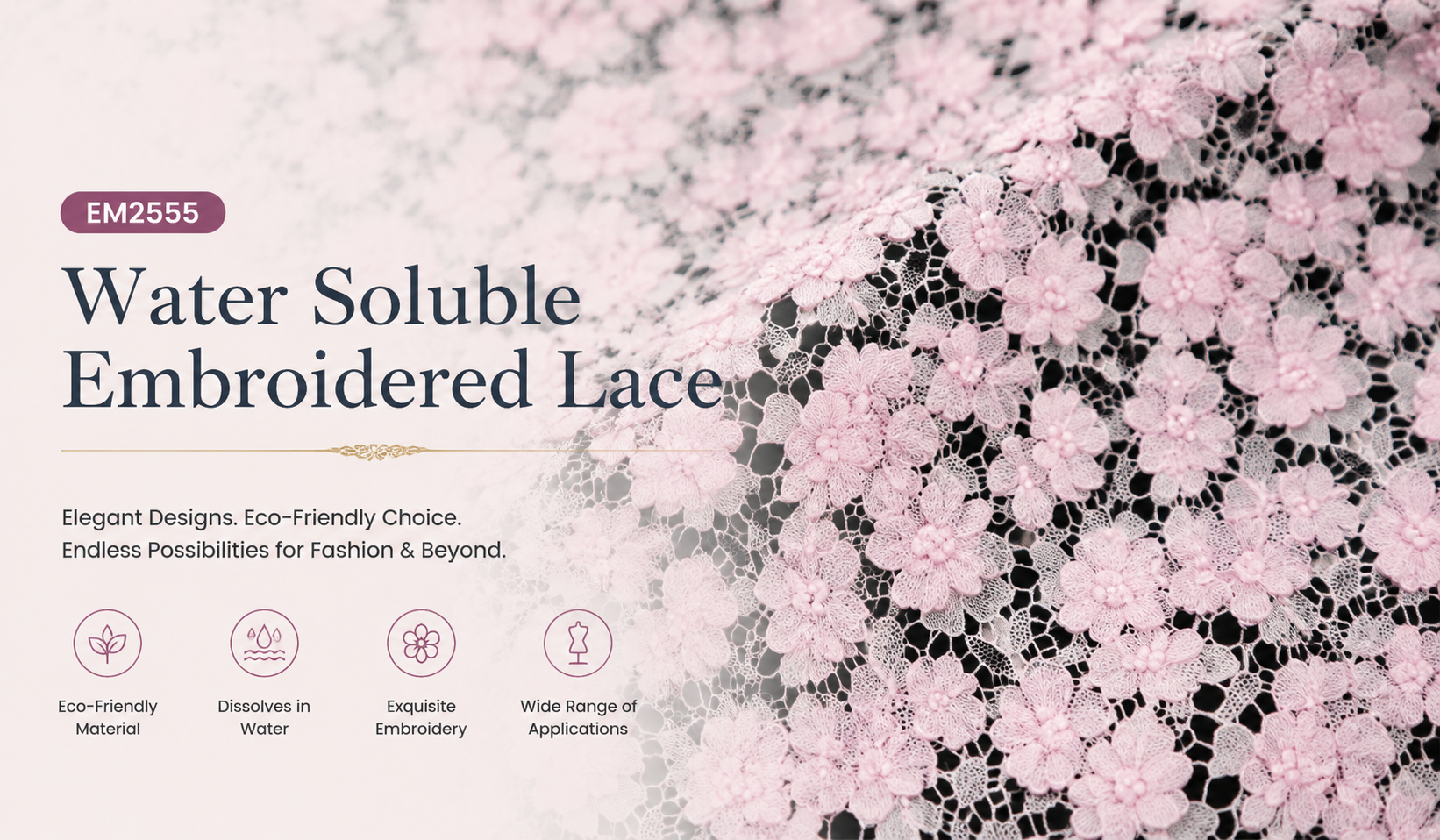
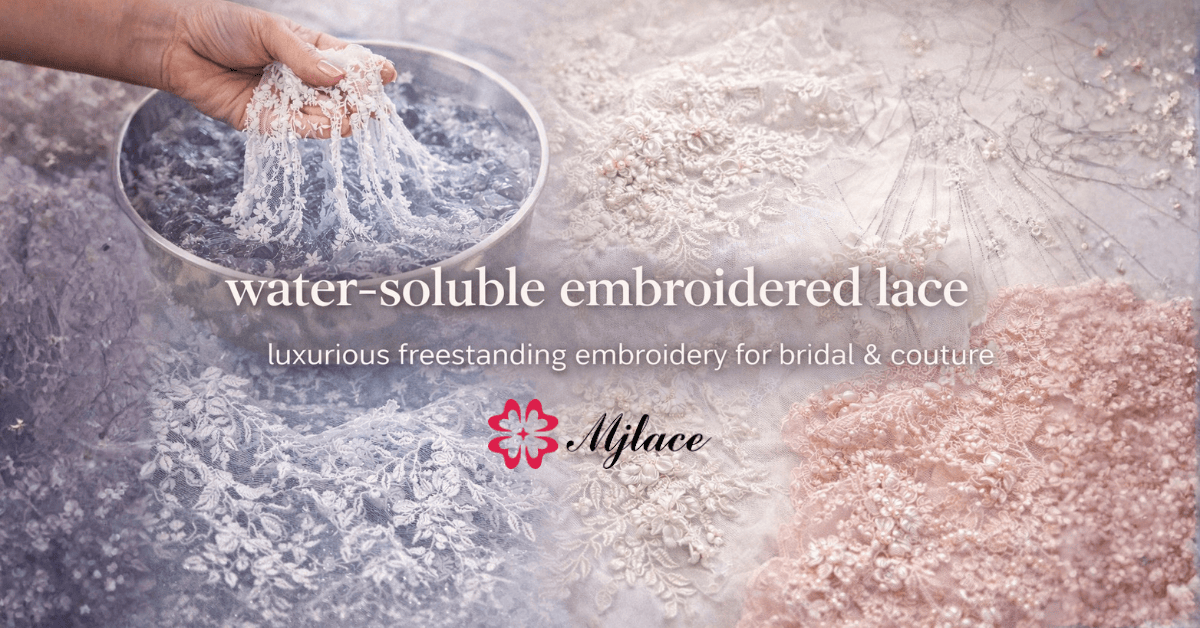
3. Guipure Lace (chemical lace)
Chemical lace ismade by embroidering patterns onto a water-soluble or chemically removable base fabric , which is then dissolved.
feature:
-
No visible ground cover
-
Striking and structured patterns
-
Heavy and luxurious appearance
Application areas:
-
bridal gown
-
Decorative trim
-
Eye-catching fashion items
Because of its tough texture, this type of lace is often compared to cotton lace.
Types of lace classified by pattern and technique
1. Chantilly Lacey
Chantilly laceis renownedfor its fine mesh base and delicate floral patterns .
Main features:
-
Light and soft
-
Elegant and romantic
-
High transparency
Application areas:
-
Bridal Veil
-
wedding dress
-
Luxury fashion layering
Chantilly lace represents classic European lace craftsmanship.
2. Rope-like lace
Rope lace is characterized by thicker ropes that outline a raised contour.
feature:
-
Strong mode definition
-
3D effect
-
Advanced visual depth
It is often used in high-end wedding dresses and evening gowns.
3. Multicolored lace
This lace incorporates multiple thread colors within a single design.
Application areas:
-
Fashionable and avant-garde clothing
-
Decorative collectibles
-
Seasonal Design
Multicolored lace allows designers to express their creative ideas and lead trends in aesthetic concepts.
Lace types classified by material composition
1. Cotton lace
Cotton laceis breathable, natural, and soft.
Advantages:
-
Skin-friendly
-
Environmental awareness
-
Comfortable for everyday wear
Commonly used in casual wear, children's clothing, and decorative trims.
2. Polyester lace
Polyester lace is the most commonly used type in commercial production.
Advantages:
-
Durable
-
High cost performance
-
High color fastness and good stability
It is ideal for large-scale production and export markets.
3. Nylon-blend lace
Blended lace combines nylon, polyester, cotton, or spandex to optimize performance.
benefit:
-
Balanced stretch and strength
-
Wide range of uses
-
Enhanced durability
Key Comparisons (Popular Search Topics)
Elastic lace and non-elastic lace
-
Elastic lace = Comfortable and flexible
-
Non-elastic lace = crisp and structured, elegant and graceful
Embroidered lace and jacquard lace
-
Embroidery = Handmade feel, highly customized
-
Jacquard technology = scalable, consistent, and efficient
Chemical lace vs. cotton lace
-
Chemical lace = bold, structured, and highly decorative
-
Cotton lace = soft, breathable, natural
How to choose the right type of shoelaces?
When choosing lace fabric, please consider the following factors:
-
Clothing Function
-
Target markets (luxury market and mass market)
-
Comfort requirements
-
Design complexity
-
Yield
Professional lace manufacturers typically offer OEM customization servicesto help brands find the right type of lace that matches their design philosophy.
Final words
Understanding the types and categories of lace is crucial for designers, buyers, and brands. Each type of lace fabric has its own structure, production logic, and market positioning.
This guide aims to lay the foundation for in-depth exploration of various lace types, manufacturing techniques, and sourcing strategies .