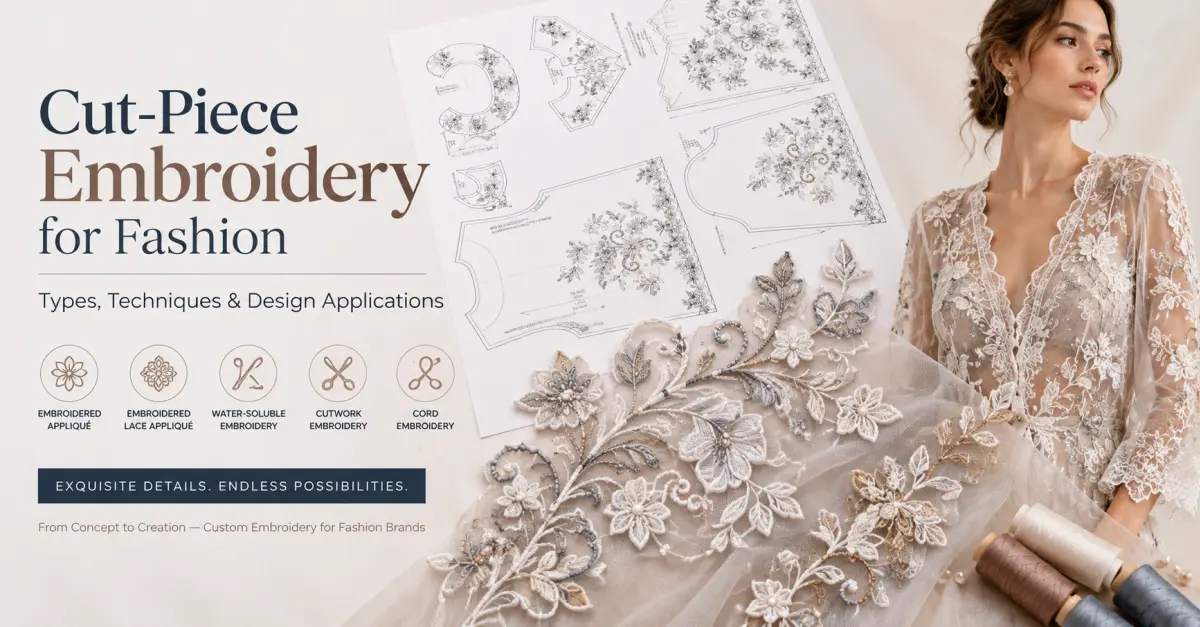

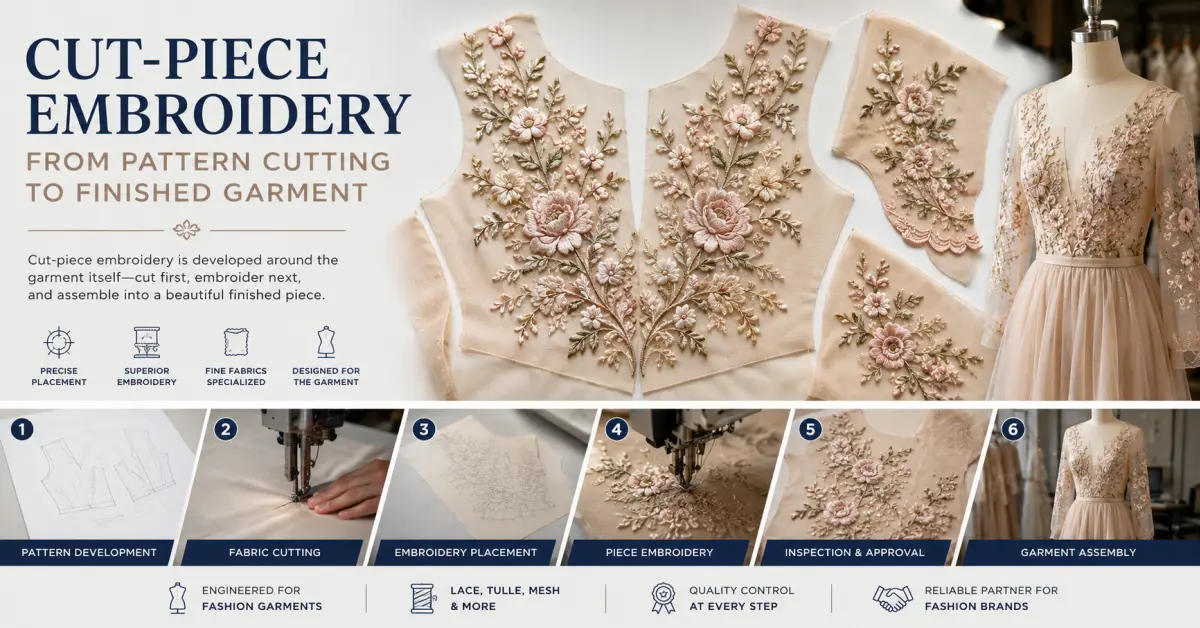

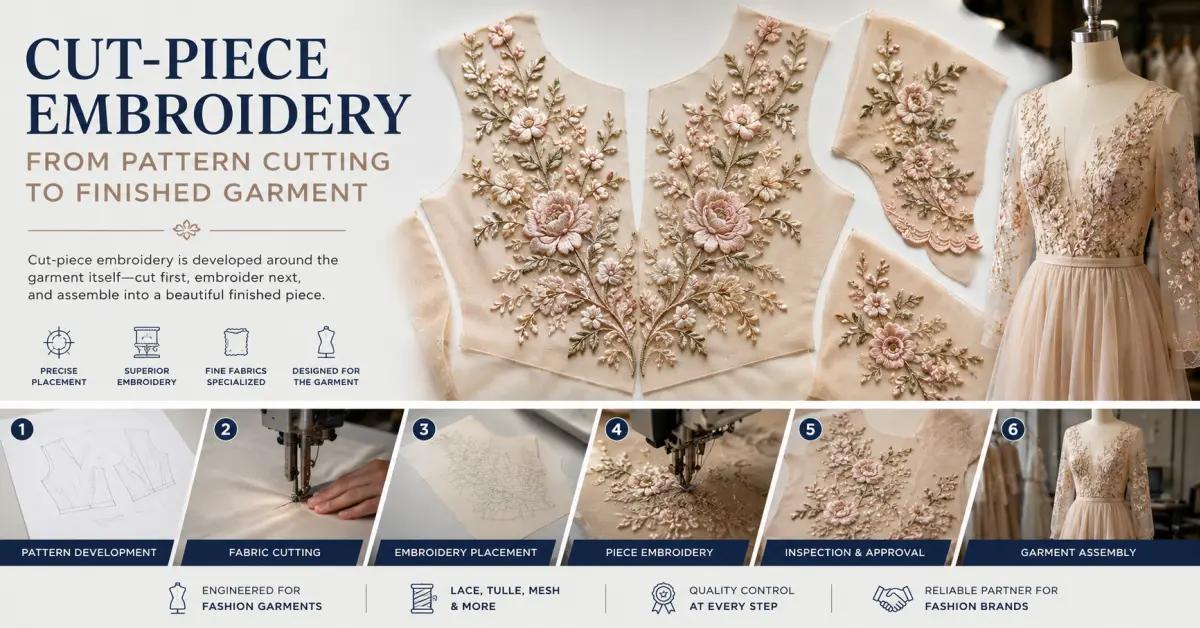
Cut-piece embroidery is used when embroidery needs to be developed around the construction of a garment rather than across a continuous piece of fabric.
The production sequence is different from conventional embroidered fabric. The base material is first cut into garment-specific pieces according to the approved pattern. Embroidery is then applied directly to those pieces, followed by inspection and garment assembly.
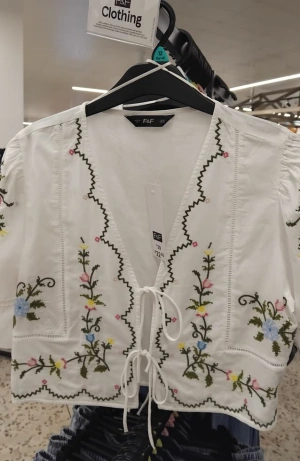
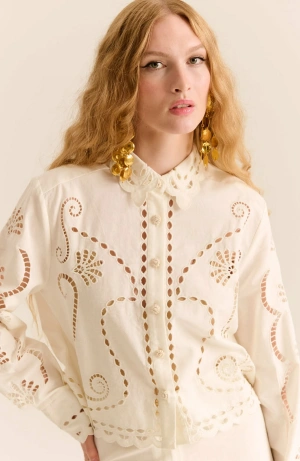
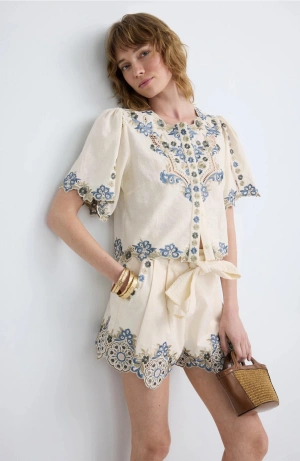
For fashion brands, this method is particularly useful for engineered embroidery on dresses, blouses, skirts, eveningwear, resortwear and other garments where the position of a motif matters as much as the motif itself.
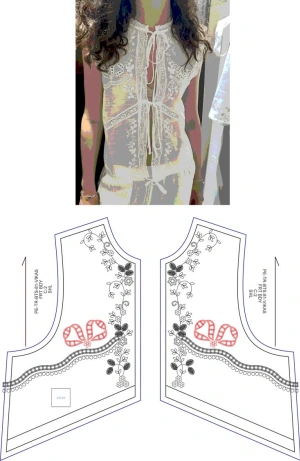
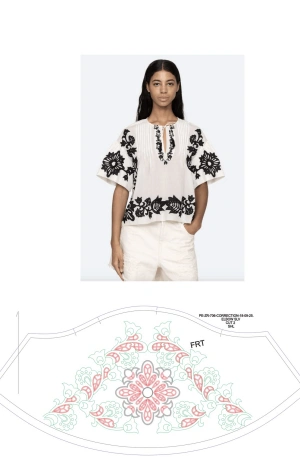
A floral design on a front bodice, for example, cannot be evaluated only as an embroidery artwork. Its position has to work with the neckline, center front, shoulder, side seam and final garment proportions. A sleeve motif needs to be considered in relation to the armhole and cuff. A skirt border needs to be positioned with the finished hem in mind.
That is why cut-piece embroidery is closely connected with pattern cutting, embroidery placement and garment construction.
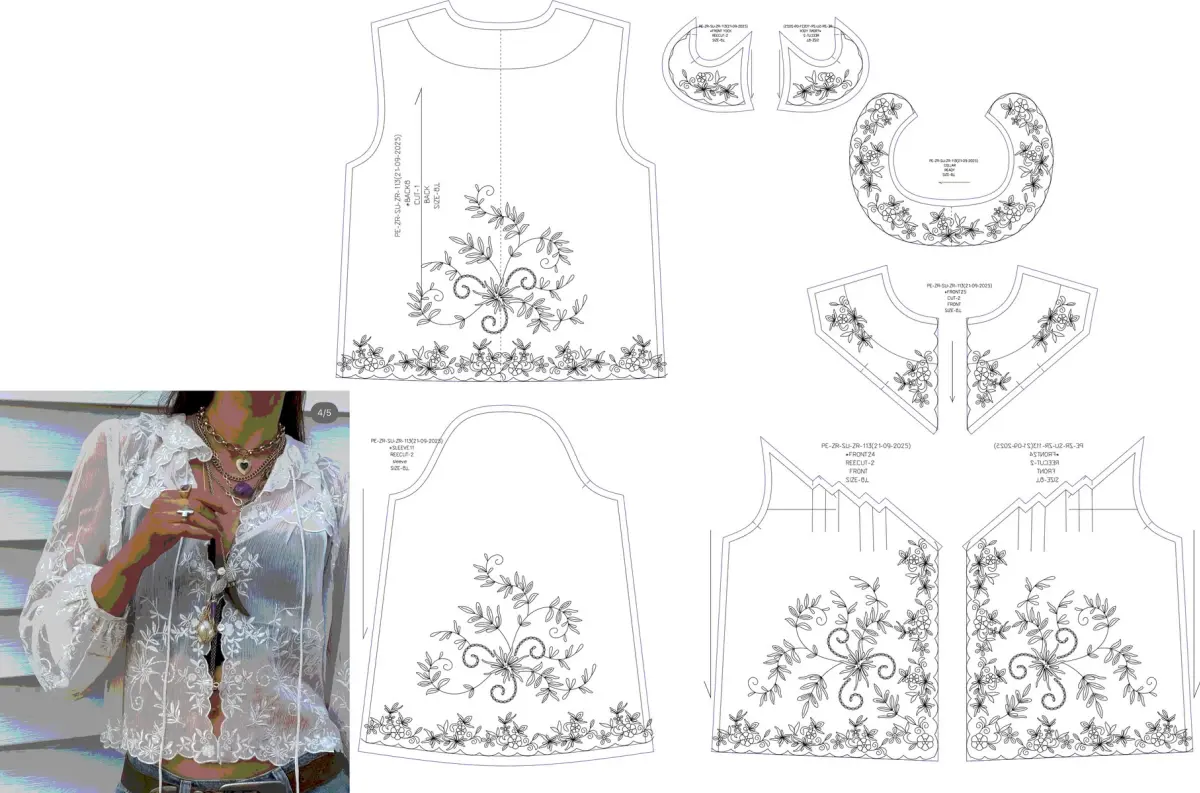
For manufacturers working with fashion brands, the process typically follows:
Design Confirmation → Pattern Development → Fabric Cutting → Embroidery Placement → Piece Embroidery → Sampling & Approval → Inspection → Garment Assembly
What Is Cut-Piece Embroidery?
Cut-piece embroidery means applying embroidery directly to fabric pieces that have already been cut according to a garment pattern.
The pieces may include:
-
Front bodice
-
Back bodice
-
Sleeves
-
Collar
-
Cuffs
-
Waist panels
-
Skirt panels
-
Jacket panels
The embroidery is developed for these individual pieces rather than being produced across an entire fabric roll.
This distinction is important when a brand wants an engineered embroidery layout instead of a repeating fabric pattern.
For example, a designer may want a large floral motif centered on the front of a dress, smaller motifs on the sleeves and a narrow decorative element along the skirt hem. Each area can be developed according to the corresponding garment piece.
Cut-piece embroidery should also be distinguished from traditional lace appliqué . An appliqué is generally produced as a separate decorative piece and then attached to the garment. Cut-piece embroidery, in this context, means the embroidery is stitched directly onto the pre-cut garment panel.
From Garment Pattern to Embroidered Pieces
The production process begins with the garment design, but the embroidery development quickly becomes connected to the pattern.
A factory reviewing a custom project normally needs to understand three things together:
-
What the garment looks like
-
How the garment is constructed
-
Where the embroidery needs to appear
A digital embroidery file by itself does not provide enough information for engineered garment embroidery.
The pattern determines the available embroidery area and establishes the reference lines used for positioning.
For example, the front bodice may be referenced from the center front and neckline. A sleeve may be referenced from the sleeve center and cuff. A collar may require the embroidery to follow its curved edge.
This pattern-to-embroidery relationship is the foundation of cut-piece production.
To understand how this connects to broader fashion trends, explore our fashion trends & design inspiration category.
Pattern Development and Fabric Cutting
Once the garment design has been confirmed, the base fabric is prepared and cut according to the approved garment pattern.
Unlike continuous embroidered fabric, the cutting stage takes place before embroidery.
The production team may prepare individual pieces such as:
| Garment Piece | Main Placement References |
|---|---|
| Front bodice | Center front, neckline, side seam |
| Back bodice | Center back, shoulder, side seam |
| Sleeve | Sleeve center, armhole, cuff |
| Collar | Center line, outer edge, joining edge |
| Cuff | Joining edge, fold line |
| Skirt panel | Side seam, waist, hem |
| Waist panel | Center line, joining seams |
The cutting accuracy determines the actual shape and working area available for embroidery.
For lace , mesh and lightweight fabrics, the cutting process also needs to account for fabric movement and structure. Stretch fabrics require particular attention because the shape of the cut piece can change if it is handled or stretched during preparation.
Piece identification is another practical consideration in production. Left and right panels, front and back pieces and different garment sizes need to remain clearly organized as they move into embroidery.
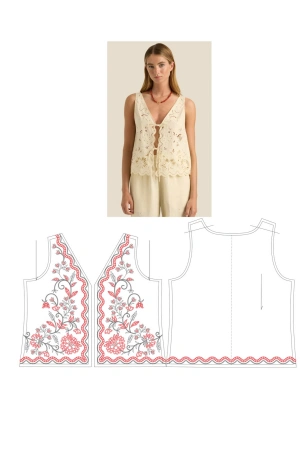
Embroidery Placement on Pre-Cut Pieces
Once the pieces have been cut, the embroidery placement is established.
This is where engineered embroidery differs most clearly from a repeating fabric design.
The reference point is usually related to the garment pattern rather than simply to the outer edge of the fabric.
For a front bodice, for example, the placement may be determined by:
-
Center front
-
Neckline
-
Shoulder line
-
Armhole
-
Side seam
-
Waist seam
A floral motif intended to sit at the center front should therefore be positioned according to the garment's center line.
The same principle applies to sleeves and paired panels.
Left and Right Front Panels
When a design is symmetrical, the two front pieces need to be considered together.
The production reference may define:
-
Distance from center front
-
Motif height
-
Main flower position
-
Direction of the design
-
Relationship between large and small motifs
The goal is not necessarily to create a mathematically mirrored image. Some fashion designs intentionally use an irregular botanical arrangement. What matters is that the result follows the approved artwork and placement plan.
Designing Around Seam Allowances
Seam allowances are often overlooked when embroidery is developed separately from garment production.
A motif may look correctly positioned on a flat cut piece but become partially hidden once the seam is sewn.
This can happen around:
-
Necklines
-
Shoulder seams
-
Armholes
-
Side seams
-
Waist seams
-
Cuffs
-
Collars
-
Hems
The embroidery layout therefore needs a clear boundary between the decorative area and the sewing area.
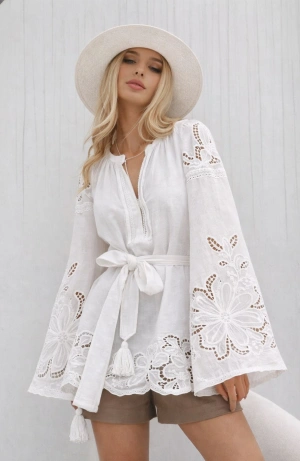
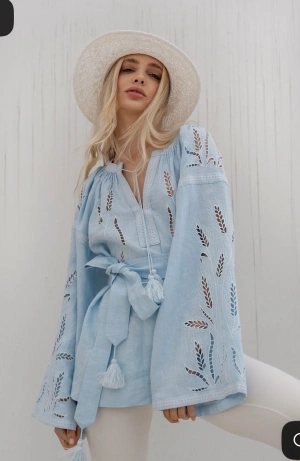
For example, a large floral motif on a bodice may need to stop before the side seam. A border on a skirt panel may need to sit at a controlled distance from the finished hem rather than from the raw cut edge.
This is one reason why a garment pattern is valuable during custom embroidery development. It shows where the finished construction lines will actually fall.
Embroidery on Lace, Mesh and Lightweight Fabrics
Cut-piece embroidery is often used with fashion fabrics that require more careful handling than standard woven materials.
Common bases include:
-
Lace
-
Tulle
-
Mesh
-
Net
-
Organza
-
Stretch mesh
The embroidery setup is influenced by the structure and behavior of the base fabric.
| Fabric Type | Typical Production Consideration |
|---|---|
| Tulle | Lightweight structure and controlled handling |
| Mesh | Open construction and stitch support |
| Stretch mesh | Stretch control during embroidery |
| Organza | Crisp surface and stitch coverage |
| Lace | Existing pattern structure and transparency |
| Net | Open structure and embroidery support |
The same embroidery artwork may not perform identically across different fabrics.
A dense design developed for a stable base can behave differently when transferred to fine tulle or stretch mesh. The embroidery density, thread tension and stabilization approach may therefore need to be reviewed during sampling.
For fashion brands, this is one reason physical samples remain useful even when the embroidery artwork has already been approved digitally.
For more on working with different fabrics, visit our textile knowledge category.
Embroidery Production on the Cut Pieces
After placement and technical preparation have been confirmed, the pre-cut pieces move into embroidery production.
The machine setup depends on the embroidery design and fabric.
Several parameters are evaluated during development:
-
Stitch density
-
Thread tension
-
Stitch direction
-
Embroidery speed
-
Stabilization
-
Motif scale
The objective is to reproduce the approved design without changing the behavior of the garment piece.
This is particularly relevant for lightweight fabrics.
Excessive embroidery coverage can change the hand feel of a fine fabric. Too much stitching in a concentrated area may also contribute to distortion.
For this reason, sampling should be evaluated not only for the appearance of the embroidery but also for how the embroidered piece behaves when handled and assembled.
Sampling and Approval Before Bulk Production
For custom fashion development, the sample is the point where the embroidery design, fabric and garment construction are evaluated together.
A useful sample review should cover:
| Sample Check | What to Confirm |
|---|---|
| Motif size | Matches approved artwork |
| Placement | Correct position on garment panel |
| Thread color | Matches approved color |
| Fabric behavior | No unacceptable distortion |
| Symmetry | Paired pieces are consistent |
| Seam relationship | Embroidery works with garment construction |
| Overall appearance | Correct effect after assembly |
If changes are required, they should be made before bulk production.
Typical adjustments may include:
-
Moving a motif
-
Reducing or increasing embroidery coverage
-
Adjusting thread color
-
Changing stitch density
-
Modifying a motif for a smaller panel
-
Revising the relationship between embroidery and seam lines
Once the sample is approved, the same specifications can be carried into bulk production.
Inspection of Embroidered Pieces
After embroidery, each piece is checked before garment assembly.
The inspection is not limited to the embroidery itself. The embroidered panel still needs to function as a garment component.
Key checks include:
| Inspection Area | Production Check |
|---|---|
| Placement | Motif is within the approved position |
| Piece dimensions | Cut piece remains within specification |
| Stitching | No obvious missing or loose stitches |
| Thread | Correct color and appearance |
| Fabric | No unacceptable damage or distortion |
| Paired pieces | Left/right panels remain consistent |
| Edges | Piece shape remains suitable for sewing |
Checking the pieces before assembly makes it easier to isolate problems.
A misplaced motif on an individual front panel can still be identified and corrected at this stage. After several panels have been sewn together, the same problem becomes much harder to address.
For more on maintaining quality, explore our quality control standards category.
From Embroidered Pieces to Garment Assembly
Once the embroidered panels have passed inspection, they enter garment production.
The subsequent operations depend on the garment but may include:
Panel Joining → Sewing → Overlocking → Pressing → Finishing
The embroidery needs to be considered during these operations.
For example, if an embroidered motif approaches a side seam, the sewing operation should not unintentionally cut through an important part of the design.
Similarly, if two embroidered panels meet at a seam, the final position should correspond with the approved garment design.
This is where the quality of the earlier placement work becomes visible.
The individual embroidered pieces may look correct when laid flat. The final test is how those pieces look when they become a three-dimensional garment.
Cut-Piece Embroidery vs. Continuous Embroidery
Cut-piece embroidery and continuous embroidery are both useful production methods, but they solve different design requirements.
| Feature | Cut-Piece Embroidery | Continuous Embroidery |
|---|---|---|
| Cutting stage | Before embroidery | After embroidery |
| Embroidery reference | Garment pattern | Fabric layout |
| Placement control | Garment-specific | Repeat-based |
| Main strength | Engineered placement | Continuous pattern production |
| Typical application | Specific garment panels | Larger fabric areas |
| Key production issue | Panel positioning and matching | Pattern placement during cutting |
For a repeating floral pattern intended to cover a large area of fabric, continuous embroidery may be more appropriate.
For a garment where the embroidery needs to sit precisely around a neckline, bodice, sleeve or skirt panel, cut-piece embroidery offers a different level of placement control.
Cut-Piece Embroidery Applications in Fashion
Cut-piece embroidery is particularly relevant to fashion collections where decoration is part of the garment structure.
Women's Dresses
Dresses can use different embroidery layouts for bodices, sleeves and skirt panels.
A large motif can be positioned around the center front, while smaller motifs can be distributed across other pieces.
Eveningwear
For evening garments, embroidery can be concentrated around the bodice, neckline, shoulder or selected skirt areas.
The placement can be developed according to the silhouette rather than following a standard fabric repeat.
Blouses
Front panels, collars, sleeves and cuffs can each have their own embroidery layout.
This works particularly well when the designer wants a relatively restrained decorative effect rather than full-surface embroidery.
Skirts
Individual skirt panels can carry floral motifs, geometric elements or border embroidery.
The placement can be developed according to the finished hem and panel construction.
Resortwear
Lightweight mesh, tulle and other fabrics can be developed with open embroidery layouts for dresses, tops and cover-ups.
Luxury Casualwear
For premium casual garments, embroidery can be used selectively on sleeves, fronts, collars or pockets rather than covering the entire garment.
For more application ideas, visit our applications & industry use category.
What Fashion Brands Should Provide for Custom Development
The quality and efficiency of development depend partly on the information supplied at the beginning of the project.
For a custom cut-piece embroidery program, buyers should ideally provide:
-
Garment design or technical drawing
-
Approved garment pattern
-
Embroidery artwork
-
Fabric specification
-
Embroidery placement
-
Color references
-
Finished motif dimensions
-
Sample quantity
-
Expected bulk quantity
A complete garment reference is also useful when the embroidery needs to be evaluated as part of the finished silhouette.
If the pattern is not available, the supplier may need to develop the placement based on garment measurements or a physical sample.
What Buyers Should Include When Requesting a Quote
For B2B sourcing, the more complete the initial information, the more useful the quotation will be.
At minimum, a supplier should be able to review:
| Information | Why It Is Needed |
|---|---|
| Embroidery artwork | Determines embroidery complexity |
| Garment pattern | Defines actual piece dimensions |
| Fabric type | Affects embroidery setup |
| Motif size | Helps estimate production requirements |
| Number of pieces | Determines handling and production time |
| Colorways | Determines thread requirements |
| Sample quantity | Defines development work |
| Bulk quantity | Helps determine production planning |
A quotation based only on a flat embroidery image may be indicative rather than final. The actual cost can change once the factory sees the garment pattern, fabric and number of embroidered pieces.
For custom programs, supplying the pattern together with the embroidery artwork is therefore one of the most useful steps a buyer can take.
For more sourcing guidance, visit our buying guide & sourcing tips category.
What to Check When Choosing a Cut-Piece Embroidery Supplier
For fashion brands, the supplier's embroidery capability is only part of the evaluation.
It is worth looking at how the manufacturer handles the complete development chain.
| Buyer Check | Why It Matters |
|---|---|
| Pattern and cutting capability | Determines piece accuracy |
| Embroidery development | Determines motif execution |
| Placement control | Reduces positioning problems |
| Sampling | Allows design validation |
| Fabric knowledge | Helps manage delicate materials |
| Quality inspection | Controls piece consistency |
| Bulk production | Maintains approved specifications |
A supplier that understands only the embroidery stage may produce a technically correct motif that does not work well on the finished garment.
For custom fashion production, coordination between fabric, pattern, embroidery and garment assembly is more useful than treating each stage independently.
For insights into the full manufacturing capability, explore our lace manufacturing technology category.
Cut-Piece Embroidery at MJlace
For a lace manufacturer working with fashion brands, cut-piece embroidery sits between fabric development and garment production.
The starting point may be a custom lace or mesh base, an embroidery artwork supplied by the customer, or a new decorative concept developed during sampling.
The production process can then be coordinated around the required garment pieces:
Design → Pattern → Cutting → Embroidery → Inspection → Garment Assembly
This approach is suitable for brands that need embroidery positioned around specific garment components rather than selecting a standard repeating embroidered fabric.
For custom projects, the development stage can also involve adjusting the embroidery according to the fabric structure, garment pattern and intended finished appearance.
The same principle applies when different pieces of one garment require different embroidery layouts. The front, sleeve, collar or skirt panel can be treated as separate production elements while remaining part of one overall design.
MJlace's product range includes cut pieces , embroidery , processing and lace trim , supporting custom development from concept through bulk production.
For exclusive collections, brands can also work with MJlace through the customized process page.
Common Production Issues in Cut-Piece Embroidery
| Issue | Likely Cause | Recommended Control |
|---|---|---|
| Motif is too close to seam | Placement developed without pattern reference | Define sewing boundaries before embroidery |
| Left and right panels differ | Inconsistent reference points | Use common pattern references |
| Embroidery puckers | Density or tension unsuitable for fabric | Adjust during sampling |
| Mesh becomes distorted | Fabric movement during stitching | Review stabilization and setup |
| Motif is partially hidden after sewing | Final construction not considered | Review placement on assembled sample |
| Panel dimensions change | Cutting or handling variation | Control cutting and piece handling |
| Different garment sizes look inconsistent | Same placement used without considering pattern scale | Review placement by size |
These are the types of issues that are best addressed during sampling rather than after bulk production has started.
A Practical Development Workflow for Fashion Brands
For a custom collection, the workflow can remain relatively simple:
1. Design Review
Confirm the garment and embroidery concept.
2. Pattern Development
Identify the individual garment pieces and available embroidery areas.
3. Fabric Cutting
Cut the base fabric according to the approved pattern.
4. Placement Development
Position the embroidery according to garment reference points.
5. Embroidery Sampling
Produce the first embroidered pieces.
6. Sample Approval
Review motif, color, placement, fabric behavior and garment construction.
7. Bulk Production
Repeat the approved specifications across the required garment pieces.
8. Inspection and Assembly
Inspect the embroidered pieces before they move into garment production.
This workflow gives both the brand and the factory a clear point for approving changes before bulk production.
FAQ
What is cut-piece embroidery?
Cut-piece embroidery is a production method where fabric is first cut into individual garment panels and embroidery is then applied directly to those pre-cut pieces.
Is cut-piece embroidery the same as lace appliqué?
No. Cut-piece embroidery refers to embroidery stitched directly onto a garment piece. A lace appliqué is generally produced separately and then attached to the garment.
Why cut the fabric before embroidery?
Cutting first allows the embroidery layout to be developed specifically around the shape and construction of each garment piece.
What fabrics can be used for cut-piece embroidery?
Lace, tulle, mesh, net, organza, stretch mesh and other suitable fashion fabrics can be used depending on the embroidery design and garment requirements.
Can the embroidery be customized for each garment panel?
Yes. Different embroidery layouts can be developed for bodices, sleeves, collars, cuffs, skirt panels and other components.
How does cut-piece embroidery handle symmetrical garments?
Left and right panels can be positioned using common garment pattern references, helping maintain consistent motif placement.
What should I provide when requesting a quotation?
Ideally provide the embroidery artwork, garment pattern, fabric specification, motif dimensions, placement requirements, color references and expected quantities.
Should a sample be approved before bulk production?
For custom fashion projects, sample approval is recommended so that placement, embroidery appearance, fabric behavior and garment construction can be reviewed before bulk production.
Conclusion
Cut-piece embroidery is most useful when the embroidery needs to be developed around the garment rather than simply repeated across fabric.
The process begins with the garment pattern. The fabric is cut into the required panels, embroidery placement is established using the pattern as a reference, and the motifs are stitched directly onto the pre-cut pieces. After sampling and approval, the embroidered panels are inspected and transferred into garment assembly.
The technical focus is therefore not only the embroidery itself.
Pattern accuracy, placement, seam allowances, fabric behavior, paired-panel matching and the final construction all influence the result.
For fashion brands developing embroidered dresses, blouses, skirts, eveningwear, resortwear and luxury casualwear, this production method provides a practical way to create engineered decorative layouts that follow the garment silhouette.
For B2B sourcing, the most useful supplier is not simply one that can reproduce an embroidery file. It is a manufacturer that can connect the artwork with the fabric, garment pattern, cut pieces and final construction—from the first sample through bulk production.