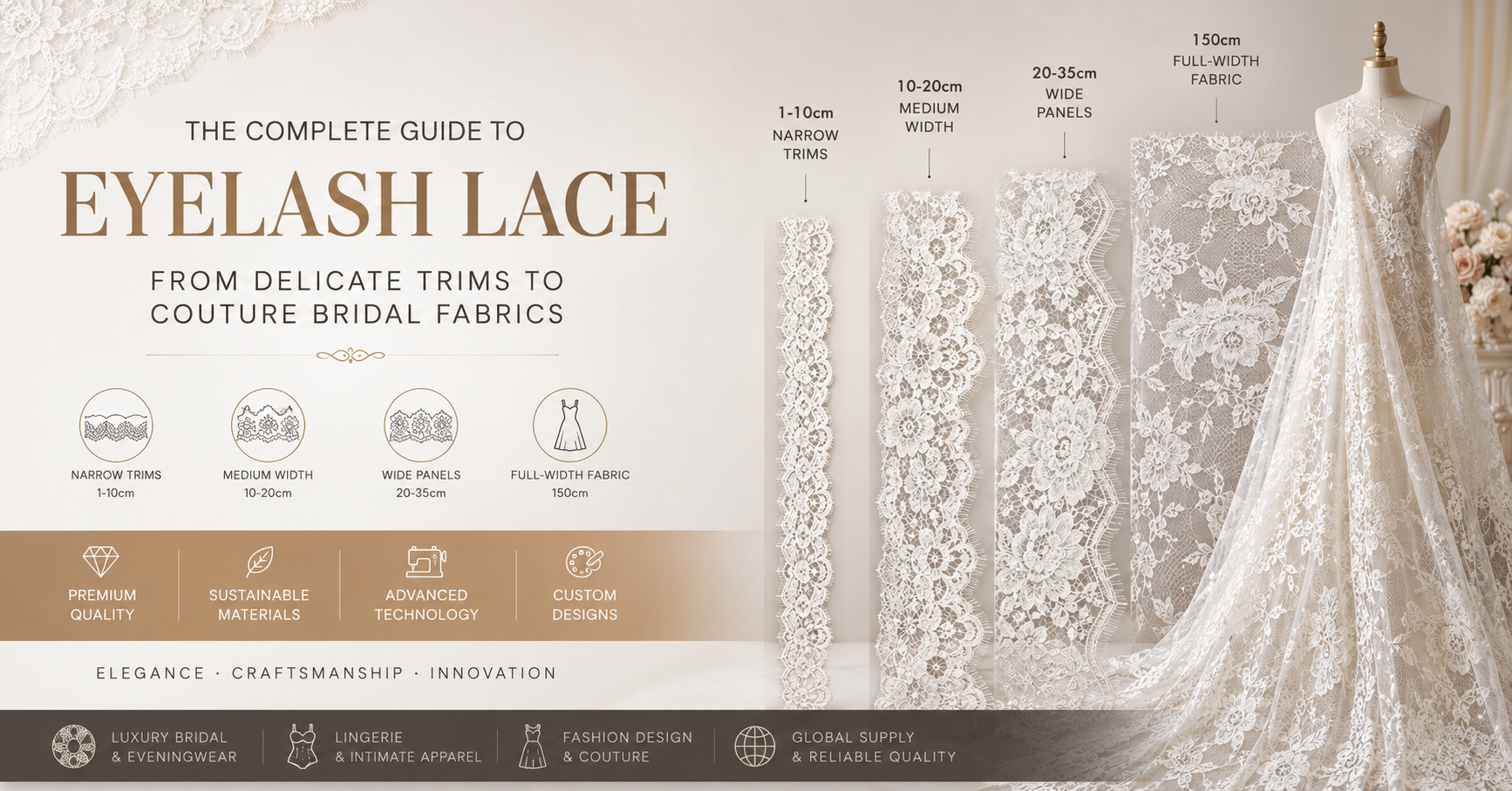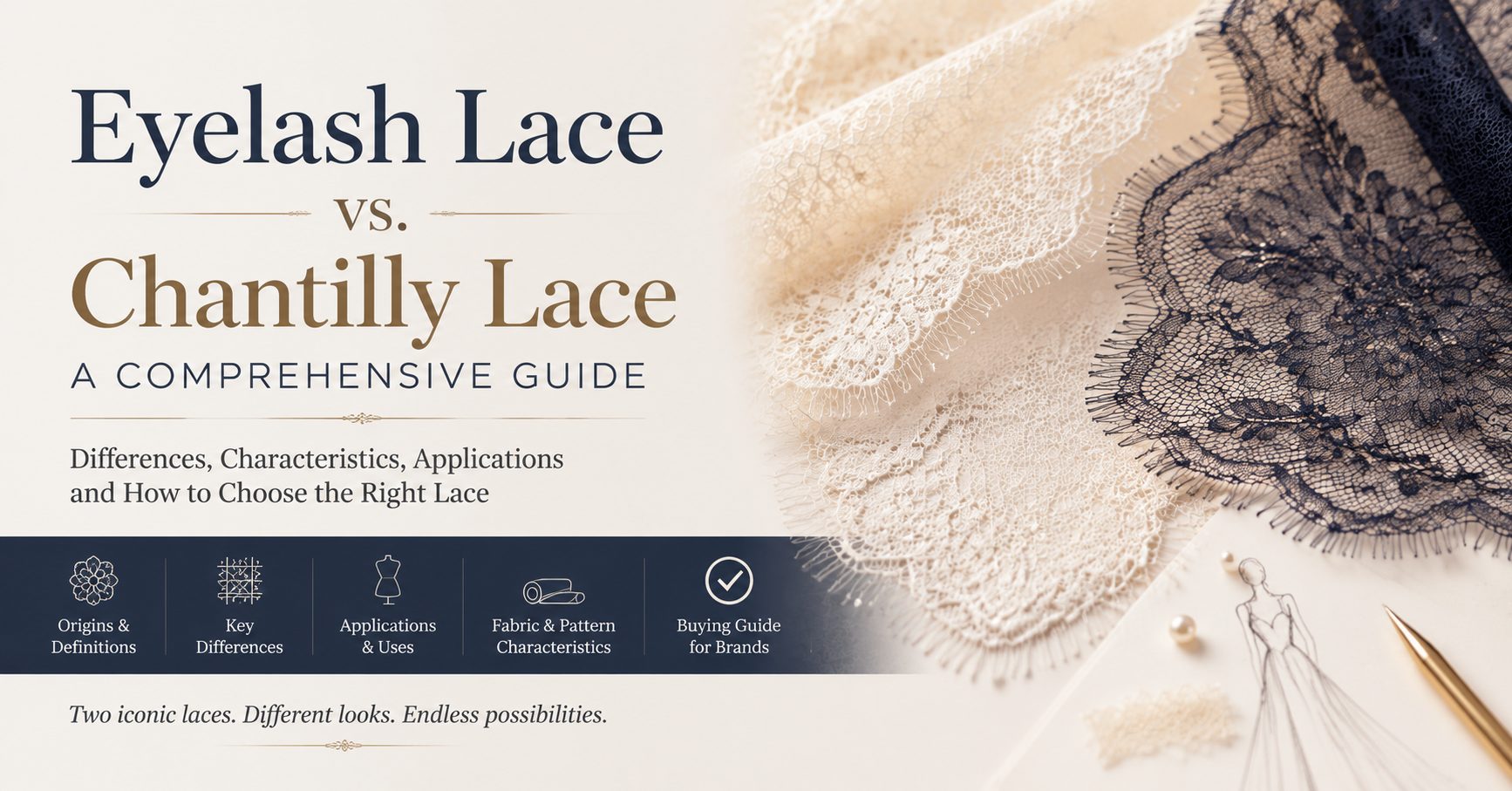

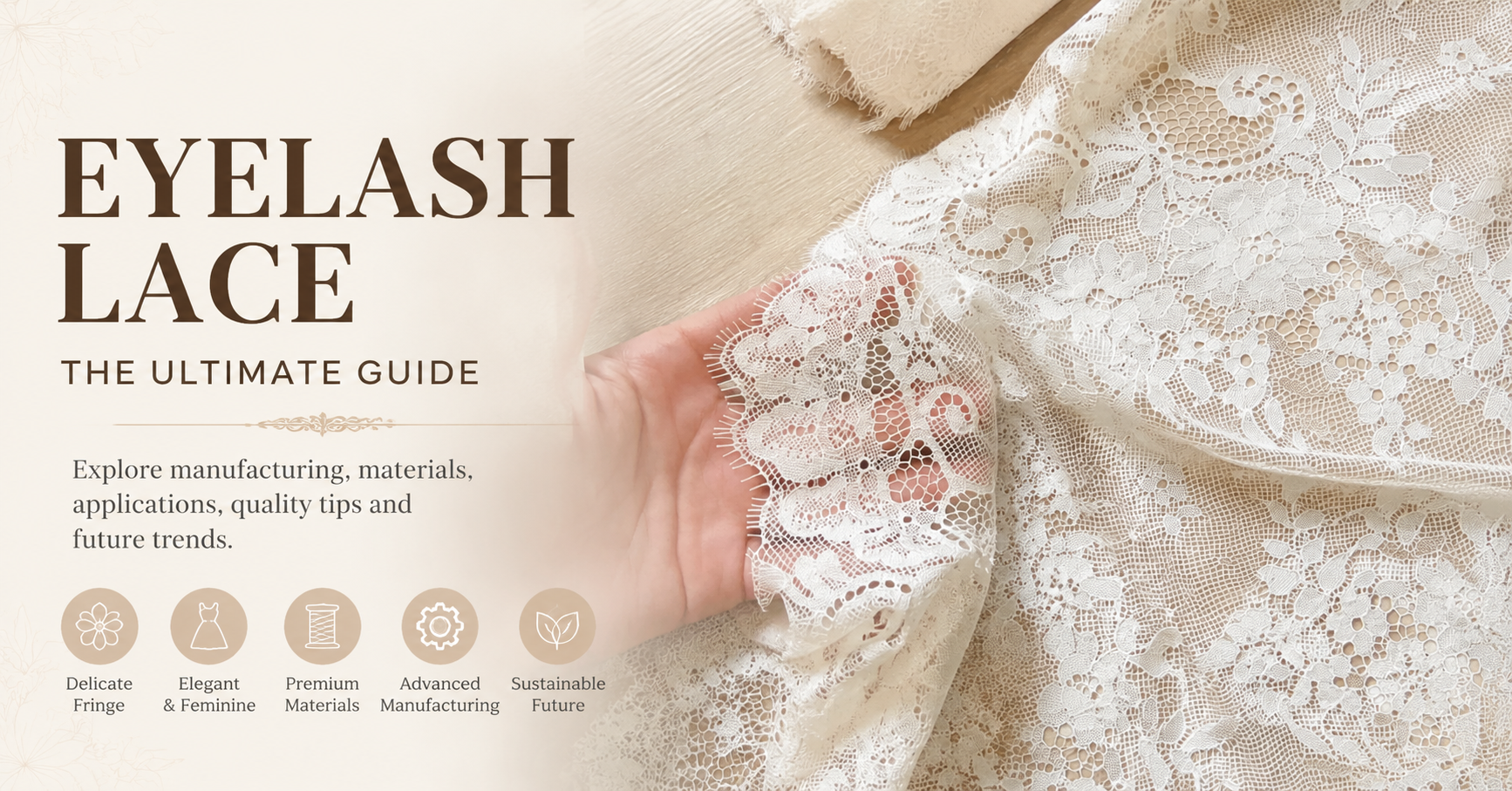

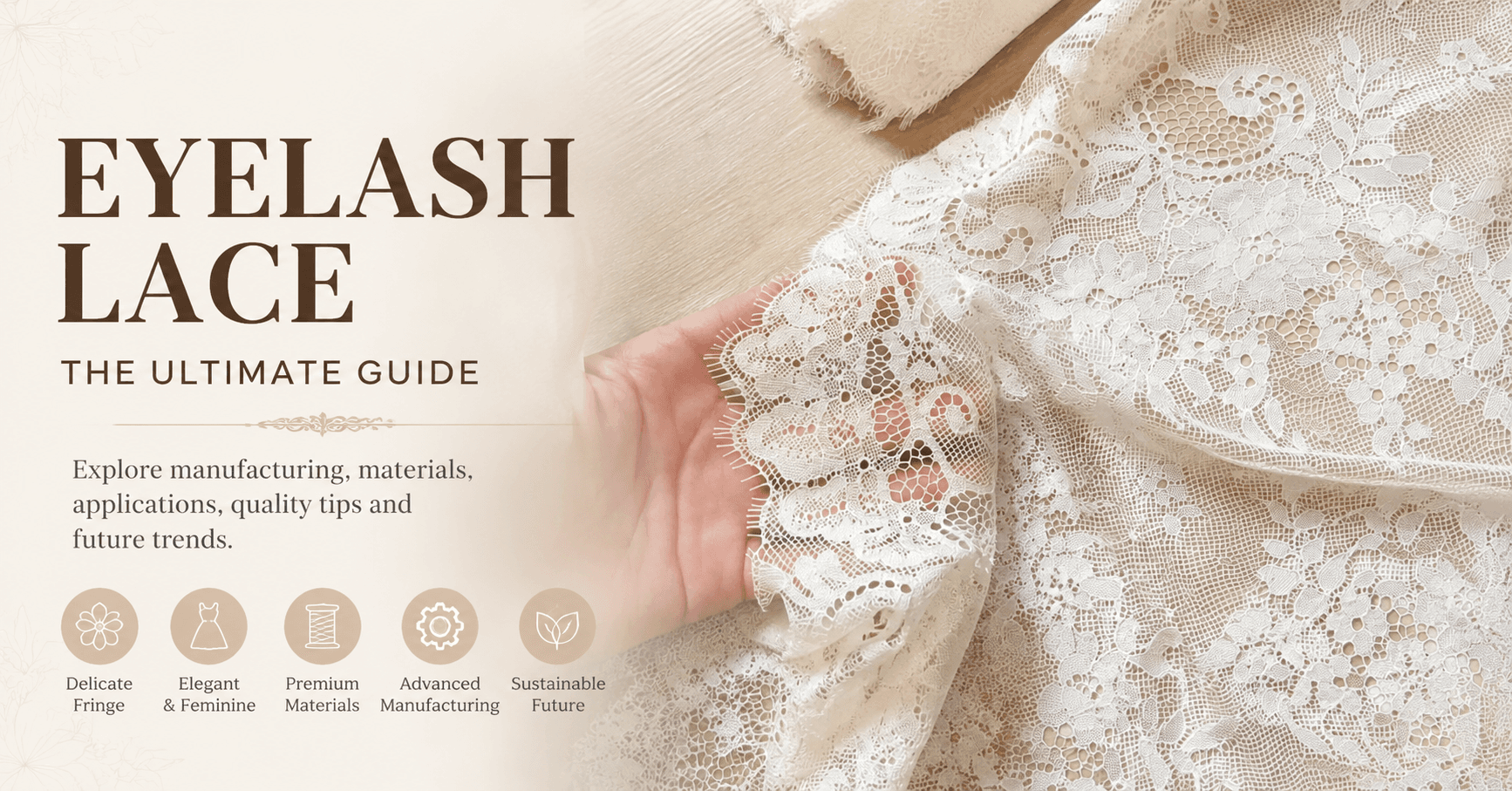
Eyelash lace is a distinctive type of lace known for its delicate, wispy fringes that extend from the fabric edges, resembling the fine hairs of eyelashes. Its elegance, texture, and versatility have made it a staple in bridalwear, haute couture, and luxury lingerie. In this guide, we'll explore eyelash lace in depth—from its characteristics and manufacturing techniques to applications, types, and the latest trends in 2026.
What is Eyelash Lace?
Eyelash lace is characterized by its soft, uneven fringes along the motifs or edges of the fabric. Unlike standard lace fabric, where the patterns end neatly, eyelash lace offers a feathery, dimensional effect that adds movement and sophistication to garments.
-
Fringed edges: The fringes, typically 1–3 cm long, give a soft halo around the lace motifs.
-
Lightweight and airy: It drapes beautifully, enhancing flow in gowns and delicate tops.
-
Applications: Bridal veils, cuffs, trims, lingerie overlays, and evening wear.
Key Features
| Feature | Description |
|---|---|
| Texture | Soft, delicate, and slightly raised due to the fringe threads |
| Motifs | Floral, vine, abstract, and geometric designs are common |
| Edges | Fringed, giving a fuzzy or feathered appearance |
| Weight | Typically 50–100 g/m², ideal for overlays and trims |
| Composition | Often made from polyester, nylon, or silk threads |
Manufacturing Techniques
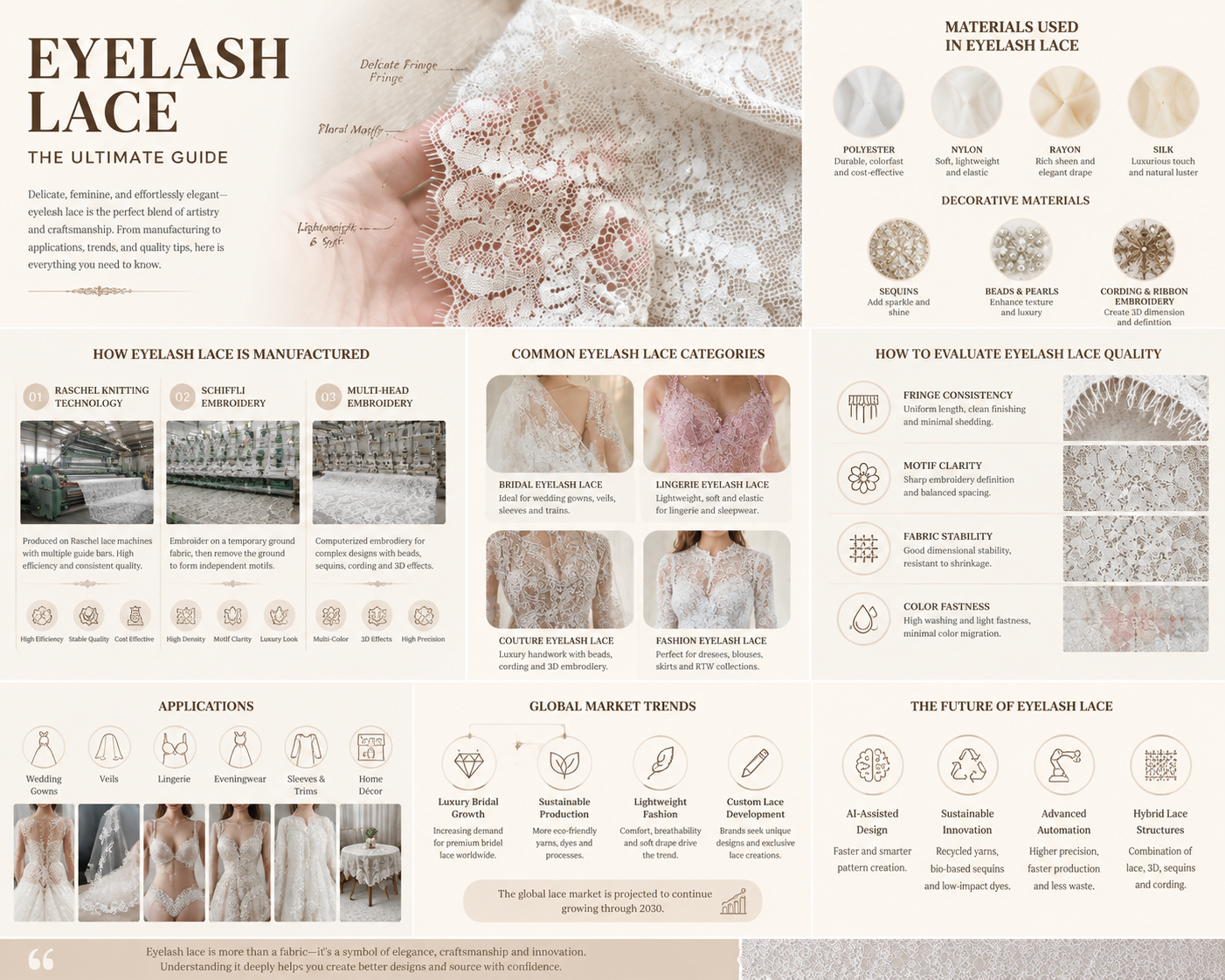
Eyelash lace can be produced using machine embroidery, chemical lace (Schiffli method), or knitted techniques, each offering different characteristics:
Machine-embroidered eyelash lace
Uses multi-head embroidery machines to create the lace motifs on a soluble backing.
After embroidery, the backing is dissolved, leaving the intricate patterns with fringed edges.
High precision allows complex floral and geometric patterns. Explore our embroidery collection.
Chemical lace (Schiffli method)
Involves embroidering patterns on a water-soluble base, followed by chemical treatment to remove the base.
Ideal for lightweight and delicate lace with a floating motif effect. See our water-soluble embroidery.
Knitted eyelash lace
Fine yarns are knitted with loops that are later cut to create fringes.
Produces softer, stretchable lace for lingerie and casual fashion.
Types of Eyelash Lace
Eyelash lace comes in several variations depending on motif density, fringe length, and thread composition:
-
Classic floral eyelash lace: Dense floral patterns with soft fringes. Popular in wedding gowns. See our bridal lace collection.
-
Sparse eyelash lace: Open patterns with minimal fringes, suitable for overlays and trims. Explore our lace trim options.
-
Colored eyelash lace: Pastels, metallic threads, and gradient-dyed motifs for fashion-forward designs. Explore our multi-color embroidery.
-
Sequined eyelash lace: Embellished with beads or sequins for added sparkle. See our sequins and beads embroidery.
Design Considerations
When designing with eyelash lace:
Fringe Alignment
Ensure motifs with long fringes are placed strategically on hems or sleeves to avoid tangling.
Layering
Eyelash lace is often layered over satin, tulle, or chiffon to create depth.
Cutting & Sewing
Use sharp scissors to prevent fraying.
Stitch carefully along motifs to preserve fringe integrity.
Combining Materials
Pair with embroidered lace, tulle, or sequined fabrics for a mixed-media effect.
Market Trends for 2026
Bridal and Evening Wear
Eyelash lace continues to dominate wedding collections due to its romantic appeal.
Pastel and Metallic Hues
Designers are experimenting with colored fringes, especially soft pastels and metallic silver/gold threads.
Sustainable Lace
Increased demand for recycled polyester eyelash lace with biodegradable or low-impact dyes. Visit our sustainability section.
Custom Motifs
Designers request bespoke patterns to differentiate bridal and couture collections. Learn about customized processes and pattern design development.
Data from global lace suppliers indicates a 15% increase in demand for custom eyelash lace in 2026 compared to 2025.
Applications
-
Bridalwear: Veils, bodices, overlays.
-
Haute Couture: Evening gowns, capes, and statement trims.
-
Lingerie: Soft lace cups, straps, and decorative trims.
-
Accessories: Scarves, gloves, and fashion masks.
Eyelash lace is particularly valued for adding dimension and texture without weighing down garments, which is why designers favor it for high-end creations.
Conclusion
Eyelash lace is more than just a decorative fabric—it is a versatile textile that blends artistry with functionality. From machine-embroidered motifs to chemical lace processes, designers can leverage its delicate fringes and ethereal appearance to create memorable fashion statements. By staying ahead of trends, experimenting with color, and understanding the nuances of fringe length and motif placement, fashion professionals can harness eyelash lace to craft garments that captivate and inspire.
Ready to source quality eyelash lace? Visit our homepage to explore our collections or contact us for inquiries. You may also submit an inquiry for custom pricing.