

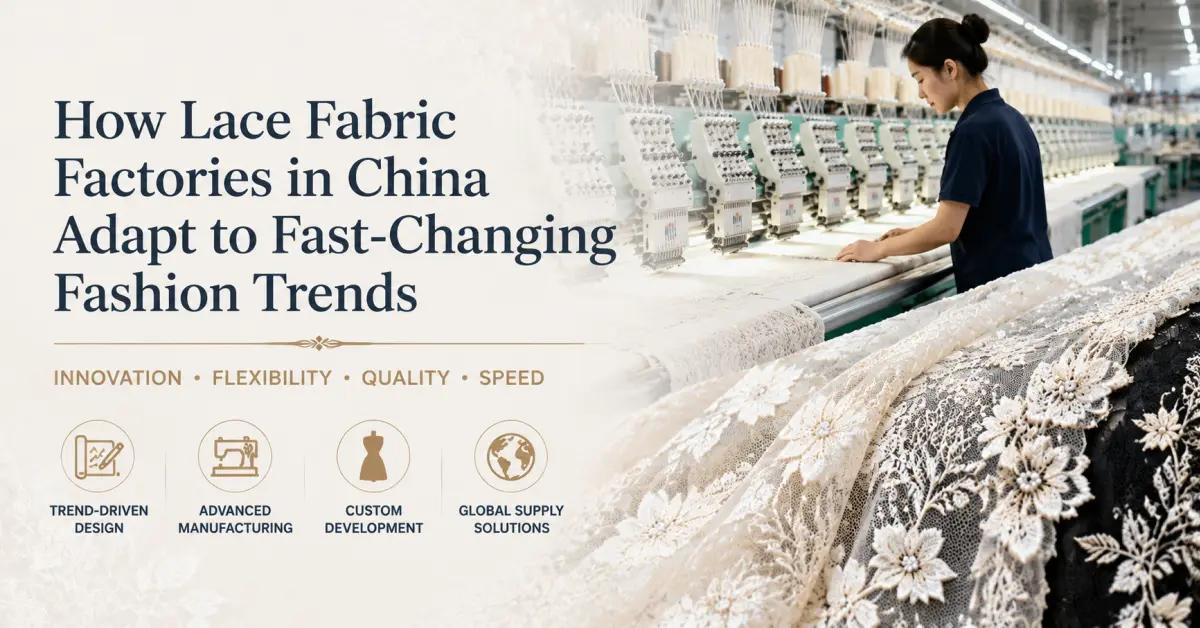
The Changing Role of Lace Fabric Manufacturers in Modern Fashion
The fashion industry has never changed as quickly as it does today.
From seasonal collections to limited drops, independent designer labels, and fast-growing fashion brands, buyers are constantly searching for unique materials that can help their products stand out in a competitive market.
Lace, once considered a traditional decorative textile mainly used for bridal gowns and luxury garments, has evolved into a versatile fashion material widely applied in:
-
women's ready-to-wear collections
-
evening dresses
-
premium lingerie
-
resort wear
-
contemporary street fashion
-
accessories
-
high-end designer collections
However, the growing demand for innovative lace designs also creates new challenges for manufacturers.
Fashion brands no longer simply need a supplier that can produce standard lace fabrics. They need a professional lace fabric factory in China that understands market trends, develops new designs quickly, supports customization, and maintains consistent quality from sample production to bulk orders.
Modern lace manufacturers are becoming more than production partners. They are becoming part of the product development process.
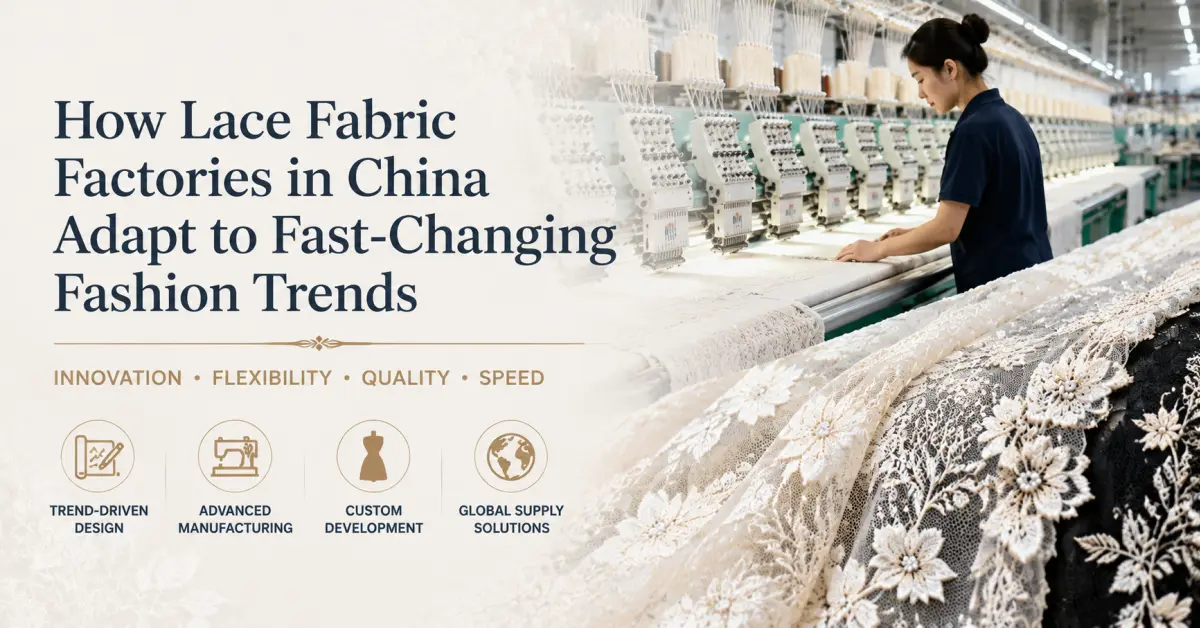
This article explores how China lace fabric factories adapt to rapidly changing fashion trends and how their manufacturing capabilities help global fashion brands create competitive collections.
Why Fashion Trends Are Changing Faster Than Ever
The New Challenges Facing Fashion Brands
Traditional fashion development followed a relatively predictable cycle:
| Traditional Fashion Cycle | Modern Fashion Cycle |
|---|---|
| Seasonal collections | Monthly or weekly releases |
| Long development periods | Faster product launches |
| Large quantity production | Small batch testing |
| Standard fabrics | Exclusive customized materials |
| Fixed designs | Trend-driven updates |
Today, brands must react quickly to:
-
social media trends
-
consumer preferences
-
influencer fashion
-
sustainable fashion demands
-
regional market differences
A lace design that is popular today may lose attention within months.
This creates pressure throughout the supply chain, especially for textile suppliers.
Fashion companies need manufacturers that can provide:
-
faster sampling
-
flexible MOQ
-
customized patterns
-
new material development
-
reliable production capacity
How China Lace Fabric Factories Track Fashion Trends
A professional lace fabric manufacturer does not simply wait for customer orders.
Leading factories actively monitor market changes and transform fashion trends into fabric development opportunities.
Trend Research and Design Development
Many modern lace factories maintain dedicated design teams responsible for:
-
market research
-
pattern development
-
color forecasting
-
fabric structure analysis
-
sample creation
Before a new lace collection is produced, designers usually study:
-
international fashion shows
-
luxury brand collections
-
textile exhibitions
-
customer feedback
-
regional fashion preferences
For example:
| Fashion Trend | Lace Development Direction |
|---|---|
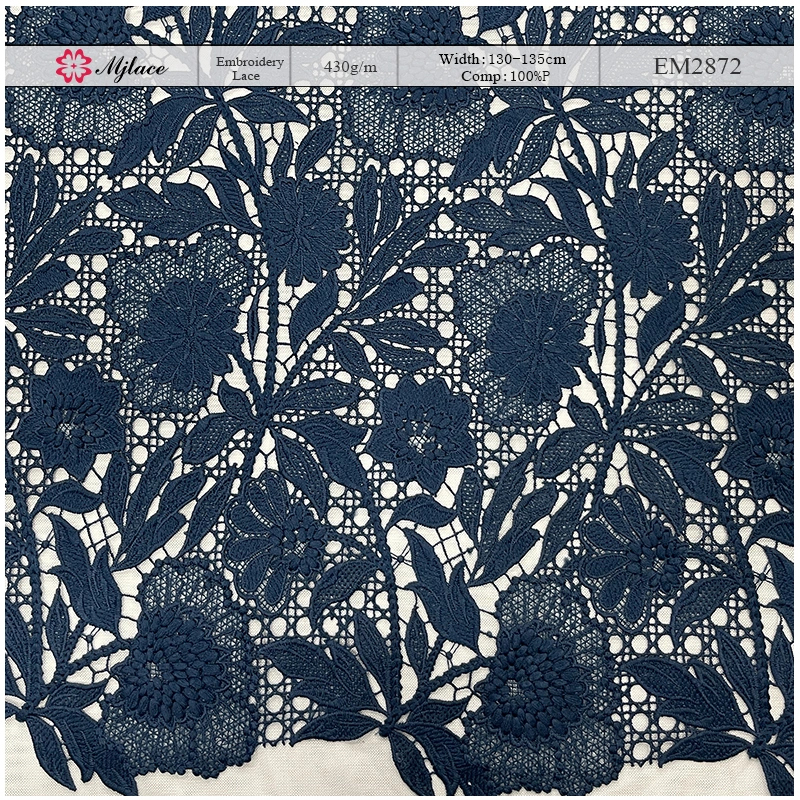
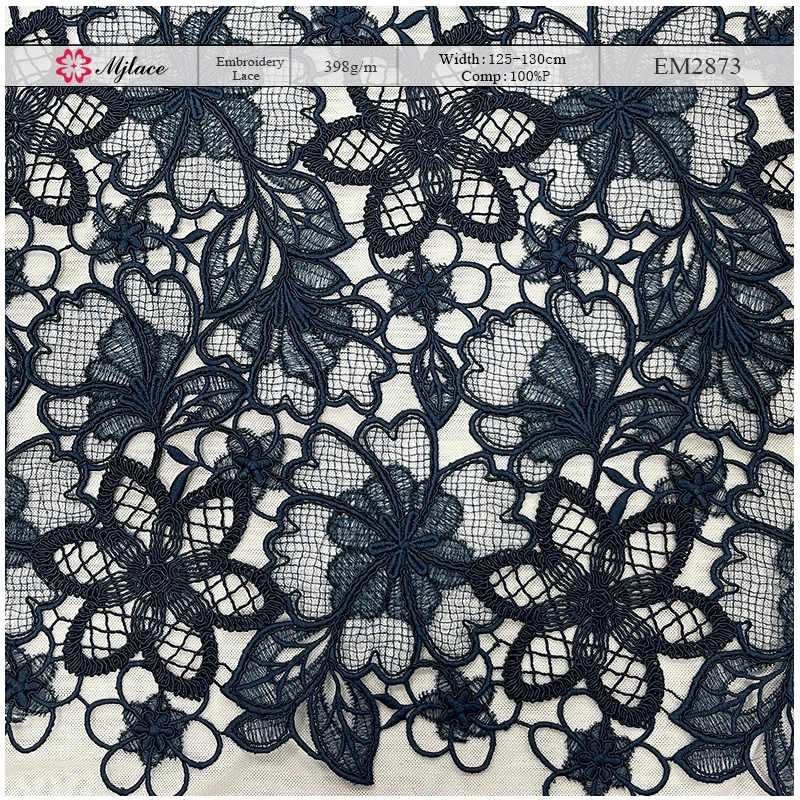
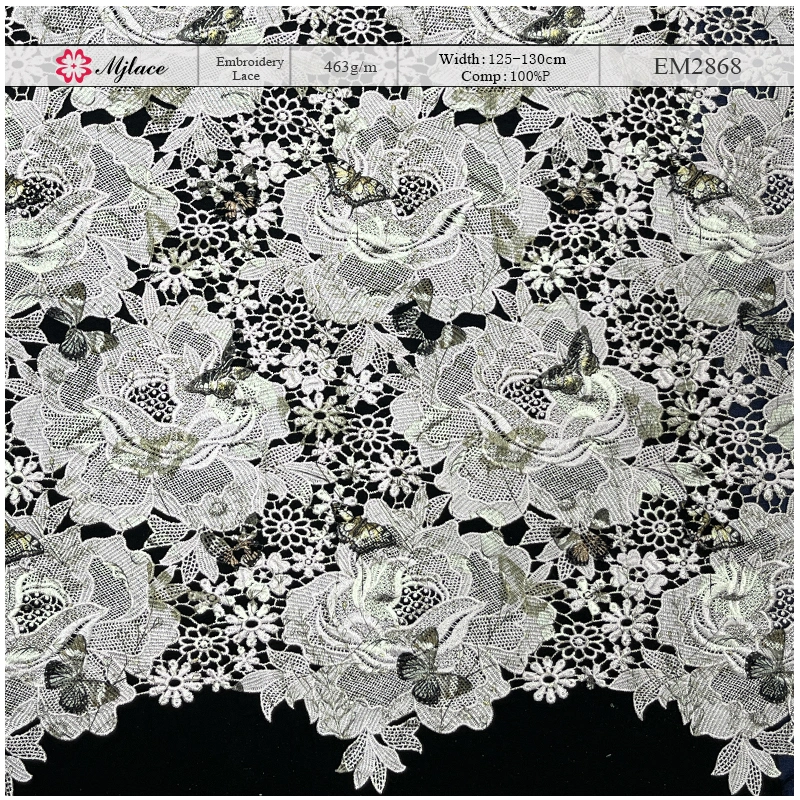
| Romantic feminine style | Floral embroidered lace |
| Minimal luxury | Clean geometric lace |
| Sustainable fashion | Recycled lace materials |
| Vintage revival | Retro guipure patterns |
| Modern evening wear | Metallic embroidery lace |
This allows manufacturers to develop fabrics that match future market demand.
Advanced Product Development: From Idea to Lace Fabric Sample
One of the biggest advantages of professional Chinese lace manufacturers is their ability to transform creative concepts into finished fabrics.
The Lace Fabric Development Process
A typical development process includes:
| Stage | Description |
|---|---|
| Design concept | Customer provides artwork, reference images, or ideas |
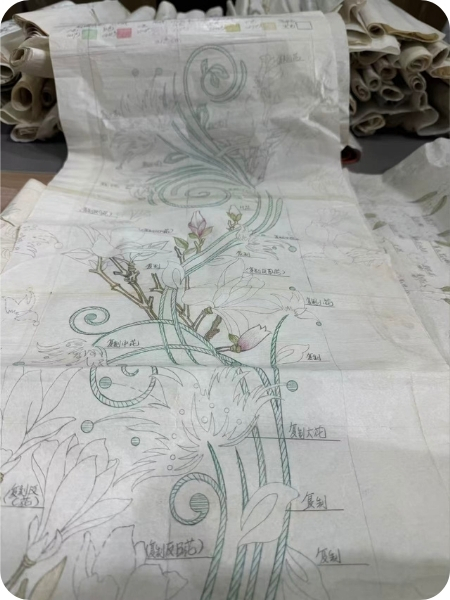
| Pattern creation | Factory develops embroidery or lace structure |
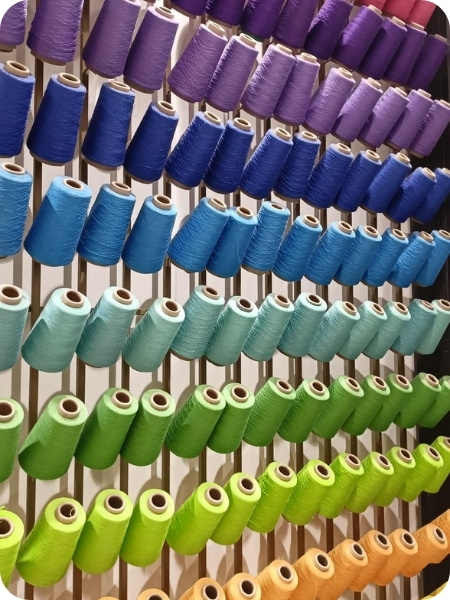
| Material selection | Choose yarn, mesh, backing and finishing |
| Sample production | Create initial fabric sample |
| Modification | Adjust pattern, density, color or texture |
| Approval | Customer confirms final version |
| Bulk production | Large-scale manufacturing begins |
Unlike traditional suppliers that mainly sell existing products, OEM lace fabric factories provide deeper customization capabilities. Explore customized processes.
Flexible OEM Manufacturing Helps Brands Create Unique Collections
Why Standard Lace Fabrics Are No Longer Enough
Many fashion brands face a common problem:
They find beautiful lace fabrics, but the same materials are available to many competitors.
This makes it difficult to build a unique brand identity.
OEM lace manufacturing solves this problem.
Through customization, brands can develop:
-
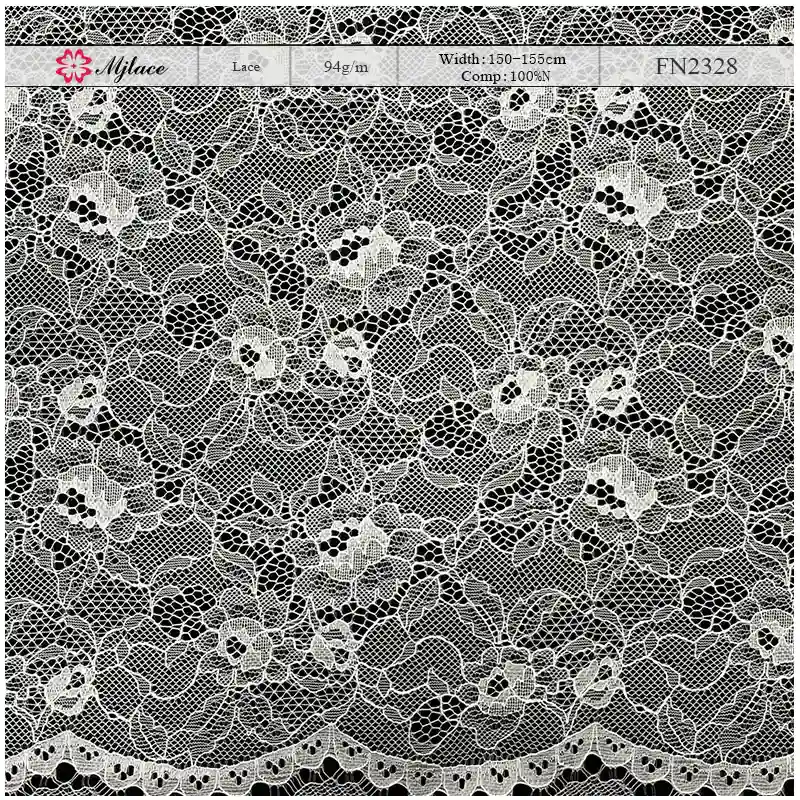
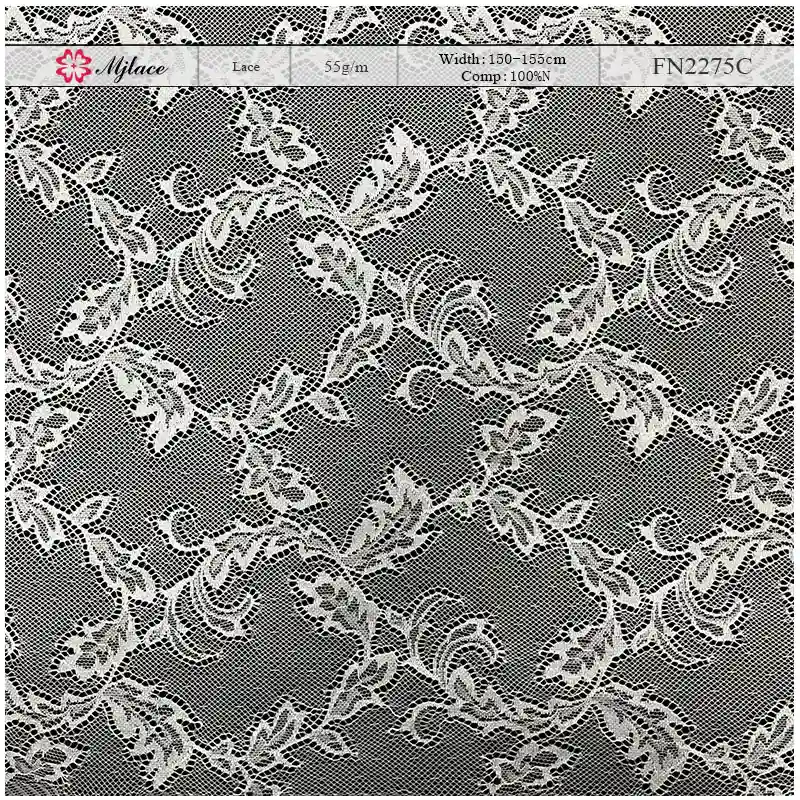
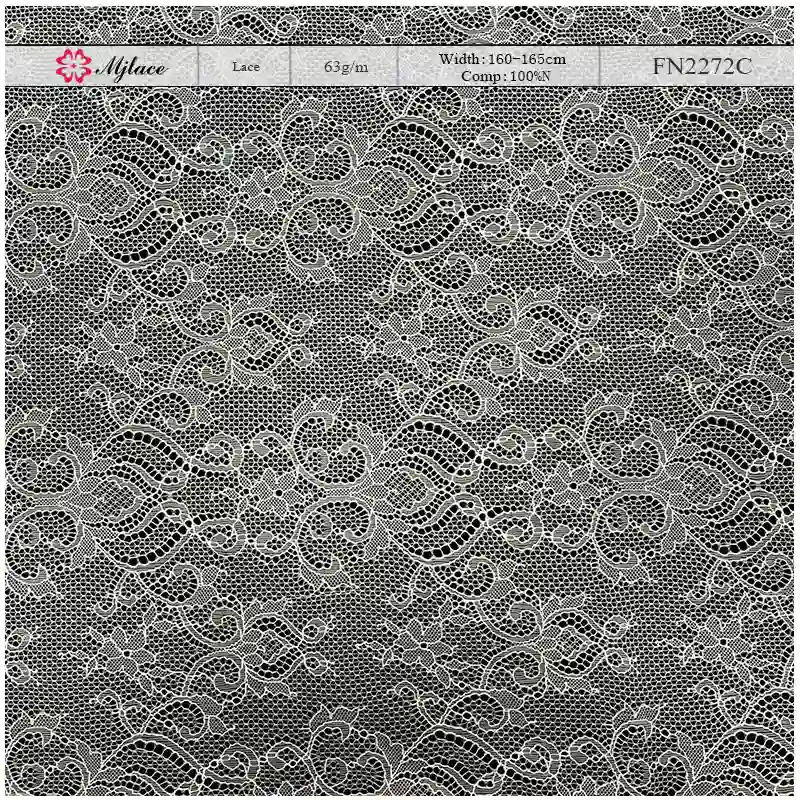
exclusive floral patterns
-
customized embroidery designs
-
special colors
-
different fabric weights
-
unique finishing effects
OEM Lace Fabric Development Options
| Customization Area | Available Solutions |
|---|---|
| Pattern | Floral, geometric, abstract, custom artwork |
| Color | Pantone matching, customized dyeing. Learn about dyeing and color matching. |
| Fabric base | Mesh, tulle, cotton blend, polyester |
| Embroidery | Flat embroidery, 3D embroidery, sequins. See embroidery. |
| Width | Customized according to garment requirements |
| Finishing | Soft touch, stretch finishing, special effects |
For fashion brands, this means lace becomes a product development advantage rather than just a material choice.
How Lace Factories Improve Production Speed
Fast Sampling Has Become a Competitive Advantage
In today's fashion market, speed matters.
A brand may lose a market opportunity if fabric development takes several months.
Professional lace factories optimize production efficiency through:
-
digital design systems
-
experienced technicians
-
organized sample management
-
flexible production planning
A typical timeline:
| Process | Approximate Time |
|---|---|
| Design discussion | 1-3 days |
| Pattern development | 7-15 days. Learn about pattern design development. |
| Sample production | 7-20 days |
| Revision | 3-10 days |
| Bulk production | Depends on quantity |
The ability to quickly move from concept to physical fabric helps brands respond to market changes faster.
The Role of Technology in Modern Lace Manufacturing
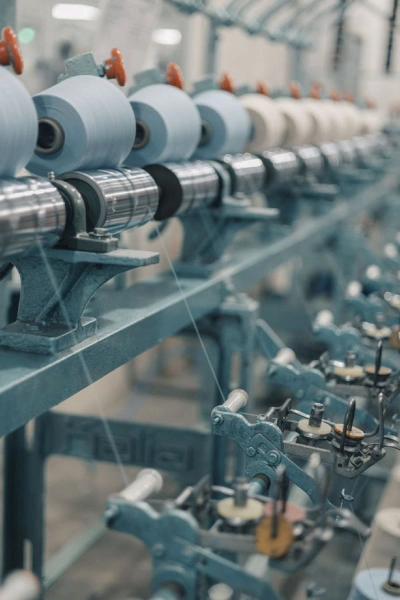
Technology has significantly changed lace production.
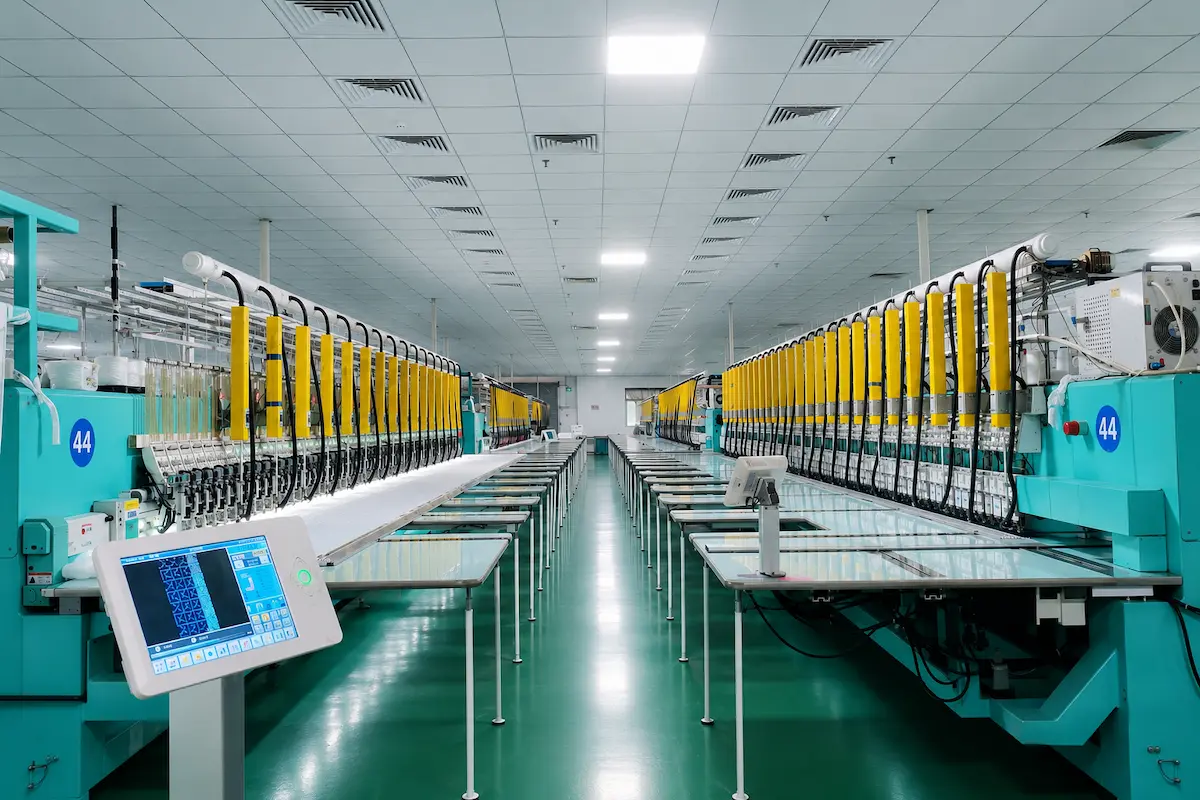
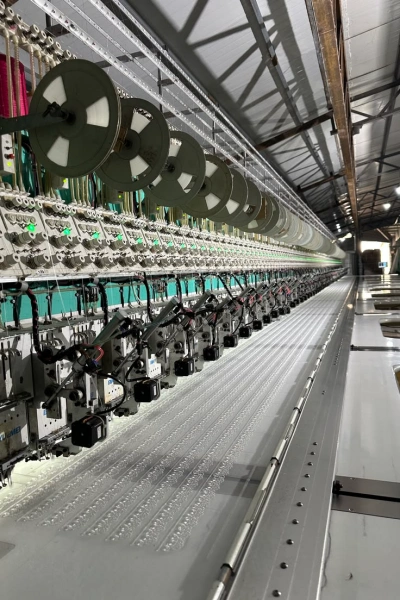
Modern factories combine traditional textile craftsmanship with advanced equipment.
Key Technologies Used in Lace Production
Computerized Embroidery Systems
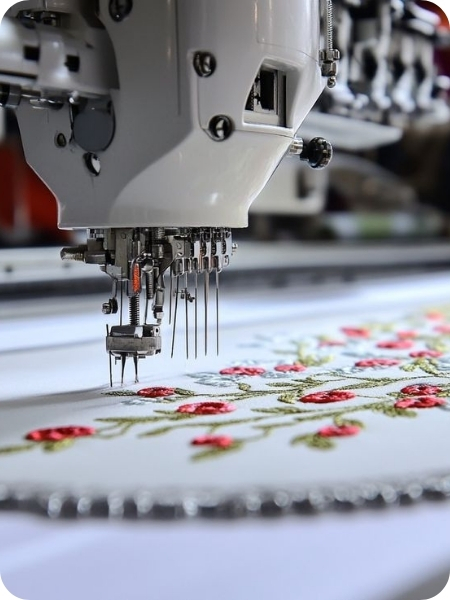
Digital embroidery machines allow factories to create:
-
complex floral patterns
-
detailed textures
-
consistent quality
-
repeatable production
Digital Pattern Design
Design software helps manufacturers:
-
adjust patterns quickly
-
preview different colors
-
optimize production layouts
Automated Quality Inspection
Advanced inspection systems help detect:
-
embroidery defects
-
uneven stitching
-
color differences
-
fabric damage. Learn about quality control standards.
Sustainable Manufacturing: A Growing Priority for Fashion Brands
Sustainability has become an important factor when selecting textile suppliers.
Global fashion brands increasingly look for manufacturers that can provide:
-
eco-friendly materials
-
responsible production
-
certified fabrics
-
reduced waste manufacturing
Modern lace factories are adapting through:
| Sustainability Approach | Manufacturing Improvement |
|---|---|
| Recycled yarn | Reduced environmental impact |
| Better production planning | Less material waste |
| Energy-efficient equipment | Lower energy consumption |
| Certified materials | Improved brand credibility. Visit our sustainability section. |
For brands targeting premium markets, sustainable lace solutions are becoming increasingly important.
Quality Control in Professional Lace Fabric Factories
Consistency is one of the biggest concerns for international buyers.
A fabric sample may look perfect, but bulk production requires strict control.
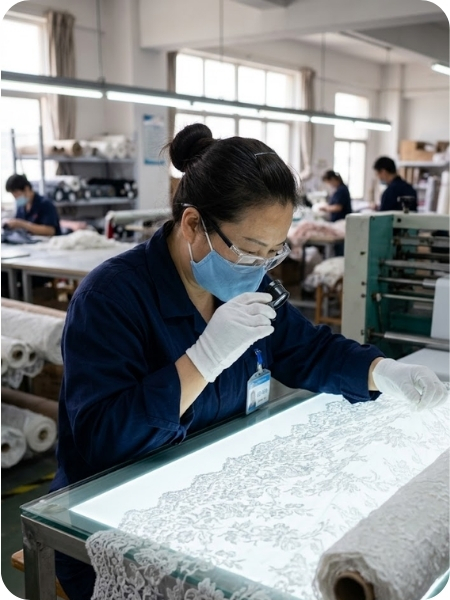
Professional factories usually implement quality checks throughout production.
Lace Fabric Quality Inspection Process
| Inspection Stage | Checking Items |
|---|---|
| Raw materials | Yarn quality and color |
| Embroidery process | Pattern accuracy |
| Fabric finishing | Softness and appearance |
| Final inspection | Defects and packaging |
Quality control ensures that brands receive stable materials for large-scale production.
How Chinese Lace Manufacturers Support Global Fashion Brands
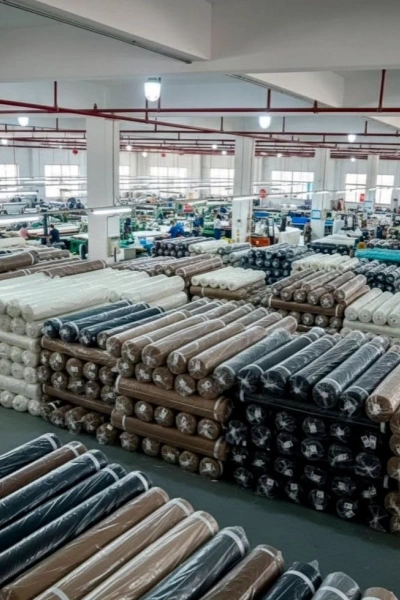
China has become an important textile manufacturing hub because of its complete supply chain.
A professional lace fabric factory can provide:
-
design support
-
material sourcing
-
production management
-
quality inspection
-
international shipping support. Learn about importing logistics.
This integrated approach reduces communication costs and improves development efficiency.
Choosing the Right Lace Fabric Factory in China
When selecting a supplier, fashion buyers should evaluate more than price.
Important factors include:
| Evaluation Factor | Why It Matters |
|---|---|
| Design capability | Determines product uniqueness |
| Production capacity | Ensures stable supply |
| Customization ability | Supports brand differentiation |
| Quality system | Reduces production risks |
| Communication ability | Improves development efficiency |
A reliable lace manufacturer should act as a long-term partner rather than only a fabric vendor. Explore cut piece and processing.
FAQ: Lace Fabric Manufacturing and Fashion Trends
1. Why do fashion brands choose lace manufacturers in China?
China has a mature textile supply chain, advanced production equipment, experienced technicians, and flexible customization capabilities.
2. Can lace fabric factories create custom designs?
Yes. Many OEM lace manufacturers can develop exclusive patterns based on customer artwork, sketches, or reference samples.
3. What types of lace fabrics can manufacturers produce?
Common types include:
-
embroidered lace fabric
-
water soluble lace
-
guipure lace
-
cotton lace
-
stretch lace
-
floral lace
4. What is the MOQ for customized lace fabric?
MOQ depends on:
-
design complexity
-
production method
-
material requirements
-
dyeing process
Many factories offer flexible solutions for developing new collections.
5. How long does custom lace development take?
Generally, sample development may take several weeks depending on design complexity and modification requirements.
The Future of Lace Manufacturing Is Driven by Innovation
The role of lace fabric factories has changed significantly.
Modern manufacturers are no longer only focused on producing fabric. They participate in:
-
design development
-
trend analysis
-
material innovation
-
customization
-
sustainable production
For global fashion brands, choosing the right lace fabric manufacturer in China means gaining a reliable partner who can help transform creative ideas into commercially successful collections.
As fashion continues to move faster, factories with strong development capabilities, flexible production systems, and advanced manufacturing technology will become increasingly valuable partners for international brands.
Ready to partner with a forward-thinking lace fabric factory? Visit our homepage to explore our capabilities or contact us for inquiries. You may also submit an inquiry for custom pricing.