

Where Precision Craft Meets Weightless Design
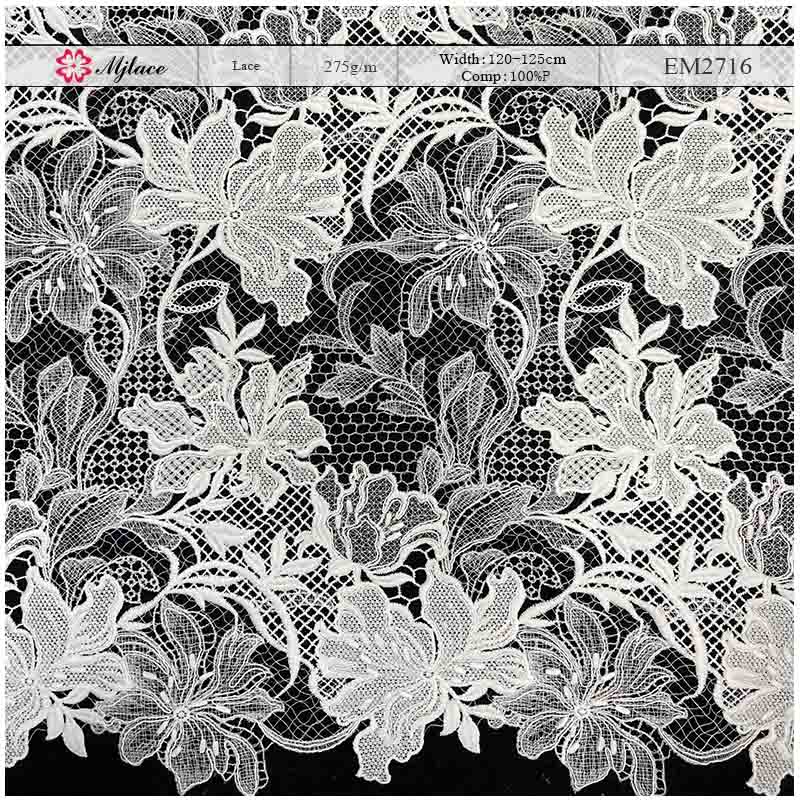
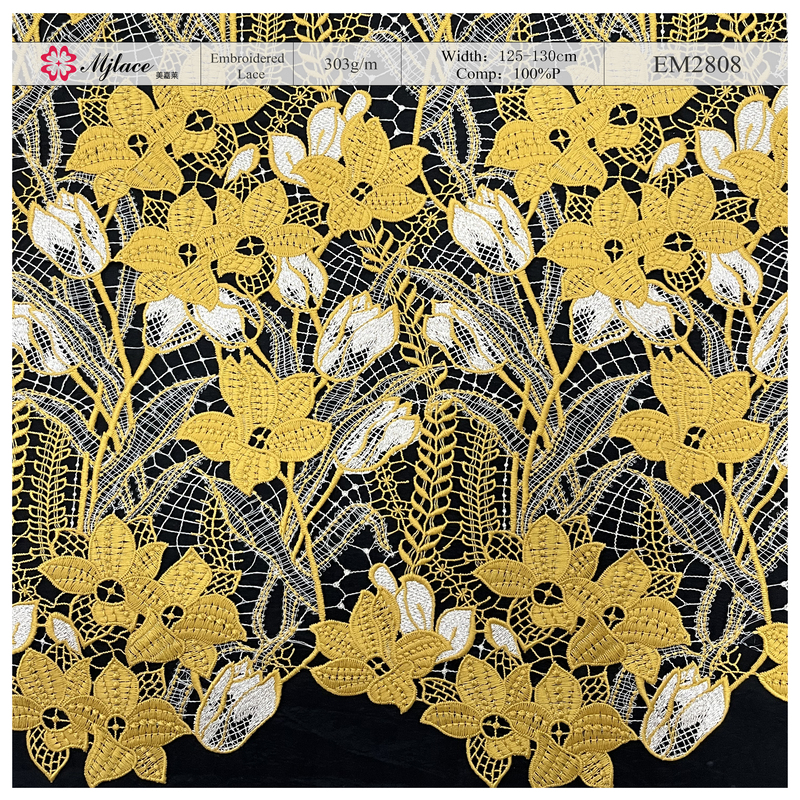
In the world of high-end lace and embroidery, Water-Soluble Embroidered Lace stands out as one of the most refined and technically sophisticated fabric developments. Known for its lightness, transparency, and sculptural detail, this technique removes the traditional fabric base entirely—leaving behind only the embroidered structure itself.
Widely used in bridalwear, couture, premium ready-to-wear, and decorative applications, water-soluble embroidery represents a perfect balance between craftsmanship and modern textile innovation.
What Is Water-Soluble Embroidery?
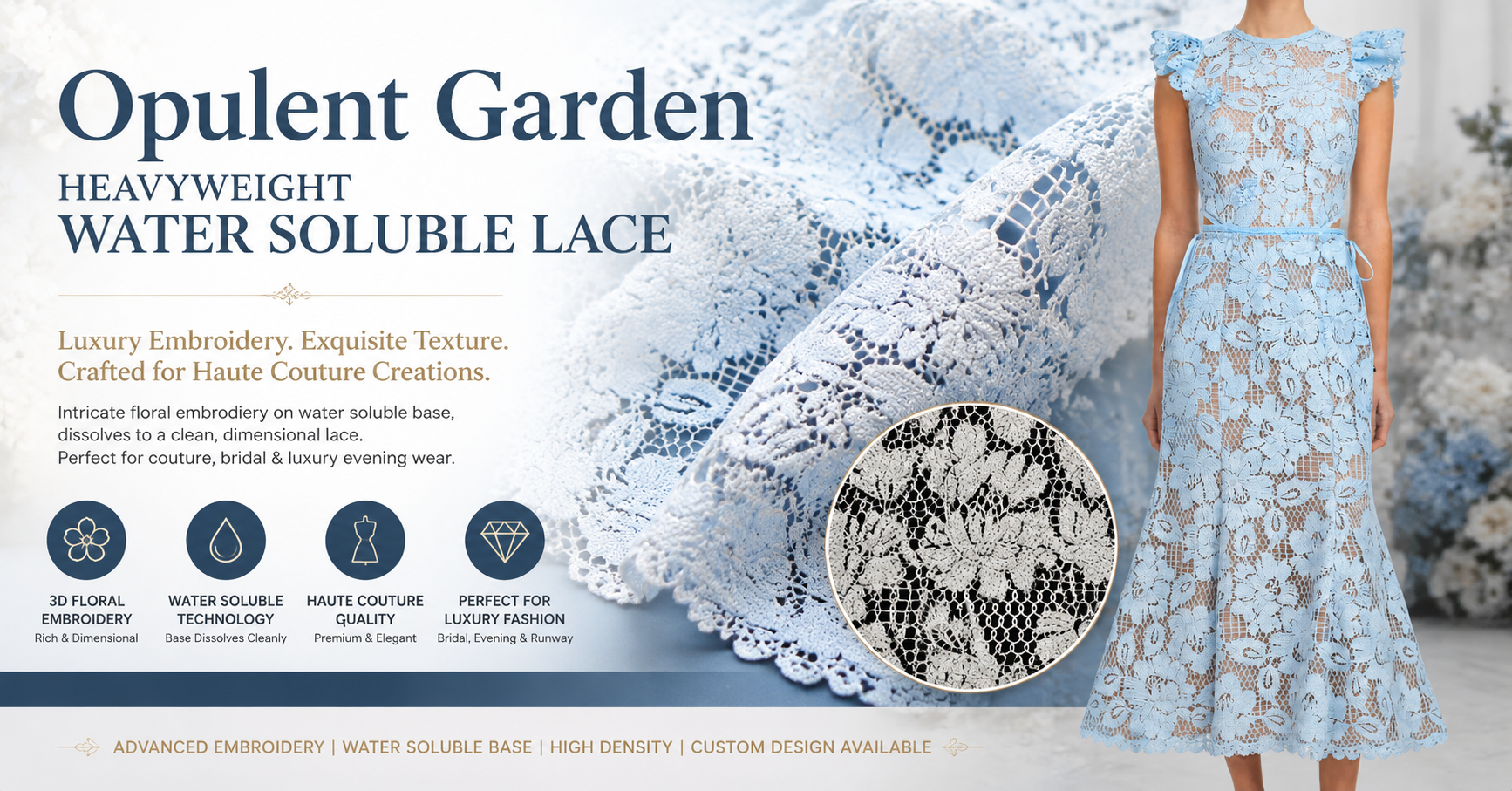
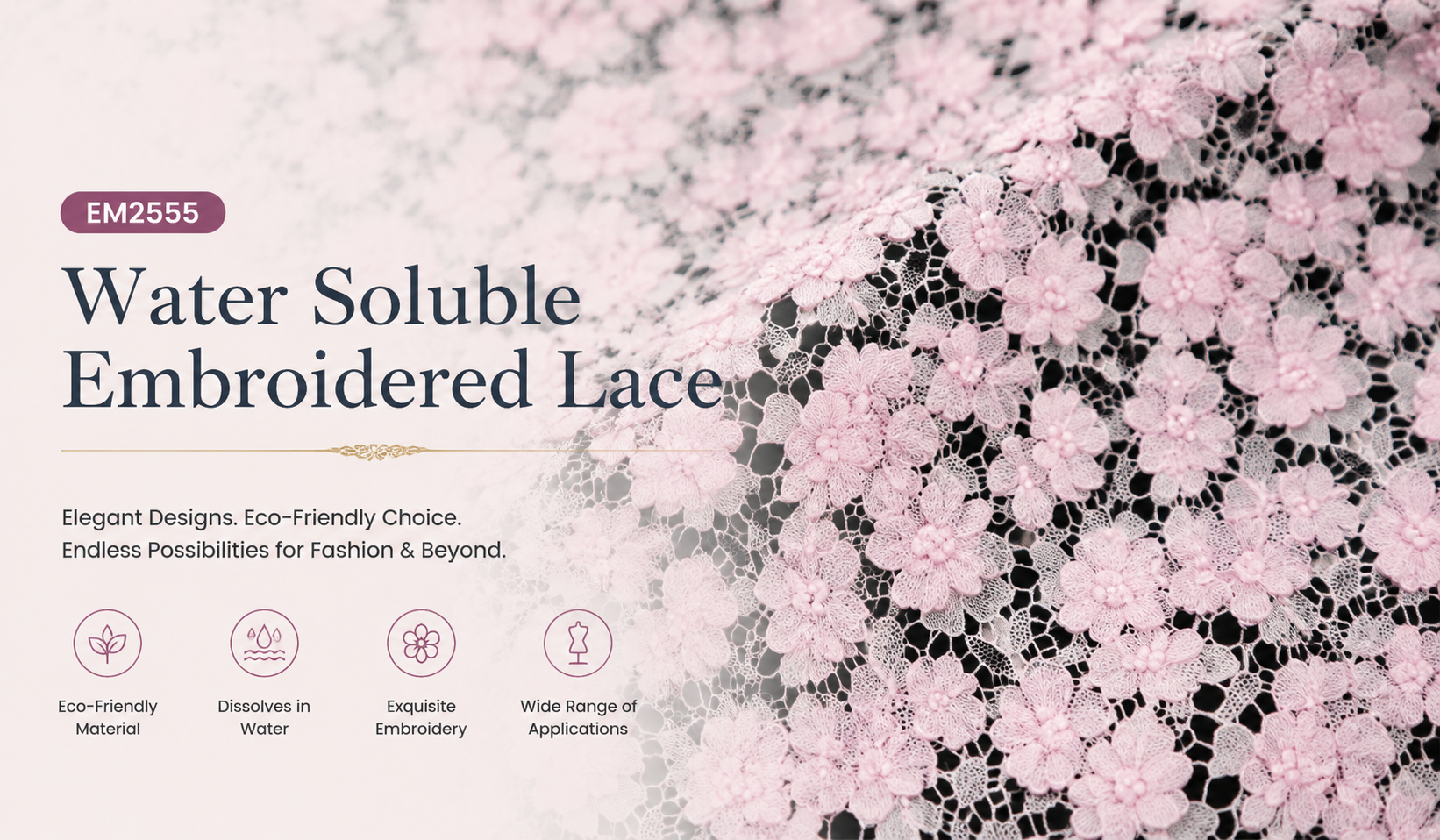
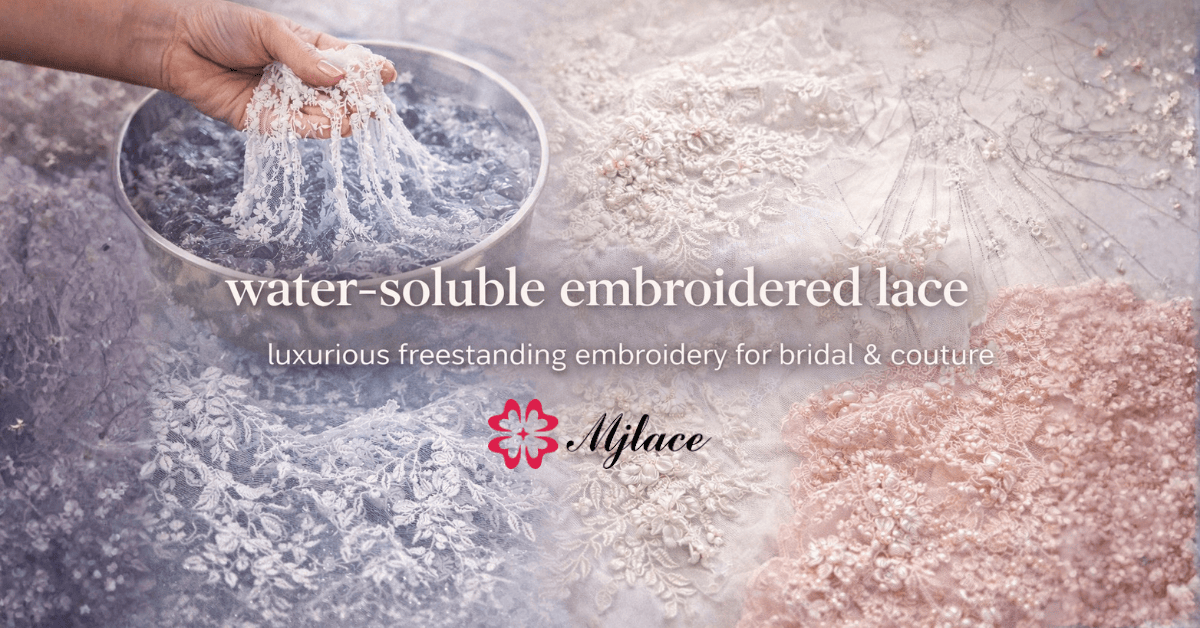
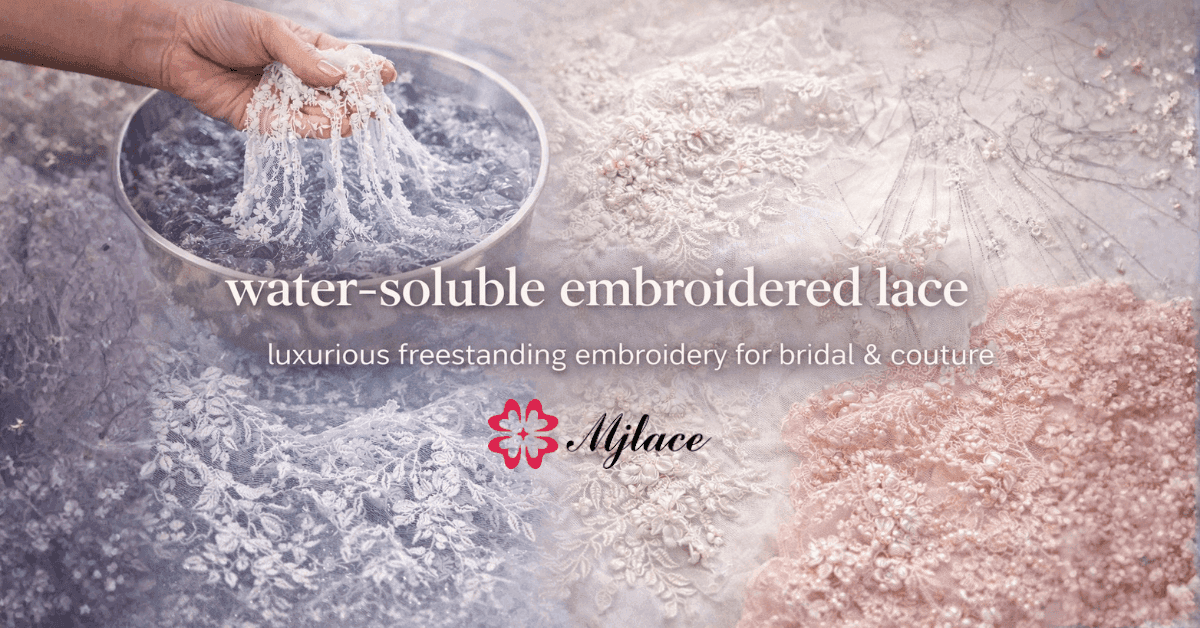
Water-Soluble Embroidered Lace is created by stitching intricate embroidery patterns onto a temporary, water-soluble backing material. Once the embroidery is complete, the base is dissolved in water, resulting in a freestanding lace structure made entirely of embroidery threads.
This technique is also commonly referred to as:
-
Water-Soluble Lace
-
Dissolvable Base Embroidery
The defining feature is its absence of a permanent fabric foundation, which gives the lace its signature lightness and open structure.
How Water-Soluble Embroidery Is Made
Water-Soluble Base Preparation
A specialized soluble film or nonwoven backing is used to support the embroidery process while remaining completely removable.
Precision Embroidery
Using high-speed computerized embroidery machines, the lace design is stitched directly onto the soluble base. Common thread choices include:
-
Rayon / Viscose
-
Polyester
-
Cotton
-
Metallic threads
Thread density, stitch direction, and layering are carefully controlled to ensure structural integrity once the base dissolves.
Water Dissolution Process
After embroidery, the fabric is washed in water, dissolving the backing material and revealing the lace structure.
Finishing and Stabilization
The lace is then shaped, dried, and stabilized to preserve pattern definition and dimensional accuracy.
Key Advantages of Water-Soluble Embroidered Lace
Exceptional Lightness and Transparency
Without a fabric base, the lace achieves a floating, airy appearance ideal for luxury designs.
Strong Dimensional Structure
The embroidery itself forms the framework, allowing for clear outlines, depth, and sculptural quality.
High Design Flexibility
Designers can create open motifs, detachable appliqués, borders, or continuous panels with great freedom.
Premium Market Positioning
Due to its complexity and craftsmanship, water-soluble embroidery is widely associated with high-value fashion segments.
Common Design Styles and Motifs
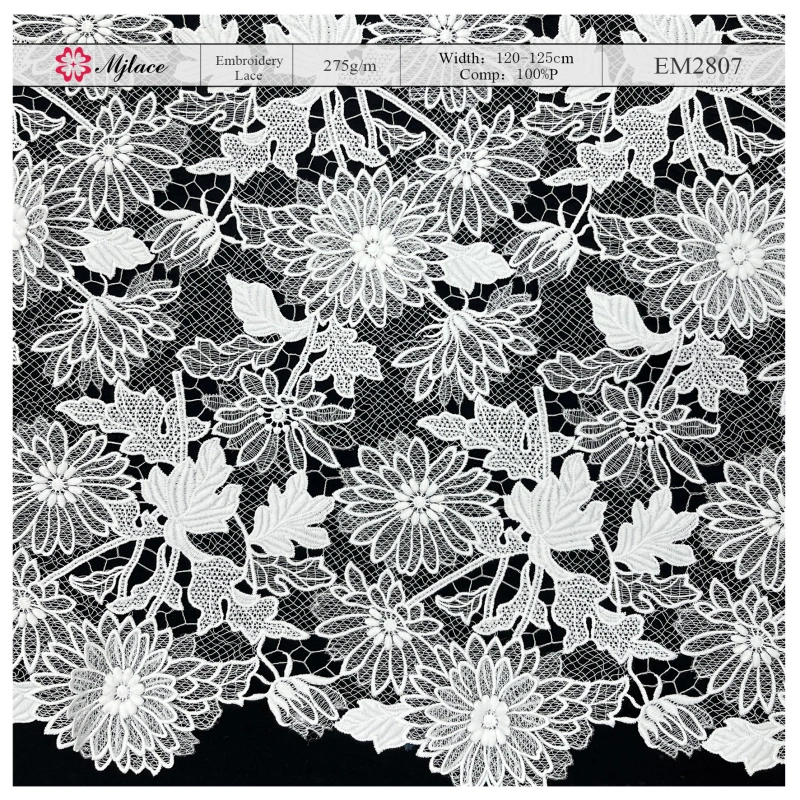
Floral and Botanical Patterns
Classic flowers, vines, and organic forms remain the most popular choices, especially for bridal and eveningwear.
Geometric and Contemporary Designs
Clean lines and architectural motifs suit modern fashion collections and statement pieces.
Lace Appliqués and Motifs
Individual motifs can be cut and applied separately, making them ideal for placement designs.
Embellished and 3D Effects
Water-soluble embroidery is often combined with beads, sequins, or raised stitching for added luxury.
Main Applications
Bridal and Couture Fashion
Used extensively for veils, bodices, sleeves, trains, and back details, offering elegance without heaviness.
High-End Womenswear
Ideal for dresses, tops, skirts, and layered designs where texture and transparency matter.
Ready-to-Wear Accents
Adds premium value through strategic placement rather than full-garment coverage.
Accessories and Decorative Use
Applied in footwear, handbags, hair accessories, and even interior decoration.
Water-Soluble Embroidery vs. Traditional Lace
| Feature | Water-Soluble Embroidery | Traditional Embroidered Lace |
|---|---|---|
| Fabric Base | None | Permanent fabric |
| Visual Effect | Light, transparent, dimensional | More structured and flat |
| Design Complexity | High | Moderate |
| Production Cost | Higher | More cost-efficient |
| Typical Market | Luxury / Custom | Mass to premium |
Custom Development & Sourcing Considerations
For fashion brands and designers, water-soluble embroidery is best suited for custom development projects:
-
Fully original embroidery designs
-
Adjustable thread types and densities
-
Custom motif sizing and layout
-
Compatibility with dyeing and embellishment processes
When sourcing, key factors to evaluate include:
-
Embroidery precision and consistency
-
Stability after water dissolution
-
Thread quality and color fastness
-
Sampling speed and development support
Future Trends: Lighter, Finer, and More Sustainable
As sustainability and innovation continue to shape textile development, water-soluble embroidery is evolving in several directions:
-
Thinner, more efficient soluble backings
-
Reduced water consumption during dissolution
-
Eco-friendly and recycled embroidery threads
-
Integration with digital and 3D embroidery technologies
This technique continues to redefine how lace can be both delicate and structurally expressive.
Conclusion
Water-Soluble Embroidered Lace is more than a decorative fabric—it is a textile expression of precision, creativity, and modern craftsmanship. By eliminating the traditional base, it offers designers unmatched freedom to create elegant, lightweight, and visually striking lace structures.
For brands seeking refined detail, premium positioning, and strong visual identity, water-soluble embroidery remains a timeless and evolving choice.