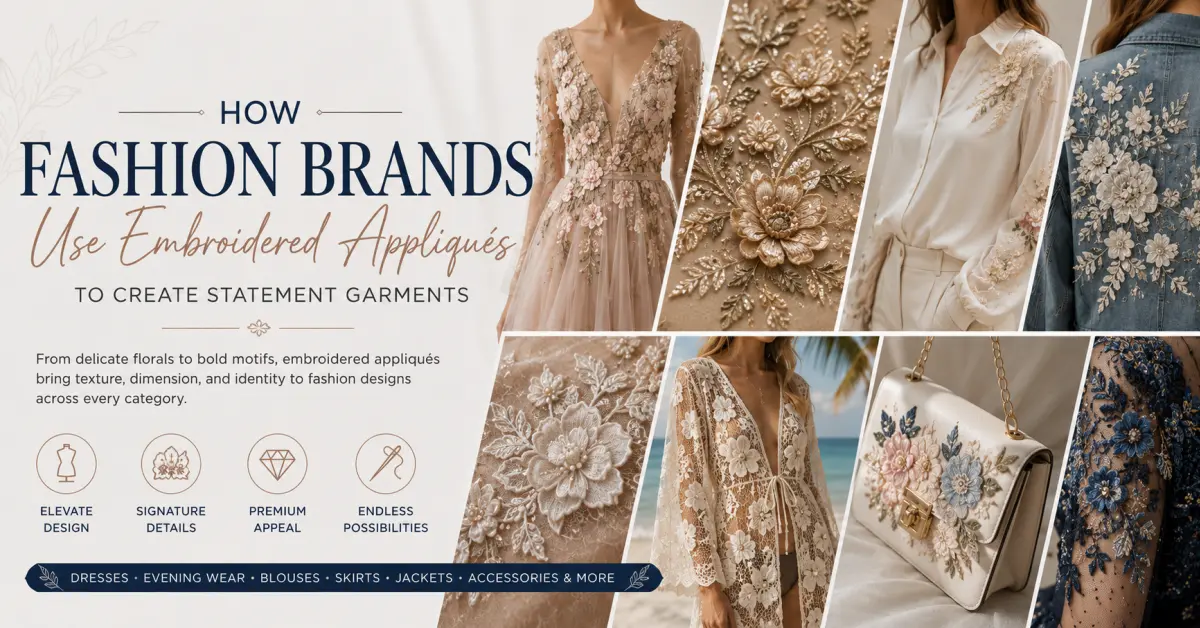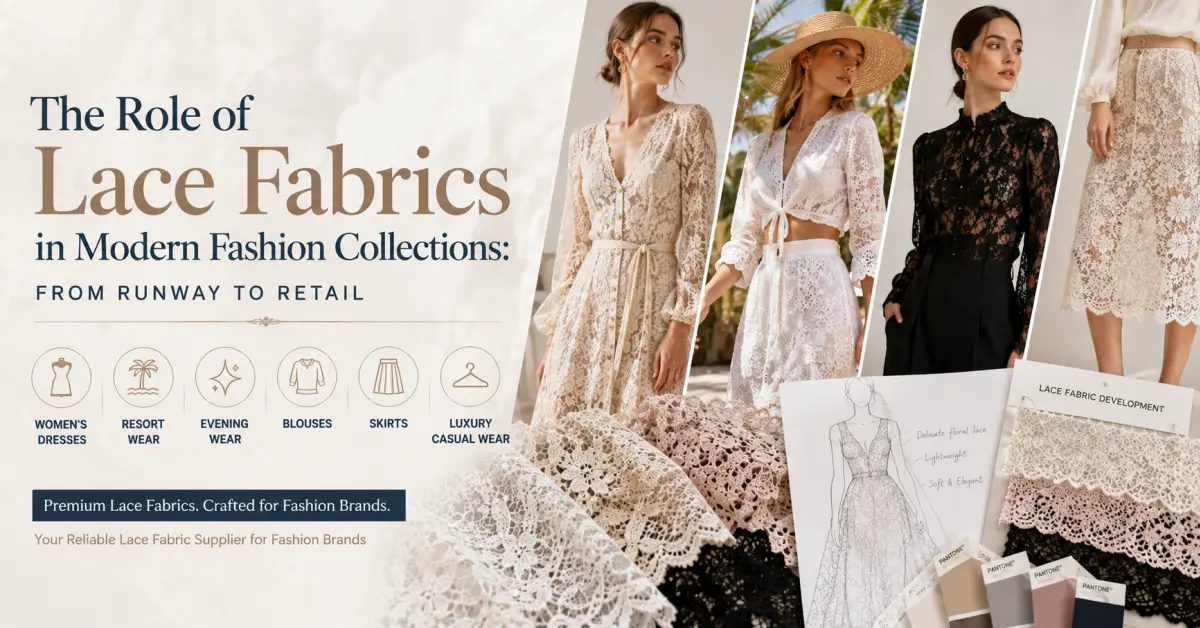

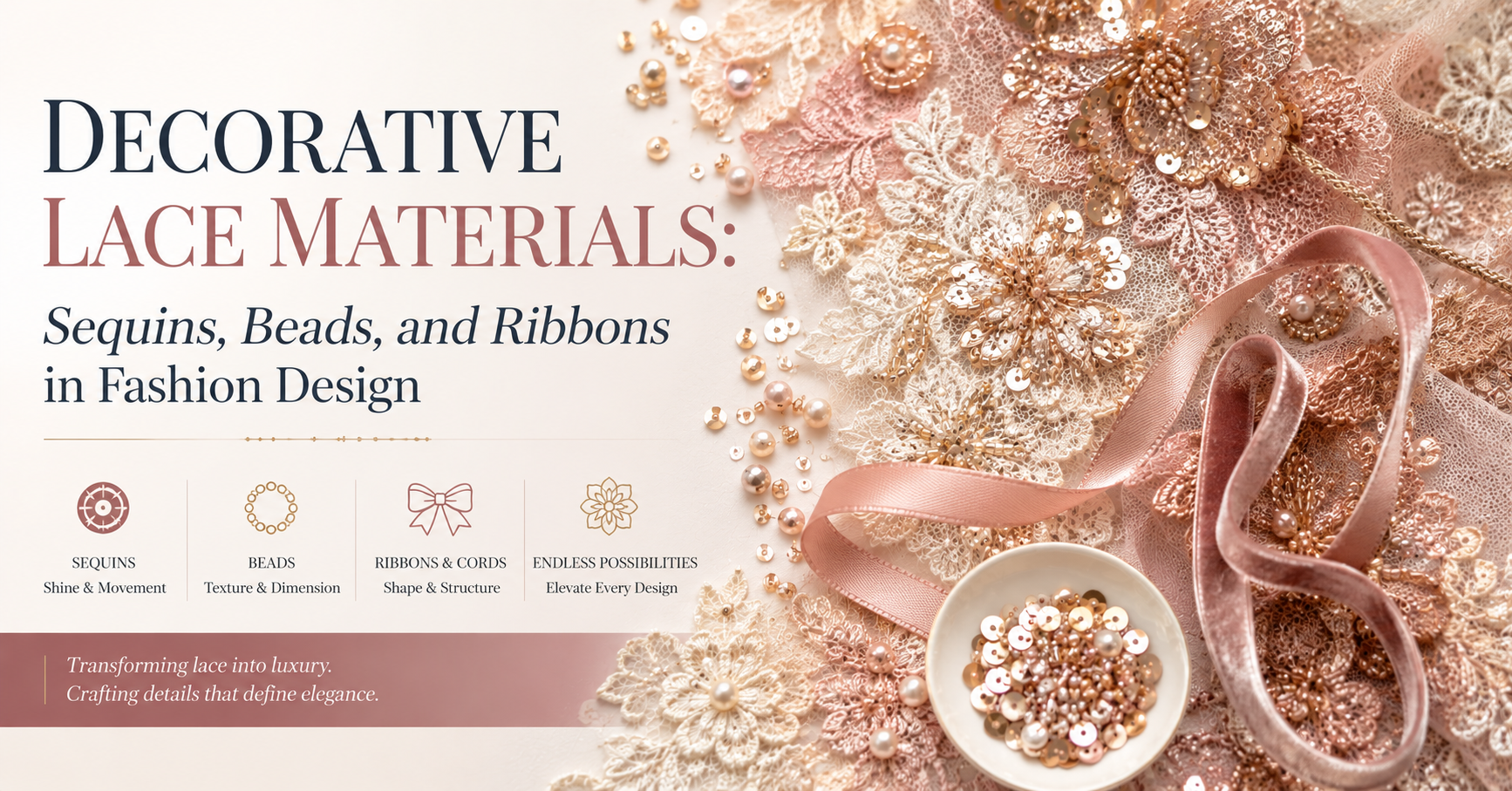

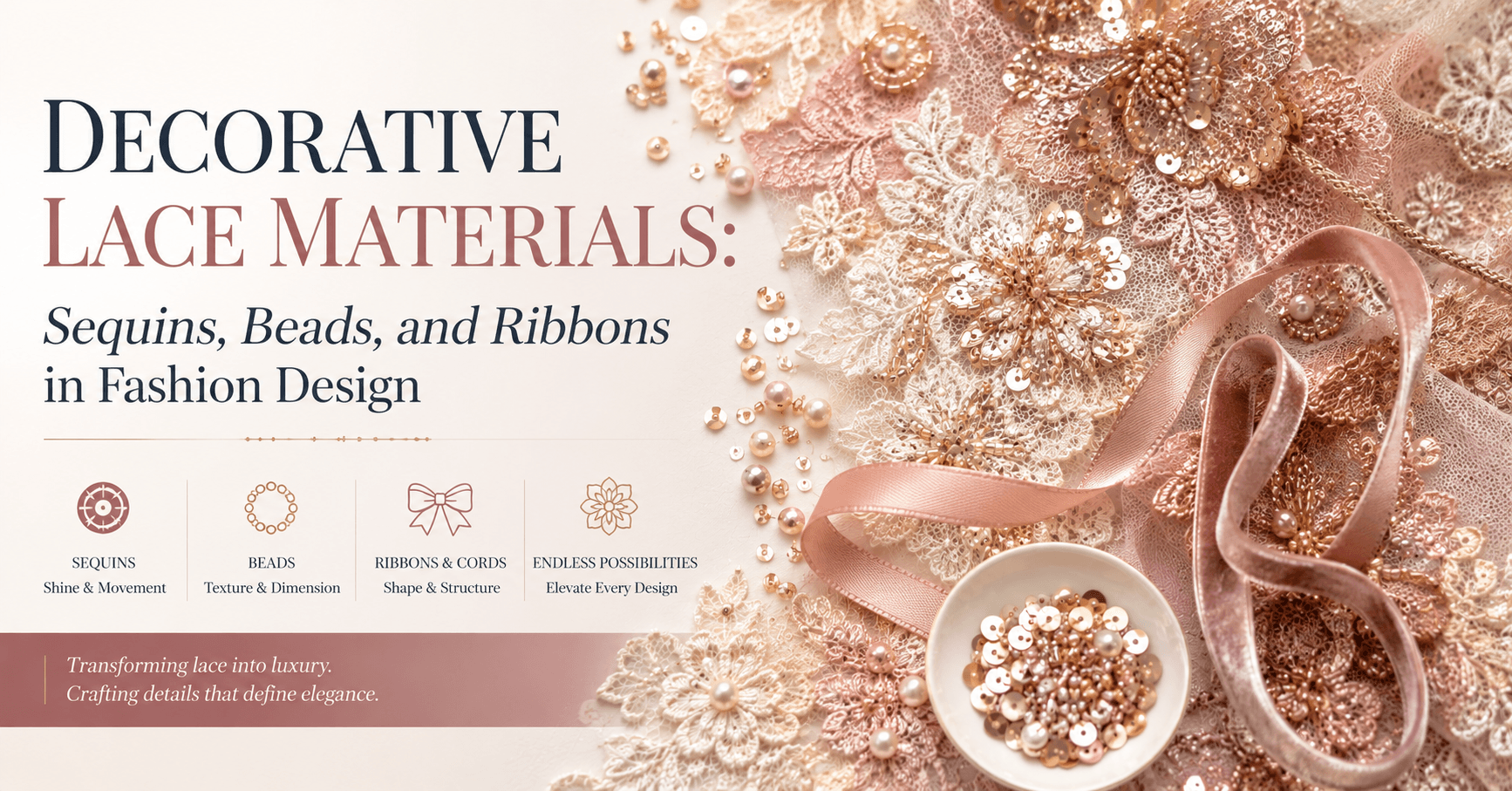
In luxury fashion and premium apparel production, decorative lace materials are no longer simply ornamental additions. Sequins, beads, ribbons, cords, and embroidered embellishments now play a critical role in defining garment value, visual identity, and market positioning. For bridal brands, couture studios, eveningwear labels, and fashion wholesalers, selecting the right decorative lace supplier directly impacts product quality, production efficiency, and customer perception.
Traditional lace fabrics often struggle to meet the increasing demands of modern fashion collections. Problems such as weak embellishment attachment, inconsistent color matching, unstable embroidery density, and poor batch consistency can lead to production delays, quality complaints, and high return rates. These issues become even more critical in high-end bridal and eveningwear applications where intricate craftsmanship and luxury appearance are essential.
Professional decorative lace manufacturers solve these challenges through advanced embroidery technology, precise embellishment integration, and strict quality control systems. By combining multi-head embroidery machines, computerized sequin devices, bead embroidery systems, and precision cord placement technology, modern lace factories can now produce highly detailed decorative lace with excellent consistency and durability.
In this guide, we will explain how decorative lace materials are manufactured, why they are important for luxury fashion collections, and how fashion brands and B2B buyers can choose the right decorative lace supplier for long-term success.
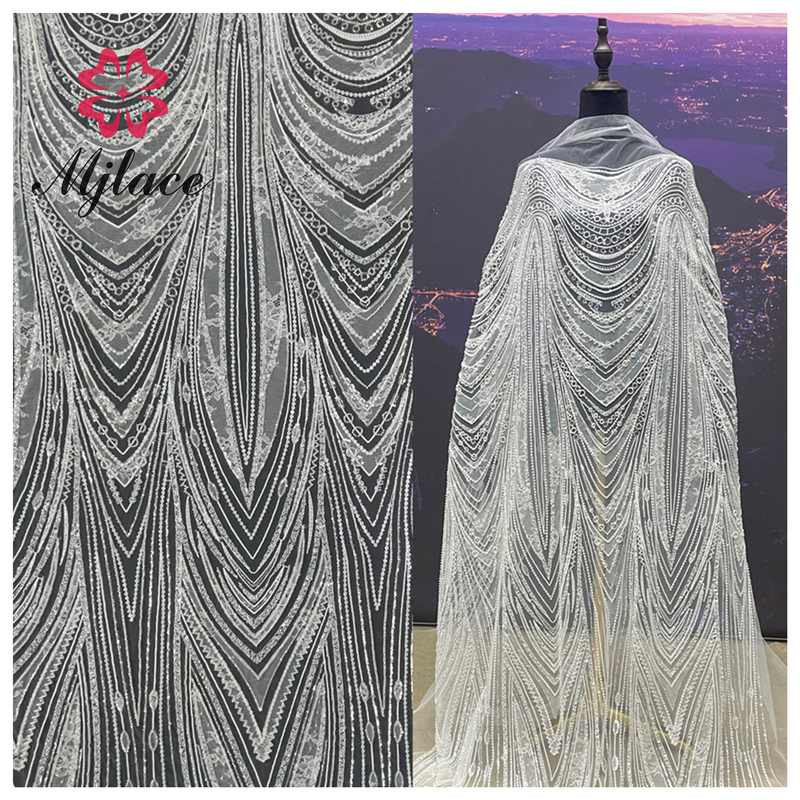
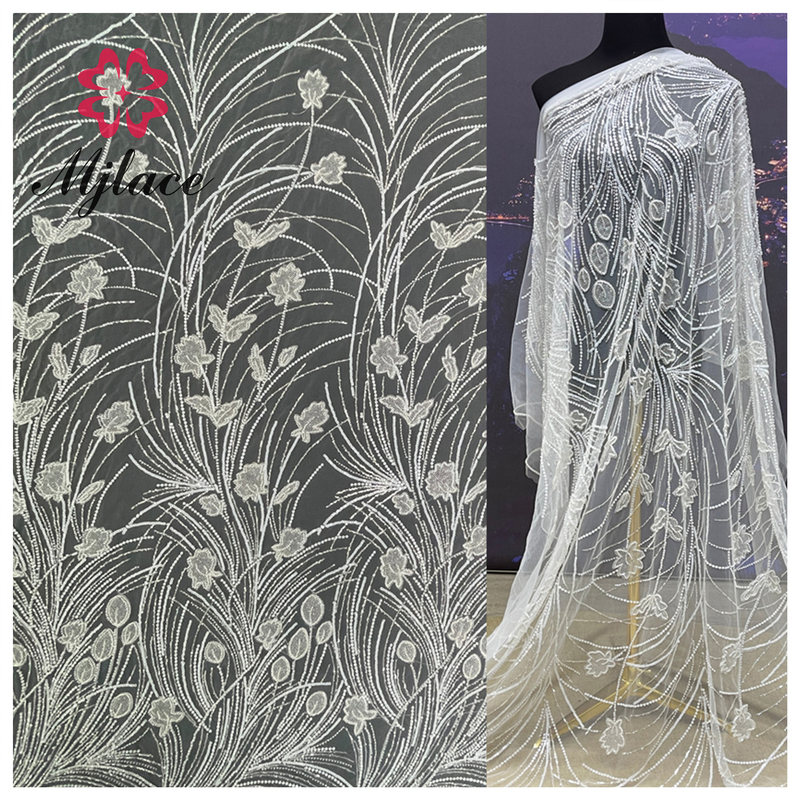
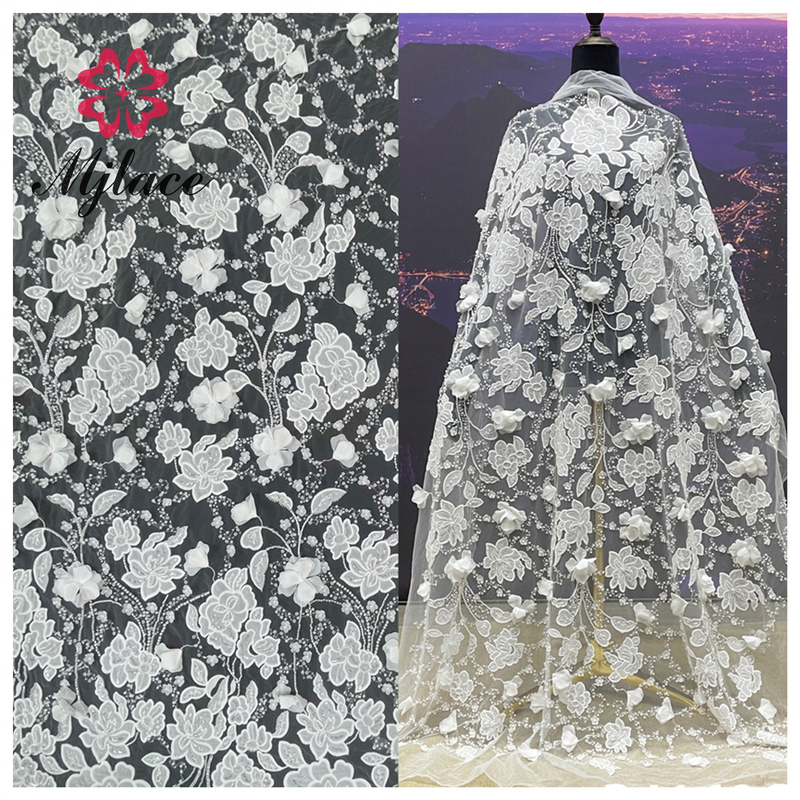
Quick Overview of Decorative Lace Materials in Fashion Design
This section provides a direct comparison of common decorative lace materials and their commercial advantages for fashion brands and wholesale buyers.
| Decorative Material | Main Features | Common Applications | Key Commercial Advantages |
|---|---|---|---|
| Sequins | Reflective surface with strong visual impact | Evening gowns, performance wear, bridal dresses | Enhances luxury appearance and runway visibility |
| Beads | Three-dimensional texture and shine | Couture dresses, luxury lace, accessories | Creates premium handcrafted aesthetics |
| Ribbons & Cords | Structural outlining and dimensional embroidery | Bridal lace, guipure lace, fashion trims | Adds depth and strengthens motif definition |
| Metallic Threads | Gold, silver, iridescent yarns | High-end embroidery and couture fabrics | Improves luxury positioning |
| 3D Embroidery | Raised floral and layered motifs | Bridal, couture, luxury fashion | Increases visual dimension and uniqueness |
| Water-Soluble Embellished Lace | Freestanding embroidered structures | Luxury bridal and appliqué designs | Lightweight with highly detailed patterns |
Key Takeaways
-
Decorative lace fabrics increase perceived garment value significantly in premium fashion markets.
-
3D embroidery combined with sequins and beads is becoming a major trend in bridal and eveningwear collections for 2026.
-
High-quality decorative lace requires stable embroidery density, precise embellishment placement, and consistent color control.
-
Fashion brands increasingly prioritize suppliers with advanced embroidery machinery and customization capabilities.
Why Decorative Lace Materials Are Essential for Luxury Fashion Collections
Modern consumers expect fashion products to deliver both craftsmanship and exclusivity. Decorative lace materials help brands achieve this through texture, shine, layering, and dimensional effects.
For bridal and couture garments, decorative embellishments create emotional value. Sequins reflect light dynamically during movement, beads add tactile depth, and ribbons create elegant motif outlines that enhance garment structure.
However, achieving consistent decorative lace production is technically challenging. Poor manufacturing processes often result in:
-
Loose sequins or beads falling off during wear
-
Uneven embroidery density
-
Color inconsistency between production batches
-
Distorted lace motifs after washing or cutting
-
Weak fabric stability around heavy embellishments
Professional lace manufacturers solve these issues through automated embroidery control systems, reinforced stitching methods, and real-time quality monitoring.
According to industry sourcing trends, premium decorative lace fabrics can increase final garment retail value by 20–40% in bridal and luxury eveningwear markets.
How Decorative Lace Materials Are Manufactured
The quality of decorative lace largely depends on production technology, embroidery precision, and finishing techniques.
Multi-Head Embroidery Systems
Modern decorative lace factories use computerized multi-head embroidery machines capable of integrating:
-
Sequins
-
Beads
-
Cords
-
Metallic threads
-
3D embroidery layers
Advanced systems can perform multiple decorative processes simultaneously while maintaining high-speed production efficiency. Explore our embroidery and laser embroidery options.
Advantages of Multi-Head Embroidery
-
Improved production consistency
-
Faster delivery for bulk orders
-
More accurate motif repetition
-
Lower defect rates during mass production
Modern embroidery systems can reach production speeds exceeding 1000 stitches per minute while maintaining highly detailed patterns.
Sequin Embroidery Technology
Sequin embroidery uses automated feeding devices to attach sequins directly into lace motifs.
Core Production Factors
-
Sequin size consistency
-
Stitch reinforcement strength
-
Heat resistance during garment finishing
-
Reflection uniformity under lighting
High-end bridal and couture brands often require customized sequin finishes including matte sequins, metallic sequins, transparent sequins, and iridescent holographic sequins. See our sequins and beads embroidery collection.
The latest embroidery systems allow precise sequin placement even on delicate tulle and water-soluble lace bases.
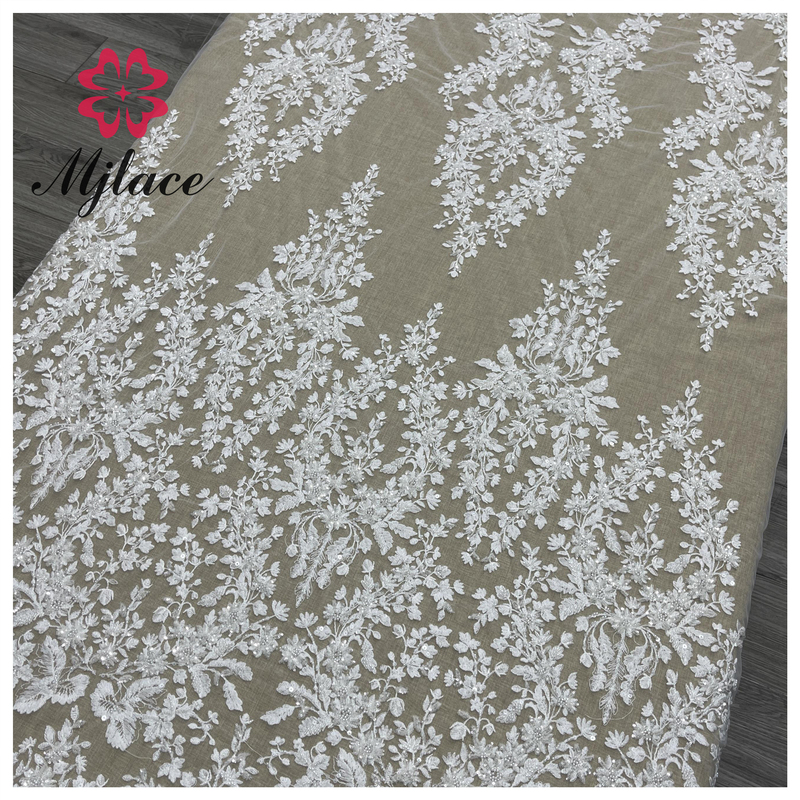
Bead Embroidery Techniques
Beaded lace fabrics require more precise craftsmanship because bead weight affects fabric stability and drape.
Professional manufacturers optimize:
-
Stitch density
-
Bead spacing
-
Thread tension
-
Structural reinforcement
Common Bead Types Used in Luxury Lace
| Bead Type | Characteristics |
|---|---|
| Glass Beads | High clarity and luxury shine |
| Crystal Beads | Premium reflective effect |
| Acrylic Beads | Lightweight and cost-efficient |
| Pearl Beads | Elegant bridal appearance |
| Metallic Beads | Strong fashion and couture effect |
Luxury bridal lace often combines multiple bead types to create layered visual depth.
Corded and Ribbon Lace Production
Cord embroidery uses thicker yarns or ribbons to outline lace motifs and create dimensional structures.
This technique is especially common in:
-
Guipure lace
-
Couture floral embroidery
-
Luxury appliqué production
Benefits of Corded Lace
-
Stronger motif definition
-
Enhanced dimensional appearance
-
Premium handcrafted aesthetic
-
Improved structural support for heavy embroidery
High-end corded lace production often combines satin ribbons, metallic cords, and raised embroidery to create luxury textures. Explore our cord embroidery and heavy work embroidery options.
Why Quality Control Determines Decorative Lace Performance
Decorative lace production involves multiple technical variables. Without strict quality control, mass production inconsistency becomes a major problem.
Professional lace factories implement:
-
Automated visual inspection systems
-
Thread tension monitoring
-
Color matching verification
-
Embellishment attachment testing
-
Wash durability testing
-
Fabric stability analysis
Common Quality Risks in Decorative Lace
| Production Problem | Result |
|---|---|
| Weak bead attachment | Bead loss during wear |
| Poor sequin stitching | Loose embellishments |
| Uneven embroidery density | Visual inconsistency |
| Inaccurate color matching | Batch variation |
| Fabric distortion | Garment fitting problems |
Reliable suppliers maintain strict process standardization to ensure stable production quality across large orders.
Decorative Lace Trends for 2026
Fashion trends continue to push decorative lace toward more dimensional, sustainable, and customized directions.
Sustainable Decorative Lace
Eco-friendly decorative materials are becoming increasingly important.
Brands now seek:
-
Recycled sequins
-
Biodegradable embroidery yarns
-
Sustainable dyeing processes
-
Eco-certified fabrics
Sustainability is becoming a purchasing requirement for many global fashion brands. Visit our sustainability section.
3D Floral Embroidery
Large raised floral embroidery is dominating bridal and couture collections.
Key features include:
-
Multi-layer embroidery
-
Raised beadwork
-
Sculptural lace motifs
-
Dimensional floral textures
This trend increases garment visual impact significantly.
Metallic and Iridescent Effects
Gold, silver, and holographic embellishments continue to grow in popularity.
These materials create:
-
Luxury appearance
-
Runway-level visual effects
-
Premium eveningwear aesthetics
Explore our multi-color embroidery options.
Mixed-Media Lace Structures
Modern decorative lace increasingly combines:
-
Tulle
-
Mesh
-
Satin
-
Organza
Layered structures create depth and improve visual sophistication.
Custom Brand-Specific Embroidery
Fashion brands increasingly request exclusive lace patterns to strengthen brand identity.
Professional suppliers now provide:
-
CAD embroidery development
-
Customized motif creation
-
Exclusive color systems
-
Private pattern protection
Custom decorative lace helps brands differentiate themselves in competitive fashion markets. Learn about our customized processes and OEM services.
How Fashion Brands Should Choose Decorative Lace Suppliers
Selecting the right lace manufacturer is critical for product consistency and long-term production stability.
Key Evaluation Factors
Technical Capability
Look for suppliers with:
-
Multi-head embroidery machines
-
Sequin embroidery systems
-
3D embroidery capabilities
-
Water-soluble lace production experience
Quality Control Systems
Reliable factories should provide:
-
Batch consistency reports
-
Color verification systems
-
Wash testing
-
Durability testing
Customization Support
Professional suppliers should support:
-
OEM embroidery development
-
Custom motifs
-
Color matching
-
Seasonal collection development through pattern design development
Production Capacity
Ensure suppliers can handle:
-
Small sampling orders (cut piece)
-
Medium-scale production
-
Large-volume manufacturing (processing)
Stable lead times are essential for seasonal fashion launches.
Frequently Asked Questions
Q1: Which decorative lace material is best for bridal fashion?
Beaded and corded lace combined with 3D floral embroidery are currently the most popular options for luxury bridal collections.
Q2: Are sequined lace fabrics durable?
High-quality sequined lace fabrics use reinforced stitching systems that significantly improve durability and wash resistance.
Q3: What is the advantage of water-soluble decorative lace?
Water-soluble lace creates freestanding embroidery structures with extremely delicate and detailed patterns ideal for couture and bridal applications.
Q4: Can decorative lace designs be customized?
Yes. Professional lace manufacturers can develop custom embroidery patterns, exclusive motifs, and brand-specific decorative designs.
Conclusion
Decorative lace materials are transforming modern fashion manufacturing. Sequins, beads, ribbons, cords, and dimensional embroidery now serve as essential design tools that enhance garment value, luxury positioning, and brand differentiation.
For fashion brands and B2B buyers, choosing the right decorative lace supplier is no longer simply about price. It requires evaluating technical capability, production consistency, customization support, and long-term manufacturing reliability.
As fashion trends continue moving toward sustainability, dimensional textures, and exclusive design development, decorative lace will remain one of the most important materials shaping the future of bridal, couture, and luxury fashion collections.
Ready to source decorative lace? Visit our homepage to explore our collections or contact us for inquiries. You may also submit an inquiry for custom pricing.