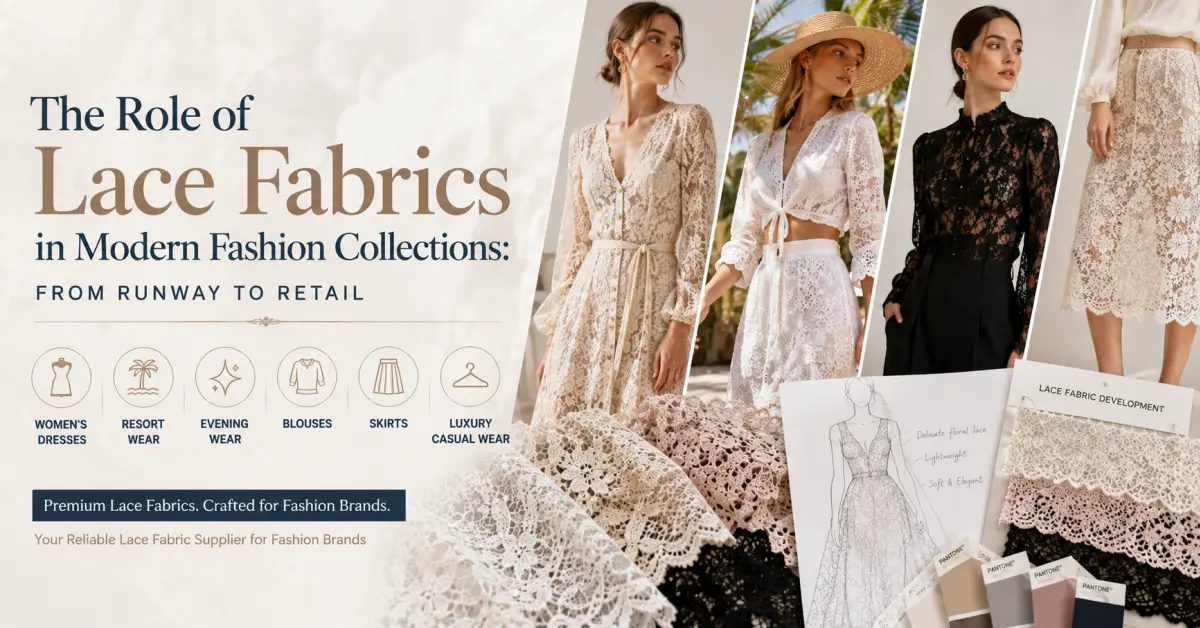


Lace for Spring/Summer 2027 is moving beyond traditional decorative patterns.
For fashion brands, the direction is becoming more commercial and more closely connected with the overall collection. Lace needs to work with silhouettes, color stories, garment construction and retail positioning rather than simply provide a decorative surface.
This is also reflected in the latest developments from Meijara Textile .
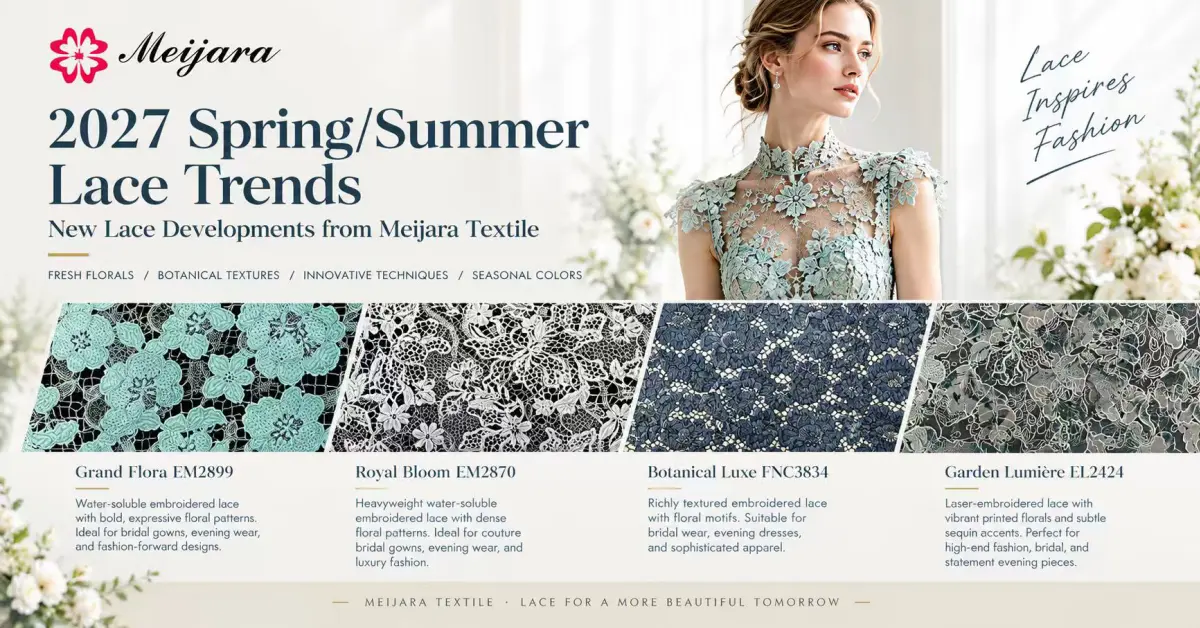
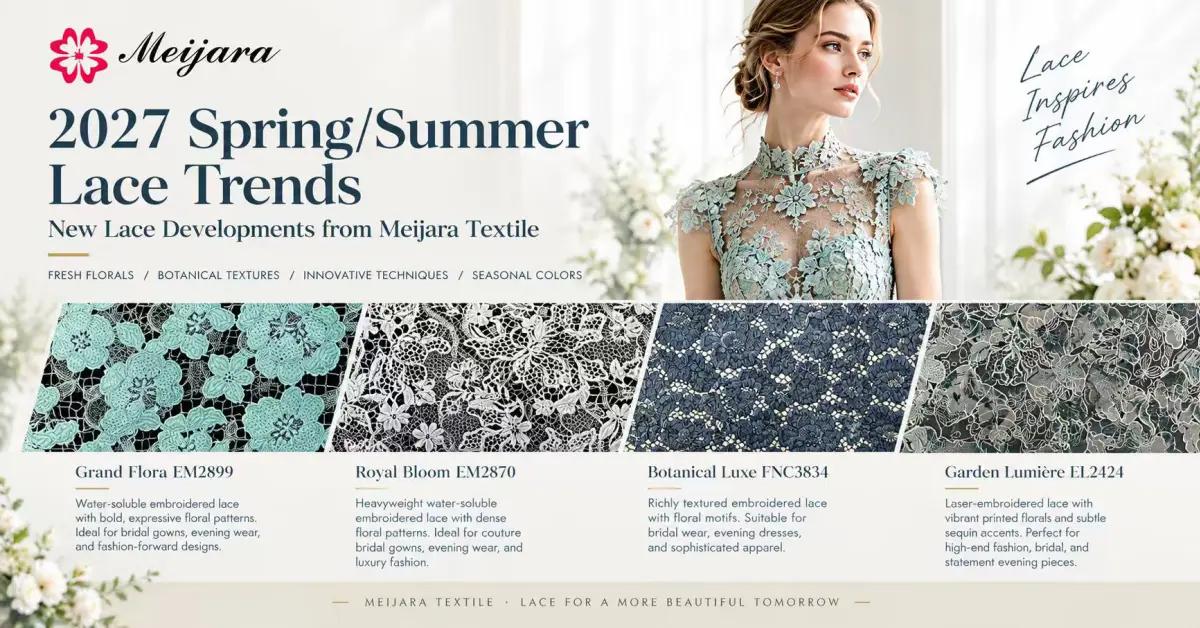
For the 2027 Spring/Summer season, our new lace collection focuses on several directions: large-scale floral motifs, botanical structures, richer surface textures, water-soluble embroidered lace , and combined techniques such as laser embroidery , printing and subtle sequin details.
The collection includes styles such as Grand Flora EM2899, Royal Bloom EM2870, Botanical Luxe FNC3834 and Garden Lumiere EL2424, each approaching floral lace from a different technical and visual direction.
Rather than developing one type of lace for one specific garment, the objective is to create fabrics that fashion brands can adapt across dresses, blouses, skirts, eveningwear, resort collections and other seasonal products.
For buyers and designers sourcing lace fabric for Spring/Summer 2027, this shift is important.
The question is no longer simply "What lace pattern is popular?"
It is:
What type of lace can give a collection a distinctive visual identity while remaining practical for garment development and production?
What Is Driving Lace Fabric Development for Spring/Summer 2027?
Seasonal lace development starts with fashion direction, but a commercial lace factory has to consider more than visual trends.
A fabric may look impressive in a design board but still be unsuitable for production if the construction is too heavy, the motif repeat does not work with garment patterns, or the surface effect becomes difficult to control during cutting and sewing.
For Spring/Summer 2027, several development factors are particularly relevant.
Floral motifs remain important, but scale is changing
Floral lace has always been an important category, but the latest development direction is less focused on small repetitive flowers.
Larger flowers, botanical compositions and more expressive arrangements are increasingly useful for fashion collections.
A large motif can create a stronger visual identity without requiring the entire fabric to have extremely high embroidery density.
This is particularly useful for:
Women's dresses, Blouses, Skirts, Resort wear, Evening dresses, Statement jackets, Luxury casualwear
The design team can position the motif according to the garment pattern rather than treating the fabric as a uniform decorative surface.
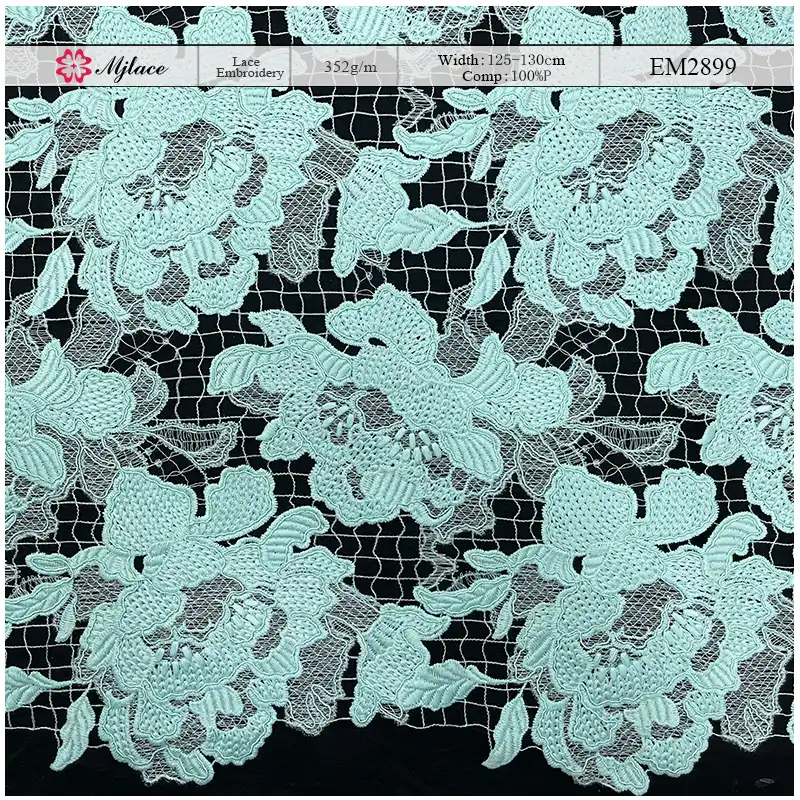
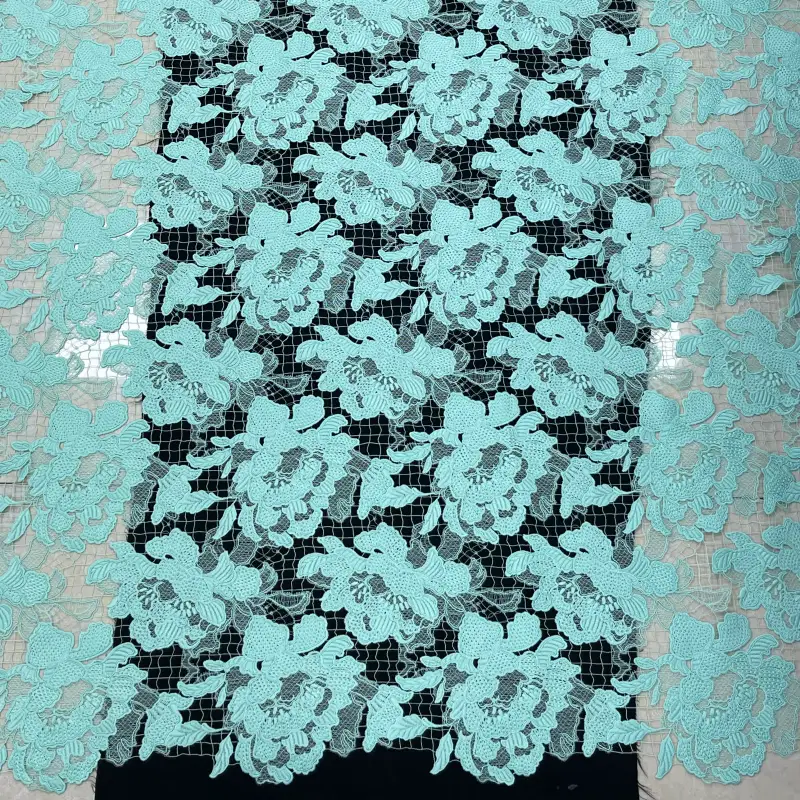
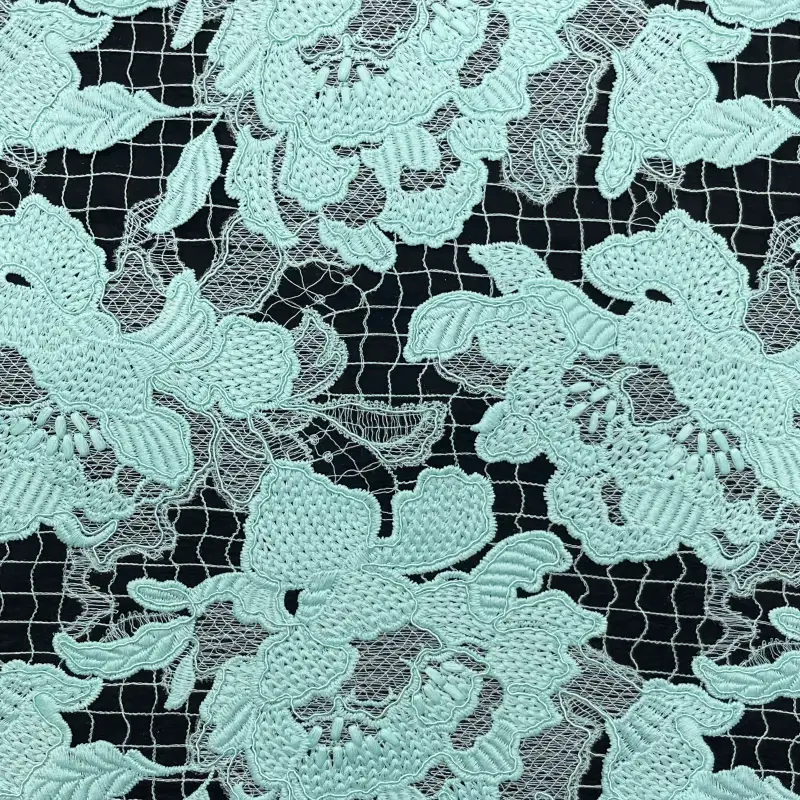
This is one reason Grand Flora EM2899 uses bold floral elements as a central design feature.
The larger floral structure gives designers more freedom when deciding where the visual emphasis should sit on the garment.
For more on how pattern development works, explore our pattern design development guide.
Four Major Directions in Meijara's 2027 Spring/Summer Lace Collection
Based on the latest collection shown above, Meijara's 2027 Spring/Summer development can be broadly divided into four directions.
| Development direction | Main visual characteristics | Suitable applications |
|---|---|---|
| Expressive floral | Large flowers, strong motif hierarchy | Dresses, skirts, resort wear |
| Dense botanical | Rich floral and leaf structures | Eveningwear, blouses, luxury fashion |
| Textured embroidered lace | Stronger surface depth | Statement garments, premium apparel |
| Mixed-technique lace | Laser embroidery, printing, sequins | Fashion-forward and contemporary collections |
These categories are not intended to replace individual product development.
They provide a framework for understanding how a lace manufacturer can translate seasonal fashion directions into commercially usable fabrics.
Grand Flora EM2899: Larger Floral Motifs for Statement Fashion
Grand Flora EM2899 represents one of the clearest directions in the new collection.
The fabric uses a large floral structure with expressive flowers distributed across the lace base. The overall effect is more graphic than a conventional small-floral lace.
The design is particularly suitable when the lace itself needs to become an important part of the garment identity.
Where can large floral lace be used?
Large floral lace can work particularly well on:
Full-length dresses, Midi dresses, Resort dresses, Statement skirts, Eveningwear, Blouses with large panels, Fashion jackets, Decorative sleeves
For a designer, the key advantage is motif scale.
A large flower can be positioned across a bodice, shoulder, sleeve or skirt panel to create a visual focal point.
This is different from a small floral lace, where the same decorative rhythm continues across the entire garment.
Large motifs require better garment planning
Large-pattern lace also creates a technical consideration.
The garment pattern should be reviewed before bulk production because the position of the flowers can significantly affect the final appearance.
For example, a large flower positioned directly across a bust point may create a completely different visual effect from the same flower positioned near the waist.
For B2B customers, this is why fabric development should ideally involve:
-
Pattern selection
-
Motif scale confirmation
-
Repeat evaluation
-
Fabric sampling
-
Garment testing
-
Final production approval
To understand more about how lace is applied across garments, visit our applications & industry use category.
Royal Bloom EM2870: Dense Floral Lace with a Couture Influence
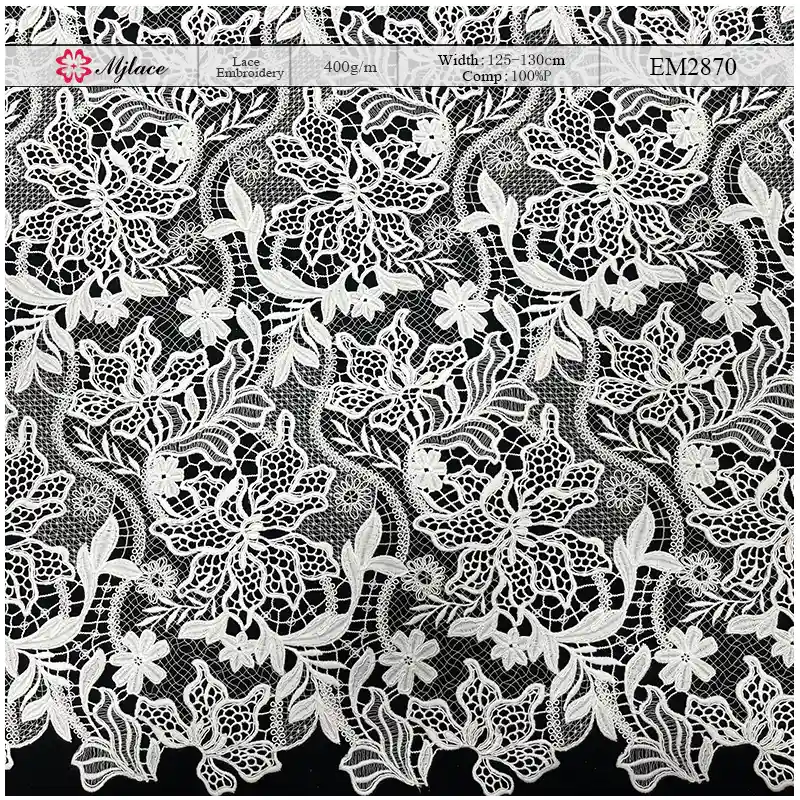
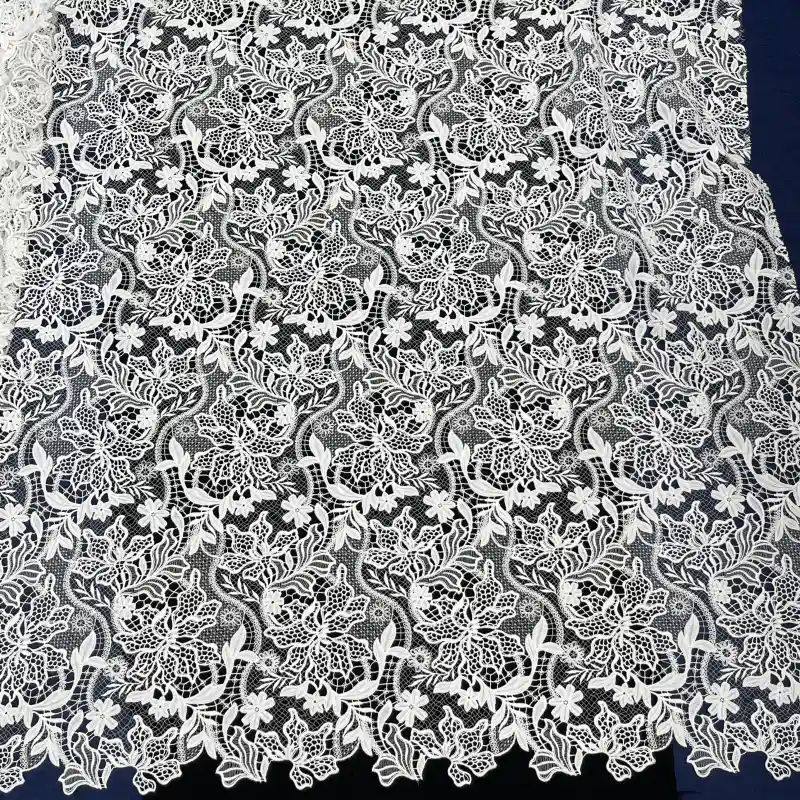
Royal Bloom EM2870 takes a different approach.
Compared with the larger and more open floral structure of Grand Flora, Royal Bloom uses a much denser floral composition.
The visual effect is richer and more concentrated, making it suitable for collections where the lace itself provides most of the surface decoration.
The fabric is particularly relevant to:
Evening dresses, Couture-inspired garments, Premium blouses, Structured skirts, Statement sleeves, Luxury occasionwear
The dense pattern can also reduce the need for additional garment decoration.
Instead of combining a relatively plain lace with extensive trims, designers can allow the fabric itself to carry the visual weight.
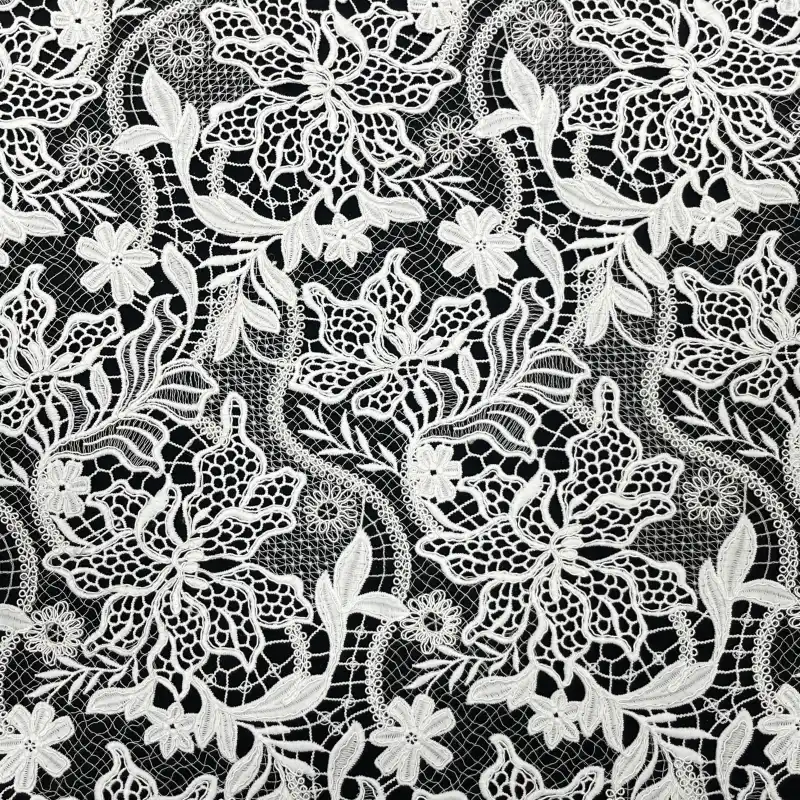
Dense lace does not always mean heavy lace
This distinction matters.
"Dense" describes the concentration of the motif and embroidery structure. It does not automatically mean that the finished garment has to feel physically heavy.
Fabric construction, base material, yarn selection, embroidery density and finishing all influence the final hand feel.
For manufacturers, these factors need to be evaluated together.
A lace fabric developed for a flowing Spring/Summer dress may require a very different construction from one intended for a structured evening jacket, even when both use a similar floral motif.
For more on embroidery techniques, explore our embroidery collection.
Botanical Lace: Moving Away from Conventional Floral Repetition
Another important direction in the 2027 collection is the use of botanical structures.
Botanical Luxe FNC3834 uses flowers, leaves and connecting elements to create a more continuous visual composition.
This type of lace is particularly suitable for brands looking for a sophisticated floral effect without relying on oversized individual flowers.
The botanical approach works well because it can bridge several fashion categories.
| Product category | Botanical lace application |
|---|---|
| Women's dresses | Full garment or selected panels |
| Evening dresses | Bodice, skirt or back |
| Blouses | Collar, sleeves and front panels |
| Skirts | Hem or full-surface construction |
| Jackets | Back panel and sleeves |
| Resort wear | Lightweight dresses and cover-ups |
| Luxury casualwear | Selected decorative panels |
The botanical direction is also commercially useful because it can be adapted to different levels of density.
A lighter botanical construction can work for Spring/Summer dresses, while a richer version can be used for evening or premium collections.
For a deeper understanding of different lace categories, read our lace types & categories guide.
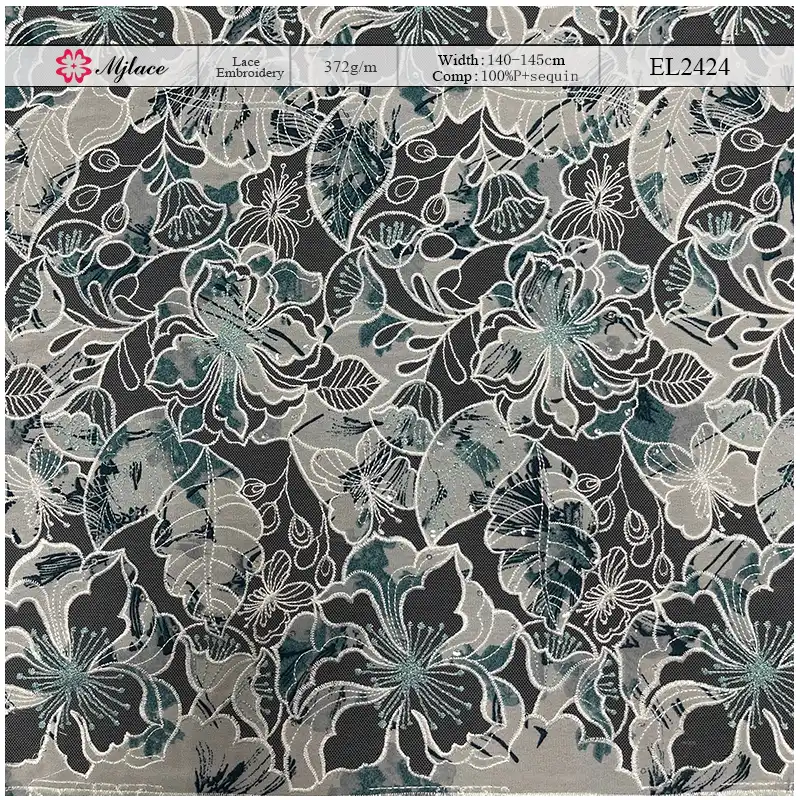
Garden Lumiere EL2424: Combining Laser Embroidery, Printing and Surface Detail
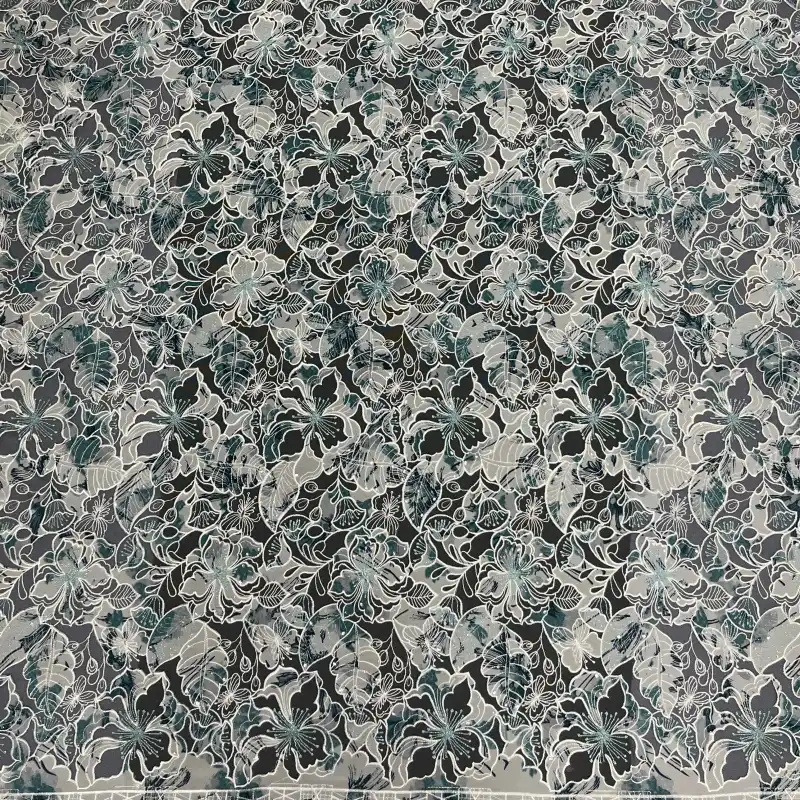
One of the more fashion-forward directions in the new collection is Garden Lumiere EL2424.
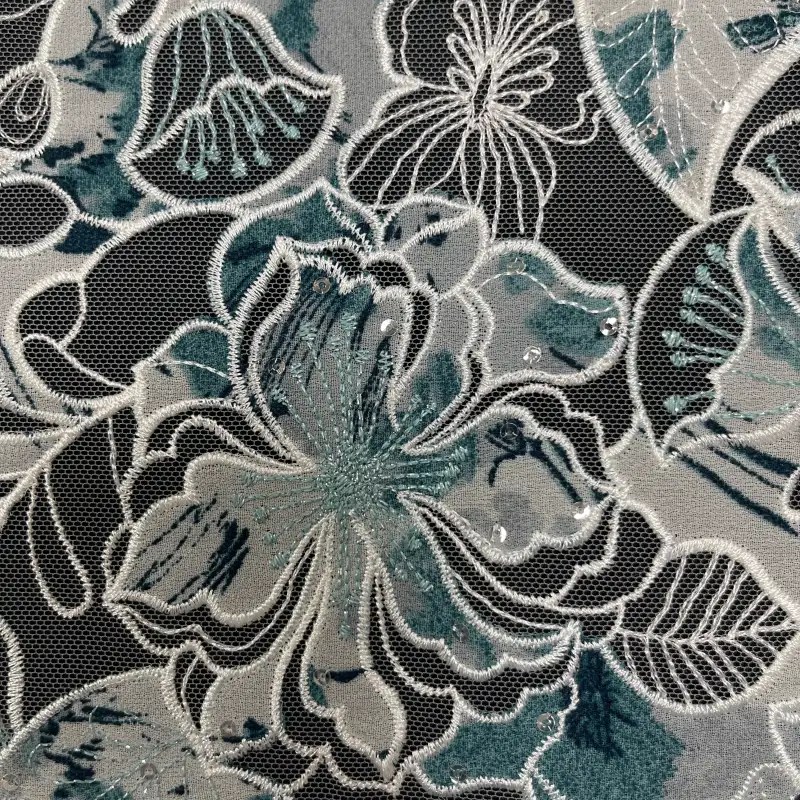
Rather than relying only on traditional embroidered motifs, this development combines laser embroidery with printed floral elements and subtle sequin accents.
This type of development reflects a broader shift in fashion decoration.
Designers increasingly want fabrics that combine different surface effects instead of using one technique from edge to edge.
The result can be more dimensional and visually complex without simply increasing embroidery density.
Why mixed techniques are useful for fashion brands
Different techniques can perform different visual functions.
| Technique | Main contribution |
|---|---|
| Embroidery | Texture and dimensionality |
| Printing | Color and visual detail |
| Laser work | Precision and contemporary effect |
| Sequins | Light reflection |
| Lace base | Transparency and structure |
When these elements are controlled properly, they can create a more sophisticated surface.
For example, printed flowers can provide color variation while embroidered outlines add structure. Small sequin details can then catch light without turning the entire fabric into heavily embellished material.
This is particularly appropriate for:
Contemporary eveningwear, Fashion-forward dresses, Resort collections, Premium blouses, Statement skirts, Editorial fashion pieces
For more on sequin and bead techniques, visit our sequins and beads embroidery collection.
Color Development Is Becoming More Important for Lace
Another noticeable feature of the 2027 Spring/Summer collection is the movement beyond traditional white and ivory.
The new developments shown include tones such as:
Soft aqua, Blue-grey, Charcoal, Neutral grey, Muted botanical tones, Classic white, Black-based combinations
This is important for fashion brands because lace is increasingly being developed as part of the collection's color palette rather than treated as a separate trim material.
From "white lace" to seasonal color stories
Traditional lace sourcing often starts with a standard white or black fabric.
However, fashion collections may require a much broader palette.
For Spring/Summer, brands may develop a color story around:
soft neutrals → botanical greens → washed blues → muted pastels → darker contrast tones
A lace supplier therefore needs to be capable of reproducing the same construction across different colors while maintaining consistency in appearance.
This is where our experience in dyeing and color matching becomes particularly relevant.
For brands developing custom colors, color approval should be completed before bulk production rather than relying on verbal color descriptions.
Why Large Floral Lace Works Well for Women's Dresses
Women's dresses remain one of the strongest applications for embroidered and decorative lace.
The reason is simple: a dress provides enough surface area for a lace motif to become part of the overall silhouette.
For Spring/Summer 2027, large floral and botanical lace can be used in several ways.
Full garment
A full lace dress creates a strong fashion statement.
This works particularly well when the lace has sufficient visual depth but does not become excessively dense.
Bodice-focused placement
The designer can use a large floral motif on the bodice while keeping the skirt visually lighter.
This creates a clear hierarchy.
Sleeve-focused decoration
Lace sleeves can create contrast between transparency and the main garment structure.
Hem placement
A floral border or concentrated botanical motif can be positioned near the hem to create movement as the wearer walks.
The same lace can therefore create completely different garments depending on how it is cut and positioned.
For more on dress applications, read our guide on how lace fabric is used across different industries .
Evening Dresses: More Controlled Surface Decoration
Eveningwear is another major application for the 2027 developments.
However, the direction is not necessarily toward maximum embellishment.
For premium eveningwear, controlled decoration is often more commercially useful.
A dense floral lace can be concentrated around:
The neckline, Shoulder, Waist, Bodice, Side panel, Back, Skirt, Sleeve
Instead of covering every part of the garment with the same level of embroidery, designers can create contrast between decorated and relatively clean areas.
This approach allows the lace to support the silhouette.
For example, a botanical motif extending from the waist toward the hip can visually emphasize the body line, while a large floral arrangement on the back can create a stronger statement when the garment is viewed from behind.
For elegant eveningwear options, explore our bridal lace collection.
10.Blouses: Smaller Quantities of Lace, More Precise Placement
Blouses require a different approach from dresses.
A blouse generally has less surface area, so very large or extremely dense lace patterns can easily dominate the garment.
For Spring/Summer 2027, botanical and floral lace can be used around:
Collars, Front panels, Shoulders, Cuffs, Sleeves, Back yokes
A semi-transparent lace panel can also be combined with an opaque base fabric to create contrast.
For commercial fashion, this creates an opportunity to use a more sophisticated lace while keeping the overall garment relatively simple.
For trim applications, explore our lace trim collection.
Skirts: Using Lace to Control Movement and Silhouette
Skirts offer several possibilities for lace application.
A designer can use lace over the entire skirt, but a more controlled approach may involve placing the lace on:
The hem, Side panels, Lower skirt, Waist area, Decorative inserts
Large floral lace is particularly interesting for skirts because the motif can interact with movement.
A flower that looks static on a fabric hanger can create a very different effect when the skirt moves.
For this reason, sampling should not stop at flat-fabric inspection.
Where appropriate, the fabric should be reviewed on an actual garment or pattern section.
For more on cut-piece applications, visit our cut piece product range.
Resort Wear: Lace Becomes Lighter and More Relaxed
Resort wear provides an opportunity to use lace in a less formal way.
The same floral language that appears in eveningwear can be developed into:
Resort dresses, Beach cover-ups, Lightweight blouses, Kimono-style jackets, Relaxed skirts, Layering pieces
For this market, transparency and hand feel become particularly important.
A highly structured lace that works well for an evening dress may not be suitable for a lightweight resort garment.
The development target therefore changes from "maximum decoration" to visual richness with comfortable wearability.
Luxury Casualwear: Making Lace More Commercial
Lace is also moving into products that are not traditionally associated with formal occasionwear.
Luxury casual collections can use lace to add distinction to otherwise simple garments.
Examples include:
Lace panels on cotton shirts, Embroidery lace details on knitwear, Lace inserts on casual blouses, Decorative lace panels on jackets, Floral embroidery on denim, Lace details combined with lightweight woven fabrics
This creates a useful bridge between traditional lace fashion and contemporary ready-to-wear.
For a factory, however, the price target must be considered from the beginning.
A construction developed for luxury eveningwear may not be commercially suitable for a high-volume casual product.
The same design language may therefore need to be developed in several construction levels.
For more on embroidery applications, explore our multi-color embroidery collection.
What Fashion Brands Should Look for When Sourcing 2027 Lace
A trend-focused sample is only the beginning.
For B2B buyers, the more important question is whether the supplier can consistently turn that sample into production.
Before selecting a lace fabric for a 2027 collection, buyers should evaluate several factors.
| Evaluation point | What buyers should check |
|---|---|
| Pattern scale | Does the motif fit the garment pattern? |
| Repeat | Is the repeat suitable for cutting? |
| Width | Does the usable width meet the garment requirement? |
| Weight | Is the fabric appropriate for the intended silhouette? |
| Stretch | Does the stretch level match the garment construction? |
| Color | Can the supplier reproduce approved colors? |
| Surface effect | Is embroidery consistent across the roll? |
| Cutting | Can motifs be positioned efficiently? |
| Finishing | Is the fabric stable after finishing? |
| Bulk consistency | Can production match the approved sample? |
These details may appear technical, but they directly affect the finished garment.
A beautiful lace sample is not enough if the usable width creates excessive cutting waste or if the motif changes significantly between sample and bulk production.
For practical sourcing guidance, visit our buying guide & sourcing tips category.
From Trend Research to Factory Development
A professional lace manufacturer does not simply copy a seasonal fashion image.
The development process usually involves translating a design direction into a manufacturable structure.
At Meijara, this means considering several stages:
Trend direction
The design team first identifies useful seasonal directions, such as:
Large florals, Botanical compositions, Layered textures, New color combinations, Mixed decorative techniques
Pattern development
The visual concept is then developed into an actual lace pattern.
This includes decisions about motif size, density, repeat and overall composition.
Machine and construction selection
The construction must be compatible with the selected production equipment and yarn structure.
Meijara's manufacturing background includes lace and embroidery production using specialized equipment, including imported Karl Mayer machinery.
For more on the equipment involved, explore our machinery and equipment category.
Sampling
The first sample allows the team to evaluate:
Motif clarity, Surface appearance, Fabric hand, Width, Weight, Stretch, Color, Production feasibility
Why Factory Development Matters for 2027 Fashion Collections
For fashion brands, development speed is increasingly connected with supplier capability.
A brand may have a strong seasonal concept, but if the supplier cannot translate that concept into stable fabric, the development schedule becomes difficult to manage.
A capable lace manufacturer should be able to support more than fabric production.
The supplier should understand:
design → pattern → construction → sampling → color → finishing → bulk production
This is particularly important for custom lace.
For new lace fabric development at Meijara, our current standard is generally:
| Stage | Typical Meijara development standard |
|---|---|
| New lace fabric MOQ | 3,000–5,000 meters |
| Sampling | 20–25 days |
| Bulk production | 35–40 days |
These timelines can vary according to design complexity, materials, finishing and order requirements, but they provide a practical reference for brands planning seasonal development.
For custom development, visit our customized process page.
2027 Lace Trends Are Not About One "Must-Have" Pattern
It is tempting to reduce seasonal trends to a few keywords:
"Florals."
"Botanical."
"Pastels."
"Embroidery."
But that is not enough for commercial product development.
The more useful question is how these elements are combined.
For example:
Large floral + soft color + lightweight base
can produce a completely different product from:
Large floral + dense embroidery + dark base.
Likewise:
Botanical motif + laser embroidery + printed color
creates a different market position from:
Botanical motif + traditional embroidery.
What Makes a Good Lace Supplier for Fashion Brands?
For fashion buyers, the supplier's ability to provide samples is only one part of the decision.
A long-term lace partner needs to provide consistency across development and production.
Important capabilities include:
Design development
Can the supplier modify an existing design or develop a new pattern according to the brand's direction?
Production capability
Can the approved sample be reproduced consistently in bulk?
Color matching
Can the factory work from a physical color standard rather than only standard catalog colors?
Technical support
Can the supplier advise on width, weight, stretch, embroidery density and finishing?
Quality control
Are finished rolls inspected before shipment?
For more on quality processes, visit our quality control standards category.
Production planning
Can the supplier provide realistic sampling and bulk-production schedules?
These factors become increasingly important when a brand is developing multiple seasonal collections.
For more on sourcing from China, read our guide on how to choose the right lace fabric supplier .
Quality Control for 2027 Lace Fabric
Seasonal design innovation cannot replace quality control.
For lace and embroidered fabrics, quality inspection may include checking:
Width, Pattern alignment, Motif consistency, Embroidery defects, Missing stitches, Broken yarns, Holes, Stains, Color consistency, Surface damage, Finishing quality, Roll length
For fashion brands, inspection is particularly important when a large floral motif is involved.
A small deviation in motif alignment may be barely noticeable on a small sample but become obvious across a complete garment.
This is why Meijara's development process connects design, production and quality inspection rather than treating them as separate stages.
For a deeper explanation, buyers can also refer to our guide on lace fabric quality control standards .
Sustainability and Material Selection
Sustainability is also becoming a more important part of fabric sourcing.
For Spring/Summer collections, buyers increasingly consider not only the visual appearance of lace but also:
Fiber composition, Recycled material options, Chemical processing, Dyeing, Production waste, Durability, Certification requirements
However, sustainability should be treated as a material and production consideration rather than simply a marketing label.
The appropriate solution depends on the product category and customer requirements.
For example, a lightweight resort blouse may require different material priorities from a heavily embroidered evening garment.
For more on sustainable options, visit our sustainability and eco-textile category.
FAQ: 2027 Spring Summer Lace Trends
What are the major lace trends for Spring/Summer 2027?
Key development directions include larger floral motifs, botanical compositions, richer embroidered textures, seasonal color development and mixed techniques such as laser embroidery, printing and subtle sequin decoration.
Are floral lace fabrics still relevant for 2027?
Yes. Floral lace remains highly relevant, but the design direction is becoming more varied. Larger flowers, botanical structures and more complex compositions offer alternatives to conventional small floral patterns.
What lace is suitable for Spring/Summer dresses?
Lightweight floral and botanical lace can work well for Spring/Summer dresses. The appropriate construction depends on the desired drape, transparency, stretch and garment silhouette.
Can lace fabrics be customized for a fashion collection?
Yes. Custom lace development can include motif design, scale, color, construction, embroidery density and finishing. The development process should begin with the requirements of the finished garment.
What is laser embroidered lace?
Laser embroidered lace combines laser-based design or cutting effects with embroidery and a lace foundation. Depending on the construction, it can create a more contemporary surface effect than traditional embroidery alone.
What is the difference between floral lace and botanical lace?
Floral lace generally emphasizes flowers as the primary motif. Botanical lace often combines flowers with leaves, stems and connecting elements to create a more continuous composition.
Can one lace design be used for different garments?
Yes, but the same lace may need different placement or cutting strategies depending on the garment. A large floral lace that works well for a dress may require more careful placement when used for a blouse or jacket.
What should fashion brands check before ordering lace fabric?
Buyers should review fabric composition, width, weight, stretch, motif scale, repeat, color, hand feel, embroidery consistency and bulk production capability.
What is Meijara's MOQ for new lace fabric development?
For new lace fabric development, Meijara's current general MOQ is approximately 3,000-5,000 meters, depending on the specific development and production requirements.
How long does new lace fabric development take?
Meijara's typical sampling period for new lace fabric development is around 20-25 days, followed by approximately 35-40 days for bulk production, depending on the design and production requirements.
Can Meijara develop custom colors?
Yes. Custom color development can be discussed according to the customer's requirements. For more accurate color matching, a physical color standard or approved reference should be provided.
For more answers, visit our FAQs page.
Conclusion: Developing Lace for the Next Fashion Season
The development of lace for Spring/Summer 2027 is moving toward greater design flexibility.
Large floral motifs, botanical compositions, textured embroidery and mixed techniques offer fashion brands more ways to build distinctive products without relying on excessive decoration.
For a lace manufacturer, the more important task is to translate a fashion direction into a fabric that can be sampled, tested, produced and ultimately used in a commercial garment collection.
For fashion brands developing Spring/Summer 2027 products, this means looking beyond the appearance of a lace sample.
Motif scale, construction, color, garment application, production consistency and quality control all need to work together.
That is where an experienced lace manufacturing partner can make a meaningful difference.
Meijara Textile develops embroidered lace, stretch lace, jacquard lace and custom lace fabrics for fashion brands, garment manufacturers and sourcing teams. Our 2027 Spring/Summer developments are available for collection development, OEM projects and bulk production.
To discuss your 2027 development requirements, contact us or submit an inquiry .