

The use of color in embroidery fabrics has always been a defining factor in fashion design. As we move into 2027, embroidery color trends are being influenced not only by aesthetic preferences but also by material technology, digital manufacturing, sustainability requirements, and consumer psychology. For fashion brands, bridal designers, and B2B buyers, understanding these color trends is essential for designing textiles that appeal to modern consumers while maintaining production efficiency and product differentiation.
This article provides a professional and detailed analysis of 2027 embroidery color trends, including palette direction, material integration, pattern harmony, and the technological advancements that enable these effects.
Core Color Directions in 2027
| Trend Category | Key Insights |
|---|---|
| Main Palette | Dusty, muted, and desaturated tones dominate |
| Highlight Shades | Soft metallics, pearlescent whites, and subtle iridescence |
| Contrast Approach | Monochromatic layering preferred over high-contrast combinations |
| Digital Integration | AI-assisted embroidery allows precise color blending |
| Sustainability | Eco-friendly dyes and low-impact pigments gain market share |
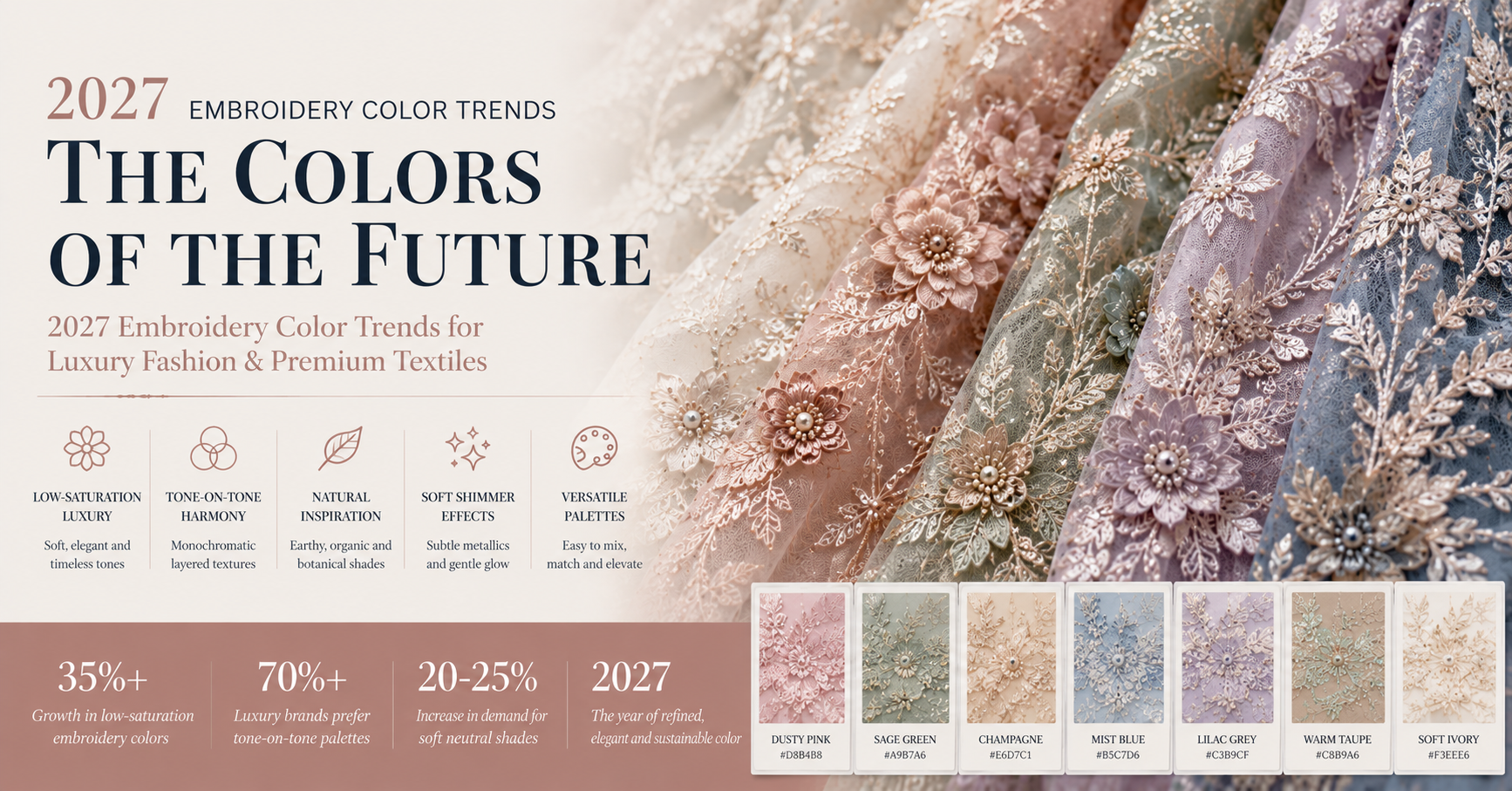
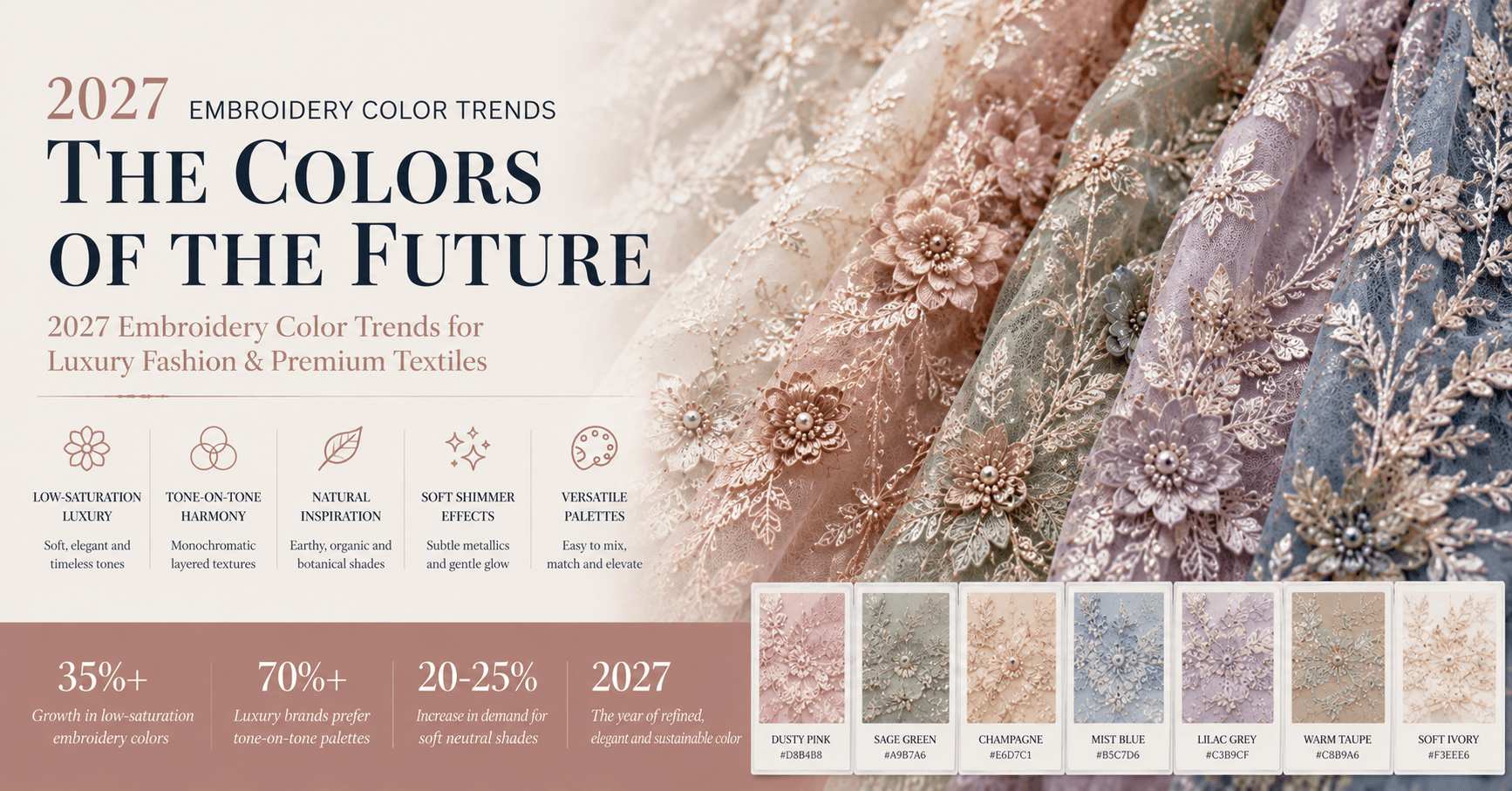
The core takeaway is that 2027's embroidery color trends prioritize subtlety, sophistication, and harmony, aligning with the "quiet luxury" aesthetic dominating bridalwear, couture, and premium ready-to-wear.
Dusty and Muted Tones Lead the Market
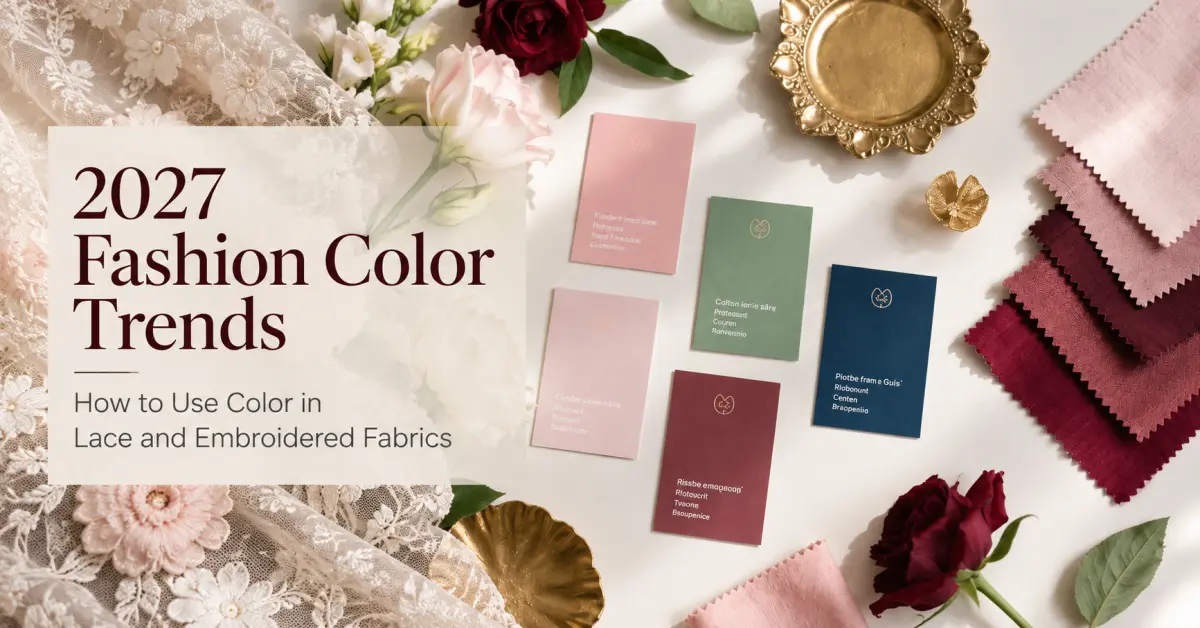
Traditional high-saturation embroidery is giving way to sophisticated, low-intensity colors.
Key Colors to Watch
-
Dusty Pink -- Soft, romantic, suitable for bridal embroidery
-
Mist Blue -- Subtle cool tones ideal for eveningwear
-
Sage Green -- Natural and calming, fits botanical embroidery
-
Sand Beige & Ash Lavender -- Neutral bases that enhance layered textures
Why these colors are gaining popularity:
-
They enhance fabric layering and embroidery dimension
-
They reduce visual clutter in highly detailed embroidery patterns
-
They photograph better for digital and social media presentation
Market Insight: High-end European bridal suppliers predict that low-saturation tones will account for over 55% of premium embroidery orders by 2027, reflecting a growing preference for understated luxury.
Monochromatic Embroidery for Sophisticated Texture
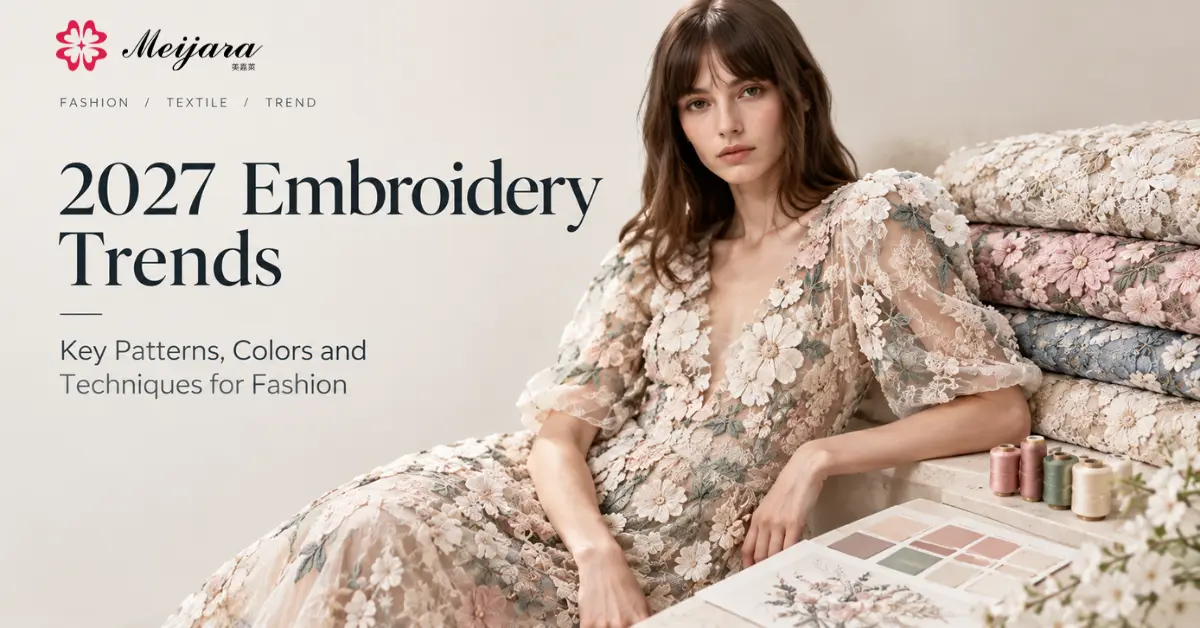
Tone-on-tone embroidery is becoming more prevalent in high-end fashion fabrics. Designers are layering the same hue with varying thread finishes, including:
-
Matte vs. glossy threads
-
Subtle metallic vs. standard yarn
-
Transparent vs. opaque sequins
Benefits
-
Enhances three-dimensional effect without overwhelming the design
-
Allows integration of multiple decorative techniques (beads, cords, sequins) seamlessly
-
Reduces visual noise while increasing perceived fabric quality
Data Insight: Brands that adopt monochromatic embroidery report up to 30% faster sampling approval because the visual harmony reduces pattern revision cycles.
Soft Metallic and Pearlescent Effects
Metallic threads remain popular, but in 2027 they are being applied more subtly.
-
Matte gold and silver threads replace high-gloss variants
-
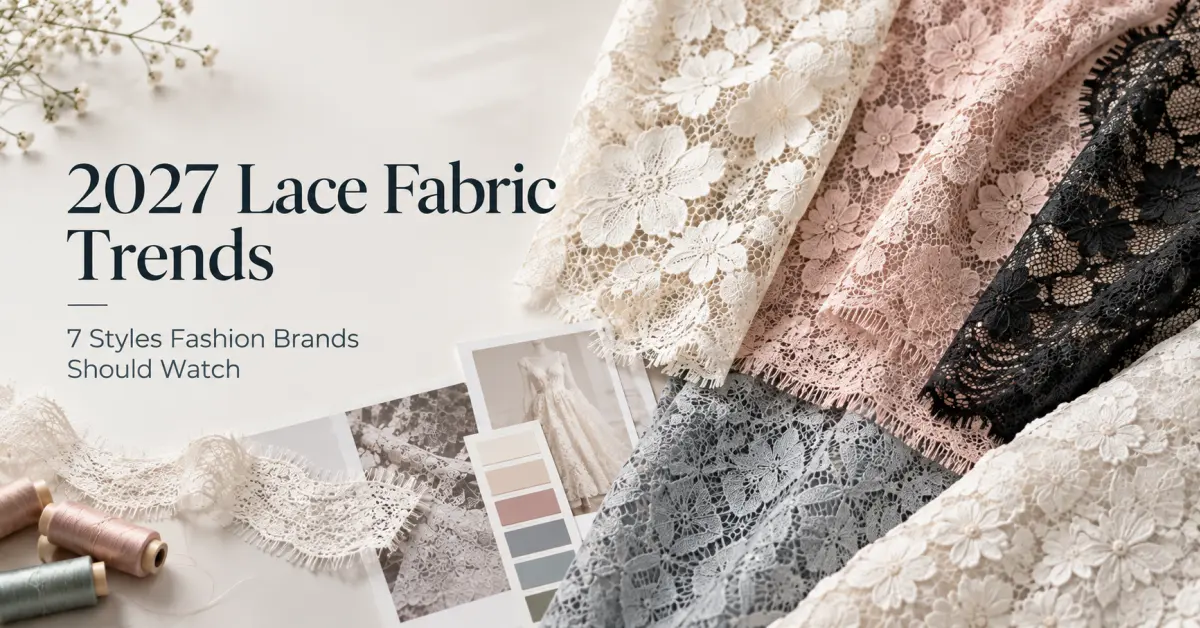
Pearlescent white and soft iridescence are favored for luxury bridal lace
-
Micro-beads with reflective coatings complement embroidery subtly
Advantages
-
Adds luxury feel without overpowering delicate fabrics
-
Harmonizes with desaturated palettes for contemporary elegance
-
Works well with layered 3D embroidery for depth and light interaction
Trend Data: Soft metallic thread usage in high-end bridal lace is expected to increase by 20–25% YoY through 2027. Explore our multi-color embroidery and sequins and beads embroidery collections.
Digital and AI-Assisted Color Precision
Advanced embroidery machinery now allows brands to design color gradients and subtle blends with unprecedented precision.
-
AI-driven embroidery software can adjust thread density, placement, and hue to create seamless color transitions
-
Color management systems ensure accurate reproduction across production runs
-
Predictive simulation helps designers visualize final effects before manufacturing
Example: A couture bridal brand uses AI-assisted color planning to blend 4 shades of dusty pink seamlessly across 3D floral embroidery, reducing manual trial-and-error by 40%.
Sustainability Driving Color Choices
Eco-conscious production influences both the dyes and thread types used in embroidery.
-
Low-impact pigments are replacing traditional chemical dyes
-
Recycled and biodegradable embroidery threads are integrated
-
Colorfastness and visual quality are maintained through advanced dyeing techniques
Market Insight: B2B buyers report that fabrics using eco-friendly pigments now represent over 30% of all high-end embroidery fabric orders, reflecting both regulatory pressure and consumer demand. Visit our sustainability section.
Regional Influences on 2027 Color Trends
Europe
-
Preference for muted, pastel, and monochromatic layers
-
Focused on bridal and couture embroidery
North America
-
Slightly more contrast and metallic highlights
-
Integration with digital printing and mixed-media fabrics
Asia
-
Emphasis on subtle iridescent effects and soft metallic threads
-
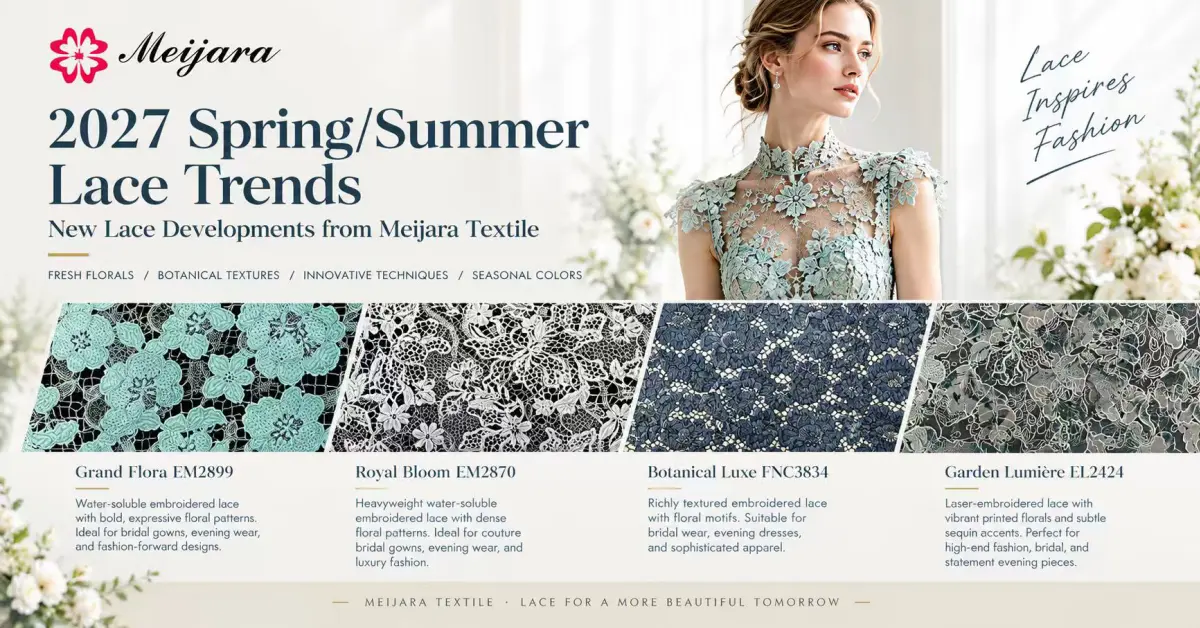
Growing demand for lightweight, layered embroidery fabrics. Explore our water-soluble embroidery.
Practical Applications for Fashion Brands and B2B Buyers
Bridal and Couture
-
Desaturated and monochromatic tones dominate for premium appeal
-
Subtle metallic threads enhance luxury perception
-
3D embroidery paired with soft color gradients increases visual depth
Ready-to-Wear and Small-Batch Collections
-
Monochromatic layering allows fast adaptation across sizes and styles
-
Soft metallic highlights create visual interest without overproduction
-
Eco-friendly pigments appeal to sustainability-conscious consumers
Key Takeaway
Color is no longer merely decorative — it is an integral part of fabric functionality, branding, and luxury perception.
Conclusion
The 2027 embroidery color landscape is defined by subtlety, sophistication, and intelligent integration with modern manufacturing technologies. Key trends include:
-
Dusty, muted, and low-saturation palettes
-
Monochromatic layering for dimensional texture
-
Soft metallic and pearlescent embellishments
-
AI-assisted color precision for production consistency
-
Sustainable dyes and eco-friendly threads
For fashion brands and B2B buyers, understanding these color trends is essential to ensure both aesthetic impact and production efficiency. Embroidery fabrics that align with these trends will dominate the luxury and premium fashion market in 2027.
Ready to bring 2027 color trends to your collection? Visit our homepage to explore our collections or contact us for inquiries. You may also submit an inquiry for custom pricing.