

The global embroidery fabric industry is entering a major transformation period. By 2027, embroidery fabrics will no longer be defined only by decorative aesthetics — they will increasingly represent a combination of advanced manufacturing technology, sustainable material innovation, intelligent production systems, and evolving luxury consumer preferences.
Over the past decade, embroidery fabrics have shifted from traditional heavy decorative textiles toward lighter, more dimensional, digitally engineered, and commercially versatile materials. This transformation is being accelerated by several major market changes:
-
The rise of lightweight luxury fashion
-
Faster fashion development cycles
-
Increasing demand for customization
-
Expansion of small MOQ production
-
Growth of bridal and occasionwear markets
-
Sustainability regulations in Europe and North America
-
AI-driven manufacturing technologies
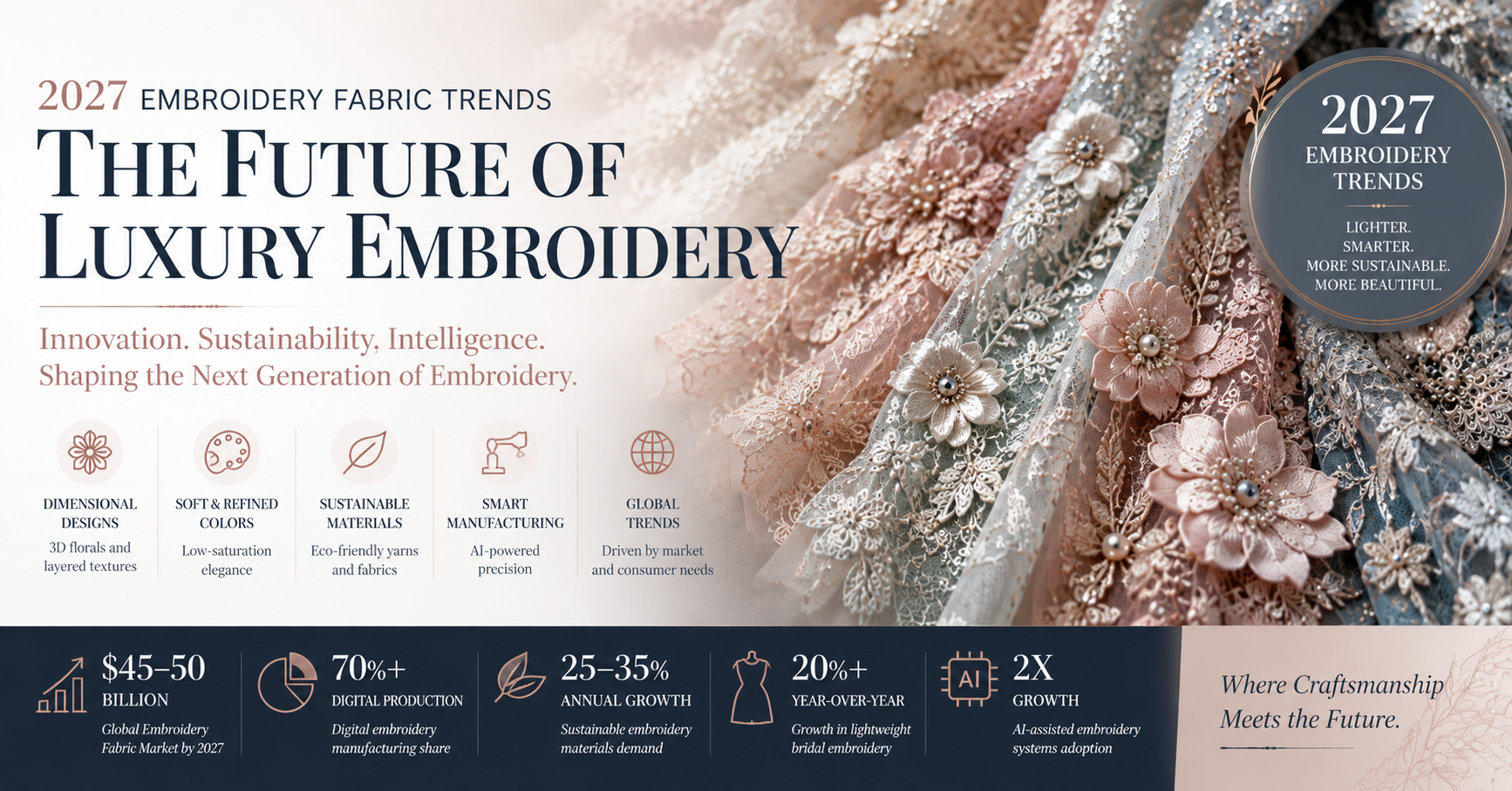
According to multiple textile industry forecasts, the global embroidery fabric market is expected to exceed USD 45–50 billion by 2027 with premium embroidered lace and decorative fabrics accounting for a rapidly growing percentage of high-end apparel production.
At the same time:
-
Digital embroidery production is expected to represent over 70% of luxury embroidery manufacturing
-
Sustainable embroidery materials are forecasted to grow by 25–35% annually
-
Lightweight bridal embroidery demand is projected to increase by more than 20% year-over-year
-
AI-assisted embroidery manufacturing adoption is expected to double between 2025 and 2027
For fashion brands, lace manufacturers, bridal suppliers, and B2B buyers, understanding these trends is critical for future product development and sourcing strategies.
The Most Important Embroidery Fabric Trends in 2027
The embroidery industry in 2027 will be shaped by seven major directions:
| Trend Category | Key Industry Shift |
|---|---|
| Embroidery Patterns | More dimensional and breathable structures |
| Color Direction | Sophisticated low-saturation palettes |
| Material Development | Lightweight and sustainable materials |
| Decorative Techniques | Multi-process hybrid embroidery |
| Manufacturing | AI-assisted smart production |
| Market Demand | Smaller MOQ and faster development |
| Luxury Fashion | Quiet luxury and texture-driven aesthetics |
The core keywords defining embroidery fabrics in 2027 will include:
-
Lightweight Luxury
-
Dimensional Embroidery
-
Sustainable Decoration
-
Intelligent Manufacturing
-
Transparent Layering
-
Hybrid Surface Design
-
Soft Reflective Effects
-
Precision Customization
1. Embroidery Pattern Trends in 2027: From Dense Decoration to Spatial Design
One of the biggest shifts in embroidery fabric development is the transformation of embroidery layout philosophy.
For many years, luxury embroidery was associated with dense floral coverage, heavy embellishment, full-surface embroidery, and large-scale decorative saturation.
However, by 2027, the industry is moving toward a more refined and spatial aesthetic.
Large Negative Space Embroidery Will Dominate Premium Markets
Modern luxury consumers increasingly prefer embroidery designs that feel lighter, more breathable, more sophisticated, and less visually overwhelming.
As a result, embroidery layouts with large transparent areas are becoming dominant in bridalwear and couture fashion.
Why Negative Space Embroidery Is Growing
This design direction improves visual luxury perception. Minimal embroidery placement often appears more premium because it emphasizes fabric transparency, embroidery precision, structural balance, and fine detailing rather than excessive decoration.
Garment movement and softness also improve. Less embroidery density allows fabrics to flow more naturally, drape more softly, and feel lighter during wear. This is especially important in bridal gowns, couture dresses, and luxury eveningwear.
Better photography performance is another driver. Modern bridal fashion is heavily influenced by social media and digital photography. Negative space embroidery performs exceptionally well in backlit photography, motion shots, layered fabric imaging, and soft-focus visual styling.
According to European bridal market reports, open-layout embroidery fabrics are expected to account for more than 55% of premium bridal embroidery developments by 2027.
Ultra-Dimensional 3D Floral Embroidery Will Continue Expanding
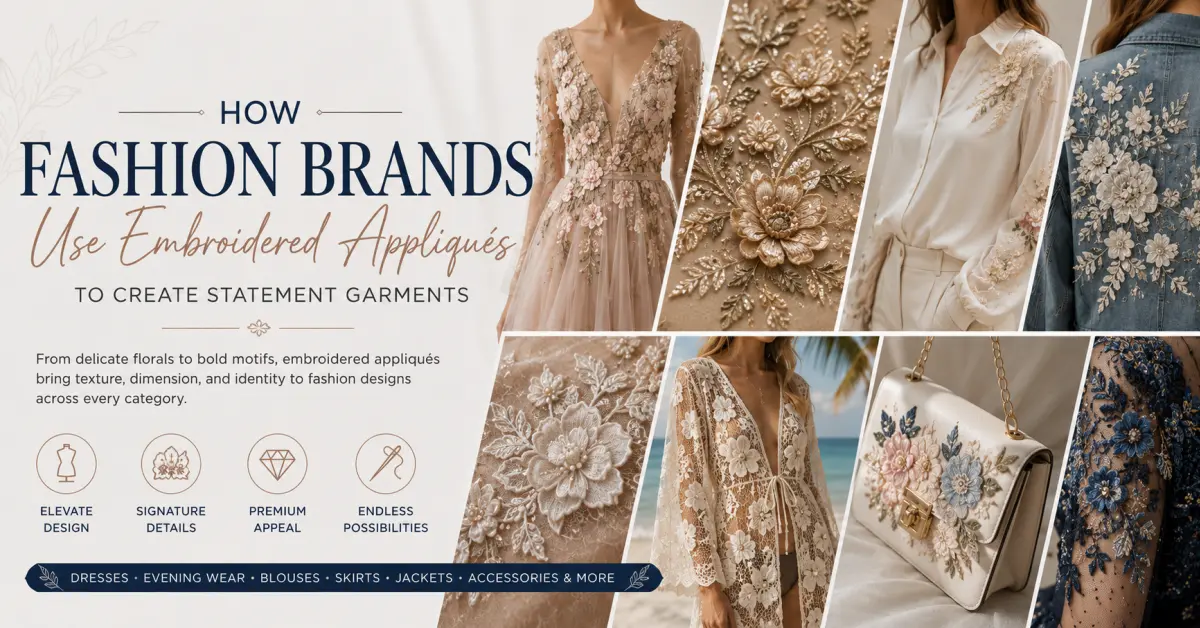
3D embroidery is no longer a niche decorative technique — it has become one of the defining characteristics of premium embroidery fabrics.
However, the direction of 3D embroidery is evolving significantly.
| Traditional 3D Embroidery | 2027 Direction |
|---|---|
| Thick and heavy petals | Ultra-lightweight structures |
| Dense layered flowers | Airy dimensional layouts |
| Large floral clusters | Controlled localized accents |
| Stiff decorative forms | Soft movable floral elements |
Key 3D Embroidery Innovations for 2027
Heat-pressed dimensional petals using thermal shaping technologies allow embroidery petals to maintain curved structures, controlled volume, and natural movement without excessive fabric weight.
Laser-cut organza flowers enable cleaner petal edges, more delicate transparency, and better dimensional layering, especially on bridal embroidery fabrics. Explore our laser embroidery options.
Floating floral structures — partially unattached floral motifs that move naturally with garment motion — create a more couture-like appearance.
Micro-bead dimensional embroidery uses micro pearls, transparent micro-beads, and soft reflective bead structures to create subtle texture variation rather than using large decorative beads.
Market Data for 3D Embroidery
Global luxury bridal suppliers estimate that 3D embroidery demand will continue growing at approximately 18–25% annually through 2027, particularly in Middle Eastern bridal markets, European couture fashion, and North American luxury bridalwear.
Botanical and Organic Embroidery Designs Will Replace Geometric Over-Structuring
Highly geometric embroidery patterns dominated many fashion collections between 2020–2024.
By 2027, the market is shifting back toward organic floral structures, natural vine embroidery, wildflower-inspired layouts, and botanical lace aesthetics.
Why Natural Embroidery Is Returning
Consumers increasingly associate natural-inspired embroidery with authenticity, soft femininity, handcrafted luxury, and emotional warmth. This shift aligns closely with the broader "quiet luxury" movement.
Most Popular Organic Embroidery Structures
Expected leading embroidery themes include vine lace embroidery, garden floral structures, asymmetrical flower placement, layered botanical motifs, and soft branch embroidery rather than rigid symmetrical patterns.
Color Trends in Embroidery Fabrics for 2027
Color direction in embroidery fabrics is also evolving rapidly.
The industry is moving away from high saturation tones, strong metallic contrast, and excessively bright embroidery toward softer, more elegant color systems.
Dusty and Desaturated Tones Will Dominate Luxury Embroidery
The strongest embroidery color trend in 2027 will be low-saturation luxury tones.
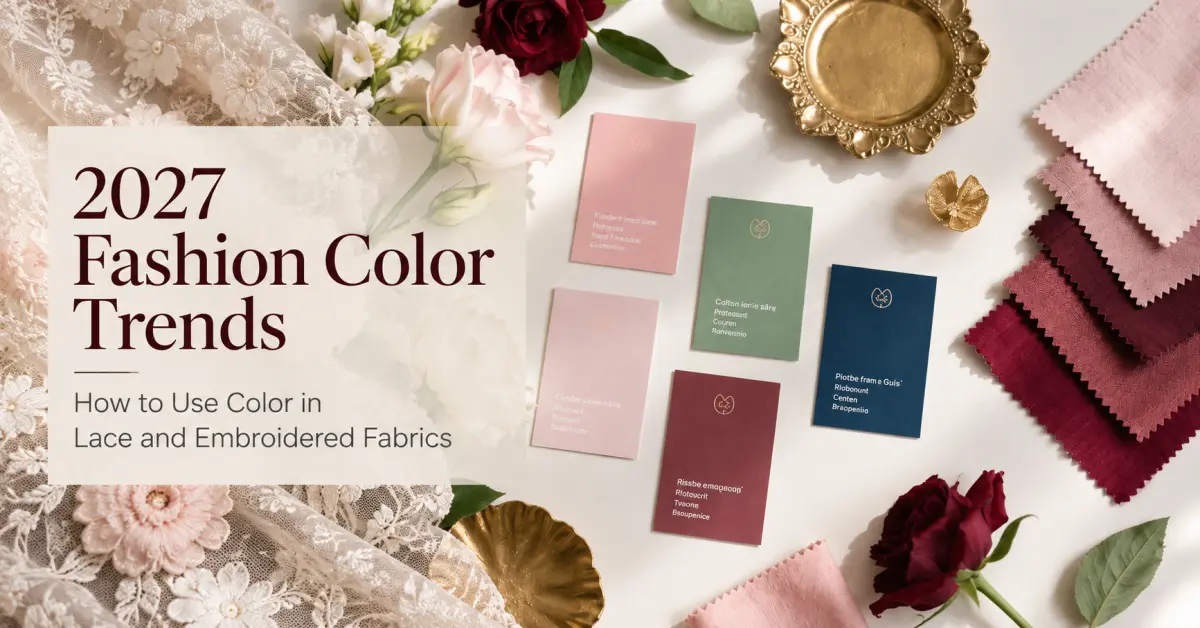
Leading embroidery colors include Dusty Pink, Mist Blue, Sage Green, Sand Beige, Ash Lavender, Soft Champagne, Warm Ivory, and Stone Grey.
Why Low-Saturation Colors Are Growing
These colors provide better luxury perception as muted colors appear more refined, more expensive, and more timeless, especially under soft lighting conditions.
Improved layering capability allows low-saturation embroidery to integrate more naturally with tulle, organza, soft mesh, and transparent fabrics, allowing smoother visual transitions.
Better social media and photography performance — muted embroidery tones perform better in digital photography, bridal campaigns, and cinematic lighting environments than highly reflective bright embroidery.
Market Data
According to European textile forecasting reports, low-saturation embroidery color demand is expected to grow by more than 35% between 2025 and 2027.
Monochromatic Embroidery Structures Will Replace Strong Contrast Embroidery
The embroidery industry is increasingly shifting toward tone-on-tone embroidery, monochromatic embellishment, and same-color layered textures rather than high-contrast decorative effects.
Why Monochromatic Embroidery Feels More Premium
This approach emphasizes texture variation, shadow layering, dimensional depth, and material contrast instead of relying on aggressive color contrast.
Common Monochromatic Decorative Combinations
Luxury embroidery increasingly combines same-color sequins, same-color beads, tone-matched cords, and transparent reflective materials within a single embroidery structure.
Metallic Effects Will Become Softer and More Controlled
Traditional high-shine metallic embroidery is gradually decreasing.
2027 trends favor matte metallic yarns, soft reflective sequins, semi-transparent shimmer effects, and diffused metallic finishes.
Why Soft Metallic Effects Are Growing
Consumers increasingly prefer quiet luxury aesthetics, soft glamour styling, and elegant texture over strong shine. This trend is especially important in couture fashion, bridal embroidery, and luxury eveningwear.
Material Trends in Embroidery Fabrics for 2027
Material innovation will become one of the biggest competitive advantages in embroidery manufacturing.
Lightweight Base Fabrics Will Become Industry Standard
Future embroidery fabrics will focus heavily on weight reduction.
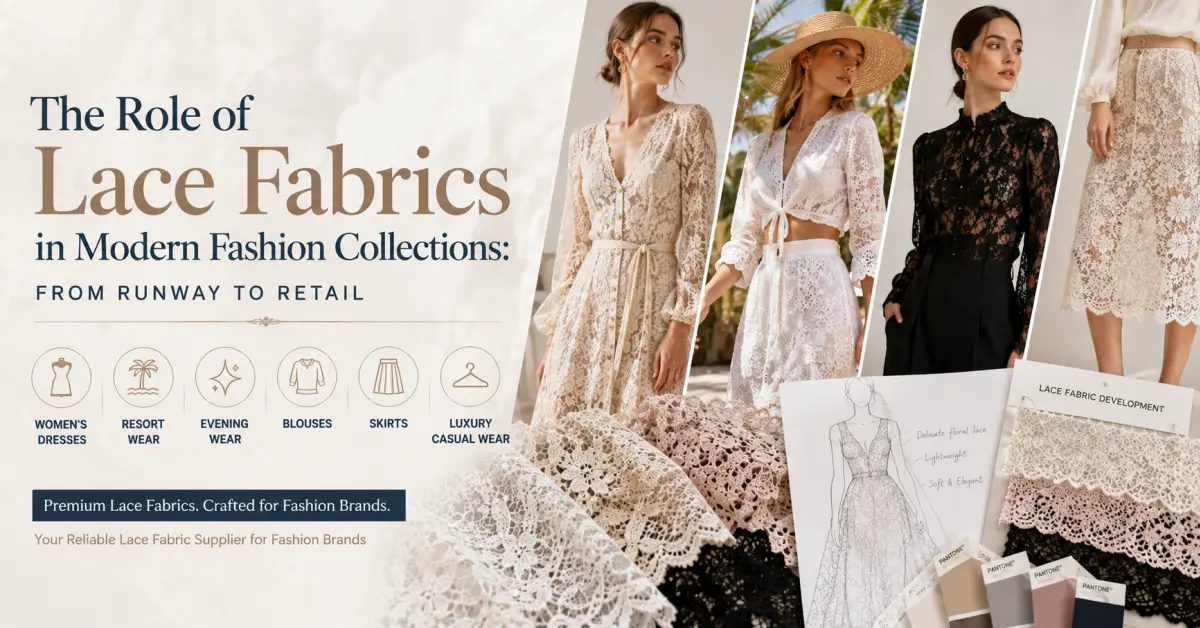
Manufacturers are increasingly using ultra-light tulle, fine mesh structures, invisible netting, and soft transparent bases.
Why Lightweight Embroidery Is Growing
Consumers increasingly prioritize comfort, breathability, soft drape, and wearability, especially in bridalwear.
Industry Data
Luxury bridal brands estimate that lightweight embroidered bridal gowns are growing approximately 22% annually compared with heavier traditional gown structures. Explore our water-soluble embroidery for lightweight options.
Sustainable Embroidery Materials Will Become Mandatory
Sustainability is transitioning from marketing language to actual sourcing requirements.
Many fashion brands now require recycled embroidery yarns, eco-certified mesh bases, bio-based sequins, and water-saving dyeing systems.
Certifications Becoming More Important
By 2027, premium embroidery suppliers will increasingly need GRS certification, OEKO-TEX certification, REACH compliance, and sustainable supply chain reporting.
Why Sustainability Is Reshaping Embroidery Production
European and North American fashion brands are under increasing pressure to reduce carbon emissions, waste generation, non-recyclable materials, and harmful chemical usage. This directly affects embroidery material sourcing. Visit our sustainability section.
Sequins and Beads Will Become Smaller, Softer, and Lighter
Traditional heavy PVC sequins are rapidly losing popularity.
2027 trends favor ultra-thin sequins, matte reflective films, micro-bead embroidery, and lightweight embellishment systems.
Why Lightweight Embellishment Matters
Reducing embellishment weight improves garment comfort, fabric drape, long-term wearability, and shipping efficiency while still maintaining luxury decorative effects. See our sequins and beads embroidery and crystal elegance bead sequin fabric.
Hybrid Decorative Techniques Will Define Premium Embroidery
Single-process embroidery is becoming less competitive.
The future belongs to hybrid decorative manufacturing.
Most Important Hybrid Embroidery Combinations
Luxury embroidery increasingly integrates embroidery + laser cutting, embroidery + digital printing, embroidery + beadwork, embroidery + cording, embroidery + hotfix crystals, and embroidery + 3D molding within a single textile structure.
Why Hybrid Embroidery Is Growing
Hybrid production creates stronger visual complexity, higher perceived value, more distinctive brand identity, and better social media visibility. This is especially important in luxury fashion marketing.
AI and Smart Manufacturing Will Reshape Embroidery Production
AI-assisted embroidery manufacturing is becoming one of the industry's biggest technological shifts.
AI Stitch Optimization Systems
Modern AI embroidery systems can automatically optimize stitch paths, thread density, tension balance, and embroidery sequencing.
This reduces thread breakage, production defects, and material waste.
Factory Efficiency Data
Factories implementing intelligent embroidery systems report:
| Production Area | Improvement |
|---|---|
| Thread Breakage | Reduced by 20–35% |
| Sampling Speed | Improved by 30–50% |
| Material Waste | Reduced by 15–25% |
| Production Stability | Improved by 20% |
High-Speed Servo Embroidery Machines Will Become Standard
Future embroidery equipment will prioritize higher precision, lower vibration, better stitch consistency, and faster production speed, especially for 3D embroidery, water-soluble lace, sequin embroidery, and lightweight mesh embroidery.
Digital Small MOQ Production Will Become Essential
Fashion brands increasingly require faster development cycles, small production runs, rapid style changes, and flexible manufacturing.
Factories unable to support digital small-MOQ embroidery production may struggle to compete in premium markets. Explore our cut piece and processing services. Learn more about OEM custom lace development.
Conclusion
The embroidery fabric industry in 2027 will be shaped by a combination of advanced technology, luxury minimalism, sustainable materials, intelligent manufacturing, and lightweight decorative engineering.
Future embroidery fabrics will become lighter, more dimensional, more environmentally responsible, and more digitally engineered than ever before.
For fashion brands and B2B buyers, choosing embroidery suppliers will increasingly depend not only on price, but also on development capability, equipment technology, smart manufacturing systems, sustainable production standards, and trend forecasting ability.
As embroidery continues evolving from traditional decoration into a high-value technical textile category, manufacturers capable of combining design innovation, intelligent production, and advanced material engineering will become the leaders of the next generation embroidery market.
Ready to stay ahead of 2027 trends? Visit our homepage to explore our collections or contact us for inquiries. You may also submit an inquiry for custom pricing.