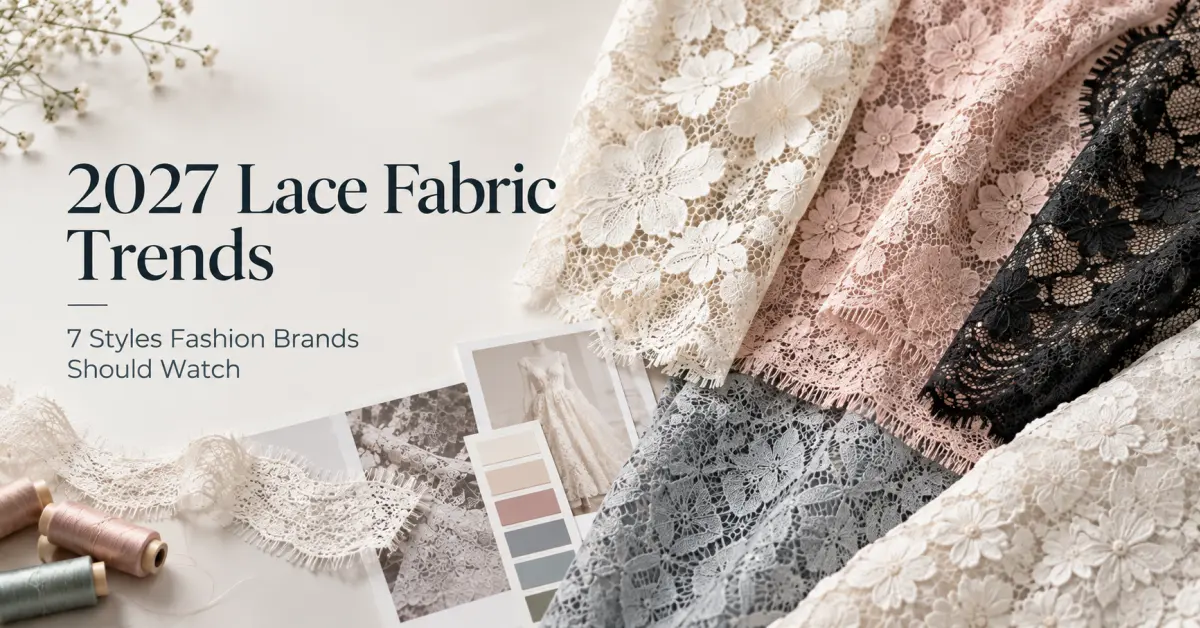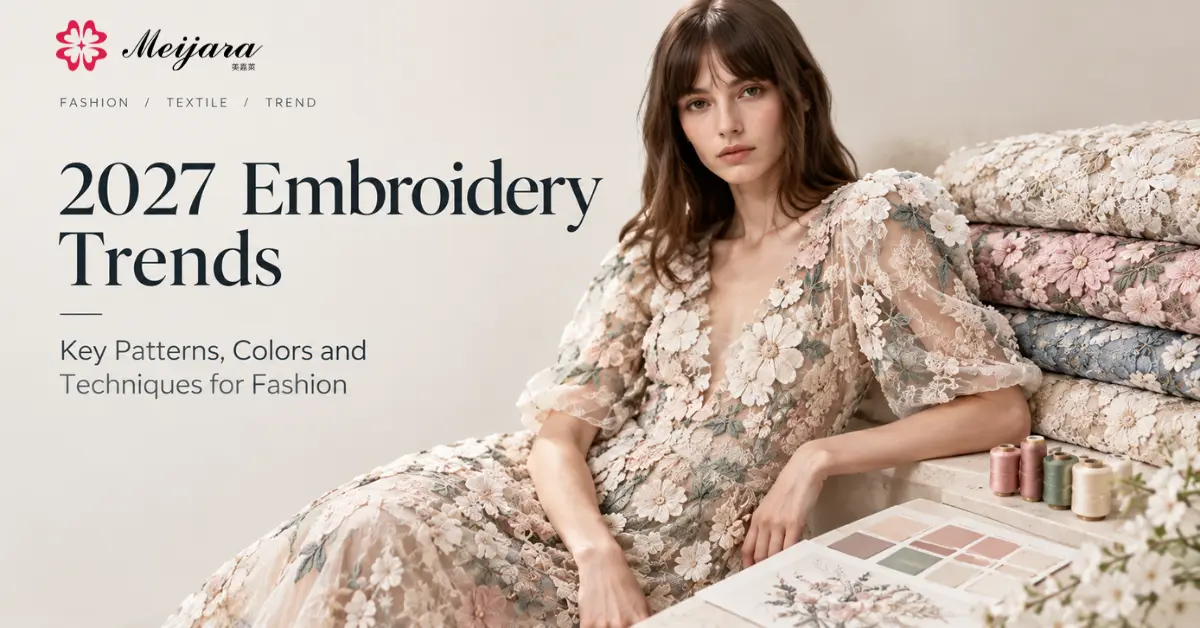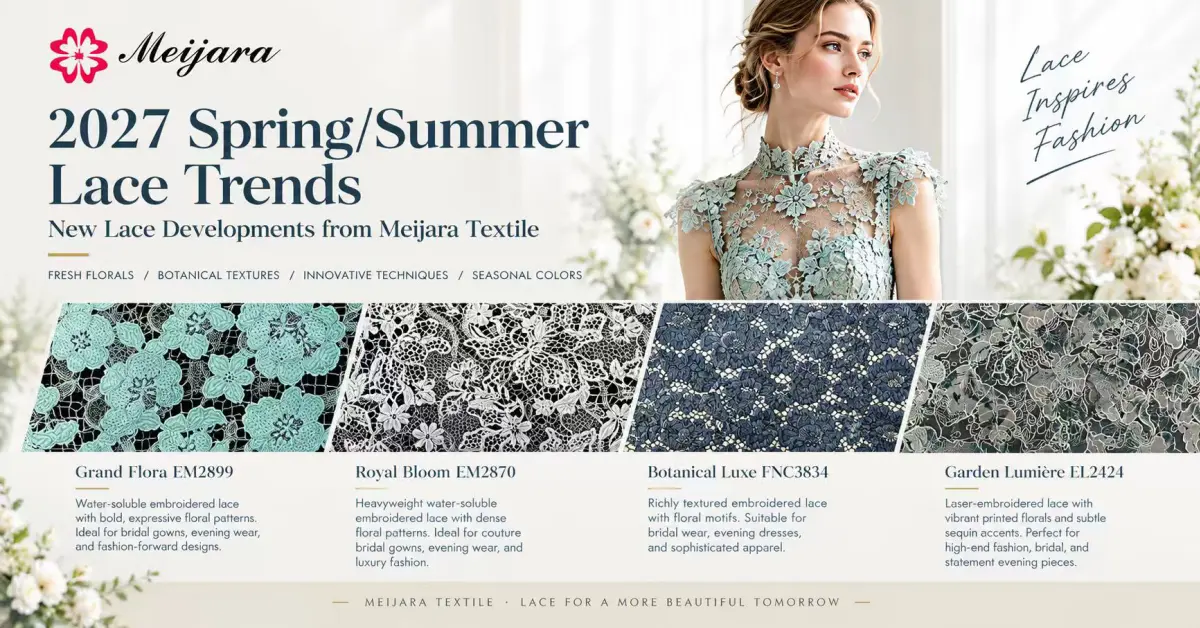


As the global fashion industry moves deeper into digital-driven design and sustainability-focused sourcing, lace fabric continues to evolve from a traditional decorative textile into a high-value design language. For the 2027 Spring/Summer season, lace is expected to play a more structural, expressive, and functional role across womenswear, couture, resort wear, and even street-luxury categories.
This article explores the key lace fabric trends for Spring/Summer 2027, focusing on material innovation, pattern evolution, application scenarios, and sourcing strategies for apparel manufacturers and fashion brands.
Macro Trend: Lace Becomes a "Design Architecture Material"
In 2027 SS collections, lace is no longer limited to trims or overlays. Instead, it is increasingly used as:
-
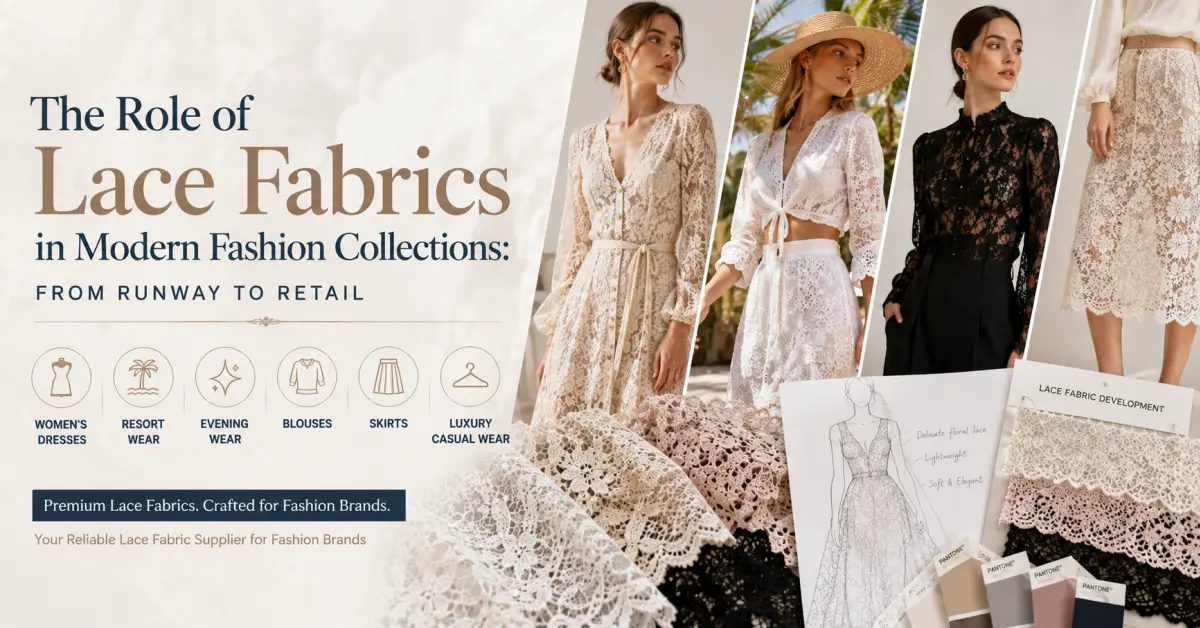
Structural garment base fabric
-
Semi-transparent layering system
-
Sculptural silhouette builder
-
Hybrid material combined with mesh, organza, and 3D embroidery
Designers are treating lace as a fabric architecture tool, rather than simple decoration.
Key insight:
The value of lace is shifting from "visual beauty" to "textural construction."
Transparency & Layering: The Rise of Controlled Sheer Aesthetics
One of the strongest directions for 2027 SS is controlled transparency.
Unlike earlier ultra-sheer trends, the new direction focuses on balance:
-
Strategic opacity zoning (floral + mesh contrast)
-
Layered lace panels with inner linings
-
Mixed-density embroidery structures
-
Skin-revealing but wearable designs
Popular applications:
-
Evening dresses with layered lace skirts
-
Resort tops with semi-sheer floral panels
-
Bridal gowns with structured illusion lace bodices
This creates a more wearable luxury aesthetic suitable for global markets.
Floral Evolution: From Romantic to Abstract Botanical Forms
Floral lace remains dominant, but the design language is evolving:
2027 Floral Lace Directions:
-
Abstract botanical silhouettes
-
Oversized floral motifs with negative space design
-
Micro-floral repeating textures for minimalist collections
-
"Hand-drawn" embroidery simulation effects
Designers are moving away from traditional romantic florals toward artistic botanical abstraction.
3D & Textured Lace: Tactile Surface Becomes a Key Selling Point
Flat lace is no longer enough for premium collections.
2027 SS emphasizes three-dimensional texture engineering, including:
-
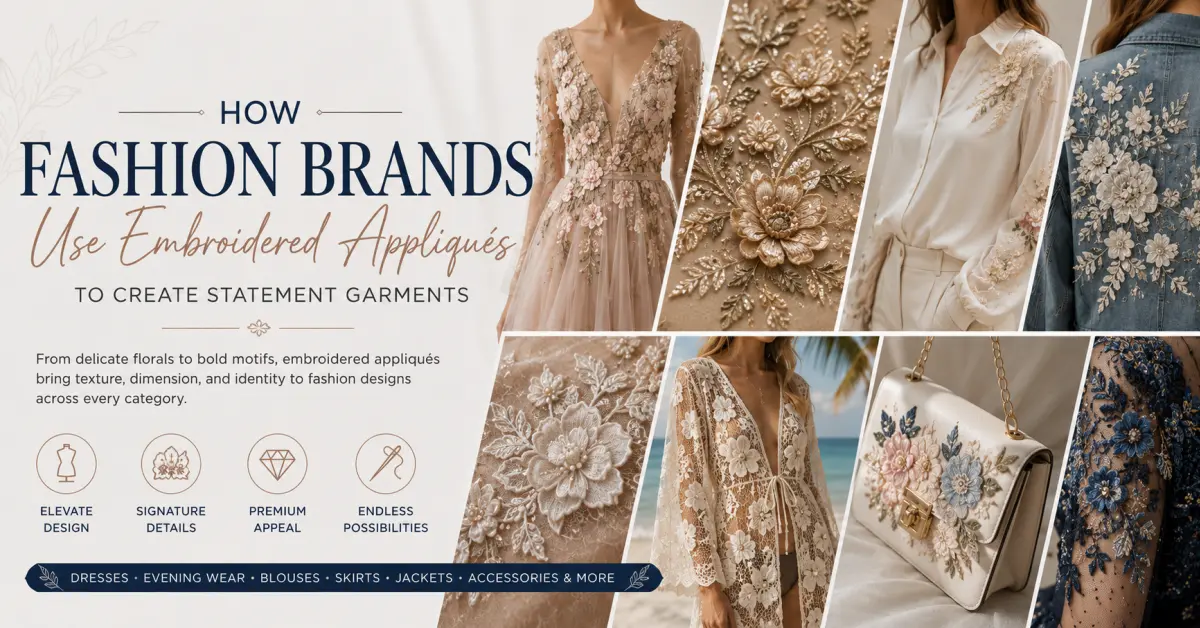
Raised embroidery layering
-
Multi-thread density variation
-
Water-soluble embroidery enhancements
-
Mixed yarn tactile effects. Explore multi-color embroidery.
Result:
Lace fabrics now deliver not only visual impact, but also sensory depth and physical presence.
Sustainable Lace Development: Eco-Conscious Material Innovation
Sustainability is a core requirement for global buyers.
Key directions include:
-
Recycled polyester lace yarns (rPET)
-
Water-soluble embroidery processes with reduced waste
-
Low-water dyeing techniques
-
Chemical-free finishing treatments
-
Lightweight lace for reduced material consumption
Brands are increasingly requesting traceable lace supply chains with environmental certification. Visit our sustainability section.
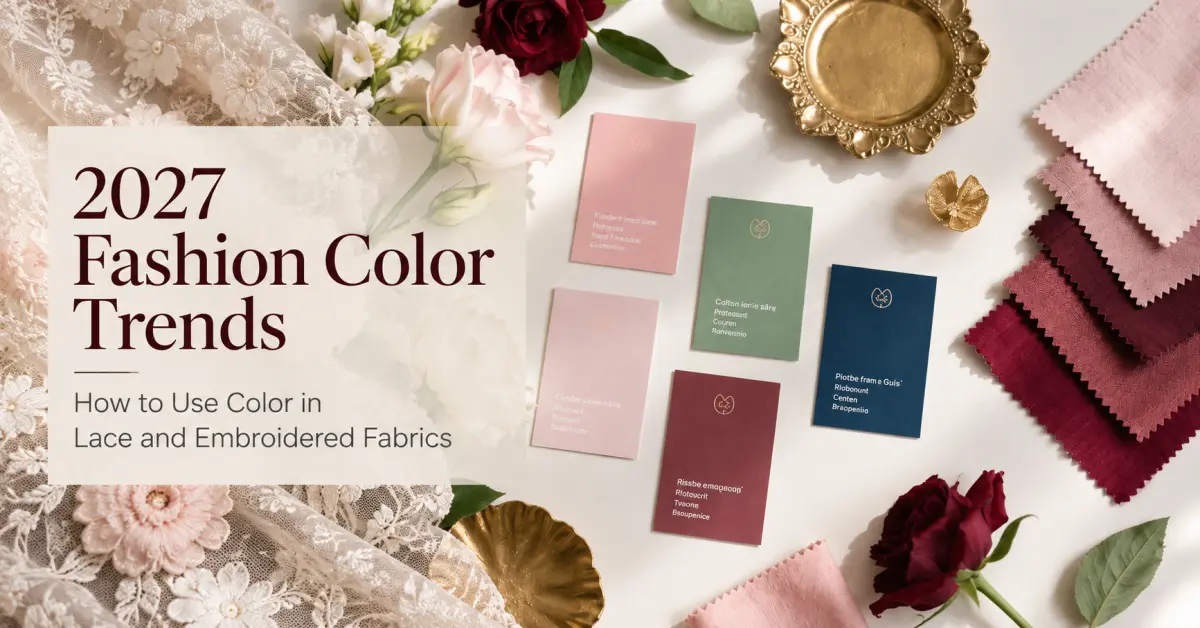
Color Trends for 2027 SS Lace Fabrics
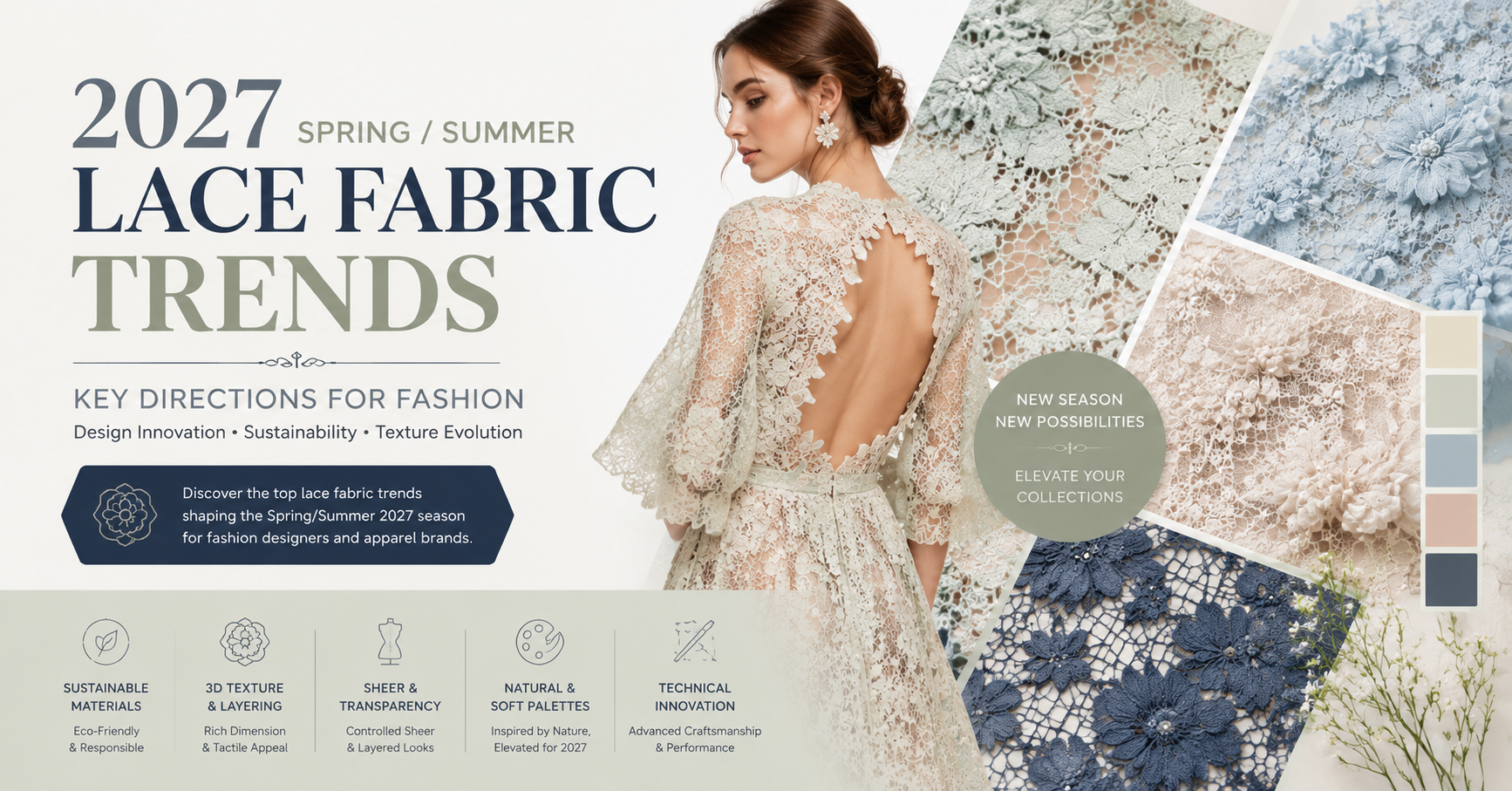
Color direction is shifting toward soft natural palettes combined with expressive accents.
Core palette trends:
-
Ivory & warm white (bridal & couture core)
-
Powder blue & mist tones (romantic minimalism)
-
Sage green & botanical neutrals (eco-luxury)
-
Soft coral & sunset pink (resort collections)
-
Deep ink black lace (high-contrast evening wear)
Key takeaway:
Color is being used to enhance lace structure rather than dominate it.
Application Expansion: Lace Beyond Womenswear
Lace usage is expanding into multiple categories:
-
Bridal & Couture: structured heavy embroidery lace gowns
-
Resort Wear: lightweight breathable lace sets
-
Ready-to-Wear: lace panel tops, skirts, layering pieces
-
Accessories: lace scarves, overlays, decorative inserts
-
Stage & Performance Wear: dramatic oversized lace designs
This diversification increases lace demand across multiple supply chains.
Technical Innovation: New Lace Manufacturing Directions
From a manufacturing perspective, 2027 SS lace development focuses on:
-
High-density computerized embroidery precision
-
Large-width lace production stability
-
Seamless pattern repeat control
-
Improved elasticity in stretch lace
-
Hybrid jacquard + embroidery combinations. Learn about pattern design development.
Factories with advanced machine systems (such as Karl Mayer-based lace machines) will have a competitive advantage in meeting global OEM demand.
Buying Insight: What Apparel Brands Should Focus On
For sourcing teams and designers, the key selection criteria in 2027 include:
-
Pattern uniqueness (exclusive design development capability)
-
Stability in bulk production quality
-
Customization flexibility (color, width, density). Explore customized processes.
-
MOQ adaptability for sampling development
-
Sustainability compliance documentation
Brands are prioritizing long-term supplier collaboration over single-season sourcing.
Conclusion: Lace in 2027 Is a Strategic Design Material
The Spring/Summer 2027 season marks a transformation period for lace fabrics. It is no longer just a decorative textile, but a multifunctional design system combining structure, texture, sustainability, and innovation.
For manufacturers and brands, success will depend on:
-
Strong design development capability
-
Advanced production technology
-
Sustainable material integration
-
Fast-response customization systems
Lace will continue to be one of the most expressive and commercially valuable fabrics in global fashion.
Ready to bring 2027 SS lace trends to your collection? Visit our homepage to explore our collections or contact us for inquiries. You may also submit an inquiry for custom pricing.