

Embroidery Lace as a Core Language of Haute Couture
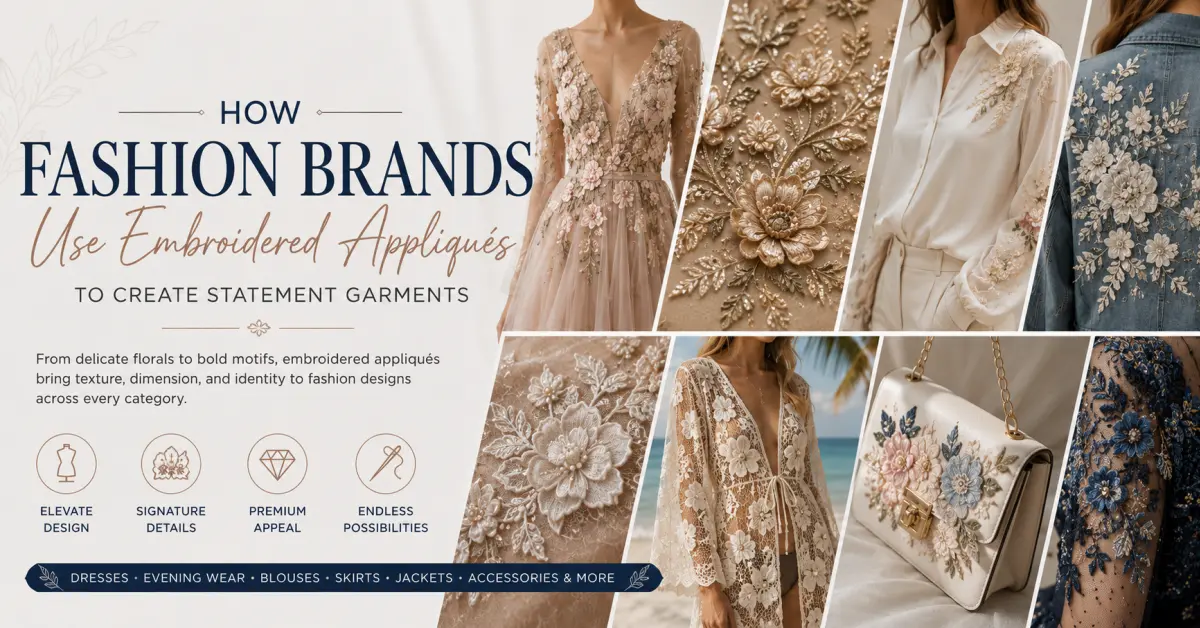
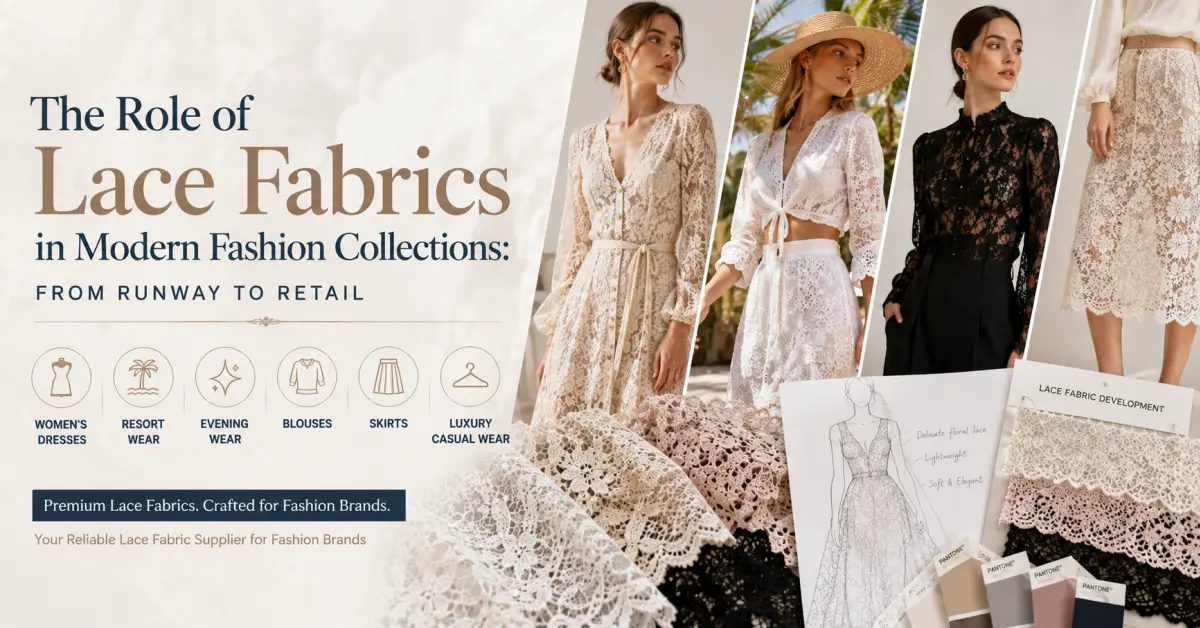
In haute couture, fabric is not just a material—it is a visual language that defines craftsmanship, identity, and artistic expression. Among all textile categories, embroidered lace fabric has always held a unique position due to its ability to combine structure, transparency, and intricate artistry.
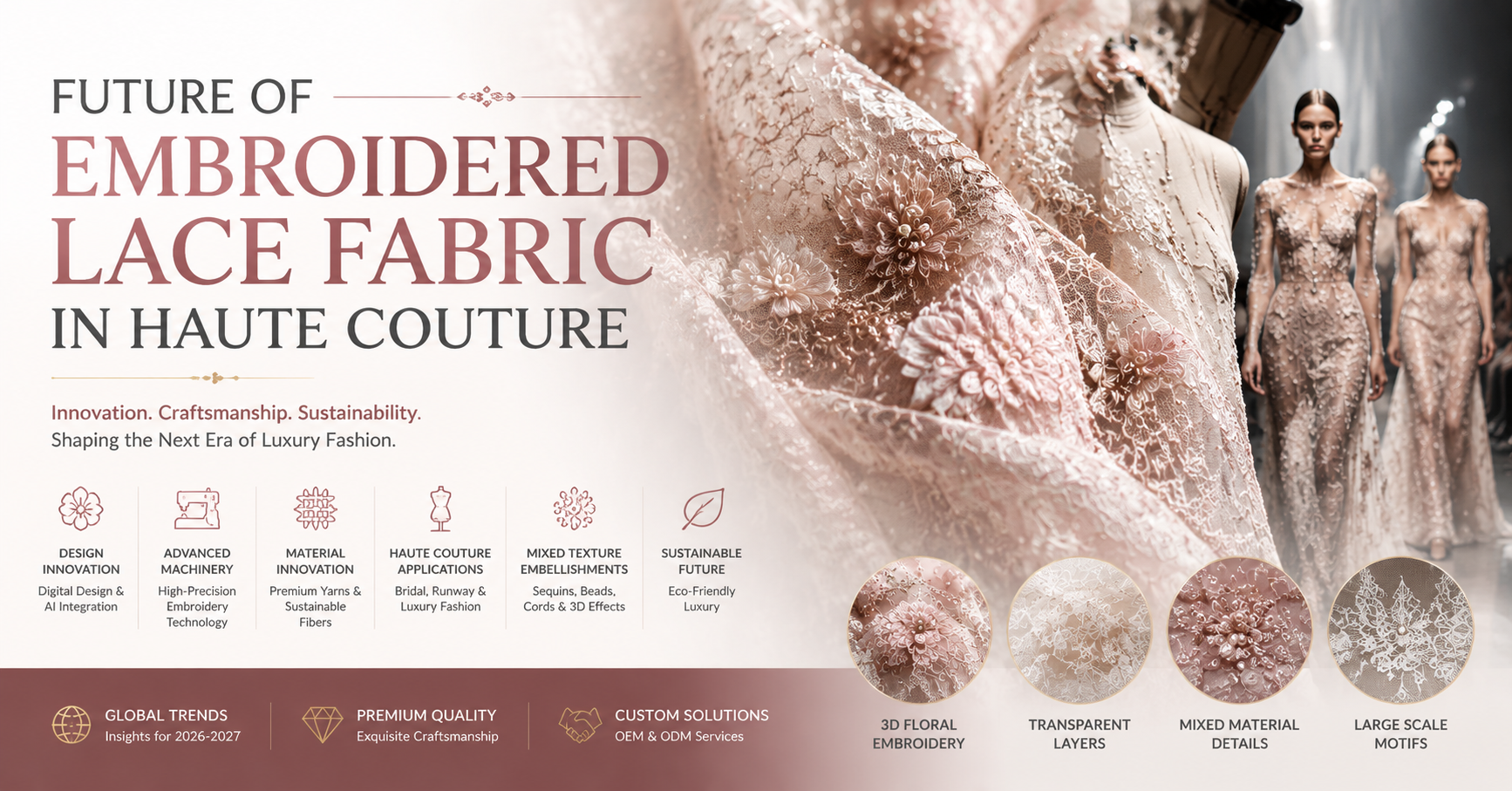
As we move toward 2027 and beyond, embroidered lace is evolving from traditional floral decoration into a highly technical, sustainable, and digitally engineered textile solution used by luxury fashion houses worldwide.
For manufacturers and designers, understanding this evolution is essential to stay competitive in the high-end fashion supply chain.
The Evolution of Embroidered Lace in Haute Couture
Historically, embroidered lace was associated with manual craftsmanship and limited production capacity. However, modern haute couture now integrates advanced machinery and digital design systems.
Today's embroidered lace fabric combines:
-
Computer-aided embroidery programming
-
Multi-thread jacquard systems
-
High-density stitching techniques
-
Hybrid decoration technologies (sequins, beads, cords)
This transformation has significantly expanded design possibilities while maintaining the artisanal appearance required by luxury fashion.
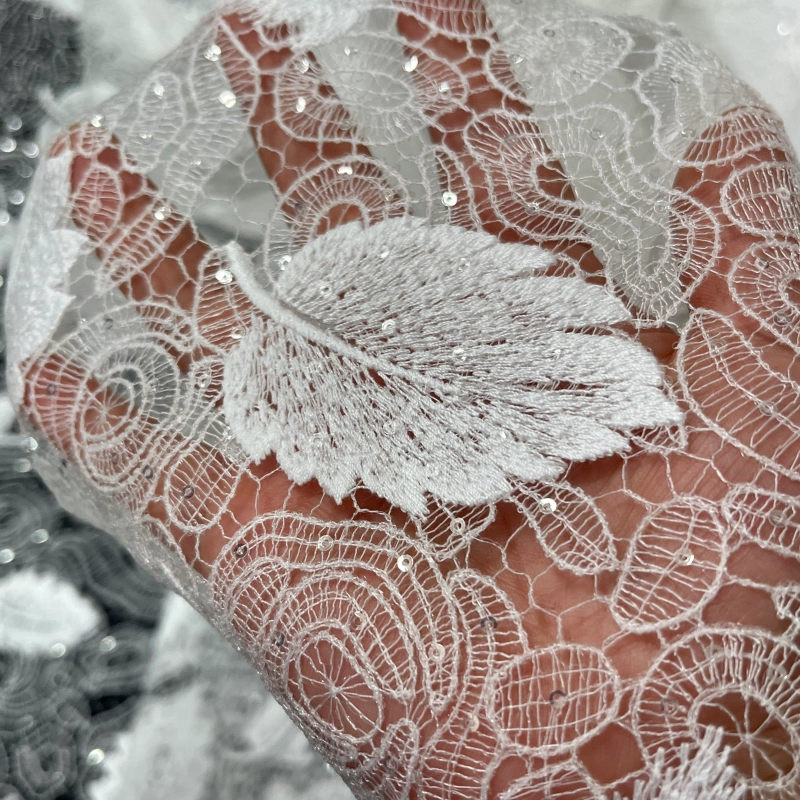
Key Drivers Shaping the Future of Embroidered Lace
Digital Design Integration
Modern lace development increasingly relies on CAD systems and AI-assisted pattern creation.
Key advantages include:
-
Faster design-to-sample cycles (8–15 days on average)
-
Precise motif repetition control
-
Reduced sampling waste
-
Improved customization accuracy for couture clients
Luxury brands now demand exclusive patterns that cannot be replicated, making digital design security an important production factor.
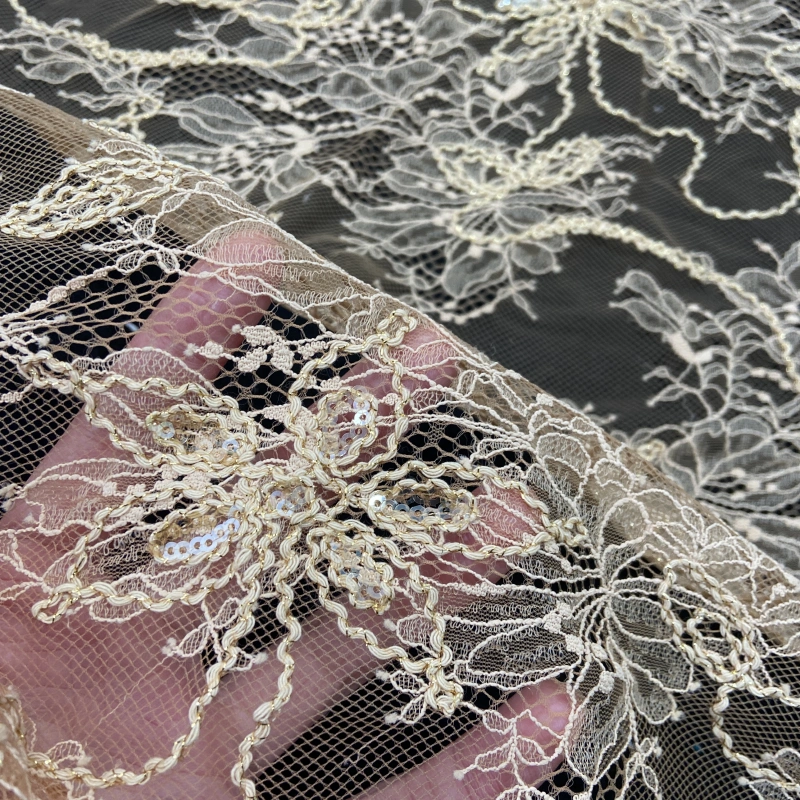
Advanced Embroidery Machinery
High-end embroidered lace production depends heavily on industrial machines such as:
-
Karl Mayer multi-bar raschel systems
-
High-speed embroidery machines
-
Computerized jacquard embroidery units
These machines enable:
-
Fine floral detailing below 0.5 mm stitch resolution
-
Multi-layer embroidery effects
-
3D raised texture structures
Production efficiency has improved by 30–60% compared to traditional methods, allowing couture-level complexity at scalable output. Explore our laser embroidery and multi-color embroidery options.
Material Innovation
Material selection is becoming more experimental in haute couture lace.
Common innovations include:
-
Ultra-fine nylon mesh (10–20D filaments)
-
Recycled polyester yarns (GRS-certified)
-
Metallic and iridescent fibers
-
Soft cotton-silk blended bases
These materials enhance drapability, transparency control, skin comfort, and visual depth under lighting.
Sustainability is also becoming a key requirement, especially for European luxury brands. Visit our sustainability section.
Design Trends in Haute Couture Embroidered Lace (2026–2027)
Oversized Botanical Motifs
Large floral compositions are replacing traditional small repeating patterns.
Characteristics:
-
Single floral elements spanning 20–40 cm
-
Layered petal structures
-
High visual impact on runway garments
This trend aligns with couture's demand for "statement fabrics".
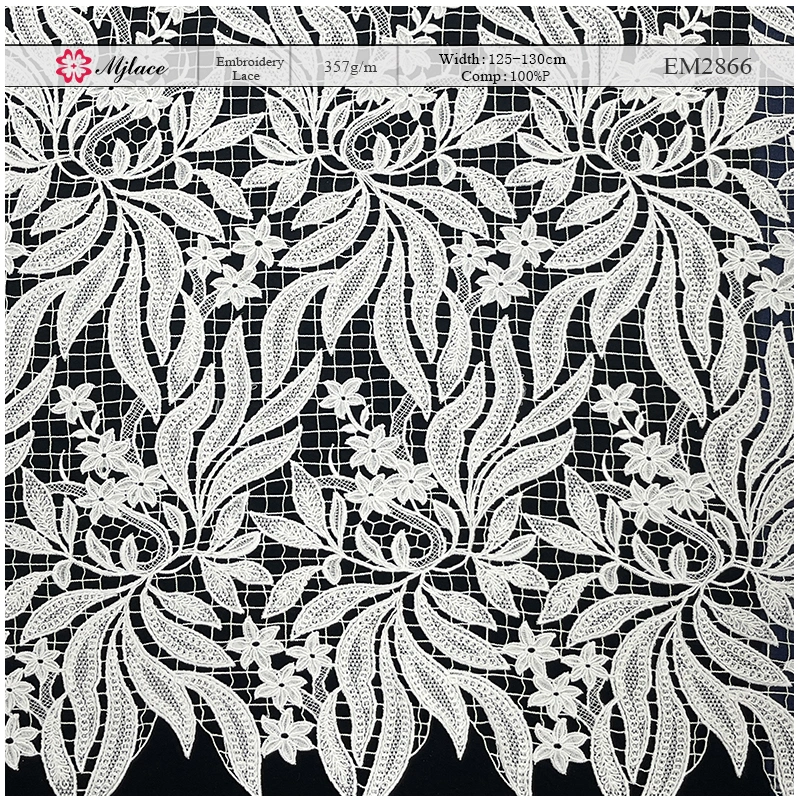
Transparent Layer Construction
Sheer lace layers are being used to create dimensional garments.
Design effects include:
-
Floating embroidery illusion
-
Skin-tone blending
-
Multi-layer depth perception
This technique is widely used in evening gowns and red carpet designs.
Mixed Texture Embroidery
Modern couture lace is no longer flat.
It now integrates:
-
Cord embroidery (raised outlines)
-
Sequin gradients
-
Bead clusters
-
Laser-cut mesh integration
This creates a 3D sculptural textile effect, highly favored by luxury designers. See our sequins and beads embroidery and crystal elegance bead sequin fabric.
Minimalist Luxury Lace
Alongside complex designs, minimal lace is gaining popularity.
Features:
-
Low-density embroidery
-
Monochrome palettes
-
Soft matte finishes
This trend reflects the shift toward quiet luxury aesthetics.
Production Scale and Technical Capability
High-end embroidered lace fabrics are produced in different scales depending on application.
| Category | Width Range | Application |
|---|---|---|
| Lace Trims | ≤10 cm | Garment edges, lingerie |
| Medium Lace Panels | 10–35 cm | Sleeves, bodice accents |
| Full Lace Fabric | 35–150 cm | Dresses, couture garments |
| Large Couture Panels | 150 × 300 cm | Stagewear, runway pieces |
Large-format lace panels (150×300 cm) are especially important for couture houses, enabling uninterrupted motif placement across garments.
Cost Structure of Couture Embroidered Lace
High-end embroidered lace has a complex cost structure:
-
Raw materials: 25–35%
-
Embroidery production: 25–40%
-
Design development: 10–15%
-
Finishing processes: 10–15%
-
Quality control: 5–10%
The embroidery process itself is often the highest cost driver due to machine time and multi-layer detailing.
Sustainability in Couture Lace Manufacturing
Luxury fashion brands are increasingly requiring environmentally responsible production.
Key directions include:
-
GRS-certified recycled yarn usage
-
Water-reduced dyeing processes
-
Energy-efficient embroidery machines
-
Waste optimization through digital sampling
By 2027, sustainable lace is expected to represent over 40% of premium lace sourcing demand in Europe.
Applications in Haute Couture Fashion
Embroidered lace is widely used in:
-
Red carpet evening dresses
-
High-fashion runway collections
-
Luxury lingerie lines
-
Editorial fashion styling
Its ability to combine transparency, structure, and ornamentation makes it indispensable in luxury garment construction.
Conclusion: The Future is Hybrid, Digital, and Sustainable
The future of embroidered lace fabric in haute couture is defined by three major forces:
-
Digitalized design systems
-
Advanced embroidery machinery
-
Sustainable material innovation
As luxury fashion becomes more experimental and environmentally conscious, embroidered lace will continue evolving into a high-tech, customizable, and design-driven textile category.
For manufacturers like Meijara Textile, this represents not only an opportunity but also a responsibility—to deliver innovation while preserving the artistry of lace craftsmanship.
Ready to explore couture lace solutions for your brand? Visit our homepage to learn more or contact us for inquiries. You may also submit an inquiry for custom pricing.