
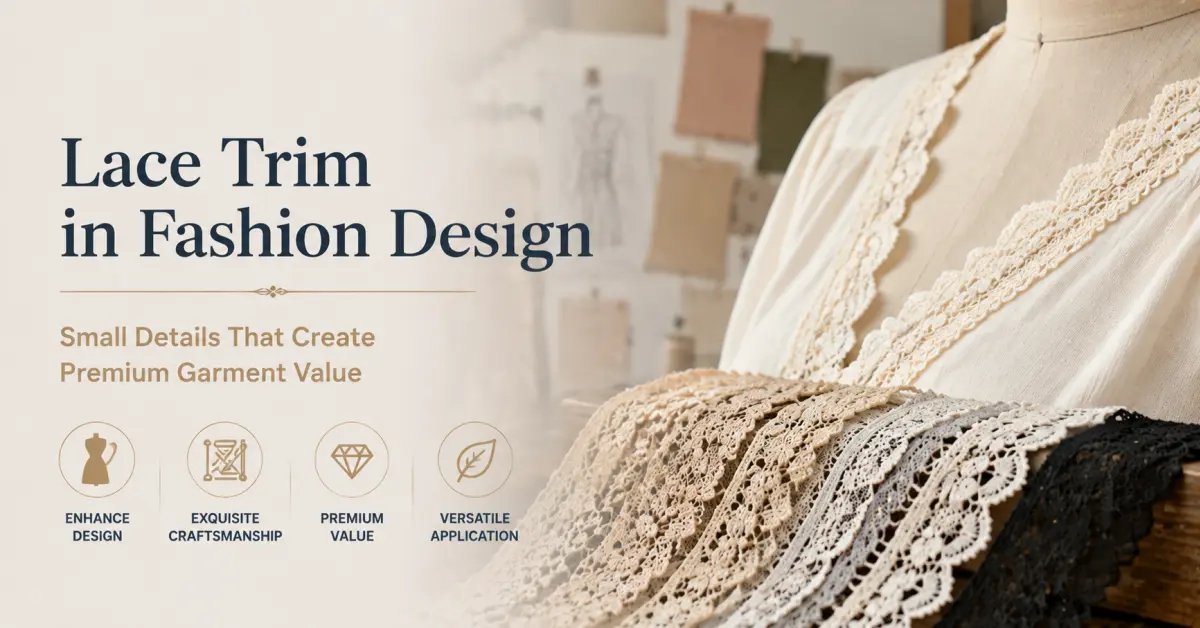

In modern fashion design, premium garments are no longer defined only by silhouette, fabric selection, or color. Increasingly, designers and fashion brands are focusing on smaller construction details that create a unique visual identity and improve product value.
Among these details, lace trim has become one of the most versatile decorative elements used in apparel design.
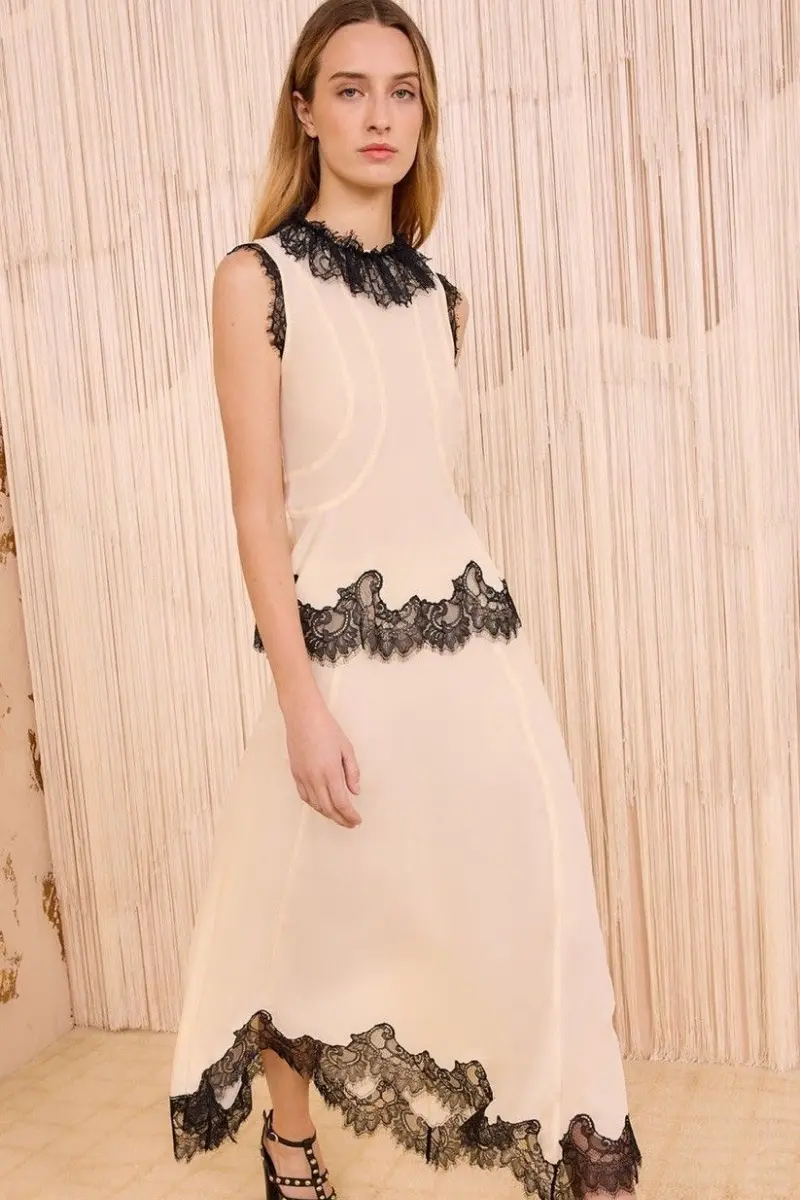
From luxury dresses and contemporary womenswear to lingerie, resort collections, and ready-to-wear garments, lace trim provides designers with a practical way to introduce texture, elegance, and craftsmanship without significantly changing the garment structure.
For global fashion brands, selecting the right lace trim supplier is not simply about purchasing decorative materials. It involves finding a manufacturing partner that understands design requirements, fabric compatibility, production consistency, and large-scale supply capability.
As a professional lace manufacturer in China, MJlace works with fashion brands, garment manufacturers, and wholesalers worldwide to develop customized lace trims that match different design concepts and production requirements.
This article explores how lace trim contributes to fashion design, how factories produce customized lace trims, and why high-quality lace trim can significantly increase garment value.
What Is Lace Trim In Fashion Design?
Lace trim is a decorative lace element designed primarily for garment finishing, edge decoration, and visual enhancement.
Unlike full lace fabric, which is commonly used as the main garment material, lace trim is usually applied to specific areas of a garment, including:
-
neckline edges
-
sleeves
-
cuffs
-
hems
-
waistlines
-
pockets
-
collars
-
lingerie details
-
decorative panels
Because lace trim requires less material than full lace fabric, it allows designers to achieve premium visual effects while maintaining cost efficiency.
For fashion manufacturers, this makes lace trim an important solution for creating differentiated products.
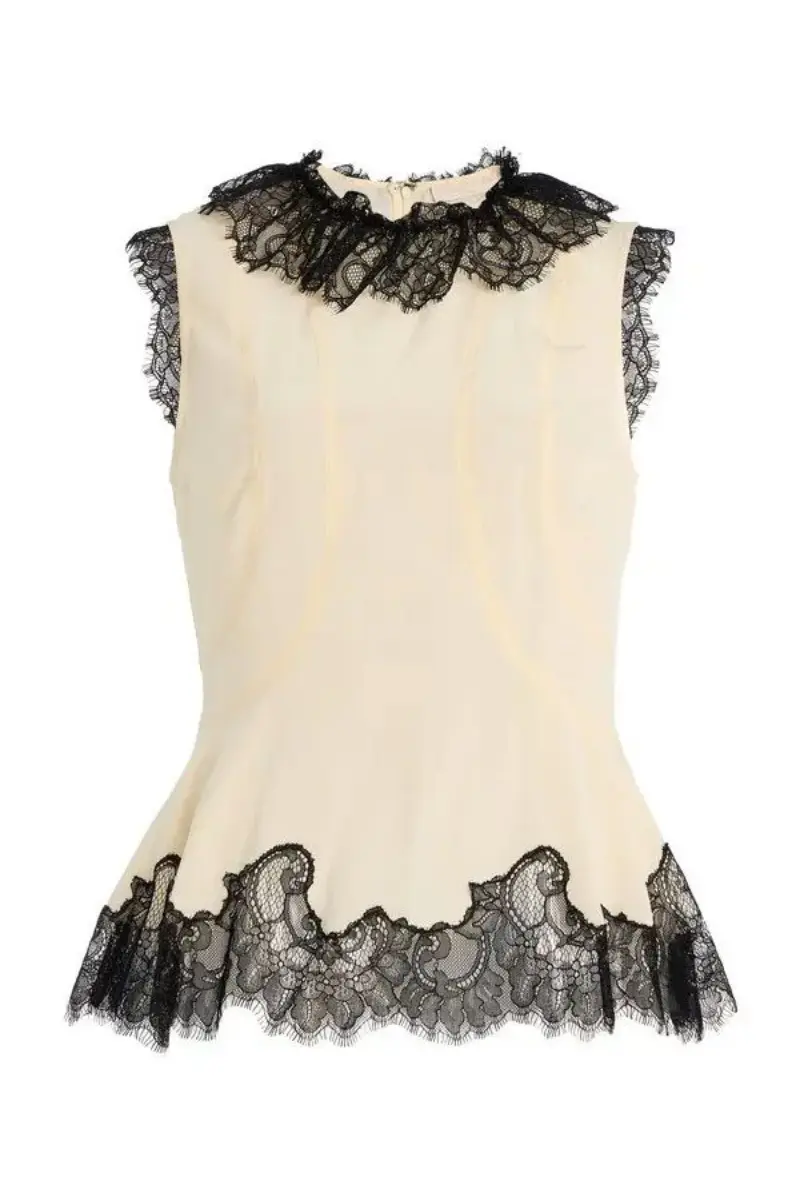
A simple cotton dress, silk blouse, or casual garment can achieve a completely different appearance by adding carefully selected lace trim.
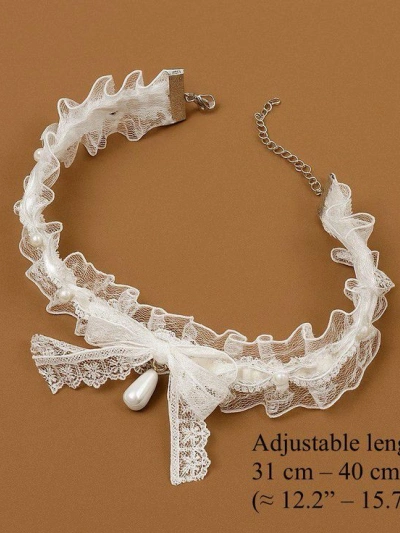
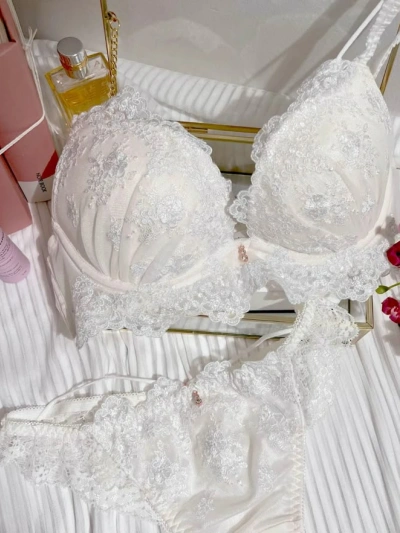
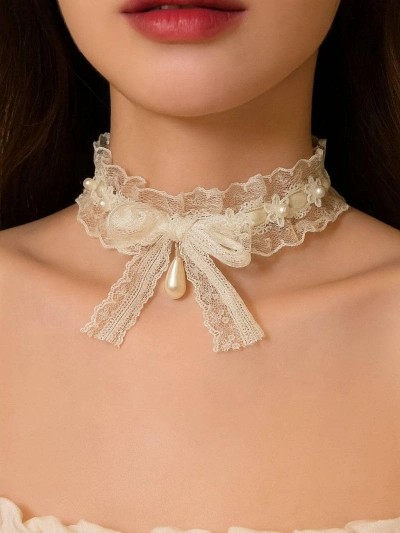
Lace Trim vs Lace Fabric: What Is The Difference?
Many buyers confuse lace trim with lace fabric. Although both are produced using lace techniques, their applications are different.
| Feature | Lace Trim | Lace Fabric |
|---|---|---|
| Main Usage | Decoration and finishing | Full garment construction |
| Application Area | Edges, collars, sleeves, details | Dresses, skirts, overlays |
| Material Consumption | Lower | Higher |
| Production Cost | More flexible | Higher investment |
| Design Function | Adds visual highlights | Creates garment structure |
| Customization | Pattern, width, edge shape | Pattern, density, fabric structure |
For fashion brands, combining lace fabric with lace trim is often an effective strategy to create layered and premium collections.
For example:
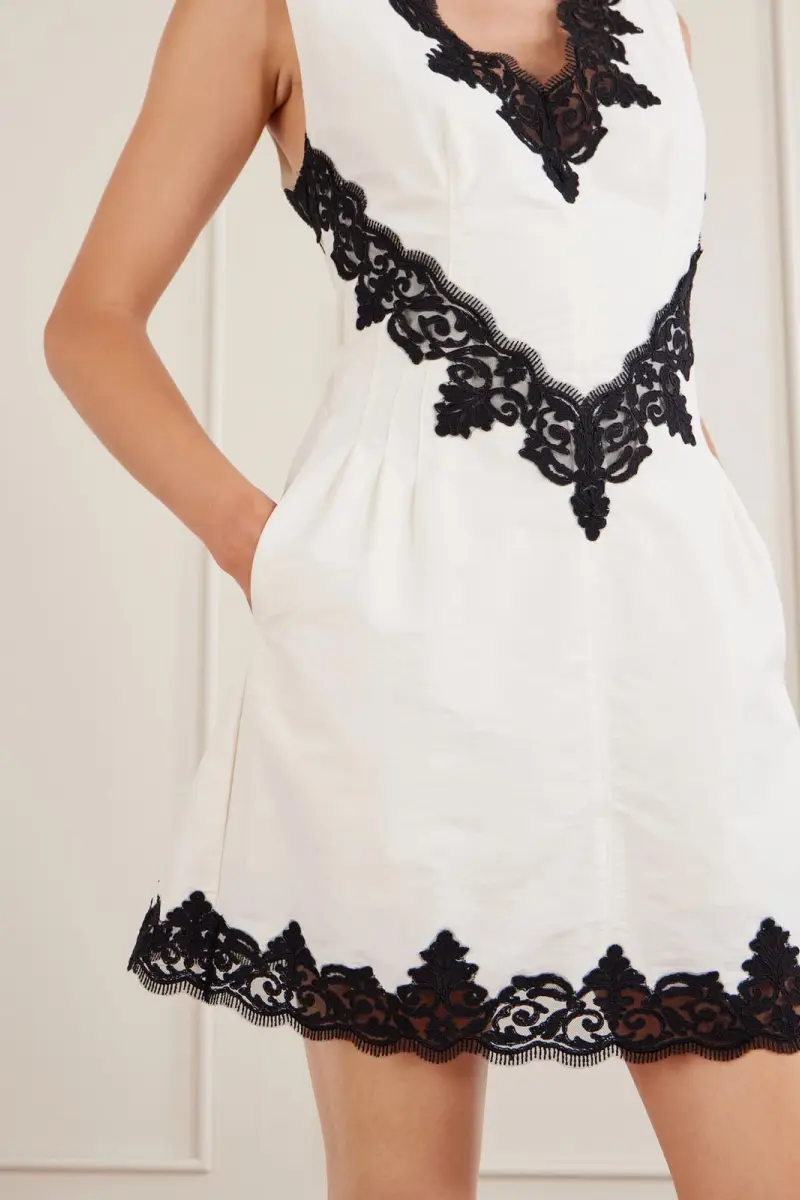
A designer may use embroidered lace fabric as the main body of a dress and add scalloped lace trim along the neckline and sleeves to enhance craftsmanship.
Why Lace Trim Has Become Important For Modern Apparel Brands
The global fashion market is becoming increasingly competitive.
Many brands today are facing similar challenges:
-
mass-produced garments look increasingly similar
-
consumers expect unique designs
-
product differentiation has become more important
-
premium details influence purchasing decisions
Because of this, fashion companies are paying more attention to material details.
A small design element such as lace trim can influence:
-
perceived product quality
-
brand positioning
-
customer experience
-
retail pricing capability
Small Details Create Higher Perceived Value
In premium fashion manufacturing, consumers often judge quality through visual and tactile experiences.
A garment with carefully finished lace edges, customized embroidery patterns, soft hand feeling, and consistent stitching quality often creates a stronger premium impression compared with a basic garment.
For brands, lace trim provides a cost-effective method to upgrade product appearance.
Example:
A standard cotton blouse:
| Product Element | Standard Version | Premium Version |
|---|---|---|
| Main Fabric | Cotton | Cotton |
| Decoration | None | Custom lace trim |
| Appearance | Basic | Feminine and premium |
| Brand Position | Mass market | Boutique / designer |
| Retail Potential | Medium | Higher |
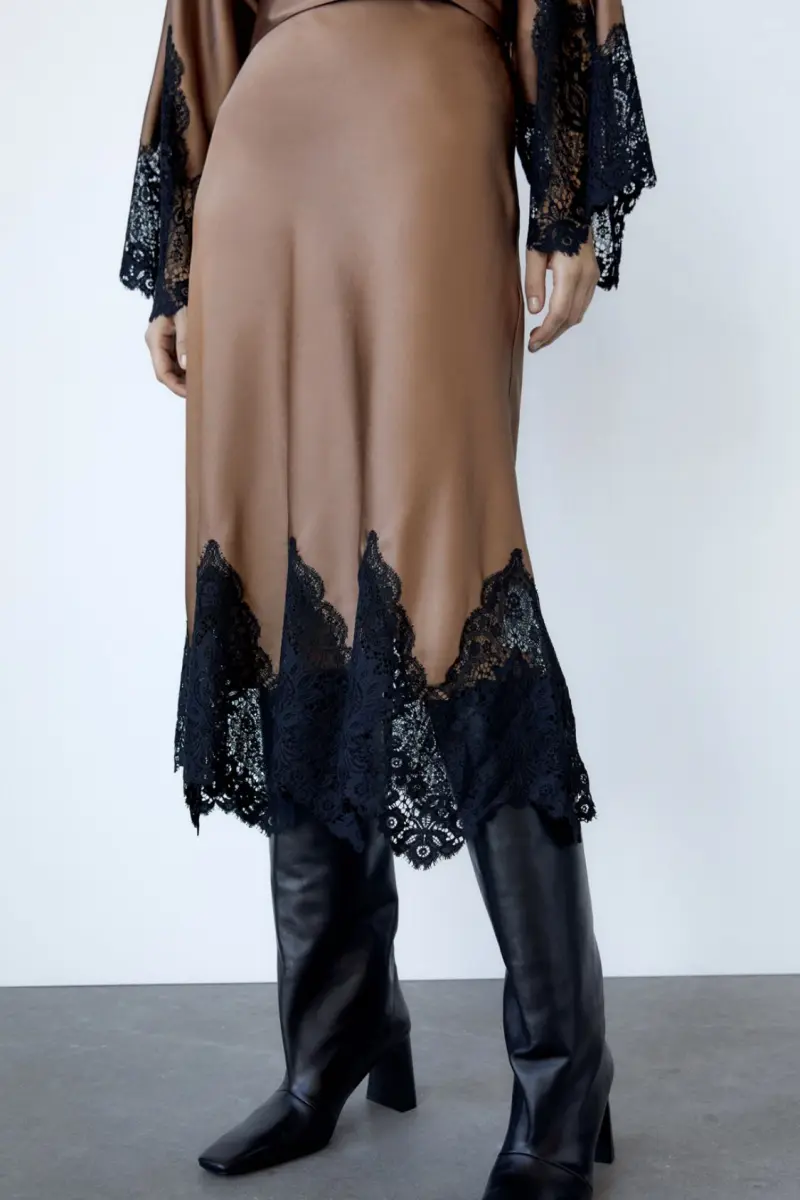
The fabric cost difference may be limited, but the final product perception can be significantly improved.
Different Types Of Lace Trim Used In Fashion Manufacturing
Professional lace manufacturers usually develop different lace trim categories according to application requirements.
Different industries require different structures, widths, materials, and finishing methods.
Embroidered Lace Trim
Embroidered lace trim is one of the most popular choices for fashion brands.
It is created by adding embroidery patterns onto mesh or fabric bases.
Common features:
-
floral patterns
-
geometric designs
-
lightweight structure
-
premium appearance
Applications:
-
dresses
-
skirts
-
blouses
-
luxury apparel
-
evening wear
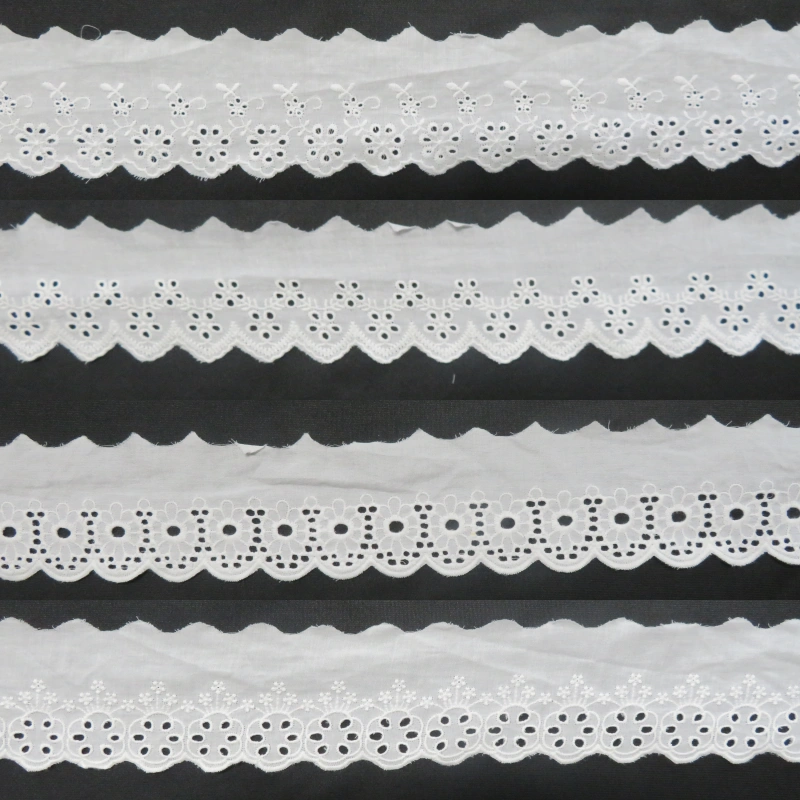
Cotton Lace Trim
Cotton lace trim is widely used in fashion collections that require natural texture and comfort.
Advantages:
-
soft touch
-
breathable
-
skin-friendly
-
suitable for casual fashion
Common applications:
-
summer dresses
-
bohemian clothing
-
children's apparel
-
resort wear
Water Soluble Lace Trim
Water soluble lace is produced through embroidery technology using a water-soluble backing material.
After washing treatment, the base disappears, leaving a delicate lace structure.
This technology allows manufacturers to create:
-
complex patterns
-
high-density embroidery
-
three-dimensional designs
It is commonly used in:
-
luxury fashion
-
designer collections
-
premium dresses
Guipure Lace Trim
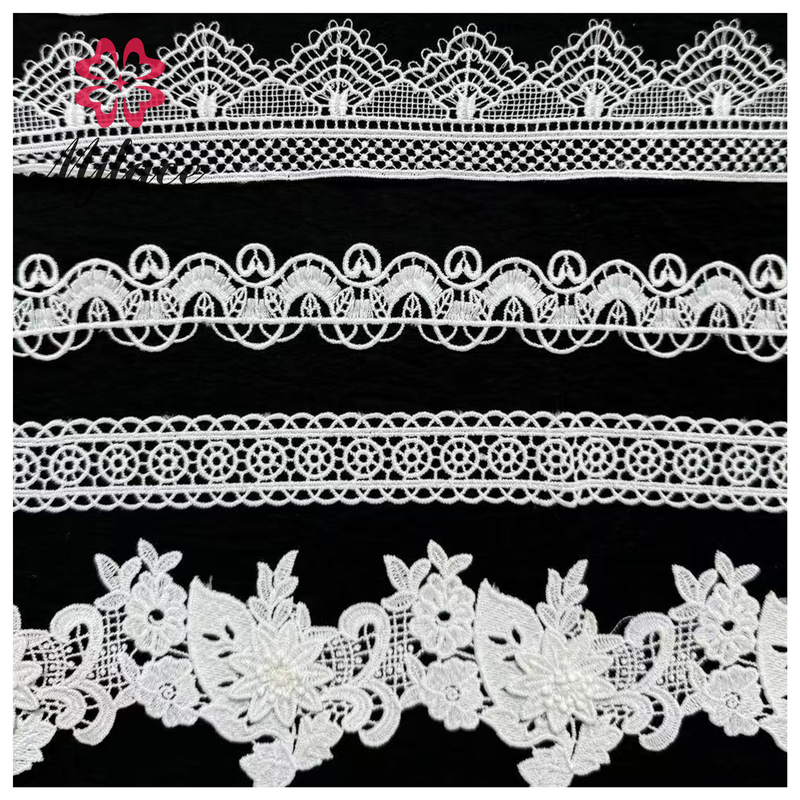
Guipure lace trim features a heavier embroidered structure without a traditional mesh background.
Characteristics:
-
strong three-dimensional effect
-
rich texture
-
high visual impact
Suitable for:
-
luxury garments
-
statement sleeves
-
fashion accessories
Comparison Of Common Lace Trim Types
| Lace Trim Type | Main Feature | Best Application |
|---|---|---|
| Embroidered Lace Trim | Flexible design options | Fashion garments |
| Cotton Lace Trim | Natural and comfortable | Casual apparel |
| Water Soluble Lace | Complex embroidery effect | Luxury collections |
| Guipure Lace Trim | Strong texture | Premium fashion |
| Elastic Lace Trim | Stretch performance | Lingerie and fitted garments |
How Lace Trim Improves Garment Value
For fashion brands, lace trim is not only decoration. It is a tool for product positioning.
A well-designed lace trim can influence three important areas:
Enhancing Brand Identity
Every fashion brand needs recognizable design elements.
Custom lace trim helps brands create unique visual signatures.
Instead of using common market lace patterns, brands can develop:
-
exclusive floral motifs
-
customized widths
-
special colors
-
unique edge designs
This prevents direct competition with similar products.
Increasing Product Differentiation
In fast fashion and contemporary fashion markets, differentiation is critical.
A customized lace trim can transform:
Basic garment → Signature collection piece
Example:
A simple linen dress can become a premium resort collection product by adding handmade-style cotton lace trim, customized sleeve decoration, and scalloped hem finishing.
Improving Retail Presentation
Retail buyers and consumers often notice finishing details first.
Lace trim can improve:
-
product photography effect
-
shelf appearance
-
online conversion rate
-
premium perception
Especially for e-commerce brands, decorative details can directly influence customer decisions.
The Manufacturing Process Of Custom Lace Trim
For fashion brands, developing a lace trim product involves much more than selecting an existing pattern from a supplier catalog.
Professional lace trim manufacturing requires a combination of:
-
design development
-
embroidery technology
-
material selection
-
production control
-
finishing techniques
-
quality inspection. Learn about quality control standards.
A reliable custom lace trim manufacturer should be able to transform a creative design concept into a stable product suitable for bulk garment production.
The following is the typical development process used by professional lace factories.
Step 1: Design Concept And Pattern Development
Every custom lace trim project starts with a design idea.
Fashion brands may provide:
-
hand sketches
-
CAD drawings
-
reference samples
-
existing garment styles
-
inspiration images
The lace factory then evaluates the design from a production perspective.
Important factors include:
| Design Factor | Why It Matters |
|---|---|
| Pattern complexity | Determines embroidery difficulty and production cost |
| Lace width | Influences garment application |
| Pattern repeat | Affects material efficiency |
| Edge design | Determines final garment appearance |
| Density of embroidery | Impacts texture and weight |
A professional lace manufacturer does not simply reproduce a design. The factory team must optimize the pattern to ensure it can be produced consistently.
For example:
A designer may create a very detailed floral lace concept. However, if the embroidery density is too high, the final lace may become too stiff or difficult to sew.
The factory needs to adjust stitch density, pattern spacing, thread selection, and backing material while maintaining the original design intention.
Step 2: Material Selection For Lace Trim Production
The choice of raw materials directly affects the final quality of lace trim.
Different fashion applications require different material characteristics.
Common lace trim materials include:
| Material | Characteristics | Typical Application |
|---|---|---|
| Polyester thread | Durable, stable, cost-effective | Mass fashion production |
| Cotton thread | Soft and natural feeling | Premium casual wear |
| Nylon thread | Lightweight and flexible | Lingerie and delicate garments |
| Rayon thread | Smooth and shiny appearance | Luxury fashion |
| Elastic yarn | Stretch performance | Fitted garments |
For fashion brands, selecting the correct material is essential because lace trim must match the main garment fabric.
For example:
A lightweight silk blouse requires a soft and flexible lace trim.
A structured evening dress may require a thicker embroidered trim with stronger visual impact.
Step 3: Lace Pattern Digitizing And Sample Development
Before mass production begins, the lace design needs to be converted into an embroidery production file.
This process is called pattern digitizing.
During digitizing, technicians define:
-
embroidery direction
-
stitch sequence
-
thread density
-
pattern structure
-
cutting points
This stage determines the final appearance of the lace trim.
A skilled lace factory can adjust the embroidery program according to:
-
fabric type
-
required softness
-
application method
-
target price range
Sample Development Process
A typical custom lace trim development timeline:
| Stage | Process | Estimated Time |
|---|---|---|
| Design review | Analyze requirements | 1-3 days |
| Pattern development | Create embroidery file | 3-7 days. Learn about pattern design development. |
| First sample | Produce prototype | 5-10 days |
| Modification | Adjust design details | 3-7 days |
| Final approval | Confirm production version | 1-3 days |
For fashion brands launching seasonal collections, efficient sample development is especially important.
Shorter development cycles allow brands to respond faster to market trends.
Step 4: Embroidery Production
After sample approval, the lace trim enters bulk production.
Modern lace factories use advanced embroidery machines to ensure:
-
consistent pattern quality
-
stable production speed
-
accurate dimensions
-
repeatable results
During production, technicians monitor:
-
thread tension
-
machine performance
-
embroidery density
-
pattern alignment
Common Lace Production Technologies
| Technology | Description | Advantage |
|---|---|---|
| Embroidery lace production | Embroidery patterns created on mesh or fabric base | Flexible customization |
| Water soluble embroidery | Embroidery on dissolvable backing | Creates complex designs |
| Computerized embroidery | Digital production control | High accuracy |
| Cutting and shaping | Creates customized edges | Better garment application |
Step 5: Cutting, Finishing And Edge Processing
After embroidery production, lace trim requires additional finishing processes.
These include:
Edge Cutting
The factory cuts lace according to required specifications.
Common options:
-
straight edge
-
scalloped edge
-
wave edge
-
floral edge
-
customized shape
Washing And Softening
Some lace trims require washing treatment to improve:
-
softness
-
flexibility
-
hand feeling
This is especially important for garments that directly contact the skin.
Quality Inspection
Before shipment, professional manufacturers inspect:
-
pattern accuracy
-
color consistency
-
width tolerance
-
embroidery defects
-
thread quality
Lace Trim Quality Control Standards
For international fashion brands, quality consistency is one of the most important supplier selection factors.
A professional lace trim factory should have a complete quality control system.
| Inspection Item | Quality Requirement |
|---|---|
| Width measurement | Consistent size according to specification |
| Pattern alignment | No obvious distortion |
| Thread condition | No broken or loose threads |
| Color matching | Consistent with approved sample |
| Surface appearance | Clean and defect-free |
| Roll packaging | Suitable for transportation |
How Fashion Brands Develop Custom Lace Trim Collections
Many brands today are moving away from standard materials and developing exclusive collections.
Custom lace trim allows brands to create products that cannot easily be copied.
A typical OEM development process includes:
Design Brief
The brand provides information such as:
-
target customer
-
garment category
-
design inspiration
-
preferred colors
-
expected quantity
-
delivery schedule
Material And Pattern Recommendation
The lace supplier analyzes the requirements and recommends:
-
suitable lace structures
-
embroidery techniques
-
thread options
-
finishing methods. Learn about dyeing and color matching.
A professional manufacturer should provide technical suggestions rather than only manufacturing based on instructions.
Prototype Sampling
Before bulk production, samples are created for approval.
Brands usually evaluate:
-
appearance
-
softness
-
sewing performance
-
compatibility with garment fabric
Bulk Manufacturing
After confirmation, production begins.
During bulk production, the supplier should maintain:
-
approved sample standards
-
consistent color
-
stable dimensions
-
delivery schedule
Custom Lace Trim Development Workflow
| Development Stage | Brand Responsibility | Factory Responsibility |
|---|---|---|
| Concept | Provide design direction | Analyze feasibility |
| Material selection | Confirm preference | Recommend options |
| Sampling | Review prototype | Produce samples |
| Approval | Confirm final version | Prepare production |
| Bulk order | Manage purchasing | Manufacture and inspect. Explore cut piece and processing. |
Why Fashion Brands Choose China Lace Trim Manufacturers
China has become one of the major global sources for lace production because of its complete textile supply chain.
A professional lace trim supplier in China can provide advantages including:
-
advanced embroidery equipment
-
experienced technicians
-
flexible customization
-
competitive production capacity
-
integrated textile resources
Advantages Of Working With A China Lace Factory
Strong Manufacturing Capability
Chinese lace manufacturers have extensive experience producing:
-
embroidered lace
-
cotton lace
-
guipure lace
-
water soluble lace
-
customized lace trims
This allows factories to support different fashion categories.
OEM And Private Label Support
Many international brands require exclusive designs.
OEM lace production enables brands to develop:
-
unique patterns
-
customized colors
-
special widths
-
branded collections. Explore customized processes.
Better Supply Chain Integration
Lace production is connected with:
-
embroidery production
-
dyeing factories
-
textile suppliers
-
garment manufacturers
This makes China an efficient sourcing destination.
How To Choose The Right Lace Trim Supplier For Fashion Brands
Selecting the right supplier directly affects product quality and brand reputation.
Fashion buyers should evaluate several important factors.
Supplier Evaluation Checklist
| Evaluation Factor | Questions To Ask |
|---|---|
| Manufacturing ability | Does the supplier own production facilities? |
| Custom development | Can they create exclusive designs? |
| Quality control | Do they have inspection procedures? |
| Experience | Have they worked with international brands? |
| Communication | Can they provide technical support? |
| Production capacity | Can they handle bulk orders? |
Avoid Choosing Suppliers Only Based On Price
The cheapest lace trim is not always the best option.
Low-cost materials may create problems such as:
-
uneven embroidery
-
poor color stability
-
weak thread quality
-
inconsistent bulk production
For fashion brands, product consistency is usually more valuable than a small material cost reduction.
Lace Trim Applications In Modern Fashion Design
Although lace trim has traditionally been associated with bridal gowns and formal clothing, the role of lace in modern fashion has expanded significantly.
Today, lace trim is widely used across multiple apparel categories, including:
-
women's ready-to-wear
-
luxury fashion collections
-
evening dresses
-
lingerie
-
resort wear
-
casual fashion
-
accessories
-
children's clothing
For fashion brands, lace trim is no longer simply an ornamental element. It has become a design tool that helps create differentiation, enhance product value, and strengthen brand identity.
Lace Trim Applications Across Fashion Categories
| Fashion Category | How Lace Trim Is Used | Recommended Lace Type |
|---|---|---|
| Women's dresses | Decorative edges, sleeves, waist details | Embroidered lace trim, floral lace |
| Blouses and tops | Neckline, cuffs, front panels | Lightweight lace trim |
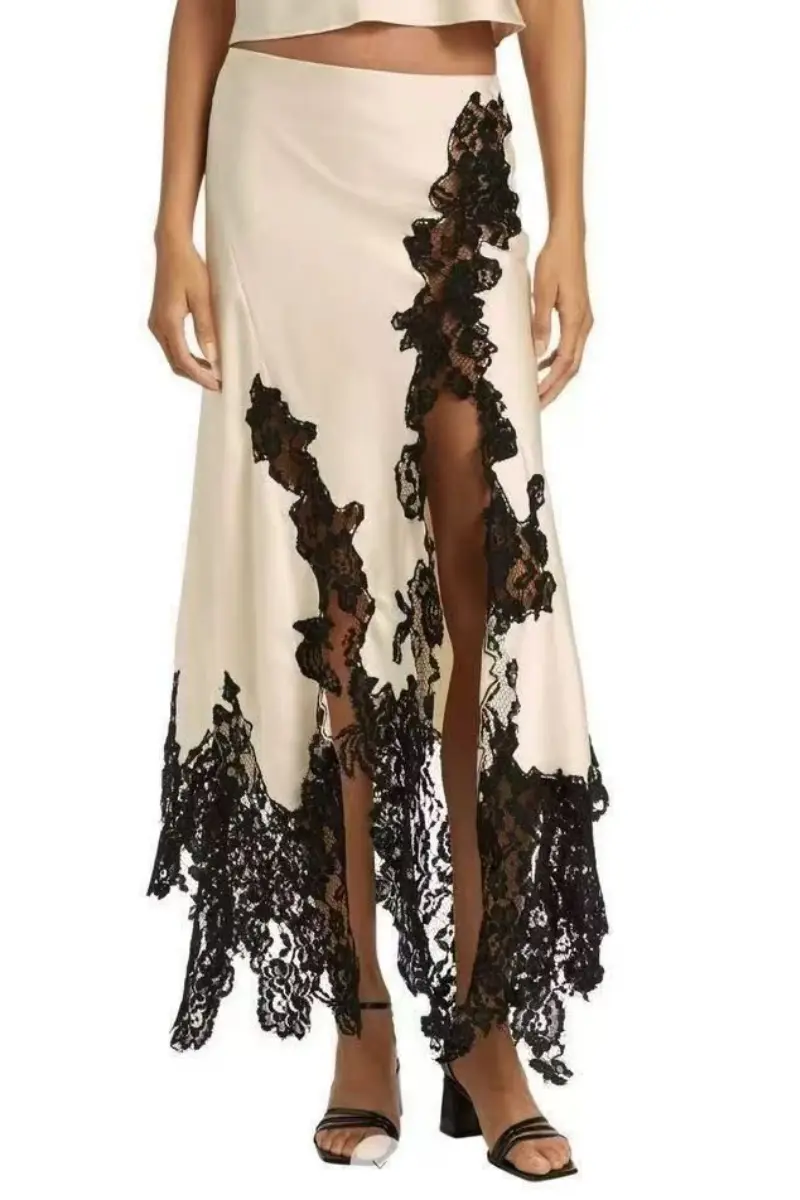
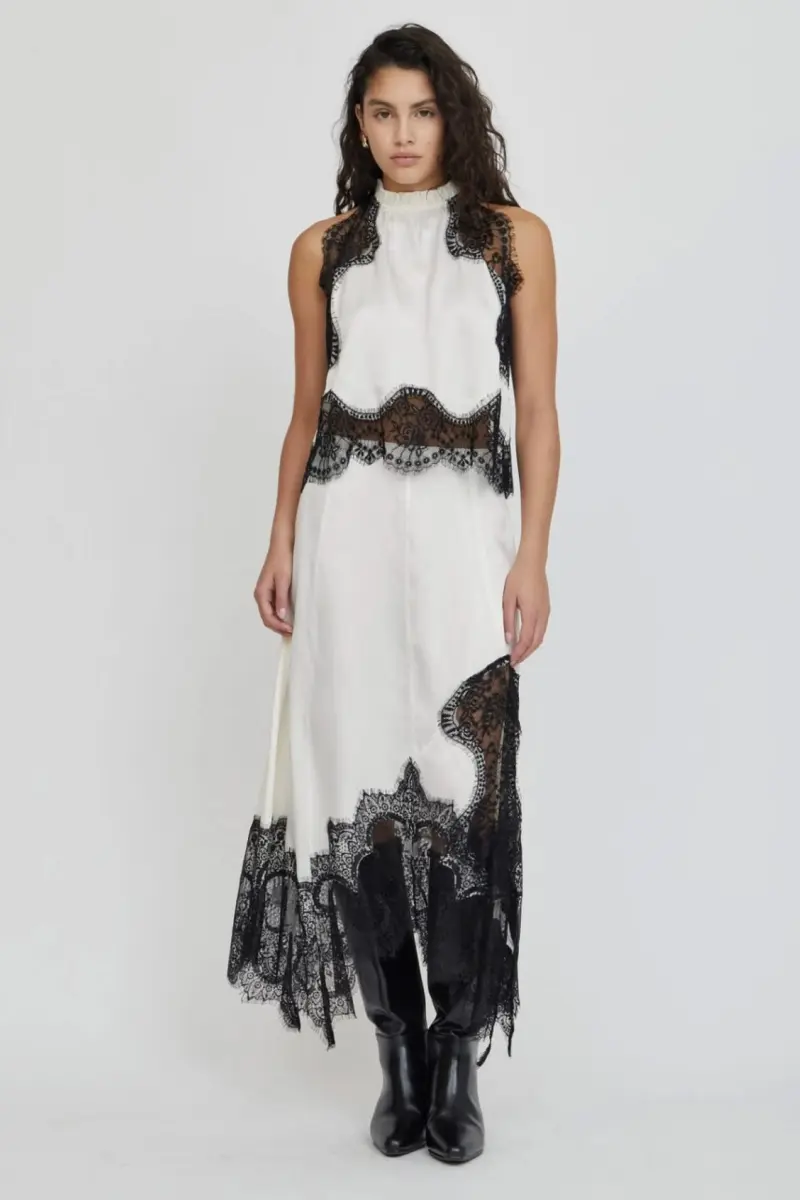
| Skirts | Hem decoration and layering effects | Wide lace trim |
| Lingerie | Elegant finishing and soft touch | Elastic lace, delicate lace |
| Resort wear | Feminine and handmade feeling | Cotton lace, crochet-style lace |
| Luxury collections | Exclusive surface decoration | Custom embroidered lace |
| Accessories | Bags, scarves, decorative elements | Narrow lace trim |
Lace Trim In Women's Ready-To-Wear Fashion
In contemporary women's fashion, lace trim is frequently used to create a balance between femininity and modern design.
Unlike traditional lace garments that rely heavily on full lace construction, many designers now use lace as a strategic detail.
Examples include:
-
lace cuffs on shirts
-
lace neckline decoration
-
lace inserts on dresses
-
layered lace panels
-
contrast lace edges
This approach allows brands to achieve a premium appearance without increasing production complexity excessively.
For commercial fashion brands, lace trim provides a flexible solution:
-
lower material consumption
-
easier garment production
-
stronger design differentiation
Lace Trim In Luxury Fashion Collections
Luxury fashion brands often use lace details to communicate craftsmanship and exclusivity.
Custom lace trim allows designers to develop:
-
signature patterns
-
brand-specific motifs
-
unique embroidery styles
For example, instead of using a standard floral lace pattern, a luxury brand may develop a custom botanical design inspired by brand heritage, local culture, or seasonal themes.
This creates stronger emotional value and improves product recognition.
Lace Trim In Seasonal Fashion Trends
Fashion trends change quickly.
A lace supplier must be able to respond to changing market demands.
Recent trends include:
| Fashion Trend | Lace Application |
|---|---|
| Romantic fashion | Floral embroidery lace |
| Vintage revival | Cotton lace and retro patterns |
| Minimal luxury | Fine transparent lace |
| Sustainable fashion | Natural fiber lace |
| Modern femininity | Clean geometric lace |
A flexible lace factory can help brands quickly transform trend concepts into commercial products.
The Role Of Lace Trim Manufacturers In Fashion Innovation
The relationship between fashion brands and lace manufacturers has changed.
Previously, brands selected available lace products from suppliers.
Today, many brands expect suppliers to participate in product development.
A professional lace manufacturer works as a technical partner by providing:
-
design suggestions
-
material recommendations
-
production solutions
-
cost optimization
-
manufacturing support
From Supplier To Development Partner
| Traditional Supplier Model | Modern Manufacturing Partnership |
|---|---|
| Provides existing products | Develops customized solutions |
| Focuses on order quantity | Focuses on product performance |
| Limited design support | Technical collaboration |
| Price-driven relationship | Long-term cooperation |
For fashion brands launching multiple collections every year, having a reliable lace manufacturing partner can significantly improve efficiency.
Future Trends In Lace Trim Manufacturing
The lace industry continues to evolve with changes in fashion consumption, technology, and sustainability requirements.
Several trends are shaping the future of lace production.
Increased Demand For Custom Lace Development
Mass-produced lace products are becoming less competitive as brands seek unique designs.
More fashion companies are investing in:
-
exclusive embroidery patterns
-
customized lace structures
-
private label collections
Custom lace manufacturing helps brands:
-
avoid direct competition
-
create stronger product identity
-
improve customer recognition
Digital Design And Faster Development
Modern lace factories increasingly use digital technology during product development.
Digital embroidery systems allow manufacturers to:
-
adjust patterns quickly
-
reduce sampling time
-
improve accuracy
-
support complex designs
This is especially valuable for fashion brands working with seasonal collections.
Sustainable Lace Production
Sustainability has become an important consideration in global fashion.
Brands are paying more attention to:
-
environmentally friendly materials
-
responsible production processes
-
reduced waste manufacturing
Future lace production will increasingly focus on:
-
recycled fibers
-
natural materials
-
efficient production methods. Visit our sustainability section.
Sustainable Lace Manufacturing Considerations
| Area | Traditional Approach | Sustainable Direction |
|---|---|---|
| Materials | Conventional synthetic fibers | Recycled or natural fibers |
| Production | High material waste | Optimized production planning |
| Packaging | Excess packaging | Reduced packaging materials |
| Development | Multiple physical samples | Digital sampling |
How MJlace Supports Global Fashion Brands With Lace Manufacturing
As fashion brands continue searching for reliable textile partners, the role of professional lace factories becomes increasingly important.
A specialized lace manufacturer should provide not only products but also complete development support.
At MJlace, the focus is on helping fashion brands develop:
-
customized lace fabrics
-
embroidered lace trims
-
fashion lace materials
-
OEM lace solutions
From initial concept development to bulk production, every stage requires attention to detail.
Manufacturing Capabilities For Fashion Brands
| Capability | Support Provided |
|---|---|
| Custom design development | Transform concepts into production-ready lace |
| OEM manufacturing | Develop exclusive lace collections |
| Pattern customization | Adjust designs based on brand requirements |
| Bulk production | Stable quality and delivery |
| Quality inspection | Ensure consistency between samples and production |
Why Fashion Brands Choose Professional Lace Manufacturers
Choosing the right lace supplier affects:
-
product quality
-
production efficiency
-
customer satisfaction
-
brand reputation
A reliable manufacturer should provide:
Consistent Quality
Bulk production should match approved samples.
Flexible Customization
Different brands require different design solutions.
Production Experience
Experienced factories understand how lace performs during garment manufacturing.
Long-Term Cooperation
Strong supplier relationships help brands develop products faster.
FAQ: Lace Trim Manufacturing For Fashion Brands
Q1: What is lace trim used for in fashion design?
Lace trim is used as a decorative textile element to enhance garments with additional texture, pattern, and visual appeal.
Common applications include:
-
dress edges
-
sleeves
-
collars
-
waist details
-
lingerie decoration
-
fashion accessories
Q2: Can lace trim be customized for fashion brands?
Yes.
Professional lace manufacturers can customize:
-
patterns
-
colors
-
widths
-
materials
-
embroidery styles
Custom lace development is commonly used by brands creating exclusive collections.
Q3: What is the difference between lace fabric and lace trim?
The main difference is application.
| Lace Fabric | Lace Trim |
|---|---|
| Covers larger garment areas | Used as decorative details |
| Usually sold by meter | Often produced in specific widths |
| Used for full garment construction | Used for finishing and enhancement |
Q4: What materials are commonly used for lace trim?
Common materials include:
-
polyester
-
cotton
-
nylon
-
rayon
-
elastic fibers
The best choice depends on garment requirements.
Q5: How long does custom lace trim development take?
Development time depends on:
-
design complexity
-
material selection
-
sampling requirements
Generally, custom development may require several weeks from initial design to final approval.
Q6: Can lace factories produce small quantities for new brands?
Many manufacturers support flexible MOQ options depending on product type and customization requirements.
New fashion brands often begin with smaller production runs before expanding.
Q7: How do fashion brands ensure lace quality?
Brands should evaluate:
-
factory experience
-
sample consistency
-
quality inspection systems
-
production capability
Working with an experienced lace manufacturer reduces production risks.
Q8: Why do fashion brands work with China lace suppliers?
China has a mature textile supply chain and experienced lace manufacturers capable of supporting:
-
OEM production
-
custom development
-
international shipping. Learn about importing logistics.
-
large-scale manufacturing
Lace Trim Is A Strategic Element For Modern Fashion Brands
In today's competitive fashion market, small design details can create significant product differentiation.
Lace trim allows brands to enhance garments through:
-
refined craftsmanship
-
customized designs
-
premium visual effects
-
improved brand identity
However, successful lace application depends on choosing the right manufacturing partner.
A professional lace trim manufacturer provides more than decorative materials. The right supplier helps brands transform creative ideas into reliable, production-ready fashion products.
From custom pattern development to bulk manufacturing, lace factories play an increasingly important role in helping global fashion brands create distinctive collections.
For brands looking to develop exclusive lace trims, partnering with an experienced manufacturer is the first step toward building unique and competitive apparel products.
Ready to develop custom lace trim for your collection? Visit our homepage to explore our capabilities or contact us for inquiries. You may also submit an inquiry for custom pricing.