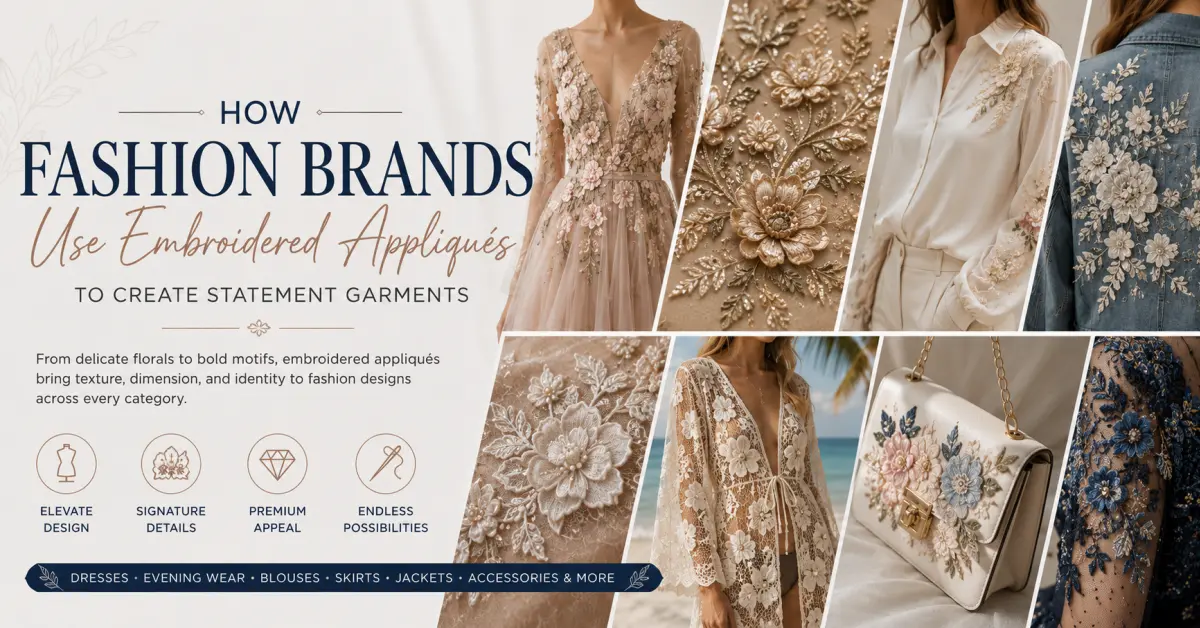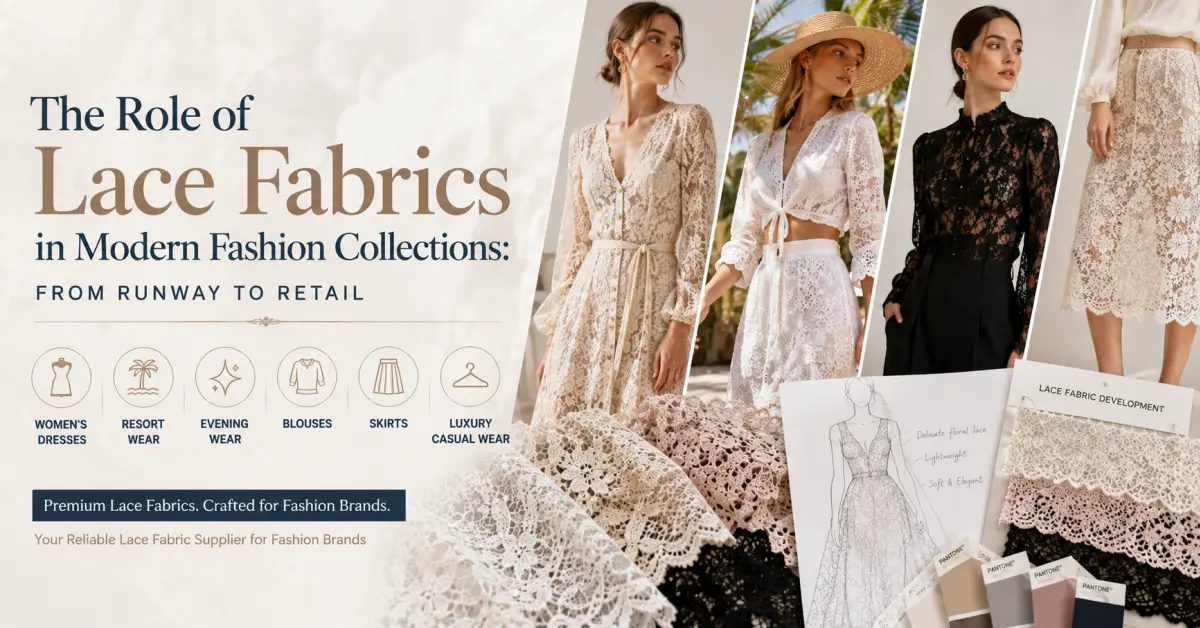

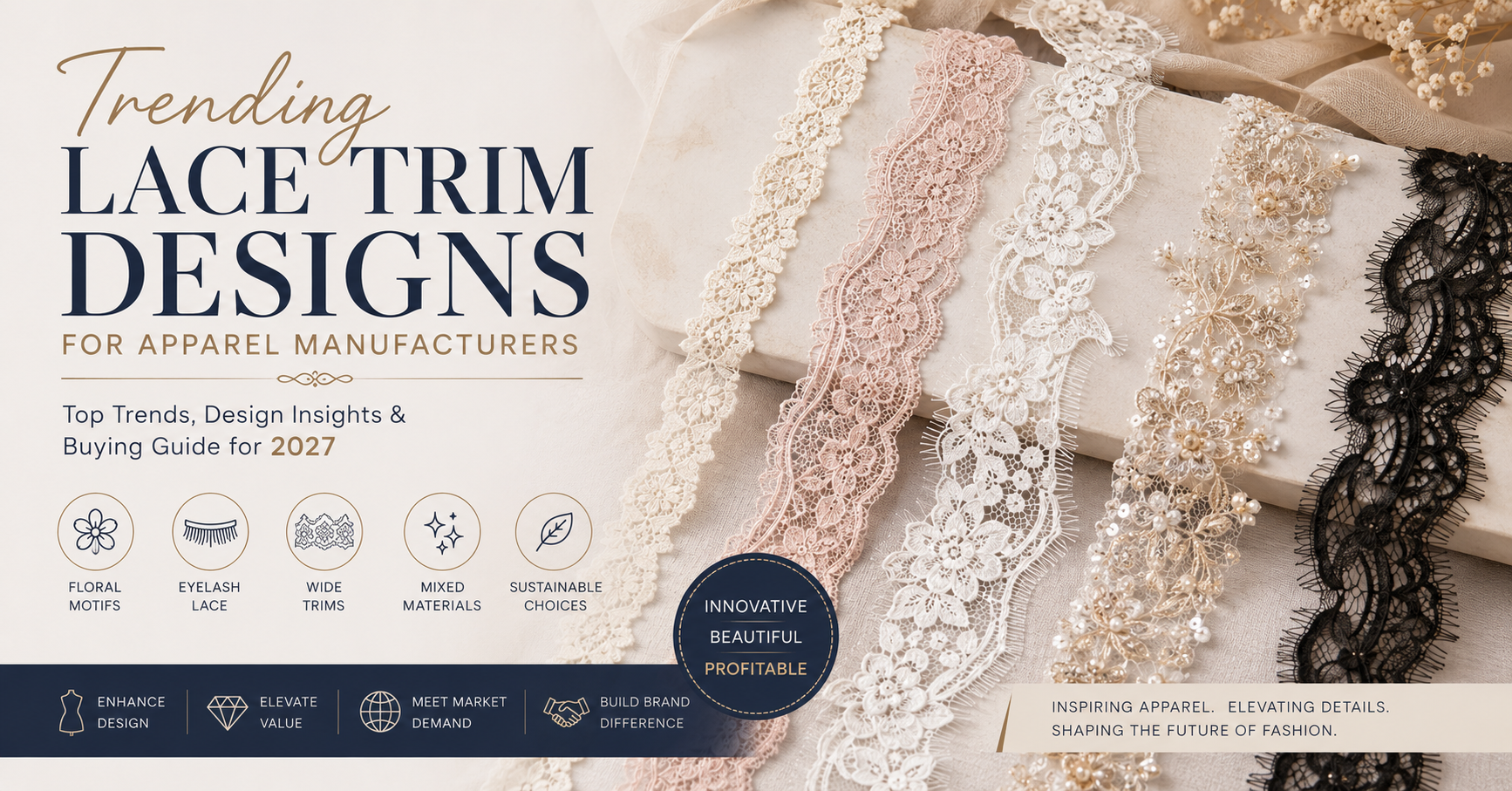

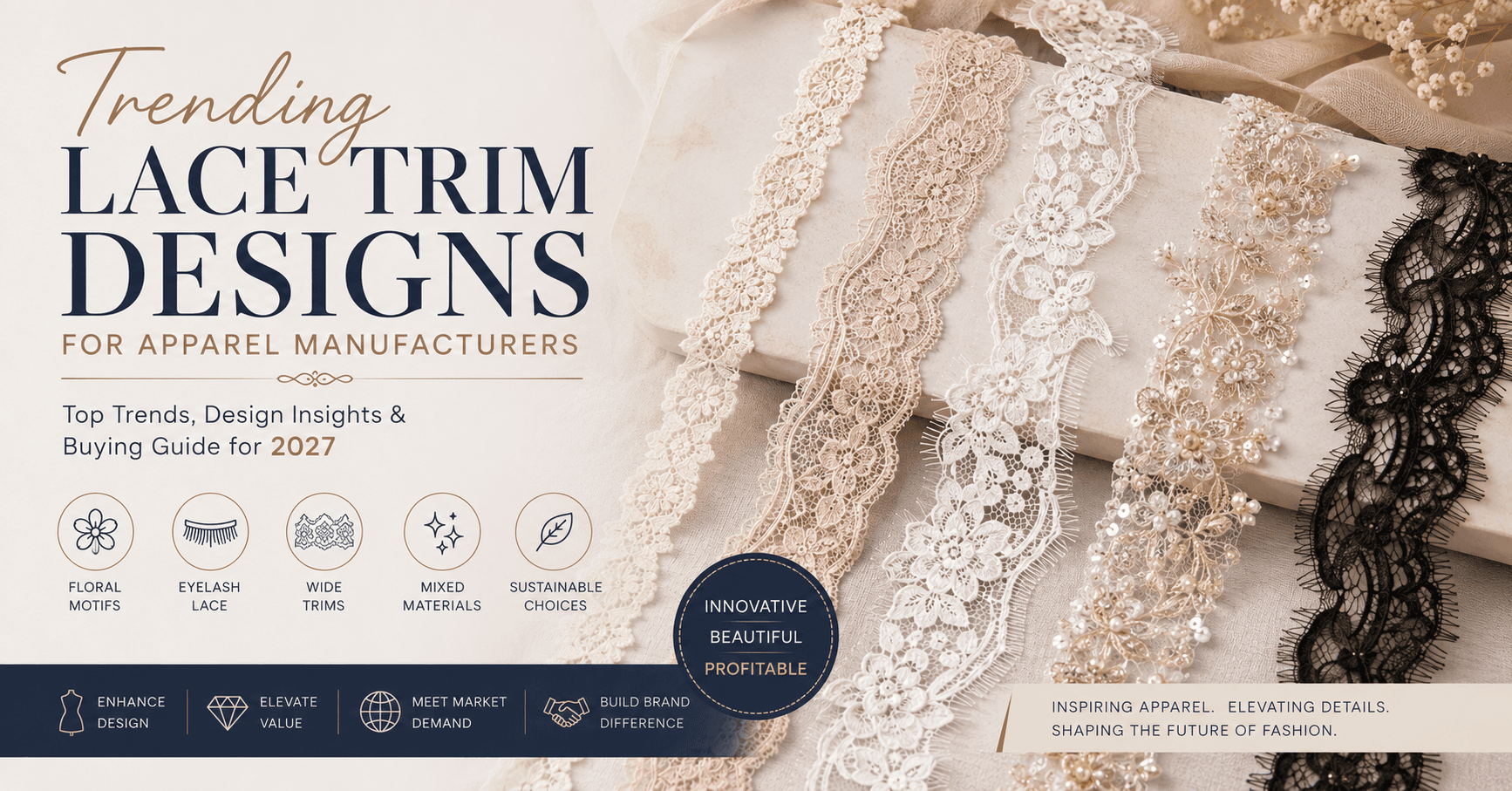
Lace trims are no longer viewed as simple decorative accessories. In today's apparel industry, they have become an important design element capable of influencing product positioning, perceived value, and consumer purchasing decisions.
According to data from global fashion sourcing platforms and apparel trade exhibitions, garments incorporating lace details generally achieve higher perceived value than comparable products without decorative trims. This trend is particularly evident in bridalwear, lingerie, occasionwear, premium womenswear, and resort collections.
As fashion brands prepare their 2027 collections, understanding which lace trim designs are gaining momentum—and why—can help manufacturers develop more commercially successful products.
This article examines the most important lace trim trends shaping the apparel industry, the technical factors behind their popularity, and how manufacturers can integrate these developments into future collections.
Why Lace Trims Continue to Grow in Popularity
Fashion trends change constantly, but lace remains one of the few decorative materials that consistently appears across luxury, premium, and mass-market segments.
Several factors explain its enduring appeal.
Increased Demand for Feminine Design Elements
Over the past three years, fashion trend forecasts have shown growing consumer interest in romantic aesthetics.
Key themes include:
-
Soft silhouettes
-
Sheer fabrics
-
Floral detailing
-
Vintage-inspired design
-
Handcrafted appearances
Lace trims naturally support these trends by adding texture and visual complexity without significantly increasing garment weight.
Premiumization of Apparel Collections
Many brands are moving toward smaller but higher-value collections.
Instead of producing more garments, brands are focusing on:
-
Better materials
-
Enhanced details
-
Stronger craftsmanship stories
Lace trims provide a relatively low-cost method of increasing perceived product value.
For example, adding a 5cm premium lace trim to a camisole can increase retail pricing by 15–30% while only adding a small percentage to manufacturing costs.
Growth of Bridal and Occasionwear Markets
Global bridalwear continues to be one of the largest consumers of decorative lace.
The increasing popularity of destination weddings, luxury bridal fashion, and custom wedding dresses has driven significant demand for both narrow lace trims and wide lace fabrics.
Trend #1: Eyelash Lace Continues to Dominate
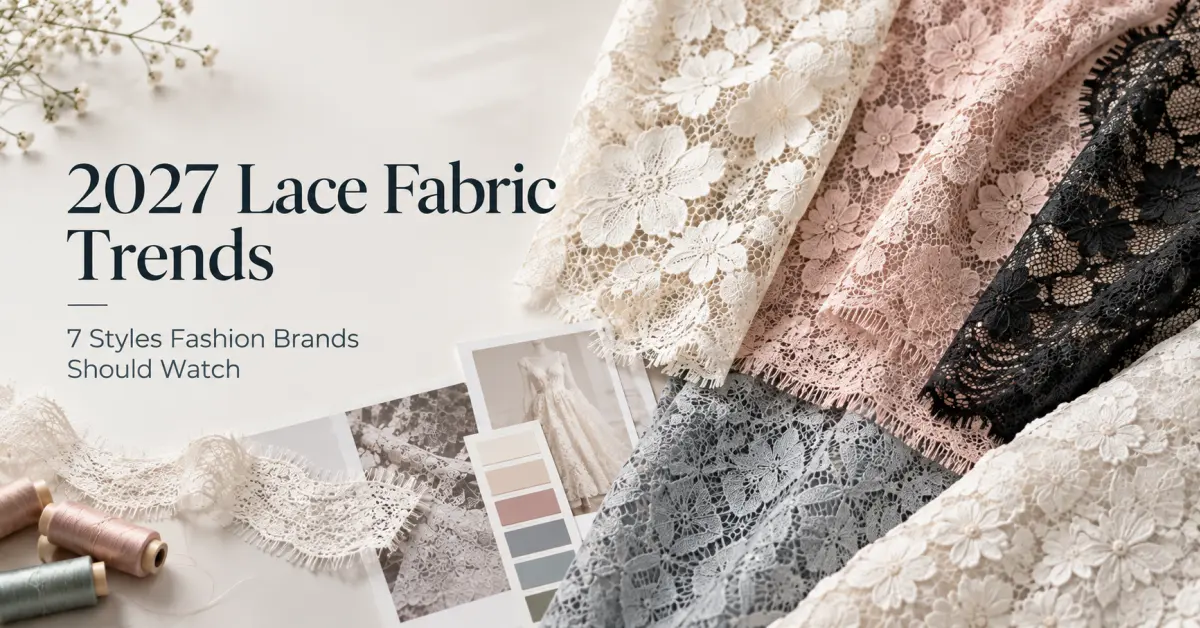
Among all lace categories, eyelash lace remains the most requested by fashion designers.
Its signature fringe edge creates softness and movement that traditional scalloped laces cannot achieve.
Why Designers Prefer Eyelash Lace
The delicate fringe creates enhanced visual depth, softer garment transitions, luxury appearance, and lightweight construction.
These characteristics make eyelash lace particularly effective for:
Lingerie
Common widths: 2cm, 4cm, 6cm, 8cm
Applications: Bra cups, panties, camisoles, bodysuits
Bridalwear
Common widths: 15cm, 20cm, 30cm
Applications: Sleeves, veils, skirt hems, necklines
Couture Fashion
Full-width eyelash lace fabrics measuring 150cm width and 300cm panel length are increasingly used for complete bridal gowns.
Trend #2: Larger Floral Motifs
For many years, small floral repeats dominated the lace market.
However, fashion brands are increasingly requesting oversized motifs.
Compared with traditional patterns, large-scale florals photograph better, create stronger visual impact, improve recognition on social media, and deliver a more luxurious appearance.
Commercial Benefits
Larger motifs allow designers to create statement sleeves, dramatic necklines, sculptural hems, and couture-inspired silhouettes.
These styles perform particularly well in bridalwear, occasionwear, and luxury evening dresses.
Trend #3: Wide Lace Trims Replace Traditional Borders
Historically, lace trims were narrow decorative elements.
Today, widths continue expanding.
Popular widths now include:
| Width | Main Application |
|---|---|
| 3-8cm | Lingerie |
| 10-15cm | Blouses |
| 15-25cm | Dresses |
| 25-35cm | Bridalwear |
| 35cm+ | Couture garments |
Wide lace trims allow manufacturers to reduce seam lines while achieving more dramatic visual effects.
This trend is particularly strong among premium bridal brands.
Trend #4: Mixed-Material Lace Designs
One of the fastest-growing segments is decorative lace incorporating additional embellishments.
Examples include:
Sequin Lace
Provides sparkle and eveningwear appeal. Explore our sequins and beads embroidery.
Beaded Lace
Creates dimensional luxury effects. See our crystal elegance bead sequin fabric.
Corded Lace
Adds texture and structure. Explore cord embroidery.
Metallic Thread Lace
Popular in occasionwear and festive collections. See our multi-color embroidery.
These materials transform lace from a supporting detail into the focal point of the garment.
Trend #5: Sustainable Lace Development
Sustainability is becoming a key purchasing requirement rather than a marketing advantage.
Large fashion brands increasingly require recycled polyester yarns, recycled nylon yarns, OEKO-TEX certified materials, and reduced-water dyeing processes.
Manufacturers capable of offering sustainable lace options are gaining access to higher-value projects and long-term partnerships. Visit our sustainability section.
Choosing the Right Lace Trim for Different Garment Categories
Lingerie Collections
Recommended widths: 2–8cm
Recommended features: Soft hand feel, lightweight structure, stretch compatibility
Women's Fashion
Recommended widths: 5–20cm
Recommended features: Floral motifs, scalloped edges, moderate density
Bridal Collections
Recommended widths: 15–35cm
Recommended features: Eyelash edges, large floral motifs, fine mesh ground
Couture Garments
Recommended widths: 35cm+ and full-width lace fabrics
Recommended features: Custom motifs, cord embroidery, beading, hand-finished details
Manufacturing Innovations Driving Future Lace Trends
Modern embroidery and lace production technology has significantly expanded design possibilities.
Advanced multi-bar Raschel machines now allow manufacturers to produce more intricate motifs, larger pattern repeats, better consistency, and higher production efficiency.
Digital embroidery systems also make custom development faster and more cost-effective than ever before.
As a result, fashion brands are increasingly requesting exclusive lace patterns rather than relying on stock designs. Learn about customized processes and pattern design development.
What Apparel Manufacturers Should Prepare for 2027
Based on current sourcing inquiries and fashion forecasting reports, manufacturers should prioritize:
✓ Eyelash lace collections
✓ Larger floral motifs
✓ Wide lace trims
✓ Sustainable materials
✓ Custom design capabilities
✓ Multi-material embellishment techniques
Companies investing in these areas will be best positioned to meet future market demand.
Conclusion
The lace trim market is evolving beyond simple decorative borders. Today's apparel manufacturers must view lace as a strategic design component that influences product value, brand identity, and consumer appeal.
Eyelash lace, oversized floral motifs, wider trims, sustainable materials, and mixed-media embellishments are expected to define the next generation of apparel collections.
For brands seeking differentiation in increasingly competitive markets, selecting the right lace trim is no longer a finishing detail—it is a critical design decision that can shape the success of an entire collection.
Ready to source trending lace trims for your 2027 collections? Visit our homepage to explore our products or contact us for inquiries. You may also submit an inquiry for custom pricing.