
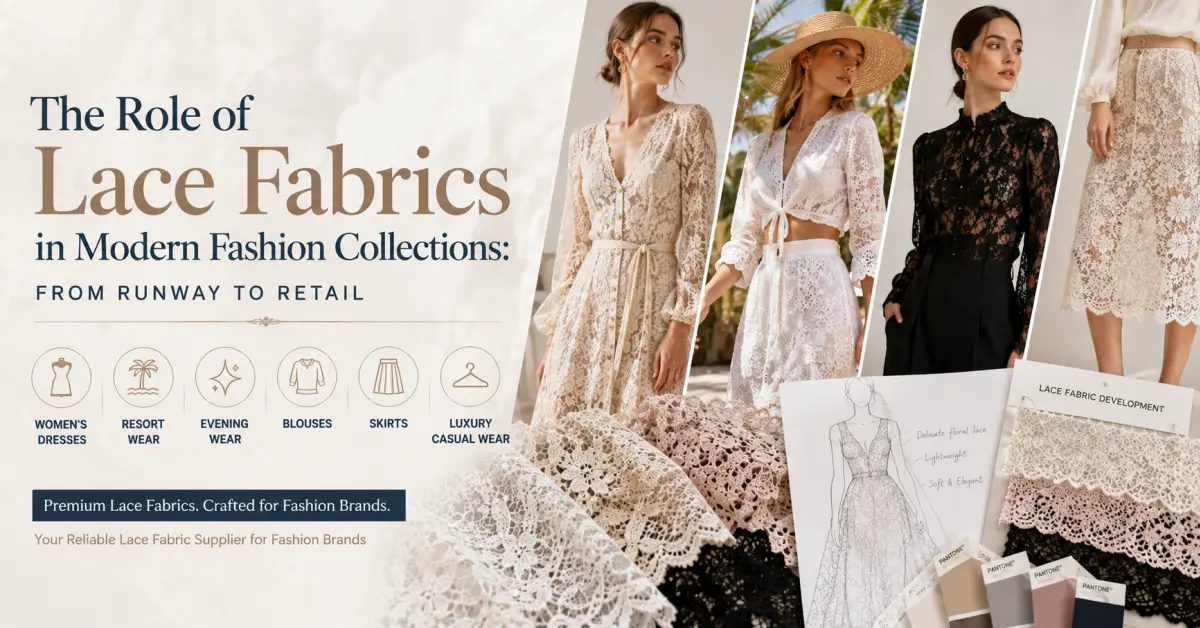

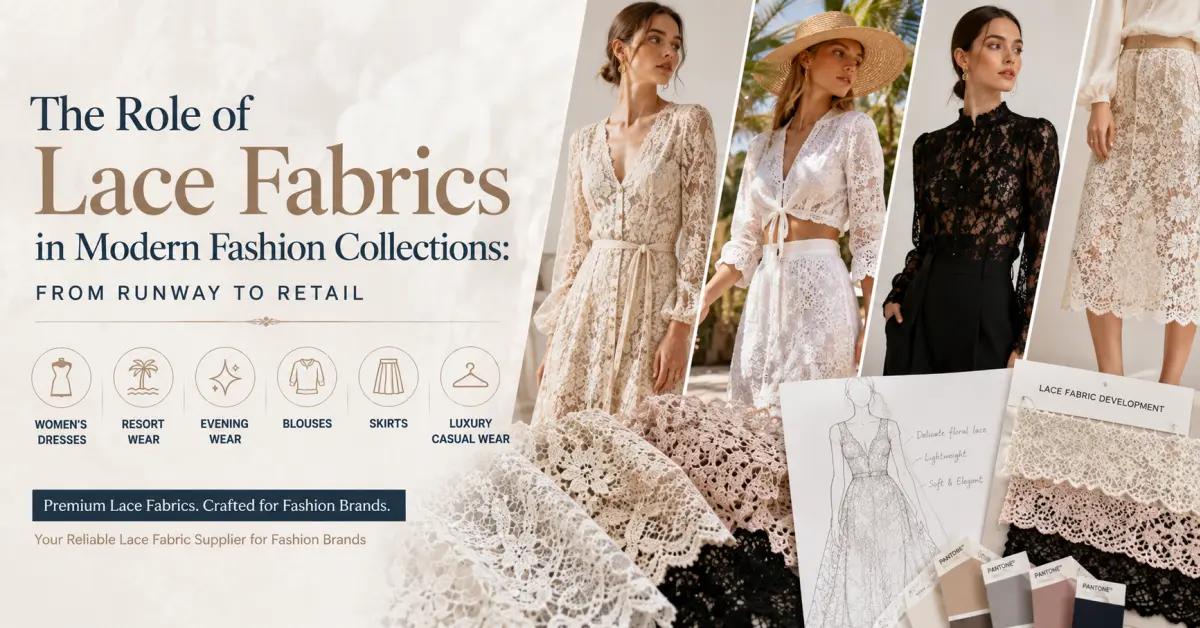
Il pizzo non è più limitato agli abiti da occasione
Il pizzo ha sempre avuto una forte presenza nella moda, ma il suo ruolo è cambiato in modo significativo.
Per molti anni, il pizzo è stato associato principalmente ad abiti da sposa, lingerie, abiti da sera e indumenti altamente decorativi. Oggi gli stilisti utilizzano il pizzo in modo molto più ampio. Appare in collezioni prêt-à-porter, collezioni resort, abbigliamento da donna contemporaneo, capi casual di lusso, camicette di tendenza, gonne a strati, abiti leggeri e persino indumenti di tutti i giorni in cui la consistenza e il design della superficie sono importanti.
Il cambiamento non riguarda semplicemente l'utilizzo di più pizzi.
Riguarda come il pizzo viene progettato, ingegnerizzato e integrato in un capo.
Una collezione di moda moderna può utilizzare il pizzo come tessuto per indumenti completi, uno strato esterno trasparente, un pannello a contrasto, una costruzione delle maniche, uno strato di gonna, un inserto decorativo o un sottile dettaglio superficiale. La stessa collezione può combinare pizzo leggero ricamato con tessuti a trama semplice, jersey, raso, organza, cotone o materiali tecnici.
Ciò crea un ruolo più impegnativo per il fornitore di pizzo.
Per i marchi di moda, procurarsi il pizzo non è più semplicemente una questione di selezionare un modello attraente da un catalogo. I designer hanno sempre più bisogno di un fornitore di tessuti di pizzo per i marchi di moda in grado di comprendere la relazione tra struttura del tessuto, design dell'indumento, requisiti di produzione, sviluppo del colore, dimensione ripetuta, peso, elasticità, trasparenza e posizionamento finale nella vendita al dettaglio.
Il pizzo giusto può cambiare l'aspetto, la sensazione e le prestazioni di un capo.
Può far sembrare più sofisticato un abito semplice. Può conferire a una collezione resort un carattere artigianale. Può trasformare una normale camicetta in un capo di tendenza. Può aggiungere consistenza a una gonna minimalista senza modificare la silhouette generale.
A livello di produzione, tuttavia, il raggiungimento di questi risultati richiede molto più di un bel modello.
La fabbrica deve essere in grado di tradurre un concetto di design in un tessuto che possa effettivamente essere tagliato, cucito, rifinito, trasportato e riprodotto in modo coerente su scala commerciale.
Come è cambiato il pizzo nella moda moderna
Il cambiamento più importante nell'uso del pizzo è il passaggio dalla decorazione al design dei materiali.
Le applicazioni di moda tradizionali spesso trattavano il pizzo come un ulteriore strato decorativo. I designer hanno selezionato un tessuto di pizzo finito e lo hanno applicato a un capo che era già stato progettato.
Le collezioni moderne funzionano sempre più nella direzione opposta.
Il tessuto stesso diventa parte del concetto di design.
Un designer può iniziare con:
-
un particolare motivo floreale
-
un livello di trasparenza specifico
-
un effetto ricamo strutturato
-
una superficie leggera
-
un drappo particolare
-
un bordo irregolare
-
una ripetizione geometrica
-
una combinazione di diverse densità di thread
-
o una relazione specifica di colore e trama
Il capo viene quindi sviluppato attorno a queste caratteristiche del materiale.
Questo approccio richiede una collaborazione molto più stretta tra il designer, il produttore di indumenti e la fabbrica di merletti.
Dal tessuto decorativo al materiale di design
Il risultato è un mercato molto più ampio per il pizzo.
Un marchio di moda può utilizzare il pizzo in diverse categorie di prodotti nella stessa stagione, con pesi e costruzioni di tessuto diversi per ciascuna applicazione.
Ecco perché la selezione dei fornitori è importante.
Il tessuto in pizzo inizia con il concept della collezione
Prima di produrre un tessuto di pizzo, i designer normalmente devono definire quale ruolo avrà il materiale nella collezione.
Sembra semplice, ma ha un effetto diretto sulle specifiche di produzione.
Un tessuto di pizzo pensato per un abito ampio da resort non funziona necessariamente con una camicetta da sera aderente.
Allo stesso modo, un pizzo ricamato denso adatto per una gonna strutturata potrebbe essere troppo pesante per un top estivo leggero.
Il fornitore deve pertanto comprendere l'applicazione prevista per l'indumento prima di consigliare o sviluppare il tessuto.
Domande a cui è necessario rispondere durante lo sviluppo
Un fornitore di pizzo professionale potrebbe aver bisogno di sapere:
-
Che tipo di indumento utilizzerà il tessuto?
-
L'indumento è aderente o largo?
-
Il tessuto verrà utilizzato come materiale principale o come rivestimento?
-
Il capo richiede elasticità?
-
Quanto trasparente dovrebbe essere il tessuto finito?
-
Che tipo di rivestimento verrà utilizzato?
-
Qual è il peso target del tessuto?
-
Il design richiede un motivo direzionale?
-
Il tessuto avrà bisogno di bordi smerlati o cigliati?
-
Il tessuto verrà tagliato in pannelli o utilizzato continuamente?
-
Quale quantità è richiesta?
-
Il prodotto è stagionale o è destinato a ripetersi?
Queste domande aiutano la fabbrica a determinare la costruzione appropriata.
Questo è uno dei motivi per cui un fornitore professionista di tessuti di pizzo per marchi di moda dovrebbe essere coinvolto nelle prime fasi del processo di sviluppo anziché solo dopo che il capo è già stato progettato.
Vestiti da donna: una delle applicazioni di pizzo più versatili
Gli abiti da donna rimangono una delle più grandi applicazioni per il pizzo alla moda, ma l'uso odierno è notevolmente più ampio rispetto all'abbigliamento formale tradizionale.
Il pizzo può essere utilizzato su:
-
miniabiti
-
abiti midi
-
abiti maxi
-
abiti sottoveste
-
abiti chemisier
-
abiti estivi
-
abiti a strati
-
abiti da cocktail
-
abiti da resort
-
abiti da sera contemporanei
La costruzione del pizzo determina come si comporta all'interno di ogni silhouette.


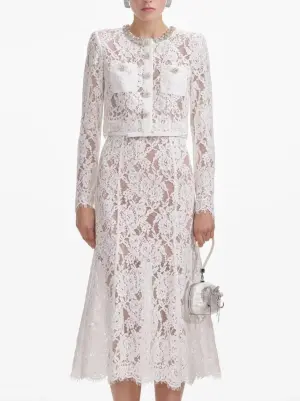
Pizzo leggero per abiti fluidi
Per abiti ampi o fluenti, i designer spesso cercano un tessuto con:
-
peso relativamente basso
-
sensazione di mano morbida
-
buon drappeggio
-
trasparenza controllata
-
ricamo flessibile
-
movimento confortevole
Un leggero pizzo ricamato floreale può creare volume visivo senza aggiungere peso fisico sostanziale.
Ciò è particolarmente utile nelle collezioni primaverili ed estive.
Pizzo strutturato per abiti aderenti
Un abito aderente richiede caratteristiche diverse.
Il tessuto potrebbe aver bisogno di:
-
maggiore stabilità dimensionale
-
allungamento controllato
-
strutture di ricamo più resistenti
-
recupero migliore
-
maggiore resistenza all'abrasione
-
posizionamento coerente del motivo
La fabbrica deve considerare non solo l'aspetto del tessuto su una gruccia campione, ma anche il suo comportamento dopo il taglio e la cucitura.
Questa distinzione viene spesso trascurata durante l'approvvigionamento.
Un tessuto di pizzo può sembrare eccellente come campione di un metro ma avere prestazioni scarse durante la produzione dell'indumento se la struttura è troppo instabile.
Abbigliamento da resort: dove il pizzo diventa leggero e rilassato
L'abbigliamento da resort è diventato un'applicazione importante per il pizzo perché la categoria si adatta naturalmente a materiali leggeri, traspiranti e visivamente strutturati.
Il pizzo può essere utilizzato per:
-
abiti coprenti
-
abiti da spiaggia
-
camicie rilassate
-
caftani
-
gonne leggere
-
set coordinati
-
top corto
-
strati esterni semitrasparenti
A differenza dell'abbigliamento formale, la moda resort spesso beneficia di un'interpretazione più rilassata del pizzo.
L'obiettivo non è necessariamente la massima densità di ricamo.
Invece, i designer potrebbero preferire:
-
strutture aperte
-
motivi botanici
-
motivi floreali su larga scala
-
costruzioni leggere
-
tavolozze di colori naturali
-
bordi irregolari
-
strutture in rete traspirante
Un buon pizzo da resort dovrebbe mantenere la ricchezza visiva pur rimanendo confortevole in ambienti caldi. Esplora pizzo trasparente con fiore etereo.
Considerazioni sulla produzione del pizzo resort
Per i marchi di moda che vendono a livello internazionale, il fornitore deve anche comprendere che le collezioni resort possono richiedere indicazioni di colore diverse a seconda del mercato di destinazione.
Avorio tenue, beige naturale, sabbia, azzurro, verde tenue, nero e colori moda stagionali possono essere tutti sviluppati dallo stesso design di base.
Abbigliamento da sera: utilizzare il pizzo per creare texture e profondità
L'abbigliamento da sera è un settore in cui il pizzo continua ad avere un forte valore commerciale.
Tuttavia, l'abbigliamento da sera contemporaneo non si basa sempre sul tradizionale pizzo pesante.
I designer combinano sempre più il pizzo con:
-
raso
-
tessuti tipo seta
-
crepe
-
mesh
-
organza
-
velluto
-
maglia
-
tessuti tecnici
Il contrasto tra i materiali può creare profondità senza richiedere abbellimenti eccessivi.
Ad esempio, un abito nero relativamente semplice può diventare visivamente sofisticato quando viene introdotto un pannello di pizzo ricamato trasparente sulle maniche, sullo scollo, sulla vita o sulla gonna.
Questo approccio è particolarmente efficace per i brand che desiderano un aspetto premium senza trasformare ogni capo in un pezzo altamente impreziosito.
L'importanza della scala del motivo
La scala dei motivi diventa particolarmente importante nell'abbigliamento da sera.
Una piccola ripetizione floreale può creare una superficie delicata e continua.
Un grande motivo botanico può creare una dichiarazione più forte.
Un motivo irregolare può far sembrare il capo più artigianale.
La fabbrica deve quindi controllare la densità del ricamo e ripetere le dimensioni in modo accurato.
Un piccolo cambiamento nella scala del motivo può alterare in modo significativo l'equilibrio visivo del capo finito.
Camicette: dove il pizzo fine può creare un alto valore percepito
Le camicette sono una delle applicazioni più efficaci per il pizzo leggero perché la struttura dell'indumento è relativamente semplice.
Ciò consente al tessuto di diventare la caratteristica visiva principale.
Il pizzo può essere utilizzato per:
-
costruzione di camicette a corpo intero
-
maniche
-
collari
-
polsini
-
gioghi
-
pannelli frontali
-
pannelli posteriori
-
inserimenti
-
dettagli sulle spalle
Per la moda commerciale, le camicette di pizzo sono particolarmente interessanti perché possono occupare diversi livelli di prezzo.
Un semplice pizzo ricamato leggero può funzionare nel prêt-à-porter contemporaneo.
Un pizzo personalizzato più denso con filati speciali, ricami dimensionali o abbellimenti aggiuntivi possono supportare un posizionamento di lusso.
La differenza non è solo l'aspetto del pizzo.
È la combinazione di:
costruzione del tessuto + design dell'indumento + finitura + branding + posizionamento.
Gonne: lavorare con bordi, ripetizioni e direzione
Le gonne rappresentano una sfida unica per i produttori di pizzo perché i designer spesso vogliono che il tessuto interagisca con la forma del capo.
Ad esempio, una gonna di pizzo potrebbe richiedere:
-
un bordo inferiore decorativo
-
motivi direzionali
-
posizionamento simmetrico
-
pannelli ingegnerizzati
-
bordi smerlati
-
densità di motivi variabile
Un motivo traforato ripetuto standard potrebbe non fornire il risultato desiderato.
È qui che la capacità di sviluppo in fabbrica diventa importante.
Perché la progettazione dei confini è importante
Il bordo inferiore di una gonna è una delle zone più visibili del capo.
Un bordo in pizzo attentamente sviluppato può creare un aspetto finito senza richiedere ulteriori rifiniture.
Ad esempio:
Corpo principale → area di transizione → bordo decorativo → bordo smerlato
Questo può essere sviluppato direttamente nella struttura tessile.
Per un marchio di moda, ciò potrebbe ridurre la necessità di operazioni di cucito aggiuntive e creare un aspetto più integrato.
Abbigliamento casual di lusso: la nuova opportunità per il pizzo
Forse uno degli sviluppi più interessanti è l'uso del pizzo nella moda casual di lusso.
Il pizzo non è più limitato ai capi che sono ovviamente "occasioni speciali".
Ora può apparire in:
-
top rilassati
-
abiti casual
-
giacche leggere
-
stratificazione di pezzi
-
T-shirt premium
-
combinazioni maglia e pizzo
-
gonne casual
-
set coordinati
La filosofia di design è diversa.
Invece di utilizzare il pizzo per comunicare l'eleganza formale, i designer potrebbero utilizzarlo per comunicare:
-
artigianalità
-
trama
-
individualità
-
morbidezza
-
femminilità
-
qualità dei materiali
Ciò crea opportunità per i marchi di moda che desiderano una firma materiale riconoscibile.
Pizzo come materiale per strati
Uno dei motivi per cui il pizzo funziona così bene nella moda moderna è la sua capacità di creare profondità visiva.
Un designer può sovrapporre il pizzo:
-
cotone
-
raso
-
maglia
-
seta
-
mesh
-
organza
-
tessuti
Il materiale sottostante cambia l'aspetto del pizzo.
Un pizzo bianco ricamato su tessuto color carne crea un effetto completamente diverso dallo stesso pizzo su nero.
Ciò rende il colore e la stratificazione parti importanti del processo di sviluppo del tessuto.
Una fabbrica può quindi fornire la stessa struttura di pizzo in diversi colori in modo che il designer possa valutare l'effetto visivo finale. Esplora rifiniture in pizzo.
Cosa dovrebbe cercare un marchio di moda in un fornitore di tessuti di pizzo
La scelta di un fornitore di pizzo basandosi esclusivamente sulle dimensioni o sul prezzo del catalogo può creare problemi in una fase successiva del processo di produzione.
Un marchio di moda professionale dovrebbe valutare il fornitore da diversi punti di vista.
Criteri chiave di valutazione dei fornitori
Il punto più importante è che un fornitore dovrebbe essere valutato come un partner di produzione, non semplicemente come un venditore di tessuti.
La capacità di fabbrica fa la differenza
Dal punto di vista dell'acquirente, due fornitori di pizzo possono mostrare campioni molto simili.
Tuttavia le loro prestazioni di produzione potrebbero essere completamente diverse.
La differenza spesso diventa visibile solo dopo che l'ordine passa alla produzione in serie.
Una fabbrica capace deve controllare più variabili contemporaneamente:
-
qualità del filato
-
struttura del tessuto di base
-
densità del ricamo
-
impostazioni della macchina
-
allineamento del motivo
-
larghezza del tessuto
-
tensione
-
finitura
-
tintura
-
color consistency. Learn about dyeing and color matching.
-
inspection
-
packaging
This is why factory infrastructure matters.
A modern lace manufacturing operation can combine computerized embroidery systems, knitting equipment, pattern development, finishing equipment, inspection systems, and skilled technical staff.
For brands ordering hundreds or thousands of meters, production consistency is often more important than the appearance of the initial sample. Learn about quality control standards.
From Design File to Physical Lace
Custom lace development normally begins with a visual concept.
This may be:
-
a hand-drawn sketch
-
a CAD file
-
an existing fabric sample
-
a photograph
-
a motif
-
a textile reference
-
or a combination of several ideas
The factory then needs to convert that concept into a technically manufacturable structure.
This process can involve:
Step 1: Design interpretation
The supplier evaluates the motif and determines whether it can be reproduced using the selected technique.
Step 2: Pattern development
The artwork is converted into a repeat structure suitable for the production equipment. Learn about pattern design development.
Step 3: Material selection
The factory determines suitable yarns, base fabrics, threads, and supporting materials.
Step 4: Sampling
A physical sample is produced.
Step 5: Technical adjustment
The design may be modified for:
-
density
-
size
-
spacing
-
transparency
-
weight
-
edge structure
-
color
Step 6: Approval
The brand reviews the physical sample.
Step 7: Bulk production
Once approved, the factory moves into commercial production.
This workflow is particularly important for brands developing exclusive collections.
Why Fabric Weight Matters in Fashion Design
Fabric weight is often discussed in technical terms, but its impact on garment design is substantial.
A heavier lace may:
-
create structure
-
hold a silhouette
-
provide stronger visual impact
-
work well for statement garments
A lightweight lace may:
-
drape more naturally
-
feel softer
-
support layering
-
work better for summer collections
There is no universally "best" weight.
The right weight depends on the garment.
Example
The supplier should therefore recommend the fabric based on application rather than simply offering the lightest or most decorative option.
Color Development Is More Than Choosing a Pantone Number
Color development is another area where brands should work closely with the factory.
Lace behaves differently from solid woven fabric because the pattern contains:
-
open spaces
-
embroidered sections
-
different thread densities
-
mesh areas
-
sometimes multiple materials
The perceived color may therefore change depending on:
-
background fabric
-
lighting
-
thread type
-
embroidery density
-
garment lining
-
layering
For this reason, physical color samples remain important.
A fashion brand should evaluate the final lace against the intended garment material rather than relying entirely on a digital screen.
Custom Lace Helps Fashion Brands Build a Distinctive Collection
One of the biggest advantages of working directly with a lace manufacturer is the ability to develop a more exclusive material.
A brand may customize:
-
motif
-
repeat size
-
width
-
color
-
embroidery density
-
thread type
-
border
-
scallop
-
material combination
-
embellishment. Explore sequins and beads embroidery.
-
finishing. Explore customized processes.
This can create a fabric that is much harder for competitors to reproduce using standard wholesale lace.
For brands operating in a crowded fashion market, that distinction can have commercial value.
Lace Development for Different Fashion Categories
A professional lace supplier should not approach every category in the same way.
Women's dresses
Focus on:
-
drape
-
transparency
-
motif scale
-
fabric width
-
comfort
Resort wear
Focus on:
-
lightweight structure
-
breathability
-
softness
-
open motifs
-
color versatility
Evening wear
Focus on:
-
visual depth
-
dimensional texture
-
embroidery density
-
premium appearance
Blouses
Focus on:
-
softness
-
drape
-
lightweight construction
-
skin comfort
Skirts
Focus on:
-
stability
-
border construction
-
repeat direction
-
cutting efficiency
Luxury casual
Focus on:
-
subtle texture
-
comfort
-
durability
-
understated design
This application-based approach is more useful than simply classifying lace by name.
Production Consistency: The Real Test of a Supplier
A sample can look perfect.
The real question is whether the factory can reproduce it consistently.
For commercial fashion production, buyers should pay attention to:
-
width consistency
-
pattern alignment
-
embroidery density
-
color variation
-
thread tension
-
edge quality
-
defects
-
holes
-
stains
-
broken embroidery
-
repeat accuracy
A professional factory should have inspection procedures throughout production rather than relying only on final inspection.
Typical production quality checkpoints
For large fashion collections, these controls can make the difference between a smooth launch and a costly production problem.
MOQ and Production Flexibility
Not every fashion brand needs the same quantity.
A large international brand may require substantial production volumes.
An independent designer may initially need only a limited quantity.
A growing fashion label may start with a small order and increase volume after the product performs well.
This makes MOQ an important sourcing consideration.
A supplier that can support different production scales gives brands more flexibility when testing new materials.
The ideal MOQ should not be considered independently from the production process.
A very low MOQ may be attractive, but if the factory cannot maintain consistent quality or competitive pricing at that volume, it may not provide the best overall solution.
From Runway Sample to Commercial Production
The transition from runway development to retail production is often where fabric problems become visible.
A runway garment may only require a small amount of specially developed material.
Retail production is different.
The factory needs to consider:
-
production quantity
-
fabric yield
-
cutting efficiency
-
defect tolerance
-
repeat consistency
-
lead time
-
packaging
-
shipping
-
replenishment
A lace fabric that works beautifully for a single runway piece may not be commercially practical.
For this reason, fabric development should consider the complete production chain from the beginning.
How Lace Influences Retail Product Value
Consumers may not know the technical details of lace manufacturing.
But they can see and feel the result.
A high-quality lace can contribute to:
-
visual differentiation
-
texture
-
perceived craftsmanship
-
product identity
-
premium positioning
-
styling versatility
This is particularly important for brands competing in premium and contemporary fashion.
The value of lace is therefore not limited to its cost per meter.
A better way to evaluate it is:
Fabric cost + garment performance + design differentiation + perceived value.
A slightly more expensive lace may produce a substantially more valuable final garment.
Why Supplier-Fashion Brand Communication Matters
Lace development involves many technical details.
Miscommunication can easily lead to:
-
incorrect motif size
-
wrong color
-
unsuitable fabric weight
-
excessive transparency
-
insufficient stretch
-
incorrect border dimensions
-
unsuitable width
A strong supplier relationship therefore depends on clear communication.
Fashion brands should provide as much information as possible during development.
Useful information includes:
-
technical drawings
-
reference samples
-
garment type
-
target market
-
expected quantity
-
color references
-
delivery schedule
-
desired hand feel
-
lining information
The more precise the initial brief, the more efficient the development process can become.
Sustainable Lace Is Becoming Part of Fashion Sourcing
Sustainability is increasingly relevant to fabric sourcing.
For fashion brands, the question is not only whether a lace looks attractive.
They may also need to understand:
-
fiber composition
-
recycled materials
-
certification
-
traceability
-
dyeing
-
finishing
-
production waste
Material selection can therefore become part of a brand's broader sustainability strategy.
Some manufacturers now offer lace made with recycled materials or certified inputs, depending on product requirements.
For buyers, it is important to verify certification and documentation rather than relying only on sustainability claims. Visit our sustainability section.
Why China Remains Important for Fashion Lace Sourcing
China continues to play an important role in global textile manufacturing because the supply chain provides access to:
-
large-scale textile production
-
embroidery technology
-
skilled manufacturing teams
-
raw material networks
-
customization
-
export infrastructure
-
flexible production models
For lace specifically, the combination of textile manufacturing and embroidery capability can be particularly valuable.
A fashion brand can work with a supplier that understands both the aesthetic side of fabric development and the technical requirements of commercial production.
This is especially useful for brands that need to move quickly from concept to sample and then into bulk production.
What Makes a Good Lace Fabric Supplier for Fashion Brands?
The best supplier is not necessarily the one with the largest catalog.
A better supplier is one that can support the brand throughout the development cycle.
That means being able to answer questions such as:
-
Can the design be manufactured?
-
Can the fabric be customized?
-
Can the color be developed?
-
Can the sample be modified quickly?
-
Can the factory reproduce the approved sample?
-
Can the supplier handle the required quantity?
-
Can the production schedule match the collection launch?
-
Can the supplier maintain quality across repeat orders?
For fashion brands, these questions are often more important than simply finding the lowest price.
A Practical Sourcing Checklist for Fashion Brands
Before placing a bulk lace order, brands can use the following checklist.
Design
-
Motif approved
-
Repeat size approved
-
Fabric width confirmed
-
Border approved
-
Transparency confirmed
Material
-
Fiber composition confirmed
-
Thread specification confirmed
-
Weight confirmed
-
Stretch requirement confirmed
-
Hand feel approved
Color
-
Color reference provided
-
Lab dip or sample approved
-
Final color confirmed
Production
-
MOQ confirmed
-
Production lead time confirmed
-
Bulk sample approved
-
Quality standards agreed
-
Packaging requirements confirmed
Logistics
-
Delivery address confirmed
-
Shipping method confirmed. Learn about importing logistics.
-
Required delivery date confirmed
-
Export documentation confirmed
This process may seem detailed, but it can significantly reduce misunderstandings during bulk production.
Lace Should Be Selected Around the Garment---not the Other Way Around
One of the most common sourcing mistakes is choosing lace simply because the pattern looks attractive.
A better approach is to start with the garment.
Ask:
What does this garment need from the fabric?
A resort dress needs movement.
A fitted blouse needs comfort.
An evening dress may need structure.
A skirt may need a strong border.
A luxury casual top may need subtle texture.
Once the garment requirement is clear, the factory can recommend the appropriate construction.
This creates a more efficient relationship between designer and manufacturer.
The Future of Lace in Fashion Collections
Lace is likely to continue expanding beyond traditional occasionwear.
Several directions are particularly relevant to fashion brands.
More engineered lace
Instead of repeating a standard pattern across the entire width, manufacturers can develop more controlled motif placement and borders.
More mixed-material development
Lace can be combined with:
-
mesh
-
organza
-
satin
-
ribbons
-
sequins
-
cords
-
other embroidery structures. Explore cord embroidery.
More lightweight structures
As consumers seek comfortable clothing, lightweight lace will remain important for summer and resort collections.
More customized materials
Brands increasingly want materials that are identifiable with their own design language.
More sustainable sourcing
Certified and recycled materials are becoming increasingly relevant to international fashion buyers.
The role of the factory will therefore become more important rather than less.
From Runway to Retail: The Complete Lace Development Chain
The modern lace supply chain can be understood as a continuous process:
Fashion trend
↓
Collection concept
↓
Garment design
↓
Lace material selection
↓
Factory development
↓
Prototype sample
↓
Technical adjustment
↓
Approved fabric
↓
Garment sampling
↓
Bulk lace production
↓
Garment manufacturing
↓
Quality inspection
↓
Global distribution
↓
Retail collection
This is why the relationship between a fashion brand and its lace supplier should be considered a long-term development partnership.
The fabric is not an isolated component.
It is part of the product development system.
How to Choose the Right Lace Partner for Your Collection
If your brand is sourcing lace for a new collection, start by defining the application.
Instead of simply asking:
"What lace do you have?"
A more productive conversation is:
"We are developing a lightweight resort dress and need a soft embroidered lace with controlled transparency, a large botanical motif, and a custom color."
This gives the factory something specific to work with.
For a blouse, the brief may focus on softness and drape.
For an evening dress, the focus may be dimensional embroidery and visual impact.
For luxury casualwear, the goal may be a subtle lace texture that works with everyday silhouettes.
The supplier's role is then to connect the design objective with a practical manufacturing solution.
Why the Factory Behind the Fabric Matters
For fashion brands, the real value of a lace supplier is not simply the fabric itself.
It is the manufacturing system behind it.
A strong factory can provide:
-
product development
-
technical consultation
-
sampling
-
customization
-
production management
-
quality control
-
material sourcing
-
finishing
-
packaging
-
international logistics support. Explore cut piece and processing.
This reduces the number of separate suppliers involved in the development process.
It can also make communication faster and improve consistency between the approved sample and bulk production.
For brands launching multiple seasonal collections, this relationship can become a significant operational advantage.
FAQ: Lace Fabrics for Modern Fashion Collections
1. What types of lace fabrics are best for fashion brands?
There is no single best type. The appropriate lace depends on the garment. Lightweight embroidered lace works well for resort dresses and blouses, while denser or more structured lace can be suitable for eveningwear, skirts, and statement garments.
2. Can a lace fabric supplier develop custom designs?
Yes. Depending on the factory's capabilities, custom development may include motif design, embroidery structure, width, color, borders, thread selection, and material combinations.
3. What should fashion brands provide when requesting custom lace?
A useful development brief should include the intended garment, reference images or drawings, desired color, approximate quantity, fabric width, hand feel, transparency, and any special construction requirements.
4. Is lace suitable for luxury casualwear?
Yes. Modern lace is increasingly used in luxury casual collections because it can introduce texture and craftsmanship without making a garment overly formal.
5. Can lace be used for resort wear?
Yes. Lightweight and breathable lace structures are particularly suitable for resort dresses, cover-ups, skirts, tops, and coordinated sets.
6. What lace works best for blouses?
Soft, lightweight lace with good drape is generally suitable for blouses. The exact construction depends on whether the blouse is fitted, relaxed, lined, or designed to be semi-transparent.
7. How can brands make their lace fabrics more exclusive?
Brands can develop custom motifs, colors, borders, embroidery structures, or material combinations instead of relying exclusively on standard catalog designs.
8. Why is factory capability important when sourcing lace?
Factory capability affects sampling speed, customization, production consistency, quality control, lead time, and the supplier's ability to reproduce the approved fabric at commercial scale.
9. How early should a fashion brand contact a lace supplier?
Ideally, the supplier should be involved during the early fabric development stage. This allows technical limitations, production requirements, and material options to be considered before the garment design is finalized.
10. Can the same lace design be produced in different colors?
In many cases, yes. However, the final appearance can vary depending on the thread, base material, embroidery density, and dyeing process. Physical samples are recommended for approval.
11. What is more important: lace price or fabric quality?
For commercial fashion, both matter, but the lowest price does not necessarily create the lowest overall product cost. Quality issues, inconsistent bulk production, delays, and poor garment performance can create additional costs.
12. How do I find a reliable lace fabric supplier for fashion brands?
Look for a supplier with proven manufacturing capability, customization experience, quality control systems, suitable MOQ, reliable communication, and the ability to support both sample development and bulk production.
Lace Is Becoming a Core Fashion Material
The role of lace in fashion is changing.
It is no longer limited to bridal gowns, lingerie, or formal occasionwear. Modern designers are using lace across women's dresses, resort wear, eveningwear, blouses, skirts, and luxury casual collections.
What makes lace valuable is not simply its decorative appearance.
It is the combination of pattern, texture, transparency, construction, color, weight, drape, and garment application.
For fashion brands, this means fabric sourcing needs to happen much earlier in the product development process.
A capable lace fabric supplier for fashion brands should be able to participate in that process—from design interpretation and sample development to customization, production, quality control, and bulk delivery.
The most successful lace developments are rarely created by simply selecting a finished fabric from a catalog.
They come from understanding what the garment needs and then engineering the fabric around that requirement.
For a modern fashion brand, that can mean the difference between using lace as another decorative material and turning lace into a recognizable part of the collection's identity.
And ultimately, that is where the real value of a professional lace manufacturing partner lies: not simply supplying fabric, but helping transform a fashion concept into a commercially viable product.
Ready to source lace fabrics for your next fashion collection? Visit our homepage to explore our products or contact us for inquiries. You may also submit an inquiry for custom pricing.