
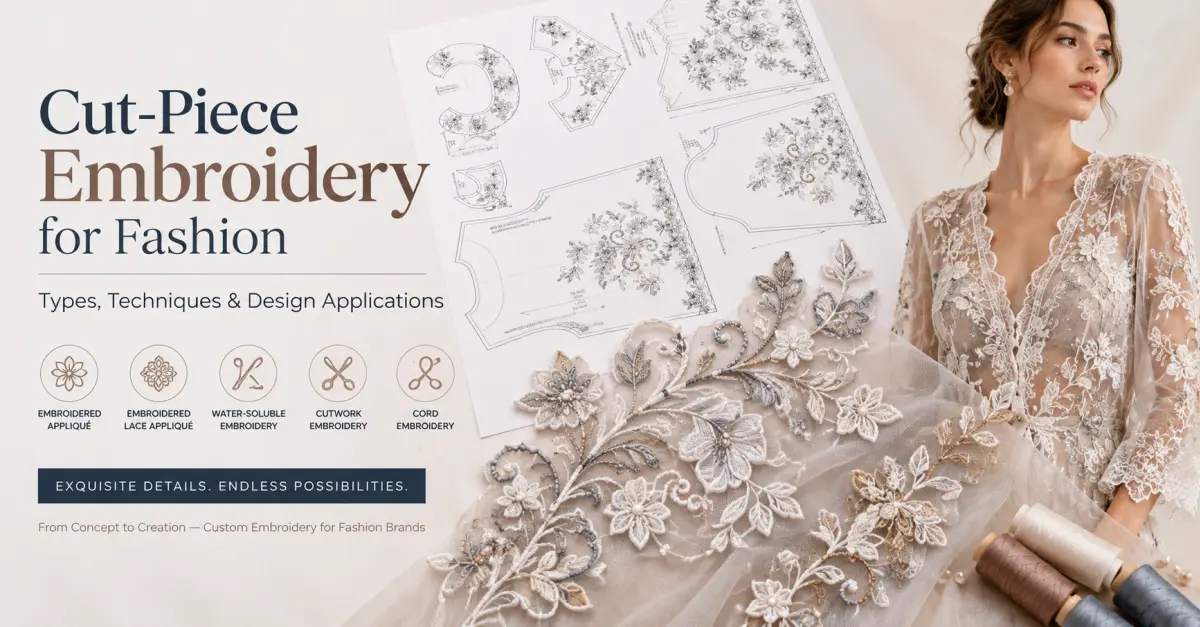

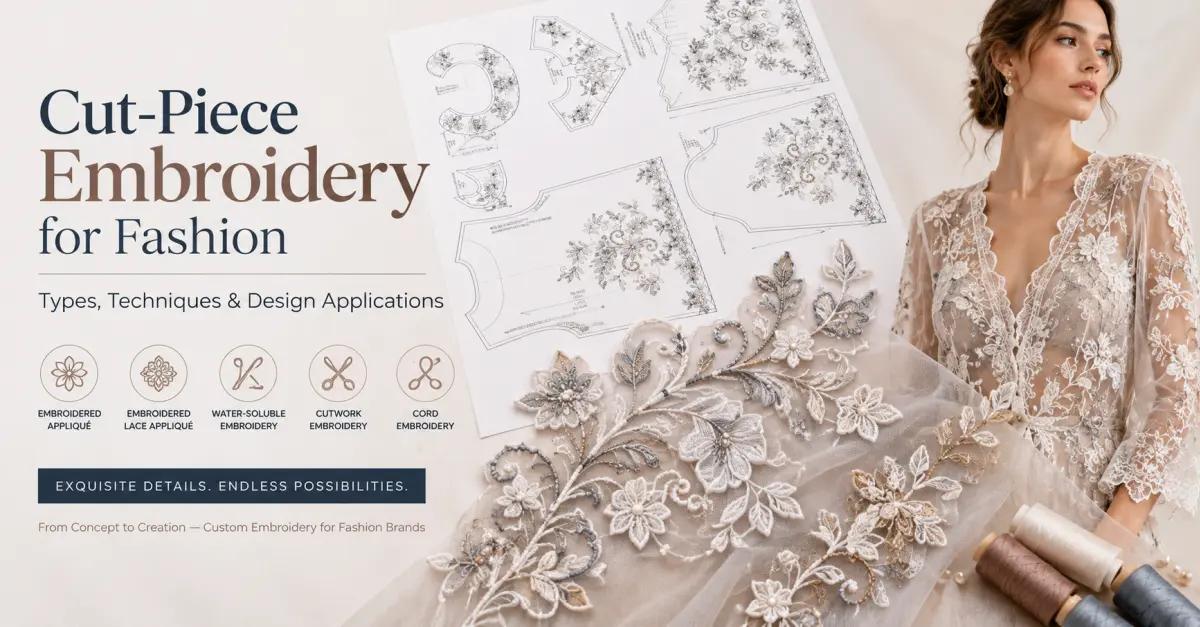
ファッションにおいてカットピース刺繍の重要性が高まっている理由
ファッション デザイナーは、必ずしも衣服全体の複雑さを増すことなく、衣服をより特徴的にする方法を常に模索しています。
ますます実用的な解決策の 1 つは、カットピース刺繍です。
生地のロール全体に刺繍を作成する代わりに、製造業者は個別の刺繍セクション、モチーフ、ボーダー、アップリケ、または衣服の形をしたパネルを作成し、後で配置して完成した衣服に組み立てることができます。
このアプローチにより、デザイナーは刺繍を表示する場所をより詳細に制御できるようになります。
花柄の刺繍を肩にかけることもできます。大きな植物モチーフをドレスの前面に適用できます。装飾的な刺繍パネルをスカートやジャケットに挿入できます。小さな刺繍アップリケを個別に配置して、より制御された視覚効果を生み出すこともできます。
ファッション ブランドにとって、これは、刺繍が生地表面全体に限定されなくなることを意味します。
これはデザインコンポーネントになります。
ただし、工場の観点から見ると、カットピース刺繍の作成は、単に生地にパターンを刺繍して後で裁断するよりもかなり技術的です。刺繍デザイン、ベース素材、ステッチ密度、裁断方法、エッジ処理、寸法安定性、衣服の構造はすべて連携して機能する必要があります。
これは、カスタム コレクションを開発しているファッション ブランドにとって特に重要です。
見た目が魅力的な刺繍デザインでも、裁断や縫製の際にうまく機能しない場合があります。非常に詳細なモチーフは硬くなりすぎる可能性があります。不適切に設計されたエッジは、衣類の製造中にほつれる可能性があります。美しいサンプルを大量に一貫して再現するのは難しい場合もあります。
だからこそ、ファッション デザインと刺繍製造の関係が重要なのです。
MJlace などのメーカーの場合、カットピースやパネルベースの刺繍を使用して、刺繍生産と衣服のパターン エンジニアリングを結び付けることもできるため、ブランドは特に装飾コンポーネントを開発できます。彼らのコレクション。 MJlace の製品範囲には次のものがあります。
カットピース刺繍とは何ですか?
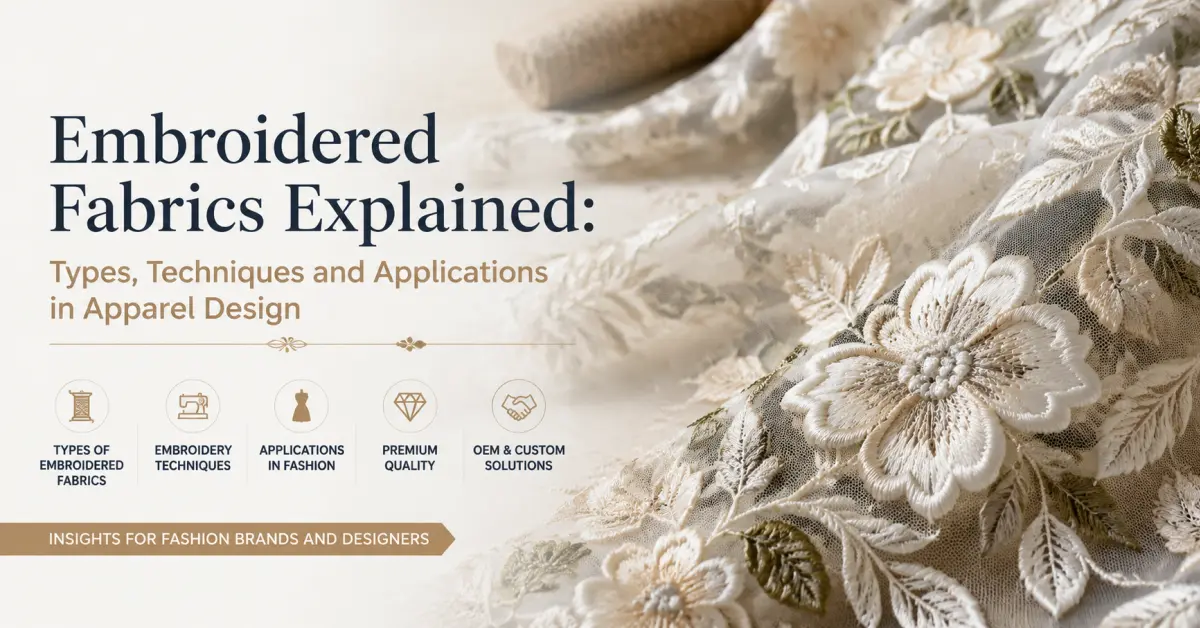
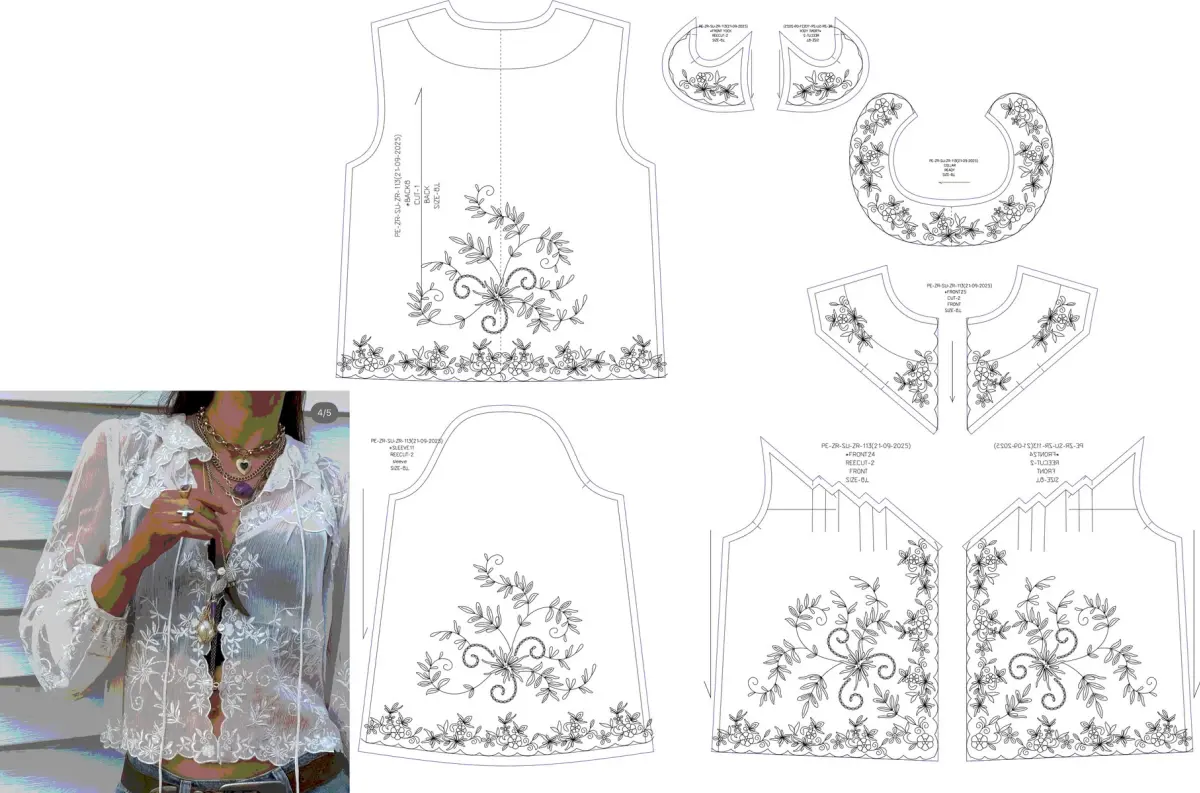
カットピース刺繍とは、製造され、衣類に使用するために個々のピース、モチーフ、パネル、ボーダー、または特定の形状に分離される刺繍繊維コンポーネントを指します。
完成した作品は次のようになります。
-
<リ>
花のモチーフ
<リ>幾何学的なアップリケ
<リ>装飾的な襟部分
<リ>スリーブパネル
<リ>身頃パネル
<リ>スカートインサート
<リ>衣服の形をした刺繍パネル
<リ>レースのアップリケ
<リ>ボーダーまたは裾のセクション
<リ>自立する刺繍モチーフ
重要な違いは、刺繍が連続した生地ヤードの単なる一部ではなく、個別のコンポーネントとして扱われることです。
簡略化された制作コンセプトは次のとおりです:
デザイン → デジタル化 → ベース準備 → 刺繍 → カッティング → エッジ仕上げ → 検査 → 縫製
この制作方法により、デザイナーは配置の自由度が大幅に高まります。
たとえば、ブランドはドレス全体に花柄の刺繍パターンを使用したくない場合があります。代わりに、デザイナーは、ウエストとスカート下部の周りに 3 つの大きなモチーフを集中させたいと考えるかもしれません。
カットピース刺繍を使用すると、メーカーは衣服のデザイン要件に応じて個別のモチーフを開発できます。
これにより、不必要な刺繍の範囲を減らし、視覚的により強調することができます。
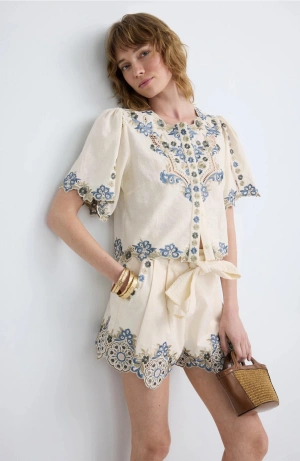
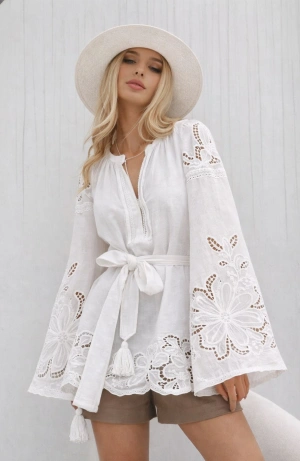
カットピース刺繍と刺繍生地
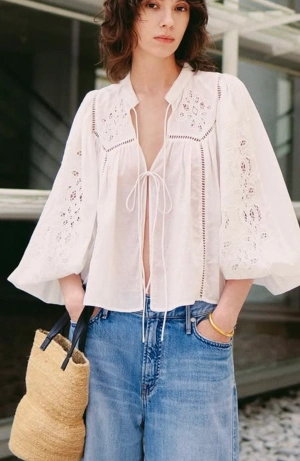
これら 2 つの製品は密接に関連していますが、同じものとして扱うべきではありません。
デザイナーが衣服全体に同じ表面パターンを共有したい場合、多くの場合、連続刺繍がより良い解決策となります。
カットピース刺繍は、デザインが特定の配置に依存するとより魅力的になります。
ファッション ブランドの場合、どちらを選択するかは、刺繍パターンだけではなく、衣服の構造から始める必要があります。
ファッション用の主なカットピース刺繍
カットピース刺繍は単一のテクニックではありません。
基布、刺繍構造、裁断方法、用途に応じてさまざまな製品を開発できます。
刺繍アップリケ
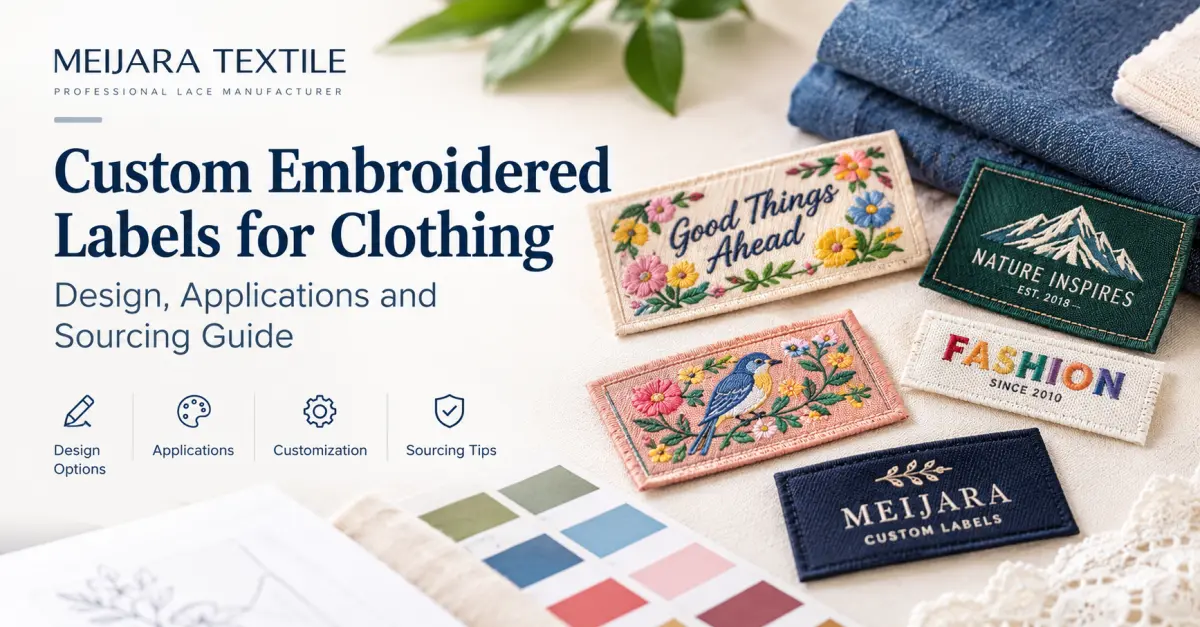
刺繍アップリケは、カットピース刺繍の最もよく知られた形式の 1 つです。
ベース素材に装飾刺繍を作成し、個別のモチーフにカットします。
一般的なモチーフは次のとおりです。
-
<リ>
花
<リ>葉
<リ>つる
<リ>幾何学的形状
<リ>抽象パターン
<リ>蝶
<リ>鳥
<リ>飾り枠
完成したアップリケは、縫製するか、衣服に取り付けることができます。
ファッション ブランドの場合、同じモチーフを複数の衣服スタイルで異なる位置に配置できるため、アップリケは特に便利です。
たとえば、1 つの花柄アップリケは次の用途に使用できます。
-
<リ>
ブラウスの肩
<リ>ドレスのネックライン
<リ>スカートの裾
<リ>ジャケットのポケット
<リ>袖口
これにより、デザイナーはコレクション開発時の柔軟性が高まります。
刺繍レースアップリケ
刺繍レースのアップリケは、刺繍とオープンレースまたはメッシュ構造を組み合わせたものです。
従来の刺繍生地に比べて、デザインが軽く、より衣服に溶け込んだように見えます。
これにより、次の用途に適しています。
-
<リ>
イブニングドレス
<リ>ブラウス
<リ>高級カジュアルウェア
<リ>リゾート コレクション
<リ>ファッションスカート
<リ>装飾スリーブ
<リ>ステートメント ガーメント
レース アップリケは、個別の花のモチーフや大きな配置パネルとして作成することもできます。
MJlace の幅広い刺繍制作には、カスタム刺繍や、衣服の要件に合わせて設計されたパネルベースのアプリケーションが含まれます。既存のレース ガイドでは、モチーフ刺繍とパネル刺繍も現代のファッション制作の重要なカテゴリーとして特定しています。
水溶性刺繍ピース
水溶性刺繍では、刺繍後に除去される一時的な可溶性ベースが使用されます。
その結果、従来の永久的な基布を使用せずに、自立した刺繍構造が得られます。
このテクニックは、デザイナーが次のことを行う場合に特に役立ちます。
-
<リ>
軽量装飾
<リ>透明効果
<リ>浮遊モチーフ
<リ>立体的な花の要素
<リ>装飾アップリケ
<リ>ハイエンドの表面効果
可溶性ベースを除去した後も刺繍構造の形状を維持する必要があるため、このプロセスではステッチ密度を慎重に制御する必要があります。
水溶性刺繍は、自立型のレース構造やアップリケの開発にすでに広く使用されています。
ファッション デザイナーにとって、主な利点は視覚的な統合です。
刺繍モチーフは、まるで衣服に直接生えているかのように見えます。
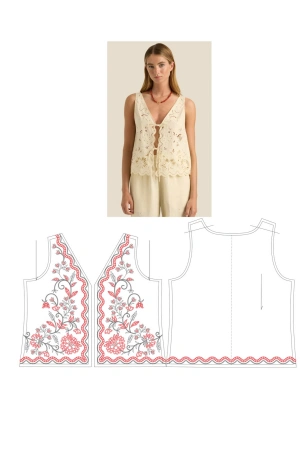
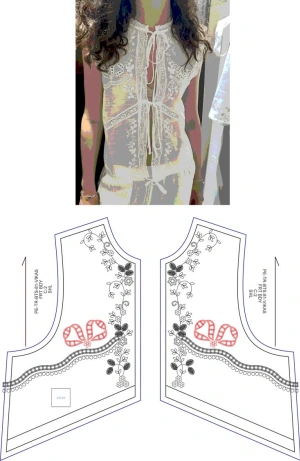
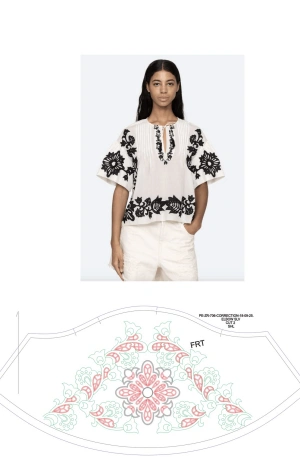
カットワーク刺繍
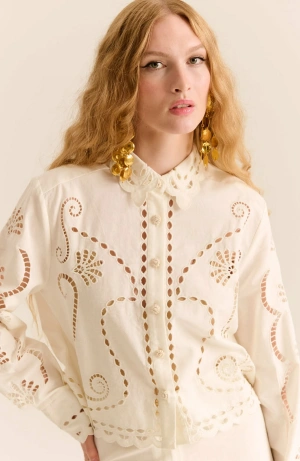
カットワーク刺繍は、刺繍とベース素材の部分の制御された除去を組み合わせたものです。
刺繍はカット部分の周囲を補強し、装飾的な透かし彫りを作成します。
このテクニックは次の場合に使用できます:
-
<リ>
コットン
<リ>リネン
<リ>デニム
<リ>織物
<リ>ファッション パネル
<リ>軽量アパレル生地
カットワークは、従来の刺繍よりもグラフィックな外観を作成できます。
デザイナーが無地の刺繍部分と透明な開口部の組み合わせを希望する場合に特に効果的です。
MJlace は、パネルベースのカットワーク アプリケーションも検討しました。デニム。刺繍構造と生地のカットアウトが衣服の構造に組み込まれています。
コード刺繍
コード刺繍では、コードや太い装飾要素を刺繍構造に導入します。
これにより、以下が作成されます。
-
<リ>
盛り上がったアウトライン
<リ>より強力なモチーフの定義
<リ>3 次元テクスチャ
<リ>より顕著な装飾効果
コード刺繍は、より強い触感の存在感のある刺繍を求めているファッション ブランドにとって特に役立ちます。
ただし、厚みが増すと衣類の取り扱いにも影響します。
太いコードのデザインは、柔らかく流れるようなシフォンの衣服には適していない可能性がありますが、以下の場合には非常にうまく機能します。
-
<リ>
ストラクチャード ジャケット
<リ>イブニングドレス
<リ>ステートメント スカート
<リ>高級アウター
<リ>装飾ボディス
メーカーの役割は、単にアートワークを複製することではなく、刺繍の構造が意図した衣服と一致するかどうかを評価することです。
カットピース刺繍が工場でどのように作られるか
完成した刺繍作品の品質は、刺繍ミシンが起動する前の状態に大きく左右されます。
専門の工場は通常、デザインエンジニアリングと繊維生産の組み合わせとしてプロジェクトを扱います。
ステップ 1: デザインの確認
最初の段階はアートワークのレビューです。
工場は以下を理解する必要があります:
-
<リ>
仕上がりサイズ
<リ>モチーフの形状
<リ>色の数
<リ>ステッチ方向
<リ>刺繍密度
<リ>ベース素材
<リ>エッジ要件
<リ>最終的な衣服の位置
デザイナーは、見た目は優れているが、機械刺繍にはすぐには適さないイラストを提出する場合があります。
メーカーは、視覚的なコンセプトを技術的に実行可能な刺繍構造に変換する必要があります。
ステップ 2: 刺繍のデジタル化
アートワークが刺繍プログラムに変換されます。
これは最も重要な技術段階の 1 つです。
デジタル化により次のことが決まります。
-
<リ>
ステッチタイプ
<リ>ステッチ方向
<リ>ステッチ密度
<リ>アンダーレイ
<リ>スレッドシーケンス
<リ>色のシーケンス
<リ>境界線の構築
<リ>階層化
<リ>ランニングステッチ
<リ>サテンステッチ
<リ>埋め縫い
デジタル化が不十分だと、次のような結果が生じる可能性があります。
-
<リ>
スレッドの蓄積
<リ>凹凸のある表面
<リ>生地の歪み
<リ>モチーフ間のギャップ
<リ>弱いエッジ
<リ>過度の硬さ
適切なデジタル化により、外観と生産の安定性のバランスが取れます。
これが、経験豊富な刺繍メーカーが刺繍プロセスを単に外注するサプライヤーよりも優れた結果を生み出すことができる理由の 1 つです。
ステップ 3: ベース素材の選択
ベース素材は、刺繍作品の最終的な外観と性能に影響します。
一般的なオプションは次のとおりです:
同じ刺繍デザインでも、基布によって全く違った印象になります。
柔らかいチュールに繊細な花柄を施すと、オーガンジーに同じデザインを施すのとはまったく異なる効果が生まれます。
したがって、素材の選択は、刺繍デザインが完成した後ではなく、開発中に行う必要があります。
ステップ 4: ミシン刺繍
デザインがデジタル化され、ベースが準備されたら、刺繍の制作に移ります。
最新のコンピュータ刺繍機を使用すると、メーカーは以下を制御できます。
-
<リ>
ステッチの配置
<リ>スレッドシーケンス
<リ>パターンの繰り返し
<リ>色の変更
<リ>ステッチ密度
<リ>制作上の位置付け
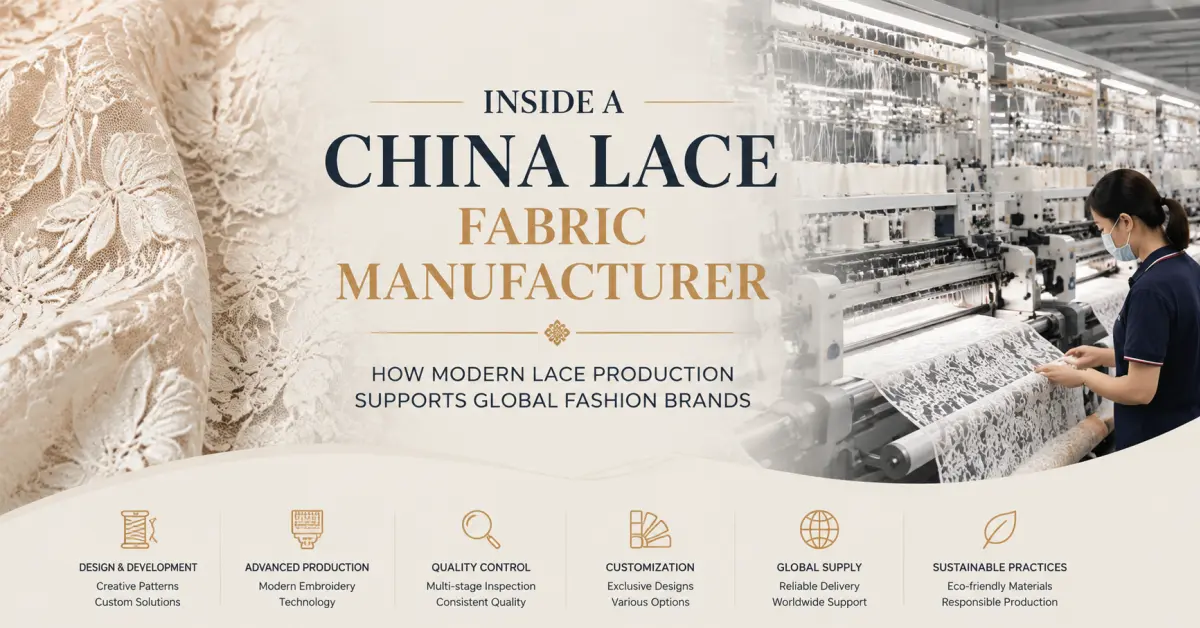
生産の一貫性は再現性に依存するため、産業規模では機械が特に重要になります。
購入者にとって問題は、サプライヤーが刺繍機を所有しているかどうかだけではありません。
サプライヤーが以下の範囲で同じ刺繍品質を維持できるかどうかです。
サンプル → パイロット生産 → 大量生産 → リピート注文
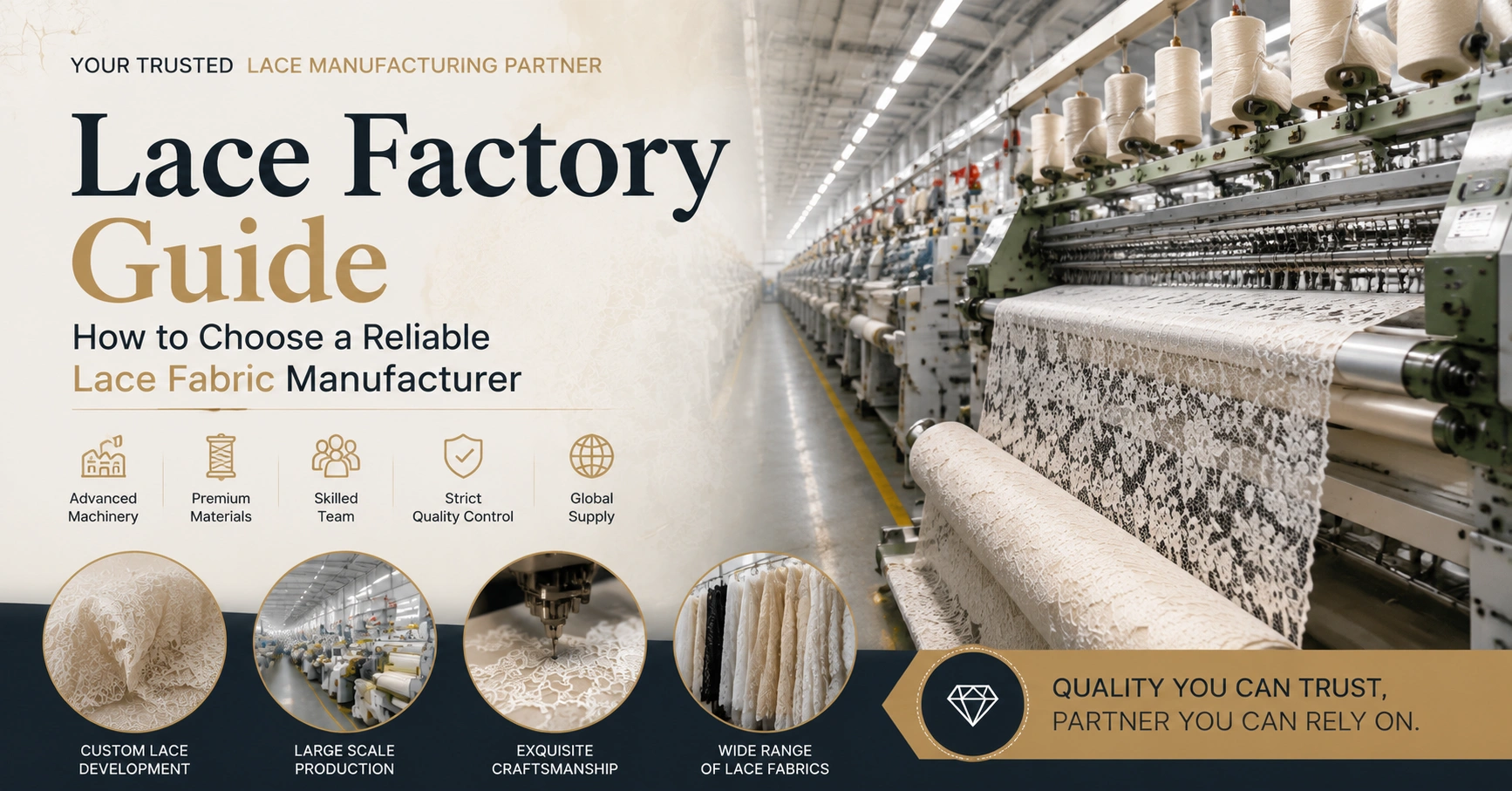
MJlace は、レースとその背後にある製造システムの一部として、産業用機械と刺繍の生産能力を強調しています。刺繍製品。
ステップ 5: 刺繍部分をカットする
刺繍後、材料を個別にカットできます。
ここが、カットピース刺繍が通常の刺繍生地の製造と大きく異なる点です。
裁断プロセスでは、意図したモチーフの形状を維持しながら刺繍デザインを維持する必要があります。
製品によっては、次のような切断作業が必要になる場合があります。
-
<リ>
手動カット
<リ>型抜き
<リ>精密切断
<リ>レーザー切断
<リ>刺繍対応のエッジカット
適切な方法は以下によって異なります。
-
<リ>
生地構造
<リ>モチーフの複雑さ
<リ>生産数量
<リ>エッジデザイン
<リ>必要な精度
大量生産の場合、再現性が特に重要になります。
何百、何千もの同じアップリケが衣服に組み立てられると、わずか数ミリメートルの違いが目立つ場合があります。
ステップ 6: エッジ仕上げ
エッジは、カットピース刺繍製品の最も重要な特徴の 1 つです。
異なるエッジ処理により、異なる視覚的および機能的な結果が生まれます。
きれいなカットエッジ
モチーフを直接衣服に縫い付けるデザインに適しています。
エッジの刺繍
追加のサテンまたは高密度ステッチ構造により周囲を補強できます。
スカラップエッジ
装飾的な花柄やレース風のモチーフに便利です。
フリーフォームエッジ
エッジは刺繍の自然な形状に従います。
レーザー仕上げエッジ
レーザー切断により、互換性のある素材に正確な輪郭を与えることができます。
正しいエッジ処理は、最終的にピースがどのように衣服に取り付けられるかによって異なります。
ステップ 7: 品質検査
専門の工場では、梱包前に切断片を検査する必要があります。
一般的な検査ポイントは次のとおりです。
-
<リ>
ステッチが欠けている
<リ>スレッドの破損
<リ>濃度が不均一
<リ>色が正しくありません
<リ>歪んだモチーフ
<リ>切断エラー
<リ>ルーズエッジ
<リ>汚れ
<リ>生地の損傷
<リ>サイズの不一致
B2B ファッション生産の場合、衣類の生産中にカットピース刺繍が手作業または半手作業で適用されることが多いため、検査は特に重要です。
小さな欠陥が何百もの部品にわたって繰り返されると、重大な製造上の問題になる可能性があります。
デザイナーはどのように開発すべきかp カットピース刺繍
通常、刺繍メーカーを早期に関与させることで最良の結果が得られます。
A designer does not necessarily need to provide a fully finished embroidery file.
A factory can often work from:
-
<リ>
Sketches
<リ>CAD artwork
<リ>Reference images
<リ>Existing embroidery samples
<リ>Lace samples
<リ>Color cards
<リ>Garment patterns
<リ>Technical drawings
The more precise the development information, however, the easier it becomes to control the final product.
Recommended Design Specification
This information gives the factory a practical starting point for development.
For more detailed guidance on the creative side, explore our fashion trends & design inspirationカテゴリ。
Cut-Piece Embroidery Applications in Modern Fashion
One of the biggest advantages of cut-piece embroidery is its versatility.
It can be used across multiple fashion categories rather than being restricted to bridalwear.
レディースドレス
Dresses are one of the most common applications.
Designers can use embroidered pieces to emphasize:
-
<リ>
ネックライン
<リ>Waistlines
<リ>Shoulders
<リ>袖
<リ>Bodices
<リ>スカートパネル
<リ>裾
<リ>Back details
Rather than covering the entire dress with embroidery, strategic placement can create a more sophisticated result.
For commercial fashion, this can also help control material consumption and production costs.
Evening Wear
Eveningwear benefits particularly from dimensional embroidery.
A dark dress with tonal embroidered appliqués can create subtle texture without changing the silhouette.
Alternatively, contrasting embroidery can become the main visual feature.
Popular combinations include:
-
<リ>
Black base + black embroidery
<リ>Ivory base + ivory embroidery
<リ>Navy base + metallic embroidery
<リ>Neutral base + tonal floral embroidery
The embroidery can therefore become part of the garment's visual identity.
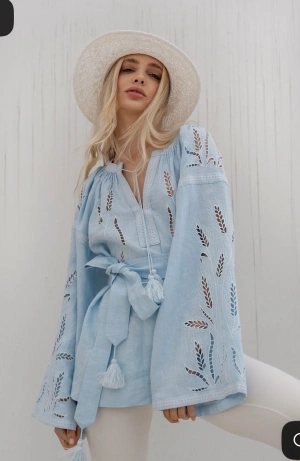
ブラウス
Blouses provide smaller but highly visible areas for appliqué placement.
Common locations include:
-
<リ>
首輪
<リ>袖口
<リ>Shoulder
<リ>Chest
<リ>Sleeve
<リ>Back yoke
For commercial collections, this is an efficient way to add perceived value without turning the entire garment into a heavily embroidered product.
スカート
Cut-piece embroidery can be particularly effective on skirt hems and panels.
For example, a designer can create a large botanical motif and place it along the lower section of a skirt.
This creates visual weight toward the hem while keeping the upper section relatively clean.
It can work particularly well with:
-
<リ>
-
Maxi skirts
-
A-line skirts
-
Pleated skirts
-
Resort skirts
Midi skirts
Resort Wear
Resort collections are increasingly suitable for lightweight embroidery.
Designers can combine:
-
Cotton
-
Linen
-
メッシュ
-
Lightweight lace
-
Sheer fabrics
-
Embroidered appliqués
with open floral or botanical designs.
The result can provide a handcrafted appearance while still being suitable for industrial garment production.
高級カジュアルウェア
Embroidery is no longer limited to formal clothing.
Luxury casualwear can use small embroidered pieces to create distinctive details on:
-
Shirts
-
Knitwear
-
Denim jackets
-
Sweatshirts
-
Lightweight jackets
-
Casual dresses
This is where cut-piece embroidery becomes particularly useful.
A brand can develop a signature embroidered motif and apply it consistently across multiple products.
Cut-Piece Embroidery and Garment Pattern Engineering
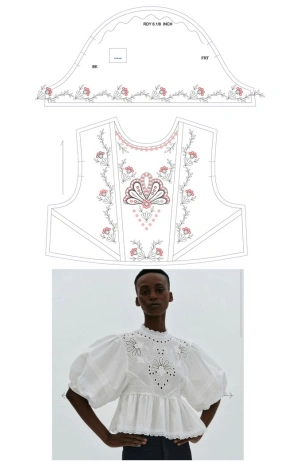
One of the most important differences between ordinary embroidery and advanced cut-piece development is the relationship between the embroidery and the garment pattern.
A conventional embroidery design may be developed independently from the garment.
A panel-based embroidery design is developed around the garment.
For example, a sleeve panel needs to account for:
-
Sleeve width
-
Seam allowance
-
Arm movement
-
Curve
-
Joining points
-
Motif direction
A bodice panel may need to account for:
-
Bust shaping
-
Waist seams
-
Darts
-
ネックライン
-
正面中央
-
Center back
This is why garment pattern information can be extremely valuable during development.
The manufacturer can use the pattern to determine the most appropriate embroidery layout.
MJlace describes panel embroidery as a production method designed around garment pattern shapes, with the aim of improving motif placement, reducing waste and supporting structured garment production.
How Embroidery Density Affects the Garment
Embroidery density is not only an aesthetic issue.
It affects:
-
Weight
-
Flexibility
-
Hand feel
-
Drapability
-
Breathability
-
Sewing performance
-
Cost
A very dense embroidery structure can make lightweight fabric significantly firmer.
For example:
Light embroidery
→ softer
→ lighter
→ more flexible
→ suitable for flowing garments
Heavy embroidery
→ stronger visual impact
→ more dimensional
→ heavier
→ suitable for structured or statement garments
The correct density therefore depends on the garment.
A supplier should not automatically reproduce the highest possible embroidery density simply because it looks more luxurious in a sample.
The goal is to achieve the right balance between appearance and garment performance.
Thread Selection for Cut-Piece Embroidery
Thread is another important factor.
Common options include:
Polyester Thread
Widely used because of its strength and production stability.
Rayon Thread
Known for its smooth appearance and visual sheen.
Cotton Thread
Offers a more natural and matte appearance.
Metallic Thread
Useful for decorative and eveningwear applications.
Special Effect Threads
Can create textured or reflective finishes.
The selection depends on:
-
Garment positioning
-
Desired appearance
-
Washing requirements
-
Production conditions
-
Budget
-
Design concept
For fashion brands, thread color should ideally be confirmed using a physical sample rather than relying exclusively on digital screens.
To understand the critical role of color in premium fabrics, read our guide to dyeing and color matching .
Quality Control: What Buyers Should Check
For brands sourcing cut-piece embroidery, visual inspection should not be the only quality-control method.
A more complete inspection system should cover several areas.
For a deeper dive into quality standards, explore our < a href="https://www.mjlace.com/category/quality-control-standards" target="_blank" rel="noopener noreferrer">quality control standards category.
Sample Approval Is Critical
Before bulk production, the buyer should approve a final production sample.
The approved sample should establish the reference for:
-
Color
-
Size
-
ステッチ密度
-
Edge finish
-
Base fabric
-
Thread
-
Motif shape
This becomes particularly important for repeat orders.
Common Problems in Cut-Piece Embroidery Production
Understanding potential production problems can help brands prevent them.
1. Excessive Thread Density
This can make the piece too stiff.
Solution: Adjust stitch density and underlay during digitizing.
2. Fabric Distortion
Dense embroidery can pull lightweight fabrics.
Solution: Optimize stabilization and embroidery parameters.
3. Uneven Cutting
Inaccurate cutting changes the appearance of repeated motifs.
Solution: Use appropriate precision cutting methods and inspection procedures.
4. Loose Edges
Poor edge finishing can create fraying during garment assembly.
Solution: Select an edge treatment appropriate to the base material.
5. Color Variation
Different thread batches may produce visible differences.
Solution: Establish approved color references and control production batches.
6. Motif Misalignment
This can occur when embroidery is designed without considering garment construction.
Solution: Develop embroidery with garment pattern information where necessary.
Cut-Piece Embroidery vs. Lace Trim
These two techniques serve different design purposes.
For example, a brand may use lace trim around the neckline while using a large embroidered floral piece across the bodice.
The two products can therefore work together within the same garment.
Cut-Piece Embroidery vs. Water-Soluble Embroidery
Water-soluble embroidery can itself become a source material for cut-piece appliqués.
Water-soluble lace production involves embroidery onto a temporary backing, followed by dissolution, shaping and stabilization.
For brands developing premium collections, the choice depends on the intended visual and functional result.
Why Factory Capability Matters for Custom Embroidery
When buying standard embroidery, the supplier's catalog may be enough.
When developing custom cut pieces, it is not.
Brands should evaluate the manufacturer's ability to manage the entire development chain.
A capable supplier should ideally be able to support:
Artwork → Digitizing → Material Selection → Sampling → Embroidery → Cutting → Finishing → QC → Bulk Production
This reduces communication gaps between different suppliers.
It also makes it easier to solve technical issues.
For example, if an embroidery motif is too heavy for the selected fabric, a manufacturer with control over digitizing and production can adjust the embroidery rather than simply reporting the problem back to the customer.
MJlace positions its manufacturing operation around lace, embroidery, cutting and processing capabilities , allowing custom projects to move from design development through sampling and bulk production.
What Fashion Brands Should Ask an Embroidery Manufacturer
Before starting a custom cut-piece project, buyers should ask:
1. Can you develop embroidery from artwork?
This determines whether the factory can support design development rather than simply reproduce existing files.
2. Can you work with garment patterns?
Important for panel embroidery and placement designs.
3. What base fabrics can you embroider?
The answer should include practical material capabilities rather than simply listing fabric names.
4. Can you produce different edge finishes?
This matters greatly for appliqués.
5. Can you produce samples before bulk?
Sample approval should be part of the development process.
6. How is quality controlled?
Ask about inspection procedures, not simply whether the supplier has "quality control."
7. Can you maintain consistency for repeat orders?
This is particularly important for fashion brands with seasonal collections.
How to Source Cut-Piece Embroidery from China
China remains an important sourcing base for lace and embroidery production because the supply chain can combine textile materials, embroidery, cutting, dyeing and garment manufacturing.
However, buyers should distinguish between:
Trading Company
and
Actual Manufacturer
For custom projects, factory capability becomes increasingly important.
Look for evidence of:
-
Production equipment
-
Embroidery capability
-
Pattern development
-
Sampling
-
Quality inspection
-
Customization
-
Bulk production
-
Export experience
A supplier that only provides product photos may not be sufficient for a complex development project.
A factory that can show the relationship between design development and production is generally more useful for long-term B2B cooperation.
For practical sourcing strategies, visit our buying guide & sourcing tipsカテゴリ。
MJlace currently presents itself as a lace and embroidery manufacturer serving fashion brands, garment manufacturers and other textile buyers, with product categories covering lace , embroidery, lace trim , cut pieces and processing .
Recommended Development Process for Fashion Brands
For brands developing a new embroidered collection, a practical workflow is:
Stage 1 — Concept
Provide the design direction and reference artwork.
Stage 2 — Technical Review
The factory evaluates:
-
Material
-
Size
-
Density
-
Thread
-
Edge
-
Construction
Stage 3 — Digitizing
Artwork is converted into an embroidery program.
Stage 4 — Sampling
The first physical sample is produced.
Stage 5 — Revision
Adjust:
-
Color
-
Density
-
Size
-
Edge
-
Base fabric
Stage 6 — Approval
The buyer approves the final standard.
Stage 7 — Bulk Production
The approved design is reproduced at production scale.
Stage 8 — Inspection
Finished pieces are checked before packing.
This structured approach reduces the risk of discovering technical problems only after bulk production has started.
Cut-Piece Embroidery and Product Development Costs
Cost is determined by much more than the amount of fabric used.
Important cost factors include:
For this reason, brands should not compare cut-piece embroidery suppliers solely by price per piece.
The technically cheaper option may create higher costs later if:
-
Cutting is inconsistent
-
Motifs require rework
-
Pieces do not match garment patterns
-
Color varies between batches
-
Embroidery is too stiff
-
Production delays occur
The better comparison is total production value, not just unit price.
How Cut-Piece Embroidery Adds Value to Fashion Collections
The biggest advantage of cut-piece embroidery is design flexibility.
A brand can create a recognizable decorative language without covering every garment with embroidery.
For example, a signature floral motif could appear as:
-
A shoulder appliqué on a blouse
-
A hem panel on a skirt
-
A bodice motif on a dress
-
A sleeve detail on a jacket
-
A small decorative element on accessories
This creates visual consistency across a collection.
At the same time, each garment can remain different.
That balance is particularly valuable for contemporary fashion brands.
FAQ: Cut-Piece Embroidery for Fashion
What is cut-piece embroidery?
Cut-piece embroidery is an embroidered textile component that is cut into an individual motif, panel, border or specific shape for application to a garment. It is commonly used for dresses, blouses, skirts, jackets and other fashion products.
What is the difference between cut-piece embroidery and embroidered fabric?
Embroidered fabric is generally produced as continuous yardage, while cut-piece embroidery is produced as individual decorative pieces. Cut-piece production provides greater control over motif placement and garment-specific decoration.
Can cut-piece embroidery be customized?
Yes. Custom cut-piece embroidery can be developed according to artwork, dimensions, colors, thread types, base fabrics, embroidery density and edge requirements.
What fabrics can be used for embroidered appliqués?
Common bases include tulle, mesh, organza, cotton, lace, satin, denim and other compatible textile materials. The appropriate material depends on the garment and embroidery construction.
Can embroidered pieces be made according to garment patterns?
Yes. Panel-based embroidery can be engineered around garment pattern shapes. This is particularly useful for bodices, sleeves, skirts and structured garments.
Is water-soluble embroidery suitable for cut-piece appliqués?
Yes. Water-soluble embroidery can create lightweight, open and freestanding embroidered motifs after the temporary backing is removed. It is particularly useful for decorative appliqués and premium fashion applications.
How long does custom embroidery development take?
Development time depends on the complexity of the artwork, material, embroidery density, number of colors and sampling requirements. A physical sample should normally be approved before bulk production.
What information should a fashion brand provide to an embroidery factory?
Brands should ideally provide artwork, finished dimensions, garment application, preferred materials, colors, thread references, quantity requirements and any specific edge or finishing requirements.
Can cut-piece embroidery be produced in bulk?
Yes. Once the embroidery program, material and finished specifications have been approved, cut-piece embroidery can be produced for commercial fashion collections.
How do I choose a cut-piece embroidery supplier?
Look beyond catalog designs and compare the supplier's ability to handle artwork development, digitizing, material selection, embroidery, cutting, finishing, quality control and bulk production.
Cut-Piece Embroidery Is a Manufacturing Tool as Much as a Design Technique
Cut-piece embroidery has evolved beyond being a simple decorative detail.
For modern fashion brands, it can function as a practical design and production tool that connects embroidery technology with garment construction.
The biggest advantage is flexibility.
Designers can control exactly where embroidery appears, how large the motif is, how much of the garment is decorated and how the embroidery interacts with the silhouette.
But successful cut-piece embroidery depends on more than a beautiful artwork.
The factory needs to control:
Digitizing → Materials → Stitch Density → Embroidery → Cutting → Edge Finishing → Quality Control
And for more complex fashion projects, the embroidery should also be developed alongside the garment pattern.
This is where an experienced embroidery manufacturer can provide greater value than a conventional fabric supplier.
For fashion brands developing new collections, the right supplier should be able to move beyond standard catalog products and support the project from the first design concept through sampling and bulk production.
At MJlace, embroidery is part of a broader lace and textile manufacturing system covering custom embroidery , water-soluble embroidery, lace, cut pieces and processing for fashion brands and garment manufacturers.
For brands looking to develop custom embroidered fabric pieces, lace appliqués or garment-specific embroidery panels, the most effective starting point is not simply choosing an existing pattern. It is discussing the garment, design, material and production requirements with the manufacturer before development begins.
That approach gives the designer more freedom---and gives the factory the technical information needed to turn that design into a repeatable commercial product.